

Lymecycline is a tetracycline-class antibiotic commonly prescribed for moderate to severe acne, particularly when topical treatments alone have not produced adequate improvement. Like all antibiotics used in acne management, lymecycline carries a defined safety profile that patients should understand before starting a course. This article explains the known side effects, how they compare to those of related antibiotics, who may be at higher risk, and what to monitor during treatment.
Key Takeaways
- Lymecycline is generally considered well tolerated among tetracycline antibiotics, but side effects do occur and some require prompt medical attention.
- The most commonly reported side effects involve the gastrointestinal system, skin photosensitivity, and, less frequently, effects on the liver or blood.
- Lymecycline is contraindicated in pregnancy, breastfeeding, and children under twelve years of age due to effects on developing bone and teeth.
- Long-term antibiotic use for acne raises concerns about antibiotic resistance, which is why treatment duration should be reviewed regularly by a prescriber.
- A qualified prescriber should assess suitability, monitor for adverse effects, and decide when to stop or switch treatment.
What Is Lymecycline and How Is It Used for Acne?
Lymecycline is a semi-synthetic tetracycline antibiotic derived from tetracycline itself. It is available in capsule form and is typically prescribed at a dose of 408 mg once daily for acne, though the prescribing clinician determines the appropriate dose and duration based on individual circumstances. Lymecycline works against acne through two main mechanisms: it inhibits the growth of Cutibacterium acnes (formerly known as Propionibacterium acnes), the bacterium associated with inflammatory acne lesions, and it has anti-inflammatory properties that may help reduce redness and swelling around spots independently of its antibacterial action.
Compared to older tetracyclines such as oxytetracycline, lymecycline is absorbed more reliably from the gastrointestinal tract and can be taken with food, which may reduce stomach-related discomfort. Doxycycline is another commonly used tetracycline for acne, and the choice between lymecycline and doxycycline often depends on tolerability, prescriber preference, and local prescribing guidelines. Lymecycline is not a topical treatment and does not work in isolation; it is usually prescribed alongside a topical agent such as a retinoid or benzoyl peroxide to reduce the risk of antibiotic resistance developing on the skin.
Common Lymecycline Side Effects
The majority of people who take lymecycline for acne do not experience severe adverse effects, but mild to moderate side effects are reported by a meaningful proportion of patients. Understanding what is common, what is less common, and what requires urgent attention helps patients use the medication safely.
Gastrointestinal Effects
Gastrointestinal symptoms are among the most frequently reported lymecycline side effects. These can include nausea, stomach discomfort, diarrhoea, and, less commonly, vomiting. Taking lymecycline with food or a full glass of water may reduce the likelihood of nausea, and this is one practical advantage lymecycline holds over some older tetracyclines that require fasting. Oesophageal irritation or ulceration is a recognised risk with tetracycline antibiotics if the capsule is swallowed without adequate fluid or taken immediately before lying down; patients are generally advised to take the capsule with a full glass of water and remain upright for at least thirty minutes afterwards.
Antibiotic-associated diarrhoea occurs because oral antibiotics alter the balance of bacteria in the gut. In most cases this is mild and resolves after the course ends, but persistent or severe diarrhoea, particularly if accompanied by blood or mucus, should be reported to a doctor promptly as it may indicate Clostridioides difficile infection, a rare but serious complication of antibiotic use.
Photosensitivity
Tetracycline antibiotics as a class are associated with increased sensitivity to ultraviolet light, meaning the skin may burn more easily than usual during sun exposure. Lymecycline carries this risk, though it is generally considered to cause less photosensitivity than doxycycline. Patients taking lymecycline are advised to use a broad-spectrum sunscreen with a high sun protection factor, wear protective clothing in strong sunlight, and avoid deliberate tanning, including sunbeds. Phototoxic reactions typically present as an exaggerated sunburn response on exposed skin and usually resolve once sun exposure is avoided and the antibiotic is stopped, but they can be uncomfortable and may occasionally cause lasting pigmentation changes.
Skin and Allergic Reactions
Skin rashes can occur with lymecycline. Most are mild and non-specific, but some reactions are more significant. Drug hypersensitivity reactions, including urticaria (hives) and, in rare cases, more severe reactions such as drug reaction with eosinophilia and systemic symptoms (DRESS syndrome), have been reported with tetracycline antibiotics. DRESS is uncommon but serious, presenting with a widespread rash, fever, swollen lymph nodes, and internal organ involvement. Any new rash that develops after starting lymecycline, particularly one accompanied by fever or feeling generally unwell, should be assessed by a doctor without delay.
Effects on Teeth and Bones
Tetracycline antibiotics bind to calcium in developing tissues and can cause permanent discolouration of teeth and impaired bone development if taken during tooth formation. This is why lymecycline is contraindicated in children under twelve years of age and in pregnant women, as the developing foetus is at risk during the second and third trimesters when tooth mineralisation occurs. In adults whose teeth are fully formed, this risk does not apply in the same way, though the contraindication in pregnancy remains absolute.
Less Common but Clinically Important Side Effects
Beyond the more frequently reported effects, lymecycline has a number of less common adverse effects that are important to be aware of, particularly because some require prompt medical evaluation.
Intracranial Hypertension
Tetracycline antibiotics, including lymecycline, have been associated with a condition called benign intracranial hypertension, also referred to as pseudotumour cerebri. This involves raised pressure within the skull and can cause persistent headaches, visual disturbances, and in some cases double vision or ringing in the ears. The condition is more commonly reported in young women, particularly those who are overweight, and the concurrent use of isotretinoin (another acne treatment) with tetracyclines is generally avoided because both drugs independently carry this risk. Patients who develop new or worsening headaches, changes in vision, or visual disturbances while taking lymecycline should seek medical assessment promptly. Intracranial hypertension associated with tetracyclines typically resolves after the antibiotic is stopped.
Liver Effects
Hepatotoxicity, or liver toxicity, is a recognised but uncommon adverse effect of tetracycline antibiotics. Lymecycline-associated liver injury has been reported in the medical literature, and patients with pre-existing liver disease may be at higher risk. Symptoms that may suggest liver involvement include jaundice (yellowing of the skin or whites of the eyes), dark urine, pale stools, or persistent upper abdominal pain. These symptoms should prompt immediate medical review. Routine liver function monitoring is not universally required for all patients taking lymecycline for acne, but a prescriber may recommend it in certain circumstances, such as in patients with known liver conditions or those taking other hepatotoxic medications.
Blood Disorders
Haematological effects, including changes in blood cell counts, have been reported rarely with tetracycline antibiotics. These can include anaemia, thrombocytopenia (low platelet count), and neutropenia (low white blood cell count). Symptoms such as unusual bruising, prolonged bleeding, persistent fatigue, or recurrent infections may warrant a blood test to check for these effects. These reactions are uncommon, but awareness is useful for patients on longer courses of treatment.
Vaginal Yeast Infections
Antibiotics alter the normal microbial balance of the body, and oral antibiotic use is a recognised risk factor for vaginal candidiasis (thrush) in women. Lymecycline is no exception. Symptoms include itching, discharge, and discomfort. Vaginal thrush associated with antibiotic use is generally treatable with over-the-counter antifungal preparations, but patients should confirm the diagnosis with a pharmacist or clinician if they are unsure.
Lymecycline and Drug Interactions
Lymecycline interacts with several other medications and substances, and these interactions can affect either the efficacy of lymecycline or the safety of the other drug involved.
Antacids, dairy products, and supplements containing calcium, magnesium, iron, or zinc can bind to lymecycline in the gastrointestinal tract and significantly reduce its absorption. Patients are generally advised to take lymecycline at a different time from these products, though the specific guidance on food interactions with lymecycline is more flexible than with older tetracyclines. Oral retinoids such as isotretinoin should not be taken concurrently with lymecycline due to the combined risk of intracranial hypertension. Lymecycline may reduce the effectiveness of oral contraceptive pills in theory, though current evidence suggests the interaction is less clinically significant than previously believed; patients should discuss this with their prescriber or pharmacist. Anticoagulants such as warfarin may be affected by tetracycline antibiotics, and closer monitoring of clotting parameters may be needed in patients taking both. Penicillin-type antibiotics and tetracyclines may have reduced combined efficacy when used together, as their mechanisms of action can be antagonistic.
Who Should Not Take Lymecycline?
Lymecycline is not appropriate for everyone, and a prescriber will assess individual suitability before recommending it. The following groups are generally considered unsuitable for lymecycline treatment:

- Pregnant women: Lymecycline is contraindicated throughout pregnancy due to the risk of foetal tooth discolouration and potential effects on bone development. Women of childbearing age should use effective contraception during treatment and discuss this with their prescriber.
- Breastfeeding women: Lymecycline passes into breast milk and is generally avoided during breastfeeding.
- Children under twelve years of age: The risk of permanent tooth discolouration and effects on developing bone make tetracyclines unsuitable for this age group.
- Patients with known hypersensitivity to tetracyclines: A previous allergic reaction to any tetracycline antibiotic is a contraindication to lymecycline use.
- Patients with severe liver impairment: Lymecycline is metabolised by the liver, and significant liver disease may affect its safety and clearance.
- Patients taking isotretinoin: Concurrent use is generally avoided due to the risk of intracranial hypertension.
Antibiotic Resistance: A Broader Safety Concern
Beyond individual side effects, the use of oral antibiotics for acne raises an important public health consideration: antibiotic resistance. Cutibacterium acnes can develop resistance to tetracycline antibiotics, including lymecycline, particularly with prolonged or repeated courses. Resistant strains may not respond to antibiotic treatment, making acne harder to manage and potentially contributing to broader resistance patterns in the community.
To reduce the risk of resistance developing, current dermatological guidance generally recommends limiting oral antibiotic courses for acne to a maximum of three to six months where possible, always combining oral antibiotics with a topical agent such as benzoyl peroxide or a retinoid, and avoiding using different antibiotics simultaneously. Patients should not extend their antibiotic course beyond what has been prescribed without clinical review, and they should not share their prescription with others. If lymecycline is not producing adequate improvement after an appropriate trial period, a prescriber may consider switching to an alternative approach rather than continuing indefinitely.

Monitoring During Lymecycline Treatment
Most patients taking lymecycline for acne do not require intensive monitoring, but there are practical steps that support safe use. Patients should attend follow-up appointments as recommended by their prescriber to assess treatment response and tolerability. Any new symptoms that develop after starting lymecycline, particularly those described in the sections above, should be reported rather than assumed to be unrelated. Patients with pre-existing medical conditions, particularly liver disease, blood disorders, or a history of intracranial hypertension, should ensure their prescriber is aware of these before starting treatment.
Sun protection is a practical daily consideration throughout the course of treatment. Patients who spend significant time outdoors or who are planning a holiday in a sunny climate should discuss this with their prescriber, as photosensitivity may be a relevant factor in the timing or choice of antibiotic.
Alternatives to Lymecycline for Acne
For patients who cannot tolerate lymecycline, who have not responded adequately, or for whom it is contraindicated, several alternative approaches to acne management exist. The most appropriate option depends on acne severity, skin type, previous treatments, and individual medical history.
Doxycycline is another tetracycline antibiotic widely used for acne. It shares a broadly similar mechanism and side effect profile with lymecycline, though it is associated with a somewhat higher rate of photosensitivity and is more commonly taken with food to reduce gastrointestinal effects. Doxycycline is available in different formulations, including modified-release versions that may improve tolerability.
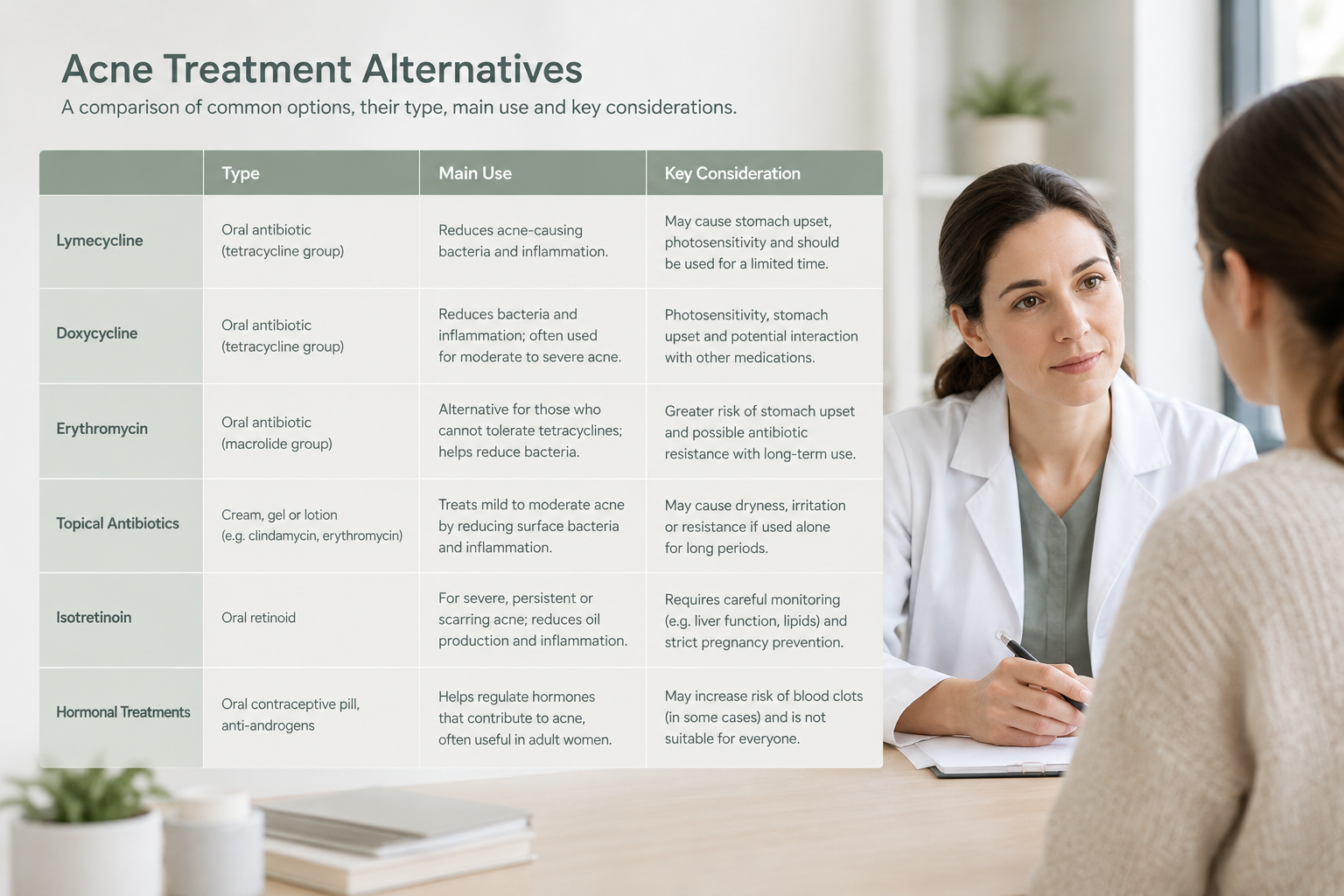
Erythromycin is a macrolide antibiotic that has historically been used for acne, though increasing rates of Cutibacterium acnes resistance have reduced its effectiveness in many patients. It may be considered in patients who cannot take tetracyclines, such as those who are pregnant or under twelve years of age, though prescribing in pregnancy requires careful clinical judgement.
Topical antibiotics such as clindamycin are used for milder inflammatory acne and carry a lower systemic side effect burden than oral antibiotics, though they should also be combined with benzoyl peroxide to reduce resistance risk.
Isotretinoin (commonly known by the brand name Roaccutane) is an oral retinoid reserved for severe, scarring, or treatment-resistant acne. It is highly effective but carries a distinct and significant side effect profile of its own, including teratogenicity (causing birth defects), requiring a strict pregnancy prevention programme for women of childbearing potential. Isotretinoin is not an antibiotic and works through different mechanisms, including reducing sebum production and normalising skin cell turnover.
Hormonal treatments such as combined oral contraceptive pills with anti-androgenic properties may be appropriate for some women with acne that has a hormonal component. These are not suitable for all patients and require individual assessment.
Topical retinoids such as tretinoin or adapalene address comedonal and inflammatory acne through mechanisms distinct from antibiotics and do not carry antibiotic resistance concerns. They are often used alongside or instead of oral antibiotics depending on acne type and severity.
Frequently Asked Questions
How long does it take for lymecycline side effects to appear?
Some side effects, such as nausea or stomach discomfort, may appear within the first few days of starting lymecycline. Photosensitivity is present throughout the course of treatment. Less common effects such as liver reactions or intracranial hypertension may develop at any point during treatment. Any new or worsening symptoms should be reported to a prescriber regardless of when they appear.
Can I drink alcohol while taking lymecycline?
Moderate alcohol consumption is not known to directly interact with lymecycline in the way that some other medications do, but alcohol can irritate the gastrointestinal tract and may worsen nausea. Patients should follow any specific guidance provided by their prescriber or pharmacist.
Will lymecycline affect my contraceptive pill?
Current evidence suggests that the interaction between tetracycline antibiotics and combined oral contraceptives is less clinically significant than was previously thought. However, patients should discuss this with their prescriber or pharmacist, particularly if they are relying on oral contraception as their primary method of birth control.
What should I do if I develop a rash while taking lymecycline?
A new rash after starting lymecycline should be assessed by a doctor. Mild rashes may not require stopping the medication, but a rash accompanied by fever, swollen glands, or feeling generally unwell may indicate a more serious hypersensitivity reaction and requires prompt medical review.
Can lymecycline cause permanent side effects?
Most lymecycline side effects resolve after the medication is stopped. However, tooth discolouration in children whose teeth are still developing is permanent, which is why the drug is contraindicated in this age group and in pregnancy. Photosensitivity reactions may occasionally cause lasting pigmentation changes in some individuals. Serious reactions such as DRESS syndrome or significant liver injury, though rare, can have lasting consequences if not identified and managed promptly.
Is lymecycline safe to take long-term?
Lymecycline is generally not intended for indefinite use. Current guidance recommends reviewing the need for continued antibiotic treatment at regular intervals, typically every three to six months, and stopping when acne is adequately controlled or when an alternative approach is more appropriate. Prolonged use increases the risk of antibiotic resistance and may increase cumulative exposure to side effects.
Can lymecycline be used alongside other acne treatments?
Lymecycline is commonly prescribed alongside topical treatments such as benzoyl peroxide or a topical retinoid. Combining lymecycline with benzoyl peroxide in particular is recommended to reduce the risk of antibiotic resistance. Lymecycline should not be used at the same time as isotretinoin or alongside other oral tetracyclines. A prescriber will advise on the most appropriate combination for individual circumstances.
Making an Informed Decision About Lymecycline for Acne
Lymecycline is a well-established option in the management of moderate to severe inflammatory acne, and for many patients it is effective and reasonably well tolerated. Understanding its side effect profile allows patients to use it more safely, recognise early warning signs, and have informed conversations with their prescriber about whether it remains the right choice as treatment progresses.
The most important practical steps are to take lymecycline as directed, use sun protection consistently throughout the course, avoid the concurrent use of medications known to interact with it, and report any new or unexpected symptoms promptly. Patients who are pregnant, planning a pregnancy, breastfeeding, or under twelve years of age should not take lymecycline, and this should be discussed clearly with a prescriber before any prescription is issued.
Acne management is rarely a single-treatment decision. If lymecycline is not producing the expected improvement, or if side effects are affecting quality of life, a prescriber can review the treatment plan and consider alternatives. A dermatologist or specialist aesthetic clinician with experience in acne management can provide a more detailed assessment of which combination of treatments may be most appropriate for an individual’s skin type, acne pattern, and medical history.