

Lymphatic drainage massage is a specialised manual therapy designed to encourage the movement of lymph fluid through the body’s lymphatic system. Unlike a conventional relaxation massage, it uses precise, light-pressure techniques directed along specific anatomical pathways. Understanding how manual drainage actually works — and what it can and cannot realistically achieve — helps patients make informed decisions before booking a session.
Key Takeaways
- Manual lymphatic drainage uses gentle, rhythmic strokes to stimulate lymph vessel contractions and redirect fluid toward functioning lymph nodes.
- It is most strongly supported by evidence for managing lymphoedema, particularly following cancer treatment or surgery.
- Aesthetic applications such as post-surgical swelling reduction and skin radiance are widely offered, though evidence for some cosmetic claims remains limited.
- The technique is generally well tolerated, but certain medical conditions make it unsuitable; a clinical assessment is advisable before starting treatment.
- Results depend on the underlying cause of fluid retention, the practitioner’s training, and whether sessions are part of a broader treatment plan.
What Is the Lymphatic System and Why Does It Matter?
The lymphatic system is a network of vessels, nodes, and organs that runs alongside the circulatory system throughout the body. Its primary roles include transporting excess interstitial fluid — the fluid that surrounds cells in tissues — back into the bloodstream, supporting immune function by filtering pathogens and cellular debris, and absorbing dietary fats from the digestive tract. Lymph fluid, a pale yellowish liquid, moves through this network without a dedicated pump like the heart. Instead, lymph vessels rely on the rhythmic contraction of their own smooth muscle walls, the movement of surrounding skeletal muscles, breathing, and gentle external pressure to keep fluid flowing in the correct direction.
When the lymphatic system is overwhelmed, damaged, or insufficiently active, fluid can accumulate in tissues, causing swelling known as oedema or, in more persistent cases, lymphoedema. This is where manual lymphatic drainage becomes clinically relevant. By applying external stimulation along the lymphatic pathways, a trained therapist aims to support the system’s natural drainage function.
How Manual Lymphatic Drainage Works
Manual lymphatic drainage (MLD) is a structured technique developed in the 1930s by Danish physiotherapists Emil and Estrid Vodder. The Vodder method, along with later adaptations such as the Földi and Casley-Smith approaches, forms the basis of most contemporary clinical practice. All recognised methods share core principles: extremely light pressure, slow rhythmic movements, and a specific sequence that follows the anatomy of the lymphatic system.
The Mechanics of the Technique
A trained MLD therapist begins by working on the lymph nodes closest to the body’s central drainage points — typically the neck, axillae (armpits), and inguinal region (groin) — before moving outward to the area of concern. This sequence is deliberate: clearing the central nodes first creates capacity for fluid to move into them from more peripheral areas. The strokes used are slow, wave-like, and applied with very light pressure, generally estimated at around 30–40 mmHg or less, which is considerably lighter than a standard therapeutic massage.
The light pressure is not incidental — it is mechanically important. Lymph capillaries sit just beneath the skin surface and are anchored to surrounding connective tissue by fine filaments. When the skin is gently stretched in the direction of lymph flow, these filaments pull the capillary walls open, allowing interstitial fluid to enter the lymphatic vessel. Deeper, heavier pressure would compress rather than open these superficial capillaries, reducing rather than enhancing drainage. This is why MLD feels noticeably different from conventional massage and why practitioner training in the correct pressure and direction is essential.
Stimulating Lymphangion Contractions
Lymph vessels are divided into segments called lymphangions, each of which contains smooth muscle capable of autonomous contraction. These contractions, known as lymphangiomotoricity, propel lymph fluid forward through one-way valves that prevent backflow. Research suggests that the gentle mechanical stimulation applied during MLD may increase the frequency and strength of these intrinsic contractions, effectively encouraging the vessel to pump more actively. The rhythmic, repetitive nature of MLD strokes appears to reinforce this effect over the course of a session.
Rerouting Fluid Around Damaged Pathways
In patients with lymphoedema — particularly secondary lymphoedema caused by lymph node removal or radiation therapy during cancer treatment — some lymphatic pathways may be permanently damaged or absent. In these cases, MLD is used not simply to accelerate normal drainage but to redirect fluid toward alternative, functioning lymphatic routes. Therapists trained in complex decongestive therapy (CDT) use specific mapping techniques to identify intact pathways and guide fluid toward them. This rerouting function is one of the more clinically significant aspects of MLD in a medical context and distinguishes it from general wellness massage.
What Lymphatic Drainage Massage May Be Used For
The applications of MLD span both medical and aesthetic contexts, and the strength of supporting evidence varies considerably between them.
Lymphoedema Management
The most robustly supported use of MLD is in the management of lymphoedema, particularly breast cancer-related lymphoedema of the arm. MLD is a core component of complex decongestive therapy, which also includes compression bandaging, exercise, and skin care. Multiple systematic reviews and clinical guidelines from organisations such as the British Lymphology Society support MLD as part of a comprehensive lymphoedema management programme. Evidence suggests MLD may help reduce limb volume, improve tissue softness, and support quality of life, though it is generally considered most effective when combined with compression therapy rather than used in isolation.
Post-Surgical Swelling and Recovery
MLD is increasingly offered following cosmetic and reconstructive surgical procedures, including liposuction, abdominoplasty (tummy tuck), and rhinoplasty. Surgery disrupts lymphatic vessels in the treated area, and the resulting localised swelling can be prolonged. Post-surgical MLD aims to accelerate the reabsorption of this fluid, potentially reducing visible swelling and bruising more quickly than the body would manage unaided. Some plastic surgeons recommend MLD as part of post-operative care protocols, though the evidence base for this specific application is still developing and individual responses vary.
Aesthetic and Wellness Applications
Beyond medical indications, MLD is widely offered in aesthetic clinics and spas for purposes including reducing facial puffiness, improving skin tone and radiance, supporting detoxification, and alleviating the appearance of cellulite. These applications are popular, but it is important to be transparent about the evidence. Temporary reduction in facial puffiness — particularly morning swelling — is plausible given the mechanism, as gentle stimulation may help clear overnight fluid accumulation. Claims about significant cellulite reduction or systemic detoxification are less well supported by clinical research, and patients should approach these with realistic expectations.
Chronic Venous Insufficiency and Other Conditions
MLD is sometimes used alongside compression therapy for chronic venous insufficiency, a condition in which leg veins struggle to return blood to the heart, leading to swelling and discomfort. Some practitioners also use it for conditions such as fibromyalgia, rheumatoid arthritis, and chronic fatigue, where it may offer symptomatic relief, though evidence in these areas remains limited and mixed. Any use of MLD for a diagnosed medical condition should be discussed with the treating physician.
What to Expect During a Session
A typical MLD session lasts between 45 and 90 minutes depending on the area being treated and the clinical indication. The patient usually lies on a treatment table, and the therapist works methodically through the relevant lymphatic pathways. The experience is generally described as deeply relaxing rather than physically intense. There is no oil or lotion used in traditional MLD, as the technique relies on skin-to-skin contact to achieve the precise degree of stretch required.
For lymphoedema management, sessions are often conducted several times per week during an intensive phase, followed by a maintenance phase with less frequent appointments. For post-surgical recovery or aesthetic purposes, the number of sessions recommended varies widely — some practitioners suggest a course of four to six sessions, while others tailor the plan to the individual’s response. A qualified therapist should be able to explain the rationale for the recommended frequency based on the specific concern being addressed.
Patients sometimes notice an increased need to urinate following a session, which is thought to reflect the kidneys processing the additional fluid that has been redirected into the bloodstream. Some people feel temporarily fatigued after treatment, particularly in the first few sessions. These responses are generally considered normal and typically resolve within a few hours.
Potential Benefits of Manual Lymphatic Drainage
- Reduction in swelling: MLD may help reduce oedema in both medical and post-surgical contexts, with the strongest evidence in lymphoedema management.
- Improved tissue softness: Regular treatment may help soften fibrotic (hardened) tissue that can develop in chronic lymphoedema.
- Accelerated post-surgical recovery: Some patients report faster resolution of bruising and swelling following cosmetic procedures when MLD is incorporated into aftercare.
- Relaxation and wellbeing: The slow, rhythmic nature of MLD has a calming effect on the nervous system, which may contribute to reduced stress and improved sleep for some patients.
- Immune support: By facilitating the movement of lymph through lymph nodes, MLD may support the immune system’s ability to filter pathogens, though direct clinical evidence for this effect in healthy individuals is limited.
- Temporary improvement in skin appearance: Reduced fluid retention in facial tissues may contribute to a temporarily brighter, less puffy complexion.
Limitations and Realistic Expectations
Manual lymphatic drainage is not a treatment for weight loss, and any reduction in measurements following a session reflects fluid redistribution rather than fat reduction. Patients seeking body contouring or fat reduction should be aware that MLD addresses fluid, not adipose tissue, and that these are distinct concerns requiring different approaches.
The effects of a single MLD session are temporary. Fluid will continue to accumulate if the underlying cause — whether lymph node damage, venous insufficiency, or post-surgical disruption — is not addressed. For conditions such as lymphoedema, MLD is a management tool rather than a cure, and ongoing maintenance is typically required to sustain results.
The quality of treatment depends significantly on the practitioner’s training. MLD is a skilled technique that requires specific education in lymphatic anatomy and the correct application of pressure and direction. Therapists who have completed recognised certification programmes — such as those accredited by the Lymphoedema Training Academy or equivalent bodies — are better equipped to deliver effective and safe treatment than those who have received only brief introductory training.
For cosmetic applications, the evidence base is considerably thinner than for medical indications. Patients considering MLD primarily for aesthetic reasons should weigh the likely modest and temporary benefits against the cost and time commitment of a course of sessions.
Risks, Side Effects, and Contraindications
Manual lymphatic drainage is generally considered a low-risk therapy when performed by a trained practitioner on an appropriate candidate. However, it is not suitable for everyone, and certain conditions represent contraindications that must be assessed before treatment begins.
Possible Side Effects
Most people tolerate MLD well. Temporary fatigue, mild headache, or increased urination in the hours following a session are the most commonly reported responses. In rare cases, patients may experience a temporary worsening of swelling before improvement occurs, particularly in the early stages of lymphoedema treatment. Skin irritation is uncommon given the light pressure used, but any pre-existing skin conditions in the treatment area should be disclosed to the therapist.
Contraindications
MLD should not be performed, or should only be performed with medical clearance, in the presence of the following conditions:
- Active infection or cellulitis: Stimulating lymph flow in an infected area risks spreading the infection further through the body.
- Active cancer: The use of MLD in patients with active, untreated malignancy is a subject of clinical debate. Some guidelines advise caution due to theoretical concerns about facilitating the spread of cancer cells, though evidence on this specific risk is not conclusive. Medical guidance should be sought.
- Acute deep vein thrombosis (DVT): Applying pressure near a blood clot carries a risk of dislodging it, which could have serious consequences. MLD is contraindicated until DVT has been appropriately treated and cleared.
- Congestive heart failure: Rapidly increasing the volume of fluid returning to the bloodstream can place additional strain on a compromised heart. MLD in patients with cardiac conditions requires medical supervision.
- Acute inflammation or fever: Treatment should be deferred until the acute phase has resolved.
- Renal insufficiency: The kidneys’ ability to process the additional fluid load mobilised by MLD may be impaired in patients with significant kidney disease.
Pregnancy, certain thyroid conditions, and recent surgical wounds may also require modified approaches or medical clearance. A thorough health history should always be taken before treatment begins.
Who May Be Suitable for Lymphatic Drainage Massage
Patients who may benefit from MLD include those with diagnosed lymphoedema, individuals recovering from cosmetic or reconstructive surgery, people experiencing chronic mild oedema without a serious underlying cause, and those seeking a relaxation therapy with a physiological basis. It may also be appropriate for individuals with certain chronic conditions where a physician has recommended it as a complementary approach.
Suitability depends on a clinical assessment that considers the individual’s medical history, current medications, and the specific concern being addressed. A qualified MLD therapist or the referring clinician should conduct this assessment before treatment begins.
Alternatives to Manual Lymphatic Drainage
For patients who are not suitable candidates for MLD, or who are exploring their options, several alternatives may be relevant depending on the underlying concern.
Compression therapy — including compression garments and bandaging — is often used alongside or instead of MLD for lymphoedema and chronic venous insufficiency. For many patients, compression is the primary long-term management tool, with MLD used to prepare the limb during intensive treatment phases.
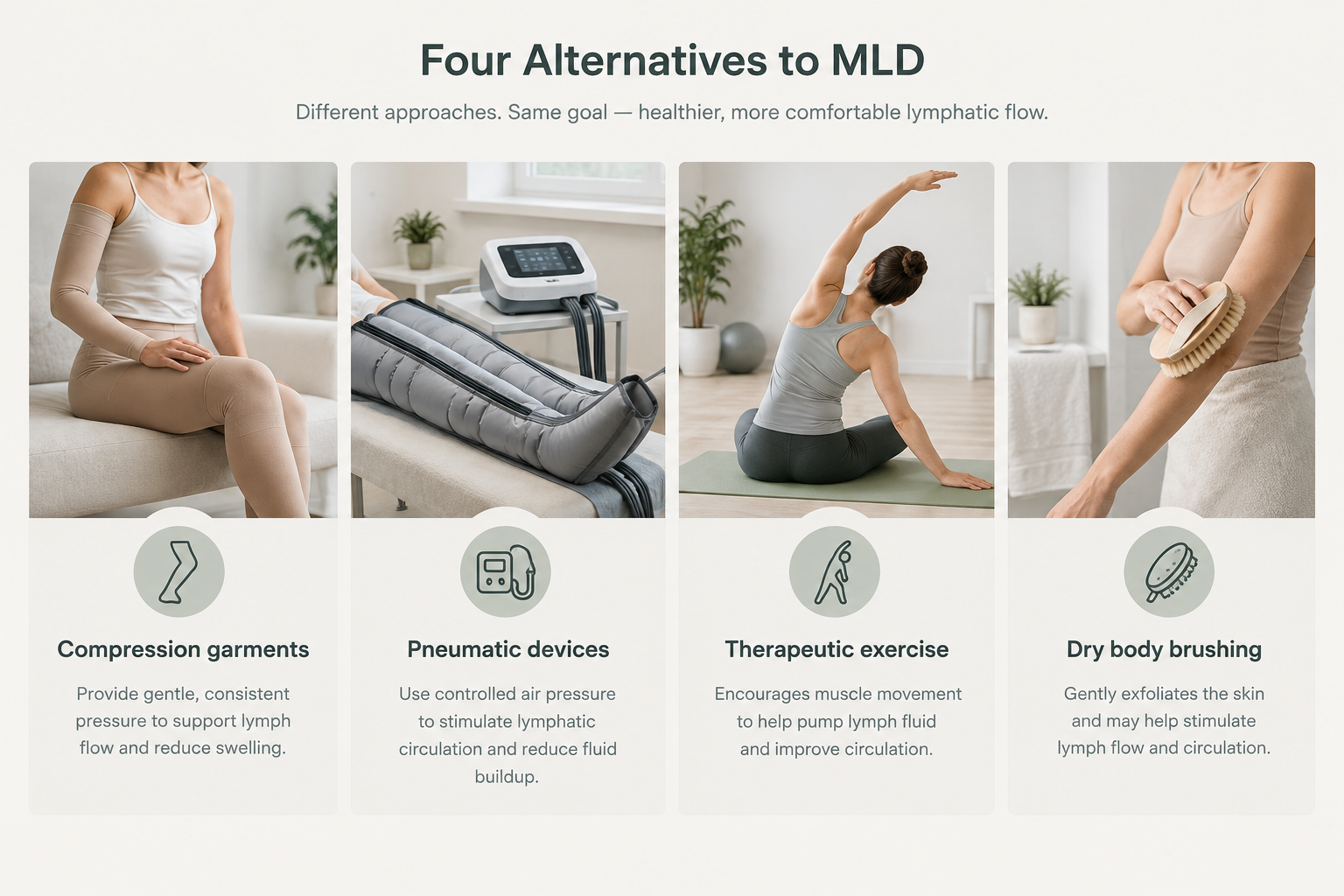
Pneumatic compression devices are mechanical pumps that apply sequential pressure to a limb via an inflatable sleeve, mimicking some of the effects of manual drainage. These devices are used in clinical and home settings and may be appropriate for patients who require frequent treatment but have limited access to a therapist.
Exercise and movement play an important role in lymphatic function. Muscle contractions during physical activity naturally stimulate lymph flow, and targeted exercise programmes are a recognised component of lymphoedema management.
Dry body brushing is a self-care practice sometimes promoted as a way to stimulate superficial lymphatic circulation. The evidence for its effectiveness is very limited, but it carries minimal risk and some patients find it a useful complement to professional treatment.
For post-surgical swelling specifically, following the surgeon’s aftercare instructions — including rest, elevation, and appropriate compression — remains the foundation of recovery, with MLD as a potential adjunct rather than a replacement.
Frequently Asked Questions
How many sessions of lymphatic drainage massage are typically needed?
The number of sessions depends on the reason for treatment. For lymphoedema, an intensive phase may involve daily or near-daily sessions for two to four weeks, followed by ongoing maintenance. For post-surgical recovery, a course of four to eight sessions is commonly suggested, though this varies by procedure and individual response. For general wellness or aesthetic purposes, some patients have occasional single sessions while others prefer a regular schedule. A qualified therapist can advise based on the specific concern.
Is lymphatic drainage massage painful?
Manual lymphatic drainage uses very light pressure and should not be painful. Most patients describe it as deeply relaxing. If a session causes significant discomfort, the therapist should be informed immediately, as this may indicate that the pressure is too firm or that the technique is being applied incorrectly.
Can lymphatic drainage massage help with post-liposuction swelling?
MLD is commonly recommended as part of post-liposuction aftercare and may help reduce swelling and bruising more quickly than the body would manage without intervention. Some surgeons include it in their standard post-operative protocols. However, timing is important — treatment should not begin until the surgeon confirms it is safe to do so, typically once incisions have closed and there is no risk of infection.
How is manual lymphatic drainage different from a regular massage?
The key differences are pressure, speed, and direction. MLD uses very light, slow, rhythmic strokes specifically directed along lymphatic pathways, beginning at central lymph nodes and working outward. A conventional massage typically uses firmer pressure aimed at muscle tissue. The two techniques have different physiological targets and are not interchangeable for lymphatic purposes.
Does lymphatic drainage massage help with cellulite?
Some practitioners promote MLD as a treatment for cellulite, and temporary improvements in skin texture may occur due to reduced fluid retention in subcutaneous tissue. However, cellulite involves structural changes in connective tissue and fat distribution that MLD does not directly address. Any improvement is likely to be modest and temporary. Patients seeking significant cellulite reduction should discuss dedicated body contouring options with a qualified practitioner.
How do I find a qualified lymphatic drainage therapist?
Look for therapists who have completed a recognised MLD certification programme, such as those accredited by the Lymphoedema Training Academy, the Dr Vodder School, or an equivalent professional body in your country. For medical indications such as lymphoedema, a referral from a physician or oncology team is advisable. Aesthetic clinics offering MLD should be able to confirm the specific training their therapists have received.
Is Lymphatic Drainage Massage Worth Considering for Your Needs?
Manual lymphatic drainage is a well-established technique with a clear physiological rationale and meaningful clinical evidence in specific contexts, particularly lymphoedema management and post-surgical recovery. For patients with these indications, MLD delivered by a properly trained therapist as part of a broader treatment plan can be a genuinely useful intervention that may improve comfort, reduce swelling, and support recovery.
For aesthetic applications — facial depuffing, general wellness, or skin radiance — the benefits are plausible but more modest and temporary. Patients considering MLD for these purposes should have realistic expectations and understand that results will not replicate those seen in medical lymphoedema treatment. MLD is not a substitute for fat reduction, weight management, or treatments targeting structural skin concerns.
The most important factors in determining whether MLD is appropriate for you are the underlying cause of your concern, your medical history, and the training of the practitioner you choose. If you are managing a diagnosed condition such as lymphoedema or recovering from surgery, discussing MLD with your treating clinician before booking is advisable. For wellness or aesthetic purposes, a consultation with a qualified therapist who takes a thorough health history will help establish whether the treatment is suitable and what realistic outcomes you might expect.