

Bunny lines are the fine diagonal or horizontal wrinkles that appear on either side of the nose when you smile, laugh, or scrunch your face. While they are a completely natural facial expression, repeated muscle movement over time can cause these lines to become etched into the skin at rest — a point at which many people begin looking for ways to soften or prevent them. This article explains what causes bunny lines, how they develop, what can realistically be done to address them, and what to consider before exploring treatment.
Key Takeaways
- Bunny lines are caused by repeated contraction of the nasalis muscle on the sides of the nose, and can become more prominent after botulinum toxin treatment to nearby areas such as the glabella.
- When lines are only visible during expression, they are classified as dynamic wrinkles; when visible at rest, they are static wrinkles and generally harder to treat.
- Small, carefully placed injections of botulinum toxin into the nasalis muscle are the most commonly used clinical approach for reducing bunny lines.
- Prevention through sun protection, skin hydration, and avoiding unnecessary facial scrunching may help slow the progression from dynamic to static lines.
- Results from botulinum toxin treatment are temporary, typically lasting three to four months, and individual response varies.
What Are Bunny Lines?
Bunny lines are wrinkles that form on the lateral sides of the nose, typically running diagonally downward from the bridge toward the cheeks, though they can also appear as horizontal creases across the nasal bridge. The name comes from the scrunching movement that resembles a rabbit twitching its nose. These lines are produced primarily by the nasalis muscle, a thin sheet of muscle that runs along the nose and is responsible for compressing and flaring the nostrils. Every time you smile broadly, squint, or scrunch your nose, the nasalis contracts and folds the overlying skin into creases.
In younger skin, these creases disappear completely when the face is relaxed. Over time, repeated folding of the skin — combined with the gradual loss of collagen, elastin, and subcutaneous volume that comes with ageing — means the lines may begin to linger even when the face is at rest. At this stage, they have transitioned from dynamic wrinkles to static wrinkles, a distinction that matters when considering treatment options.
Why Do Bunny Lines Sometimes Appear After Botox?
One of the most frequently discussed causes of bunny lines in a clinical context is compensatory muscle activity following botulinum toxin treatment to the glabella — the area between the eyebrows — or the forehead. When the corrugator supercilii and procerus muscles are relaxed by botulinum toxin, some patients unconsciously recruit the nasalis muscle more heavily to achieve a similar scrunching or squinting expression. This increased activity in the nasalis can make bunny lines more noticeable, or cause them to appear for the first time in patients who did not have them before treatment.
This phenomenon is well recognised among aesthetic practitioners and is one reason why a thorough facial assessment before any botulinum toxin treatment is important. An experienced injector will observe how the face moves during natural expressions and may discuss whether treating the nasalis at the same appointment is appropriate. Not every patient who receives glabellar treatment will develop bunny lines, but those who already have visible nasal creases or who show strong nasalis activity during consultation may be at higher risk.
Dynamic vs Static Nose Wrinkles: Why the Distinction Matters
Understanding whether bunny lines are dynamic or static helps set realistic expectations for any treatment approach. Dynamic wrinkles are only visible during muscle contraction — when you smile, laugh, or scrunch your nose — and the skin returns to a smooth appearance at rest. Static wrinkles are present even when the face is completely relaxed and reflect structural changes in the skin itself, including collagen breakdown, reduced elasticity, and volume loss in the surrounding tissue.
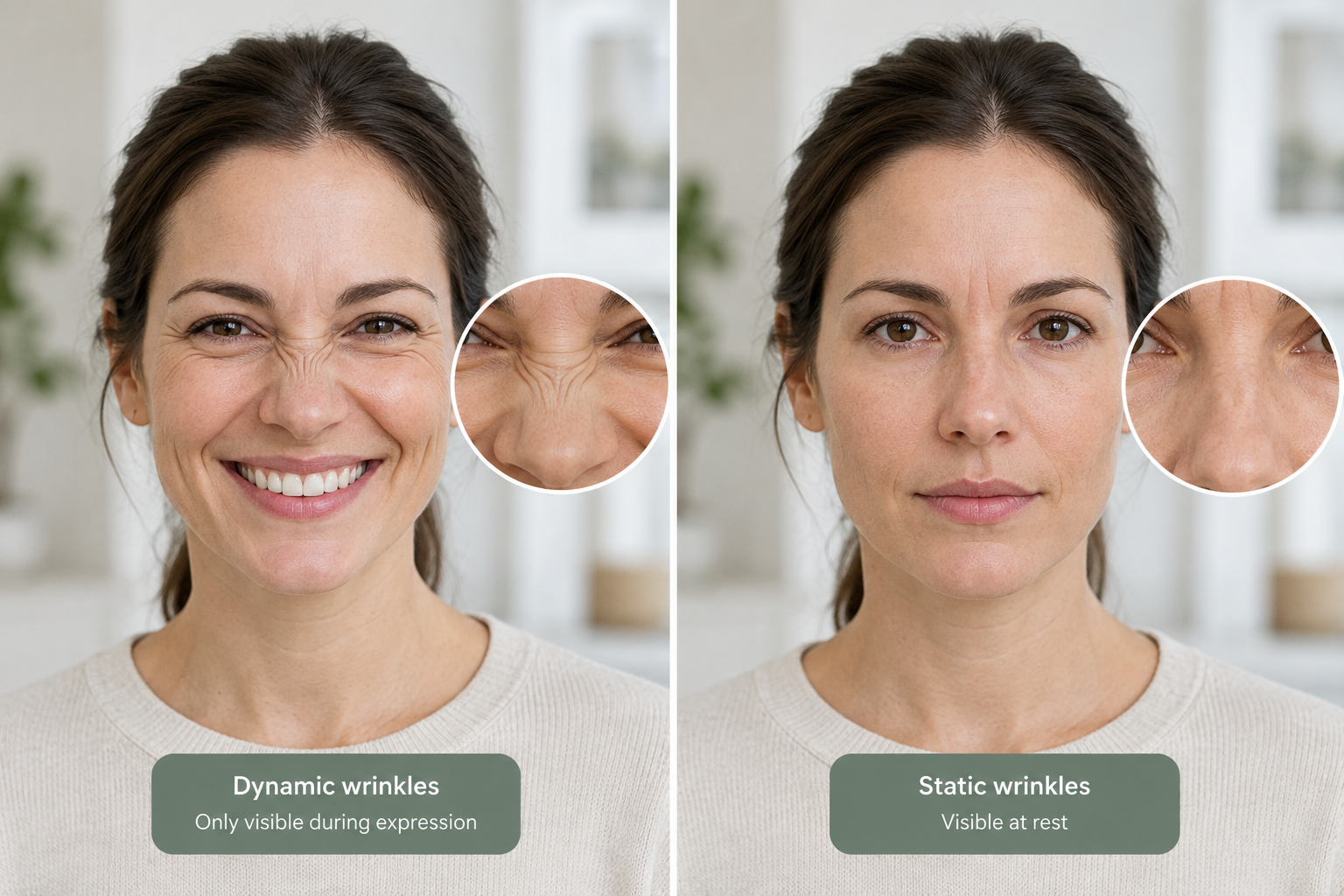
Botulinum toxin works by temporarily reducing muscle activity, which makes it highly effective for dynamic wrinkles. When the nasalis is relaxed, the skin is no longer repeatedly folded, and dynamic bunny lines become much less visible during expression. However, if lines have already become static — meaning they are visible at rest — muscle relaxation alone may not fully resolve them. In these cases, additional treatments targeting skin quality or volume may be considered alongside or after botulinum toxin, depending on the individual assessment.
How Botulinum Toxin Treats Bunny Lines
Botulinum toxin — available under brand names including Botox, Dysport, and Azzalure — works by temporarily blocking the nerve signals that cause a muscle to contract. When a small amount is injected into the nasalis muscle on each side of the nose, the muscle’s ability to scrunch the overlying skin is reduced, which softens or eliminates the appearance of bunny lines during expression. The goal is not to completely immobilise the nose but to reduce the intensity of the muscle contraction enough to prevent deep skin folding.
The nasalis is a relatively small and superficial muscle, and treatment typically involves a small number of injection points on each side of the nose. Because the muscle is close to other structures involved in lip movement and nasal function, precise placement is important. Injecting too low or using too much product can affect the upper lip, alter the nasal tip position, or cause asymmetry. This is why bunny line treatment should only be performed by a qualified and experienced practitioner who is familiar with the relevant anatomy.
Results from botulinum toxin for bunny lines typically become visible within two to seven days and reach their full effect at around two weeks. The duration of effect varies between individuals but generally lasts approximately three to four months, after which the muscle gradually regains its activity and lines may return. Regular maintenance treatments are usually required to sustain the result.
What to Expect During and After Treatment
A consultation before treatment allows the practitioner to assess the severity of the lines, observe nasalis activity during natural expressions, review medical history, and discuss realistic outcomes. Patients are typically asked about previous botulinum toxin treatments, any medications that may affect bleeding or healing, and whether they have any relevant medical conditions.
The treatment itself is brief, usually taking only a few minutes once the assessment is complete. A fine needle is used to deliver small amounts of botulinum toxin into the target area. Most patients describe the sensation as a mild sting or pinch. Topical anaesthetic cream is not always necessary for this area, though it may be offered. There is no requirement for sedation.
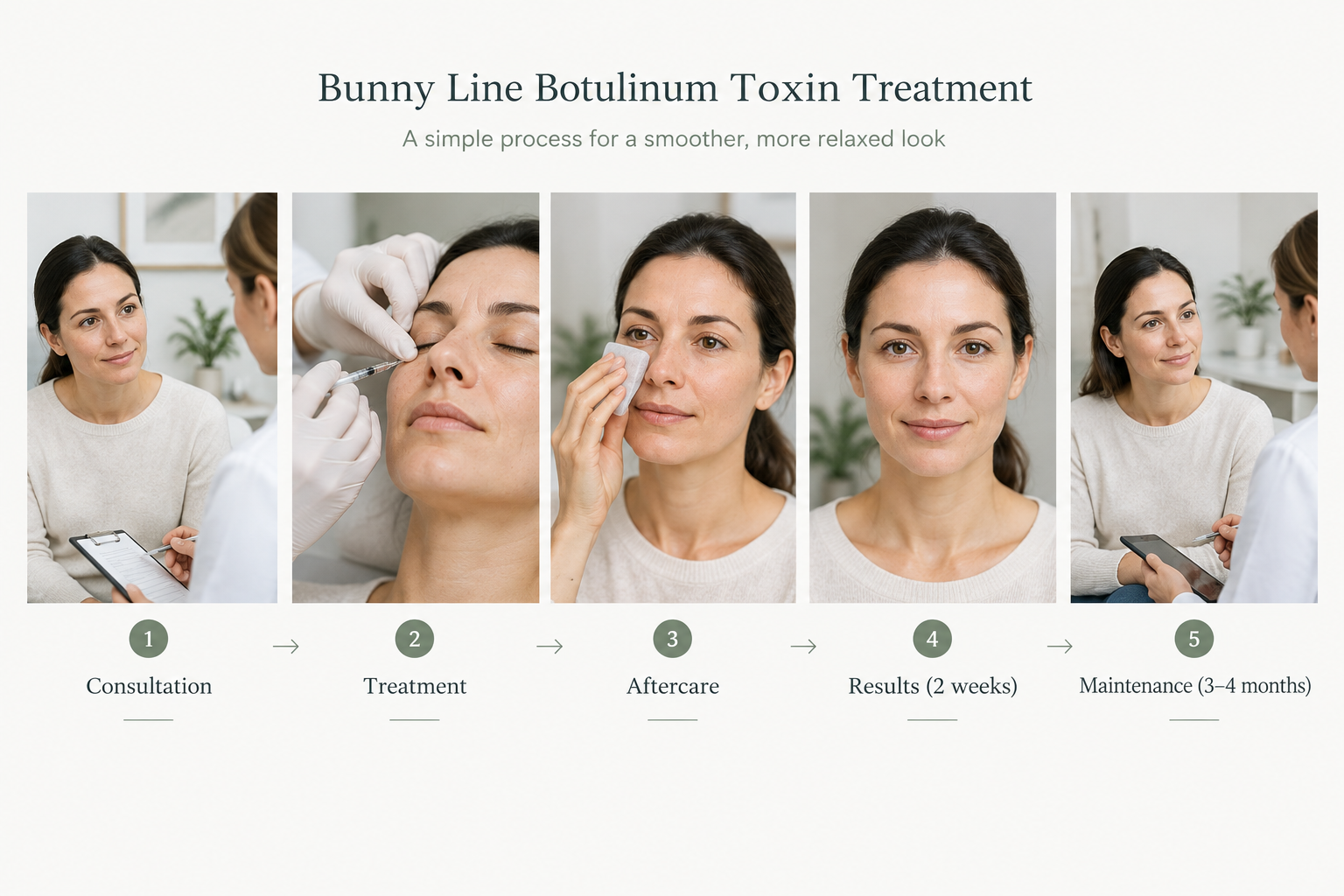
After treatment, it is common to see small raised areas at the injection sites, which typically resolve within twenty to thirty minutes. Minor redness or tenderness at the injection points may persist for a few hours. Most people return to normal activities immediately. Bruising is possible, particularly in this area where small blood vessels are present, but is usually minor and resolves within a few days. Practitioners typically advise avoiding vigorous exercise, alcohol, and lying face-down for the remainder of the day following treatment.
Risks and Limitations of Bunny Line Treatment
Botulinum toxin treatment for bunny lines carries the same general risks as botulinum toxin treatment in other facial areas, along with some specific considerations related to the anatomy of the nose and upper lip. Potential side effects and complications include:
- Bruising and swelling at the injection sites, which is usually temporary and resolves within days.
- Asymmetry, where one side of the nose responds differently to treatment, resulting in uneven appearance during expression.
- Upper lip weakness or altered movement if the product spreads to muscles involved in lip elevation, which can temporarily affect smiling or speaking.
- Altered nasal tip position in some cases, depending on individual anatomy and injection placement.
- Under-correction, where the lines remain visible because the dose was insufficient or the muscle activity was stronger than anticipated.
- Over-correction, where excessive relaxation of the nasalis affects natural facial movement in an undesirable way.
All effects of botulinum toxin are temporary, which means that complications related to muscle relaxation will resolve as the product wears off. However, this also means that the cosmetic result is not permanent and requires ongoing treatment to maintain. Patients should have realistic expectations and understand that individual response to botulinum toxin varies — some people metabolise the product more quickly than others, and the degree of muscle relaxation achieved can differ between treatment sessions.
Who May Be Suitable for Bunny Line Treatment
Botulinum toxin treatment for bunny lines may be appropriate for adults who have visible nasal wrinkles during expression that they find bothersome, and who are in good general health. It may also be considered as part of a broader facial botulinum toxin treatment plan, particularly for patients who have noticed that glabellar or forehead treatment has made nasal lines more prominent.
Treatment is generally not recommended during pregnancy or breastfeeding. It may not be suitable for people with certain neuromuscular conditions, known allergy to botulinum toxin or its components, active infection in the treatment area, or certain medications that affect neuromuscular function. A thorough medical history review at consultation is essential to identify any contraindications relevant to the individual patient.
Patients with static bunny lines — lines that are clearly visible at rest — should be counselled that botulinum toxin alone may not fully resolve the appearance of the wrinkles, and that additional treatments may be needed to address the underlying skin changes.
Preventing Bunny Lines from Worsening
While it is not possible to prevent all facial lines from forming — they are a natural consequence of expression and ageing — certain habits and skincare practices may help slow the progression of dynamic bunny lines into deeper static wrinkles.
Sun Protection
Ultraviolet radiation is one of the most significant contributors to premature skin ageing, accelerating the breakdown of collagen and elastin that keeps skin resilient and able to recover from repeated folding. Daily use of a broad-spectrum sunscreen with an SPF of at least 30, applied to the nose and surrounding areas, may help preserve skin quality over time. Protective clothing and avoiding prolonged sun exposure during peak hours are additional measures that support long-term skin health.
Skincare Supporting Skin Quality
Topical retinoids — derivatives of vitamin A — have the most robust evidence among over-the-counter and prescription skincare ingredients for stimulating collagen production and improving skin texture. Regular use of a retinoid, introduced gradually to minimise irritation, may help maintain skin resilience in areas prone to expression lines. Moisturising ingredients such as hyaluronic acid and ceramides support the skin barrier and help maintain hydration, which can make fine lines appear less prominent. Antioxidant serums containing vitamin C may offer additional protection against environmental damage.
Mindful Facial Habits
Habitual nose scrunching — for example, when reading, concentrating, or reacting to bright light — contributes to repeated nasalis contraction. While it is not realistic or desirable to suppress all natural facial expression, becoming aware of unnecessary scrunching habits and reducing them where possible may modestly reduce the cumulative mechanical stress on the skin in this area. Wearing well-fitted prescription glasses or sunglasses can reduce the squinting that sometimes accompanies light sensitivity and contributes to nasal wrinkling.
General Skin Health
Adequate hydration, a balanced diet rich in antioxidants, avoiding smoking, and limiting alcohol consumption all support general skin health and may help preserve the skin’s ability to recover from repeated movement. These measures are not specific to bunny lines but contribute to overall facial skin quality.
Complementary and Alternative Treatments
For patients with static bunny lines or those seeking to improve skin quality in the nasal area alongside or instead of botulinum toxin, several other approaches may be considered, depending on individual assessment.
Dermal Fillers
Hyaluronic acid dermal fillers are occasionally used to soften static lines in the nasal area by adding volume beneath the crease. However, the nose is a complex anatomical area with a rich blood supply, and filler treatment in this region carries specific risks, including vascular complications. Filler treatment for bunny lines is less common than botulinum toxin and requires careful patient selection and a highly experienced practitioner. It is not a routine first-line approach for this concern.
Skin Resurfacing Treatments
Treatments such as laser resurfacing, radiofrequency microneedling, and chemical peels can improve skin texture and stimulate collagen remodelling, which may help reduce the appearance of fine static lines. These treatments address the skin itself rather than the underlying muscle activity, making them more relevant for static wrinkles than for dynamic lines. They may be used in combination with botulinum toxin for a more comprehensive result.
Polynucleotides and Skin Boosters
Injectable skin quality treatments, including polynucleotides and hyaluronic acid skin boosters, aim to improve hydration, elasticity, and overall skin condition. While they do not directly address muscle activity, improving the quality and resilience of the skin in the nasal area may make it less prone to forming deep creases over time. Evidence for these treatments in the specific context of bunny lines is limited, and they are generally considered supportive rather than primary treatments for this concern.
Frequently Asked Questions
Are bunny lines the same as smile lines?
No. Bunny lines refer specifically to the wrinkles that form on the sides of the nose when the nasalis muscle contracts. Smile lines — also called nasolabial folds — are the creases that run from the sides of the nose down to the corners of the mouth and are caused by different muscles and volume changes. The two concerns are distinct and are addressed with different treatment approaches.
Can bunny lines be prevented entirely?
Preventing all bunny lines is not realistic, as they are a natural result of facial expression and the ageing process. However, consistent sun protection, good skincare, and awareness of habitual nose-scrunching may help slow the progression from faint dynamic lines to deeper static wrinkles. For those already receiving botulinum toxin treatment to nearby areas, discussing the nasalis with the treating practitioner may help prevent compensatory worsening.
How many units of botulinum toxin are needed for bunny lines?
The appropriate amount varies between individuals depending on the strength of the nasalis muscle, the severity of the lines, and the specific botulinum toxin product used. Units are not interchangeable between different brands. The treating practitioner will determine the appropriate dose based on clinical assessment. Providing specific unit numbers in a general article would not be appropriate, as this is a clinical decision made for each individual patient.
Will treating bunny lines affect my smile?
When performed correctly by an experienced practitioner, botulinum toxin treatment for bunny lines should not significantly affect the smile. However, because the nasalis is located close to muscles involved in lip movement, there is a small risk of temporary effects on the upper lip if the product spreads beyond the intended area. This risk is minimised by careful injection technique and appropriate dosing.
How long do results last?
Results from botulinum toxin treatment for bunny lines typically last approximately three to four months, though this varies between individuals. Some people find that results last slightly longer or shorter depending on their metabolism, muscle strength, and lifestyle factors. Regular maintenance treatments are needed to sustain the effect.
Can I treat bunny lines at home?
There are no home treatments that can replicate the effect of botulinum toxin on the nasalis muscle. Topical skincare products, including retinoids and moisturisers, can support skin quality and may modestly reduce the appearance of fine lines, but they cannot relax the underlying muscle. Facial massage and exercises are sometimes promoted online for wrinkle reduction, but evidence for their effectiveness in this specific context is very limited. Botulinum toxin treatment must be performed by a qualified medical professional.
Is bunny line treatment painful?
Most patients describe the injections as a mild sting or pinch that lasts only a moment. The treatment area is small and the procedure is brief, so discomfort is generally minimal. Topical anaesthetic cream can be applied beforehand if preferred, though many patients find it unnecessary for this particular treatment.
Is Treating Bunny Lines Worth Discussing with a Practitioner?
Bunny lines are a common and natural feature of facial expression, and many people are entirely comfortable with them. For those who find that nasal wrinkles are becoming more prominent — whether spontaneously with age or following botulinum toxin treatment to nearby areas — there are clinically recognised options worth exploring. Botulinum toxin treatment for the nasalis muscle is a well-established approach with a reasonable safety profile when performed by a qualified practitioner, and it can meaningfully reduce the appearance of dynamic bunny lines. Results are temporary and require maintenance, and the treatment is not suitable for everyone.
For patients with static lines already visible at rest, a combination approach addressing both muscle activity and skin quality may produce a more satisfying outcome than botulinum toxin alone. Preventive skincare, particularly consistent sun protection and the use of topical retinoids, remains a practical and evidence-supported foundation regardless of whether injectable treatment is pursued.
If bunny lines are a concern for you, a consultation with a qualified aesthetic practitioner allows for an individual assessment of the lines, the underlying muscle activity, and the most appropriate treatment plan for your specific anatomy and goals. A good practitioner will discuss realistic outcomes, relevant risks, and whether treatment is appropriate for you — without pressure to proceed.