

Brazilian laser hair removal targets the entire pubic region, including the labia, perineum, and perianal area, using concentrated light energy to reduce hair growth at the follicle level. For many people, it offers a longer-lasting alternative to waxing, shaving, or threading in one of the most sensitive areas of the body. This article explains how the treatment works, what a typical course of sessions involves, realistic outcomes, potential risks, and the key factors that determine whether it may be appropriate for you.
Key Takeaways
- Brazilian laser hair removal uses targeted light energy to damage hair follicles in the entire intimate area, reducing regrowth over a course of multiple sessions.
- Most people require between six and eight sessions spaced several weeks apart to achieve meaningful, lasting hair reduction — complete permanent removal is not guaranteed for everyone.
- The treatment works best on darker hair against lighter skin, though modern devices have expanded suitability across a broader range of skin tones when used by an experienced practitioner.
- Temporary side effects such as redness, swelling, and sensitivity are common; serious complications are uncommon but possible, particularly when treatment is performed on unsuitable skin or by an inadequately trained provider.
- A thorough consultation, patch test, and honest discussion of your skin type, hair colour, and medical history are essential before beginning treatment.
What Is Brazilian Laser Hair Removal?
Brazilian laser hair removal is a cosmetic procedure that uses a medical-grade laser or intense pulsed light (IPL) device to target and damage hair follicles in the pubic region. Unlike a standard bikini laser treatment, which removes hair along the bikini line only, a Brazilian covers the full pubic area — the mons pubis, labia majora, perineum, and perianal zone. Some clinics offer a variation that leaves a small strip or triangle of hair, sometimes called a Hollywood or full Brazilian depending on the extent of coverage.
The procedure is performed in a clinical setting by a trained practitioner. It is not a single-session treatment. Because hair grows in cycles and laser energy is only effective during the active growth phase (anagen), a course of sessions is required to treat follicles at different stages. Most clinics recommend an initial course of six to eight sessions, with maintenance appointments thereafter if needed.
How Does Laser Hair Removal Work in the Intimate Area?
Laser hair removal is based on the principle of selective photothermolysis. The laser emits a specific wavelength of light that is preferentially absorbed by melanin — the pigment found in hair. This light energy converts to heat within the follicle, damaging the structures responsible for hair regrowth without, in theory, significantly affecting the surrounding skin tissue.
In the intimate area, the same mechanism applies as elsewhere on the body, but the skin is thinner, more sensitive, and often more variable in tone due to natural pigmentation differences. This makes device selection and practitioner skill particularly important. Commonly used laser types for hair removal include the diode laser, Nd:YAG laser, and alexandrite laser. The Nd:YAG laser, which uses a longer wavelength, is generally considered safer for darker skin tones because it penetrates deeper and is less strongly absorbed by surface melanin, reducing the risk of pigmentation changes. Alexandrite lasers are often effective on lighter skin with dark hair. IPL devices, while widely used, are not technically lasers and deliver a broader spectrum of light; they can be effective but require careful calibration in sensitive areas.
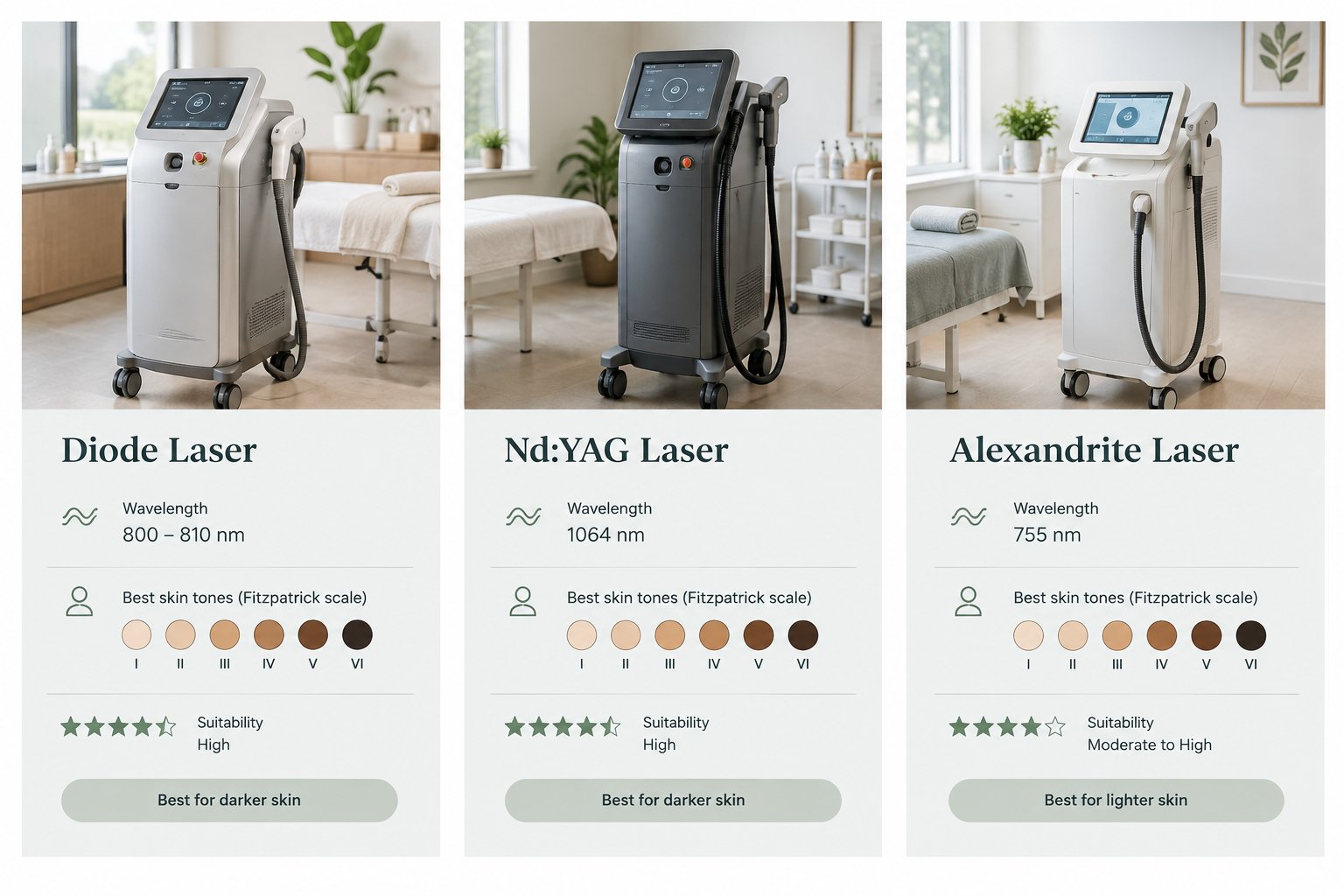
The follicle damage caused by laser energy is intended to be permanent in treated follicles, but because not all follicles are in the active growth phase simultaneously, and because hormonal changes can stimulate new follicle activity over time, most people experience significant long-term hair reduction rather than absolute permanent removal. The distinction between hair reduction and complete permanent hair removal is clinically important and should be discussed clearly before treatment begins.
Who May Be a Suitable Candidate?
Suitability for Brazilian laser hair removal depends on several factors, and a thorough consultation with a qualified practitioner is necessary before treatment. The following considerations are relevant to most patients.
Skin Tone and Hair Colour
Laser hair removal historically worked most reliably on individuals with fair skin and dark, coarse hair, because the contrast between hair melanin and skin melanin allowed the laser to target the follicle selectively. Advances in laser technology — particularly longer-wavelength devices such as the Nd:YAG — have made treatment more accessible to people with medium and darker skin tones, but the risk of side effects including hyperpigmentation or hypopigmentation remains higher in these groups if the wrong device or settings are used. People with very light blonde, grey, red, or white hair have limited or no response to laser treatment because there is insufficient melanin in the follicle to absorb the laser energy effectively.
Medical History and Medications
Certain medications and health conditions may affect suitability or require precautions. Photosensitising medications — including some antibiotics, retinoids, and certain hormonal treatments — can increase the risk of adverse skin reactions. Active skin infections, open wounds, or inflammatory skin conditions in the treatment area are contraindications. Hormonal conditions such as polycystic ovary syndrome (PCOS) can affect hair growth patterns and may mean that more sessions are needed or that results are less predictable. Pregnancy is generally considered a contraindication for laser hair removal, as safety data in this population is insufficient.
Skin Condition in the Treatment Area
The intimate area is prone to natural pigmentation variation, ingrown hairs, and folliculitis. Active skin irritation, recent waxing, or sunburn in the area should be resolved before treatment. Tattoos in or near the treatment zone cannot be treated directly with laser, as the device would target the tattoo pigment rather than the hair follicle and could cause burns or pigment changes.
What Happens During a Brazilian Laser Hair Removal Session?
Before the first session, a reputable clinic will conduct a consultation to assess your skin type, hair characteristics, and medical history. A patch test is typically recommended to assess how your skin responds to the laser settings before full treatment begins. You will usually be advised to shave the area one to two days before each session — waxing, plucking, or epilating should be avoided in the weeks leading up to treatment, as these methods remove the hair root that the laser needs to target.
During the appointment, you will be positioned on a treatment couch and offered protective eyewear. The practitioner will apply a cooling gel or use a device with an integrated cooling system to protect the skin surface and reduce discomfort. The laser handpiece is moved systematically across the treatment area, delivering pulses of light. The intimate area is treated in sections, and the practitioner will adjust settings based on the skin and hair characteristics observed.
Does Brazilian Laser Hair Removal Hurt?
Discomfort is common and varies between individuals. Many people describe the sensation as similar to a rubber band snapping against the skin, or a brief stinging or prickling feeling with each pulse. The intimate area tends to be more sensitive than the legs or underarms, and some zones — particularly the labia and perianal area — may be more uncomfortable than others. Modern devices with integrated cooling systems significantly reduce discomfort compared with older technology. Topical anaesthetic cream can be applied before the session to reduce sensitivity, though this should be discussed with the clinic in advance. Sessions for the full Brazilian area typically last between 20 and 45 minutes depending on the device and the extent of the area being treated.
How Many Sessions Are Needed?
Most people require an initial course of six to eight sessions to achieve meaningful hair reduction in the intimate area. Sessions are typically spaced four to eight weeks apart to align with the hair growth cycle. The pubic region may require slightly longer intervals between sessions compared with facial areas, as body hair tends to have a longer growth cycle.
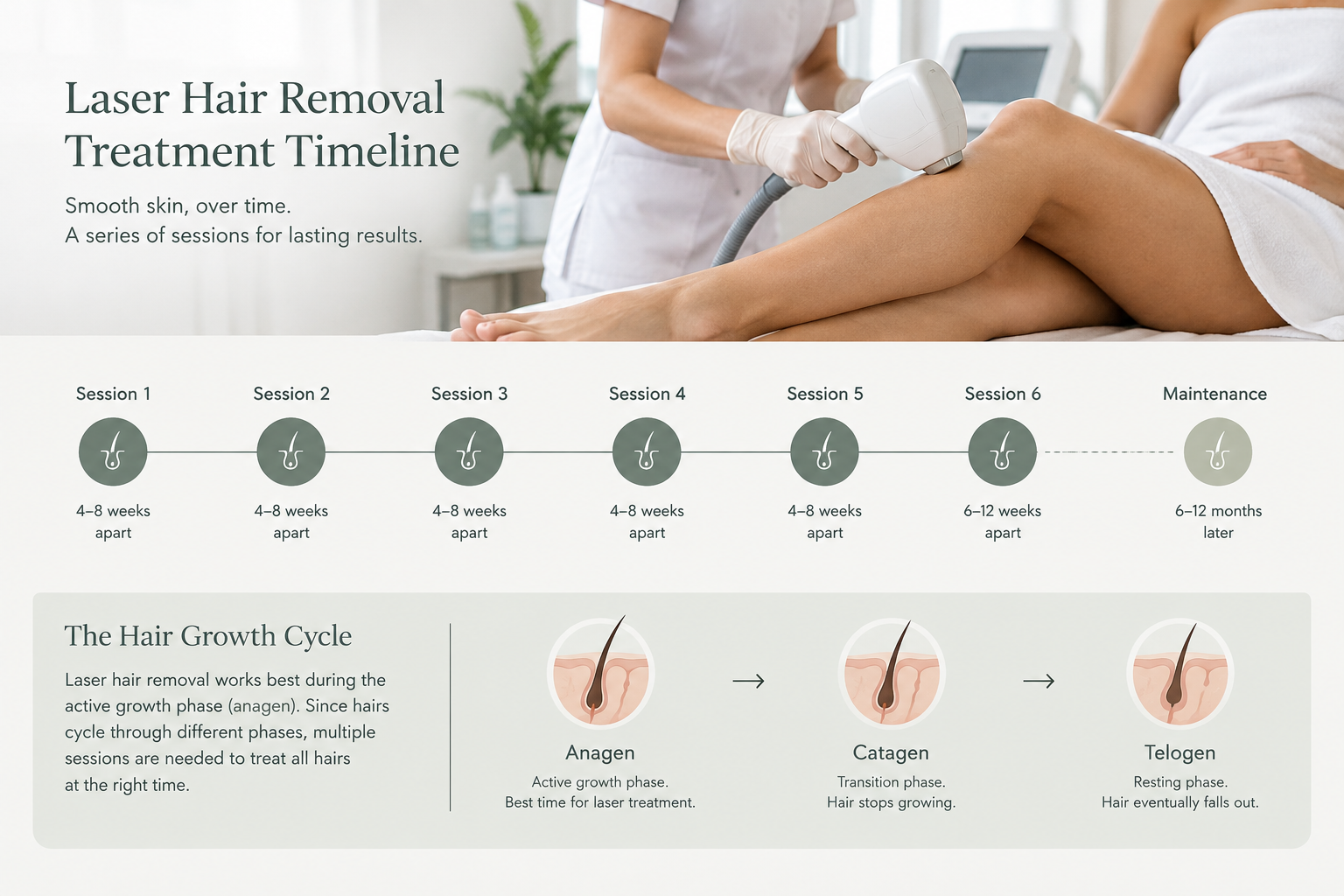
After completing the initial course, many people find that hair regrowth is significantly reduced in density and coarseness. However, some follicles may remain active, and hormonal changes — such as those associated with pregnancy, menopause, or conditions affecting androgen levels — can stimulate new hair growth over time. Periodic maintenance sessions, typically once or twice a year, are often recommended to sustain results. The exact number of sessions needed varies considerably between individuals and cannot be guaranteed in advance.
Results: What Can You Realistically Expect?
After completing a full course of Brazilian laser hair removal, most people experience a substantial reduction in hair density and thickness in the treated area. Many report that regrowth, where it occurs, is finer and lighter than before treatment. The skin in the intimate area may also benefit from a reduction in ingrown hairs and folliculitis associated with repeated shaving or waxing.
It is important to have realistic expectations. Laser hair removal is most accurately described as long-term hair reduction rather than guaranteed permanent hair removal. Regulatory bodies in several countries, including the United States Food and Drug Administration (FDA), permit the claim of permanent hair reduction — meaning a stable reduction in the number of regrowing hairs after a treatment course — but not unconditional permanent removal. Individual results depend on hair colour, skin tone, hormonal status, the device used, and the skill of the practitioner. Some people achieve near-complete clearance; others retain a proportion of finer regrowth that may require ongoing maintenance.
Risks and Side Effects
Brazilian laser hair removal carries a range of potential side effects and risks, which are important to understand before proceeding. The intimate area presents specific considerations because of its skin sensitivity and natural pigmentation variability.
Common and Expected Side Effects
Temporary redness, swelling, and a sensation similar to mild sunburn in the treated area are the most frequently reported side effects. These typically resolve within a few hours to two days. Mild skin sensitivity and itching are also common in the days following treatment. Follicular oedema — small raised bumps around the hair follicles — is a normal immediate response indicating that the follicles have been affected by the laser energy.
Less Common but Clinically Relevant Risks
Pigmentation changes are among the more significant risks in the intimate area. Hyperpigmentation (darkening of the skin) or hypopigmentation (lightening of the skin) can occur, particularly in individuals with medium to dark skin tones or when inappropriate laser settings are used. These changes may be temporary or, in some cases, prolonged. Blistering, crusting, or superficial burns can result from incorrect device settings, inadequate cooling, or treatment of recently sun-exposed or tanned skin. Paradoxical hypertrichosis — a counterintuitive increase in hair growth in or around the treated area — has been reported, particularly in individuals with darker skin tones or when lower-energy settings are used; the mechanism is not fully understood but is a recognised phenomenon in the literature. Scarring is rare but possible if burns are not managed appropriately. Infection is uncommon but can occur if post-treatment skin care instructions are not followed.
Reducing Risk
The risk of adverse effects is substantially reduced by choosing a clinic with appropriately trained practitioners, using a device suited to your skin type, completing a patch test before the full course, and following all pre- and post-treatment instructions carefully. Avoid sun exposure, self-tanning products, and heat treatments such as saunas or hot baths in the days before and after each session.
Aftercare and Recovery
Recovery after each Brazilian laser hair removal session is generally straightforward. The treated area should be kept clean and cool. Loose-fitting underwear and clothing are recommended for the first day or two to minimise friction and irritation. Fragrance-free moisturisers or aloe vera gel can help soothe the skin. Avoid swimming pools, hot tubs, and intense exercise for 24 to 48 hours after treatment, as heat and sweat can aggravate the treated skin. Sun protection is important for any exposed skin, and the intimate area should not be exposed to UV light during the treatment course.
Shaving between sessions is permitted and may be necessary as hair continues to grow during the course. Waxing, plucking, or using depilatory creams that remove the hair root should be avoided between sessions, as these interfere with the laser’s ability to target the follicle at the next appointment. Treated hairs will typically shed over the two to three weeks following each session, which can sometimes be mistaken for new growth.
Alternatives to Brazilian Laser Hair Removal
Several alternatives exist for intimate area hair removal, each with different characteristics in terms of longevity, cost, discomfort, and suitability.
- Waxing: Removes hair from the root and provides smooth results for two to six weeks. It is widely available and relatively affordable per session, but requires regular repetition, can cause ingrown hairs, and may be uncomfortable in sensitive areas.
- Shaving: The most accessible and lowest-cost option, but results last only one to three days, and regrowth can be coarse. Shaving in the intimate area carries a risk of cuts, razor burn, and ingrown hairs.
- Electrolysis: The only method currently recognised by the FDA as achieving permanent hair removal. Electrolysis uses an electric current delivered through a fine probe to destroy individual follicles. It is effective on all hair colours and skin tones, but is time-consuming, more expensive per follicle, and may be impractical for large areas such as the full Brazilian zone.
- Depilatory creams: Chemical creams that dissolve the hair shaft at the skin surface. They are painless and inexpensive but results are short-lived, and the intimate area’s sensitive skin may react to the chemicals involved. Patch testing is essential.
- IPL home devices: Consumer IPL devices are available for home use, but they deliver lower energy levels than clinical devices and are generally not recommended for the intimate area due to the sensitivity of the skin and the difficulty of safe self-application.
The most appropriate alternative depends on individual goals, skin and hair characteristics, budget, and tolerance for ongoing maintenance. A practitioner consultation can help clarify which approach is most suitable.
Choosing a Clinic for Intimate Area Laser Treatment
The intimate area requires particular care in terms of practitioner training, device selection, and clinical environment. When evaluating a clinic, consider the following factors.
- Confirm that the practitioner performing the treatment has specific training in laser and light-based devices and is familiar with treating the intimate area across a range of skin tones.
- Ask which laser device will be used and whether it is appropriate for your skin type and hair colour. A reputable clinic will explain the rationale for their device choice.
- Ensure a patch test is offered before the full course begins.
- Ask about the clinic’s protocols for managing adverse reactions and who to contact if you experience unexpected side effects between sessions.
- Be cautious of clinics that offer very low prices without a thorough consultation, or that guarantee complete permanent hair removal without qualification.
- Check whether the clinic operates under appropriate regulatory oversight for your country or region.
Frequently Asked Questions
Is Brazilian laser hair removal safe for all skin tones?
Brazilian laser hair removal can be performed on a range of skin tones, but the risk of pigmentation side effects is higher in individuals with medium to dark skin if the wrong device or settings are used. The Nd:YAG laser is generally considered the safest option for darker skin tones. A thorough consultation and patch test are essential regardless of skin tone.
How long do results from Brazilian laser hair removal last?
After completing an initial course of sessions, many people experience a significant and long-lasting reduction in hair growth. However, results are not universally permanent. Hormonal changes, such as those associated with pregnancy or PCOS, can stimulate new follicle activity. Periodic maintenance sessions are often recommended to sustain results over the long term.
Can I have Brazilian laser hair removal while pregnant?
Laser hair removal during pregnancy is generally not recommended. There is insufficient safety data to confirm that the procedure is without risk during pregnancy, and most clinics will decline to treat pregnant patients. Treatment should be postponed until after pregnancy and, if breastfeeding, until after weaning.
Will Brazilian laser hair removal help with ingrown hairs?
Reducing hair density through laser treatment may help decrease the frequency of ingrown hairs in the intimate area, as there are fewer hairs capable of curling back into the skin. Many people who experience recurrent ingrown hairs from shaving or waxing report an improvement after completing a laser course, though this is not a guaranteed outcome.
How soon after waxing can I start laser hair removal?
Waxing removes the hair root, which is the target for laser energy. Most clinics recommend waiting at least four to six weeks after waxing before beginning laser treatment to allow the hair to re-enter the active growth phase. Shaving is the preferred method of hair management in the weeks leading up to each session.
Is there a difference between a Hollywood and a Brazilian laser treatment?
The terms are used inconsistently across clinics, but a Brazilian laser treatment typically refers to removal of all or most hair in the pubic region, sometimes leaving a small strip. A Hollywood laser treatment generally refers to complete removal of all hair in the intimate area, including the labia, perineum, and perianal zone. It is worth confirming exactly which areas are included when booking, as definitions vary between providers.
Is Brazilian Laser Hair Removal the Right Choice for You?
Brazilian laser hair removal can offer meaningful, long-lasting hair reduction in the intimate area for suitable candidates, with many people finding it a practical alternative to the ongoing time and discomfort of regular waxing or shaving. The treatment is most effective for those with darker hair and lighter to medium skin tones, though advances in laser technology have broadened suitability. Results vary, and a realistic expectation of significant hair reduction — rather than guaranteed permanent removal — is important before committing to a course of sessions.
The intimate area presents specific considerations around skin sensitivity, natural pigmentation variation, and the importance of practitioner expertise. Choosing a clinic with appropriately trained staff, a suitable device for your skin type, and a thorough pre-treatment consultation process significantly influences both safety and outcome. If you have a hormonal condition affecting hair growth, or if you have medium to dark skin, these factors should be discussed in detail before treatment begins.
If you are considering Brazilian laser hair removal, a consultation with a qualified aesthetic practitioner or dermatologist is the appropriate starting point. A clinical assessment of your skin type, hair characteristics, and medical history will help determine whether the treatment is suitable for you, which device is most appropriate, and what realistic outcomes you might expect from a full course of sessions.