

A burst blood vessel on the face is a common concern that can appear suddenly as a small red, purple, or dark spot, or gradually as a network of fine red lines across the cheeks, nose, or chin. While the term sounds alarming, most cases are harmless and relate to fragile or dilated superficial blood vessels rather than a serious medical event. Understanding what has actually happened, why it occurs, and what options exist for treatment can help you decide whether home care, professional assessment, or a cosmetic procedure is the right next step.
Key Takeaways
- A burst blood vessel on the face usually refers to a broken capillary or small superficial vessel, not a deep vascular rupture, and is rarely a medical emergency on its own.
- Common causes include physical trauma, sun damage, rosacea, ageing, and repeated pressure such as sneezing or vomiting.
- Broken capillaries on the face do not heal on their own once they become permanently dilated; cosmetic treatments such as laser therapy or intense pulsed light (IPL) may reduce their appearance.
- A sudden, large, or painful facial bruise or a vessel that appears alongside neurological symptoms warrants prompt medical assessment.
- Treatment suitability depends on skin type, the underlying cause, and individual health history, so a clinical consultation is an important first step.
What Does a Burst Blood Vessel on the Face Actually Mean?
The phrase “burst blood vessel on the face” is used loosely to describe several different things, and distinguishing between them matters for choosing the right response. In most everyday contexts, it refers to a broken capillary, also called a telangiectasia, which is a tiny superficial blood vessel that has become permanently dilated and visible through the skin. These appear as fine red or pink lines, small spider-like clusters, or isolated red dots, most commonly on the nose, cheeks, and chin.
A separate but related presentation is a petechiae or purpura, which are small pinpoint red or purple spots caused by minor bleeding under the skin. These can result from sudden pressure changes, such as forceful coughing, sneezing, or vomiting, and typically resolve on their own within one to two weeks as the body reabsorbs the leaked blood. A larger area of bleeding under the skin is called a bruise or ecchymosis, which follows a predictable colour progression from red-purple to yellow-green as it heals.
In rare cases, the term may relate to a more significant vascular event, such as a ruptured blood vessel associated with a haemangioma or a vascular malformation. These situations are less common and usually involve a more pronounced or rapidly changing appearance. Any sudden, unexplained, or painful vascular change on the face, particularly if accompanied by swelling, vision changes, or neurological symptoms, should be assessed by a medical professional promptly.
Common Causes of Broken Capillaries and Facial Vascular Changes
Broken capillaries on the face develop when the walls of small superficial blood vessels weaken, stretch, or sustain minor damage. Several factors can contribute to this, and in many people more than one cause is present at the same time.
Sun Damage and UV Exposure
Cumulative ultraviolet radiation is one of the most significant contributors to broken capillaries on the face. UV exposure degrades collagen and elastin in the skin, weakening the structural support around superficial blood vessels. Over time, this allows vessels to dilate and become permanently visible. People with a history of significant sun exposure or who have not consistently used sun protection are more likely to develop facial telangiectasia as they age.
Rosacea
Rosacea is a chronic inflammatory skin condition that causes persistent facial redness, flushing, and visible blood vessels, particularly across the central face. The repeated cycles of flushing and inflammation associated with rosacea gradually damage capillary walls, leading to permanently dilated vessels. Broken capillaries in the context of rosacea are a symptom of the underlying condition rather than an isolated event, and managing rosacea triggers is an important part of any treatment plan.
Physical Trauma and Pressure
A direct blow to the face, forceful sneezing, prolonged vomiting, or intense physical straining can cause small vessels to rupture suddenly. This type of burst blood vessel on the face typically presents as a petechiae or bruise and usually resolves without treatment. However, repeated episodes of pressure or trauma in the same area can contribute to longer-term capillary fragility.
Ageing and Skin Thinning
As skin ages, it becomes thinner and loses collagen, reducing the cushioning and structural support around superficial vessels. This makes capillaries more susceptible to dilation and visible damage. Age-related broken capillaries tend to appear gradually and are often most noticeable on the cheeks and nose.
Temperature Extremes and Environmental Factors
Repeated exposure to extreme heat or cold, including hot showers, saunas, very cold weather, and wind, can cause blood vessels to repeatedly dilate and constrict. Over time, this repeated stress may weaken vessel walls and contribute to permanently visible capillaries. Spicy foods, alcohol, and hot beverages can also trigger flushing and, with regular exposure, may worsen existing capillary fragility.
Skin Type and Genetics
Fair-skinned individuals are more likely to develop visible broken capillaries, partly because the contrast between vessel colour and skin tone is greater, and partly because lighter skin types tend to be more susceptible to UV damage and rosacea. A family history of rosacea or facial redness also increases the likelihood of developing broken capillaries.
Certain Medications and Topical Products
Long-term use of topical corticosteroids can thin the skin and weaken capillary walls, increasing the risk of visible broken vessels. Some blood-thinning medications may make bruising and minor vascular bleeding more noticeable. A prescribing clinician or pharmacist can advise on whether a medication may be contributing to facial vascular changes.
How to Tell the Difference: Broken Capillary, Bruise, or Something Else?
Distinguishing between different types of facial vascular changes helps determine the appropriate response. A broken capillary or telangiectasia appears as a persistent fine red or pink line or cluster that does not change colour over days and does not fade without treatment. It is not tender to touch and has usually been present for weeks, months, or longer.
A bruise or petechiae caused by a burst blood vessel from trauma or pressure typically changes colour over seven to fourteen days, moving from red-purple through blue and green to yellow before fading. It may be slightly tender initially. If a bruise does not follow this progression, appears without any obvious cause, or is accompanied by other unexplained bruising elsewhere on the body, a medical assessment is advisable to rule out an underlying clotting or vascular disorder.
A cherry angioma is a small, bright red, dome-shaped growth made up of dilated blood vessels. These are benign and very common, particularly from middle age onwards, and are distinct from broken capillaries in that they are raised rather than flat. Spider naevi are another distinct presentation, consisting of a central red spot with radiating vessels, and may occasionally be associated with liver conditions when multiple are present.
When Should You See a Doctor?
Most broken capillaries on the face are a cosmetic concern rather than a medical one, but certain presentations warrant professional assessment. Seek prompt medical attention if a burst blood vessel on the face is accompanied by significant pain, rapid swelling, vision changes, facial weakness, or any neurological symptom. A sudden, large, or unexplained bruise that appears without trauma, particularly in someone taking anticoagulant medication, should also be evaluated.
Multiple spider naevi appearing across the face and body, or broken capillaries developing alongside other symptoms such as jaundice or abdominal changes, may occasionally indicate an underlying systemic condition and should be discussed with a GP. For isolated, stable, cosmetically bothersome broken capillaries without any associated symptoms, a consultation with a dermatologist or aesthetic practitioner is appropriate.
Treatment Options for Broken Capillaries on the Face
Permanently dilated capillaries do not resolve on their own. Once a vessel has become chronically dilated and visible, it requires targeted treatment to reduce its appearance. Several clinically used options exist, and the most appropriate choice depends on the size and distribution of the vessels, skin type, the underlying cause, and individual health factors.
Laser Therapy
Laser treatment is one of the most widely used approaches for broken capillaries on the face. Vascular lasers, such as the pulsed dye laser (PDL), work by delivering a specific wavelength of light that is selectively absorbed by the haemoglobin in red blood cells within the vessel. The heat generated causes the vessel wall to collapse and the body gradually absorbs the treated vessel over the following weeks. Nd:YAG lasers are also used, particularly for deeper or larger vessels and for patients with darker skin tones where certain wavelengths carry a higher risk of pigmentation change.
Laser treatment for facial broken capillaries typically requires one to three sessions, though this varies depending on the extent of the vessels and individual response. Some redness, mild swelling, and temporary darkening of the treated area are common in the days following treatment. Results are generally visible within two to six weeks as the body clears the treated vessels. Laser therapy does not prevent new capillaries from forming, so maintenance sessions may be needed over time, particularly if the underlying cause such as rosacea or ongoing sun exposure is not addressed.
Intense Pulsed Light (IPL)
Intense pulsed light therapy uses broad-spectrum light filtered to target haemoglobin in superficial blood vessels. IPL is particularly useful when broken capillaries are widespread across the face rather than isolated, as it can treat a larger area in a single session. It is also commonly used for the diffuse redness associated with rosacea. IPL is generally less precise than a dedicated vascular laser for individual vessels, and results may be more gradual, often requiring a course of three to five sessions.
IPL is not suitable for all skin tones. Darker skin types carry a higher risk of pigmentation changes with IPL, and a thorough skin assessment before treatment is essential. Temporary redness, mild swelling, and a sensation similar to a light snap against the skin during treatment are typical. Sun avoidance and consistent use of broad-spectrum SPF before and after a course of IPL are important for both safety and outcome.
Nd:YAG Laser
The Nd:YAG laser operates at a longer wavelength than pulsed dye lasers, allowing it to penetrate more deeply and treat larger or more resistant vessels. It is also considered safer for patients with medium to darker skin tones. Nd:YAG treatment may cause more discomfort than IPL and typically requires a cooling system or topical anaesthetic to manage the sensation. Post-treatment redness and swelling are common and usually resolve within a few days.
Electrocautery and Diathermy
Electrocautery uses a fine electrical current to heat and seal individual broken capillaries. This technique is precise and can be effective for small, isolated vessels. It is less commonly used for widespread capillary networks and carries a small risk of scarring or pigmentation change if not performed carefully. Diathermy is a similar approach using high-frequency electrical current and is sometimes used for cherry angiomas and spider naevi as well as broken capillaries.
Sclerotherapy
Sclerotherapy involves injecting a solution directly into a blood vessel to cause it to collapse and be reabsorbed. While sclerotherapy is the standard treatment for leg veins, it is less commonly used on the face due to the small size of facial capillaries and the precision required. It may occasionally be considered for larger facial vessels that have not responded to laser or light-based treatments, but this is not a routine first-line approach for most patients.
Topical Treatments and Skincare
No topical product can permanently close a dilated capillary, but certain skincare ingredients may help reduce redness and support skin barrier function. Niacinamide, azelaic acid, and green tea extracts have some evidence for reducing facial redness and may be useful as part of a broader management plan, particularly for rosacea-related broken capillaries. Topical brimonidine and oxymetazoline are prescription options that temporarily constrict blood vessels and reduce visible redness, though they do not permanently treat broken capillaries. Consistent use of a broad-spectrum SPF 30 or higher is important for preventing further UV-related capillary damage.
What to Expect During and After Treatment
Before any laser or light-based treatment for broken capillaries, a qualified practitioner will assess the skin, review medical history, and discuss realistic expectations. Relevant factors include skin tone, any history of cold sores (as laser treatment can trigger reactivation of herpes simplex virus), current medications, and whether the patient has recently had significant sun exposure or used self-tanning products.
During a laser or IPL session, protective eyewear is worn throughout. Most patients describe the sensation as a brief snap or sting with each pulse of light. Sessions typically last between fifteen and forty-five minutes depending on the area being treated. Immediately after treatment, the skin may appear red and slightly swollen, similar to mild sunburn. Some patients notice a temporary darkening of treated vessels before they fade, which is a normal part of the healing process.
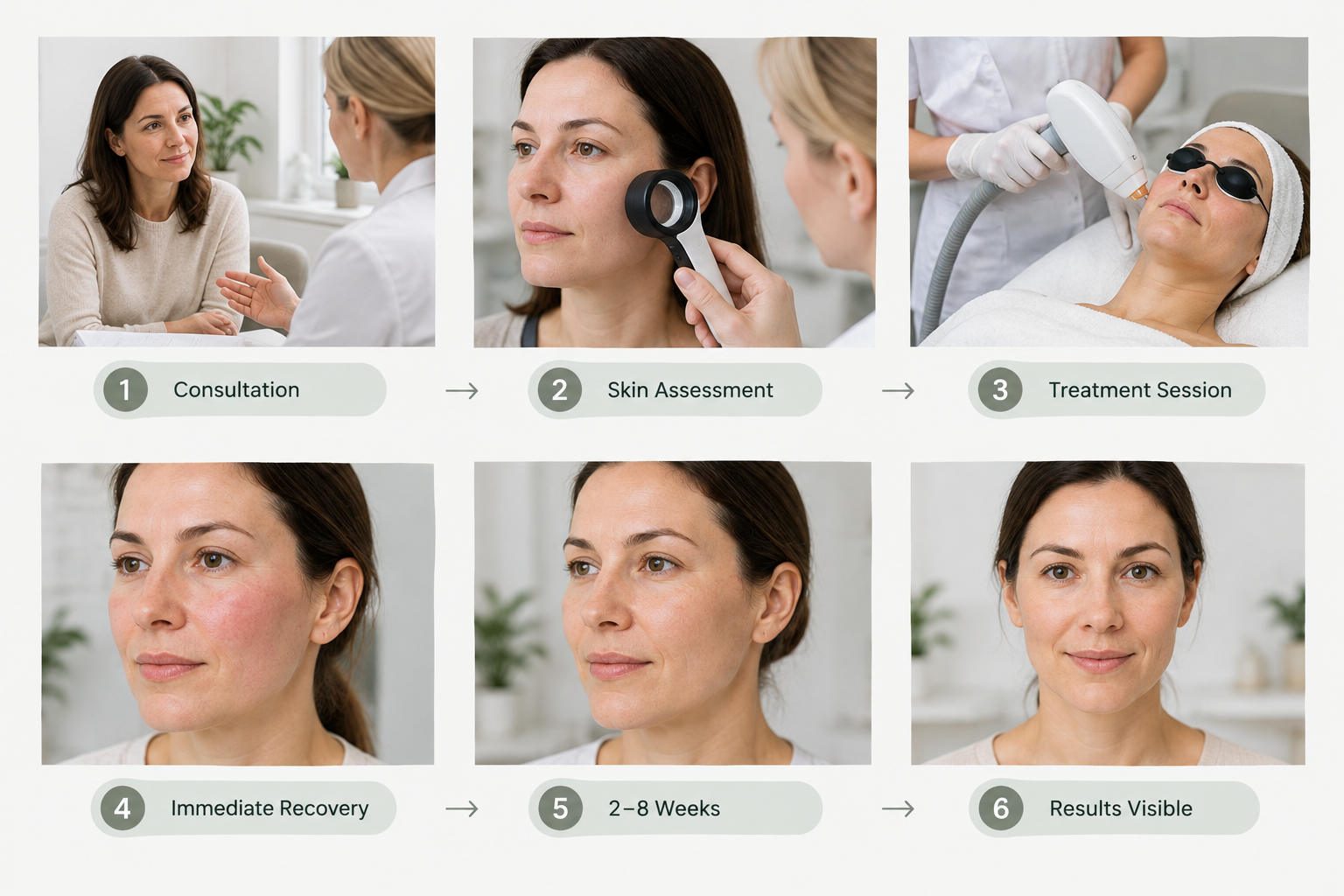
Downtime is generally minimal for most vascular laser and IPL treatments, with most patients returning to normal activities the same day or the following day. Makeup can usually be applied after twenty-four to forty-eight hours. Strenuous exercise, heat exposure including saunas and hot baths, and direct sun exposure should be avoided for at least one week after treatment. Results become progressively visible over two to eight weeks as the body clears treated vessels.
Preventing Further Broken Capillaries
While treatment can reduce existing broken capillaries, addressing the factors that contribute to their development helps prevent new ones from forming. Daily use of a broad-spectrum sunscreen with SPF 30 or higher is one of the most effective preventive measures, as UV damage is a primary driver of capillary fragility and skin thinning. Avoiding prolonged exposure to extreme heat, including very hot showers and saunas, and protecting the face from cold wind can also reduce repeated vascular stress.
For individuals with rosacea, identifying and managing personal triggers, which commonly include alcohol, spicy foods, hot beverages, stress, and certain skincare products, can help reduce the frequency of flushing episodes and slow the progression of visible capillaries. A dermatologist can advise on rosacea management strategies, which may include prescription topical or oral treatments alongside cosmetic procedures.
Gentle skincare practices, including avoiding harsh scrubs, very hot water on the face, and irritating ingredients, support the skin barrier and reduce unnecessary vascular stress. Choosing skincare products formulated for sensitive or rosacea-prone skin may be beneficial for those with capillary fragility.
Frequently Asked Questions
Will a burst blood vessel on my face heal on its own?
It depends on the type. A bruise or petechiae caused by sudden pressure or minor trauma will typically resolve on its own within one to two weeks as the body reabsorbs the leaked blood. A permanently dilated capillary or telangiectasia, however, will not fade without treatment because the vessel wall has lost its ability to constrict back to its normal size.
Is a broken capillary on the face dangerous?
In most cases, a broken capillary on the face is a cosmetic concern rather than a medical one. However, if a vascular change appears suddenly alongside pain, swelling, vision changes, or any neurological symptom, prompt medical assessment is important. Multiple unexplained broken vessels appearing alongside other symptoms should also be discussed with a GP.
How many laser sessions will I need for broken capillaries?
The number of sessions varies depending on the extent of the broken capillaries, the treatment used, and individual response. Many patients see significant improvement after one to three laser sessions, while a course of three to five IPL sessions may be recommended for more widespread redness. A practitioner will give a more specific estimate after assessing the skin in person.
Can broken capillaries come back after laser treatment?
Laser treatment closes existing dilated vessels, but it does not prevent new ones from forming. If the underlying cause, such as ongoing sun exposure, rosacea, or repeated heat exposure, is not addressed, new broken capillaries may develop over time. Maintenance sessions and preventive skincare are often recommended to sustain results.
Is laser treatment for broken capillaries painful?
Most patients describe the sensation as a brief snap or sting with each pulse, similar to a small elastic band against the skin. Discomfort is generally mild and well tolerated without anaesthetic, though a cooling device or topical numbing cream may be used for more sensitive patients or larger treatment areas.
Can I wear makeup after treatment for broken capillaries?
Most practitioners advise waiting twenty-four to forty-eight hours before applying makeup after laser or IPL treatment to allow the skin to settle and reduce the risk of irritation or infection. Mineral-based makeup is often recommended as a gentler option during the initial recovery period.
Are there any skin types that are not suitable for laser treatment of broken capillaries?
Certain laser and IPL wavelengths carry a higher risk of pigmentation changes in medium to darker skin tones. This does not mean treatment is impossible, but it does mean that careful device selection and practitioner experience are particularly important. An Nd:YAG laser is generally considered safer for darker skin tones than pulsed dye laser or standard IPL. A thorough skin assessment before treatment is essential for all patients.
Deciding Whether Treatment for Broken Capillaries Is Right for You
Broken capillaries on the face are very common and, in the vast majority of cases, are a cosmetic concern rather than a sign of a serious underlying condition. For many people, the appearance of persistent red lines or spots on the cheeks, nose, or chin causes genuine self-consciousness, and effective treatment options are available. Laser therapy and IPL are the most widely used approaches, with a reasonable evidence base supporting their effectiveness for facial telangiectasia and rosacea-related redness.
Treatment is not suitable for everyone, and realistic expectations are important. Results vary between individuals, maintenance sessions may be needed over time, and addressing the underlying cause, whether that is sun exposure, rosacea, or lifestyle factors, is an important part of achieving lasting improvement. The right starting point is a consultation with a qualified dermatologist or aesthetic practitioner who can assess the skin, identify the type and cause of the vascular change, and recommend the most appropriate and safe treatment approach for your skin type and concerns.