

Frown lines — the vertical creases that form between the eyebrows — are one of the most common concerns that bring people to aesthetic clinics. They can appear as early as the late twenties and tend to deepen with age, sometimes giving the face a tired, stern, or worried expression even when none is intended. Several treatment options exist, ranging from injectable procedures to topical skincare, and understanding how each works, what results are realistic, and what the limitations are can help you have a more informed conversation with a qualified practitioner.
Key Takeaways
- Frown lines between the eyebrows are caused by repeated muscle movement combined with gradual loss of skin elasticity and collagen — both factors need to be considered when choosing a treatment approach.
- Botulinum toxin injections are the most widely used clinical treatment for dynamic frown lines and have a well-established evidence base, though results are temporary and maintenance is required.
- Dermal fillers may be considered for deeper, static frown lines that remain visible at rest, but carry a different risk profile and require careful patient selection.
- Skin quality treatments such as retinoids, chemical peels, and energy-based devices can complement injectable treatments but are unlikely to produce the same degree of improvement on their own for established lines.
- Suitability depends on individual anatomy, skin condition, medical history, and treatment goals — a thorough consultation with a qualified practitioner is essential before any procedure.
What Causes Frown Lines?
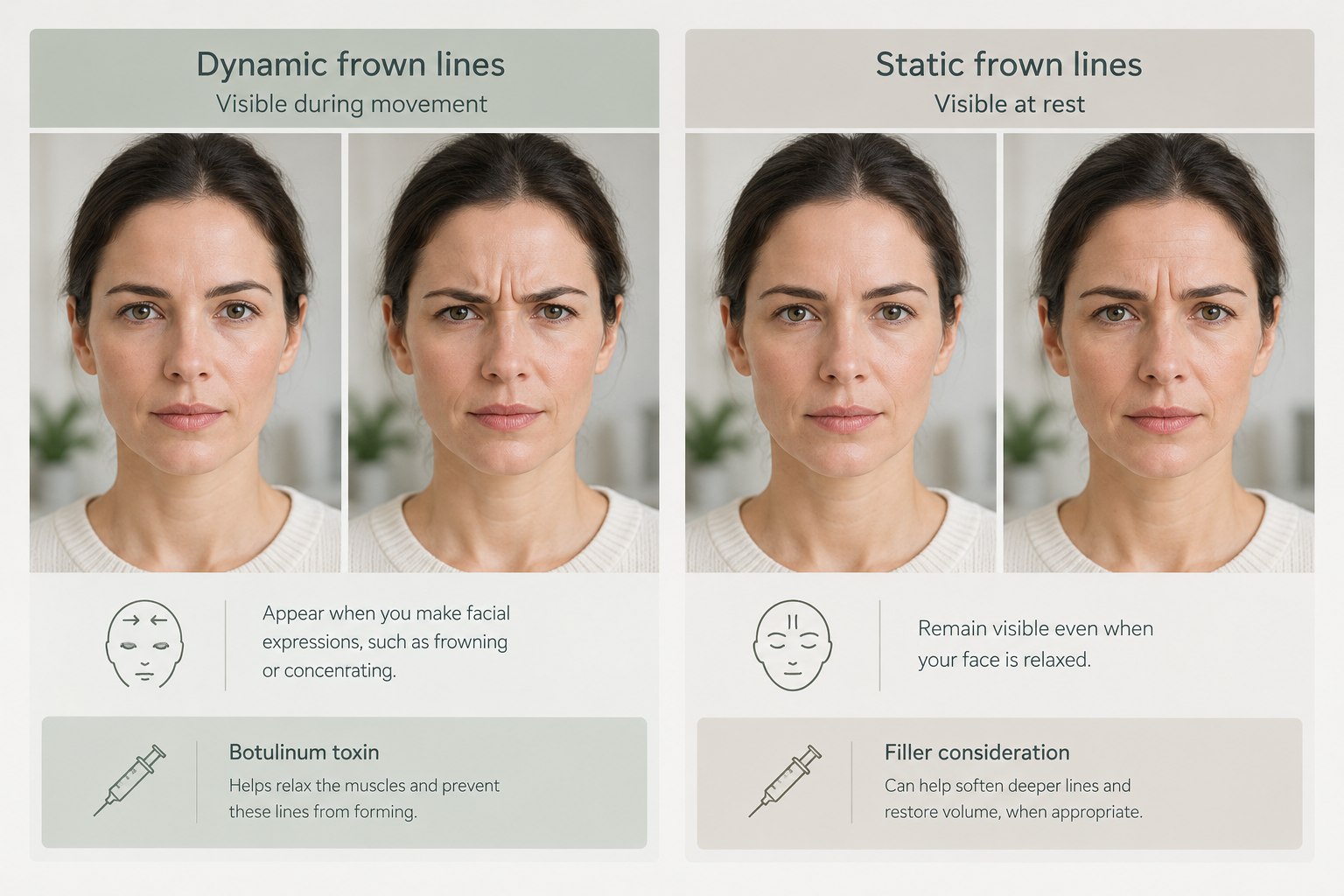
Frown lines, clinically referred to as glabellar lines, develop in the skin overlying the corrugator supercilii and procerus muscles — the muscles responsible for drawing the eyebrows inward and downward. Every time these muscles contract during concentration, squinting, or emotional expression, the overlying skin folds. Over years of repeated movement, the skin loses its ability to spring back fully, and the creases become increasingly visible even when the face is at rest.
Several factors influence how quickly and deeply glabellar lines develop. Intrinsic ageing reduces the skin’s collagen and elastin content, making it thinner and less resilient. Photoageing from cumulative ultraviolet exposure accelerates this process. Genetics play a role in determining skin thickness and the rate of collagen loss. Lifestyle factors including smoking, dehydration, and poor sleep can also contribute. Understanding whether a line is primarily dynamic — visible mainly during muscle movement — or static — present at rest — is clinically important because it influences which treatment approach is most appropriate.
Botulinum Toxin for Frown Lines
Botulinum toxin injections are the most established and widely used clinical treatment for dynamic glabellar lines. The treatment works by temporarily blocking the nerve signals that cause the corrugator and procerus muscles to contract. When these muscles are relaxed, the overlying skin is no longer repeatedly folded, which allows existing lines to soften and may help prevent further deepening over time.
Several botulinum toxin products are licensed for use in aesthetic medicine, including brands such as Botox (onabotulinumtoxinA), Dysport (abobotulinumtoxinA), and Azzalure (abobotulinumtoxinA). These products differ in their formulation, unit measurements, and diffusion characteristics, and units between brands are not directly interchangeable. The choice of product is a clinical decision made by the treating practitioner based on the individual patient’s anatomy and the specific treatment area.
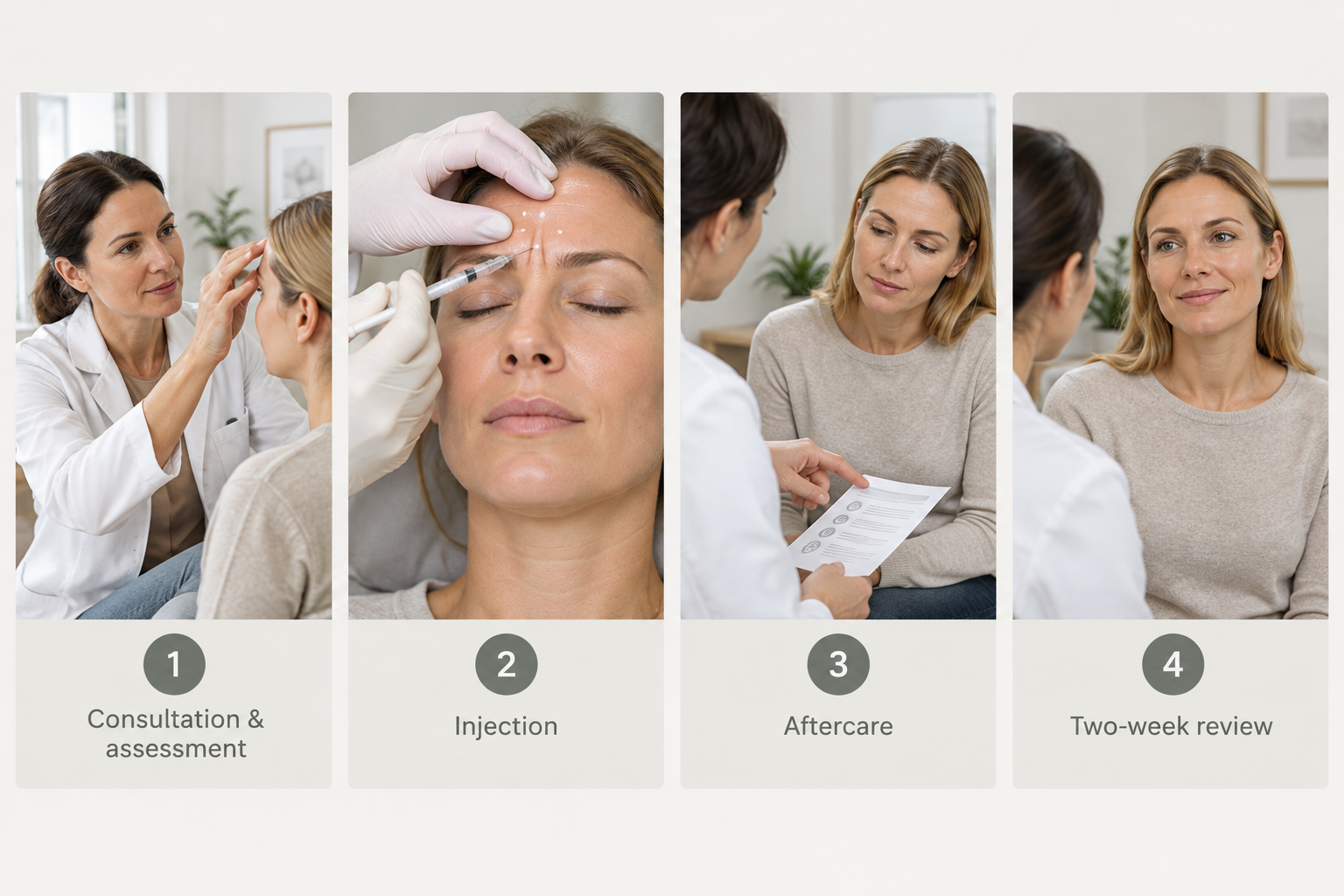
Results from botulinum toxin treatment for frown lines typically become visible within two to seven days, with the full effect usually apparent by two weeks. The duration of effect varies between individuals but commonly lasts three to four months, after which muscle activity gradually returns and repeat treatment is needed to maintain the result. Some patients find that with consistent treatment over time, the muscles may weaken slightly and lines may become less pronounced between sessions, though this is not guaranteed.
What the Appointment Involves
A botulinum toxin appointment for glabellar lines is generally brief, often taking fifteen to thirty minutes including consultation time. The practitioner will assess the movement and strength of the relevant muscles, discuss the patient’s goals, and review medical history and any contraindications. Small amounts of the product are injected into specific points in the glabellar region using a fine needle. Topical anaesthetic is not usually required, though some patients find the injections mildly uncomfortable. Most people return to normal activities immediately after the appointment.
Risks and Side Effects of Botulinum Toxin
Botulinum toxin treatment for frown lines is generally well tolerated, but it is not without risk. Common side effects include temporary redness, swelling, or bruising at the injection sites, which typically resolve within a few days. Headache is occasionally reported in the days following treatment. A more significant but less common complication is eyelid ptosis — a temporary drooping of the upper eyelid — which can occur if the product migrates beyond the intended treatment area. This usually resolves as the product wears off but can be distressing while it persists. Asymmetry of the brows or an unnatural appearance can also occur, particularly if the treatment is not tailored carefully to the individual’s anatomy. Serious systemic complications are rare when the procedure is performed by a trained and qualified practitioner using appropriate technique and dosing.
Botulinum toxin is not suitable for everyone. It is generally contraindicated during pregnancy and breastfeeding, in people with certain neuromuscular conditions such as myasthenia gravis, and in those with known hypersensitivity to any component of the product. Certain medications, including some antibiotics and anticoagulants, may also affect suitability or increase the risk of bruising. A thorough medical history review before treatment is essential.
Dermal Fillers for Frown Lines
Dermal fillers — most commonly hyaluronic acid-based products — are occasionally used to address frown lines, particularly when lines remain visible at rest and have a degree of volume loss or skin depression contributing to their appearance. Hyaluronic acid is a naturally occurring substance in the skin that attracts and retains water, and when injected into or beneath a line, it can physically lift and smooth the crease.
However, the glabellar region is considered a higher-risk area for filler injection compared with many other facial zones. The blood vessels in this area, including branches of the supratrochlear and supraorbital arteries, are in close proximity to common injection points. Inadvertent injection into or compression of these vessels carries a risk of vascular occlusion, which in rare but serious cases can lead to skin necrosis or, in extremely rare circumstances, vision complications. For this reason, filler treatment in the glabellar area requires a practitioner with detailed anatomical knowledge, appropriate training, and access to hyaluronidase — an enzyme that can dissolve hyaluronic acid filler in an emergency.
Dermal fillers in this region are not a first-line treatment for most patients with frown lines. They may be considered in specific cases where botulinum toxin alone has not fully resolved a deep static line, but this decision requires careful clinical assessment and a thorough discussion of the risks involved.
Skincare and Topical Treatments
Topical skincare cannot replicate the results of injectable treatments for established frown lines, but it plays a meaningful supporting role in overall skin health and may help slow the progression of fine lines over time. Retinoids — derivatives of vitamin A including prescription tretinoin and over-the-counter retinol — are among the most evidence-supported topical ingredients for stimulating collagen production and improving skin texture. Consistent use over months may produce a modest improvement in fine lines, though deeper glabellar creases are unlikely to respond significantly to topical treatment alone.
Broad-spectrum sun protection is arguably the most important daily skincare habit for preventing further photoageing and protecting the results of any clinical treatment. Antioxidant serums containing vitamin C may offer additional photoprotection and support collagen synthesis. Peptide-containing products are widely marketed for their potential to support skin firmness, though the clinical evidence for their effect on established lines is less robust than for retinoids.
Energy-Based and Skin Resurfacing Treatments
A range of energy-based devices and resurfacing treatments are used in aesthetic medicine to improve skin quality, stimulate collagen remodelling, and reduce the appearance of fine lines. These include fractional laser resurfacing, radiofrequency treatments, microneedling, and chemical peels of varying depths. These approaches work primarily by inducing controlled injury to the skin, triggering a healing response that produces new collagen and improves skin texture and tone.
For frown lines specifically, energy-based treatments are most useful as complementary options rather than standalone solutions. They may improve the overall quality and resilience of the skin in the glabellar area, potentially making lines less prominent and helping to maintain the results of botulinum toxin treatment between sessions. However, they are unlikely to produce the same degree of line reduction as botulinum toxin in patients with moderate to deep dynamic glabellar lines. The appropriate treatment or combination depends on the individual’s skin type, line depth, and goals, and should be discussed with a qualified practitioner.
Combination Approaches
In clinical practice, frown line treatment often involves more than one modality. A common approach is to use botulinum toxin as the primary treatment for dynamic lines while addressing skin quality with a medical-grade skincare regimen and, where appropriate, a course of skin resurfacing or collagen-stimulating treatment. For patients with deeper static lines, a small amount of hyaluronic acid filler may occasionally be used alongside botulinum toxin, though this requires careful patient selection and a detailed risk discussion.
The rationale for combination treatment is that frown lines typically have more than one contributing factor — muscle movement, skin laxity, volume changes, and surface texture all play a role. Addressing only one factor may produce a partial result, while a tailored combination approach may offer more comprehensive improvement. The appropriate combination varies significantly between individuals, and a thorough assessment is needed before any treatment plan is agreed.
How Long Do Results Last?
The longevity of frown line treatment depends on the specific approach used. Botulinum toxin results for glabellar lines typically last three to four months in most patients, though some individuals experience a shorter or longer duration depending on factors such as muscle mass, metabolism, the product used, and the dose administered. Regular maintenance treatments are needed to sustain the result.

Hyaluronic acid filler results in the glabellar area may last six to twelve months or longer depending on the product used and individual factors, though the higher-risk nature of this area means that treatment decisions should not be driven primarily by longevity. Skin resurfacing and collagen-stimulating treatments produce gradual improvements that develop over weeks to months as new collagen forms, and the results may be maintained with periodic repeat treatments and a consistent skincare routine. Topical retinoids require ongoing use to maintain any benefit.
Who May Be Suitable for Frown Line Treatment?
Suitability for frown line treatment depends on a range of individual factors that a qualified practitioner will assess during consultation. Botulinum toxin for glabellar lines may be appropriate for adults who have visible dynamic frown lines that cause cosmetic concern, are in good general health, have realistic expectations about the degree of improvement achievable, and have no relevant contraindications. It is not suitable during pregnancy or breastfeeding, in people with certain neuromuscular disorders, or in those with active infection or skin disease in the treatment area.
Patients with very deep static lines may find that botulinum toxin alone produces only partial improvement, and a discussion about additional options may be appropriate. Those with very thin skin, a history of significant volume loss in the glabellar area, or previous complications from injectable treatments require particularly careful assessment. Age alone is not a determining factor — what matters is the nature of the lines, the patient’s anatomy, their medical history, and their goals.
Risks, Limitations and Realistic Expectations
No frown line treatment produces permanent results, and none can guarantee a specific outcome. Botulinum toxin can significantly soften dynamic glabellar lines in suitable patients, but the degree of improvement varies. Very deep lines that have been present for many years may not fully resolve even with optimal treatment, as the skin may have developed a degree of permanent creasing. Managing expectations before treatment is an important part of the consultation process.
All injectable treatments carry risks including bruising, swelling, infection, and the possibility of an unsatisfactory aesthetic result. The glabellar region carries specific anatomical risks, particularly for filler treatment. Choosing a qualified and experienced practitioner who works in a clinical setting, carries appropriate emergency medications, and conducts a thorough pre-treatment assessment significantly reduces but does not eliminate these risks.
It is also worth noting that frown lines are a normal part of facial ageing and expression. Treatment is a personal choice, and the decision to pursue it should be based on individual goals and values rather than external pressure. A good practitioner will support an informed decision rather than recommend treatment that is not clearly in the patient’s interest.
Frequently Asked Questions
How many botulinum toxin sessions will I need before I see a good result?
Many patients see a meaningful improvement after a single treatment session, with the full effect visible at two weeks. However, patients with deeper or more established glabellar lines may find that the result improves progressively over several treatment cycles as the muscles weaken slightly with consistent relaxation. Your practitioner can give you a more specific expectation based on your individual assessment.
Can frown lines be prevented from getting worse?
Consistent sun protection, a skincare routine that includes retinoids, and avoiding habits that accelerate skin ageing — such as smoking — can help slow the progression of frown lines. Some practitioners suggest that starting botulinum toxin treatment before lines become deeply established may help prevent them from deepening further, though this is a personal decision that should be discussed with a qualified practitioner.
Will I look frozen or unnatural after botulinum toxin treatment?
An unnatural or frozen appearance is more likely to result from excessive dosing or poor technique than from the treatment itself. A skilled practitioner will aim to soften the lines while preserving natural facial movement and expression. Discussing your preference for a natural result during the consultation is important, as dosing can be adjusted accordingly.
Is there any downtime after frown line treatment?
Botulinum toxin treatment for glabellar lines typically involves minimal downtime. Most patients return to normal activities immediately. Temporary redness or small bumps at the injection sites usually resolve within a few hours. Bruising is possible and may take several days to fade. Practitioners generally advise avoiding strenuous exercise, alcohol, and lying flat for several hours after treatment, though specific aftercare instructions vary.
Can I combine frown line treatment with other facial treatments?
Combining botulinum toxin with other treatments such as skin boosters, chemical peels, or laser resurfacing is common in clinical practice, but the timing and sequencing of treatments matters. Some combinations are best performed on the same day, while others should be spaced apart to allow the skin to recover and the botulinum toxin to settle. Your practitioner will advise on the most appropriate approach for your individual treatment plan.
What happens if I stop having botulinum toxin treatments?
If botulinum toxin treatment is discontinued, muscle activity gradually returns and frown lines will reappear over the following weeks to months. The lines are unlikely to be worse than they would have been without treatment, and in some cases may be slightly less pronounced if the muscles have weakened over time with consistent treatment. There is no rebound effect from stopping.
Making an Informed Decision About Frown Line Treatment
Frown line treatment is not a single procedure but a range of options with different mechanisms, evidence bases, risk profiles, and appropriate uses. Botulinum toxin remains the most clinically supported approach for dynamic glabellar lines and is suitable for a wide range of patients when performed by a qualified practitioner. Dermal fillers may have a role in specific cases but carry a higher risk profile in this anatomical area and require careful patient selection. Skincare and energy-based treatments can support and complement injectable results but are unlikely to match them for established lines.
The most important step before any treatment is a thorough consultation with a qualified aesthetic practitioner who can assess your individual anatomy, discuss realistic outcomes, explain the relevant risks, and help you decide whether treatment is appropriate and which approach best matches your goals. If you are considering frown line treatment, look for a practitioner with appropriate medical training, a clear consultation process, and a transparent approach to discussing both benefits and limitations.