

Deep facial wrinkles — the kind etched firmly into the skin rather than appearing only when you move — are among the most common concerns patients bring to aesthetic consultations. Unlike fine surface lines, these grooves persist at rest and often require a combination of approaches to address meaningfully. This article explains the main treatment categories available, how each works, what results are realistic, and what limitations and risks to consider before making a decision.
Key Takeaways
- Deep, etched facial lines are caused by a combination of repeated muscle movement, collagen loss, volume depletion, and cumulative sun damage — no single treatment addresses all of these simultaneously.
- The most effective approaches often combine treatments: for example, muscle-relaxing injections alongside dermal fillers or a skin-resurfacing procedure.
- Results vary considerably depending on the depth of the wrinkle, skin quality, age, lifestyle, and the specific treatment used.
- Most non-surgical treatments require maintenance sessions to sustain results; none offer permanent correction.
- A thorough clinical assessment is essential before treatment, as the underlying cause of a wrinkle influences which approach is most appropriate.
Why Deep Wrinkles Form and Why They Are Harder to Treat
Facial wrinkles develop through several overlapping mechanisms. Repeated contraction of the underlying facial muscles — during expressions such as frowning, squinting, or smiling — gradually creases the overlying skin. Over time, these dynamic lines become static, meaning they remain visible even when the face is completely relaxed. This transition from a dynamic to a static wrinkle reflects a loss of the skin’s ability to spring back, driven by declining collagen and elastin production, reduced hyaluronic acid content, and thinning of the dermis.
Volume loss in the deeper facial tissues also plays a significant role. As fat compartments in the face diminish with age, the skin loses its underlying support structure, causing it to fold and crease more easily. Ultraviolet radiation accelerates this process by degrading collagen fibres and impairing the skin’s repair mechanisms — a process known as photoageing. Smoking, poor nutrition, and chronic dehydration compound these effects. The result is a wrinkle that has both a structural and a surface component, which is why superficial treatments alone rarely produce satisfying results for deeply etched lines.
Botulinum Toxin Injections for Dynamic and Etched Lines
Botulinum toxin injections — commonly known by brand names such as Botox, Dysport, and Azzalure — work by temporarily blocking the nerve signals that cause specific facial muscles to contract. By reducing the repetitive folding of the skin, botulinum toxin allows existing lines to soften and helps prevent further deepening of dynamic wrinkles. For lines that are primarily movement-driven, such as forehead lines, frown lines between the brows (glabellar lines), and crow’s feet around the eyes, botulinum toxin is one of the most well-evidenced non-surgical options available.
For deeply etched static lines — those visible at rest — botulinum toxin alone is often insufficient. The muscle relaxation removes the ongoing cause of the crease, but the structural groove already present in the skin may not fully resolve. In practice, many practitioners use botulinum toxin as part of a broader treatment plan, combining it with dermal fillers or skin-resurfacing procedures to address both the muscular and structural components of a deep wrinkle. Results from botulinum toxin typically become visible within a few days to two weeks and generally last between three and six months, after which repeat treatment is needed to maintain the effect.
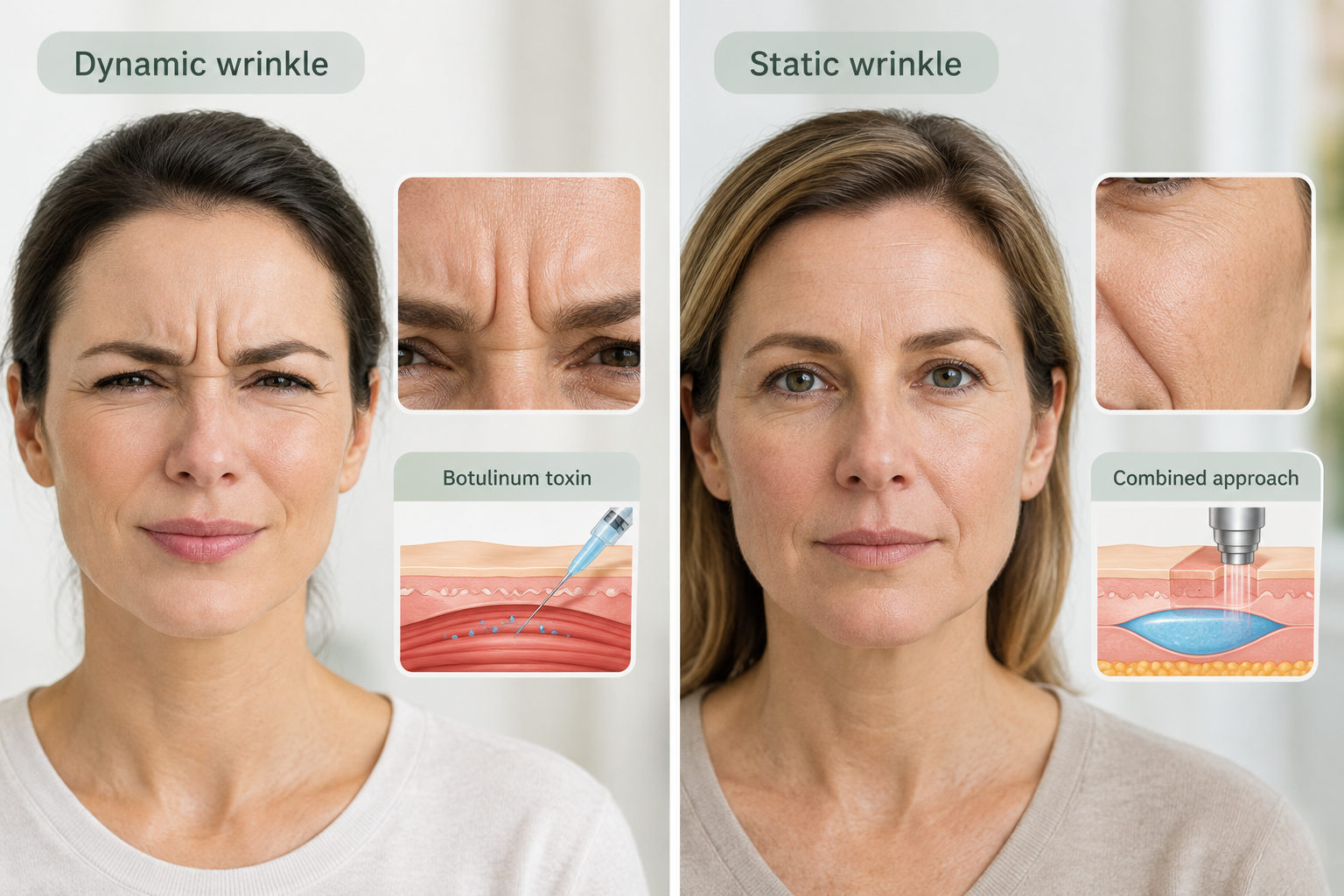
Side effects are usually mild and temporary, including localised bruising, swelling, or headache. Rare but more significant risks include eyelid or brow drooping (ptosis), asymmetry, and, in very rare cases, spread of the toxin effect beyond the intended area. Suitability depends on medical history, and botulinum toxin is not appropriate during pregnancy or breastfeeding, or for individuals with certain neuromuscular conditions.
Dermal Fillers: Restoring Volume and Smoothing Deep Grooves
Dermal fillers are injectable substances used to physically fill a wrinkle or restore lost volume beneath the skin’s surface. The most widely used fillers contain hyaluronic acid, a naturally occurring substance in the body that attracts and retains water, adding immediate plumpness to the treated area. Hyaluronic acid fillers are available in a range of consistencies — thinner formulations suit fine lines and delicate areas, while denser, more cohesive gels are better suited to deeper folds and structural volume replacement.
For deep nasolabial folds (the lines running from the nose to the corners of the mouth), marionette lines, and other pronounced facial grooves, dermal fillers can produce a visible and immediate improvement. The filler physically lifts and supports the overlying skin, reducing the depth of the crease. Results typically last between six and eighteen months depending on the product used, the treatment area, and individual metabolism. Some fillers used for deeper structural support may last longer, though longevity claims should be interpreted with caution as individual variation is significant.
Hyaluronic acid fillers have the advantage of being reversible using an enzyme called hyaluronidase, which dissolves the filler if a complication arises or the result is unsatisfactory. This reversibility is an important safety consideration. Non-hyaluronic acid fillers, including those based on calcium hydroxylapatite or poly-L-lactic acid, are not reversible and carry a different risk profile. These longer-lasting options may be appropriate in certain clinical contexts but require careful patient selection and an experienced injector.
Risks associated with dermal fillers include bruising, swelling, asymmetry, nodule formation, and, in rare but serious cases, vascular occlusion — where filler inadvertently enters or compresses a blood vessel, potentially causing tissue damage or, in very rare instances, vision changes. Choosing a qualified and experienced practitioner who understands facial anatomy and has access to hyaluronidase is essential for minimising these risks.
Skin Resurfacing: Addressing the Surface Texture of Deep Lines
Skin resurfacing treatments work at the level of the epidermis and upper dermis, stimulating collagen remodelling and improving the texture and quality of the skin overlying a wrinkle. Several technologies are used for this purpose, each with a different depth of action, downtime, and evidence base.
Laser Resurfacing
Ablative laser resurfacing — using devices such as carbon dioxide (CO2) or erbium lasers — removes the outer layers of the skin in a controlled manner, triggering a wound-healing response that produces new collagen. Ablative laser treatments are among the most effective options for improving the surface texture of deep wrinkles, particularly those caused by photoageing. However, they involve significant downtime, typically one to two weeks of redness, crusting, and peeling, and carry risks including infection, pigmentation changes, and scarring, particularly in individuals with darker skin tones. Ablative laser resurfacing is generally performed by specialist practitioners and requires thorough pre-treatment assessment.
Fractional laser treatments — both ablative and non-ablative — deliver energy in a grid pattern, leaving surrounding tissue intact to accelerate healing. Fractional approaches offer a more moderate balance between efficacy and recovery time, though they typically require a course of sessions to achieve results comparable to a single full ablative treatment. Non-ablative fractional lasers cause less surface disruption and have shorter downtime but produce more modest improvements in deeply etched lines.
Radiofrequency and Microneedling
Radiofrequency (RF) energy heats the deeper layers of the skin and underlying tissue, stimulating collagen and elastin production without removing the skin surface. RF treatments are available as standalone devices or combined with microneedling — a technique that creates controlled micro-injuries in the skin using fine needles. Radiofrequency microneedling delivers RF energy directly into the dermis through the needle tips, allowing more precise depth control and potentially greater collagen stimulation than surface-only RF.
These treatments are generally better suited to improving overall skin quality, mild to moderate laxity, and fine-to-moderate lines rather than resolving the deepest static wrinkles. A course of treatments is usually required, and results develop gradually over several months as new collagen matures. Downtime is typically shorter than ablative laser — usually a few days of redness and mild swelling — making these options more accessible for patients who cannot take extended time away from work or social commitments.
Chemical Peels
Chemical peels use acid solutions applied to the skin surface to remove damaged outer layers and stimulate renewal. Superficial peels using glycolic or lactic acid improve skin texture and tone with minimal downtime but have limited impact on deep wrinkles. Medium-depth peels using trichloroacetic acid (TCA) can produce more meaningful improvement in moderate lines and photoageing, with a recovery period of approximately one week. Deep phenol peels offer the most significant resurfacing effect but carry substantial risks and require careful patient selection; they are less commonly performed in routine aesthetic practice.
Polynucleotides and Skin Biorevitalisation
Polynucleotide (PDRN) injections are an emerging treatment category that involves injecting purified DNA fragments — typically derived from salmon or trout — into the skin to stimulate fibroblast activity and support tissue repair. Polynucleotides are thought to promote collagen synthesis, improve skin hydration, and enhance overall skin quality rather than directly filling a wrinkle. Evidence for polynucleotides in facial rejuvenation is still developing, and while early clinical data is encouraging, large-scale randomised controlled trials are limited. These treatments may be useful as part of a broader skin quality programme but are unlikely to resolve deeply etched lines as a standalone intervention.
Surgical Options for the Deepest Facial Lines
For the most deeply etched facial wrinkles — particularly those associated with significant skin laxity or volume loss that cannot be adequately addressed non-surgically — surgical options may be worth discussing with a qualified surgeon. Procedures such as a facelift (rhytidectomy) reposition and tighten the underlying facial tissues and remove excess skin, addressing the structural causes of deep folds and grooves more comprehensively than injectable or energy-based treatments. Brow lifts can address deep forehead lines and frown lines that have not responded adequately to botulinum toxin.
Surgical procedures carry greater risks than non-surgical alternatives, including anaesthetic risks, scarring, infection, nerve injury, and a longer recovery period. They are not appropriate for everyone and require thorough pre-operative assessment. However, for patients with advanced skin laxity or very deep structural changes, surgery may offer more durable and comprehensive results than repeated non-surgical treatments.
Combining Treatments: Why a Single Approach Is Often Not Enough
Deep facial wrinkles rarely have a single cause, and the most effective treatment plans typically address multiple contributing factors simultaneously or sequentially. A common combination approach might involve botulinum toxin to reduce ongoing muscle-driven creasing, a hyaluronic acid filler to restore volume and physically lift the groove, and a resurfacing treatment such as fractional laser or radiofrequency microneedling to improve the overlying skin quality. Each element targets a different layer or mechanism, and the combined effect is generally greater than any single treatment alone.
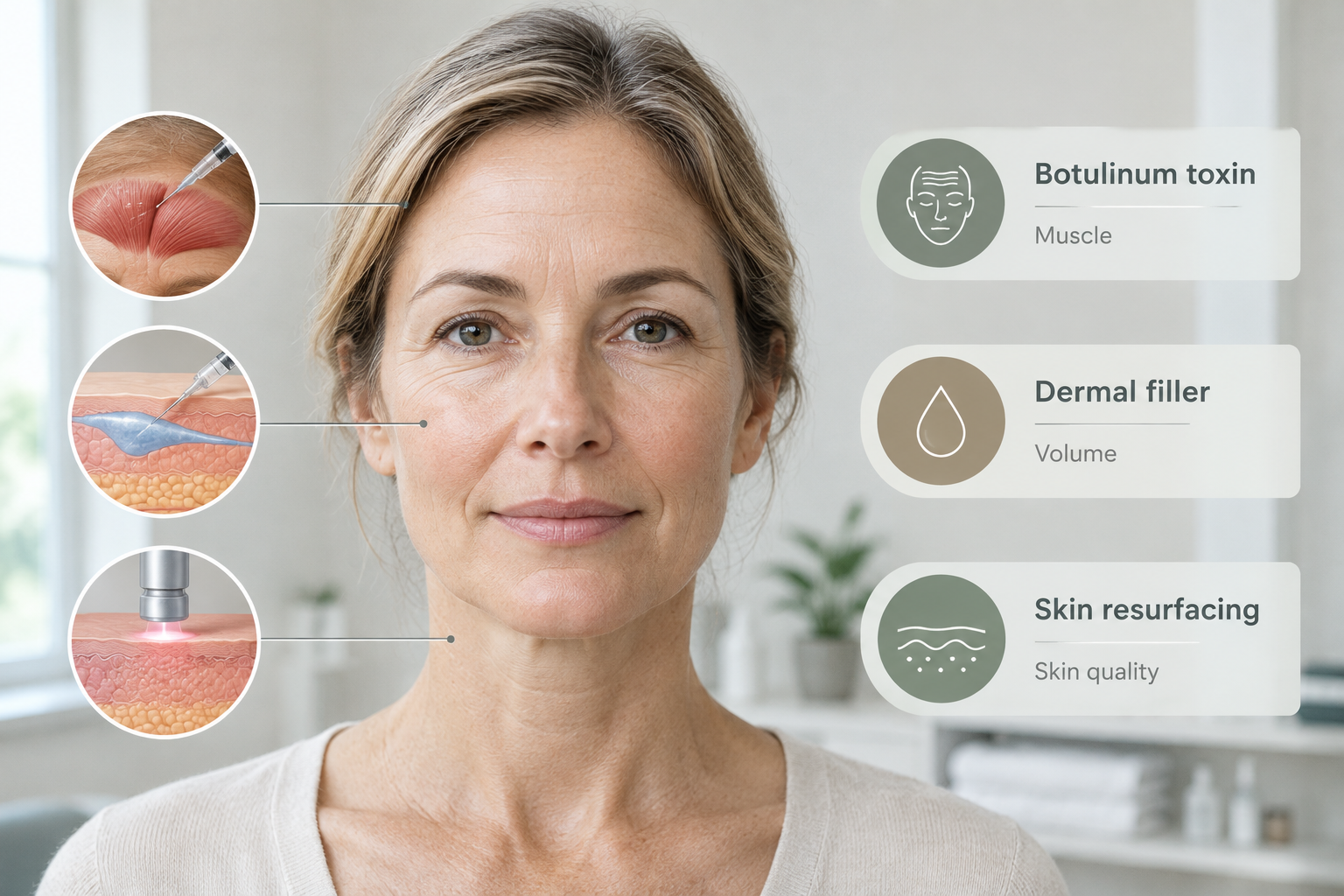
Combination treatment also allows practitioners to use lower doses or less aggressive settings for each individual modality, potentially reducing the risk of side effects while still achieving a meaningful result. The sequencing and timing of combined treatments matters — for example, resurfacing procedures are often performed after injectable treatments have settled, and some combinations require a gap of several weeks between sessions. A practitioner experienced in combination approaches can design a plan tailored to the specific pattern and severity of an individual’s wrinkles.
Skincare and Prevention: Supporting Treatment Results
Medical-grade skincare plays an important supporting role both in preparing the skin for treatment and in maintaining results afterwards. Topical retinoids (vitamin A derivatives) are among the most evidence-supported ingredients for stimulating collagen production, improving skin cell turnover, and reducing the appearance of fine to moderate lines over time. Consistent daily use of broad-spectrum sunscreen is essential for preventing further photoageing and protecting the results of any resurfacing treatment. Antioxidant serums containing vitamin C may help neutralise free radical damage and support collagen integrity.
Skincare alone is unlikely to resolve deeply etched static wrinkles, but it can meaningfully slow their progression and improve the skin’s overall quality and responsiveness to clinical treatments. Patients who maintain a consistent evidence-based skincare routine typically sustain their treatment results for longer and may require less frequent clinical intervention over time.
Risks, Limitations, and Realistic Expectations
No treatment currently available can permanently erase deeply etched facial lines or fully restore the skin to its appearance at a younger age. All non-surgical treatments require maintenance, and results vary considerably between individuals based on skin type, age, the depth and location of the wrinkle, lifestyle factors, and the specific treatment used. Patients with very deep grooves, significant skin laxity, or extensive photoageing may find that non-surgical treatments produce a noticeable but partial improvement rather than a complete resolution.
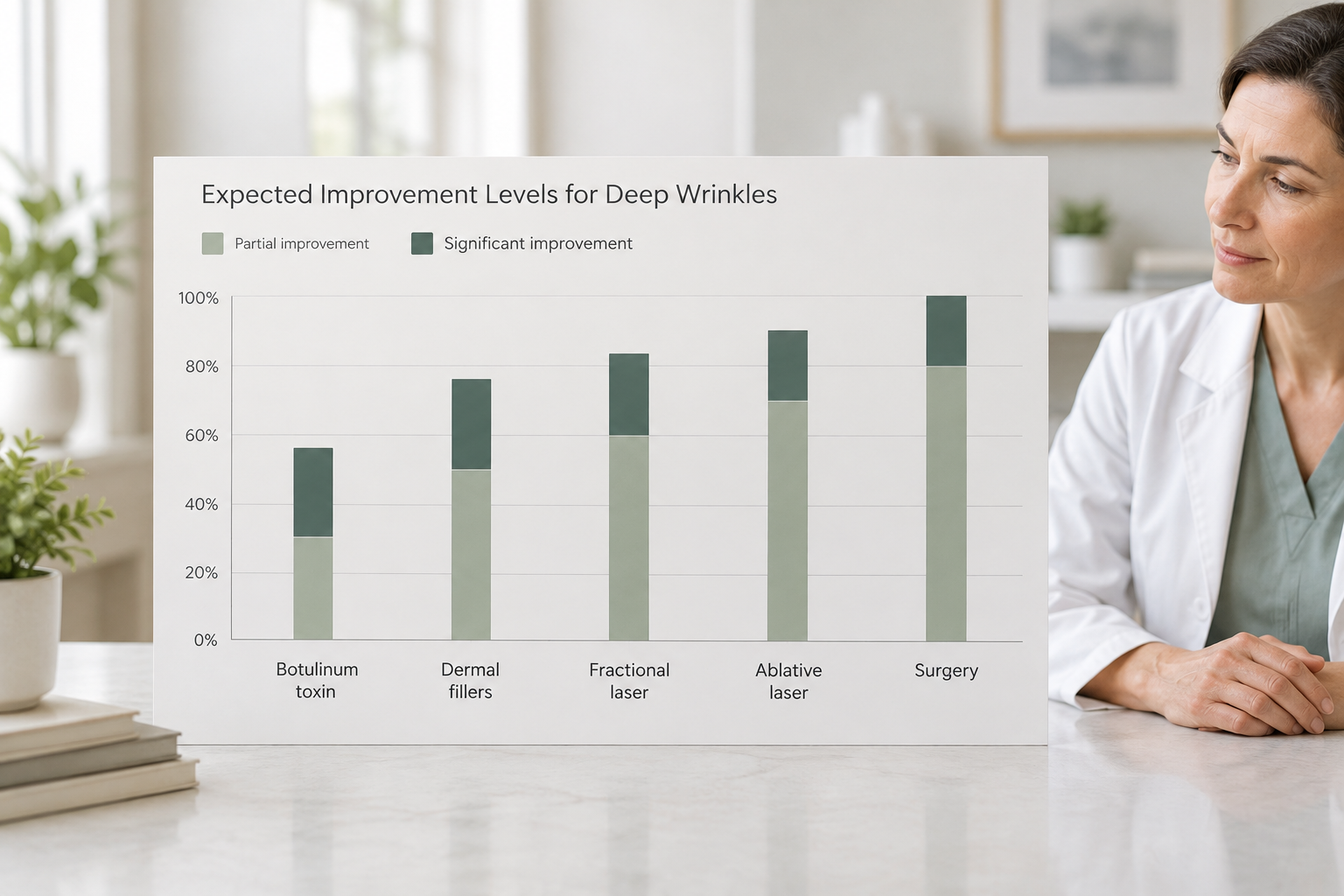
Every treatment carries some risk. Injectable treatments risk bruising, swelling, asymmetry, and — in the case of fillers — rare but serious vascular complications. Energy-based treatments risk burns, pigmentation changes, and scarring if not performed correctly or if the patient is not appropriately selected. Surgical procedures carry the full range of operative risks. Discussing realistic expectations, the likely number of sessions required, maintenance intervals, and the full risk profile with a qualified practitioner before committing to treatment is essential.
Who May Be Suitable for Deep Wrinkle Treatment
Suitability for any treatment depends on a thorough clinical assessment. Factors that influence which approach may be appropriate include the patient’s age, skin type and tone, the specific location and depth of the wrinkles, medical history, current medications, and individual goals. Certain conditions — including active skin infections, autoimmune disorders, bleeding disorders, or the use of blood-thinning medications — may affect suitability for specific treatments. Pregnancy and breastfeeding are contraindications for most aesthetic procedures. Individuals with a history of keloid scarring require careful assessment before any resurfacing treatment.
Patients with realistic expectations and a clear understanding of what each treatment can and cannot achieve tend to report greater satisfaction with outcomes. A practitioner who takes time to explain the likely degree of improvement, the number of sessions required, and the maintenance schedule is better placed to help a patient make an informed decision.
Frequently Asked Questions
Can deep wrinkles be completely removed without surgery?
Complete removal of deeply etched static wrinkles without surgery is rarely achievable. Non-surgical treatments can produce significant improvement — often reducing the depth and visibility of a wrinkle considerably — but most patients retain some degree of the line, particularly if it is long-standing or very deep. Combination approaches tend to produce the best non-surgical outcomes.
How many sessions will I need?
This depends entirely on the treatment chosen and the severity of the wrinkles. A single session of dermal filler may produce an immediate visible improvement, while a course of four to six radiofrequency microneedling sessions may be recommended for skin quality improvement. Botulinum toxin requires repeat treatment every three to six months. A practitioner can give a more specific estimate after assessing the individual concern.
At what age should I start treating deep wrinkles?
There is no universal age threshold. Some people develop pronounced static lines in their thirties, while others retain relatively smooth skin into their fifties. The appropriate time to consider treatment is when the lines are causing concern and when a clinical assessment confirms that a suitable and proportionate treatment option exists. Preventive use of botulinum toxin for dynamic lines before they become static is an approach some patients and practitioners discuss, though evidence on long-term preventive benefit is still limited.
Is there a difference between treating forehead lines and nasolabial folds?
Yes. Forehead lines and frown lines are primarily driven by muscle movement and often respond well to botulinum toxin, particularly when treated before they become deeply etched. Nasolabial folds are more strongly influenced by volume loss and gravitational descent of facial tissues, making dermal fillers or structural volume replacement a more central part of treatment. The appropriate approach depends on the specific anatomy and cause of each wrinkle.
How long do results from deep wrinkle treatments last?
Longevity varies by treatment. Botulinum toxin effects typically last three to six months. Hyaluronic acid fillers generally last six to eighteen months depending on the product and area. Laser resurfacing results may last one to several years, though the ageing process continues. No treatment offers permanent correction, and maintenance is required for all non-surgical options.
Are there any treatments I should avoid for deep wrinkles?
Patients should be cautious about treatments with limited clinical evidence, unregulated products, or procedures performed by unqualified practitioners. Permanent fillers carry a higher risk of long-term complications and are generally not recommended for facial wrinkle treatment in most clinical guidelines. Any treatment that seems to promise permanent or guaranteed results without acknowledging risks warrants careful scrutiny.
Choosing the Right Approach for Your Deep Facial Wrinkles
The best treatment for deep wrinkles on the face is not a single universal answer — it depends on the type, location, and depth of the wrinkle, the underlying cause, the patient’s skin quality, and their goals and tolerance for downtime. Botulinum toxin, dermal fillers, laser resurfacing, radiofrequency microneedling, and chemical peels each address different aspects of the problem, and the most effective plans often combine more than one approach. Surgical options remain relevant for patients with significant structural changes that non-surgical treatments cannot adequately address.
What matters most before committing to any treatment is an honest, thorough consultation with a qualified practitioner who can assess your specific concerns, explain realistic outcomes, and outline the full range of options — including their limitations and risks. Approaching deep wrinkle treatment with informed, realistic expectations gives the best foundation for a result you are likely to be satisfied with over time.