

Booking an appointment at an aesthetic skin clinic for the first time can feel both exciting and uncertain. You may have a specific concern in mind, or you may simply want professional guidance on where to start. Either way, understanding what the visit involves, what questions are likely to be asked, and what realistic outcomes look like will help you arrive prepared and leave with a clearer picture of your options.
Key Takeaways
- A first visit to an aesthetic skin clinic typically begins with a detailed consultation rather than immediate treatment, giving the practitioner time to assess your skin, medical history, and goals.
- Treatments discussed may range from injectable treatments such as botulinum toxin or dermal fillers to skin-quality procedures such as chemical peels, laser therapy, or microneedling, depending on your concerns.
- Realistic expectations are essential: most aesthetic treatments offer gradual improvement rather than dramatic transformation, and results vary between individuals.
- Suitability for any procedure depends on medical history, skin type, current medications, and individual anatomy, which is why a thorough clinical assessment comes first.
- You are never obligated to proceed with any treatment at or after a consultation; a reputable clinic will give you time to consider your options.
What Happens at an Aesthetic Skin Clinic Consultation?
The consultation is the foundation of any responsible aesthetic treatment plan. At a reputable aesthetic skin clinic, a qualified practitioner will spend time understanding your concerns before recommending anything. This is not a sales appointment; it is a clinical assessment designed to establish whether a treatment is appropriate for you, which options are available, and what realistic outcomes you can expect.
During the consultation, the practitioner will typically review your medical history, including any medications you take, allergies, previous cosmetic procedures, and relevant health conditions. They will examine the treatment area closely, often in good lighting and sometimes with the aid of a skin analysis device that can reveal concerns not visible to the naked eye, such as subsurface pigmentation, pore size, or hydration levels. They will ask about your goals and may ask you to describe what bothers you most, since this helps prioritise the most appropriate approach.
You should expect the practitioner to explain the options available to you, including the mechanism of each treatment, what it can and cannot achieve, the likely number of sessions required, associated downtime, and potential risks. A thorough practitioner will also tell you when a treatment is unlikely to help your specific concern, or when a referral to a dermatologist or GP may be more appropriate.
Common Skin Concerns Addressed at Aesthetic Clinics
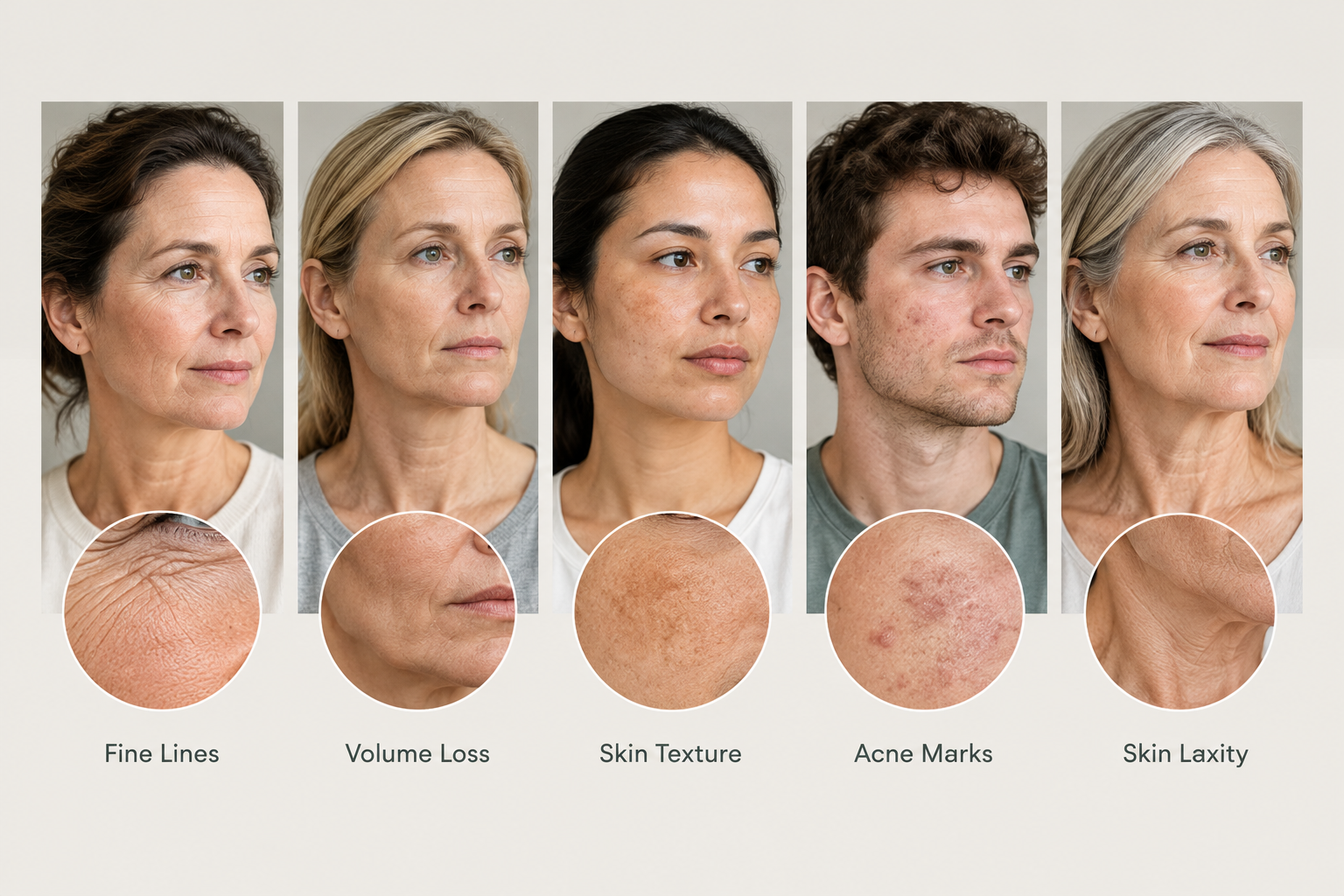
Aesthetic skin clinics typically address a wide range of concerns, and understanding which category your concern falls into helps set realistic expectations from the outset.
Fine Lines and Dynamic Wrinkles
Fine lines caused by repeated facial muscle movement, such as frown lines between the brows, forehead lines, and crow’s feet around the eyes, are among the most commonly discussed concerns at aesthetic clinics. Botulinum toxin injections, often referred to by brand names such as Botox or Dysport, are a well-established treatment for dynamic wrinkles. These injectable treatments temporarily relax the underlying muscle, reducing the appearance of movement-related lines. Results typically become visible within a few days to two weeks and generally last between three and six months, after which the treatment may be repeated. Botulinum toxin does not address static lines, which are present at rest, or volume loss, which requires a different approach.
Volume Loss and Facial Contour
As skin ages, the face naturally loses fat, collagen, and bone density, which can cause hollowing in areas such as the cheeks, temples, and under-eye region, as well as deepening of the nasolabial folds. Dermal fillers, most commonly made from hyaluronic acid, can be used to restore volume, soften folds, and improve facial contour. Hyaluronic acid is a substance naturally present in the body, and most modern fillers are dissolvable using an enzyme called hyaluronidase if correction is needed. Results are usually visible immediately and may last from six months to over a year depending on the product used, the area treated, and individual metabolism.
Skin Texture, Tone, and Quality
Concerns such as uneven skin tone, enlarged pores, rough texture, dullness, or early signs of sun damage are often addressed through skin-quality treatments rather than injectables. Options that may be discussed include chemical peels, which use controlled exfoliation to improve surface texture and pigmentation; microneedling, which creates micro-channels in the skin to stimulate collagen production; laser and light-based treatments, which can target pigmentation, redness, or skin laxity; and advanced facials such as HydraFacial, which combines cleansing, exfoliation, and hydration in a single session. The most appropriate option depends on your skin type, the severity of the concern, and your tolerance for downtime.
Acne and Post-Acne Marks
Active acne and post-acne scarring are distinct concerns that often require different approaches. Active acne may benefit from certain chemical peels, light-based treatments, or a combination of in-clinic and at-home skincare, though severe or cystic acne is generally better managed by a dermatologist. Post-acne hyperpigmentation, which appears as flat dark marks after spots heal, may respond to chemical peels or laser treatments. Atrophic acne scars, which are depressed or pitted, are more challenging to treat and may require microneedling, radiofrequency microneedling, or resurfacing laser treatments over multiple sessions.
Skin Laxity and Loss of Firmness
Mild to moderate skin laxity, particularly around the jawline, neck, or lower face, may be addressed with energy-based devices such as radiofrequency or high-intensity focused ultrasound (HIFU), which stimulate collagen remodelling in the deeper layers of the skin. These treatments are generally non-surgical and require little to no downtime, though results develop gradually over several weeks and are typically more modest than surgical alternatives. Significant skin laxity may be better addressed through surgical consultation.
How to Prepare for Your First Visit
Arriving prepared helps you make the most of your consultation time and ensures the practitioner has the information needed to assess you safely.
- List your current medications and supplements: Some medications, including blood thinners, certain antidepressants, and high-dose vitamin E or fish oil supplements, may affect treatment suitability or increase the risk of bruising.
- Note any allergies: Include allergies to medications, anaesthetics, or skincare ingredients.
- Bring a list of previous cosmetic treatments: Include any injectables, laser treatments, or surgical procedures, along with approximate dates and the products or devices used where known.
- Arrive with a clean face where possible: Removing makeup before your appointment allows the practitioner to assess your skin accurately. Some clinics will ask you to do this on arrival.
- Avoid alcohol for 24 hours before a treatment appointment: Alcohol can increase the risk of bruising if you are having injectables on the same day as your consultation.
- Prepare your questions in advance: Write down what concerns you most, what outcomes you are hoping for, and any specific questions about risks, downtime, or costs.
- Be honest about your goals: Practitioners can only recommend appropriate treatments if they understand what you are hoping to achieve. Sharing reference images can be helpful, though a good practitioner will also explain when a particular result may not be achievable or appropriate for your anatomy.

What a Responsible Aesthetic Skin Clinic Should Offer
Not all aesthetic clinics operate to the same standard, and knowing what to look for helps you choose a clinic where your safety and wellbeing are the priority.
Practitioners at a reputable aesthetic skin clinic should hold recognised qualifications in medicine, dentistry, nursing, or a related regulated healthcare profession, and should have specific training in the aesthetic procedures they perform. In many countries, regulations around who can legally administer certain treatments, particularly injectable procedures, are evolving, so it is worth checking the regulatory requirements in your region before booking.
A responsible clinic will conduct a thorough consultation before any treatment, obtain your informed consent, provide a clear explanation of risks and alternatives, and give you time to consider your options without pressure. They should have protocols in place for managing complications and be able to refer you to appropriate medical care if needed. Transparency about pricing, realistic outcomes, and the limitations of each treatment is a sign of clinical integrity rather than a weakness.
Be cautious of clinics that offer treatments without a prior consultation, make guarantees about results, use aggressive promotional language, or significantly undercut market pricing without a clear explanation. Aesthetic treatments carry real clinical risks, and the practitioner’s skill, training, and aftercare support are as important as the treatment itself.
Understanding Realistic Results and Timelines
One of the most important conversations to have at your first aesthetic skin clinic appointment is about realistic expectations. Aesthetic treatments can produce meaningful improvements in appearance and skin quality, but they are not transformative in the way that surgical procedures can be, and results vary considerably between individuals.
Injectable treatments such as botulinum toxin typically show results within a few days to two weeks. Dermal fillers produce more immediate visible change, though some initial swelling is normal and the final result becomes clearer after one to two weeks. Skin-quality treatments such as chemical peels or microneedling often require a course of sessions, with gradual improvement visible over weeks to months as collagen remodelling takes place. Energy-based treatments for skin laxity may take three to six months to show their full effect.
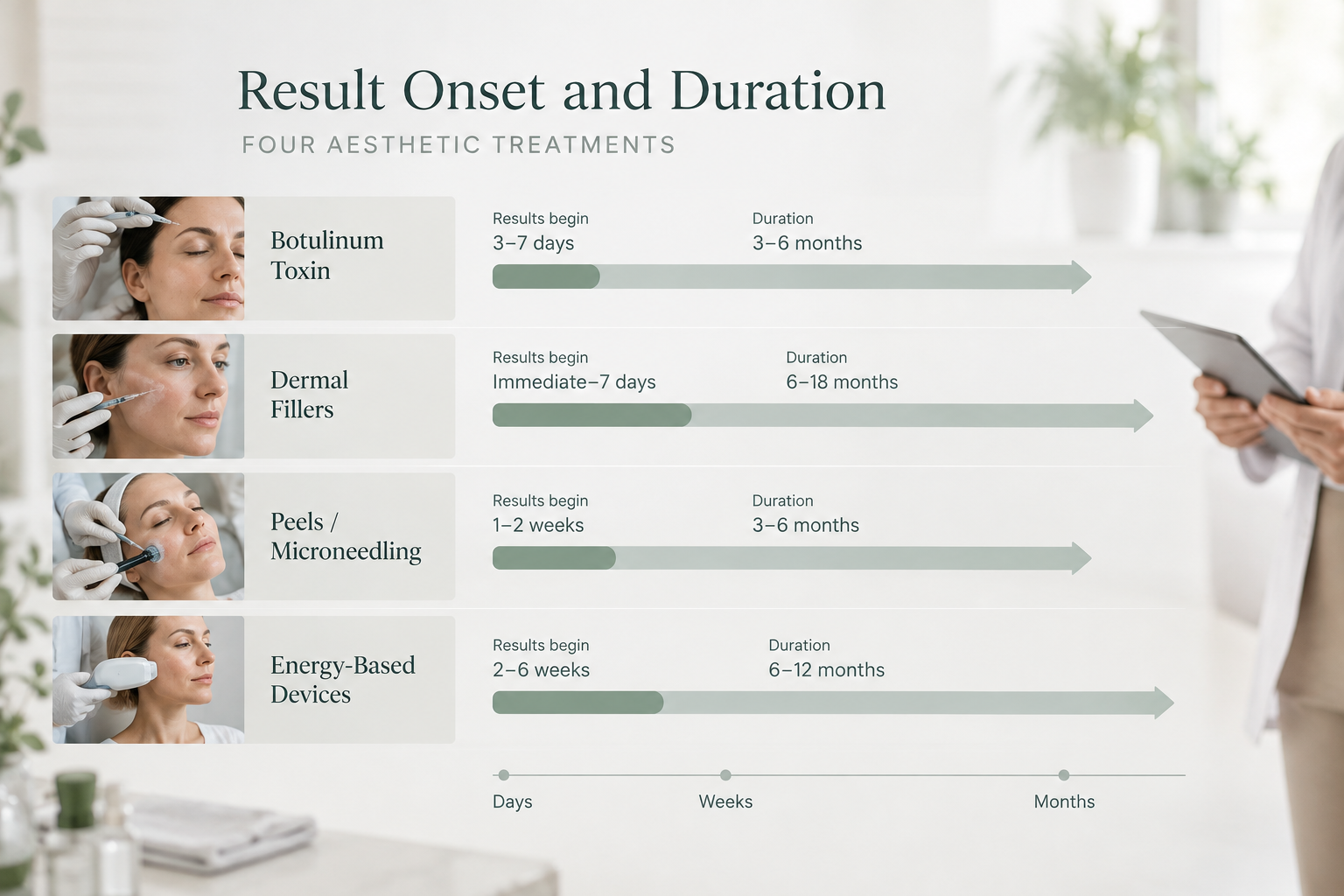
Maintenance is a realistic part of most aesthetic treatment plans. Botulinum toxin effects are temporary and typically require repeat treatment every three to six months to maintain results. Dermal fillers gradually break down and may need topping up every six to eighteen months depending on the product and area. Skin-quality treatments may require periodic maintenance sessions to sustain improvements, particularly if the underlying cause, such as sun exposure or hormonal changes, continues.
It is also worth understanding that aesthetic treatments address the appearance of a concern rather than its underlying cause. A practitioner who takes time to explain this distinction, and who discusses complementary approaches such as medical-grade skincare, sun protection, and lifestyle factors, is providing more complete and responsible guidance.
Risks, Side Effects, and Downtime
Every aesthetic treatment carries some degree of risk, and a responsible practitioner will discuss these with you before obtaining your consent. The specific risks depend on the treatment, the area being treated, your individual health, and the skill of the practitioner.
Common side effects across many aesthetic treatments include temporary redness, swelling, tenderness, or bruising at the treatment site. These effects are usually mild and resolve within a few days. More significant risks, which are less common but important to understand, include infection, allergic reaction, asymmetry, prolonged swelling, or, in the case of injectable treatments, vascular complications. Vascular occlusion, where filler inadvertently enters or compresses a blood vessel, is a rare but serious complication that requires immediate treatment; this is one reason why choosing a qualified and experienced practitioner matters.
Downtime varies considerably between treatments. Many injectable treatments involve little to no downtime, though bruising may occasionally require a few days to resolve. Ablative laser treatments and deeper chemical peels can involve several days to two weeks of visible skin recovery. Energy-based treatments for skin tightening are generally associated with minimal downtime. Your practitioner should give you a clear and honest picture of what to expect after each treatment so you can plan accordingly.
Who May Not Be Suitable for Aesthetic Treatments
Suitability for aesthetic skin treatments is assessed individually, and certain factors may mean that some treatments are not appropriate at a given time. These include:
- Pregnancy or breastfeeding, during which most aesthetic treatments are not recommended
- Active skin infections, cold sores, or inflammatory skin conditions in the treatment area
- Certain autoimmune conditions or medications that affect immune function
- Blood-thinning medications that significantly increase bruising risk for injectable treatments
- A history of keloid scarring, which may affect suitability for treatments that create controlled skin injury
- Unrealistic expectations or body dysmorphic disorder, where aesthetic treatment is unlikely to address the underlying concern and may cause harm
- Recent surgical procedures or treatments in the same area
A thorough consultation will identify any factors that affect your suitability and allow the practitioner to recommend the most appropriate approach, or to advise against treatment where it is not in your best interest.
Questions to Ask at Your First Appointment
Arriving with prepared questions helps you gather the information you need to make an informed decision. Consider asking:
- What qualifications and specific training do you have in this treatment?
- Based on my concerns, which treatment do you recommend and why?
- What results can I realistically expect, and over what timeframe?
- What are the risks and side effects specific to my situation?
- How many sessions are likely to be needed, and how often?
- What is the expected downtime, and are there any activities I should avoid afterwards?
- What happens if I am not satisfied with the result, or if a complication occurs?
- Are there alternative treatments that might achieve a similar outcome?
- What skincare or lifestyle changes might support or extend the results?
Frequently Asked Questions
Do I need to have a treatment at my first visit?
No. A first visit to an aesthetic skin clinic should begin with a consultation, and you are under no obligation to proceed with any treatment on the same day. Many clinics offer a separate consultation appointment specifically to allow you time to consider your options before committing.
How do I know if a practitioner is qualified?
Look for practitioners who hold recognised healthcare qualifications, such as a medical degree, nursing registration, or dental qualification, and who have completed specific training in aesthetic procedures. In some countries, professional registers or regulatory bodies allow you to verify a practitioner’s credentials. Do not hesitate to ask about qualifications directly.
Will my first treatment be painful?
Most aesthetic treatments involve some degree of discomfort, though this varies considerably. Injectable treatments use fine needles and are often described as a mild stinging or pressure sensation. Topical anaesthetic cream is commonly applied before treatments to reduce discomfort. Energy-based treatments may produce a warming or snapping sensation. Your practitioner should explain what to expect and take steps to minimise discomfort.
How much does a first consultation cost?
Consultation fees vary between clinics and countries. Some clinics offer free consultations, while others charge a fee that may or may not be rededucted from the cost of treatment. A paid consultation is not necessarily a sign of a better or worse clinic; what matters is the quality and thoroughness of the assessment.
Can I combine multiple treatments in one visit?
Combining treatments is sometimes possible and may be recommended by your practitioner, but this depends on the specific treatments, the areas involved, and your individual circumstances. Some combinations are well-established and complementary, while others may not be appropriate to perform simultaneously. Your practitioner will advise on the safest and most effective approach for your goals.
What should I do if I have a reaction after treatment?
Minor redness, swelling, or tenderness after most aesthetic treatments is expected and usually resolves within a few days. If you experience unusual pain, significant swelling, skin colour changes, vision changes, or any symptoms that concern you, contact your clinic promptly. A reputable clinic will have aftercare protocols and should be reachable for post-treatment concerns.
Making the Most of Your First Aesthetic Skin Clinic Appointment
A first visit to an aesthetic skin clinic is most valuable when approached as a two-way conversation rather than a passive experience. The more clearly you can communicate your concerns, goals, and questions, the better equipped your practitioner will be to offer guidance that is genuinely relevant to you. Equally, the more thoroughly a practitioner explains your options, the limitations of each treatment, and the realistic outcomes you can expect, the better placed you are to make an informed decision.
Aesthetic skin treatments can offer meaningful improvements in skin quality, facial appearance, and confidence when they are well-matched to a patient’s concerns and expectations. They are not a substitute for general health, a consistent skincare routine, or sun protection, all of which remain the foundation of long-term skin health. A practitioner who acknowledges this and incorporates it into their recommendations is offering more complete and responsible care.
If you leave your first consultation with a clearer understanding of your skin, a realistic picture of what treatment can and cannot achieve, and confidence in the practitioner’s expertise and transparency, that appointment has served its purpose well, regardless of whether you proceed with treatment immediately. Take the time you need, ask the questions that matter to you, and choose a clinic where your safety and informed consent are genuinely the priority.