

Microneedling creates thousands of microscopic channels in the skin, temporarily increasing its permeability and triggering a controlled wound-healing response. What you apply to your skin in the hours and days that follow can meaningfully influence how well your skin recovers and how effectively it responds to treatment. Choosing the right post-microneedling products — and avoiding the wrong ones — is one of the most practical steps you can take to support your results.
Key Takeaways
- Immediately after microneedling, the skin barrier is compromised; only gentle, fragrance-free, clinically appropriate products should be applied.
- Hyaluronic acid, peptides, and growth factor serums are among the most widely recommended ingredients during early recovery.
- Active ingredients such as retinoids, vitamin C, AHAs, BHAs, and benzoyl peroxide should be avoided for at least several days post-treatment.
- Broad-spectrum SPF is essential once the skin has settled, typically from day two or three onwards.
- The specific products suitable for you may depend on your skin type, the depth of treatment, and your practitioner’s protocol — always follow personalised aftercare advice.
Why Post-Microneedling Skincare Matters
Microneedling — also called collagen induction therapy — uses fine needles to create controlled micro-injuries in the dermis and epidermis. This stimulates the production of collagen and elastin and can improve skin texture, tone, fine lines, acne scarring, and enlarged pores over a course of treatments. However, the same process that makes microneedling effective also leaves the skin temporarily vulnerable. The skin barrier is disrupted, transepidermal water loss increases, and the surface becomes more sensitive to both beneficial and potentially irritating substances.
Because the microchannels created during treatment allow ingredients to penetrate more deeply than they would on intact skin, the post-treatment window is sometimes described as a period of enhanced absorption. This is a double-edged consideration: supportive ingredients may reach deeper layers of the skin more readily, but so can irritants, allergens, and active compounds that would normally be tolerated on healthy skin. Selecting appropriate products during this period is therefore not simply a matter of comfort — it can affect both recovery and outcomes.
The First 24 Hours: What Your Skin Needs Most
In the immediate aftermath of microneedling, the skin typically appears red, feels warm, and may be mildly swollen — a response that resembles moderate sunburn. During this initial phase, the priority is to calm inflammation, support the skin barrier, and maintain hydration without introducing any ingredient that could cause further irritation or interfere with the healing process.
Most practitioners recommend applying a plain, fragrance-free moisturiser or a medical-grade hyaluronic acid serum immediately after treatment, often in the clinic itself. Hyaluronic acid is a naturally occurring molecule in the skin that attracts and retains water. When applied topically after microneedling, it can help to hydrate the skin and support the early stages of recovery. Look for formulations that contain only hyaluronic acid and minimal additional ingredients — the simpler the formula, the lower the risk of irritation during this sensitive window.
Cooling the skin with a clean, damp cloth or a gentle thermal water spray can also help to ease discomfort. Avoid touching the face with unwashed hands, and do not apply makeup for at least 24 hours, as cosmetic products often contain preservatives, fragrances, and pigments that may irritate compromised skin or introduce bacteria into open microchannels.
Best Ingredients to Use After Microneedling
Once the most acute phase has passed — typically after the first 24 to 48 hours — a broader range of supportive ingredients can be introduced carefully. The following are among the most clinically appropriate options during the post-microneedling recovery period.
Hyaluronic Acid
Hyaluronic acid remains the most consistently recommended ingredient throughout the post-microneedling recovery period. It is well tolerated by most skin types, non-irritating, and plays a direct role in skin hydration and tissue repair. Serums containing low, medium, and high molecular weight hyaluronic acid may offer layered hydration, as different molecular sizes penetrate to different depths. Apply to slightly damp skin and follow with a gentle moisturiser to seal in hydration.
Peptides
Peptides are short chains of amino acids that act as signalling molecules in the skin. Certain peptides — such as copper peptides and signal peptides — may support collagen synthesis and wound healing, making them a logical complement to the collagen-stimulating effects of microneedling. Copper peptides in particular have attracted interest in post-procedure skincare because of their potential role in tissue remodelling, though evidence from large-scale clinical trials remains limited. Peptide serums are generally well tolerated and can typically be introduced from day two or three, depending on how the skin is responding.
Growth Factor Serums
Growth factor serums contain proteins that play a role in cellular communication and tissue repair. They are frequently used in professional post-microneedling protocols and are sometimes applied during the treatment itself. The evidence base for topical growth factors is still developing, and formulations vary considerably between brands, but they are generally considered appropriate for use in the post-treatment period when sourced from reputable, clinically validated products. If your practitioner recommends a specific growth factor serum, follow their guidance on timing and application.
Ceramides and Barrier-Repair Moisturisers
Ceramides are lipid molecules that form a key part of the skin barrier. After microneedling, the barrier is temporarily weakened, and ceramide-containing moisturisers can help to restore its integrity. Look for fragrance-free formulations that combine ceramides with other barrier-supportive ingredients such as niacinamide (in low concentrations), cholesterol, and fatty acids. These moisturisers are suitable from the first day of recovery and can be used throughout the healing period.
Centella Asiatica (Cica) Extracts
Centella asiatica, commonly referred to as cica, is a plant extract with a long history of use in wound healing. It contains active compounds — including asiaticoside, madecassoside, and asiatic acid — that may support collagen synthesis and reduce inflammation. Cica-based products have become increasingly popular in post-procedure skincare and are generally well tolerated. They can be a useful addition from the second or third day of recovery, particularly for patients who experience prolonged redness or sensitivity.
Niacinamide (Low Concentration)
Niacinamide, a form of vitamin B3, supports the skin barrier, reduces transepidermal water loss, and has mild anti-inflammatory properties. At low concentrations — typically two to five percent — it is generally well tolerated after microneedling and can help to calm post-treatment redness. Higher concentrations may cause flushing or irritation in some individuals, particularly on sensitised skin, so it is advisable to start with a lower-strength formulation and introduce it gradually from around day three.
Broad-Spectrum Sunscreen
Sun protection is not optional after microneedling — it is essential. Post-treatment skin is significantly more susceptible to UV-induced damage and hyperpigmentation, particularly in individuals with medium to darker skin tones. A broad-spectrum SPF 30 or higher should be applied from day two or three, once the skin surface has begun to settle. Choose a mineral sunscreen containing zinc oxide or titanium dioxide rather than a chemical sunscreen during the early recovery period, as mineral filters sit on the skin surface and are less likely to cause irritation on compromised skin.
Ingredients and Products to Avoid After Microneedling
Knowing what not to apply is just as important as knowing what to use. Several common skincare ingredients that are beneficial on healthy skin can cause significant irritation, inflammation, or adverse reactions when applied to skin that has recently undergone microneedling.
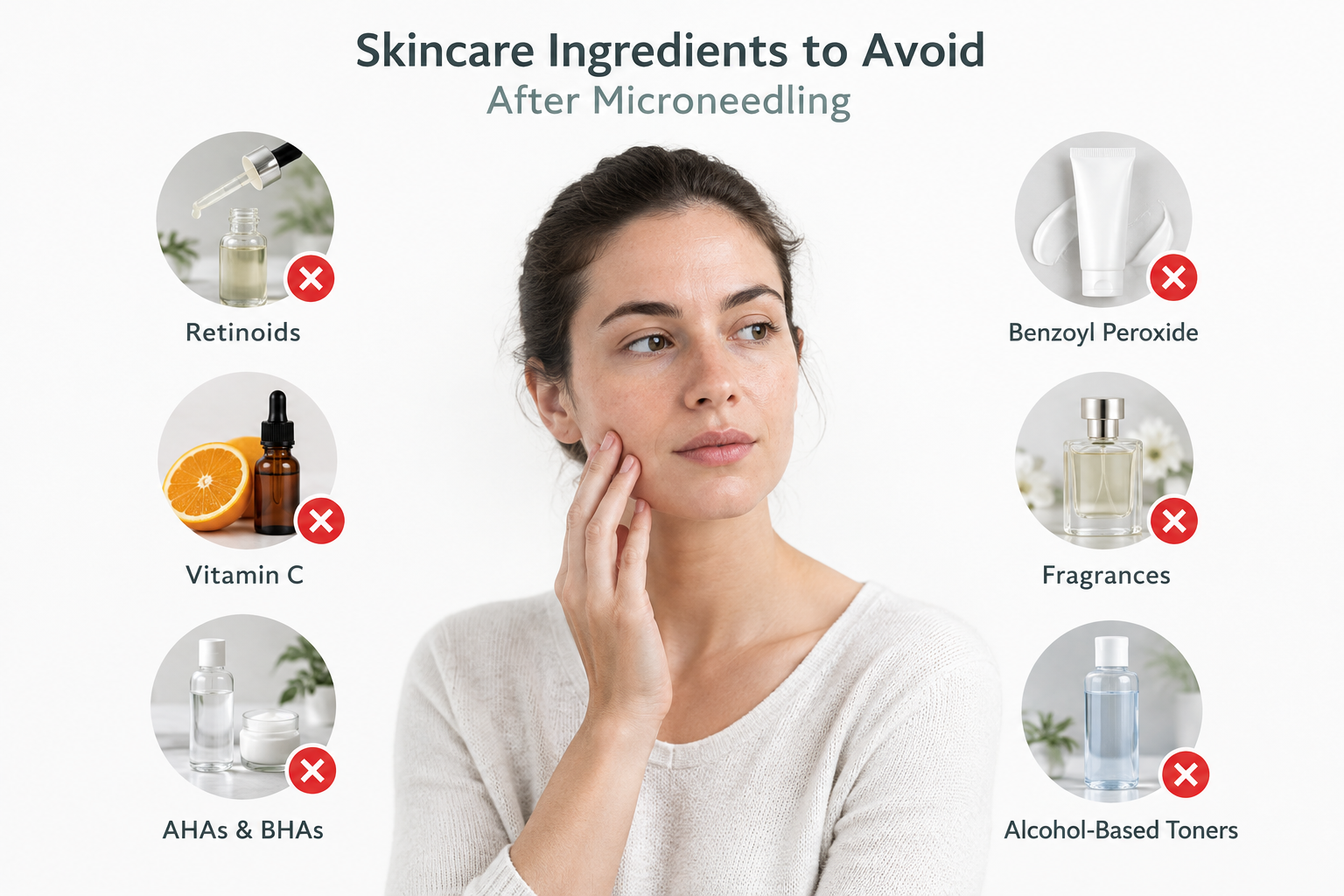
Retinoids and Retinol
Retinoids — including prescription tretinoin and over-the-counter retinol — are among the most evidence-supported ingredients in anti-ageing skincare, but they are strongly irritating on post-microneedling skin. Retinoids increase cell turnover and can cause dryness, peeling, and inflammation even on intact skin. Applied after microneedling, they carry a meaningful risk of prolonged irritation and barrier disruption. Most practitioners advise avoiding retinoids for at least five to seven days after treatment, and sometimes longer depending on treatment depth and individual skin sensitivity.
Vitamin C (Ascorbic Acid)
Vitamin C in its pure ascorbic acid form is acidic and can cause stinging, redness, and irritation on compromised skin. While vitamin C is a valuable antioxidant and brightening ingredient in a regular skincare routine, it should be avoided for at least three to five days after microneedling. Some practitioners recommend waiting a full week. Gentler vitamin C derivatives — such as sodium ascorbyl phosphate or ascorbyl glucoside — may be better tolerated once the skin has partially recovered, but it is advisable to reintroduce any vitamin C product cautiously and only after the skin barrier has begun to restore itself.
AHAs and BHAs
Alpha hydroxy acids (such as glycolic acid and lactic acid) and beta hydroxy acids (such as salicylic acid) are chemical exfoliants that work by dissolving the bonds between dead skin cells. On post-microneedling skin, these acids can penetrate far more deeply than intended, causing chemical irritation, inflammation, and potentially prolonged redness. AHAs and BHAs should be avoided for at least five to seven days after treatment, and their reintroduction should be gradual.
Benzoyl Peroxide
Benzoyl peroxide is commonly used in acne management but is a potent oxidising agent that can cause significant irritation on sensitised skin. It should be avoided during the post-microneedling recovery period. If you use benzoyl peroxide as part of your regular acne routine, discuss the timing of your microneedling treatment with your practitioner so that an appropriate pause can be planned.
Fragrances and Essential Oils
Fragrances — whether synthetic or derived from essential oils — are among the most common causes of contact dermatitis and skin sensitisation. After microneedling, the skin’s increased permeability means that fragrance molecules can penetrate more deeply and trigger a more pronounced inflammatory response. Avoid all fragranced skincare products, including those marketed as natural or botanical, for at least the first week of recovery.
Alcohol-Based Products and Toners
Alcohol-based toners and astringents are drying and disruptive to the skin barrier. They should be avoided entirely during the post-microneedling recovery period. If you use a toner as part of your routine, choose a hydrating, alcohol-free formula and reintroduce it only once the skin has fully settled.
Physical Exfoliants and Scrubs
Physical exfoliation — including facial scrubs, cleansing brushes, and exfoliating cloths — should be avoided for at least one to two weeks after microneedling. The skin surface is already undergoing a natural renewal process as part of the healing response, and mechanical abrasion can disrupt this process, cause micro-tears, and increase the risk of post-inflammatory hyperpigmentation.
A Practical Post-Microneedling Skincare Timeline
Recovery timelines vary depending on the depth of treatment, the device used, and individual skin characteristics. The following is a general framework; always follow the specific aftercare instructions provided by your practitioner.
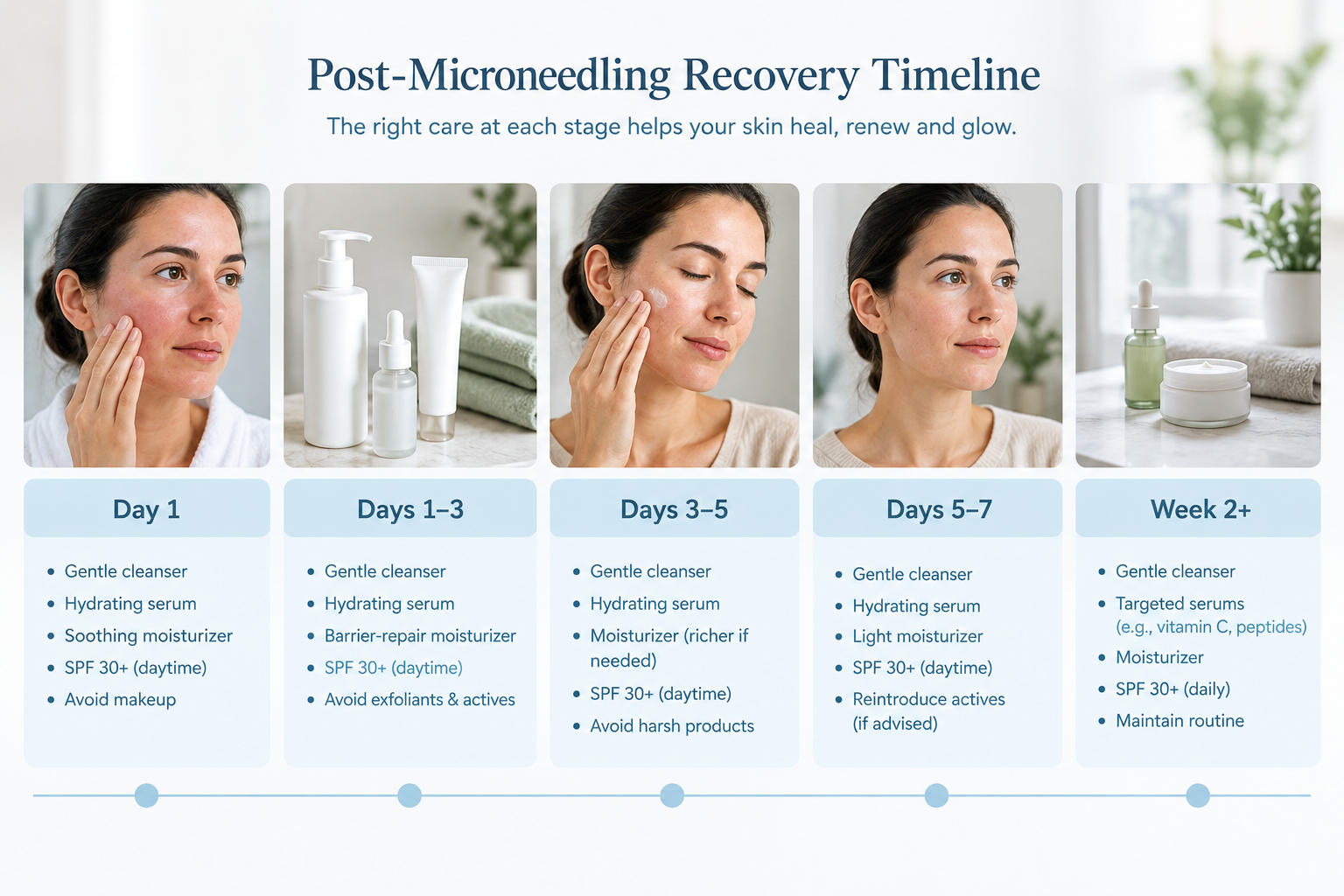
- Day 1 (treatment day): Gentle hyaluronic acid serum or plain moisturiser applied in clinic. No makeup. Avoid touching the face. Use a gentle, fragrance-free cleanser if washing is advised.
- Days 1–3: Continue with hyaluronic acid and a ceramide-based moisturiser. Avoid all active ingredients. Skin may appear pink or red and feel tight or sensitive.
- Days 3–5: Introduce mineral SPF. Skin redness typically begins to subside. Gentle peptide or cica serums may be introduced if the skin is tolerating products well.
- Days 5–7: Most patients can begin reintroducing low-concentration niacinamide. Skin texture may feel slightly rough as superficial peeling begins.
- Week 2 onwards: Gradual reintroduction of vitamin C derivatives, then retinoids, then AHAs and BHAs — one product at a time, with monitoring for any signs of irritation.
Cleansing After Microneedling
Cleansing is an often-overlooked aspect of post-microneedling care. In the first 24 hours, many practitioners advise avoiding water on the face entirely, or using only cool, clean water without a cleanser. From day two, a gentle, fragrance-free, non-foaming cleanser is appropriate. Micellar water can be a useful option during this period, provided it does not contain alcohol or fragrance. Avoid cleansing brushes, washcloths, or any form of mechanical friction. Pat the skin dry with a clean, soft towel rather than rubbing.
Professional vs Over-the-Counter Products
Many clinics offer or recommend medical-grade skincare products for use after microneedling. Medical-grade formulations are typically manufactured to higher standards of ingredient purity and stability, and some are specifically designed for use in post-procedure protocols. However, medical-grade does not automatically mean superior for every patient, and cost can be a significant factor. High-quality over-the-counter products containing the same key ingredients — hyaluronic acid, ceramides, peptides — can be equally appropriate for many patients, provided they are fragrance-free and formulated without irritating actives.
If your clinic recommends specific products, it is reasonable to ask why those particular formulations are suggested and whether equivalent alternatives are available. A practitioner who can explain the rationale behind their product recommendations is demonstrating the kind of clinical transparency that supports informed decision-making.
Skin Type Considerations
Post-microneedling product selection may need to be adjusted based on your skin type and any underlying skin concerns.
- Oily or acne-prone skin: Choose non-comedogenic, lightweight formulations. Avoid heavy occlusive creams that may block pores during the recovery period. Niacinamide can be particularly useful for managing sebum production once the skin has settled.
- Dry or dehydrated skin: Prioritise hydration with layered hyaluronic acid serums and richer ceramide moisturisers. Avoid anything that may further compromise the barrier.
- Sensitive or reactive skin: Keep the routine as minimal as possible. Introduce new products one at a time and monitor for any signs of irritation before adding the next step.
- Darker skin tones: Post-inflammatory hyperpigmentation is a meaningful risk after microneedling in individuals with Fitzpatrick skin types IV–VI. Diligent sun protection is particularly important, and the reintroduction of brightening ingredients should be discussed with your practitioner.
Frequently Asked Questions
Can I apply hyaluronic acid immediately after microneedling?
Yes, hyaluronic acid is one of the few ingredients considered appropriate for immediate post-microneedling application. It is non-irritating, supports hydration, and is commonly applied in clinic directly after treatment. Choose a plain, fragrance-free formulation with minimal additional ingredients.
When can I start using retinol again after microneedling?
Most practitioners advise waiting at least five to seven days before reintroducing retinol, and sometimes longer depending on how your skin has responded to treatment. Reintroduce it gradually — starting with a lower frequency than usual — and discontinue if irritation occurs. Follow your practitioner’s specific guidance.
Is it safe to use vitamin C serum after microneedling?
Pure ascorbic acid vitamin C serums should be avoided for at least three to five days after microneedling due to their acidity and potential to irritate compromised skin. Gentler vitamin C derivatives may be reintroduced earlier, but it is advisable to wait until the skin barrier has begun to recover and to patch-test before full application.
How long should I avoid makeup after microneedling?
Most practitioners recommend avoiding all makeup for at least 24 hours after microneedling, and ideally 48 to 72 hours. Cosmetic products often contain preservatives, fragrances, and pigments that can irritate post-treatment skin or introduce bacteria into microchannels. Mineral makeup is sometimes considered acceptable from day two or three, but confirm this with your practitioner.
Can I use niacinamide after microneedling?
Low-concentration niacinamide (two to five percent) is generally well tolerated after microneedling and can help to support the skin barrier and reduce redness. It is typically appropriate to introduce from around day three to five, once the most acute phase of recovery has passed. Higher concentrations may cause flushing in some individuals and are best reintroduced later.
Do I need to use sunscreen after microneedling?
Yes — broad-spectrum sun protection is essential after microneedling. Post-treatment skin is more susceptible to UV damage and hyperpigmentation. A mineral SPF 30 or higher should be applied from day two or three and used consistently throughout the recovery period and beyond. Avoid prolonged sun exposure during the first two weeks after treatment.
Can I use a sheet mask after microneedling?
Sheet masks can be appropriate after microneedling if they contain only gentle, supportive ingredients such as hyaluronic acid or centella asiatica, and are free from fragrance, alcohol, and active exfoliants. However, check the full ingredient list carefully before use, as many sheet masks contain preservatives or botanical extracts that may irritate sensitised skin. Discuss with your practitioner before using any mask product in the first few days after treatment.
Building Your Post-Microneedling Routine Around Your Results
The products you use after microneedling are not a substitute for the treatment itself, but they do play a meaningful supporting role in how your skin heals and how well the results develop over time. A well-chosen post-treatment routine — centred on hydration, barrier repair, and sun protection — can help to minimise downtime, reduce the risk of adverse reactions, and create the conditions in which collagen remodelling can proceed effectively.
The most important principle is simplicity in the early days. A short routine of two or three carefully chosen products is more appropriate than a complex multi-step regimen during the first week of recovery. As the skin heals, active ingredients can be reintroduced gradually and systematically, ideally with guidance from the practitioner who performed your treatment.
If you are unsure which products are appropriate for your skin type, treatment depth, or specific concerns, a follow-up consultation with your practitioner is the most reliable way to get personalised advice. Post-microneedling skincare is not one-size-fits-all, and the right routine for one patient may not be the right routine for another. Working with a qualified professional ensures that your aftercare supports — rather than undermines — the investment you have made in your skin.