

Microneedling is one of the most widely performed skin rejuvenation treatments available today, and a common reason patients seek it out is to address skin laxity. The short answer is that microneedling can contribute to skin tightening in certain patients, but the degree of improvement depends on several factors including skin condition, age, treatment depth, and the number of sessions completed. This article explains the mechanism behind microneedling’s effect on skin firmness, what clinical evidence suggests, who may benefit most, and what limitations to consider before booking a consultation.
Key Takeaways
- Microneedling stimulates collagen and elastin production, which can improve skin firmness and texture over time, though results vary between individuals.
- Mild to moderate skin laxity tends to respond better than significantly loose or sagging skin, which may require more intensive treatments.
- A course of multiple sessions is typically recommended, with visible improvements often becoming more apparent several weeks after treatment as new collagen matures.
- Radiofrequency microneedling delivers additional thermal energy and may produce more pronounced skin tightening compared to standard microneedling alone.
- Microneedling carries a generally manageable side effect profile, but it is not suitable for everyone and a thorough clinical assessment is essential before treatment.
How Microneedling Works on Skin Firmness
Microneedling, also called collagen induction therapy, uses a device fitted with fine needles to create controlled micro-injuries in the skin’s surface. These tiny punctures trigger the skin’s natural wound-healing response, which involves three overlapping phases: inflammation, proliferation, and remodelling. It is during the remodelling phase that the skin produces new collagen and elastin fibres — the structural proteins responsible for skin firmness, elasticity, and resilience.
Collagen is the most abundant protein in the dermis and provides the scaffolding that keeps skin looking lifted and smooth. Elastin allows skin to spring back after being stretched. Both proteins decline naturally with age, contributing to the gradual loosening and thinning of skin that many people notice from their mid-thirties onwards. By stimulating the fibroblast cells that manufacture these proteins, microneedling aims to partially restore the dermal architecture that supports firmer-looking skin.
The depth to which the needles penetrate is adjusted according to the treatment area and the concern being addressed. Deeper penetration generally reaches more of the dermis where collagen-producing fibroblasts are concentrated, but it also increases the likelihood of post-treatment redness and downtime. Needle depth is a clinical decision made by the practitioner based on individual skin assessment.
What the Evidence Suggests
A growing body of published research supports microneedling as an effective treatment for improving skin texture, fine lines, and overall skin quality. Studies examining collagen induction therapy have demonstrated measurable increases in dermal collagen density following a course of treatments, with histological analysis — examination of skin tissue under a microscope — confirming structural changes in the dermis.
Evidence specifically addressing skin tightening is more nuanced. Clinical studies and systematic reviews suggest that microneedling can produce meaningful improvements in mild to moderate skin laxity, particularly on the face and neck. However, the degree of tightening observed in research tends to be moderate rather than dramatic, and results are generally less pronounced than those achieved with surgical procedures such as a facelift or neck lift. It is important to note that study quality varies, sample sizes are often small, and standardised outcome measures differ between trials, making direct comparisons difficult.
Radiofrequency microneedling — a technology that combines the needle-based collagen induction mechanism with the delivery of radiofrequency energy into the dermis — has attracted particular research interest for skin tightening. The thermal energy generated by radiofrequency causes immediate contraction of existing collagen fibres while also stimulating longer-term neocollagenesis (new collagen formation). Several published studies report more significant improvements in skin laxity with radiofrequency microneedling compared to standard microneedling, though evidence continues to develop and individual responses remain variable.
Radiofrequency Microneedling vs Standard Microneedling for Skin Tightening
Standard microneedling relies entirely on the mechanical wound-healing response to stimulate collagen production. The process is gradual, and improvements in skin firmness develop over weeks to months as new collagen matures and remodels. This approach is well-suited to improving skin texture, fine lines, enlarged pores, and mild laxity, and it carries a relatively straightforward recovery profile.
Radiofrequency microneedling adds a second mechanism: the delivery of controlled radiofrequency energy through insulated needles directly into the dermis and, in some protocols, the deeper subcutaneous tissue. This thermal component causes immediate collagen contraction, which some patients notice as a subtle tightening effect relatively soon after treatment. The longer-term collagen remodelling response is also amplified compared to standard microneedling alone. For patients whose primary concern is skin laxity rather than surface texture, radiofrequency microneedling is often considered the more appropriate option, though it typically involves greater cost and may involve slightly more downtime.
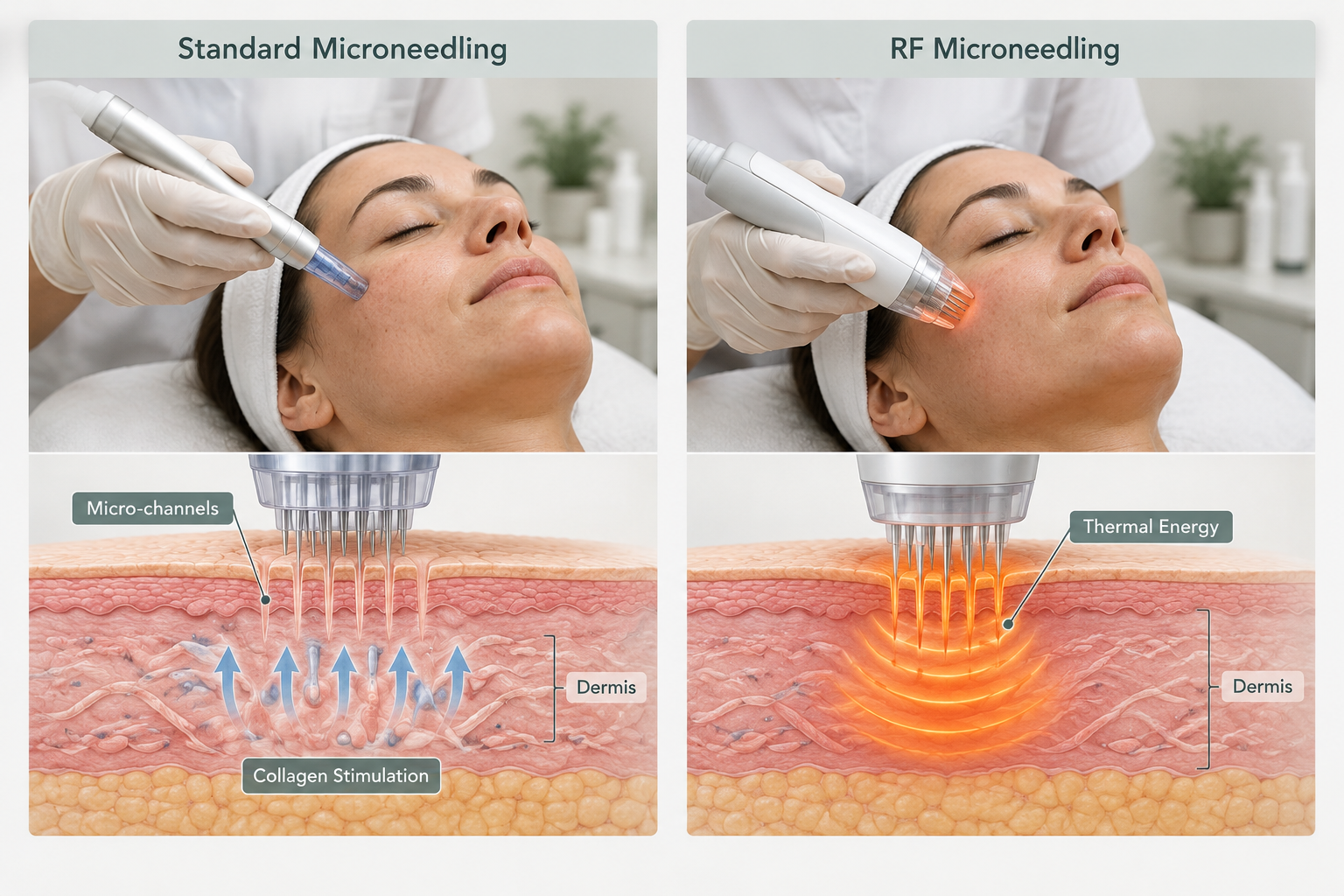
The choice between standard and radiofrequency microneedling should be guided by a qualified practitioner who can assess the degree of laxity, skin type, treatment area, and individual goals. Neither approach is a substitute for surgical intervention when significant skin sagging is present.
Treatment Areas Where Microneedling May Help Tighten Skin
Microneedling for skin tightening is most commonly performed on the face, with the cheeks, jawline, and neck being frequent areas of concern. Facial skin laxity in these zones often responds reasonably well to a structured course of treatment, particularly when laxity is mild to moderate and the patient’s skin retains reasonable baseline quality.
The neck and décolletage are also treated areas, though skin in these regions can be more delicate and may require adjusted needle depths and protocols. The periorbital area — around the eyes — is another zone where patients seek improvement in skin crepiness and fine lines, though the skin here is thin and treatment parameters must be carefully selected.
Microneedling is also used on the body, including the abdomen, inner arms, and thighs, where skin laxity may follow weight loss or changes in body composition. Body microneedling for skin tightening is a recognised application, though the evidence base for body areas is generally less extensive than for facial treatments, and results may be more modest given the larger surface areas involved and the typically thicker skin.
How Many Sessions Are Typically Needed
A single microneedling session is unlikely to produce significant skin tightening. Most clinical protocols and practitioner recommendations involve a course of three to six sessions, spaced approximately four to six weeks apart, to allow adequate healing and collagen maturation between appointments. The exact number of sessions recommended will depend on the individual’s skin condition, the degree of laxity, the treatment area, and the type of microneedling device used.
Collagen remodelling is a slow biological process. Patients should expect to wait several weeks after completing a course before the full extent of improvement becomes visible. Some practitioners describe a timeline of three to six months post-treatment for collagen maturation to reach its peak effect. This delayed onset is a normal feature of collagen induction therapy and should be factored into expectations from the outset.
Maintenance sessions — typically once or twice a year — are often recommended to sustain results, as the skin continues to age and collagen production naturally declines over time. Without maintenance, the improvements achieved through a course of treatment will gradually diminish.
What to Expect During and After Treatment
Before microneedling, a practitioner will typically conduct a skin assessment and review medical history to confirm suitability. A topical numbing cream is usually applied to the treatment area approximately 30 to 45 minutes before the procedure to minimise discomfort. Most patients describe the sensation during treatment as a mild to moderate prickling or scratching feeling, with deeper settings or more sensitive areas feeling more intense.
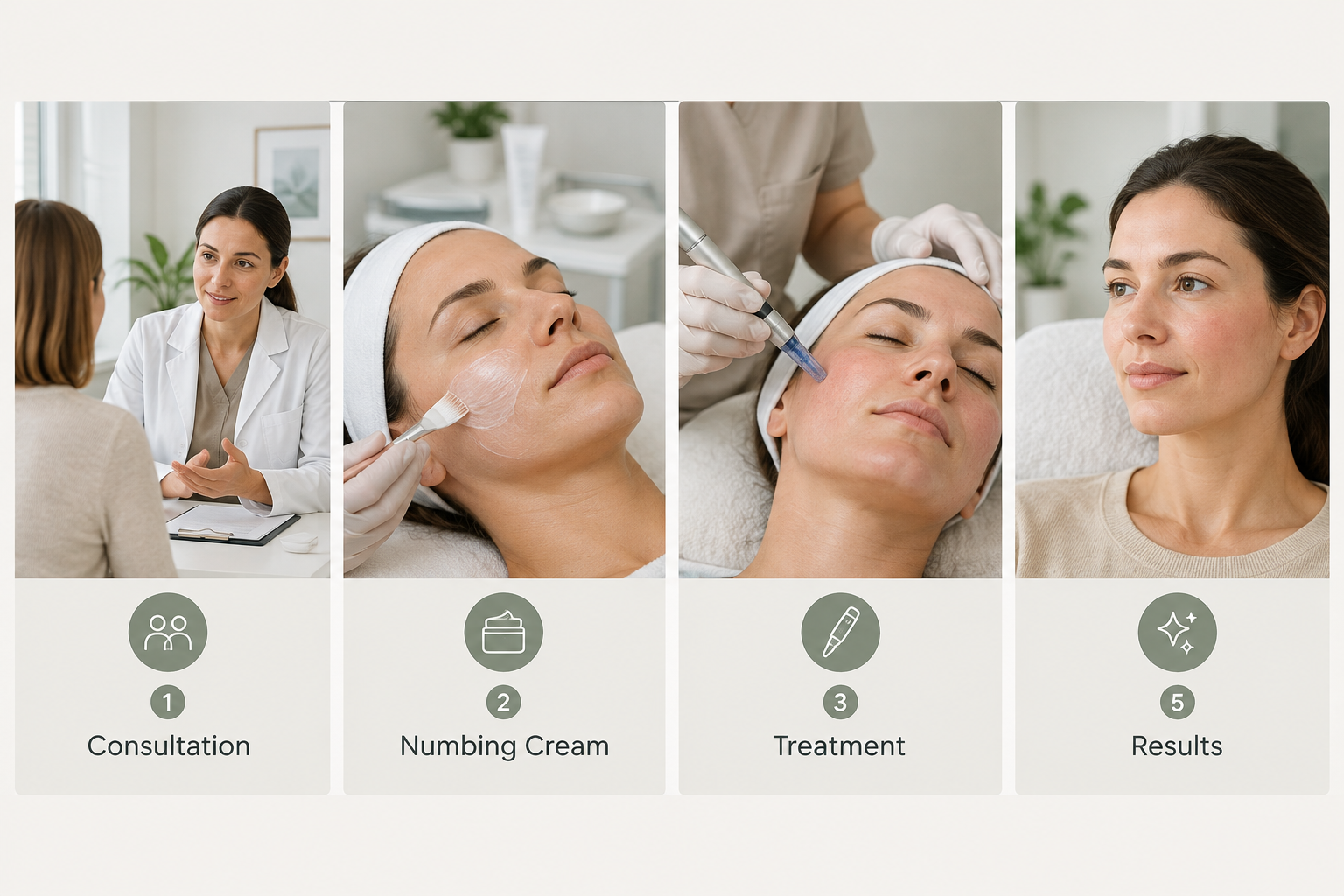
Immediately after microneedling, the treated skin typically appears red and may feel warm, similar in appearance to mild sunburn. Some swelling and pinpoint bleeding can occur, particularly with deeper needle settings. These immediate effects generally resolve within 24 to 72 hours for standard microneedling, though radiofrequency microneedling may involve a slightly longer period of visible redness or swelling depending on the intensity of the treatment.
During the first few days after treatment, the skin may feel dry, tight, or slightly rough as the healing process progresses. Patients are generally advised to avoid direct sun exposure, use a gentle moisturiser, apply a broad-spectrum sunscreen, and avoid active skincare ingredients such as retinoids, acids, and vitamin C until the skin has fully recovered — typically around five to seven days. Strenuous exercise, saunas, and swimming are usually avoided for a similar period to reduce the risk of irritation or infection.
Makeup can often be applied after 24 to 48 hours, though this varies by practitioner guidance and the depth of treatment performed. Patients should follow the specific aftercare instructions provided by their treating clinician.
Risks and Side Effects
Microneedling has a generally manageable safety profile when performed by a trained and qualified practitioner using appropriate equipment. However, it is not without risk, and patients should be aware of potential adverse effects before proceeding.
Common and expected side effects include redness, swelling, mild bruising, and skin sensitivity in the days following treatment. These are typically temporary and resolve without intervention. Less common but possible complications include prolonged redness, post-inflammatory hyperpigmentation (darkening of the skin), infection, and scarring. Post-inflammatory hyperpigmentation is a particular consideration for patients with darker skin tones, and treatment parameters should be carefully adjusted to reduce this risk.
Infection is a risk with any procedure that breaches the skin barrier. Using sterile, single-use needle cartridges and maintaining appropriate clinical hygiene standards significantly reduces this risk. Patients should ensure treatment is performed in a clinical environment with appropriate infection control protocols in place.
Microneedling is generally not recommended for patients with active acne, rosacea flares, eczema, psoriasis, or other inflammatory skin conditions in the treatment area. It is also contraindicated in patients with active infections, open wounds, or certain skin cancers in the area to be treated. Patients taking blood-thinning medications, those with a history of keloid scarring, and those who are pregnant or breastfeeding should discuss their individual circumstances with a qualified practitioner before considering treatment.
Who May Be a Suitable Candidate
Microneedling for skin tightening tends to produce the most satisfying results in patients with mild to moderate skin laxity who have realistic expectations about the degree of improvement achievable. Younger patients or those in the earlier stages of skin ageing may respond particularly well, as their skin retains greater capacity for collagen production and remodelling.
Patients who are generally healthy, not taking medications that impair healing, and who do not have active inflammatory skin conditions in the treatment area are typically considered more suitable candidates. A thorough consultation with a qualified practitioner is essential to assess individual suitability, discuss goals, and determine the most appropriate treatment protocol.
Patients with significant skin sagging — for example, pronounced jowling, a heavily lax neck, or substantial loose skin following major weight loss — are unlikely to achieve the degree of improvement they are seeking through microneedling alone. In these cases, a practitioner may discuss alternative or complementary approaches, including surgical options, during the consultation.
Alternatives to Microneedling for Skin Tightening
Several non-surgical treatments are used for skin tightening, and microneedling sits within a broader landscape of options that a practitioner may discuss depending on individual goals and skin assessment.
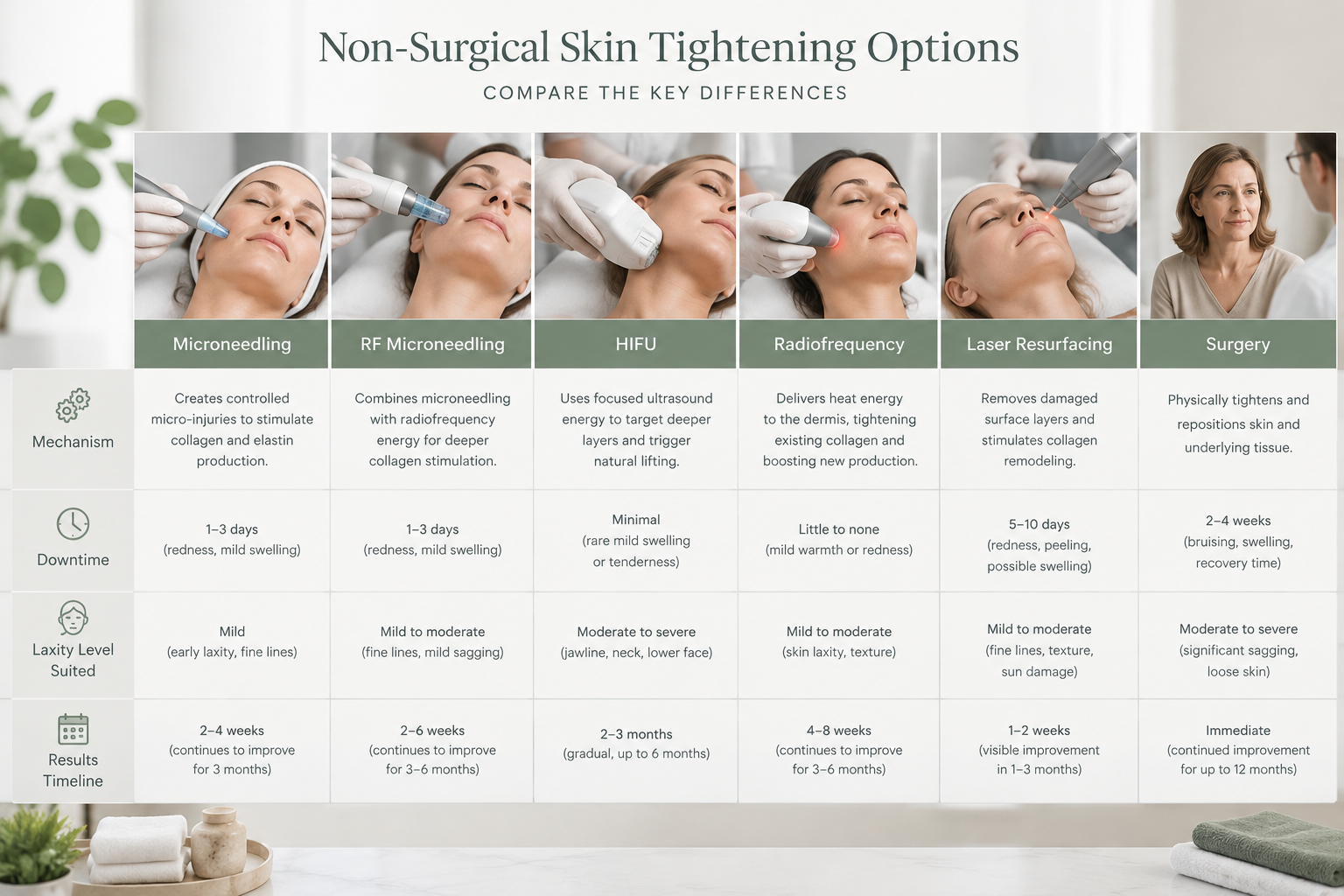
High-intensity focused ultrasound (HIFU) uses focused ultrasound energy to target the deeper layers of the skin and the superficial musculoaponeurotic system (SMAS), the fibromuscular layer beneath the skin. HIFU is often considered for patients seeking a lifting effect on the brow, mid-face, jawline, and neck, and some evidence supports its use for moderate skin laxity. Results develop gradually over two to three months as collagen remodelling occurs.
Radiofrequency skin tightening (non-needling devices) delivers radiofrequency energy to the dermis through surface applicators, stimulating collagen contraction and production. Various devices are available, and treatment protocols differ. This approach is generally well-tolerated and may be suitable for patients who prefer a non-needling option.
Laser skin resurfacing treatments, including fractional laser and ablative laser procedures, can produce significant improvements in skin texture and moderate tightening by stimulating collagen remodelling. These treatments typically involve more downtime than microneedling and carry their own risk profile, but may be appropriate for patients seeking more pronounced results.
Dermal fillers do not tighten skin directly but can restore volume to areas where volume loss contributes to the appearance of laxity, such as the cheeks and temples. Fillers may be used alongside skin tightening treatments as part of a comprehensive facial rejuvenation approach.
Surgical procedures such as a facelift, neck lift, or blepharoplasty remain the most effective interventions for significant skin laxity. For patients with advanced sagging that non-surgical treatments cannot adequately address, surgical consultation may be the most appropriate next step.
Frequently Asked Questions
How long does it take to see skin tightening results from microneedling?
Initial improvements in skin texture may be noticeable within a few weeks of treatment, but meaningful skin tightening from collagen remodelling typically develops over two to six months following a course of sessions. The timeline varies between individuals depending on age, skin condition, and the number of treatments completed.
Is radiofrequency microneedling better than standard microneedling for tightening?
Radiofrequency microneedling combines mechanical collagen stimulation with thermal energy delivery, which may produce more pronounced tightening effects than standard microneedling alone. It is often considered the more appropriate option when skin laxity is the primary concern, though it typically involves higher cost and may involve slightly more downtime. A practitioner assessment is needed to determine which approach suits individual goals.
Can microneedling replace a facelift?
Microneedling cannot replicate the results of surgical procedures such as a facelift. It may be a suitable option for patients with mild to moderate laxity who are not ready for or do not require surgery, but patients with significant skin sagging are unlikely to achieve comparable results through microneedling alone.
How many microneedling sessions are needed for skin tightening?
Most practitioners recommend a course of three to six sessions spaced four to six weeks apart for skin tightening goals. The exact number depends on individual skin assessment, the degree of laxity, and the treatment area. Maintenance sessions are typically recommended once or twice a year to sustain results.
Is microneedling safe for darker skin tones?
Microneedling can be performed on darker skin tones, but the risk of post-inflammatory hyperpigmentation is a relevant consideration. Treatment parameters should be carefully adjusted by an experienced practitioner, and a thorough pre-treatment assessment is particularly important for patients with Fitzpatrick skin types IV to VI.
Does microneedling hurt?
A topical numbing cream is applied before treatment to reduce discomfort. Most patients describe the sensation as mild to moderate prickling or scratching. Deeper needle settings and more sensitive areas may feel more intense. Discomfort is generally manageable and temporary.
How long do microneedling skin tightening results last?
Results from a course of microneedling are not permanent. The skin continues to age and collagen production naturally declines over time. Many patients find that results are maintained for six to twelve months before a maintenance session is beneficial, though this varies considerably between individuals.
Is Microneedling the Right Choice for Your Skin Tightening Goals?
Microneedling is a clinically recognised treatment that can contribute to skin tightening by stimulating collagen and elastin production through controlled dermal injury. For patients with mild to moderate skin laxity, a structured course of treatment — particularly with radiofrequency microneedling — may produce meaningful improvements in skin firmness, texture, and overall quality. Results develop gradually, require patience, and are best maintained with periodic follow-up sessions.
The treatment is not appropriate for everyone, and it is not a substitute for surgical intervention when significant laxity is present. Individual response varies, and realistic expectations are essential. The most important step before committing to any skin tightening treatment is a thorough consultation with a qualified and experienced practitioner who can assess your skin, discuss your goals honestly, and recommend the approach most likely to deliver meaningful results for your specific situation.