

Jowling — the gradual descent of soft tissue along the lower face — is one of the most common concerns patients raise in aesthetic consultations. One approach that practitioners frequently discuss is placing dermal filler in the cheeks to create a lifting effect on the lower face, including the jowl area. This article explains how cheek volumising works as a strategy for jowl improvement, what results are realistic, who may benefit, and what the limitations and alternatives are, so you can approach a consultation with a clearer understanding of your options.
Key Takeaways
- Dermal filler placed in the mid-cheek and cheekbone area can provide a degree of lift to the lower face, which may soften the appearance of jowls in suitable candidates.
- This approach works best when volume loss and tissue descent are the primary causes of jowling, rather than significant skin laxity alone.
- Results are temporary, typically lasting between 12 and 24 months depending on the product used, the area treated, and individual factors.
- Cheek filler for jowl improvement is not a surgical alternative; it offers a different, more modest degree of correction than a facelift or lower face lift.
- A thorough clinical assessment is essential to determine whether this approach is appropriate for your anatomy and concerns.
Why Jowls Develop: The Anatomy Behind the Change
Understanding why jowls form helps explain why treating the cheeks can influence the lower face. The face ages through several simultaneous processes: bone resorption reduces the structural scaffold, fat compartments lose volume and shift downward, ligaments that anchor soft tissue to deeper structures weaken, and skin elasticity gradually declines. The result is a redistribution of facial volume — fullness moves away from the upper and mid-face and accumulates along the jawline and below it, creating the characteristic heaviness known as jowling.
The cheeks play a central structural role in this process. The malar fat pad — the soft tissue that sits over the cheekbone — is one of the first areas to descend with age. As mid-face volume diminishes and the malar fat pad drops, the overlying skin and soft tissue of the lower face lose their support. This contributes directly to the formation of nasolabial folds, marionette lines, and jowls. Restoring volume to the cheek region can therefore have a downstream effect on the lower face, which is the anatomical rationale behind using cheek filler to address jowling.
How Cheek Filler Creates a Lifting Effect
Dermal fillers used in the cheeks are most commonly hyaluronic acid-based products, though calcium hydroxylapatite fillers are also used in this region. Hyaluronic acid is a naturally occurring substance in the body that attracts and retains water, adding volume when injected. When placed strategically in the mid-cheek, along the cheekbone (malar region), or in the submalar area beneath the cheekbone, filler can restore lost projection and support the overlying soft tissue.
The lifting mechanism is primarily mechanical and structural. By rebuilding the scaffold of the mid-face, filler repositions descended tissue upward and outward, reducing the downward pull on the lower face. This can soften the transition between the cheek and the jowl, improve the definition of the jawline, and reduce the depth of marionette lines. The effect is sometimes described as a non-surgical mid-face lift, though this description should be understood as a functional analogy rather than a claim of equivalence with surgical outcomes.
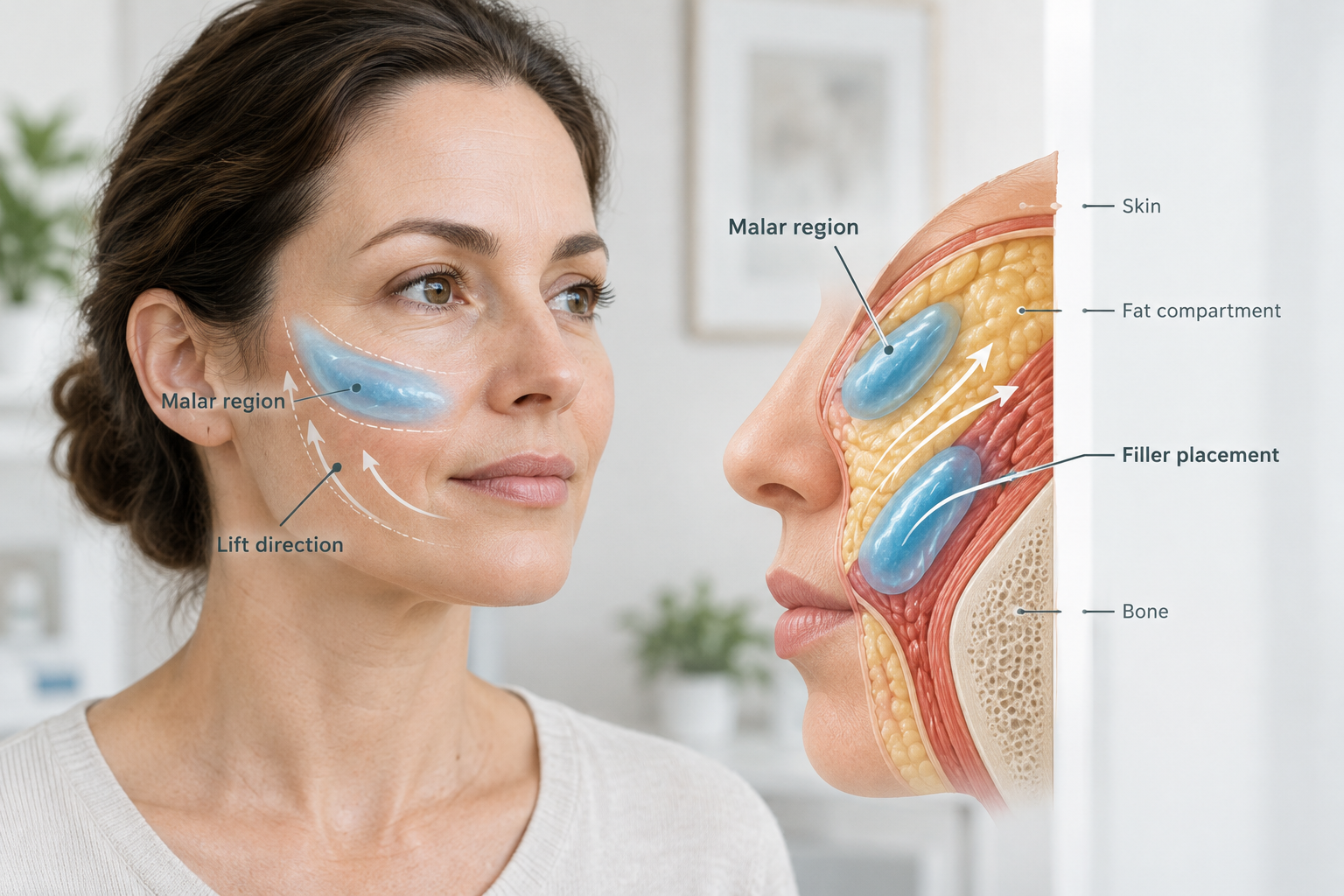
Practitioners may also use filler along the jawline itself in combination with cheek treatment to further define the lower face contour. The two areas are often addressed together in a full lower face rejuvenation plan, though the specific approach depends on individual anatomy and the practitioner’s assessment.
Who May Be a Suitable Candidate
Cheek filler for jowl improvement tends to produce the most satisfying results in patients whose jowling is primarily driven by volume loss and tissue descent rather than by significant skin laxity. Candidates who may benefit include those who have noticed a flattening of the cheeks alongside the development of jowls, those in their late thirties to mid-fifties who retain reasonable skin quality, and those seeking a non-surgical option with minimal downtime.
Patients with mild to moderate jowling are generally better candidates than those with advanced or severe jowling. When jowling is primarily the result of excess, heavily lax skin, adding volume to the cheeks alone is unlikely to produce a meaningful improvement and may in some cases add unwanted heaviness to the face. A practitioner experienced in facial anatomy will assess the relative contributions of volume loss, tissue descent, and skin laxity before recommending this approach.
Other factors that influence suitability include:
- Previous filler treatments in the same area, which may affect how new product integrates
- Medical history, including any bleeding disorders, autoimmune conditions, or medications that affect healing
- History of cold sores, which may require prophylactic antiviral treatment before injection
- Pregnancy or breastfeeding, during which elective aesthetic treatments are generally not recommended
- Active skin infection or inflammation in the treatment area
- Allergy to any component of the filler product
- Unrealistic expectations about the degree of correction achievable without surgery
A detailed consultation, including a full facial assessment and discussion of your goals, is necessary before any treatment decision is made.
What the Treatment Involves
Cheek filler treatment is typically performed in a clinic setting and does not require general anaesthesia. Most hyaluronic acid fillers used in the cheeks contain lidocaine, a local anaesthetic, which helps reduce discomfort during injection. A topical numbing cream may also be applied before treatment begins.
The practitioner will assess your facial structure, mark relevant anatomical landmarks, and cleanse the skin. Filler is then injected using either a fine needle or a blunt-tipped cannula. Cannulas are often preferred in the cheek area because they can reach a wider area through fewer entry points and may reduce the risk of bruising compared with needles, though both techniques are used by experienced practitioners depending on the clinical situation.
The appointment typically takes between 30 and 60 minutes, including consultation time and aftercare advice. The amount of filler used varies considerably between patients and depends on the degree of volume loss, the desired outcome, and the practitioner’s assessment. It is not possible to give a meaningful standard dose without individual assessment.
Immediately after treatment, the practitioner will usually massage the area gently to ensure even distribution and assess the result. You will normally be given aftercare instructions before leaving the clinic.
Recovery, Downtime, and Aftercare
Cheek filler treatment involves minimal downtime for most patients, though some degree of swelling, redness, and tenderness at the injection sites is common in the first 24 to 72 hours. Bruising is possible, particularly if small blood vessels are disrupted during injection, and may take up to two weeks to resolve fully. The cheeks may feel slightly firm or uneven immediately after treatment as the filler settles.
Most patients are comfortable returning to normal daily activities the same day or the following day, though social downtime of a few days is worth planning for if bruising is a concern. Strenuous exercise, alcohol, and significant heat exposure — such as saunas or steam rooms — are generally advised against for 24 to 48 hours after treatment, as these can increase swelling and bruising.
The final result is usually visible once initial swelling has resolved, which typically takes one to two weeks. Hyaluronic acid fillers also absorb water in the days following injection, which means the treated area may appear slightly more voluminous in the first week before settling to its longer-term appearance.
How Long Results May Last
The longevity of cheek filler varies depending on the specific product used, the volume injected, the depth of placement, individual metabolism, and lifestyle factors. In general, hyaluronic acid fillers placed in the cheeks tend to last longer than those placed in areas of high movement, such as the lips. Results in the cheek region are commonly reported to last between 12 and 24 months, with some patients maintaining a visible effect for longer.
Calcium hydroxylapatite fillers, which are denser and also stimulate collagen production, may offer a longer duration in some patients, though individual results vary. Over time, the body gradually breaks down hyaluronic acid through natural enzymatic processes, and the lifting effect diminishes as volume reduces. Maintenance treatments are typically needed to sustain the result.
It is worth noting that repeated treatments over time may have a cumulative benefit in some patients, as certain filler products can stimulate the body’s own collagen production. However, this effect is product-dependent and should not be assumed for all fillers.
Risks and Side Effects
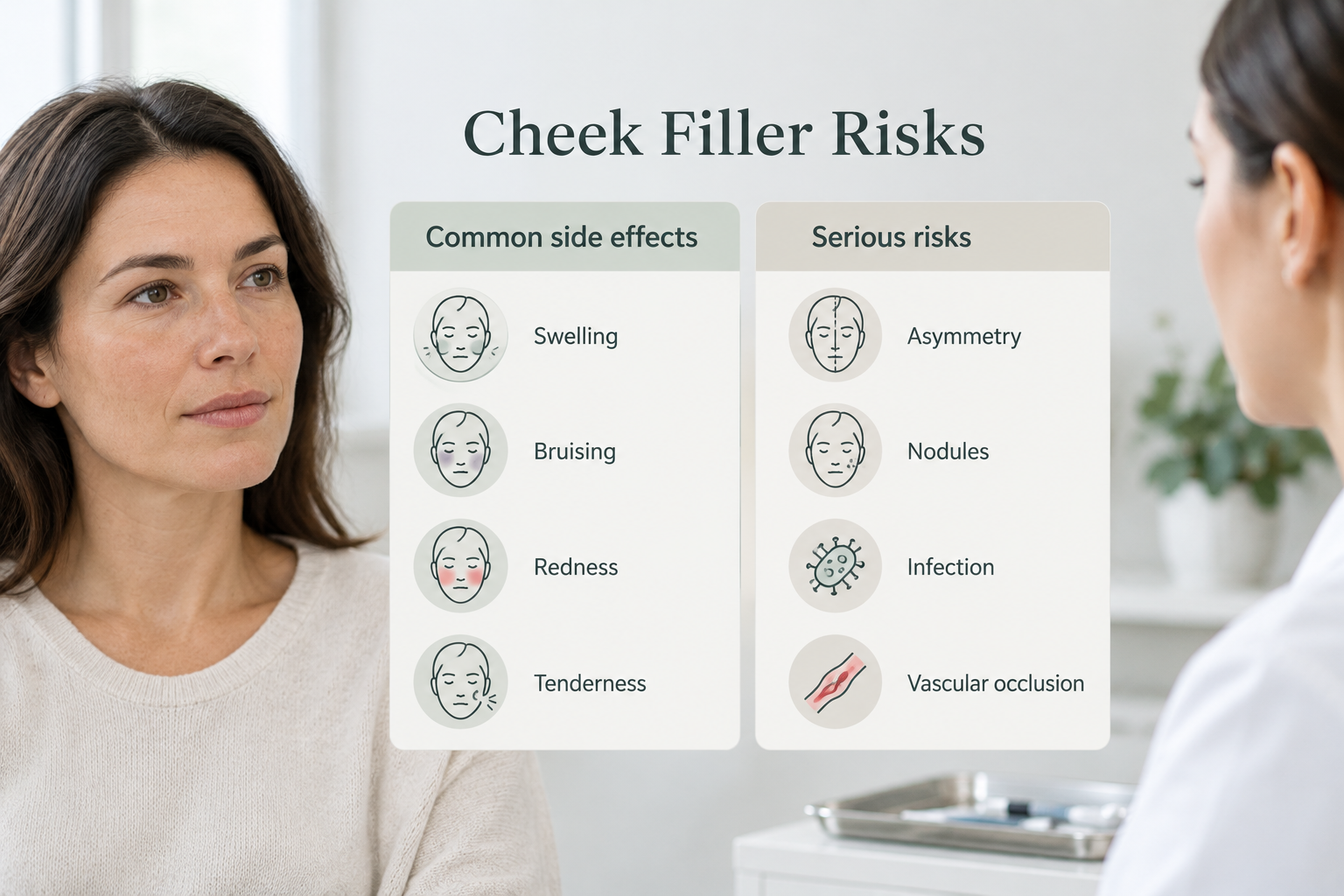
Dermal filler treatment in the cheeks carries risks that every prospective patient should understand before proceeding. Common side effects include temporary swelling, bruising, redness, and tenderness at injection sites. These typically resolve within one to two weeks without intervention.
Less common but more significant risks include:
- Asymmetry: Uneven placement or differential swelling can result in asymmetry, which may require correction with additional filler or, in the case of hyaluronic acid products, dissolution with hyaluronidase enzyme.
- Nodules or lumps: Filler can occasionally form palpable lumps under the skin, particularly if placed too superficially or if the product migrates.
- Infection: Any injectable treatment carries a small risk of infection. Signs include increasing pain, warmth, redness, or discharge after the first 48 hours, and should be assessed promptly by a medical professional.
- Delayed inflammatory reactions: Some patients experience delayed swelling or nodule formation weeks or months after treatment, sometimes triggered by illness or dental procedures. These reactions are uncommon but require medical assessment.
- Vascular occlusion: The most serious risk associated with dermal filler is accidental injection into or compression of a blood vessel, which can restrict blood flow to surrounding tissue. In the cheek area, this is rare but can have serious consequences including skin necrosis or, in very rare cases, visual complications. This risk underscores the importance of treatment by a qualified, experienced practitioner who understands facial vascular anatomy and has access to hyaluronidase for emergency reversal of hyaluronic acid filler.
- Tyndall effect: Superficial placement of filler can cause a bluish discolouration of the skin, known as the Tyndall effect, though this is more commonly associated with under-eye treatment than cheek treatment.
Choosing a practitioner with appropriate medical training, a thorough knowledge of facial anatomy, and access to emergency reversal agents is one of the most important safety decisions a patient can make.
Limitations of Cheek Filler for Jowl Correction
Cheek filler can improve the appearance of mild to moderate jowling in suitable candidates, but it is important to have realistic expectations about what this approach can and cannot achieve. Filler does not remove excess skin, tighten lax tissue, or address the muscular changes that contribute to lower face ageing. In patients with significant skin laxity or advanced jowling, the improvement from cheek volumising alone is likely to be modest.
There is also a risk of over-correction. Adding too much volume to the cheeks in an attempt to lift the lower face can result in an unnatural, overly full appearance — sometimes described informally as a pillow face effect — which does not reflect natural facial anatomy. An experienced practitioner will aim for a balanced, proportionate result rather than maximum volume.
Filler is also a temporary solution. Unlike surgical intervention, which can produce longer-lasting structural change, filler requires ongoing maintenance to sustain the effect. The cumulative cost of repeated treatments over several years is a practical consideration worth factoring into any decision.
Alternatives to Cheek Filler for Jowl Improvement
Several other approaches may be considered for jowl improvement, either alone or in combination with cheek filler, depending on the degree of concern and individual anatomy.
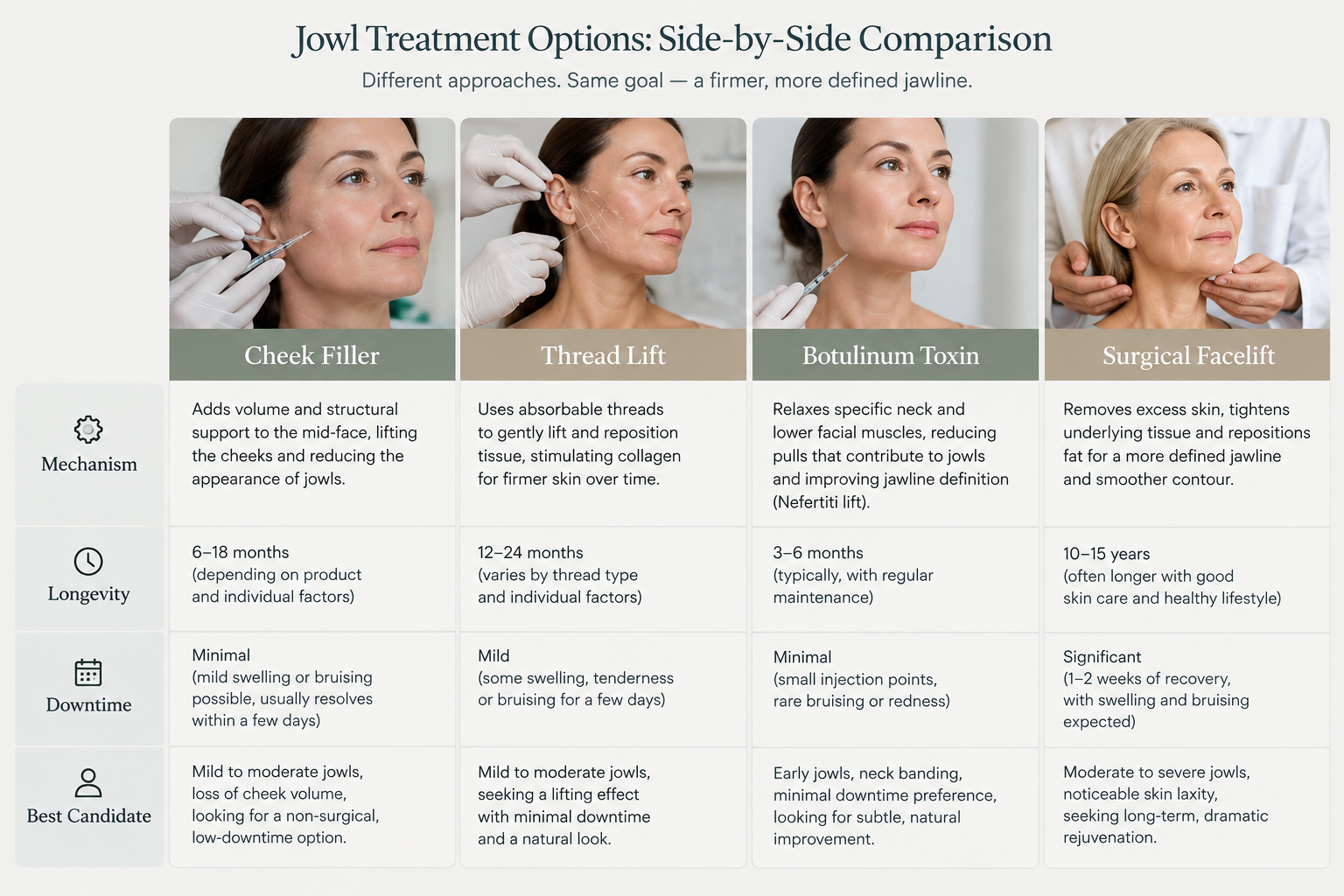
Thread lifts use dissolvable sutures inserted under the skin to mechanically lift and reposition descended tissue. They can be used in the mid-face and lower face and may complement cheek filler in some patients. Results are temporary and typically last 12 to 18 months, and thread lifts carry their own risk profile including the possibility of thread visibility, puckering, or infection.
Botulinum toxin injected into the platysma muscle of the neck and the depressor muscles of the lower face — sometimes called a Nefertiti lift — can reduce the downward pull on the lower face and improve jawline definition. This approach addresses muscular contributors to jowling rather than volume loss, and may be used alongside cheek filler as part of a comprehensive treatment plan.
Skin tightening devices such as high-intensity focused ultrasound (HIFU) and radiofrequency treatments aim to stimulate collagen production and tighten lax skin. These may be appropriate for patients whose jowling is partly driven by skin laxity, and can be combined with volumising treatments. Evidence for these devices varies, and results are generally more modest than surgical options.
Surgical options including a lower face lift or jowl lift remain the most effective intervention for significant jowling with skin laxity. Surgery produces structural changes that non-surgical treatments cannot replicate, and results are considerably longer-lasting. For patients with advanced jowling, a surgical consultation may be the most appropriate next step.
The right approach depends on the degree of jowling, the underlying causes, individual anatomy, lifestyle, and personal preference. A practitioner experienced in both surgical and non-surgical options is best placed to advise on which combination of treatments may be most appropriate.
Frequently Asked Questions
Can cheek filler really lift jowls, or is this just a marketing claim?
Cheek filler can produce a genuine, if modest, lifting effect on the lower face in suitable candidates by restoring mid-face volume and supporting descended tissue. The effect is anatomically logical and is observed clinically, but it is not equivalent to surgical lifting and works best in patients with mild to moderate jowling driven by volume loss rather than significant skin laxity.
How much filler is typically needed to see a difference in the jowl area?
The amount varies considerably between individuals and depends on the degree of volume loss, facial anatomy, and the desired outcome. This is something your practitioner will assess during consultation. Attempting to estimate a dose without examining the patient is not clinically meaningful, and practitioners who suggest a fixed amount without assessment should be approached with caution.
Will cheek filler make my face look unnatural or overfilled?
In the hands of an experienced practitioner who understands facial proportions and uses an appropriate volume, cheek filler should enhance natural contours rather than distort them. Over-treatment is a risk, particularly when large volumes are used in an attempt to achieve a significant lift. Discussing your concerns about a natural result during consultation is important.
Is cheek filler for jowls painful?
Most patients describe the procedure as uncomfortable rather than significantly painful. The use of lidocaine-containing filler products and topical anaesthetic cream before treatment helps manage discomfort. The cheek area is generally well tolerated, though individual pain thresholds vary.
Can cheek filler be reversed if I am unhappy with the result?
Hyaluronic acid fillers can be dissolved using an enzyme called hyaluronidase, which breaks down the filler relatively quickly. This is one of the reasons hyaluronic acid products are widely used — the reversibility provides a safety net. Calcium hydroxylapatite fillers cannot be dissolved in the same way, which is a relevant consideration when choosing a product.
How soon after treatment will I see the lifting effect on my jowls?
Some improvement may be visible immediately after treatment, though initial swelling can make it difficult to assess the final result accurately. The settled result is usually apparent after one to two weeks, once swelling has resolved and the filler has integrated with surrounding tissue.
Is it safe to combine cheek filler with other treatments for jowls?
Combining cheek filler with complementary treatments such as botulinum toxin, jawline filler, or skin tightening procedures is common in clinical practice and can produce a more comprehensive result than any single treatment alone. However, combination treatments should be planned carefully by an experienced practitioner, and it is not always appropriate to perform multiple treatments in the same session.
Is Cheek Volumising the Right Approach for Your Jowls?
Placing dermal filler in the cheeks to lift jowls is a clinically rational, non-surgical approach that can produce meaningful improvement in the right candidate. If your jowling is mild to moderate, if volume loss in the mid-face is a contributing factor, and if you have realistic expectations about the degree of correction achievable without surgery, cheek volumising may be worth discussing with a qualified practitioner.
The approach has genuine limitations. It does not address significant skin laxity, it requires maintenance to sustain results, and it carries the risks associated with any injectable treatment. For patients with more advanced jowling, a combination approach — or a surgical consultation — may ultimately provide a more satisfying outcome.
The most important step is a thorough assessment with a practitioner who has the anatomical knowledge, clinical experience, and honesty to recommend the approach that genuinely suits your face and your goals, rather than the one that is simply most convenient to offer. If you are considering this treatment, seek a consultation with a medically qualified aesthetic practitioner who can evaluate your individual anatomy and discuss all available options with you.