

Key Takeaways
- First stage mild rosacea is characterised by persistent facial redness lasting more than 30 minutes after a trigger, often with early thread veins appearing on the central face.
- It differs from pre-rosacea (Stage 1) in that redness is no longer purely transient — some degree of background erythema begins to remain between flare-ups.
- Identifying and managing personal triggers is one of the most effective ways to reduce flare frequency and slow progression.
- A gentle, fragrance-free skincare routine with a mineral sunscreen forms the foundation of daily management at this stage.
- Early intervention with topical treatments or laser therapy may help prevent permanent vascular damage and reduce the likelihood of progression to moderate or severe rosacea.
What Is Rosacea and How Does It Progress?
Rosacea is a chronic inflammatory skin condition that primarily affects the central face — the cheeks, nose, chin, and forehead. It is more common in people with fair skin and a genetic predisposition, and it tends to follow a pattern of flare-ups and periods of remission rather than resolving on its own. Without management, rosacea can progress through recognisable stages, each associated with more persistent and potentially permanent changes to the skin and underlying blood vessels.
The four-stage model — pre-rosacea, mild, moderate, and severe — is a practical framework for understanding how the condition evolves. It is related to, but distinct from, the subtype classification used by the National Rosacea Society (NRS), which groups rosacea into erythematotelangiectatic rosacea (subtype 1), papulopustular rosacea (subtype 2), phymatous rosacea (subtype 3), and ocular rosacea (subtype 4). Many patients with first stage mild rosacea fall within the erythematotelangiectatic subtype, characterised by flushing, persistent erythema, and visible blood vessels without papules or pustules.
Understanding where you are in this progression matters because the options available — and the likelihood of reversing or stabilising the condition — are significantly better at the mild stage than at later ones.
Pre-Rosacea vs Mild Rosacea: What Is the Difference?
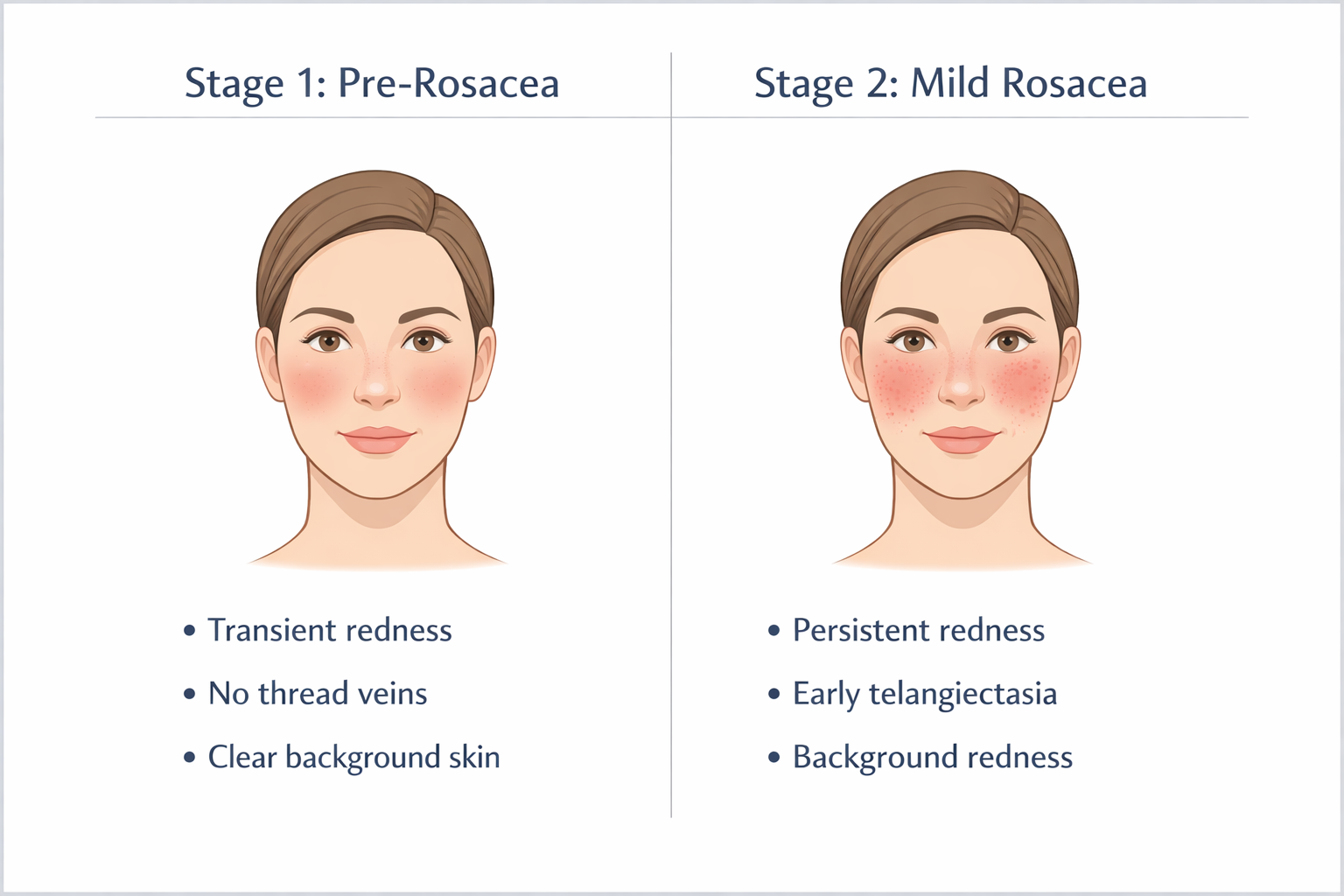
Many people who search for information about first stage mild rosacea are actually trying to work out whether they have moved beyond the earliest pre-rosacea phase. The distinction is clinically meaningful.
| Feature | Pre-Rosacea (Stage 1) | Mild Rosacea (Stage 2) |
|---|---|---|
| Redness duration | Transient — resolves within minutes | Persistent — may last 30+ minutes or linger between flares |
| Background erythema | Absent between flares | Beginning to appear between flares |
| Visible blood vessels | Not yet visible | Early telangiectasia / thread veins may be present |
| Skin sensitivity | Mild, intermittent | More consistent; products and temperature cause reactions |
| Papules or pustules | Absent | Absent (distinguishes from papulopustular subtype) |
| Structural skin change | None | Minor capillary damage beginning |
The key shift at the mild stage is that the skin no longer fully recovers between episodes. Persistent facial redness — even if subtle — begins to remain as a baseline, and the first signs of telangiectasia may appear as fine red lines across the cheeks or nose. At this point, the condition has moved from a purely functional vasomotor response to one involving early structural change in the superficial blood vessels.
Recognising the Symptoms of First Stage Mild Rosacea
First stage mild rosacea can be easy to dismiss as sensitive skin, a rosy complexion, or a reaction to weather. The following features, particularly when they occur together, suggest the condition has progressed beyond simple flushing.
- Persistent facial redness that remains for 30 minutes or longer after a known trigger, or that does not fully clear between episodes.
- Central face distribution — redness concentrated across the cheeks, nose, chin, and central forehead rather than the full face or isolated patches.
- Early telangiectasia — fine visible blood vessels, sometimes called thread veins or couperose, appearing on the cheeks or around the nose.
- Burning or stinging sensations when applying skincare products, particularly those containing alcohol, fragrance, or exfoliating acids.
- Skin sensitivity to temperature changes, wind, and certain foods or drinks.
- A rosy or flushed appearance that others may comment on as a healthy glow, but which the individual notices is becoming more constant.
Importantly, first stage mild rosacea does not typically involve papules (raised bumps) or pustules (spots). If these are present, the condition may have progressed to a moderate stage or may represent papulopustular rosacea, which warrants prompt clinical assessment.
Why Does Rosacea Develop? The Underlying Mechanisms
Rosacea is not simply a cosmetic sensitivity — it involves genuine pathophysiological changes in the skin. Understanding these mechanisms helps explain why the skincare and treatment approaches used for rosacea-prone skin are different from those used for other skin types.
Genetic predisposition plays a significant role. Rosacea is more common in people with fair skin and Fitzpatrick skin types I and II, and having a first-degree relative with the condition increases risk. At a cellular level, rosacea involves immune dysregulation, with inflammatory cytokines triggering an exaggerated response to stimuli that would not affect unaffected skin. Neurovascular hypersensitivity — an overreaction of the blood vessels and nerves in the skin — drives the vasomotor flushing that characterises early rosacea.
The skin barrier in rosacea-prone skin is also compromised. Increased skin permeability means that irritants, allergens, and environmental triggers penetrate more easily, perpetuating the inflammatory cycle. Research has also identified a possible role for Demodex folliculorum, a microscopic mite that lives on human skin in small numbers but is found in higher densities on rosacea-affected skin. The relationship between Demodex and rosacea is still being studied, but it has informed the development of topical ivermectin as a treatment option.
These mechanisms explain why rosacea cannot simply be treated with standard skincare and why a targeted, evidence-informed approach is needed — particularly at the mild stage, when intervention is most likely to be effective.
Common Rosacea Triggers and How to Identify Yours
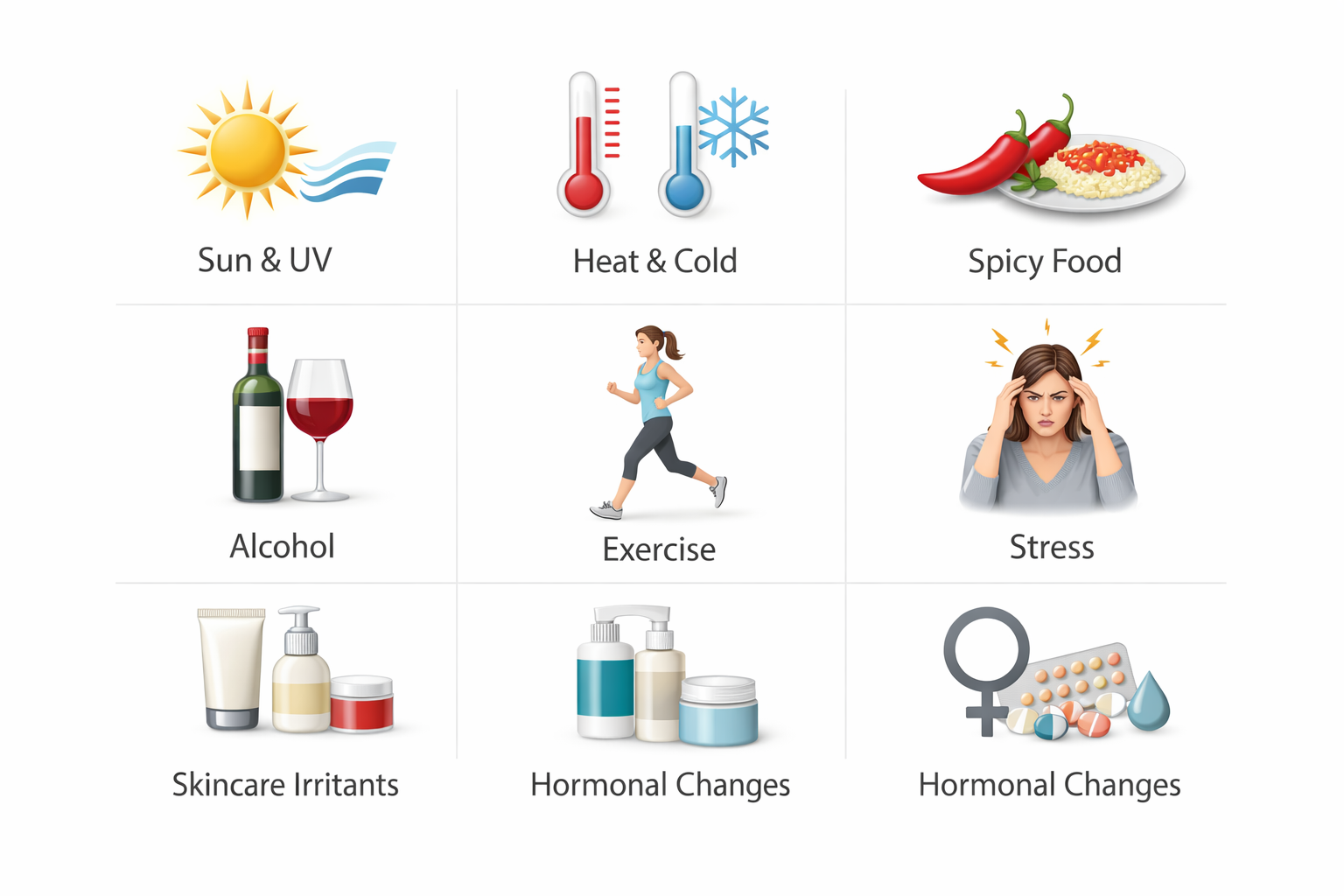
Rosacea triggers vary between individuals, which is why identifying personal triggers is more useful than following a generic avoidance list. The most commonly reported triggers include:
- Sun and UV exposure — one of the most consistent triggers across all rosacea subtypes
- Temperature extremes — hot weather, cold wind, hot baths or showers, saunas
- Spicy foods and hot beverages — including chilli, hot soups, and hot drinks (the temperature of the drink, not just the caffeine, may be relevant)
- Alcohol — particularly red wine, which contains histamine and other vasodilating compounds
- Physical exertion — exercise-induced flushing is common and can be managed with cooling strategies
- Stress and emotional responses — embarrassment, anxiety, and emotional stress all trigger vasomotor flushing
- Certain skincare ingredients — alcohol, fragrance, menthol, camphor, sodium lauryl sulphate (SLS), and high-concentration glycolic acid are frequent offenders
- Hormonal changes — menopause-related flushing can overlap with and exacerbate rosacea
The National Rosacea Society provides a rosacea trigger diary — a structured booklet that helps patients record flare-ups alongside food, activity, environment, and product use. Keeping a trigger diary for four to six weeks can reveal patterns that are not obvious day-to-day and allows for targeted lifestyle adjustments rather than unnecessary blanket restrictions.
Building a Skincare Routine for Mild Rosacea
A consistent, gentle skincare routine is the cornerstone of managing first stage mild rosacea. The goal is to support the compromised skin barrier, reduce inflammatory stimuli, and avoid triggering a rosacea flare-up through product choice or application technique.
Morning Routine
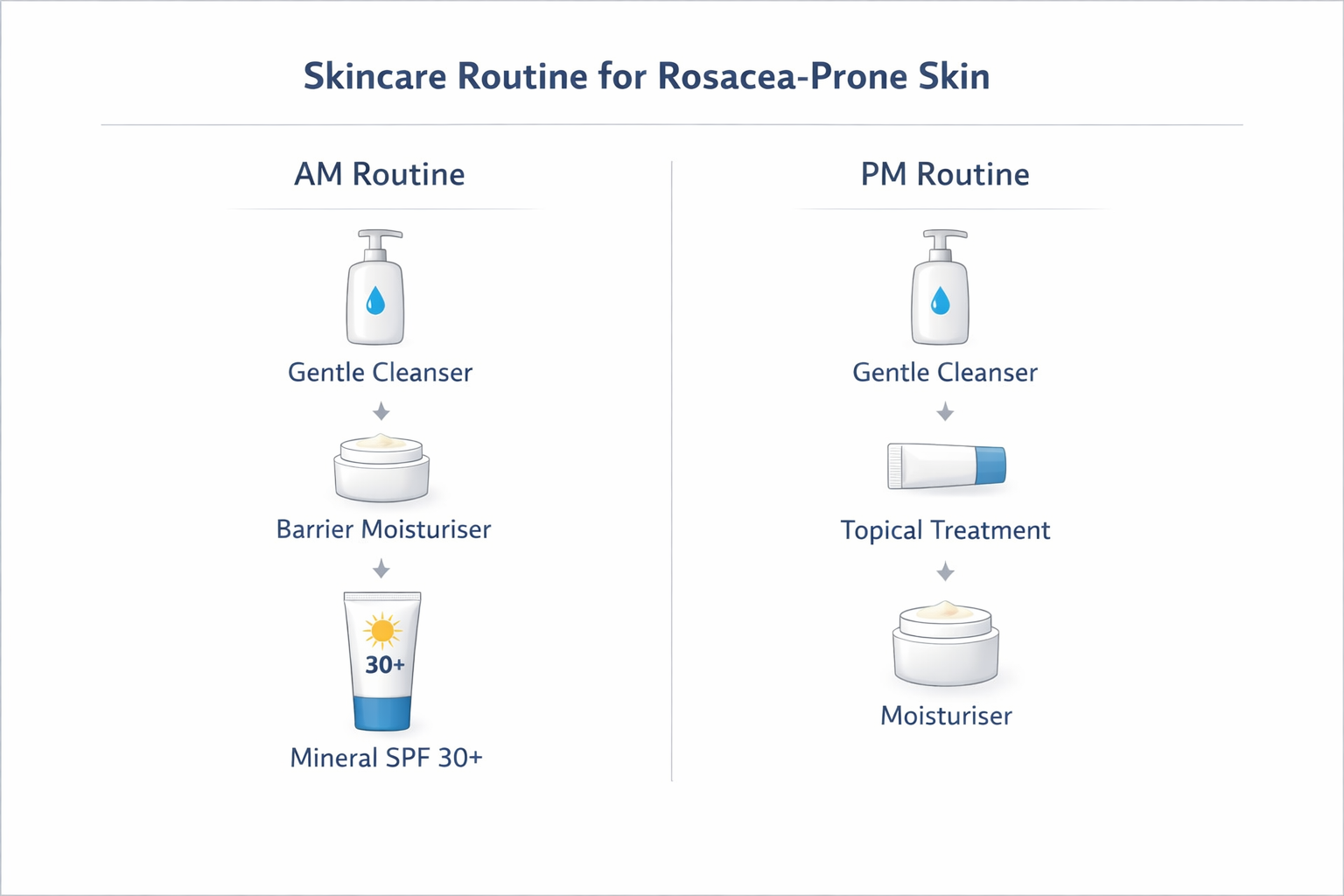
- Cleanse with a fragrance-free cleanser — non-foaming, sulphate-free formulas are less likely to disrupt the skin barrier. Use lukewarm water and fingertips only; avoid flannels, brushes, or anything abrasive.
- Apply a barrier-repair moisturiser containing ceramides, niacinamide, or hyaluronic acid. These ingredients help restore the skin’s protective function without causing irritation. Niacinamide in particular has mild anti-inflammatory properties that may benefit rosacea-prone skin.
- Apply a broad-spectrum mineral sunscreen with SPF 30 or higher. Mineral sunscreens containing zinc oxide or titanium dioxide are generally better tolerated by rosacea-prone skin than chemical UV filters, which can cause stinging or flushing in sensitive individuals. Sun exposure is one of the most reliable rosacea triggers, making daily SPF non-negotiable.
Evening Routine
- Cleanse again with the same gentle, fragrance-free cleanser to remove sunscreen, pollution, and any residue without stripping the skin.
- Apply any prescribed topical treatment as directed by your clinician (see the treatment section below).
- Moisturise with the same barrier-repair product used in the morning, or a slightly richer formulation if the skin feels dry.
Ingredients to Avoid
The following ingredients are commonly associated with rosacea flare-ups and are best avoided in cleansers, toners, serums, and moisturisers:
- Alcohol (denatured alcohol, ethanol, isopropyl alcohol)
- Fragrance and parfum (including essential oils such as lavender and peppermint)
- Menthol and camphor
- Sodium lauryl sulphate (SLS) and sodium laureth sulphate (SLES)
- High-concentration glycolic acid, lactic acid, and other AHAs
- Witch hazel
- Retinoids at high concentrations (low-concentration retinol may be tolerated by some patients but should be introduced cautiously and only under guidance)
Green-tinted primers or colour-correcting products can help neutralise redness for cosmetic purposes and are generally well tolerated, though they address appearance rather than the underlying condition.
Clinical Treatments for First Stage Mild Rosacea
Skincare and lifestyle management can significantly reduce flare frequency and slow progression, but they do not address the structural vascular changes — such as telangiectasia — that have already developed. Clinical treatments offer more targeted options.
Topical Prescription Treatments
Topical metronidazole (available as a gel or cream) is one of the most established prescription treatments for rosacea. It has anti-inflammatory properties and is typically applied once or twice daily. Results are usually seen within six to twelve weeks of consistent use.
Topical ivermectin cream (1%) is a newer option that targets both the inflammatory component of rosacea and the Demodex mite population on the skin. Clinical trials have shown it to be effective for reducing redness and inflammatory lesions, and it is generally well tolerated. It is now considered a first-line option by many dermatologists for erythematotelangiectatic and papulopustular rosacea.
Azelaic acid (15–20%) is another evidence-supported topical treatment with anti-inflammatory and mild antimicrobial properties. It is available in both prescription and some over-the-counter formulations and may be particularly useful for patients who also experience post-inflammatory pigmentation.
All prescription topical treatments should be initiated and monitored by a qualified clinician. Self-prescribing or using treatments intended for other skin conditions is not appropriate for rosacea management.
Laser and Light-Based Treatments
For patients with visible telangiectasia or persistent background erythema that does not respond adequately to topical treatment, laser and light-based therapies offer a more direct approach. These treatments target the haemoglobin in dilated blood vessels, causing them to collapse and be reabsorbed by the body.
Intense Pulsed Light (IPL) is widely used for erythematotelangiectatic rosacea and can reduce both diffuse redness and individual thread veins. Nd:YAG laser (1064nm) is another option, particularly for deeper or more resistant vessels. Fotona and other vascular laser platforms are also used in clinical practice. Multiple sessions are typically required, and results vary depending on skin type, the extent of vascular involvement, and individual response.
Early intervention with laser or IPL at the mild stage — before extensive telangiectasia has developed — is generally associated with better outcomes and fewer sessions than treatment at a more advanced stage. These treatments do not cure rosacea, but they can significantly reduce visible redness and may help prevent further vascular damage when combined with ongoing trigger management and skincare.
Oral Antibiotics
Short courses of oral antibiotics (typically doxycycline at sub-antimicrobial doses) are sometimes used for rosacea, primarily for their anti-inflammatory rather than antimicrobial effect. At the mild stage, oral antibiotics are less commonly needed unless topical treatments have not produced adequate improvement. They are generally used for four to six weeks and are not intended as a long-term solution.
The Psychological Impact of Mild Rosacea
The emotional and psychological effects of rosacea are well documented but often underacknowledged in clinical discussions. Even at the mild stage, persistent facial redness can affect confidence, social interactions, and professional life. Many people with rosacea report feeling self-conscious about their appearance, avoiding social situations, or spending significant time and money on cosmetic products to conceal redness.
Acknowledging this impact is important for two reasons. First, stress and anxiety are themselves recognised rosacea triggers, creating a cycle where distress about the condition can worsen it. Second, the psychological burden of rosacea is a legitimate reason to seek clinical assessment and treatment — not just a cosmetic concern. Patients who feel their rosacea is affecting their quality of life should be encouraged to discuss this with a clinician rather than waiting until the condition becomes more severe.
Can Mild Rosacea Be Reversed or Stopped from Progressing?
Rosacea cannot currently be cured, but it can be effectively managed — and the mild stage is the most favourable point at which to intervene. With consistent trigger avoidance, an appropriate gentle skincare routine, and clinical treatment where indicated, many patients achieve long periods of remission with minimal visible redness.
The structural changes that have already occurred — such as early telangiectasia — are unlikely to resolve on their own, but they can be reduced with laser or IPL treatment. Preventing further vascular damage is a realistic and achievable goal at this stage. Patients who delay treatment until rosacea has progressed to moderate or severe stages typically require more intensive intervention and may experience less complete improvement.
It is also worth noting that rosacea does not inevitably progress through all four stages. Many patients remain at the mild stage for years or indefinitely with appropriate management. The condition’s course is highly individual, and a clinician can help assess the likelihood of progression based on symptom pattern, trigger profile, and skin type.
When to See a Clinician
A clinical assessment is advisable if any of the following apply:
- Facial redness persists for more than 30 minutes after a trigger, or does not fully clear between episodes
- Fine red thread veins (telangiectasia) are becoming visible on the cheeks or nose
- Skincare products consistently cause burning, stinging, or increased redness
- Over-the-counter products have not improved the condition after several weeks of consistent use
- Redness is affecting confidence, social life, or daily activities
- Eye symptoms such as dryness, irritation, or redness are present alongside facial redness (this may indicate ocular rosacea, which requires separate management)
- Papules or pustules are developing alongside the redness
A dermatologist or trained aesthetic clinician can confirm the diagnosis, rule out other conditions that mimic rosacea (such as seborrhoeic dermatitis, lupus, or perioral dermatitis), and recommend a treatment plan appropriate to the stage and subtype.
Frequently Asked Questions
Is mild rosacea the same as Stage 1 rosacea?
No. In the four-stage model, Stage 1 refers to pre-rosacea — a phase of transient flushing that resolves quickly and leaves no lasting redness. Mild rosacea is Stage 2, where redness begins to persist and early structural changes such as telangiectasia may appear. The two stages require different management approaches.
Can mild rosacea go away on its own?
Rosacea is a chronic condition and does not typically resolve without management. However, with consistent trigger avoidance and appropriate skincare, many patients achieve long periods of remission where symptoms are minimal or not visible. Clinical treatments can further reduce persistent redness and thread veins.
What does mild rosacea look like?
Mild rosacea typically appears as a persistent rosy or flushed appearance across the central face — cheeks, nose, chin, and forehead. Fine red thread veins may be visible on the cheeks. The skin may look and feel sensitive, and redness tends to worsen noticeably after triggers such as sun exposure, heat, alcohol, or spicy food.
Is mild rosacea the same as sensitive skin?
Not exactly. Sensitive skin is a broad term that can describe many conditions. Mild rosacea involves a specific pattern of central face distribution, vasomotor flushing, and early vascular changes that distinguish it from general skin sensitivity. A clinician can help differentiate between the two, which matters because the treatment approach differs.
Can I use retinol if I have mild rosacea?
Retinoids can be irritating for rosacea-prone skin, particularly at higher concentrations. Some patients tolerate low-concentration retinol when introduced very gradually, but this should be discussed with a clinician before attempting. Prescription retinoids are generally not recommended at the mild stage unless a dermatologist advises otherwise.
How many IPL or laser sessions will I need for mild rosacea?
The number of sessions varies depending on the extent of redness and telangiectasia, skin type, and the specific device used. Most patients require between two and four sessions for meaningful improvement, with maintenance sessions potentially needed over time. A clinician will assess your skin and provide a more specific estimate at consultation.
Does mineral sunscreen really make a difference for rosacea?
Yes. Sun exposure is one of the most consistent and well-documented rosacea triggers, and daily use of a broad-spectrum mineral sunscreen with SPF 30 or higher is considered an essential part of rosacea management. Mineral sunscreens containing zinc oxide or titanium dioxide are generally better tolerated than chemical filters by rosacea-prone skin.
Taking Action at the Mild Stage: What to Consider Next
First stage mild rosacea is a meaningful point in the condition’s progression — early enough that intervention can prevent permanent vascular damage, but advanced enough that self-management alone may not be sufficient. The combination of trigger identification, a consistent gentle skincare routine with daily mineral sunscreen, and clinical treatment where appropriate gives the best chance of achieving long-term remission and avoiding progression.
If you recognise the symptoms described in this article — persistent facial redness, early thread veins, and skin sensitivity concentrated on the central face — a consultation with a dermatologist or experienced aesthetic clinician is a practical next step. A professional assessment can confirm the diagnosis, identify your rosacea subtype, and help you build a management plan tailored to your skin rather than a generic protocol. Early intervention is not about treating a cosmetic concern; it is about protecting your skin from changes that become progressively harder to reverse.