

Key Takeaways
- Microneedling — also called collagen induction therapy — uses controlled micro-injuries to stimulate the skin’s natural healing response and increase collagen and elastin production.
- Professional microneedling with a medical-grade device delivers significantly deeper, more consistent results than at-home derma rollers and carries a lower risk of infection when performed correctly.
- Choosing a qualified provider matters as much as choosing the treatment itself; credentials, device quality, and a proper consultation are all important factors to verify before booking.
- Most people require a series of three to six sessions spaced four to six weeks apart, with visible improvement continuing for several months after the final session as dermal remodeling progresses.
- Microneedling is generally not covered by insurance; per-session costs typically range from $200 to $700 depending on the treatment type, area, and any add-ons such as platelet-rich plasma (PRP).
What Is Microneedling and How Does It Work?
Microneedling, clinically referred to as collagen induction therapy, is a minimally invasive procedure that uses a device fitted with fine needles to create controlled micro-injuries across the surface of the skin. These tiny punctures — too small to be visible to the naked eye — penetrate the epidermis and reach the upper dermis, triggering the skin’s wound healing cascade without causing lasting damage to the surrounding tissue.
In response to these controlled micro-injuries, the body initiates a repair process involving fibroblast migration, the production of new collagen and elastin, and the release of growth factors that support tissue regeneration. Over the weeks and months that follow a session, this process of dermal remodeling gradually improves skin texture, firmness, and overall quality. The micro-channels created during treatment also temporarily increase skin permeability, which is why practitioners often apply hyaluronic acid serums or growth factor serums immediately after treatment — the skin can absorb these more effectively in the short window following the procedure.
Modern professional devices use motorized pens with adjustable needle depth, allowing the practitioner to target different skin layers depending on the concern being treated. This precision is one of the key differences between a medical-grade device used in a clinic and a basic derma roller used at home.
What Skin Concerns Can Microneedling Address?
Microneedling is used across a broad range of skin concerns, and its suitability for multiple Fitzpatrick skin types — including darker skin tones — makes it a versatile option where some laser treatments carry a higher risk of post-inflammatory hyperpigmentation.
- Acne scars: Atrophic (depressed) acne scars are among the most well-studied indications for microneedling. Multiple sessions can soften the appearance of rolling and boxcar scars by stimulating new collagen beneath the scar tissue.
- Fine lines and wrinkles: Microneedling may help reduce the appearance of fine lines around the eyes, mouth, and forehead by improving dermal density over time.
- Enlarged pores: Repeated sessions can contribute to a reduction in pore visibility as skin texture becomes more refined.
- Uneven skin texture and tone: Patients with rough texture, dullness, or mild uneven pigmentation often report improvement after a treatment series.
- Hyperpigmentation and melasma: Evidence for microneedling in melasma is developing; it may be used as part of a combination approach, though results vary and a careful assessment is needed for darker skin tones to minimize the risk of worsening pigmentation.
- Stretch marks and surgical scars: Microneedling is used for body areas affected by stretch marks or scarring, though these typically require more sessions and results are more variable than for facial acne scars.
- Skin laxity: Mild to moderate skin laxity may respond to microneedling, particularly when radiofrequency energy is combined with the needling (see RF microneedling below).
It is worth noting that microneedling produces gradual improvements rather than dramatic immediate changes. Realistic expectations and a clear understanding of what the treatment can and cannot achieve are important to establish during a consultation.
Types of Microneedling: Traditional, RF, and Add-Ons
Not all microneedling treatments are the same. Understanding the main variations helps you have a more informed conversation with a provider.
Traditional Microneedling
Standard microneedling uses a motorized pen device — such as the SkinPen or Dermapen — to create micro-channels at a controlled depth. It is effective for improving skin texture, tone, and mild to moderate scarring. Sessions typically last 30 to 60 minutes including numbing time, and downtime is generally limited to one to three days of redness and mild swelling.
Radiofrequency Microneedling (RF Microneedling)
Radiofrequency microneedling combines the needle-based mechanism with the delivery of radiofrequency energy into the dermis. Devices such as Morpheus8 and INTRAcel use insulated needles to deliver RF energy at a precise depth, generating additional heat that further stimulates collagen contraction and new tissue formation. RF microneedling is particularly useful for skin laxity and deeper textural concerns, and it tends to produce more pronounced tightening effects than standard microneedling alone. It is generally priced higher and may involve slightly more downtime.
The FDA issued a safety communication in October 2025 regarding RF microneedling devices, noting reports of adverse events including burns and scarring associated with improper use. This underscores the importance of choosing a provider who uses an FDA-cleared device and has appropriate training with the specific system.
Microneedling with PRP
Platelet-rich plasma (PRP) is a common add-on in which a small amount of the patient’s own blood is processed to concentrate growth factors, which are then applied to the skin immediately after microneedling. Sometimes called a vampire facial, this combination is intended to enhance the healing response. Evidence for PRP as an adjunct to microneedling is promising for acne scars, though research is still developing and results vary between individuals.
Exosome and Growth Factor Add-Ons
Some clinics now offer exosome therapy or concentrated growth factor serums applied during or after microneedling. These are positioned as enhanced recovery and results boosters. The evidence base for exosome add-ons is still emerging, and patients should ask providers to explain the rationale and any available clinical data before agreeing to these additions.
Professional Microneedling vs. At-Home Derma Rollers
| Factor | Professional Microneedling | At-Home Derma Roller |
|---|---|---|
| Needle depth | 0.5–3.5 mm, adjustable per area | Typically 0.2–0.5 mm |
| Device type | Medical-grade motorized pen | Manual roller, non-medical grade |
| Sterility | Single-use sterile cartridges, clinical environment | Variable; reuse increases infection risk |
| Numbing | Topical numbing cream applied before treatment | Usually none |
| Depth of effect | Reaches dermis; stimulates fibroblasts | Primarily superficial; limited dermal effect |
| Results | Clinically documented improvement in scars, texture, laxity | Mild improvement in product absorption; limited structural change |
| Risk of adverse effects | Low when performed correctly by a trained provider | Higher risk of infection, irritation, or uneven trauma if misused |
| Cost | $200–$700+ per session | $20–$100 for device |
At-home derma rollers are not equivalent to professional microneedling. The needle depth achievable at home is insufficient to reach the dermis where meaningful collagen stimulation occurs, and the risk of introducing bacteria into micro-channels is a genuine concern with reusable devices. For patients seeking visible improvement in acne scars, skin laxity, or texture, professional treatment with a medical-grade device is the appropriate option.
What to Expect During a Microneedling Appointment
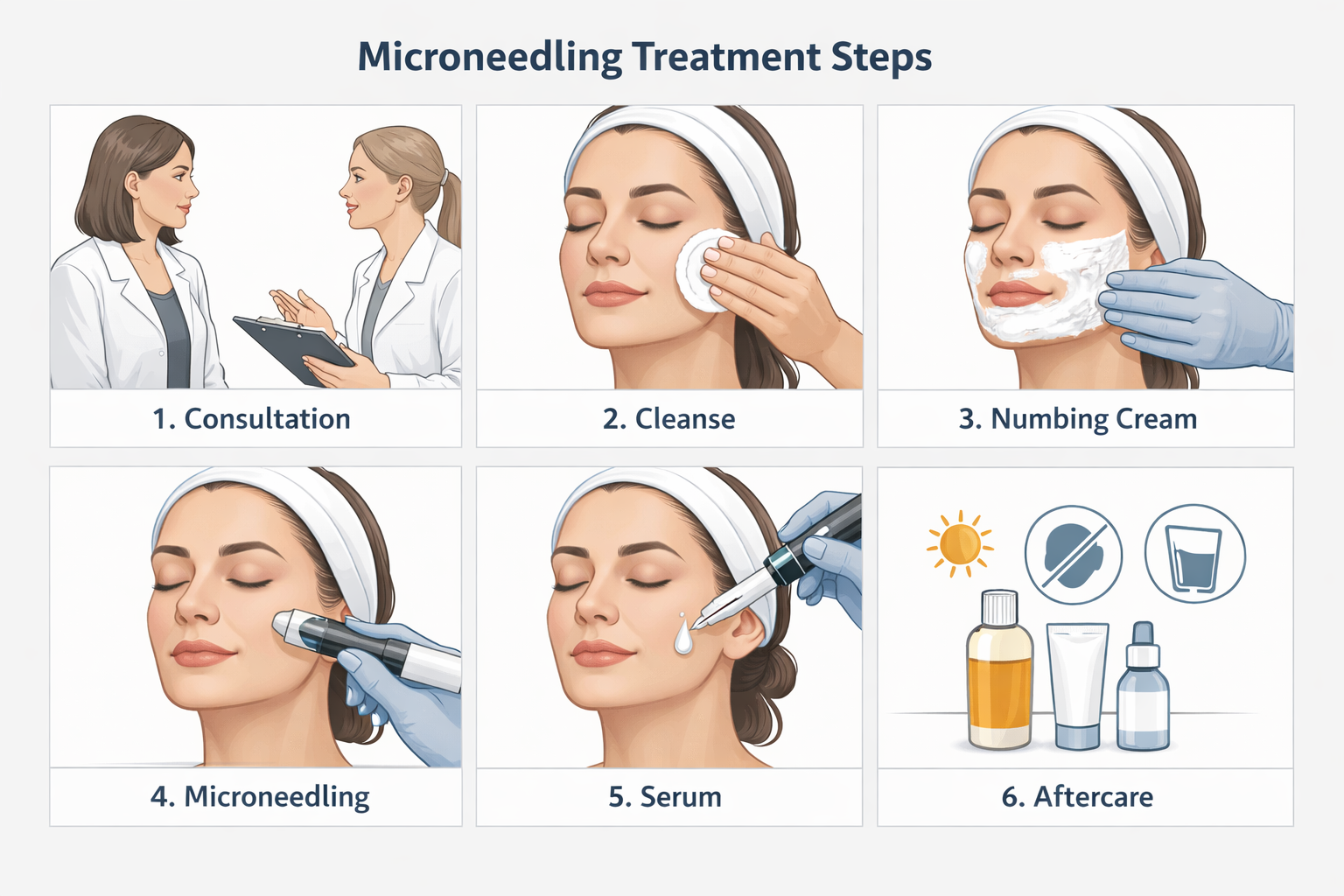
- Consultation and skin assessment: A qualified provider will review your skin concerns, medical history, current medications, and skin type before recommending a personalized treatment plan. This is also the time to ask about the device being used, the practitioner’s credentials, and expected outcomes.
- Skin preparation: The treatment area is cleansed thoroughly to remove makeup, oils, and bacteria.
- Topical numbing cream: A topical numbing cream is applied and left on for approximately 20 to 45 minutes to minimize discomfort during the procedure.
- The microneedling pass: The practitioner moves the device systematically across the treatment area. You may feel a mild scratching or vibrating sensation. The depth and speed are adjusted based on the area and concern being treated.
- Serum application: Immediately after needling, a hyaluronic acid serum or growth factor serum is applied to take advantage of the increased skin permeability created by the micro-channels.
- Aftercare instructions: The provider will give you specific aftercare instructions before you leave. Following these carefully is important for both safety and results.
The appointment itself typically takes 60 to 90 minutes from arrival to departure, with the actual needling lasting around 20 to 30 minutes depending on the area treated.
Microneedling Aftercare: A Day-by-Day Recovery Timeline
Microneedling is associated with minimal downtime compared to more ablative procedures, but the skin does need careful management in the days following treatment.
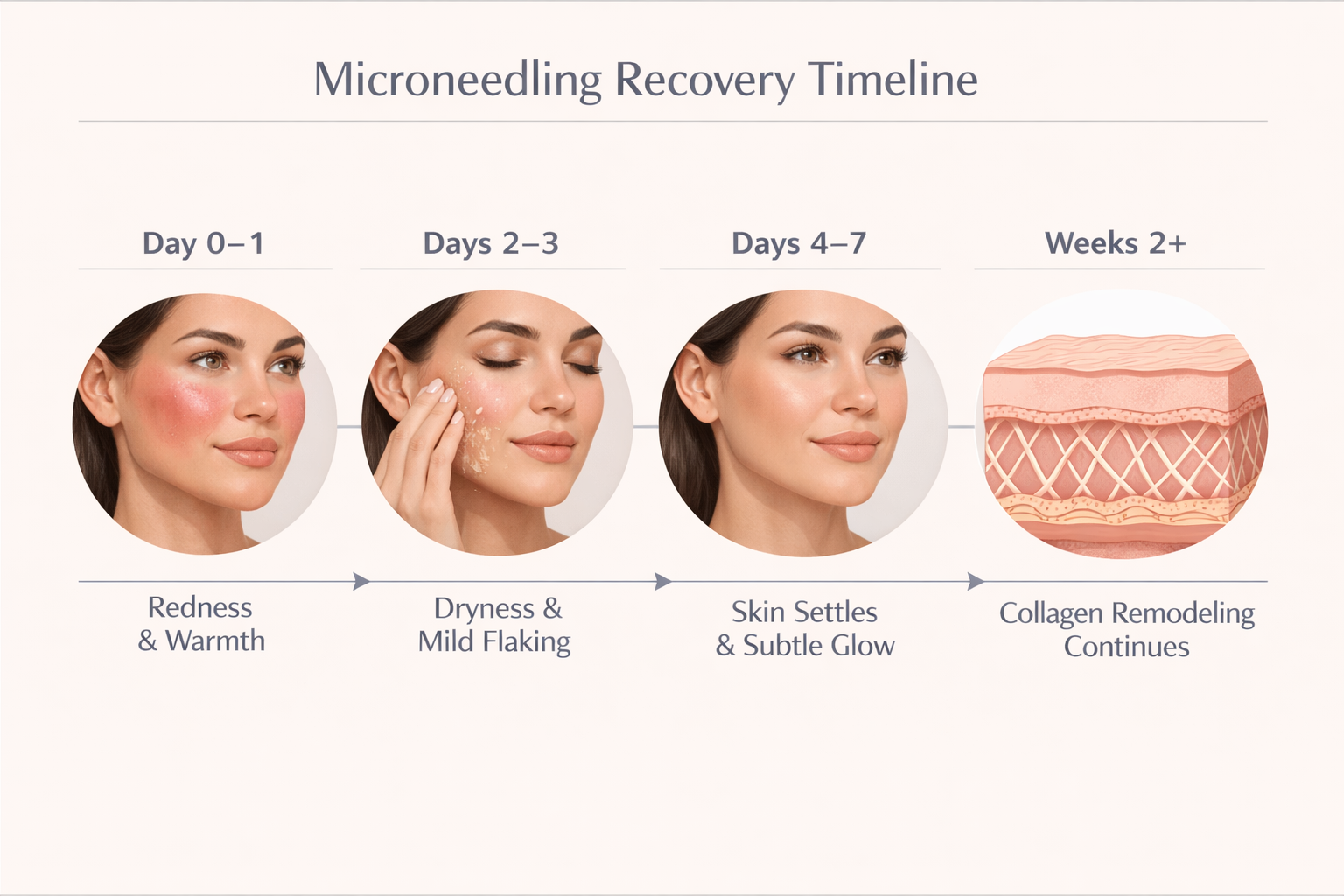
Day 0–1 (Treatment Day and the Following Morning)
Expect noticeable redness and a sensation similar to mild sunburn. Some patients experience minor swelling, particularly around the eyes and cheeks. Avoid makeup, active skincare ingredients (retinoids, vitamin C, AHAs, BHAs), strenuous exercise, and direct sun exposure. Use only a gentle cleanser and a fragrance-free moisturizer. Apply SPF 30 or higher if going outdoors.
Days 2–3
Redness typically begins to subside. Some patients notice mild dryness, tightness, or very fine flaking as the skin begins to repair. Continue avoiding active ingredients and sun exposure. Hyaluronic acid-based products are generally well tolerated at this stage.
Days 4–7
Most patients see the surface redness resolve and skin begin to look more settled. A subtle glow or improvement in texture may be noticeable. Full surface healing is usually complete within five to seven days, though the deeper process of collagen remodeling continues for weeks to months beneath the surface.
Weeks 2 Onward
Collagen synthesis and dermal remodeling continue progressively. Visible improvements in texture, tone, and scar appearance typically become more apparent four to six weeks after each session, with the full benefit of a treatment series often peaking three to six months after the final appointment. Consistent SPF use during this period is important to protect the remodeling skin from UV-induced pigmentation.
How Many Sessions Are Needed and How Long Do Results Last?
Session frequency and the total number of treatments depend on the concern being addressed. For general skin texture and tone improvement, most providers recommend a series of three sessions spaced four to six weeks apart. For more significant acne scarring or skin laxity, a series of four to six sessions is more typical.
Results from a completed treatment series can last 12 to 18 months or longer, depending on the individual’s skin, age, sun exposure habits, and skincare routine. Maintenance sessions every six to twelve months are commonly recommended to sustain the improvements achieved. Because collagen production naturally declines with age, ongoing maintenance becomes increasingly relevant over time.
Who Is a Good Candidate for Microneedling?
Microneedling is suitable for a wide range of patients across all Fitzpatrick skin types I through VI. Its relatively low risk of post-inflammatory hyperpigmentation in darker skin tones makes it a preferred option over certain laser treatments for patients with Fitzpatrick types IV to VI, though a thorough skin assessment is still essential.
Good candidates are generally adults with realistic expectations who are concerned about acne scars, fine lines, uneven skin texture, enlarged pores, or mild skin laxity, and who are not currently experiencing any of the contraindications listed below.
Who Should Avoid Microneedling
- Pregnancy or breastfeeding
- Active acne breakouts, eczema, psoriasis, or rosacea flares in the treatment area
- Open wounds, cold sores, or active skin infections
- Recent use of isotretinoin (Accutane) — most providers recommend waiting at least six months after completing a course
- Blood-thinning medications (discuss with your prescribing doctor and the treating practitioner)
- Compromised immune system or conditions affecting wound healing
- History of keloid scarring (microneedling may worsen keloid formation in susceptible individuals)
- Implanted electronic devices such as pacemakers (particularly relevant for RF microneedling)
This list is not exhaustive. A full medical history review during a consultation is the appropriate way to determine individual suitability.
How Much Does Microneedling Cost?
| Treatment Type | Approximate Cost Per Session |
|---|---|
| Standard microneedling (face) | $200 – $500 |
| Standard microneedling (body area) | $250 – $600 |
| Microneedling with PRP add-on | $600 – $900 |
| RF microneedling (e.g., Morpheus8) | $700 – $1,500+ |
| 3-session package (standard) | $900 – $2,000 |
| Maintenance session | $200 – $500 |
Pricing varies considerably depending on geographic location, the type of clinic (medical spa versus dermatology practice), the device used, the practitioner’s credentials, and whether add-ons such as PRP or exosome serums are included. Microneedling is a cosmetic procedure and is not covered by health insurance. Many clinics offer package pricing for a series of sessions, which typically represents a modest saving compared to booking individually. Some practices also offer financing or payment plan options — it is worth asking about these during your consultation if cost is a consideration.
How to Find a Qualified Microneedling Provider Near You
The quality and safety of microneedling depend heavily on the provider performing it. The same treatment can produce very different outcomes depending on the practitioner’s training, the device used, and the clinical environment. When searching for microneedling near you, the following checklist can help you evaluate providers before booking.
Credentials to Look For
- A board-certified dermatologist, plastic surgeon, or physician with aesthetic training
- A registered nurse (RN) or physician assistant (PA) working under medical supervision
- A licensed aesthetician operating within a medically supervised clinic or med spa
- Specific training or certification in the device being used (e.g., SkinPen or Dermapen certification)
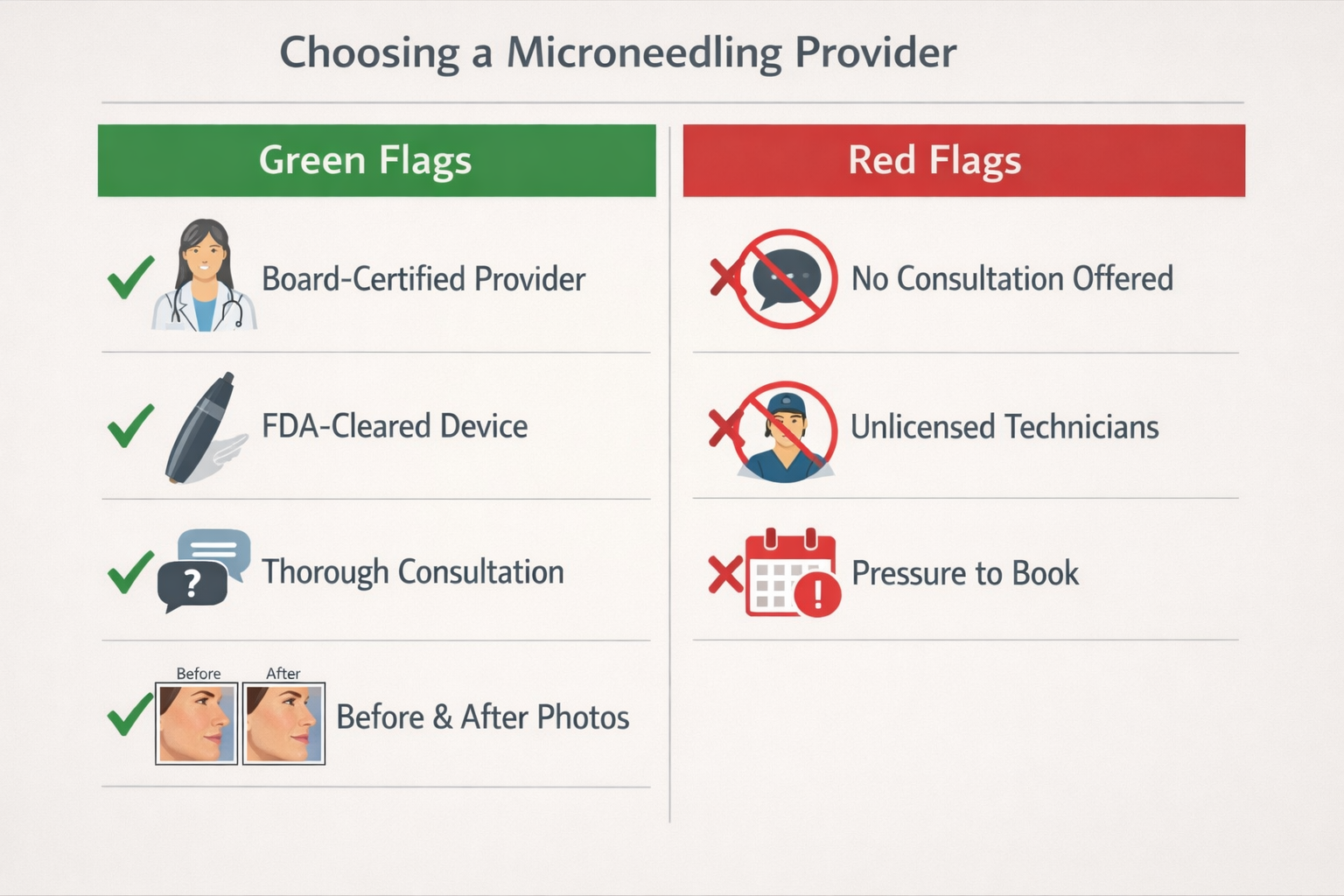
Green Flags
- A thorough consultation and skin assessment before any treatment is recommended
- Transparent pricing with no pressure to book immediately
- Use of an FDA-cleared device with single-use sterile cartridges
- A portfolio of before-and-after photos showing realistic patient results
- Clear written aftercare instructions provided at or before the appointment
- Willingness to discuss contraindications and whether you are a suitable candidate
Red Flags
- No consultation offered before treatment
- Inability or unwillingness to name the device being used
- Unlicensed technicians performing the procedure without medical oversight
- Unusually low pricing that may indicate compromised sterility or non-medical-grade equipment
- Pressure to purchase large packages before you have had a single session
Questions to Ask Before Booking
- What device do you use, and is it FDA-cleared?
- What are your qualifications and how long have you been performing microneedling?
- How many sessions do you recommend for my specific concern, and why?
- What does the aftercare involve, and what should I avoid before and after treatment?
- Are there any reasons I might not be a suitable candidate based on my medical history?
- Can I see before-and-after photos of patients with similar concerns to mine?
- What is included in the quoted price, and are there additional costs for serums or add-ons?
2025–2026 Technology Developments Worth Knowing
The microneedling landscape has continued to evolve. RF microneedling devices have become more refined, with newer platforms offering more precise energy delivery and improved safety profiles for a wider range of skin tones. Some clinics are beginning to incorporate AI-assisted pen devices that adjust needle speed and depth in real time based on skin resistance, though the clinical evidence for these systems is still accumulating.
Exosome therapy as a post-microneedling add-on has gained significant attention in 2025 and 2026, with early data suggesting potential benefits for skin regeneration and recovery. However, the regulatory landscape for exosome products varies by country, and patients should ask providers about the specific product being used and its regulatory status before proceeding.
Frequently Asked Questions
Does microneedling hurt?
Most patients describe the sensation as mild scratching or vibrating rather than sharp pain. A topical numbing cream is applied before treatment and significantly reduces discomfort. Sensitivity varies by area — the forehead and bony areas tend to be more sensitive than the cheeks. RF microneedling may involve slightly more sensation due to the heat component.
How soon will I see results?
An initial improvement in skin radiance is sometimes noticeable within a week of the first session. More meaningful changes in texture, scarring, and firmness typically become visible four to six weeks after each session as collagen remodeling progresses. The full benefit of a treatment series is usually most apparent three to six months after the final appointment.
Can microneedling be done on the body as well as the face?
Yes. Microneedling is used on the neck, décolletage, abdomen, thighs, and other body areas, particularly for stretch marks and surgical scars. Body treatments may require longer session times and often need more sessions than facial treatments to achieve comparable improvement.
Is microneedling safe for darker skin tones?
Microneedling is generally considered safer for Fitzpatrick skin types IV through VI than many laser treatments because it does not rely on light-based energy that can affect melanin. However, there is still a risk of post-inflammatory hyperpigmentation if the skin is over-treated or if aftercare is not followed carefully. A provider experienced with skin of color and a conservative initial approach are important considerations.
How does microneedling differ from a chemical peel or laser resurfacing?
Microneedling works through mechanical stimulation of the dermis rather than chemical exfoliation or light-based energy. It generally involves less downtime than ablative laser resurfacing and carries a lower risk of pigmentation changes in darker skin tones compared to some laser options. Chemical peels primarily target the epidermis and upper dermis through controlled chemical exfoliation. The best option depends on the specific concern, skin type, and desired recovery time — a consultation with a qualified provider can help determine which approach is most appropriate.
Can I wear makeup after microneedling?
Most providers recommend avoiding makeup for at least 24 hours after treatment, and ideally 48 hours, to reduce the risk of introducing bacteria or irritants into the micro-channels while the skin barrier is temporarily compromised. Mineral-based makeup is generally considered less irritating if coverage is needed sooner, but follow your provider’s specific aftercare instructions.
Making an Informed Decision About Microneedling Near You
Microneedling is a well-established, evidence-supported treatment for a range of skin concerns including acne scars, fine lines, enlarged pores, and uneven texture. Its suitability across diverse skin types, combined with minimal downtime and a manageable recovery process, makes it one of the more accessible non-surgical skin treatments available at medical spas and dermatology clinics.
That said, results are gradual and cumulative rather than immediate, and the quality of the outcome depends significantly on the provider’s training, the device used, and how carefully aftercare instructions are followed. A single session is unlikely to produce dramatic change; a properly planned series with realistic expectations is the more appropriate framework for most patients.
If you are considering microneedling, the most useful first step is booking a consultation with a qualified practitioner — ideally a board-certified dermatologist, RN, or PA working within a medically supervised environment — who can assess your skin, discuss your goals, and recommend a personalized treatment plan based on your specific concerns and medical history. Use the provider checklist in this guide to help you evaluate your options before committing to a booking.