

Key Takeaways
- Dermapen microneedling uses a motorised pen device to create controlled micro-injuries that trigger the skin’s natural wound-healing cascade, stimulating collagen and elastin production.
- The Dermapen 4 device features adjustable needle depth and vertical stamping technology, making it adaptable to different skin concerns and treatment areas.
- Common uses include acne scar reduction, fine lines, uneven skin texture and tone, hyperpigmentation, enlarged pores, and stretch marks.
- Most patients require three to six sessions spaced four to six weeks apart; visible improvement typically develops over several weeks as new collagen matures.
- The treatment carries a well-established safety profile across all Fitzpatrick skin types, though it is not suitable for everyone and a clinical assessment is essential before booking.
What Is Dermapen Microneedling?
Dermapen microneedling is a form of collagen induction therapy (CIT) — a technique that uses fine needles to create thousands of controlled micro-injuries in the skin’s surface. These tiny punctures are not intended to cause harm; instead, they trigger the body’s natural healing response, prompting the skin to produce new collagen and elastin fibres as it repairs itself. The result, over a series of treatments, is progressively firmer, smoother, and more even-toned skin.
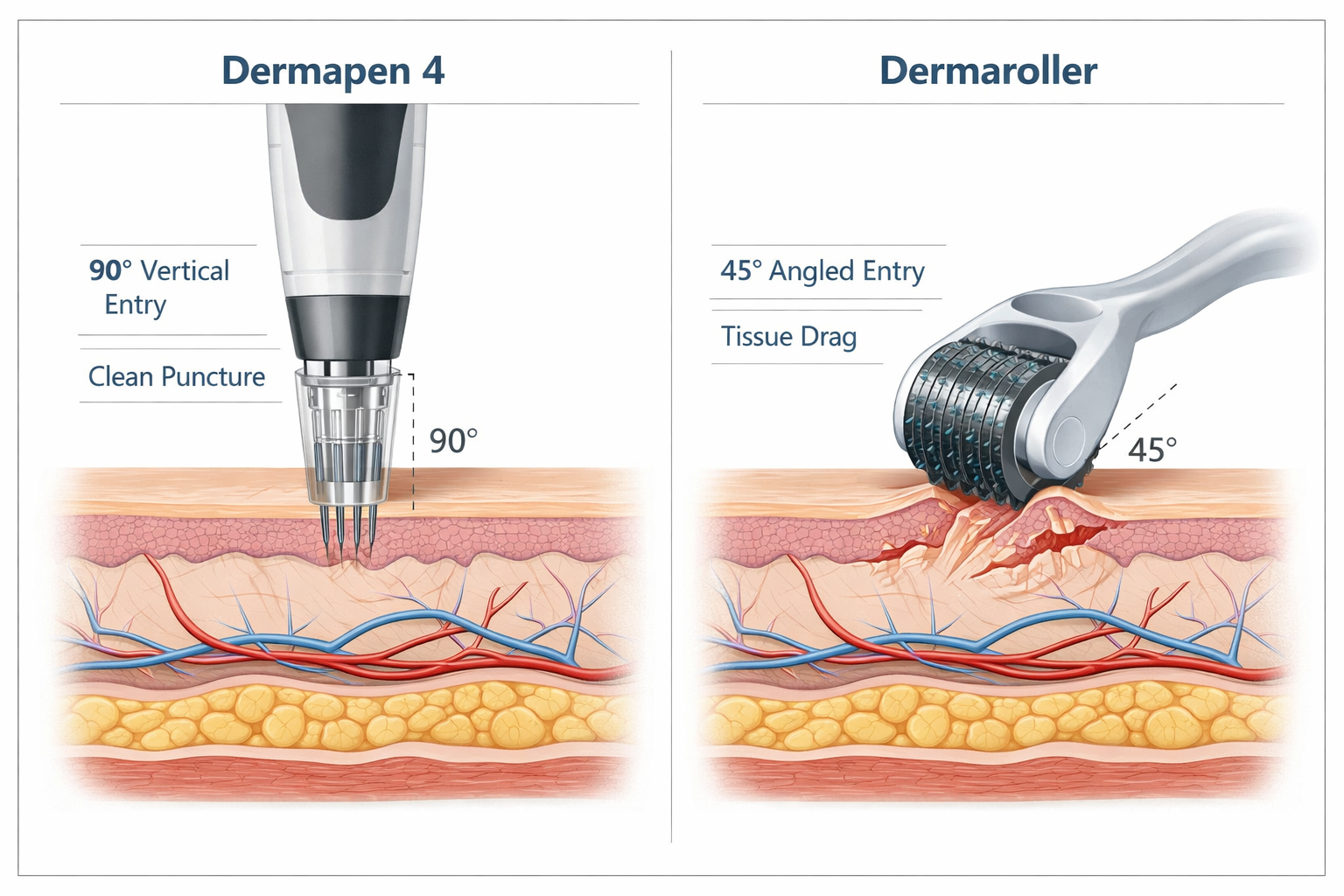
The Dermapen device is a motorised, pen-shaped instrument that holds a disposable sterile cartridge containing a cluster of fine needles — typically a 12-needle cartridge. Unlike older dermarollers, which drag needles across the skin at an angle, the Dermapen uses vertical stamping technology: the needles move straight up and down, creating clean, precise puncture channels rather than tearing the tissue. This distinction matters clinically, as vertical entry reduces epidermal trauma and supports more consistent healing.
The current generation device, Dermapen 4, can deliver up to 1,920 puncture channels per second across multiple speed settings. The adjustable needle depth — ranging from approximately 0.5 mm to 2.5 mm — allows a trained practitioner to target different layers of the skin depending on the concern being treated. Shallower settings address surface texture and product absorption; deeper settings reach the papillary and reticular dermis where structural collagen remodelling occurs.
How Dermapen Microneedling Works: The Biology
Understanding the mechanism helps set realistic expectations. When the Dermapen device creates controlled micro-injuries in the skin, it initiates a wound-healing cascade — the same biological sequence the body uses to repair any minor tissue damage. This process unfolds in three overlapping phases: inflammation, proliferation, and remodelling.
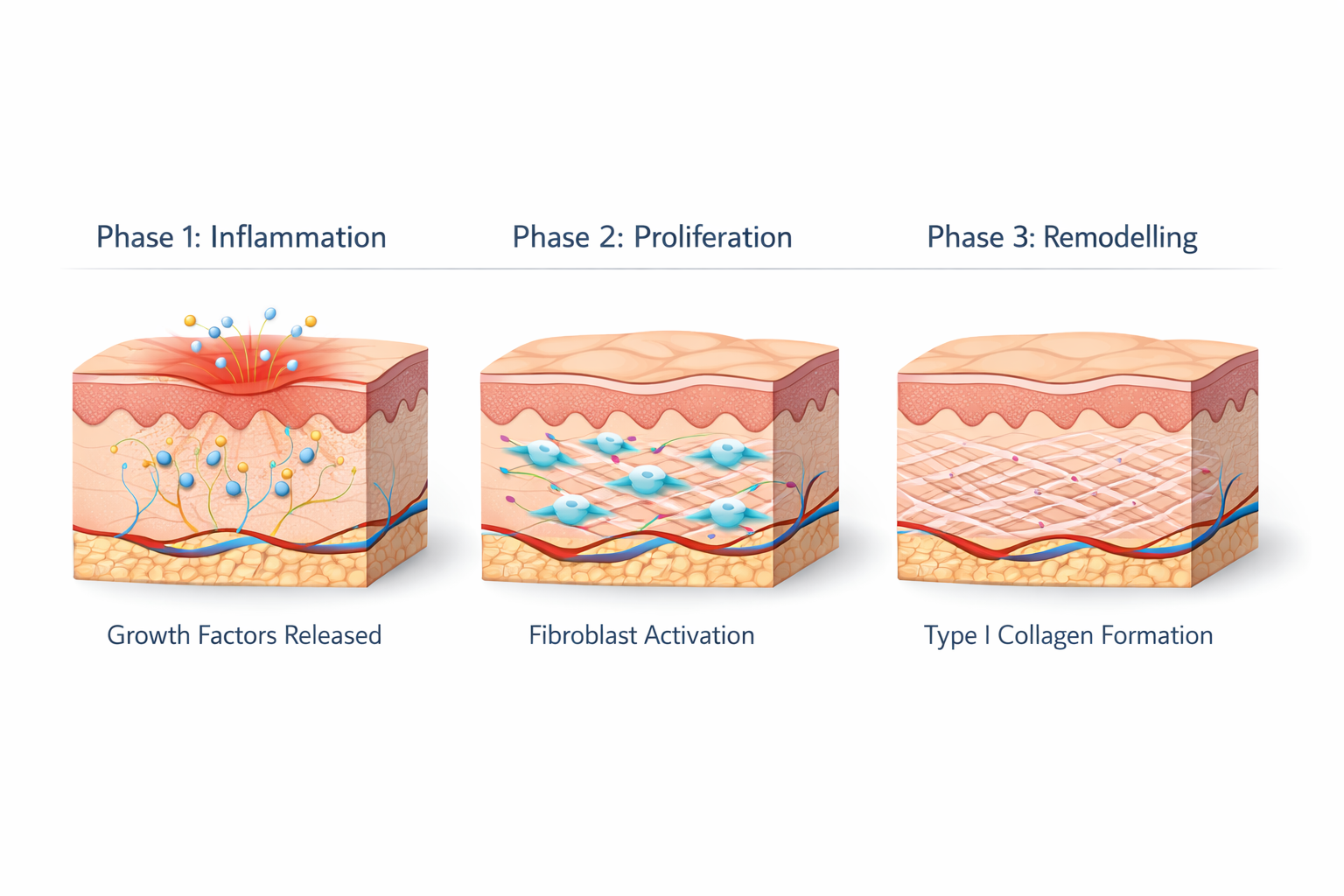
During the inflammatory phase, the body increases blood flow to the treated area and releases growth factors including vascular endothelial growth factor (VEGF), epidermal growth factor (EGF), and transforming growth factor beta-3 (TGF-β3). These signalling molecules recruit fibroblasts — the skin cells responsible for producing structural proteins — to the site of injury. Fibroblast activation is the central event that drives the treatment’s long-term benefits.
In the proliferative phase, activated fibroblasts begin synthesising new collagen and elastin. Initially, the body lays down Type III collagen, which is softer and more flexible — this is why some patients notice an early improvement in skin quality within the first week or two. Over the following six to eight weeks, Type III collagen is gradually replaced by the stronger, more organised Type I collagen, which forms the structural scaffold responsible for lasting improvements in firmness and texture. This collagen transition is why results continue to develop well after the treatment session itself.
The microchannels created during treatment also temporarily increase epidermal permeability, which is why practitioners often apply active serums — such as hyaluronic acid or growth factor formulations — immediately after needling. This transdermal product absorption effect means that topical ingredients can penetrate far more deeply than they would through intact skin, enhancing the overall outcome.
Skin Conditions Dermapen Microneedling May Address
Dermapen microneedling is used across a broad range of skin concerns. The depth and speed settings are adjusted depending on the condition being treated, which is why a thorough consultation and clinical assessment are important before any session begins.
Acne Scars
Acne scar reduction is one of the most evidence-supported applications of microneedling. Atrophic acne scars — the depressed, pitted marks left by inflammatory acne — form when the skin loses collagen during the healing process. By stimulating new collagen production in the scar tissue, repeated microneedling sessions can gradually raise the base of these depressions and improve their appearance. Multiple peer-reviewed studies, including reviews published in the National Library of Medicine, support microneedling as an effective option for atrophic acne scarring, though results vary depending on scar depth, type, and individual healing response.
Fine Lines and Wrinkles
Skin laxity and fine lines develop as collagen and elastin production naturally decline with age. Dermapen microneedling stimulates dermal remodelling in these areas, which may improve the appearance of fine lines around the eyes, mouth, and forehead, as well as mild skin laxity on the face and neck. Deeper wrinkles or significant volume loss are generally better addressed with complementary treatments such as dermal fillers or energy-based devices.
Hyperpigmentation, Melasma, and Uneven Tone
Microneedling can help address hyperpigmentation, sun spots, and melasma by promoting keratinocyte turnover and supporting more even melanin distribution as the skin remodels. Because the treatment does not rely on heat or harsh chemicals, it is considered suitable for a wider range of skin tones than laser resurfacing — an important consideration for patients with medium to darker complexions who may be at higher risk of post-inflammatory hyperpigmentation from heat-based treatments.
Enlarged Pores and Skin Texture
Repeated stimulation of collagen around the pore walls can reduce the appearance of enlarged pores over time. Patients with rough or uneven skin texture often notice improvements in overall smoothness and radiance as the extracellular matrix remodels following a course of treatment.
Stretch Marks and Surgical Scars
Stretch marks and surgical scars involve disrupted collagen architecture in the dermis. Microneedling at appropriate depths can initiate remodelling in these areas, though results for stretch marks tend to be more modest than for facial acne scars, and multiple sessions are typically required. Outcomes depend significantly on the age, colour, and depth of the marks.
Body Microneedling
Dermapen microneedling is not limited to the face. Practitioners may treat the neck, décolletage, hands, abdomen, and scalp. Scalp microneedling, sometimes combined with topical hair growth serums, is an emerging application for certain types of hair thinning, though the evidence base for this use is still developing and results are variable.
What Happens During a Dermapen Session
A typical Dermapen microneedling appointment follows a consistent sequence, though the exact protocol will vary depending on the clinic, the areas being treated, and the individual’s skin concerns.
Before the session: A topical numbing cream is applied to the treatment area and left for approximately 20 to 45 minutes. This significantly reduces discomfort during the procedure. Patients are usually advised to arrive with clean skin and to avoid applying retinoids, AHAs, or other active ingredients for several days beforehand. Sun-exposed or sunburned skin should be avoided on the day of treatment.
During the session: Once the numbing cream has taken effect, the practitioner glides the Dermapen device across the skin using a systematic stamping motion. The treatment typically takes 20 to 45 minutes depending on the area covered. Most patients describe the sensation as mild pressure or a light scratching feeling. Some areas — particularly around bony prominences or thinner skin — may feel more sensitive. Pinpoint bleeding (petechiae) and redness (erythema) are normal and expected responses during the procedure.
After the session: A soothing serum, hyaluronic acid, or cooling mask is usually applied immediately after needling to calm the skin and take advantage of the enhanced transdermal product absorption window. The skin will appear red and may feel warm — similar to a mild sunburn — for 24 to 72 hours.
Add-On Treatments and Enhancements
Dermapen microneedling is frequently combined with complementary treatments to enhance outcomes. PRP (platelet-rich plasma) is one of the most common add-ons: a small amount of the patient’s own blood is processed to concentrate growth factors, and the resulting plasma is applied to the skin immediately after needling. The microchannels allow the PRP to penetrate deeply into the dermis, where it may amplify fibroblast activation and accelerate healing. PRF (platelet-rich fibrin) is a related option with a slightly different preparation method.
LED light therapy is another common post-treatment addition, using specific wavelengths to reduce inflammation and support cellular repair. Some clinics also incorporate Dp Dermaceuticals — the skincare range developed specifically for use with the Dermapen system — as part of the treatment protocol. These products are formulated to work with the microchannels created during needling rather than against the skin’s compromised barrier.
Results Timeline: What to Realistically Expect
| Timeframe | What You May Notice |
|---|---|
| Days 1–3 | Redness, warmth, mild swelling — similar to a sunburn. Skin may feel tight. |
| Days 4–7 | Redness fades; skin may feel slightly dry or flaky as surface cells turn over. |
| Days 7–14 | Initial glow and improved hydration often become noticeable as early inflammation resolves. |
| Weeks 4–6 | Collagen remodelling becomes visible: improved texture, tone, and early scar improvement. |
| Weeks 6–12 | Type I collagen matures; firmer, smoother skin with more significant scar and pigmentation improvement. |
| After a full course | Cumulative results from three to six sessions; optimal improvement typically assessed at 3–6 months. |
It is important to understand that collagen production continues for weeks after each session. This means results are not immediate and should not be judged too soon after a single treatment. Most practitioners recommend a course of three to six sessions spaced four to six weeks apart, with the exact number depending on the concern being treated and the individual’s response.
Dermapen vs. Dermaroller: Key Differences
| Feature | Dermapen 4 | Traditional Dermaroller |
|---|---|---|
| Needle motion | Vertical stamping (90° entry) | Rolling (45° entry and exit) |
| Tissue trauma | Clean puncture channels | Potential tearing and dragging |
| Needle depth control | Adjustable (0.5–2.5 mm) | Fixed depth per roller |
| Hygiene | Disposable sterile cartridge per session | Reusable (risk of contamination) |
| Speed | Up to 1,920 channels per second | Dependent on manual rolling speed |
| Curved areas | Easily adapts to contours | Difficult around nose, eyes, lips |
| Suitable for professional use | Yes — clinic standard | Limited professional use |
The vertical stamping technology of the Dermapen creates more uniform microchannels with less lateral tissue damage compared to the dragging motion of a dermaroller. This translates to a more controlled healing response, reduced risk of post-treatment irritation, and better adaptability to curved facial contours. For these reasons, professional microneedling in clinical settings has largely moved away from dermarollers toward motorised pen devices.
Aftercare: Supporting Your Skin’s Recovery
What you do in the days following a Dermapen session has a meaningful impact on both comfort and results. The skin’s barrier is temporarily compromised after needling, making it more reactive and more absorbent — which is useful for beneficial serums but also means that irritants can cause more significant reactions than usual.
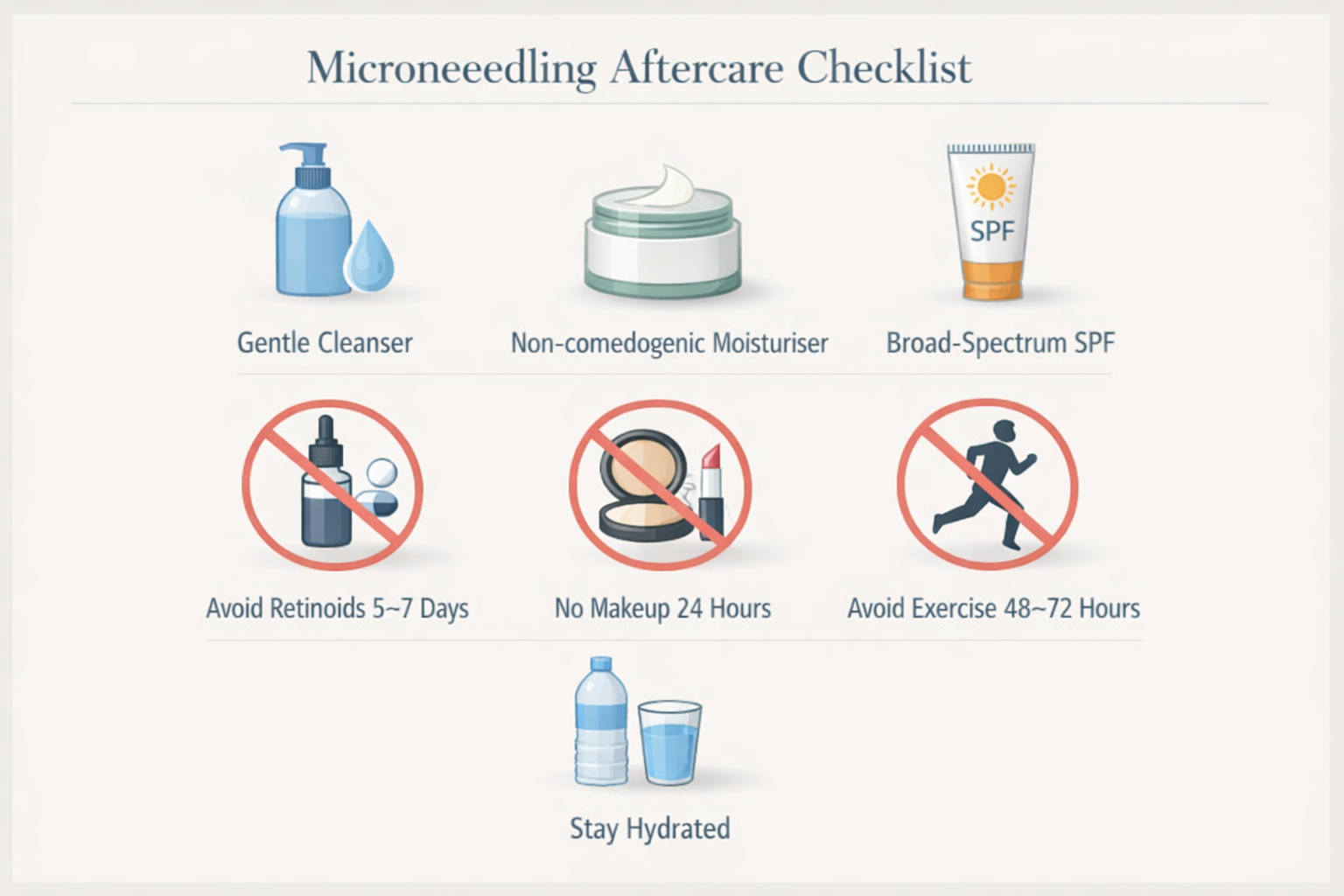
- Cleanse gently: Use a mild, fragrance-free cleanser for at least 72 hours post-treatment. Avoid scrubbing or using cleansing brushes.
- Moisturise consistently: Apply a non-comedogenic, soothing moisturiser to support barrier recovery. Hyaluronic acid-based products are well tolerated.
- Apply broad-spectrum SPF daily: Sun protection is non-negotiable after microneedling. The skin is more vulnerable to UV damage during the healing phase, and unprotected sun exposure can worsen hyperpigmentation. Use a broad-spectrum SPF 30 or higher every morning.
- Avoid active ingredients: Retinoids, AHAs, BHAs, vitamin C in high concentrations, and exfoliants should be paused for at least five to seven days, or as directed by your practitioner.
- Skip makeup for 24 hours: Applying makeup immediately after treatment risks introducing bacteria into open microchannels.
- Avoid heat and exercise: Saunas, steam rooms, and strenuous exercise that causes significant sweating should be avoided for 24 to 72 hours to reduce the risk of irritation and infection.
- Stay hydrated: Adequate water intake supports skin healing from within.
Side Effects, Risks, and Downtime
Dermapen microneedling has a well-documented safety profile when performed by a trained practitioner using a sterile device. However, it is not without risk, and patients should have a clear understanding of what is normal versus what warrants follow-up.
Expected and temporary effects include redness, warmth, mild swelling, and skin sensitivity for one to three days. Some patients experience minor flaking or dryness as the skin turns over in the days following treatment. These are part of the normal healing process.
Less common but possible side effects include prolonged redness beyond five days, temporary breakouts as the skin purges, and post-inflammatory hyperpigmentation — particularly in patients with darker skin tones who are not adequately prepared or protected from sun exposure after treatment. Infection is rare when a disposable sterile cartridge is used and aftercare instructions are followed, but it remains a possibility if the skin is not kept clean during the healing phase.
Serious complications such as scarring or significant pigmentation changes are uncommon with professional treatment but are more likely when treatment is performed on unsuitable candidates, at inappropriate depths, or without adequate aftercare. This underscores the importance of choosing a qualified, experienced practitioner.
Minimal downtime is one of the treatment’s practical advantages over more aggressive resurfacing options. Most patients can return to work within one to two days, though the skin may still appear slightly pink during this period.
Who May Be a Suitable Candidate
Dermapen microneedling may be appropriate for adults who want to address skin texture, acne scarring, fine lines, hyperpigmentation, or enlarged pores without significant downtime or the use of heat-based or chemical treatments. Because the procedure does not rely on thermal energy, it is considered suitable across all Fitzpatrick skin types — including medium to darker complexions that carry a higher risk of pigmentation changes with laser resurfacing.
Good candidates are generally in reasonable overall health, have realistic expectations about the gradual nature of results, and are committed to following aftercare instructions including consistent sun protection.
Who Should Avoid Dermapen Microneedling
A clinical assessment is essential to identify contraindications. Dermapen microneedling is generally not recommended for individuals with:
- Active skin infections, open wounds, or cold sores in the treatment area
- Active inflammatory acne or significant acne pustules in the area to be treated
- A history of keloid or hypertrophic scarring
- Active eczema, psoriasis, or rosacea flare-ups in the treatment zone
- Blood clotting disorders or those taking anticoagulant medications
- Current use of isotretinoin (Accutane) — most practitioners advise waiting at least six months after completing a course
- Pregnancy or breastfeeding
- Active skin cancer or a history of skin cancer in the treatment area
- Certain autoimmune conditions that affect wound healing
This list is not exhaustive. A qualified practitioner will review your full medical history, current medications, and skin condition before confirming suitability.
Frequently Asked Questions
Is Dermapen microneedling painful?
Most patients find the treatment tolerable with topical numbing cream applied beforehand. The sensation is typically described as mild pressure or a light scratching feeling. Areas with thinner skin or closer to bone may feel more sensitive. Without numbing cream, the procedure would be significantly more uncomfortable, which is why it is a standard part of the protocol.
How many sessions will I need?
The number of sessions depends on the concern being treated. For general skin rejuvenation and texture improvement, three sessions may be sufficient. For acne scar reduction or more significant skin remodelling, four to six sessions are commonly recommended. Sessions are typically spaced four to six weeks apart to allow the collagen production cycle to progress between appointments.
Is Dermapen microneedling safe for darker skin tones?
Yes — because Dermapen microneedling does not use heat or harsh chemicals, it is generally considered safe across all Fitzpatrick skin types, including medium to darker complexions. This is a meaningful advantage over laser resurfacing, which carries a higher risk of post-inflammatory hyperpigmentation in patients with more melanin-rich skin. However, appropriate aftercare — particularly diligent broad-spectrum SPF use — remains essential for all skin tones.
When will I see results?
An initial improvement in skin radiance and hydration may be noticeable within seven to fourteen days of the first session. More significant changes in texture, scarring, and tone typically develop over four to twelve weeks as new collagen matures. Full results from a complete course of treatment are usually assessed at three to six months after the final session.
Can I combine Dermapen microneedling with other treatments?
Yes, in many cases. PRP (platelet-rich plasma) is a common and well-regarded add-on that may enhance the biological response. LED therapy, growth factor serums, and specific topical protocols are also frequently incorporated. Combining microneedling with chemical peels or laser treatments is possible but requires careful timing and clinical judgement — your practitioner will advise on the safest and most effective sequencing for your goals.
How much does Dermapen microneedling cost?
Pricing varies depending on the clinic’s location, the practitioner’s experience, the area being treated, and whether add-ons such as PRP are included. Single sessions typically range from around £150 to £400 in the UK, with package deals for multiple sessions often offering a reduced per-session cost. The treatment is not covered by health insurance as it is a cosmetic procedure. A thorough consultation — ideally included in the clinic’s pricing — should precede any commitment to a course.
Is Dermapen Microneedling Worth Considering for Your Skin Goals?
Dermapen microneedling occupies a well-supported position in aesthetic medicine as a minimally invasive treatment for a range of common skin concerns. Its mechanism — stimulating the skin’s own wound-healing cascade to drive collagen and elastin production — is grounded in established biology, and the evidence base for its use in acne scar reduction and skin rejuvenation is among the stronger bodies of research in non-surgical aesthetics.
The treatment’s practical advantages include minimal downtime, suitability across all Fitzpatrick skin types, adaptability to different concerns through adjustable needle depth, and the ability to enhance topical ingredient delivery through transdermal product absorption. These characteristics make it a versatile option for patients who want meaningful skin improvement without the recovery demands of laser resurfacing or the risks associated with chemical peels in certain skin types.
Its limitations are equally worth understanding. Results are gradual and cumulative — a single session will not produce dramatic change, and the full benefit of a course develops over several months. Outcomes vary between individuals depending on skin type, the severity of the concern, age, lifestyle factors, and adherence to aftercare. It is not a replacement for treatments that address volume loss, deep structural changes, or conditions requiring medical management.
If you are considering Dermapen microneedling, a consultation with a qualified and experienced practitioner is the appropriate starting point. A thorough assessment of your skin, medical history, and realistic goals will determine whether this treatment is suitable for you, how many sessions may be beneficial, and whether any complementary treatments could improve your outcome.