

Key Takeaways
- Laser tattoo removal does not routinely cause scarring, but the risk increases significantly with inexperienced practitioners, incorrect fluence settings, inadequate session spacing, and poor aftercare.
- Several distinct types of skin change can occur, including keloid scars, hypertrophic scars, atrophic scars, hyperpigmentation, and hypopigmentation — each with different appearances and treatment implications.
- Fitzpatrick skin types IV–VI carry a higher risk of post-inflammatory hyperpigmentation (PIH); picosecond lasers and longer wavelengths such as 1064 nm are generally considered safer options for darker skin tones.
- If scarring does develop, effective treatments exist, including silicone gel sheets, intralesional corticosteroid injections, and fractional laser resurfacing.
- Some scars visible after tattoo removal were caused by the original tattooing process, not the laser — a distinction that is important to understand before treatment begins.
Does Laser Tattoo Removal Leave Scars?
Laser tattoo removal can leave scars, but this outcome is uncommon when treatment is carried out by an experienced practitioner using appropriate laser settings and correct session spacing. The procedure works by directing concentrated pulses of light energy at tattoo ink beneath the skin. This process triggers a wound healing response in the surrounding tissue, and in most cases the skin recovers fully without permanent change. However, when something disrupts that healing process — whether through operator error, patient factors, or inadequate aftercare — scarring can result.
It is also worth noting that not every skin change after laser tattoo removal constitutes a true scar. Temporary redness, swelling, blistering, and scabbing are normal parts of the healing process. Pigment changes such as post-inflammatory hyperpigmentation (PIH) or hypopigmentation are distinct from structural scarring, though they can be equally distressing and may take months to resolve. Understanding the difference between these outcomes helps set realistic expectations before committing to treatment.
How Laser Tattoo Removal Works
Modern laser tattoo removal relies on a principle called selective photothermolysis. The laser emits wavelengths of light that are selectively absorbed by tattoo ink pigment in the dermal layer of the skin, while largely sparing the surrounding tissue. The absorbed energy causes the ink particles to shatter into smaller fragments through a photoacoustic effect — a rapid mechanical shockwave generated by the laser pulse. These fragmented ink particles are then gradually cleared by the body’s immune system through macrophage clearance, where immune cells engulf the debris and transport it through the lymphatic system.
Two main categories of laser technology are used for this purpose. Q-switched lasers — including Q-switched Nd:YAG, Alexandrite, and Ruby devices — deliver energy in nanosecond pulses and have been the clinical standard for many years. Picosecond lasers, such as PicoWay and PicoSure, deliver energy in much shorter pulses measured in trillionths of a second. Because picosecond lasers rely more heavily on the photoacoustic effect and generate less heat than nanosecond devices, they are associated with a reduced risk of thermal tissue damage, which is one of the primary drivers of scarring. A 2026 peer-reviewed study (PMC13428261) found picosecond lasers to be effective and comparatively safer for Fitzpatrick skin types III and IV, a group that faces elevated pigmentation risk with older technology.
| Feature | Q-Switched Laser | Picosecond Laser |
|---|---|---|
| Pulse duration | Nanoseconds | Picoseconds |
| Primary mechanism | Photothermal and photoacoustic | Predominantly photoacoustic |
| Heat generation | Higher | Lower |
| Scarring risk | Moderate if settings incorrect | Generally lower |
| Hypopigmentation risk | Higher, especially on darker skin | Comparatively lower |
| Sessions typically needed | More | Fewer in many cases |
| Coloured ink clearance | Limited for some colours | Broader wavelength options |
| Suitability for darker skin tones | More caution required | Better profile with appropriate settings |
Types of Scars and Skin Changes After Tattoo Removal
Not all adverse outcomes from laser tattoo removal look the same. Recognising the type of skin change helps determine the appropriate response and sets realistic expectations for recovery.
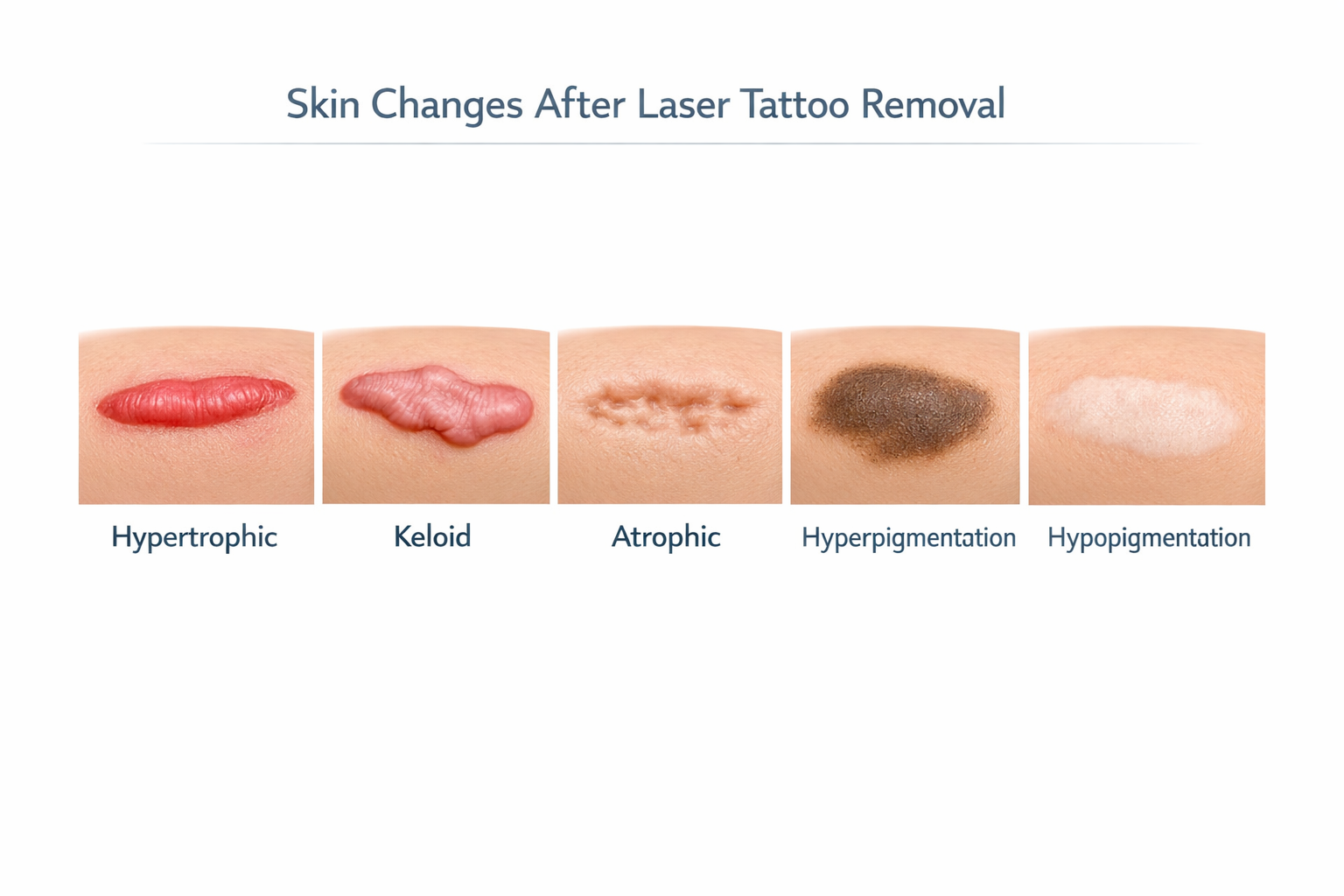
Hypertrophic Scars
Hypertrophic scars are raised, firm, and often pink or red. They form when the wound healing process produces excess collagen within the boundaries of the original treatment area. Unlike keloid scars, hypertrophic scars do not extend beyond the treated zone and may gradually flatten over time. They are more likely to occur when fluence settings are too high or when sessions are spaced too closely together, preventing the skin from completing its healing cycle before the next treatment.
Keloid Scars
Keloid formation involves an overgrowth of scar tissue that extends beyond the original wound margins. Keloid scars are firm, raised, and can be itchy or tender. They are significantly more common in individuals with a personal or family history of keloid scarring, and they occur more frequently in people with darker skin tones. A history of keloid formation is considered a relative contraindication to laser tattoo removal, and any reputable clinic should screen for this during the initial consultation. Keloid scars are among the most difficult adverse outcomes to treat and may require a combination of intralesional corticosteroid injections, silicone gel sheets, and in some cases surgical or laser intervention.
Atrophic Scars
An atrophic scar appears as a depressed or indented area of skin, sometimes described as a pitted or sunken texture. This type of scar results from insufficient collagen production during wound healing, leaving a deficit in the dermal layer. Atrophic scars from laser tattoo removal are less common than hypertrophic scars but can occur following infection, aggressive treatment, or in areas where the skin is naturally thinner. Fractional laser resurfacing is one of the more established options for improving the appearance of atrophic scars once they have fully matured.
Hyperpigmentation and Hypopigmentation
Post-inflammatory hyperpigmentation (PIH) refers to darkening of the skin in the treated area, caused by an increase in melanin production triggered by inflammation. It is not a structural scar but can be persistent and visually significant. PIH is particularly common in individuals with Fitzpatrick skin types IV–VI, where melanocytes are more reactive to laser-induced inflammation. Hypopigmentation — the opposite effect, where the treated area becomes lighter than the surrounding skin — can occur when the laser inadvertently damages melanocytes. Hypopigmentation can be long-lasting and is sometimes permanent, making it one of the more serious pigment-related risks of laser tattoo removal. Both outcomes are more likely when inappropriate laser settings are used or when the skin has not been adequately protected from sun exposure during the healing period.
Who Is at Higher Risk of Scarring?
Several factors influence an individual’s likelihood of developing a scar following laser tattoo removal. Understanding these risk factors before treatment allows both the patient and the practitioner to make informed decisions about whether to proceed and how to minimise risk.
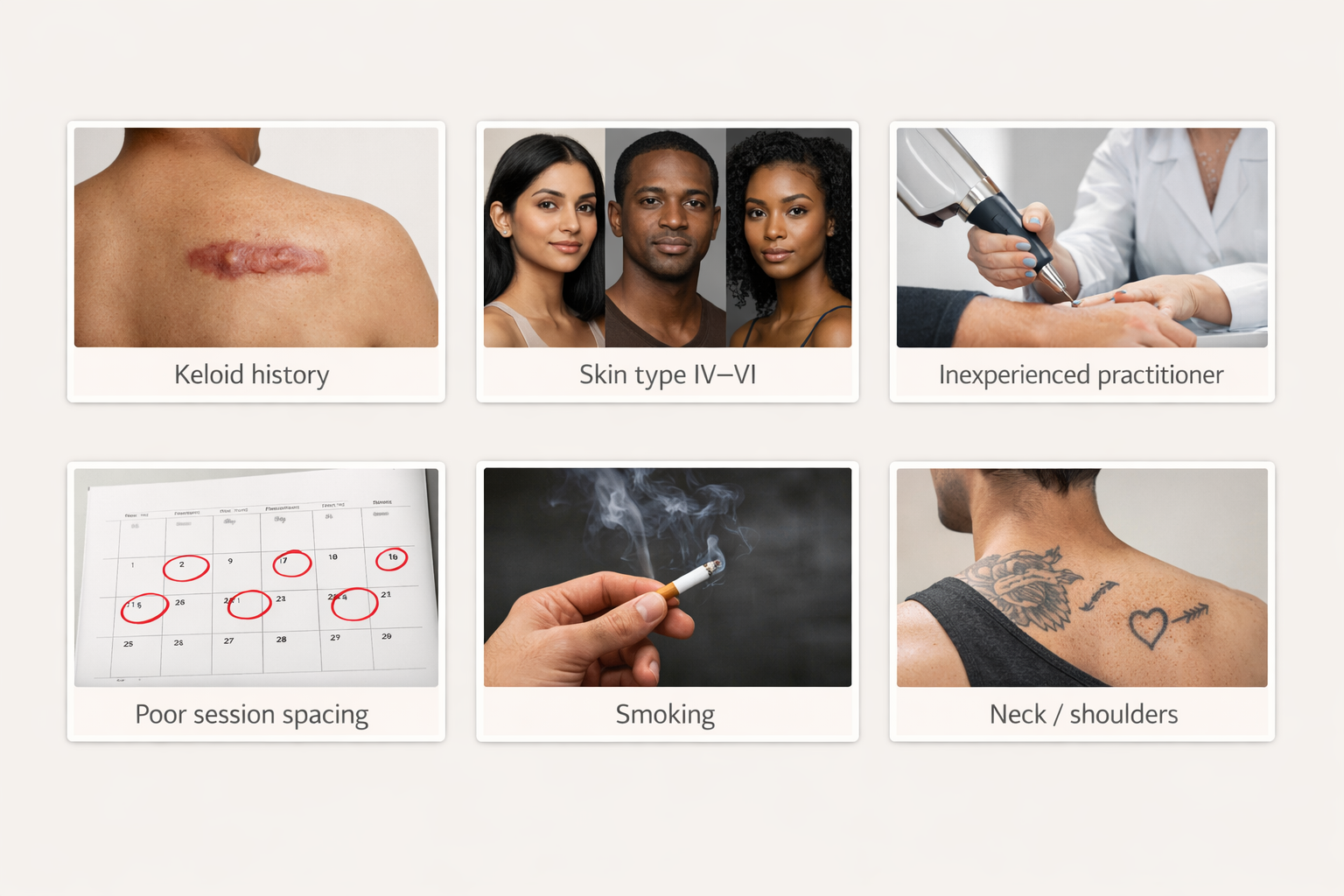
| Risk Factor | Why It Matters |
|---|---|
| Keloid history | Strong predictor of keloid formation post-treatment |
| Fitzpatrick skin type IV–VI | Higher PIH risk; melanocytes more reactive to laser energy |
| Inexperienced practitioner | Incorrect fluence settings and poor technique increase tissue damage |
| Inadequate session spacing | Skin cannot complete wound healing before the next treatment |
| Poor aftercare compliance | Picking scabs, sun exposure, and infection all increase scarring risk |
| Smoking | Impairs circulation and wound healing, slowing recovery |
| Tattoo body location | Neck, shoulders, and joints carry higher scarring risk due to skin tension and movement |
| Amateur tattoo | Uneven ink depth increases unpredictable tissue response |
| Pre-existing scar tissue | Areas with existing scarring respond differently to laser energy |
Smoking is a frequently overlooked lifestyle factor. Research consistently links smoking to impaired wound healing through reduced tissue oxygenation and compromised immune function. Patients who smoke may experience slower recovery between sessions and a higher overall risk of adverse outcomes. Staying well hydrated and maintaining general immune health also supports the body’s ability to clear fragmented ink particles through macrophage clearance and the lymphatic system.
The anatomical location of the tattoo matters more than many patients realise. Areas subject to frequent movement or skin tension — such as the neck, shoulders, and joints — are associated with a higher risk of hypertrophic scarring because the mechanical stress on healing tissue disrupts collagen remodelling. Tattoos on the hands and feet also tend to be more challenging to treat safely.
The Role of Practitioner Skill and Laser Settings
The single most controllable risk factor for scarring is the skill and experience of the practitioner performing the treatment. Scarring from laser tattoo removal is most commonly linked to incorrect fluence settings — using energy levels that are too high for the patient’s skin type, ink colour, or tattoo depth — rather than an inherent danger of the laser technology itself. Research published in the Journal of Cutaneous and Aesthetic Surgery identifies excessive fluence and inadequate session spacing as the primary operator-related causes of adverse effects, including scarring and dyspigmentation.
A qualified practitioner will assess the patient’s Fitzpatrick skin type, review their medical and scarring history, evaluate the tattoo’s age, size, colour, and ink depth, and select appropriate laser parameters before beginning treatment. They will also ensure that sufficient time passes between sessions — typically six to eight weeks or longer — to allow the skin to complete its wound healing cycle and for macrophage clearance of fragmented ink to progress. Rushing this process by reducing session spacing is a recognised cause of cumulative tissue damage and increased scarring risk.
Pre-Existing Scars and the Original Tattoo
A common and often surprising finding after laser tattoo removal is the appearance of scarring that was not caused by the laser at all. Some tattoos — particularly those applied by inexperienced or amateur tattoo artists — are placed too deeply into the dermis, causing scar tissue to form during the original tattooing process. This pre-existing scar tissue is concealed beneath the ink and only becomes visible once the pigment has been cleared. Patients may attribute this scarring to the laser treatment when it was, in fact, present before removal began.
Amateur tattoos carry a higher risk of this phenomenon because the needle depth is less controlled, leading to uneven ink placement and a greater likelihood of dermal trauma during tattooing. A thorough pre-treatment consultation should include discussion of this possibility, particularly for older or amateur tattoos, so that patients are not surprised by the outcome. Clinics should document the skin’s baseline condition before treatment begins.
For patients considering a cover-up tattoo over an area that has been treated with laser removal, most practitioners recommend waiting at least 12 to 18 months after the final session to allow the skin to fully stabilise before introducing new ink.
How to Prevent Scarring During and After Treatment
Prevention is considerably more straightforward than treating an established scar. The following aftercare steps are widely recommended by practitioners and supported by clinical guidance to minimise the risk of scarring and pigment changes.
- Keep the treated area clean. Gently wash with mild soap and water and pat dry. Avoid scrubbing or applying harsh products to the skin during the healing period.
- Apply a protective barrier. Petroleum jelly, Aquaphor, or a similar emollient helps maintain moisture and protects the skin surface while it heals. Some clinics use a Tegaderm bandage or similar wound dressing immediately after treatment.
- Do not pick or scratch scabs. Blistering and scabbing are normal parts of the healing process. Disturbing scabs prematurely removes the protective layer and significantly increases the risk of infection and scarring.
- Avoid sun exposure. UV rays can trigger post-inflammatory hyperpigmentation in healing skin and interfere with the wound healing process. Keep the treated area covered and apply a high-SPF sunscreen once the skin has closed.
- Allow full healing between sessions. Do not return for the next treatment before the skin has fully recovered. Adequate session spacing is one of the most important factors in preventing cumulative tissue damage.
- Avoid smoking during the treatment course. Smoking impairs circulation and slows wound healing, increasing the risk of complications between sessions.
- Stay hydrated and support immune health. The body’s immune system drives macrophage clearance of ink particles. General health supports this process.
- Report any signs of infection promptly. Increasing redness, warmth, swelling, pus, or fever after treatment should be assessed by a medical professional without delay, as infection significantly increases scarring risk.
Treating Scars That Have Already Developed
If scarring does occur following laser tattoo removal, several evidence-informed treatment options are available. Early intervention generally produces better outcomes than waiting for a scar to fully mature.
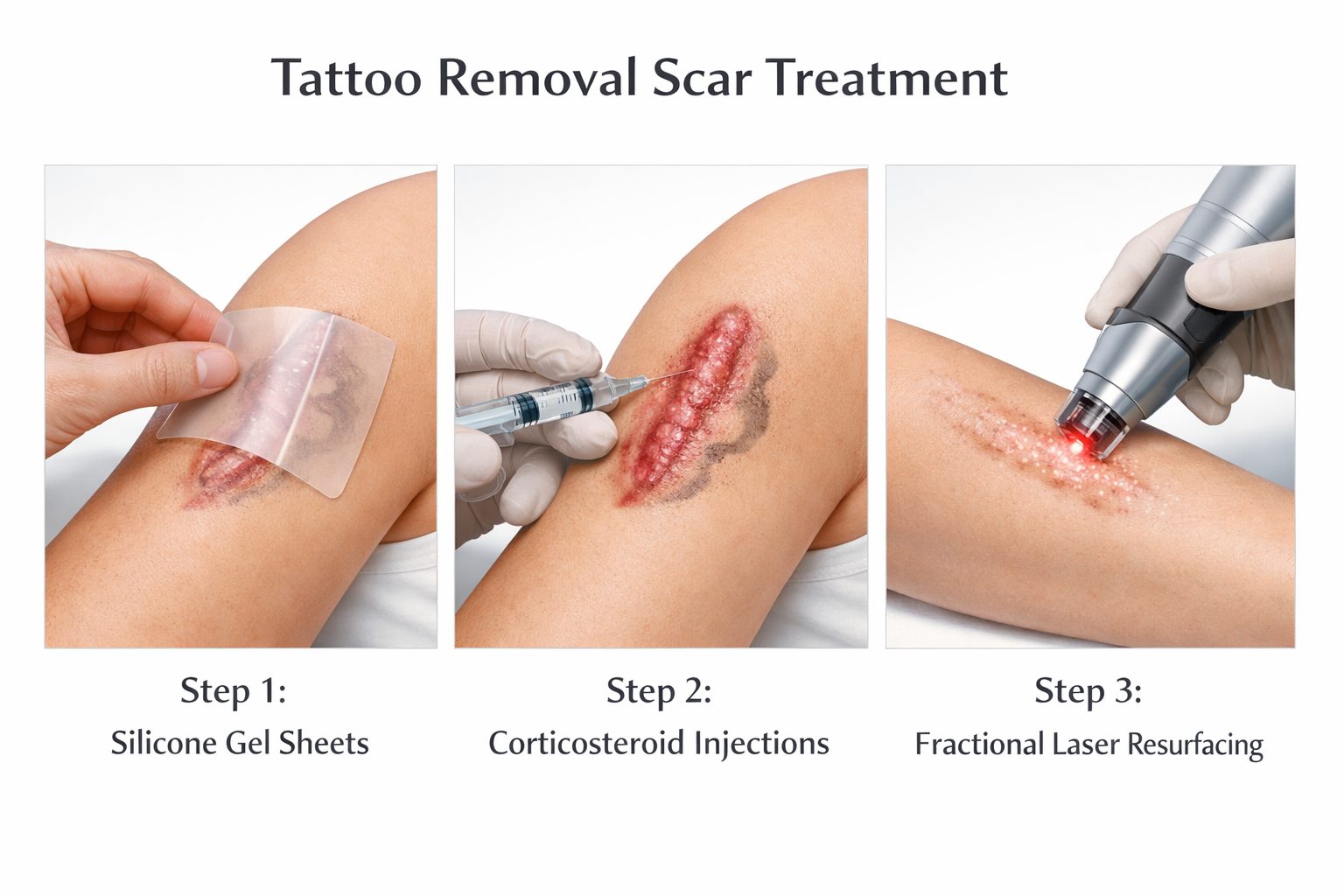
Silicone Gel Sheets and Silicone Gel
Silicone gel sheets are considered a first-line treatment for early hypertrophic scarring. Applied consistently over the scar for eight to twelve weeks, silicone creates a hydrated microenvironment that is thought to regulate collagen production and reduce scar elevation. Silicone gel in topical form offers a similar mechanism and may be more practical for irregular or hard-to-cover areas. Both formats are widely available and carry a low risk profile, making them a reasonable starting point for mild to moderate raised scars.
Intralesional Corticosteroid Injections
For more established hypertrophic or keloid scars, intralesional corticosteroid injections — typically triamcinolone acetonide — are a well-established medical treatment. Injected directly into the scar tissue at intervals of approximately four to six weeks, corticosteroids reduce inflammation and suppress excess collagen production, helping to flatten and soften the scar over time. This approach is usually performed by a dermatologist or trained medical practitioner and may be combined with silicone therapy for improved results.
Fractional Laser Resurfacing
Fractional laser resurfacing — using either ablative devices such as fractional CO₂ laser or non-ablative fractional lasers — is an option for atrophic scars and mature hypertrophic scars that have not responded adequately to conservative measures. Fractional lasers create microscopic columns of controlled injury in the skin, stimulating collagen remodelling without treating the entire surface area. A randomised controlled trial (PMC12178957) examined fractional CO₂ laser for early scar treatment and found meaningful improvements in scar texture and appearance. Multiple sessions are typically required, and results vary depending on scar type, depth, and patient factors.
Will Skin Return to Normal After Tattoo Removal?
For the majority of patients, the skin does return to a close approximation of its pre-tattoo appearance after laser tattoo removal, particularly when treatment is performed correctly and aftercare instructions are followed. Complete clearance of all ink is not guaranteed for every tattoo — factors such as ink colour, ink depth, tattoo age, and the number of sessions completed all influence the final result — but structural scarring in the absence of the risk factors described above is uncommon.
Temporary changes such as redness, mild textural variation, and slight pigment differences often resolve within several months of completing treatment. Persistent hypopigmentation is the most likely long-term skin change in cases where melanocyte damage has occurred, and this can be difficult to reverse. Patients with darker skin tones should discuss this risk explicitly with their practitioner before beginning treatment and ensure that appropriate laser technology and settings are used throughout their course.
Frequently Asked Questions
Are blisters after laser tattoo removal normal?
Yes. Blistering is a common and expected response to laser tattoo removal, particularly after the first few sessions. Blisters form as part of the normal wound healing process and should be left intact where possible. Do not puncture blisters deliberately, as this increases infection risk. If a blister breaks on its own, keep the area clean and covered with a sterile dressing. Contact your clinic if blisters are unusually large, painful, or show signs of infection.
Can I treat a scar if one develops after tattoo removal?
Yes. Several treatment options are available depending on the scar type. Silicone gel sheets are a practical first step for early raised scars. Intralesional corticosteroid injections are used for more established hypertrophic or keloid scars. Fractional laser resurfacing can improve atrophic or textural scars. Early assessment by a dermatologist or experienced practitioner gives the best chance of a good outcome.
Does the tattoo itself cause scarring that shows up after removal?
It can. Some tattoos — especially amateur ones — are applied too deeply into the dermis, causing scar tissue to form during the original tattooing process. This pre-existing scar tissue is hidden beneath the ink and may only become visible once the pigment has been cleared by laser treatment. This is not caused by the laser and cannot be prevented by aftercare. A good pre-treatment consultation should discuss this possibility.
Is scarring from tattoo removal permanent?
It depends on the scar type. Hypertrophic scars often improve significantly over time, particularly with treatment. Keloid scars are more persistent and may require ongoing management. Atrophic scars can be improved with fractional laser resurfacing but may not resolve completely. Hypopigmentation — loss of skin colour — can be long-lasting and is sometimes permanent. Hyperpigmentation (PIH) is usually temporary but may take six to twelve months to fade, particularly in darker skin tones.
Does skin type affect the risk of scarring?
Yes, significantly. Individuals with Fitzpatrick skin types IV–VI have a higher risk of post-inflammatory hyperpigmentation because their melanocytes are more reactive to laser-induced inflammation. They also face a higher risk of hypopigmentation if melanocytes are damaged. Picosecond lasers and longer wavelengths such as 1064 nm Nd:YAG are generally considered more appropriate for darker skin tones, and conservative fluence settings are essential. Patients with darker skin should seek a practitioner with specific experience treating their skin type.
How many sessions are needed, and does more sessions mean more scarring risk?
The number of sessions required varies widely depending on tattoo size, ink colours, ink depth, and the patient’s immune response. Most professional tattoos require between six and twelve sessions, though this varies considerably. More sessions do not automatically increase scarring risk, provided that adequate session spacing is maintained and the skin is allowed to heal fully between appointments. Rushing treatment by reducing the interval between sessions is a recognised risk factor for cumulative tissue damage.
Making an Informed Decision About Laser Tattoo Removal
Laser tattoo removal is a well-established procedure with a generally favourable safety profile when performed by a qualified and experienced practitioner using appropriate technology and settings. Permanent scarring is an uncommon outcome in this context, but it is not impossible, and the risk is meaningfully influenced by factors within both the practitioner’s and the patient’s control.
Before beginning treatment, it is worth having a thorough consultation that covers your Fitzpatrick skin type, any personal or family history of keloid formation, the characteristics of the tattoo being removed, and the laser technology the clinic uses. Ask specifically about session spacing protocols and what aftercare support is provided. If you have a darker skin tone, confirm that the clinic has experience treating patients with similar skin and that they use laser settings appropriate for your type.
If you are already experiencing a skin change after a previous removal session, seek an assessment from a dermatologist or experienced practitioner sooner rather than later. Early intervention for developing scars consistently produces better outcomes than waiting. A qualified professional can help distinguish between normal healing, pigment changes, and true scarring — and recommend the most appropriate course of action for your specific situation.