

Key Takeaways
- Laser hair removal can cause post-inflammatory hyperpigmentation (PIH), particularly in people with Fitzpatrick skin types IV–VI, though this is usually temporary when managed correctly.
- The risk is significantly reduced by choosing the right laser for your skin tone — the Nd:YAG laser (1064nm) is generally considered the safest option for darker skin.
- Sun exposure before or after treatment is one of the most preventable risk factors for developing dark spots after laser hair removal.
- Existing hyperpigmentation is not treated by laser hair removal; a separate pigmentation-focused treatment is required for that concern.
- Most cases of post-laser hyperpigmentation respond well to topical lightening agents and, where necessary, professional treatments such as chemical peels or pigment-targeting lasers.
What Is Hyperpigmentation and Why Does It Matter for Laser Treatments?
Hyperpigmentation is the term used when patches of skin become darker than the surrounding area due to an excess of melanin — the pigment produced by cells called melanocytes. It can appear as flat dark spots, uneven patches, or a general darkening of the skin tone. Common forms include post-inflammatory hyperpigmentation (PIH), which develops after skin injury or inflammation; melasma, which is often linked to hormonal changes; and solar lentigines, commonly known as age spots, which result from cumulative sun exposure.
Understanding hyperpigmentation is particularly relevant when considering laser hair removal because the laser itself works by targeting melanin. This creates a dual dynamic: the same mechanism that destroys the hair follicle can, under certain conditions, also stimulate excess melanin production in the surrounding skin. For most patients this is not a significant concern, but for those with certain skin types or inadequate aftercare, it is a real and manageable risk worth understanding before treatment.
How Laser Hair Removal Works
Laser hair removal is based on the principle of selective photothermolysis — the delivery of concentrated light energy at a specific wavelength that is preferentially absorbed by melanin in the hair follicle. The absorbed light converts to heat, which damages the follicle and disrupts the hair growth cycle without, in theory, harming the surrounding skin tissue.
The key word is “selectively.” When the laser parameters are correctly matched to the patient’s skin tone and hair colour, the energy targets the follicle melanin rather than the melanin in the surrounding epidermis. When the settings are poorly calibrated — or when the wrong laser type is used — the surrounding skin absorbs excess heat, triggering an inflammatory response. It is this inflammation that can activate melanocytes and lead to post-inflammatory hyperpigmentation.
Epidermal cooling systems, built into most modern laser devices, help protect the surface skin during treatment by reducing heat transfer to the epidermis. These cooling mechanisms are an important safety feature, particularly for patients with darker skin tones, and their effectiveness varies between devices and providers.
Can Laser Hair Removal Cause Hyperpigmentation?
Yes, laser hair removal can cause hyperpigmentation, though it is not an inevitable outcome. PIH after laser hair removal typically develops within days to weeks of treatment and presents as darkened patches or spots at the treated site. In most cases it is temporary, fading over several weeks to months with appropriate care. In a smaller number of cases, particularly where the underlying cause is not addressed, it can persist for longer.
It is also worth noting that the opposite reaction — hypopigmentation, where the skin becomes lighter than normal — can occur, particularly in people with darker skin tones who receive treatment with excessive laser fluence. Hypopigmentation can be more difficult to treat than hyperpigmentation and is one reason why correct laser selection and energy settings are so important. Both risks underscore the value of consulting an experienced, qualified provider before beginning a course of treatment.
Who Is Most at Risk?
Several factors increase the likelihood of developing hyperpigmentation after laser hair removal. Understanding these risk factors helps patients and practitioners make informed decisions about treatment suitability and approach.
- Darker skin tones (Fitzpatrick skin types IV–VI): People with naturally higher levels of melanin in the epidermis are at greater risk because the laser energy is more likely to be absorbed by the surrounding skin rather than exclusively by the hair follicle.
- Recent sun exposure or tanned skin: A tan — whether from the sun or a sunbed — temporarily increases epidermal melanin, raising the risk of the laser reacting with the skin surface rather than the follicle.
- Incorrect laser type: Using an IPL (Intense Pulsed Light) device or an Alexandrite laser on darker skin tones significantly increases the risk of PIH compared to using a wavelength better suited to those skin types.
- Excessive laser fluence or energy settings: Laser fluence refers to the energy delivered per unit area. Settings that are too high for a patient’s skin type can cause thermal injury to the epidermis, triggering an inflammatory response.
- Pre-existing skin conditions: Active acne, eczema, or other inflammatory skin conditions at the treatment site can increase sensitivity and the likelihood of a post-inflammatory pigmentation response.
- Poor aftercare: Failing to protect the skin from UV radiation after treatment is one of the most common and preventable causes of post-laser hyperpigmentation.
- Inadequate skin preparation: Not following pre-treatment instructions — such as avoiding certain skincare actives or failing to disclose medications — can compromise outcomes.
The Fitzpatrick Scale and Laser Selection
The Fitzpatrick skin type classification is a widely used dermatological scale that categorises skin into six types based on its response to UV exposure. It is a practical tool for guiding laser selection and energy settings in aesthetic treatments.
| Fitzpatrick Type | Skin Characteristics | Recommended Laser | PIH Risk |
|---|---|---|---|
| Type I | Very fair, always burns, never tans | Alexandrite (755nm), Diode (810nm) | Low |
| Type II | Fair, usually burns, sometimes tans | Alexandrite (755nm), Diode (810nm) | Low |
| Type III | Medium, sometimes burns, always tans | Diode (810nm), Alexandrite (755nm) | Low–Moderate |
| Type IV | Olive, rarely burns, always tans | Diode (810nm), Nd:YAG (1064nm) | Moderate |
| Type V | Brown, very rarely burns | Nd:YAG (1064nm) | Moderate–High |
| Type VI | Dark brown to black, never burns | Nd:YAG (1064nm) | High without correct settings |
The Nd:YAG laser, operating at a wavelength of 1064nm, penetrates more deeply into the skin and is less readily absorbed by epidermal melanin compared to shorter wavelengths. This makes it the preferred choice for skin of color — Fitzpatrick types IV through VI — where the risk of surface pigmentation changes is greatest. IPL devices, which emit a broad spectrum of light rather than a single wavelength, are generally considered unsuitable for darker skin tones due to the higher risk of epidermal damage and subsequent PIH.
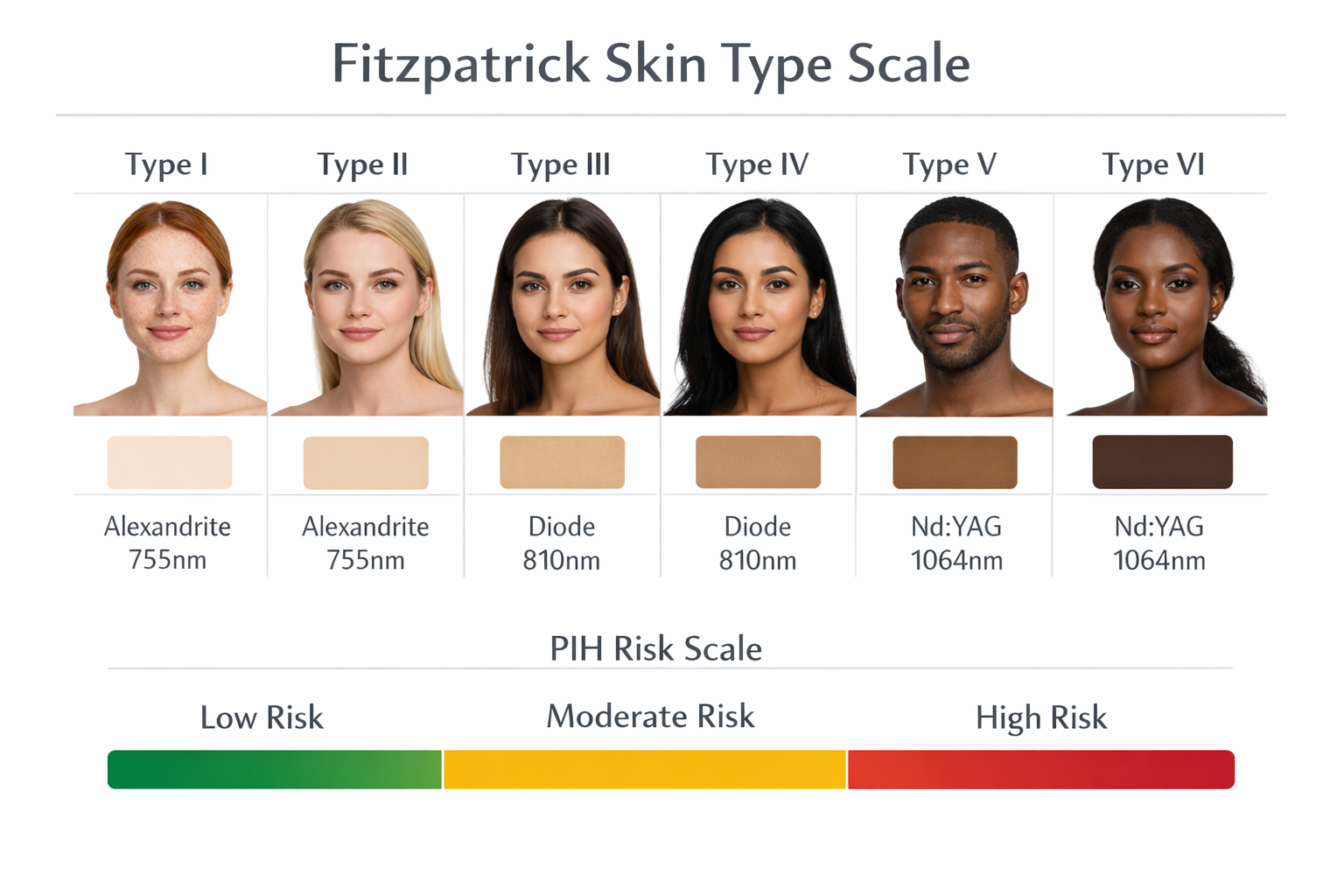
Dual-wavelength systems that combine Alexandrite and Nd:YAG capabilities can offer flexibility for practitioners treating a range of skin types, but the appropriate wavelength must still be selected based on the individual patient’s Fitzpatrick skin type at the time of treatment.
Does Laser Hair Removal Help with Existing Hyperpigmentation?
This is a question that comes up frequently, and the answer requires a clear distinction. Standard laser hair removal is not designed to treat existing hyperpigmentation. The wavelengths and pulse durations used for hair removal are optimised for targeting the hair follicle, not for breaking down superficial pigment deposits in the skin.
However, there is an indirect benefit worth acknowledging. For people who develop dark spots as a result of repeated shaving, waxing, or ingrown hairs — a common pattern, particularly on the legs, underarms, and bikini area — laser hair removal may help reduce the cycle of skin trauma that perpetuates PIH. By eliminating the hair follicle and reducing ingrown hairs over time, laser hair removal removes a recurring source of inflammation. This does not treat existing dark spots, but it may help prevent new ones from forming through the same mechanism.
If existing hyperpigmentation is the primary concern, a separate treatment approach is needed. Pigment-targeting lasers such as Q-switched or picosecond devices, chemical peels, or topical lightening agents are more appropriate options, and these should be discussed with a qualified practitioner or board-certified dermatologist.
How to Prevent Hyperpigmentation from Laser Hair Removal
Prevention is considerably more straightforward than treatment. The following steps reflect established clinical practice for reducing the risk of PIH in patients undergoing laser hair removal.
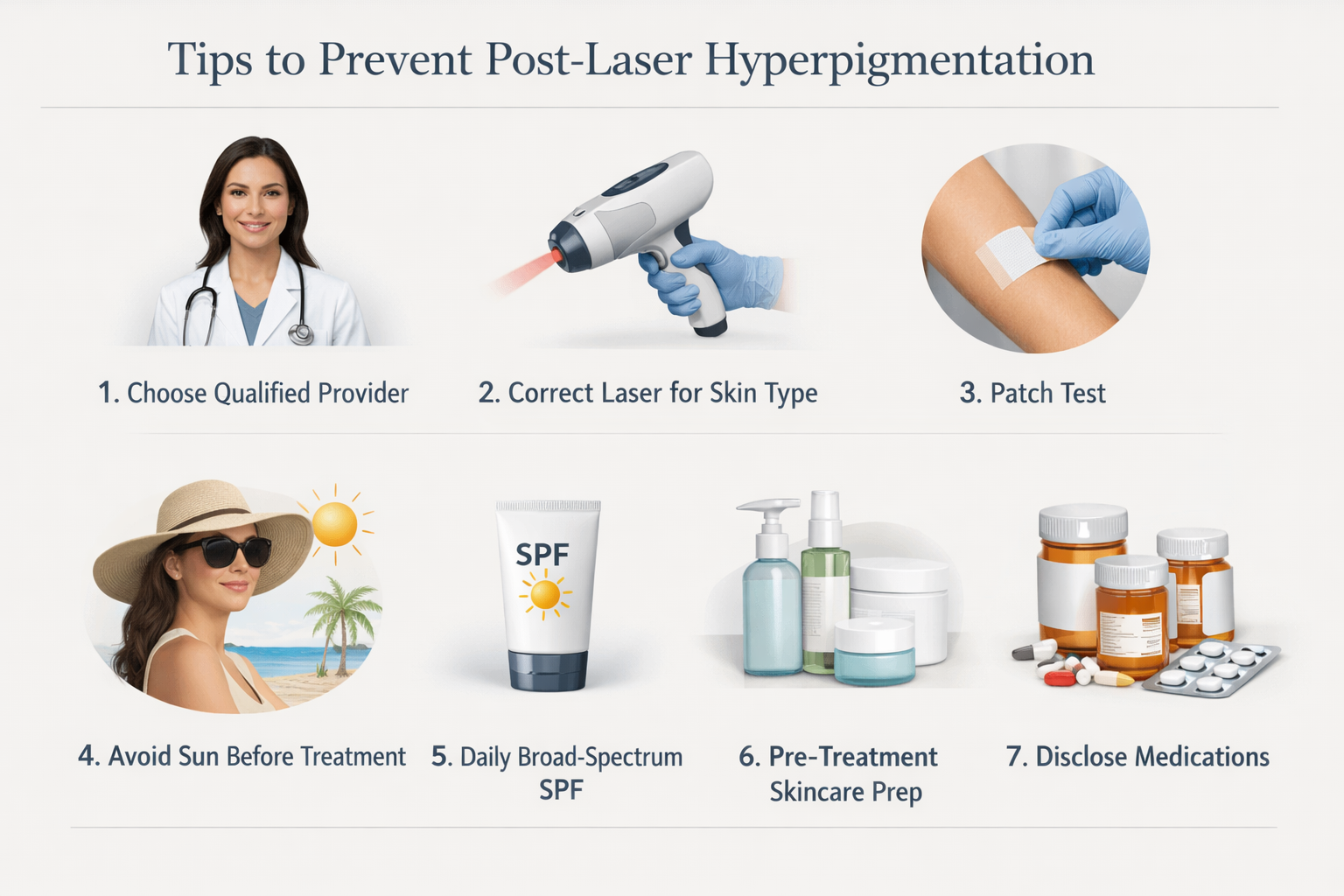
- Choose a qualified, experienced provider: A practitioner with specific experience treating skin of color and a thorough understanding of laser parameters is the single most important factor in safe outcomes. Ask about their experience with your Fitzpatrick skin type before booking.
- Ensure the correct laser is used: Confirm that the clinic uses a laser appropriate for your skin tone. For darker skin types, this should be an Nd:YAG laser or a diode laser with appropriate settings — not IPL.
- Request a patch test: A patch test on a small area of skin before a full treatment session allows the practitioner to assess your skin’s response to the laser at the proposed settings. This is particularly important for patients with Fitzpatrick types IV–VI.
- Avoid sun exposure before treatment: Tanned skin significantly increases the risk of PIH. Most practitioners recommend avoiding direct sun exposure and sunbeds for at least four weeks before each session.
- Apply broad-spectrum SPF daily: Using a broad-spectrum SPF 30 or higher sunscreen consistently in the weeks before and after treatment protects the skin from UV-induced melanin stimulation.
- Follow pre-treatment skincare guidance: Some practitioners recommend a short course of topical hydroquinone or other lightening agents before treatment in higher-risk patients to reduce baseline melanin activity. Retinoids and certain exfoliating acids should typically be paused before treatment as they can increase skin sensitivity.
- Disclose all relevant medications and conditions: Certain medications, including some antibiotics and hormonal treatments, can increase photosensitivity. Full disclosure at consultation allows the practitioner to adjust the approach accordingly.
How to Treat Hyperpigmentation After Laser Hair Removal
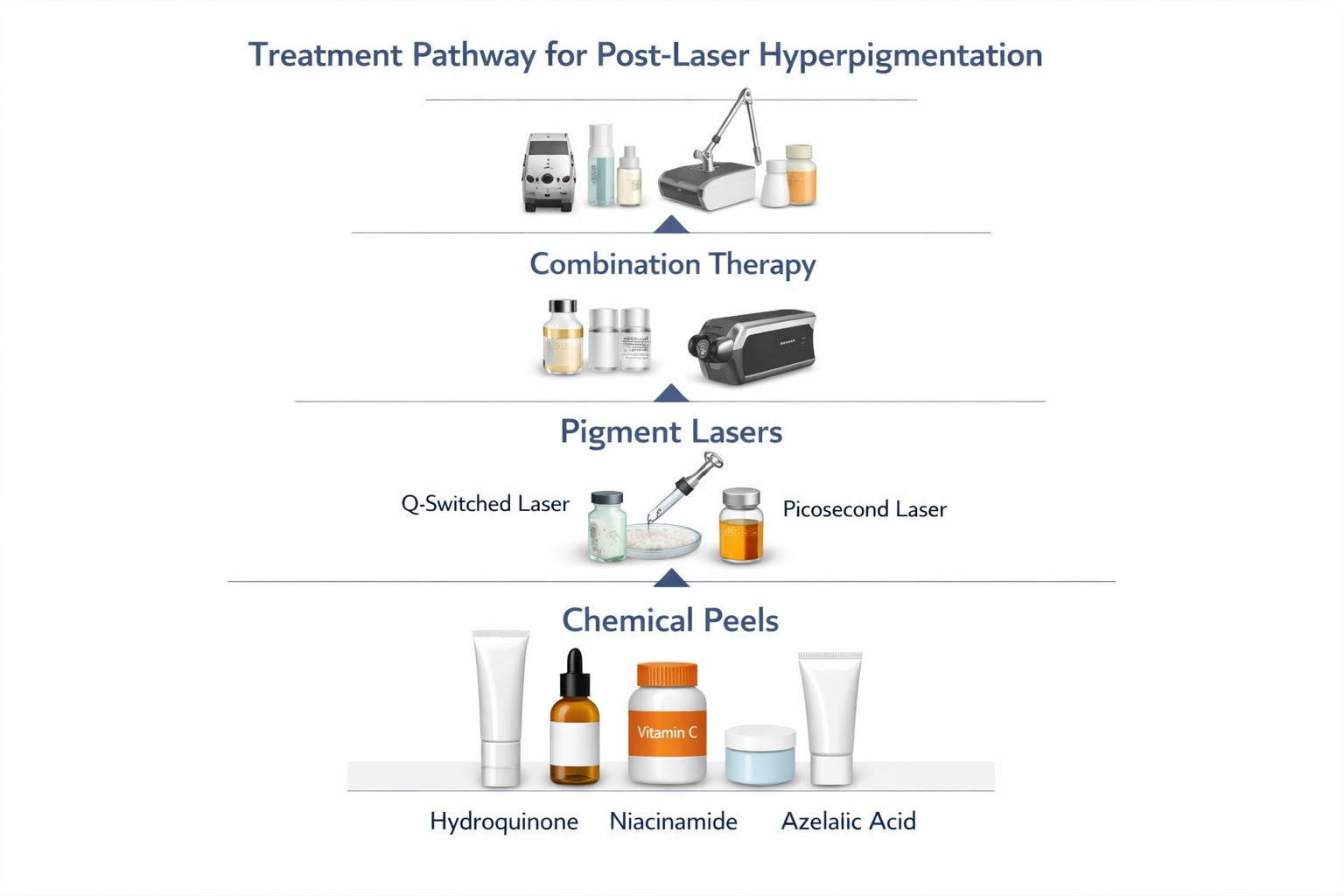
If PIH does develop after laser hair removal, the good news is that most cases are temporary and respond well to treatment. The approach typically moves from conservative topical management through to professional interventions if needed.
Topical Lightening Agents
Topical lightening agents are usually the first line of management for post-laser PIH. Several ingredients have clinical evidence supporting their use in reducing excess melanin production and accelerating the fading of dark spots. Hydroquinone is one of the most studied and works by inhibiting the enzyme tyrosinase, which is involved in melanin synthesis. Kojic acid, azelaic acid, tranexamic acid, niacinamide, and vitamin C are alternatives or adjuncts that may be better tolerated by some patients. Retinoids can accelerate skin cell turnover and help fade pigmentation over time, though they require careful introduction and consistent sun protection. Combining two or more of these agents is often more effective than using any single ingredient alone, and a dermatologist can advise on an appropriate formulation for your skin type.
Chemical Peels
Superficial chemical peels using glycolic acid or salicylic acid can help accelerate the fading of post-laser PIH by promoting controlled exfoliation of the pigmented epidermal cells. These should be performed by a qualified practitioner, and the peel strength must be carefully selected for the patient’s skin type to avoid triggering further inflammation — and potentially rebound pigmentation — in the process of treatment.
Pigment-Targeting Laser Treatments
For persistent PIH that does not respond adequately to topical agents, energy-based treatments may be considered. Q-switched and picosecond lasers deliver very short pulses of energy that selectively fragment melanin deposits without causing significant thermal damage to surrounding tissue. Fractional laser resurfacing is another option that can improve both pigmentation and overall skin texture. Emerging evidence also supports the use of the 1927nm thulium laser for treating PIH in skin of color, with studies suggesting it can be effective when used at appropriate settings. These treatments should only be undertaken by experienced practitioners, as poorly calibrated energy-based treatments can worsen pigmentation rather than improve it.
Emerging Approaches
PDRN (polydeoxyribonucleotide) therapy is an emerging treatment that has shown early promise in combination with laser approaches for managing post-laser PIH. A 2025 peer-reviewed case report published on PubMed described a combination protocol using PDRN alongside Q-switched Nd:YAG laser for post-laser pigmentation, with positive outcomes. While the evidence base for PDRN in this specific context is still developing, it represents a direction of active clinical interest. Combination approaches — pairing topical agents with energy-based devices — are increasingly supported in the clinical literature as more effective than monotherapy for stubborn pigmentation.
How Long Does Post-Laser Hyperpigmentation Last?
The timeline for resolution varies depending on the severity of the PIH, the patient’s skin type, and how consistently treatment and sun protection are applied. Mild cases may fade within four to eight weeks with diligent sun protection and topical agents. More pronounced PIH, particularly in patients with Fitzpatrick types V or VI, may take three to six months or longer to resolve. Persistent PIH lasting beyond six months warrants assessment by a board-certified dermatologist to rule out other contributing factors and to consider professional treatment options.
Red Flags: When to Seek Professional Assessment
Most post-laser hyperpigmentation follows a predictable course of gradual fading. However, certain signs suggest that professional assessment is warranted sooner rather than later.
- Pigmentation that is spreading or darkening rather than fading in the weeks after treatment
- Blistering, crusting, or significant skin texture changes at the treated site
- Areas of skin that appear lighter than normal (possible hypopigmentation), which can be more difficult to reverse
- PIH that shows no improvement after three months of consistent topical treatment and sun protection
- Any signs of infection such as increasing redness, warmth, swelling, or discharge
Prompt assessment allows for earlier intervention and reduces the risk of long-term pigmentation changes becoming established.
Questions to Ask Your Provider Before Treatment
Asking the right questions before booking laser hair removal can significantly reduce your risk of adverse outcomes. Consider raising the following with any clinic you are evaluating.
- Which laser device do you use, and is it appropriate for my Fitzpatrick skin type?
- Do you offer a patch test before a full treatment course?
- What experience do you have treating patients with skin of color?
- What laser fluence and settings do you typically use for my skin type, and how are these adjusted?
- What aftercare protocol do you recommend, and what should I avoid after each session?
- What is your approach if I develop hyperpigmentation after treatment?
- Are there any medications or skincare products I should stop using before treatment?
A reputable clinic will welcome these questions and provide clear, specific answers. Vague or dismissive responses to questions about laser type or skin type experience should be treated as a caution signal.
Frequently Asked Questions
Is hyperpigmentation after laser hair removal permanent?
In the majority of cases, post-laser hyperpigmentation is temporary. With consistent sun protection and appropriate topical treatment, most cases resolve within weeks to months. Permanent pigmentation changes are uncommon but are more likely when the underlying cause — such as continued sun exposure or repeated treatment with incorrect settings — is not addressed.
Can I have laser hair removal if I already have hyperpigmentation?
It depends on the location and cause of the existing hyperpigmentation. Active PIH at the treatment site may increase the risk of worsening with laser treatment. A thorough consultation with an experienced practitioner is essential. In some cases, it may be advisable to treat the existing pigmentation first before proceeding with laser hair removal.
Is IPL safe for darker skin tones?
IPL (Intense Pulsed Light) is generally not recommended for Fitzpatrick skin types IV–VI. Because IPL emits a broad spectrum of light rather than a single targeted wavelength, it is more likely to be absorbed by epidermal melanin in darker skin, increasing the risk of burns, PIH, and hypopigmentation. The Nd:YAG laser is a safer alternative for skin of color.
How soon after laser hair removal can hyperpigmentation appear?
Post-inflammatory hyperpigmentation typically becomes visible within a few days to two weeks after treatment, as the inflammatory response resolves and excess melanin becomes apparent at the skin surface. In some cases it may take slightly longer to become noticeable.
Does sunscreen really make a difference after laser hair removal?
Yes, consistently applying a broad-spectrum SPF 30 or higher sunscreen is one of the most effective steps you can take to prevent post-laser hyperpigmentation. UV radiation stimulates melanocytes, and freshly treated skin is particularly vulnerable to this effect. Sun protection should be applied daily — not just on sunny days — throughout the treatment course and for several weeks after the final session.
Can the ingrown hair cycle cause hyperpigmentation?
Yes. Repeated shaving and waxing can cause ingrown hairs, which create localised inflammation each time they occur. This cycle of inflammation can lead to PIH over time, particularly in people with darker skin tones. Laser hair removal, by reducing hair growth and the incidence of ingrown hairs, may help interrupt this cycle — though it does not treat the dark spots that have already formed.
Making an Informed Decision About Laser Hair Removal and Pigmentation Risk
Laser hair removal is a well-established treatment with a strong safety record when performed correctly by a qualified practitioner using appropriate technology. The risk of hyperpigmentation is real but manageable, and for the majority of patients it is not a reason to avoid treatment — it is a reason to approach treatment thoughtfully.
The most important factors in reducing pigmentation risk are choosing a provider with genuine experience treating your skin type, confirming that the correct laser is being used, protecting your skin from UV exposure throughout the treatment course, and following aftercare guidance consistently. For patients with Fitzpatrick skin types IV–VI, the Nd:YAG laser represents the current standard of care, and a patch test before a full course is a reasonable expectation.
If you have existing hyperpigmentation, it is worth discussing this openly at consultation. A qualified practitioner or board-certified dermatologist can help you understand whether laser hair removal is appropriate at this time, whether any pre-treatment preparation is advisable, and whether a separate pigmentation treatment should be considered alongside or before your hair removal course. An informed, personalised approach gives you the best chance of achieving the results you are looking for while keeping your skin healthy throughout the process.