

Key Takeaways
- Laser treatment for dark skin is safe and effective, but only when the correct laser technology and parameters are selected for your skin type.
- The Fitzpatrick scale is the standard clinical tool used to classify skin tone and guide laser settings — skin types IV, V, and VI require particular care due to higher melanin concentration.
- The 1064 nm Nd:YAG laser is widely regarded as the gold standard for darker skin tones across multiple conditions, including hair removal and pigmentation.
- Picosecond lasers, MOXI, Clear + Brilliant, and Aerolase Neo are among the technologies with a documented safety profile for skin of colour.
- Ablative lasers such as CO2 and Alexandrite carry a significantly higher risk of post-inflammatory hyperpigmentation (PIH) in darker skin and are generally avoided.
Can People with Dark Skin Have Laser Treatment?
The short answer is yes — but the choice of laser matters enormously. A persistent misconception suggests that laser treatment is unsuitable for Black, Brown, or otherwise melanin-rich skin. In reality, the issue is not laser treatment itself but the use of the wrong laser technology. When an experienced practitioner selects an appropriate device and calibrates it correctly for deeper skin tones, laser treatment can safely address a wide range of concerns, from unwanted hair to acne scars and uneven pigmentation.
The challenge lies in the physics of how lasers interact with melanin. Skin of colour contains a higher concentration of epidermal melanin, which competes with the laser’s intended target. If a laser wavelength is strongly absorbed by melanin in the upper layers of the skin, it can cause thermal damage, burns, or trigger post-inflammatory hyperpigmentation — a darkening of the skin in response to injury. Understanding this mechanism is the foundation of safe laser treatment for darker skin tones.
Understanding the Fitzpatrick Scale and Why It Matters
The Fitzpatrick scale is a six-point classification system that categorises skin by its response to ultraviolet light, ranging from Type I (very fair, always burns, never tans) to Type VI (deeply pigmented, never burns). Clinicians use this scale to guide laser parameter selection — including wavelength, fluence, pulse duration, and cooling — before treating any patient.
For laser treatment, Fitzpatrick skin types IV, V, and VI are the most relevant to this discussion. These types carry a higher baseline level of melanin, which increases the risk of adverse reactions if an inappropriate laser is used. It is worth noting that the Fitzpatrick scale was originally developed to study sun-reactive skin rather than to comprehensively represent the full diversity of darker complexions. Some clinicians also reference the Willis and Earles Scale, which was specifically designed to classify skin of African descent and may offer a more nuanced assessment in certain cases.
Despite its limitations, the Fitzpatrick scale remains the most widely used clinical tool for laser safety assessment. A thorough consultation should always include a skin type assessment, a review of your medical history, and — in most cases — a test patch to observe how your skin responds before a full treatment session proceeds.
How Melanin Affects Laser Treatment
The scientific principle underlying all laser treatments is selective photothermolysis, a theory developed by Anderson and Parrish in 1983. It describes how a laser can be tuned to a specific wavelength and pulse duration so that it selectively heats a target chromophore — such as melanin in a hair follicle or a pigmented lesion — without damaging the surrounding tissue.
In melanin-rich skin, the epidermis itself contains a high concentration of melanin, which can absorb laser energy before it reaches the intended target. This is why shorter wavelengths — which are more readily absorbed by epidermal melanin — carry a greater risk of surface-level thermal damage in darker skin tones. Longer wavelengths penetrate more deeply into the skin, bypassing much of the epidermal melanin and reducing the risk of unwanted surface heating.
This is why the 1064 nm Nd:YAG laser is so frequently recommended for skin of colour. Its longer wavelength passes through the epidermis more safely than shorter-wavelength devices, allowing it to target deeper structures — such as hair follicles or dermal pigment — with a reduced risk of triggering PIH or burns at the skin surface.
The Safest Lasers for Dark Skin
Several laser technologies have demonstrated a favourable safety profile for Fitzpatrick skin types IV through VI. The following are among the most commonly used and best-supported options.
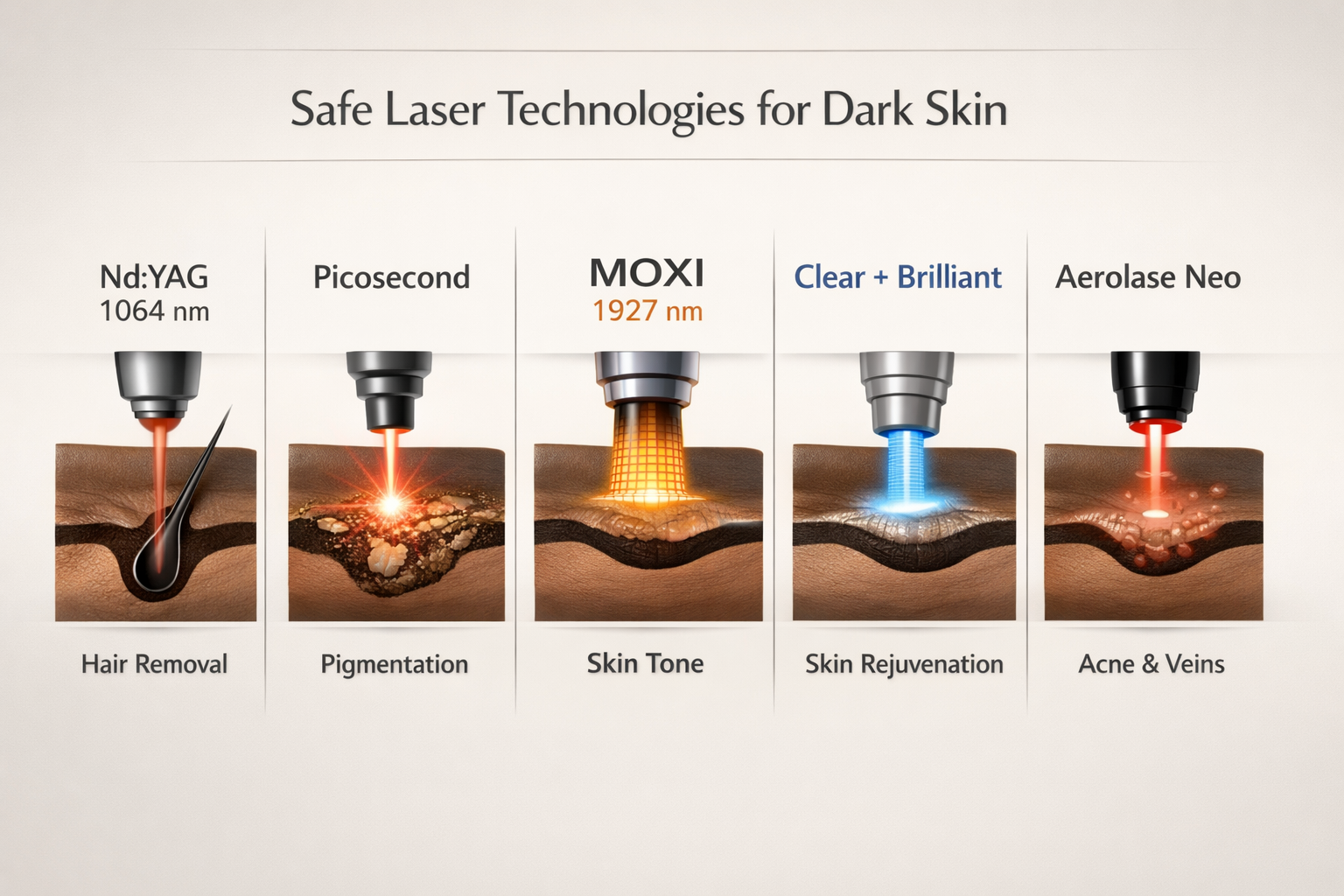
1064 nm Long-Pulsed Nd:YAG Laser
The long-pulsed 1064 nm Nd:YAG laser is considered the gold standard for laser hair removal in darker skin tones and is also used for vascular lesions, skin rejuvenation, and pigmentation. Its longer wavelength reduces absorption by epidermal melanin, and its adjustable pulse duration allows practitioners to deliver energy safely without excessive thermal damage. Laser Genesis, a non-ablative treatment that uses the same 1064 nm wavelength at lower fluence, is used for collagen remodelling, pore reduction, and overall skin tone improvement with a gentle profile suitable for darker complexions.
Picosecond Lasers
Picosecond technology delivers laser energy in pulses measured in trillionths of a second — far shorter than the nanosecond pulses used by older Q-switched lasers. This ultra-short pulse duration means the laser relies more on the photoacoustic effect (a mechanical shattering of pigment particles) than on heat. Because less thermal energy is deposited in the surrounding tissue, the risk of post-inflammatory hyperpigmentation is meaningfully reduced compared with conventional Q-switched devices. Devices such as PicoSure Pro and PicoWay Resolve are used for pigmentation, tattoo removal, and acne scar remodelling in patients with darker skin tones, though careful parameter selection remains essential.
MOXI Laser (1927 nm)
The MOXI laser is a non-ablative fractional laser that operates at 1927 nm, a wavelength primarily absorbed by water rather than melanin. Because it does not target epidermal melanin directly, it carries a lower risk of triggering PIH in darker skin compared with many other resurfacing devices. MOXI is typically used for mild pigmentation, uneven skin tone, and early signs of sun damage. It is often described as a gentler entry point into laser resurfacing for patients with Fitzpatrick types IV and V.
Clear + Brilliant
Clear + Brilliant is a gentle fractional laser designed for mild skin texture improvement, early pigmentation, and overall radiance. It operates at either 1440 nm or 1927 nm and creates microscopic treatment zones in the skin to stimulate collagen remodelling without significant surface disruption. Its low-intensity approach makes it a reasonable option for patients with darker skin tones who want gradual improvement with minimal downtime, though it is not suited to more significant pigmentation or scarring concerns.
Aerolase Neo
The Aerolase Neo uses a 650-microsecond pulse duration at 1064 nm, which is significantly shorter than conventional long-pulsed Nd:YAG devices. This combination of wavelength and pulse duration is designed to reduce heat build-up in the epidermis while still effectively targeting the intended chromophore. Published case series and clinical reports have documented its use across Fitzpatrick types IV through VI for conditions including acne, pigmentation, and hair removal, though large-scale randomised controlled trials remain limited.
675 nm Laser (Emerging Evidence)
A 675 nm wavelength laser has attracted growing clinical interest for treating melasma and acne scars in patients with Fitzpatrick types IV and V. Peer-reviewed studies published in journals including the Journal of the American Academy of Dermatology and indexed on PubMed have reported encouraging results, with a lower rate of PIH compared with some established alternatives. Evidence is still developing, and this technology is not yet as widely available as Nd:YAG or picosecond platforms, but it represents a meaningful area of progress for skin of colour laser medicine.
Lasers to Approach with Caution or Avoid
Not all laser technologies are appropriate for darker skin tones. The following devices carry a higher risk of adverse effects — particularly post-inflammatory hyperpigmentation, hypopigmentation, and burns — in patients with Fitzpatrick types IV through VI.
| Laser / Device | Wavelength | Primary Risk for Dark Skin | Notes |
|---|---|---|---|
| CO2 Laser | 10,600 nm (ablative) | High PIH risk, burns, scarring | Generally avoided for types IV–VI |
| Erbium (Er:YAG) | 2940 nm (ablative) | High PIH risk, prolonged healing | Ablative resurfacing; not recommended for darker tones |
| Alexandrite Laser | 755 nm | Strong melanin absorption, PIH, burns | Shorter wavelength; high epidermal melanin uptake |
| IPL (Intense Pulsed Light) | Broad spectrum (515–1200 nm) | Inconsistent targeting, PIH, burns | Not a true laser; difficult to control in dark skin |
| Ablative Fractional (Fraxel Restore) | 1550 nm / 1927 nm (ablative settings) | PIH, prolonged erythema | Non-ablative settings may be safer; requires expert assessment |
Ablative lasers remove the outer layers of the skin entirely, which triggers a significant healing response. In melanin-rich skin, this healing process frequently stimulates excess melanin production, leading to rebound hyperpigmentation that can be more difficult to treat than the original concern. Intense Pulsed Light (IPL) uses a broad spectrum of light rather than a single wavelength, making it harder to control precisely in patients with higher melanin levels, and it is generally not recommended for Fitzpatrick types IV and above.
Conditions Laser Treatment Can Address in Darker Skin
Laser Hair Removal
Laser hair removal for dark skin is one of the most frequently requested and well-studied applications. The 1064 nm Nd:YAG laser is the preferred choice for Fitzpatrick types IV through VI, as its longer wavelength targets the melanin in the hair follicle while minimising energy absorption in the surrounding darker epidermis. Multiple sessions are typically required — often six to eight — with maintenance treatments depending on individual hair regrowth patterns. Results vary based on hair colour, thickness, and hormonal factors.
Hyperpigmentation and Dark Spots
Post-inflammatory hyperpigmentation (PIH) is one of the most common skin concerns in people with darker skin tones, often arising after acne, injury, or inflammation. Picosecond lasers and the 1064 nm Nd:YAG are frequently used to address PIH, with the photoacoustic mechanism of picosecond devices offering a reduced thermal burden. Treatment of hyperpigmentation in darker skin requires careful parameter selection and a conservative approach, as aggressive settings can paradoxically worsen pigmentation.
Melasma
Melasma is a hormonally influenced pigmentation condition that disproportionately affects people with Fitzpatrick types III through VI. It is notoriously difficult to treat and prone to recurrence. Low-fluence Q-switched 1064 nm Nd:YAG treatments, picosecond lasers, and the emerging 675 nm laser have all shown promise in clinical studies, but melasma management typically requires a combination approach — including topical agents, strict sun protection, and hormonal management — rather than laser treatment alone. Rebound hyperpigmentation is a recognised risk if laser energy is too aggressive or sun exposure is not adequately controlled after treatment.
Acne Scars
Atrophic acne scars — the depressed, pitted scars left by inflammatory acne — can be addressed with non-ablative fractional lasers, picosecond devices, and the 1064 nm Nd:YAG. These technologies stimulate collagen remodelling in the dermis without removing the surface skin, which reduces the risk of PIH compared with ablative resurfacing. Improvement is typically gradual and cumulative, with most patients requiring a series of treatments. Keloid scarring is an important consideration in patients of African or Asian descent, as some individuals are predisposed to raised, thickened scar formation; this should be discussed thoroughly during consultation before any laser treatment is planned.
Uneven Skin Tone and Texture
Gentle non-ablative fractional lasers such as MOXI and Clear + Brilliant, as well as Laser Genesis, can improve overall skin tone, texture, and radiance in darker skin tones with a lower risk profile than more aggressive resurfacing devices. These treatments work by stimulating collagen production and promoting mild cellular turnover without significant surface disruption.
Pre-Treatment Preparation for Dark Skin
Preparing the skin appropriately before laser treatment significantly reduces the risk of adverse reactions in patients with higher Fitzpatrick skin types. The following steps are commonly recommended, though your practitioner will provide personalised guidance based on your specific treatment plan.
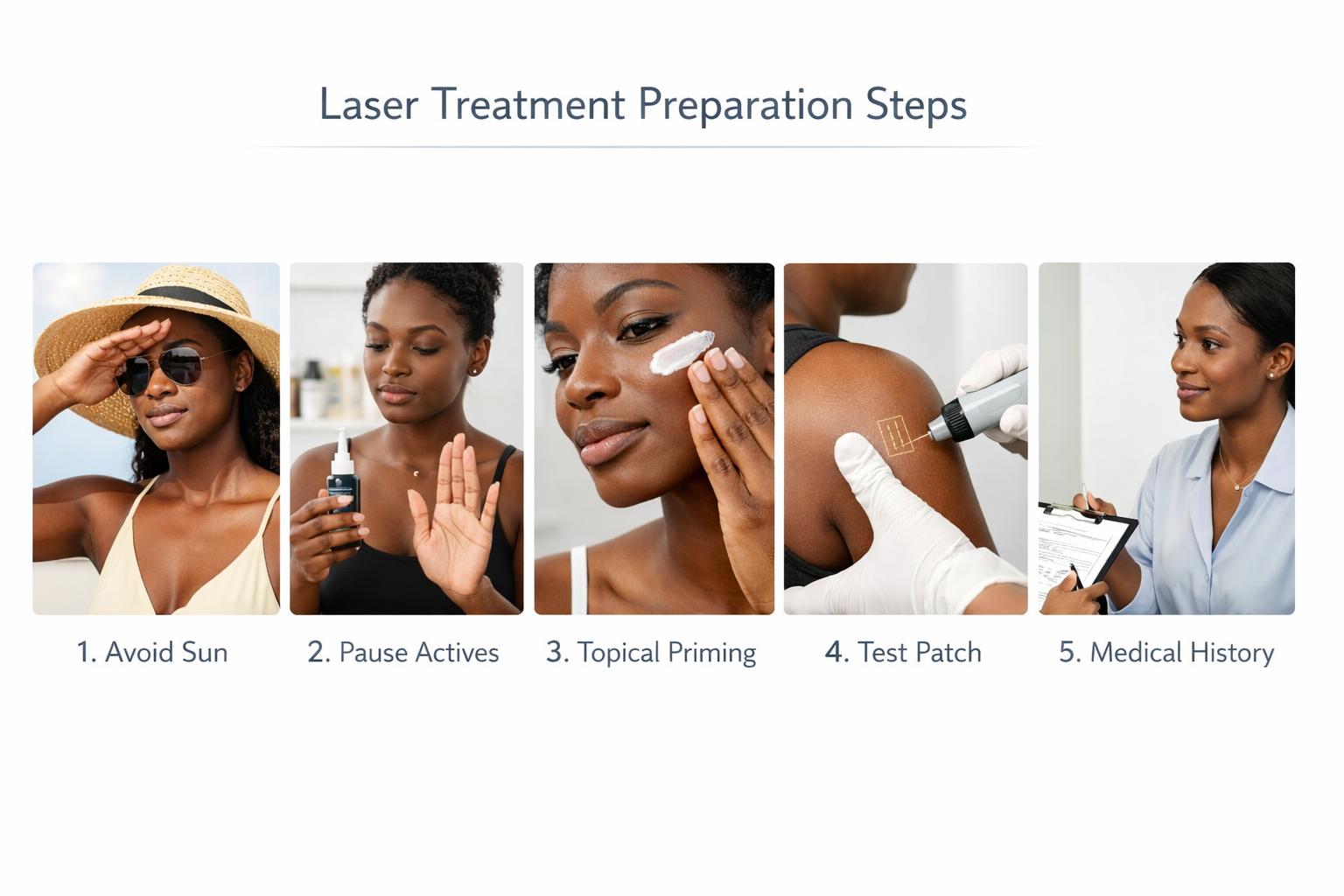
- Avoid sun exposure and tanning for at least two to four weeks before treatment. Both natural sun exposure and artificial tanning (including self-tan products) increase epidermal melanin levels, raising the risk of PIH and burns.
- Pause active skincare ingredients such as retinoids, glycolic acid, and salicylic acid for at least one to two weeks before treatment, as these can sensitise the skin and increase the risk of irritation.
- Consider topical priming with melanocyte-calming agents — such as those found in Obagi Nu-Derm or similar prescription-grade formulations — in the weeks before treatment. These can help suppress melanin production and reduce the likelihood of PIH. This is typically recommended by the treating clinician rather than self-initiated.
- Attend a test patch session before your first full treatment. A test patch involves applying the laser to a small, discreet area to assess your skin’s response before proceeding. This is a non-negotiable safety step for darker skin tones and should be offered by any reputable clinic.
- Disclose your full medical history, including any medications, hormonal treatments, history of keloid scarring, and previous laser or cosmetic treatments.
Aftercare and Recovery for Darker Skin Tones
Post-treatment care is particularly important for melanin-rich skin, where the risk of PIH and rebound hyperpigmentation is higher than in lighter skin types. The following guidance reflects general best practice, though your practitioner’s specific instructions should always take precedence.
- Apply broad-spectrum SPF 30–50 sunscreen daily, starting immediately after treatment and continuing for several weeks. A mineral sunscreen containing zinc oxide or titanium dioxide is often preferred post-treatment, as it sits on the skin surface rather than being absorbed and is less likely to cause irritation on sensitised skin.
- Keep the skin clean and hydrated using a gentle, fragrance-free cleanser and a simple hydrating moisturiser. Avoid active ingredients such as retinoids, AHAs, and BHAs until the skin has fully recovered.
- Do not pick or scratch any flaking or crusting skin. Disrupting the healing process can introduce bacteria, cause scarring, and significantly increase the risk of PIH.
- Avoid strenuous exercise for 24 to 48 hours after treatment, as heat and sweat can irritate the treated area and prolong redness.
- Expect some temporary darkening of treated pigmented areas before fading occurs. This is a normal part of the treatment response for pigmentation treatments and does not indicate a complication. However, if darkening is severe, persistent, or spreading, contact your practitioner promptly.
- Attend all follow-up appointments so your practitioner can monitor your skin’s response and adjust treatment parameters if needed.
How to Choose a Clinic for Laser Treatment on Dark Skin
Choosing the right clinic is as important as choosing the right laser. The following factors are worth evaluating before booking a consultation or committing to treatment.
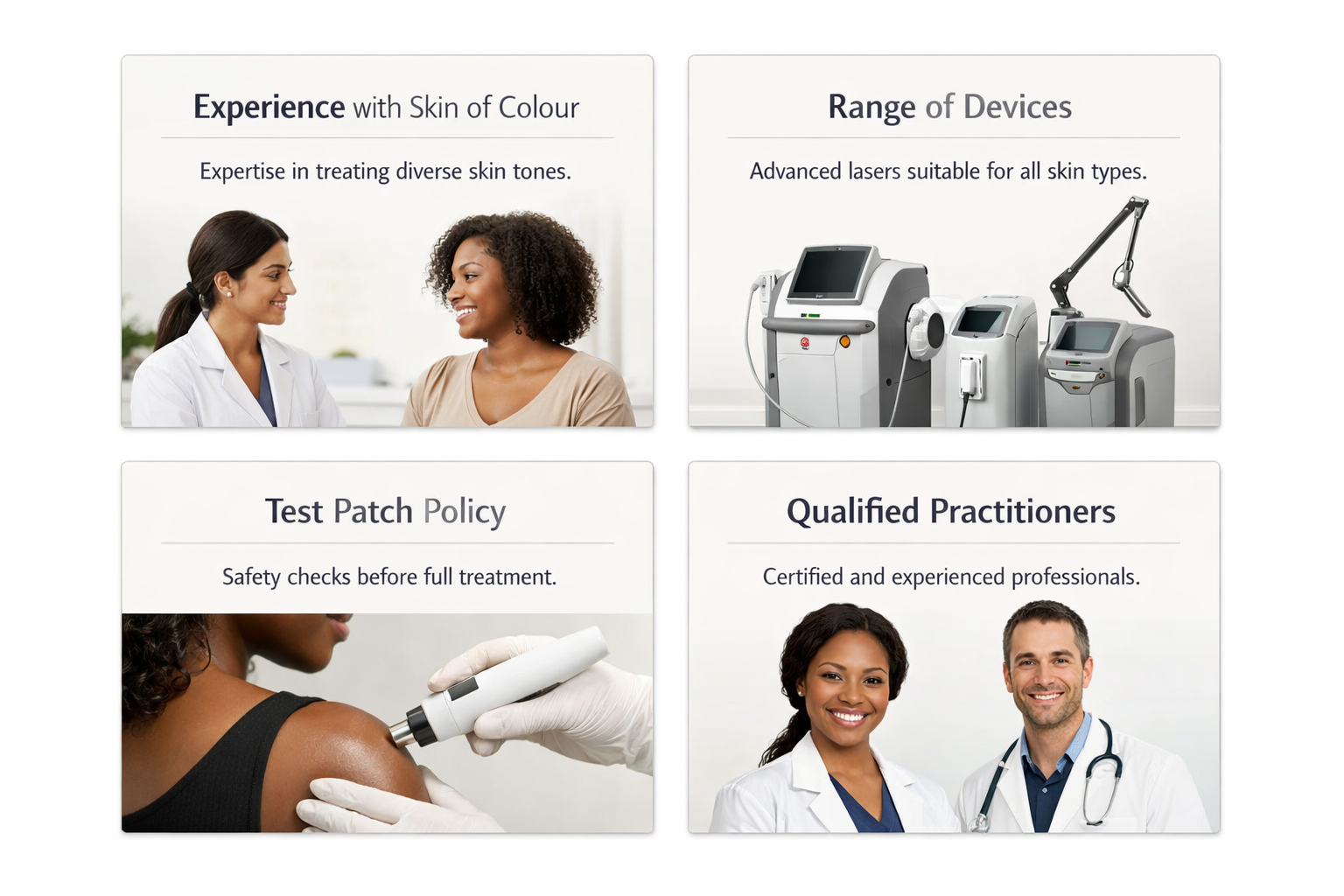
- Experience with skin of colour: Ask specifically whether the clinic regularly treats patients with Fitzpatrick types IV through VI. Request to see examples of previous results in patients with a similar skin tone to yours.
- Range of laser devices: A clinic with only one or two laser platforms may not be able to offer the most appropriate technology for your skin type and concern. Access to multiple devices — including a 1064 nm Nd:YAG and ideally a picosecond platform — is a positive indicator.
- Test patch policy: Any reputable clinic treating darker skin tones should offer a test patch before a full treatment session. If a clinic skips this step, consider it a red flag.
- Qualified practitioners: In the UK, laser practitioners should hold at minimum a Level 4 Certificate in Laser and Light Treatments. Treatments performed by or under the supervision of a medical professional — such as a doctor or nurse prescriber — offer an additional layer of clinical oversight.
- Transparent consultation process: A thorough consultation should include a skin type assessment, a discussion of your concerns and medical history, a realistic explanation of expected outcomes, and a clear description of the risks relevant to your skin type.
Frequently Asked Questions
Is laser treatment safe for Black skin?
Laser treatment can be safe for Black skin — which typically falls within Fitzpatrick types V and VI — when the correct laser technology is used and parameters are carefully calibrated. The 1064 nm Nd:YAG laser and picosecond devices have the strongest safety evidence for deeply pigmented skin. The risk of post-inflammatory hyperpigmentation is real but can be significantly reduced with appropriate device selection, conservative settings, a test patch, and proper aftercare.
Which laser is best for dark skin?
There is no single universally best laser for all concerns in dark skin. For hair removal, the long-pulsed 1064 nm Nd:YAG is widely considered the gold standard. For pigmentation and acne scars, picosecond lasers are frequently recommended. For gentle skin tone improvement, MOXI or Clear + Brilliant may be appropriate. The right choice depends on your specific concern, skin type, and the devices available at your clinic.
Can dark skin get laser hair removal?
Yes. Laser hair removal is one of the most well-established laser applications for darker skin tones. The 1064 nm Nd:YAG laser is the preferred device, as its longer wavelength targets the hair follicle while minimising energy absorption in the surrounding darker epidermis. Multiple sessions are typically required, and a test patch should always be performed first.
What happens if the wrong laser is used on dark skin?
Using an inappropriate laser on darker skin can cause burns, blistering, post-inflammatory hyperpigmentation, hypopigmentation (permanent lightening of the skin), and in rare cases keloid scarring. These risks are why device selection, practitioner experience, and a test patch are so important for patients with Fitzpatrick types IV through VI.
How many laser sessions will I need?
The number of sessions depends on the condition being treated, the laser used, and your individual skin response. Laser hair removal typically requires six to eight sessions. Pigmentation and acne scar treatments may require three to six sessions or more, with results building gradually over time. Your practitioner should provide a realistic treatment plan during your consultation.
Can laser treatment make hyperpigmentation worse on dark skin?
Yes, it can — particularly if an inappropriate laser is used, settings are too aggressive, or aftercare is not followed correctly. Post-inflammatory hyperpigmentation and rebound hyperpigmentation are recognised risks in melanin-rich skin. This is why conservative parameters, a test patch, pre-treatment skin priming, and diligent sun protection are all essential components of a safe treatment plan.
Making an Informed Decision About Laser Treatment for Dark Skin
Laser treatment for dark skin has advanced considerably, and the historical assumption that these technologies are unsuitable for melanin-rich complexions is no longer accurate. With the right laser, the right practitioner, and the right preparation, a wide range of skin concerns — from unwanted hair to acne scars, hyperpigmentation, and uneven tone — can be addressed safely and effectively in patients across Fitzpatrick types IV through VI.
The most important steps before committing to treatment are choosing a clinic with genuine experience in skin of colour, ensuring a thorough consultation and test patch are part of the process, and understanding that results are gradual and cumulative rather than immediate. Conditions such as melasma and PIH require particular patience and a combination approach, and no laser treatment should be viewed as a guaranteed cure.
If you are considering laser treatment and have a darker skin tone, a consultation with an experienced practitioner who has access to appropriate technology — and who takes the time to assess your individual skin type, concerns, and medical history — is the essential first step toward a safe and effective outcome.