

Key Takeaways
- CoolSculpting is not recommended while breastfeeding. Although it is not formally listed as a contraindication by the manufacturer, the treatment has never been clinically tested on lactating mothers, and most practitioners advise waiting until after you have fully weaned.
- The main concern is that inflammatory byproducts released as treated fat cells break down could theoretically enter breast milk, though the precise risk is not yet quantified by clinical research.
- Hormonal fluctuations during lactation can also affect how your body stores and responds to fat, making results less predictable even if the safety question were resolved.
- Most practitioners recommend waiting at least three to six months after finishing breastfeeding, and until your weight has stabilised, before booking a consultation.
- In the meantime, gentle exercise, a balanced diet, and pelvic floor recovery are the most appropriate steps, with non-surgical fat reduction options available once you are ready.
Can You Have CoolSculpting While Breastfeeding?
The short answer is no — CoolSculpting is not considered appropriate for women who are currently breastfeeding. This is not because the procedure is inherently dangerous in a dramatic sense, but because it has never been studied in lactating mothers, and the precautionary principle applies clearly here. When the safety of a treatment in a specific population has not been established, responsible practitioners do not offer it.
Allergan Aesthetics, the manufacturer of CoolSculpting, does not formally list breastfeeding as a direct contraindication in the same way that pregnancy is listed. However, the absence of a formal listing does not mean the treatment is considered safe during lactation — it means it has simply not been tested in this group. Virtually every reputable clinic and practitioner applies the same guidance: wait until you have finished breastfeeding before considering CoolSculpting or any comparable non-surgical fat reduction treatment.
Why CoolSculpting Is Not Recommended During Lactation
To understand the concern, it helps to know how CoolSculpting works. The treatment uses controlled cooling technology — a process known as cryolipolysis — to lower the temperature of targeted subcutaneous fat cells to a point where they undergo a natural cell death process called apoptosis. Over the following weeks, the body’s lymphatic system gradually clears away the dead fat cells. This process is what produces the gradual reduction in fat volume that patients see over eight to sixteen weeks.
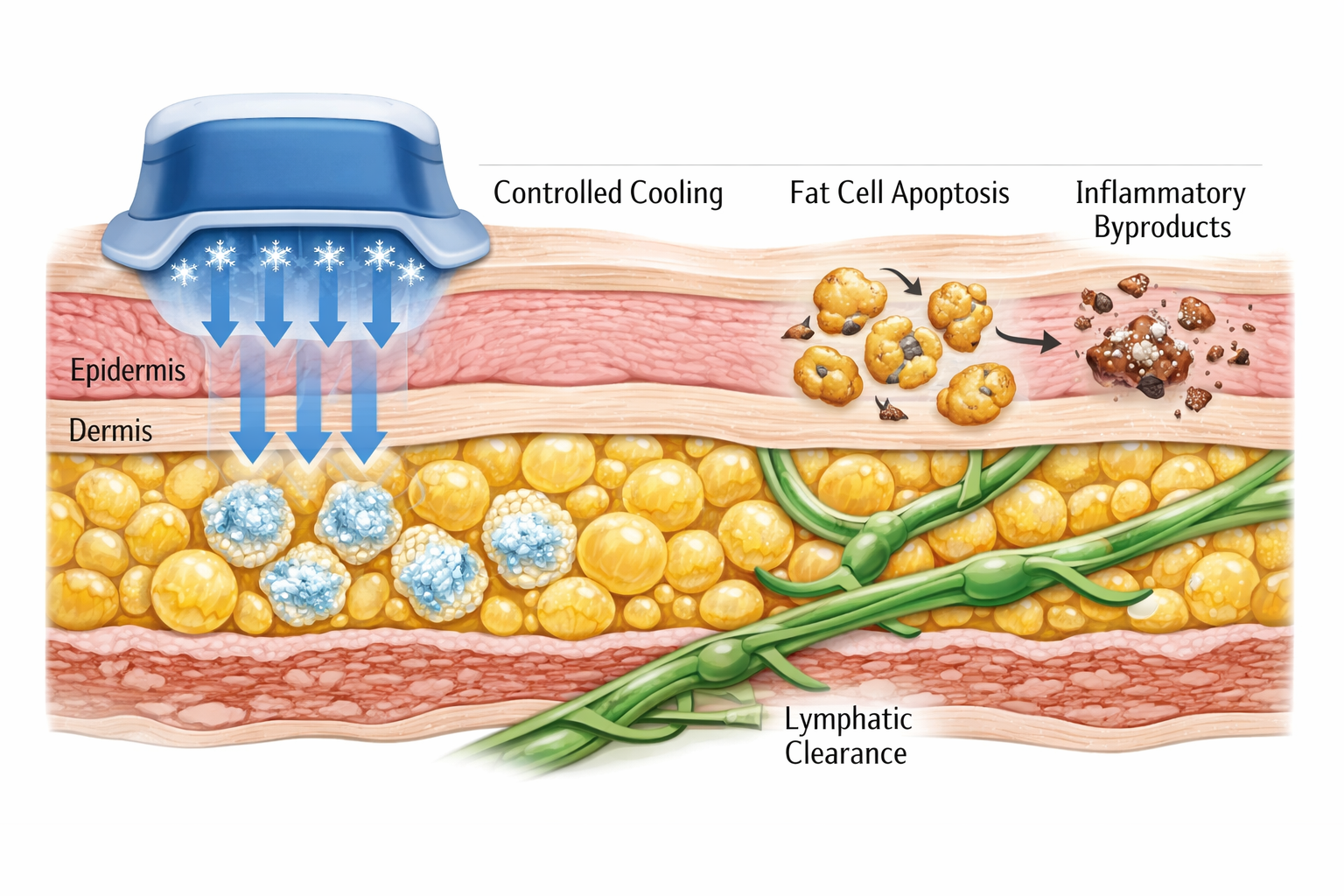
The issue for breastfeeding women lies in what happens during that clearance process. As fat cells break down, they release inflammatory byproducts into the bloodstream before being processed and eliminated. In a non-breastfeeding adult, this is a normal and manageable biological process. In a lactating mother, there is a theoretical concern that some of these byproducts could pass into breast milk and reach the nursing infant. The precise risk has not been quantified because no clinical studies have examined CoolSculpting in breastfeeding women — and that absence of data is itself the reason for caution.
This is a straightforward application of the precautionary principle: when a treatment’s effects on breast milk composition and infant safety are unknown, the responsible position is to avoid it. This reasoning applies regardless of how localised or non-invasive the treatment appears to be.
The Role of Hormonal Fluctuations in Timing
Beyond the safety question, there is a practical reason why CoolSculpting during breastfeeding is unlikely to produce optimal results even if the safety concern were set aside. Lactation involves significant hormonal fluctuations, including elevated levels of prolactin and altered oestrogen levels, which influence how and where the body stores fat. Many women retain fat in the abdomen, hips, and thighs during breastfeeding as a biological reserve for milk production.
Treating areas of fat that are actively being maintained by hormonal signals is unlikely to produce the stable, predictable reduction that CoolSculpting is designed to deliver. Weight stabilisation is one of the key criteria for being an ideal candidate for the procedure, and that stability is difficult to achieve while the body is still in a lactation-driven hormonal state. Treating too early risks spending money on results that shift or diminish as your body continues to change after weaning.
When Is It Safe to Start CoolSculpting After Pregnancy?
Most practitioners suggest waiting a minimum of three to six months after you have fully weaned before having CoolSculpting. This window allows time for several important changes to occur. Hormone levels need to normalise after lactation ends, which typically takes a few weeks to a couple of months. Body weight needs to reach a stable baseline, since CoolSculpting is a body contouring treatment rather than a weight-loss solution — it works best when the overall weight is consistent and the remaining fat deposits are localised and pinchable.
A useful readiness checklist before booking a consultation might include the following:
- You have completely finished breastfeeding and are fully weaned.
- At least three months have passed since your last nursing session.
- Your weight has been stable for at least four to six weeks.
- You are within approximately 10 to 15 kilograms of your target weight.
- You have realistic expectations — CoolSculpting reduces localised fat deposits, not overall body weight.
- You are not currently pregnant or planning to become pregnant in the near term.
- Any surgical incisions, including C-section scars, are fully healed.
What About C-Section Recovery?
For mothers who delivered by caesarean section, there is an additional consideration. The C-section incision needs to be fully healed before any body contouring treatment is applied to the lower abdomen. This typically takes a minimum of four to six weeks for surface healing, though deeper tissue recovery can take considerably longer. Many women who have had a caesarean also notice a C-section pouch or C-section overhang — a small fold of skin and fat that sits above the scar line. CoolSculpting may be able to address some of the subcutaneous fat in this area once healing is complete and breastfeeding has ended, though the degree of improvement depends on how much of the concern is fat versus skin laxity. A clinical assessment is needed to determine whether CoolSculpting or an alternative approach is more appropriate for this specific concern.
Understanding Postpartum Body Changes
Many women find that even after returning to their pre-pregnancy weight, their body shape has changed. The abdomen in particular often retains a softness or roundness — sometimes called the mummy tummy — that does not respond fully to diet and exercise. This can be frustrating, but it is a normal consequence of the physical changes pregnancy involves.
One important distinction to understand is the difference between subcutaneous fat and a condition called diastasis recti. Subcutaneous fat is the layer of fat beneath the skin that CoolSculpting targets — it is the pinchable fat that sits above the abdominal muscles. Diastasis recti, by contrast, is a separation of the abdominal muscles that can occur during pregnancy, causing the belly to protrude even when fat levels are low. CoolSculpting cannot address diastasis recti. If muscle separation is contributing to your postpartum abdominal shape, a surgical procedure such as abdominoplasty — or targeted physiotherapy — may be more appropriate. A qualified practitioner can assess which factor is dominant during a consultation.
What Can You Do While You Are Still Breastfeeding?
The period of breastfeeding is not wasted time when it comes to postpartum body contouring — it is simply a time for a different kind of preparation. The most effective steps during this period focus on building a foundation that will make body contouring more effective when the time comes.
- Nutrition: A balanced, nutrient-dense diet supports both milk production and gradual, sustainable weight management. Extreme calorie restriction is not appropriate during breastfeeding and is counterproductive to long-term body composition goals.
- Gentle exercise: Low-impact activity such as walking, postnatal yoga, and swimming can support cardiovascular health and gradual fat loss without placing excessive strain on a recovering body.
- Pelvic floor recovery: Working with a women’s health physiotherapist to address pelvic floor weakness and diastasis recti is one of the most valuable investments a postpartum woman can make, and it directly improves the outcomes of any subsequent body contouring.
- Hydration: Adequate hydration supports lymphatic function, skin quality, and overall recovery — all of which matter for body contouring results later.
Postpartum Body Contouring Options: A Comparison
Once you are fully weaned and your body has stabilised, several non-surgical fat reduction and body contouring treatments may be worth discussing with a qualified practitioner. The table below outlines how CoolSculpting compares to some commonly considered alternatives in a postpartum context.
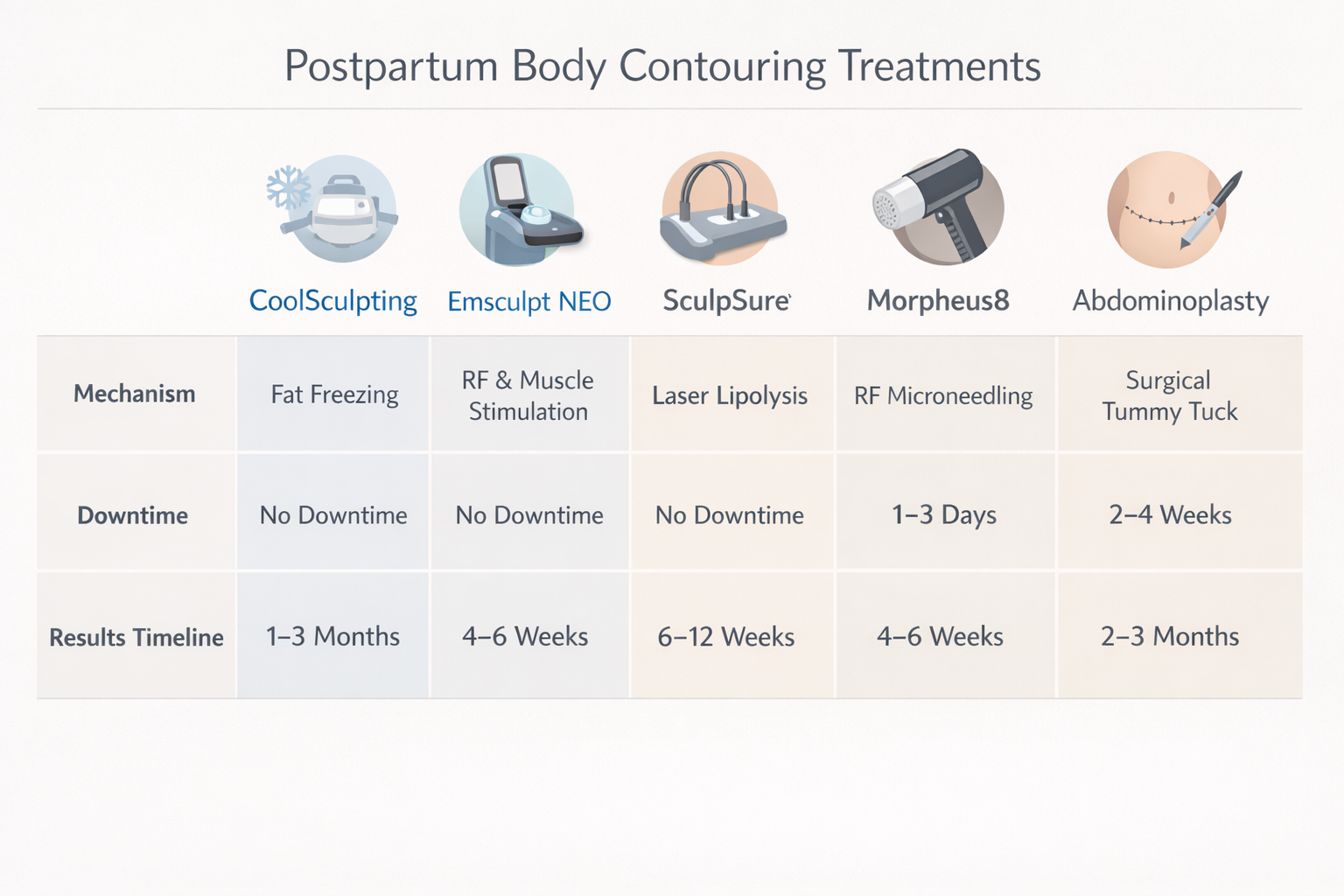
| Treatment | Mechanism | Primary Goal | Suitable Post-Weaning | Downtime | Results Timeline |
|---|---|---|---|---|---|
| CoolSculpting / CoolSculpting Elite | Cryolipolysis — controlled cooling of fat cells | Localised subcutaneous fat reduction | Yes, once weight is stable | Minimal | 8–16 weeks |
| Emsculpt NEO | Combined radiofrequency and electromagnetic muscle stimulation | Fat reduction and muscle strengthening | Yes — may also help diastasis recti | None | 4–8 weeks |
| SculpSure | Laser-based hyperthermic fat reduction | Localised fat reduction | Yes, once weaned and weight stable | Minimal | 6–12 weeks |
| Morpheus8 | Fractional radiofrequency microneedling | Skin tightening and mild fat remodelling | Yes — particularly useful for skin laxity | 3–5 days | 4–12 weeks |
| Abdominoplasty (tummy tuck) | Surgical removal of excess skin and fat; muscle repair | Significant contouring; diastasis recti correction | Yes — requires full recovery from pregnancy | 2–6 weeks | 3–6 months |
Emsculpt NEO is worth noting specifically because it combines fat reduction with muscle stimulation, which may be particularly relevant for postpartum women dealing with weakened core muscles alongside localised fat. However, suitability for any of these treatments depends on individual anatomy, health history, and goals — a clinical assessment is always required before proceeding.
What to Expect from CoolSculpting Once You Are Ready
CoolSculpting Elite, the current generation of the device, uses applicators that draw the targeted tissue into a cooling panel. During a session, most patients experience an initial sensation of intense cold, followed by numbness as the area becomes desensitised. Sessions typically last between 35 and 45 minutes per area, and multiple areas can often be treated in a single appointment using dual applicators.
After treatment, the area may feel tender, swollen, or temporarily firm. Some patients notice redness or mild bruising. These effects generally resolve within a few days to a couple of weeks. There is no requirement for anaesthesia and no incisions are made, which means there is no formal recovery period — most people return to normal activities the same day.
Results from cryolipolysis develop gradually as the lymphatic system clears away the treated fat cells. Most patients begin to notice changes at around four to eight weeks, with the most visible results appearing between twelve and sixteen weeks after treatment. Studies suggest that a single CoolSculpting session can reduce fat in the treated area by approximately 20 to 25 percent, though individual results vary. Some patients choose to have a second session in the same area to achieve further reduction.
Who Is an Ideal Candidate for CoolSculpting After Pregnancy?
CoolSculpting is most effective for people who are close to their target weight but have specific, localised areas of subcutaneous fat that have not responded to diet and exercise. In a postpartum context, common treatment areas include the lower abdomen, flanks, love handles, and inner thighs. The ideal candidate has pinchable fat in the target area, a body mass index generally below 30, and stable weight.
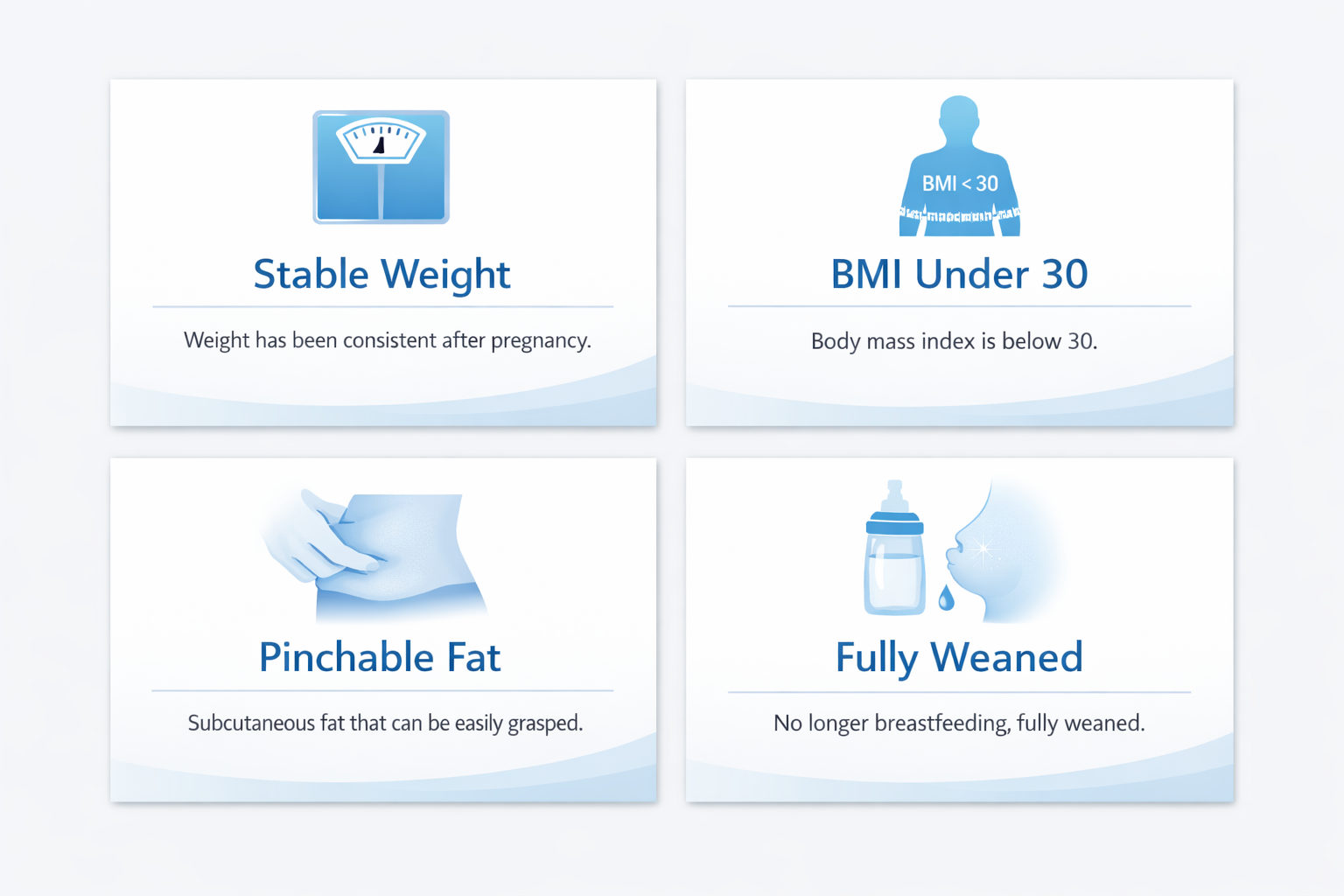
CoolSculpting is not a treatment for obesity or for achieving significant overall weight loss. It is also not appropriate for visceral fat — the fat stored deeper around the organs — which requires lifestyle changes rather than body contouring. A thorough consultation with a qualified practitioner will determine whether the fat in your areas of concern is suitable for treatment and whether CoolSculpting or an alternative approach is the better fit for your goals.
Frequently Asked Questions
I had CoolSculpting before I knew I was pregnant or while breastfeeding — what should I do?
If you had CoolSculpting before realising you were pregnant, or inadvertently during early breastfeeding, try not to panic. The theoretical concern relates to inflammatory byproducts entering breast milk, but there is no established evidence of harm in this scenario. Contact your midwife, GP, or obstetrician to discuss the situation and seek personalised guidance. Do not continue further CoolSculpting sessions until you have finished breastfeeding and received professional advice.
Can I breastfeed after having CoolSculpting?
CoolSculpting targets subcutaneous fat and does not affect breast tissue or mammary glands when applied to areas such as the abdomen, flanks, or thighs. If you have CoolSculpting after you have finished breastfeeding and then become pregnant again in the future, there is no established evidence that previous CoolSculpting treatment affects your ability to breastfeed. However, this is a question worth raising with your practitioner during consultation.
How many CoolSculpting sessions will I need after pregnancy?
The number of sessions depends on the areas being treated, the volume of fat present, and your goals. Many patients see meaningful improvement after a single session per area, while others choose two sessions for more significant reduction. Your practitioner will assess your anatomy and discuss a realistic treatment plan during consultation.
Will CoolSculpting fix my mummy tummy completely?
CoolSculpting can reduce localised subcutaneous fat in the abdominal area, which may meaningfully improve the appearance of a postpartum belly. However, if your mummy tummy is partly or largely caused by diastasis recti — separation of the abdominal muscles — CoolSculpting will not address that component. A clinical assessment is important to identify the underlying cause before choosing a treatment approach.
Is there anything safe for body contouring while I am still breastfeeding?
Most aesthetic body contouring treatments, including CoolSculpting, Emsculpt NEO, SculpSure, and radiofrequency-based devices, are generally not recommended during breastfeeding due to the same lack of safety data in lactating women. The safest and most appropriate approach during this period is lifestyle-based: balanced nutrition, gentle exercise, and pelvic floor physiotherapy. These steps also improve the outcomes of any body contouring treatment you choose after weaning.
Does CoolSculpting work on a C-section pouch?
CoolSculpting may be able to reduce the subcutaneous fat component of a C-section pouch or C-section overhang, but the result depends on how much of the concern is fat versus excess skin or scar tissue. The C-section incision must be fully healed before treatment can be applied to the lower abdomen. A consultation with a practitioner experienced in postpartum body contouring will help determine whether CoolSculpting, an alternative treatment, or a combination approach is most appropriate.
Planning Your Postpartum Body Contouring Journey
The postpartum period involves significant physical change, and it is natural to want to feel comfortable in your body again. CoolSculpting can be a genuinely effective option for reducing stubborn localised fat after pregnancy — but timing matters. Waiting until you are fully weaned, your weight has stabilised, and your hormones have had time to normalise is not simply a precaution; it is also the approach most likely to produce the clear, lasting results that make the treatment worthwhile.
If you are currently breastfeeding, the most useful thing you can do is focus on recovery, nutrition, and gentle movement, and plan a consultation for three to six months after you finish nursing. At that point, a qualified practitioner can assess your specific concerns — whether that is lower abdominal fat, a C-section pouch, love handles, or another area — and recommend the most appropriate non-surgical fat reduction approach for your body and your goals. A personalised treatment plan, developed after a thorough clinical assessment, will always produce better outcomes than rushing into treatment before your body is ready.