

Key Takeaways
- Bingo wings develop when the skin and soft tissue on the underside of the upper arm lose firmness, typically due to a combination of ageing, reduced collagen and elastin, muscle loss, and changes in body composition.
- Targeted exercises can strengthen the tricep muscles and improve arm tone, but they cannot remove excess skin or eliminate localised fat deposits once skin laxity is established.
- Non-surgical treatments such as Morpheus8, radiofrequency skin tightening, cryolipolysis, and fat-dissolving injections may improve mild to moderate laxity with minimal downtime.
- Significant loose skin — particularly after major weight loss — typically requires a surgical arm lift (brachioplasty) for a meaningful and lasting result.
- The right approach depends on the degree of skin laxity, the proportion of excess fat versus loose skin, and individual goals; a clinical assessment is the most reliable starting point.
What Are Bingo Wings?
Bingo wings is a colloquial term for the loose, soft tissue that hangs from the underside of the upper arm, between the armpit and the elbow. The name is thought to originate from the arm-waving motion associated with calling out in bingo halls, which makes the loose skin visibly wobble. The same area is sometimes called bat wings, flabby arms, or saggy arms, and in clinical settings the concern is often described as upper arm triceps laxity.
The condition involves a combination of excess fat, reduced muscle volume, and skin that has lost its ability to retract — a quality known as skin elasticity. In some people, fat accumulation is the dominant factor; in others, loose skin is the primary issue; and in many, both are present simultaneously. Understanding which factor is driving the appearance is important because it directly determines which treatments are likely to be effective.
What Causes Bingo Wings?
Several overlapping factors contribute to the development of bingo wings, and most people are affected by more than one at the same time.
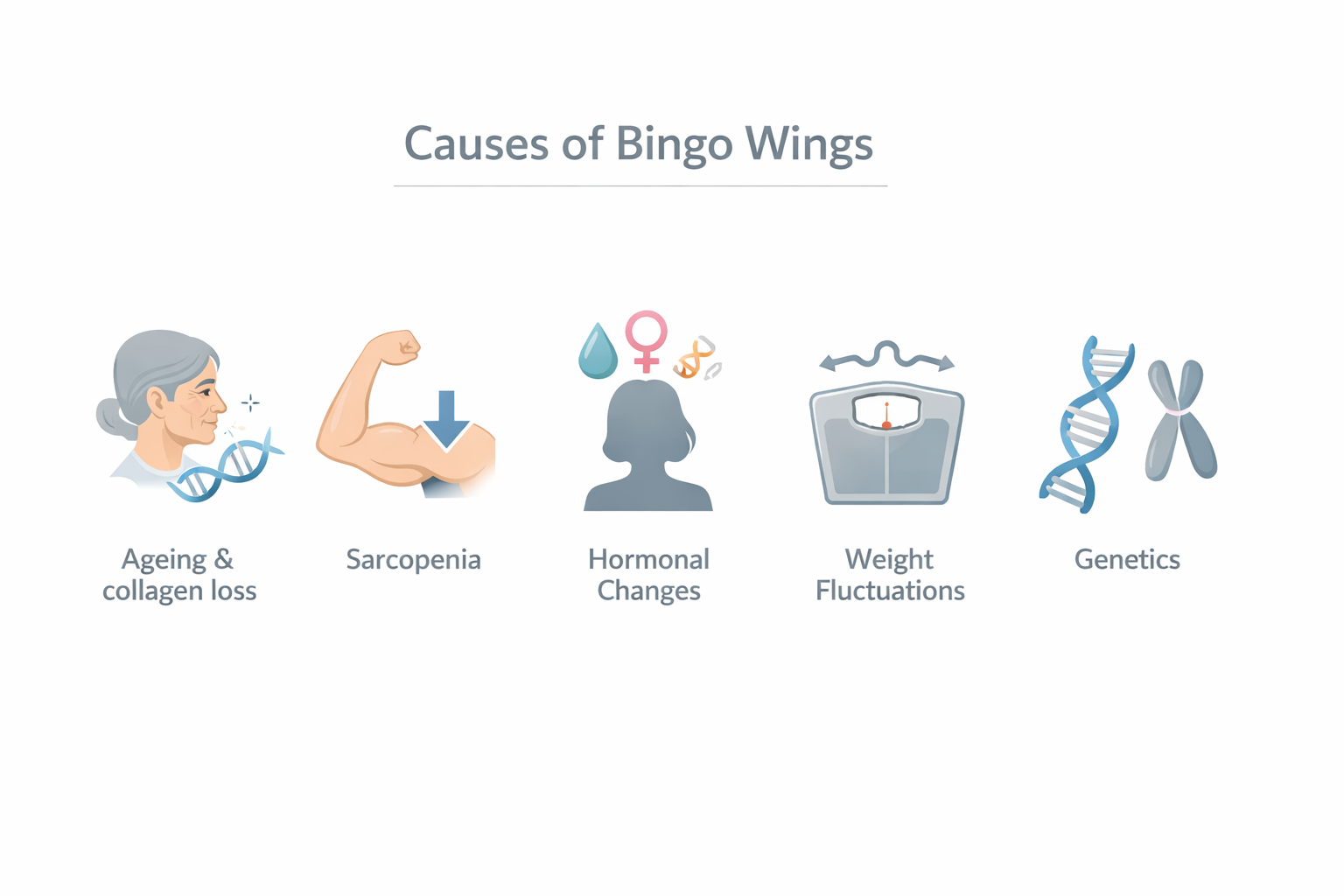
Ageing and Loss of Collagen and Elastin
As the body ages, the skin gradually produces less collagen and elastin — the structural proteins responsible for firmness and recoil. From the mid-thirties onwards, this decline becomes measurable, and the skin on the upper arm, which is naturally thinner and less supported than skin elsewhere, becomes progressively looser. The result is crepey skin that no longer sits tightly against the underlying tissue, even when body weight remains stable.
Sarcopenia and Muscle Loss
Sarcopenia — the age-related loss of muscle mass — reduces the volume of the tricep muscles that give the upper arm its shape. Without adequate muscle beneath the skin, the overlying tissue has less support and begins to droop. This process accelerates after the age of fifty and is significantly worsened by a sedentary lifestyle and insufficient protein intake.
Hormonal Changes
Hormonal fluctuations, particularly the decline in oestrogen associated with perimenopause and menopause, affect both fat distribution and skin quality. Many women notice that fat accumulates more readily in the upper arms during this period, and that the skin simultaneously becomes thinner and less resilient. This combination makes bingo wings a particularly common concern for women in their forties and fifties, though men are not immune — reduced testosterone with age contributes to similar changes in muscle mass and fat distribution.
Weight Fluctuations and Rapid Weight Loss
Significant weight gain stretches the skin of the upper arm over time. When weight is subsequently lost — whether through diet, exercise, or bariatric surgery — the skin does not always retract fully, particularly if the loss is rapid or if the skin’s elasticity has already been reduced by age. Post-bariatric patients frequently experience pronounced excess skin on the upper arms that cannot be addressed without surgical intervention.
Genetics and Fat Distribution
Genetic predisposition plays a role in where the body preferentially stores fat. Some individuals accumulate fat in the upper arms regardless of overall body weight, making the area resistant to general weight loss efforts. This inherited tendency, combined with the other factors above, explains why bingo wings can appear even in people who are otherwise lean and active.
Can Exercises Get Rid of Bingo Wings?
Exercise is a valuable part of managing the appearance of the upper arms, but it is important to understand what it can and cannot achieve. Strength training and resistance training can rebuild tricep muscle volume, improve arm definition, and help reduce overall body fat when combined with a calorie-appropriate diet. However, exercise cannot remove excess skin, and it cannot selectively eliminate localised fat deposits in the way that clinical treatments can — a principle sometimes called the spot reduction myth.
For people whose bingo wings are primarily caused by reduced muscle tone and modest fat accumulation — rather than significant skin laxity — a consistent exercise programme may produce a noticeable improvement. For those with established loose skin, exercise remains beneficial for general health and arm tone, but it is unlikely to resolve the sagging tissue on its own.
Effective Exercises for the Upper Arms
The following exercises target the tricep muscles and broader upper-body musculature. Aim for two to three sessions per week, allowing rest days between sessions for muscle recovery.
- Tricep dips: Using a sturdy chair or bench, lower and raise the body using the arms. Three sets of ten to fifteen repetitions build tricep strength effectively.
- Overhead tricep extensions: Holding a dumbbell or resistance band overhead with both hands, lower it behind the head and press back up. This isolates the long head of the tricep muscle directly.
- Push-ups and diamond push-ups: Standard push-ups engage the chest, shoulders, and triceps. Placing the hands close together in a diamond shape increases tricep activation.
- Resistance band pull-aparts: Holding a resistance band at shoulder height with both hands, pull it apart to engage the upper back and rear shoulders, which supports overall arm posture.
- Bent-over rows: Using dumbbells or a resistance band, rows strengthen the upper back and biceps, contributing to balanced arm development.
- Arm circles: A lower-intensity option that improves shoulder mobility and provides light muscular endurance work for the upper arms.
Cardiovascular exercise — such as swimming, cycling, or brisk walking — supports overall fat reduction and complements strength training. A diet adequate in lean protein helps preserve and rebuild muscle mass, particularly important for older adults experiencing sarcopenia.
Non-Surgical Treatments for Bingo Wings
For people with mild to moderate skin laxity, or those who want to reduce localised arm fat without surgery, a range of non-surgical and minimally invasive treatments may be appropriate. Results vary depending on the degree of laxity, the proportion of fat versus loose skin, and individual skin quality. Most non-surgical options require multiple sessions and produce gradual improvements over weeks to months rather than immediate visible changes.
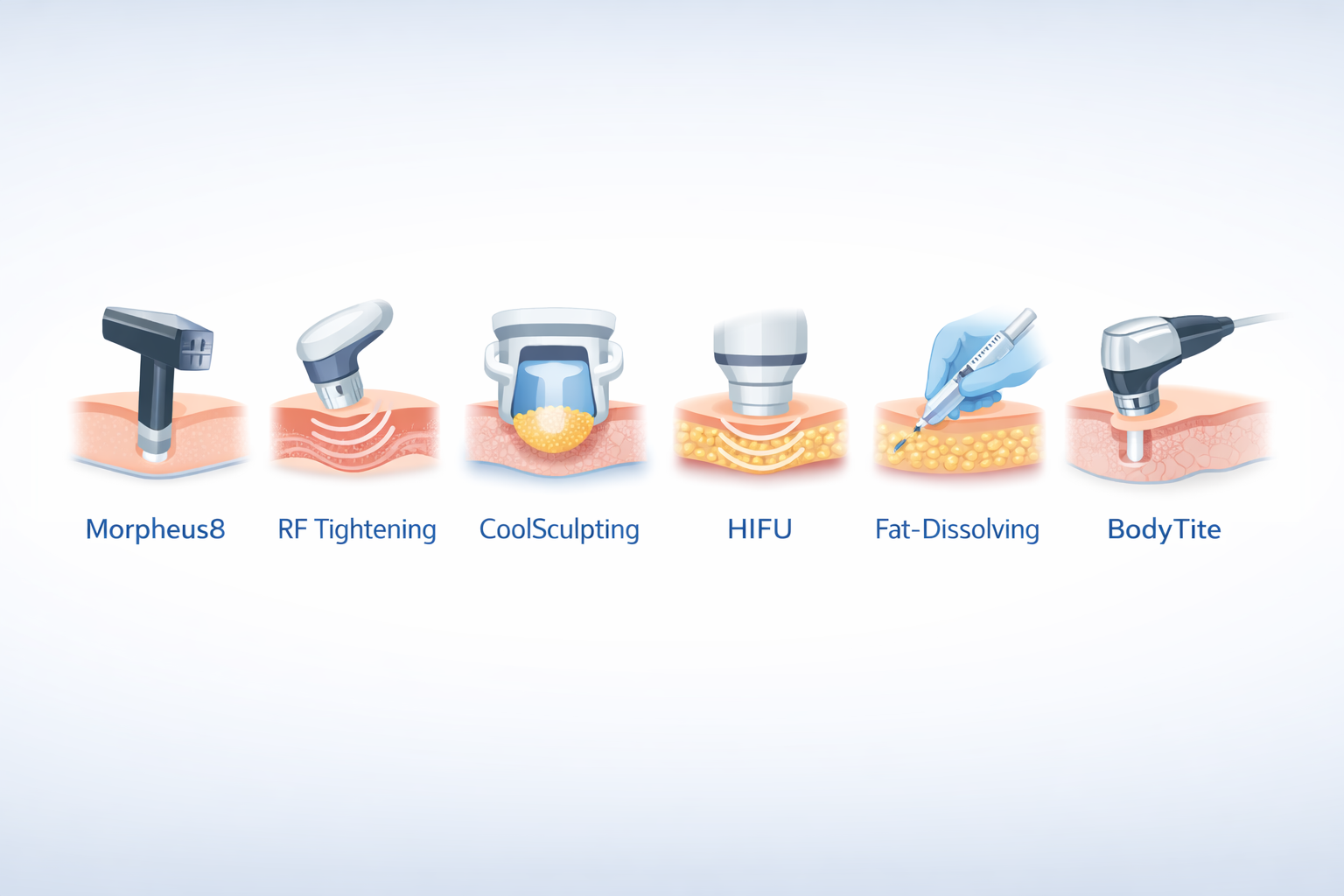
Morpheus8 (RF Microneedling)
Morpheus8 is a radiofrequency microneedling device that delivers RF energy through fine needles into the deeper layers of the skin and subcutaneous tissue. The heat generated stimulates collagen production and collagen remodelling, gradually improving skin texture, firmness, and laxity. Morpheus8 is considered one of the more effective non-surgical options for upper arm skin tightening because it targets both the dermis and the tissue beneath it. A course of two to four sessions is typically recommended, with results continuing to develop for up to three months after the final treatment. It is best suited to mild to moderate laxity rather than significantly hanging skin.
Radiofrequency (RF) Skin Tightening
Standalone radiofrequency treatments use controlled heat energy to stimulate collagen and elastin production within the dermis. The upper arm skin gradually becomes firmer and smoother over a series of sessions. RF treatments are non-invasive, require no downtime, and are generally well tolerated. They are most effective for early or mild skin laxity and work less well when there is a substantial amount of loose skin or excess fat.
CoolSculpting (Cryolipolysis)
CoolSculpting uses controlled cooling — a process known as cryolipolysis or fat freezing — to selectively destroy fat cells in a targeted area. The treated fat cells are gradually eliminated by the body’s natural processes over eight to sixteen weeks. CoolSculpting can reduce localised arm fat and may improve the overall contour of the upper arm, but it does not tighten loose skin. It is most appropriate for people whose primary concern is excess fat rather than skin laxity, and who have reasonable skin elasticity.
HIFU (High-Intensity Focused Ultrasound)
High-intensity focused ultrasound, sometimes referred to by brand names such as Ultherapy, delivers ultrasound energy to precise depths within the skin and underlying tissue, triggering collagen synthesis and a gradual lifting effect. HIFU can be used on the upper arms to improve skin firmness, though results tend to be more modest than those achieved with RF microneedling for this particular area. Results develop over two to three months and may last up to a year or more, depending on the individual’s skin quality and age.
Fat-Dissolving Injections
Fat-dissolving injections — including products such as Lemon Bottle and DesoBody, which contain deoxycholic acid or similar lipolytic compounds — can be administered into localised fat deposits on the upper arm. The active ingredient disrupts fat cell membranes, causing the cells to break down and be cleared by the body over two to four weeks. Multiple sessions are usually required, and results are gradual. Fat-dissolving injections address fat reduction rather than skin tightening, so they are most suitable when excess fat is the dominant concern and skin elasticity remains reasonable.
Profhilo
Profhilo is a high-concentration hyaluronic acid injectable treatment that spreads through the tissue to improve skin hydration, firmness, and overall quality. It does not add volume in the way a filler does; instead, it stimulates collagen and elastin production and improves the texture of crepey skin. Profhilo is often used on the upper arms as part of a combination approach, particularly for patients whose main concern is skin quality rather than significant laxity or fat.
BodyTite (Radiofrequency-Assisted Liposuction)
BodyTite is a minimally invasive body contouring procedure that combines radiofrequency-assisted liposuction (RFAL) with simultaneous skin tightening. A small probe is inserted through a tiny incision to deliver RF energy internally while an external electrode heats the overlying skin. This dual action removes fat and contracts the skin at the same time, producing results that are closer to surgical outcomes than standard non-surgical treatments, but with significantly less scarring than a brachioplasty. BodyTite is often described as a middle-ground option for patients with moderate laxity who want meaningful improvement without a visible scar.
Surgical Options for Bingo Wings
When skin laxity is significant — particularly after major weight loss or in older patients with substantially stretched skin — non-surgical treatments are unlikely to produce a satisfying result. Surgical options offer more definitive outcomes but involve recovery time, anaesthesia, and permanent scarring.
Brachioplasty (Arm Lift)
Brachioplasty is the surgical removal of excess skin and fat from the upper arm. The procedure typically involves an incision running from the armpit to the elbow along the inner arm, allowing the surgeon to excise redundant tissue and reshape the arm contour. It is performed under general anaesthetic and usually takes one to three hours. The result is a significantly firmer, more defined upper arm, but the trade-off is a permanent scar along the inner arm. For patients with significant hanging skin, brachioplasty remains the most effective available treatment. The NHS does not routinely fund brachioplasty for cosmetic reasons.
Mini Brachioplasty
A mini brachioplasty uses a shorter incision, typically confined to the armpit area, and is suitable for patients with moderate rather than significant laxity. The scar is less extensive and more easily concealed, making this a popular option for those who want meaningful skin removal without the full-length incision of a standard arm lift.
Arm Liposuction
Arm liposuction removes excess fat from the upper arm without excising skin. It is best suited to patients who have good skin elasticity and whose primary concern is fat rather than loose skin. In younger patients with resilient skin, liposuction alone can produce a well-contoured result. In older patients or those with reduced elasticity, removing fat without addressing the skin may worsen the appearance of laxity, so careful patient selection is essential.
Combined Procedures
For patients with both excess fat and loose skin, a combination of liposuction and brachioplasty may be recommended. Removing fat first can reduce the volume that needs to be excised, potentially allowing a shorter incision, while the skin excision addresses residual laxity that liposuction alone cannot correct.
Treatment Comparison: Which Option May Suit You?
| Treatment | Best For | Invasiveness | Downtime | Results Timeline | Approximate UK Cost |
|---|---|---|---|---|---|
| Morpheus8 (RF microneedling) | Mild–moderate skin laxity | Minimally invasive | 1–3 days | 4–12 weeks | From ~£500 per session |
| RF skin tightening | Early/mild laxity, skin quality | Non-invasive | None | 6–12 weeks | From ~£350 per session |
| CoolSculpting (cryolipolysis) | Localised fat, good elasticity | Non-invasive | None–minimal | 8–16 weeks | From ~£600 per area |
| HIFU | Mild laxity, skin lifting | Non-invasive | None–minimal | 8–12 weeks | From ~£1,500 |
| Fat-dissolving injections | Localised fat deposits | Minimally invasive | Minimal | 2–6 weeks per session | From ~£300 per session |
| Profhilo | Crepey skin, skin quality | Minimally invasive | None–minimal | 4–8 weeks | From ~£400 per session |
| BodyTite (RFAL) | Moderate laxity + fat | Minimally invasive | 5–10 days | 3–6 months | ~£3,500–£4,000 |
| Arm liposuction | Fat, good skin elasticity | Surgical | 1–2 weeks | 3–6 months | ~£3,000–£3,500 |
| Mini brachioplasty | Moderate excess skin | Surgical | 2–3 weeks | 3–6 months | From ~£4,500 |
| Full brachioplasty (arm lift) | Significant excess skin | Surgical | 2–4 weeks | 3–6 months | ~£5,000–£12,900 |
Cost ranges are approximate UK figures and will vary by clinic, practitioner experience, and individual treatment plan. Always obtain a detailed written quote following a consultation.
Recovery and What to Expect
Non-surgical treatments such as RF skin tightening, HIFU, and CoolSculpting typically involve no downtime or only mild redness and swelling for a day or two. Morpheus8 may cause temporary redness, swelling, and pinpoint marks that resolve within a few days. Fat-dissolving injections can cause localised swelling and tenderness for several days after each session. Because non-surgical treatments stimulate gradual biological processes — collagen remodelling, fat cell clearance — visible improvements develop over weeks to months rather than immediately, and maintenance sessions are usually recommended annually to sustain results.
BodyTite involves small incisions and a local or light sedation anaesthetic. Most patients return to normal activities within five to ten days, though compression garments are worn for several weeks to support healing and optimise skin contraction.
Recovery from brachioplasty is more involved. Most patients return to desk-based work within ten to fourteen days and wear a compression garment for four to six weeks. Strenuous upper-body activity is typically restricted for six weeks. The arm lift scar is permanent, though it usually fades and softens over twelve to eighteen months. The skin removed during brachioplasty does not grow back, and the results are long-lasting provided body weight remains stable.
Who Is a Suitable Candidate?
Candidacy for bingo wing treatments depends on the degree of skin laxity, the proportion of fat versus loose skin, overall health, and individual expectations. As a general framework:
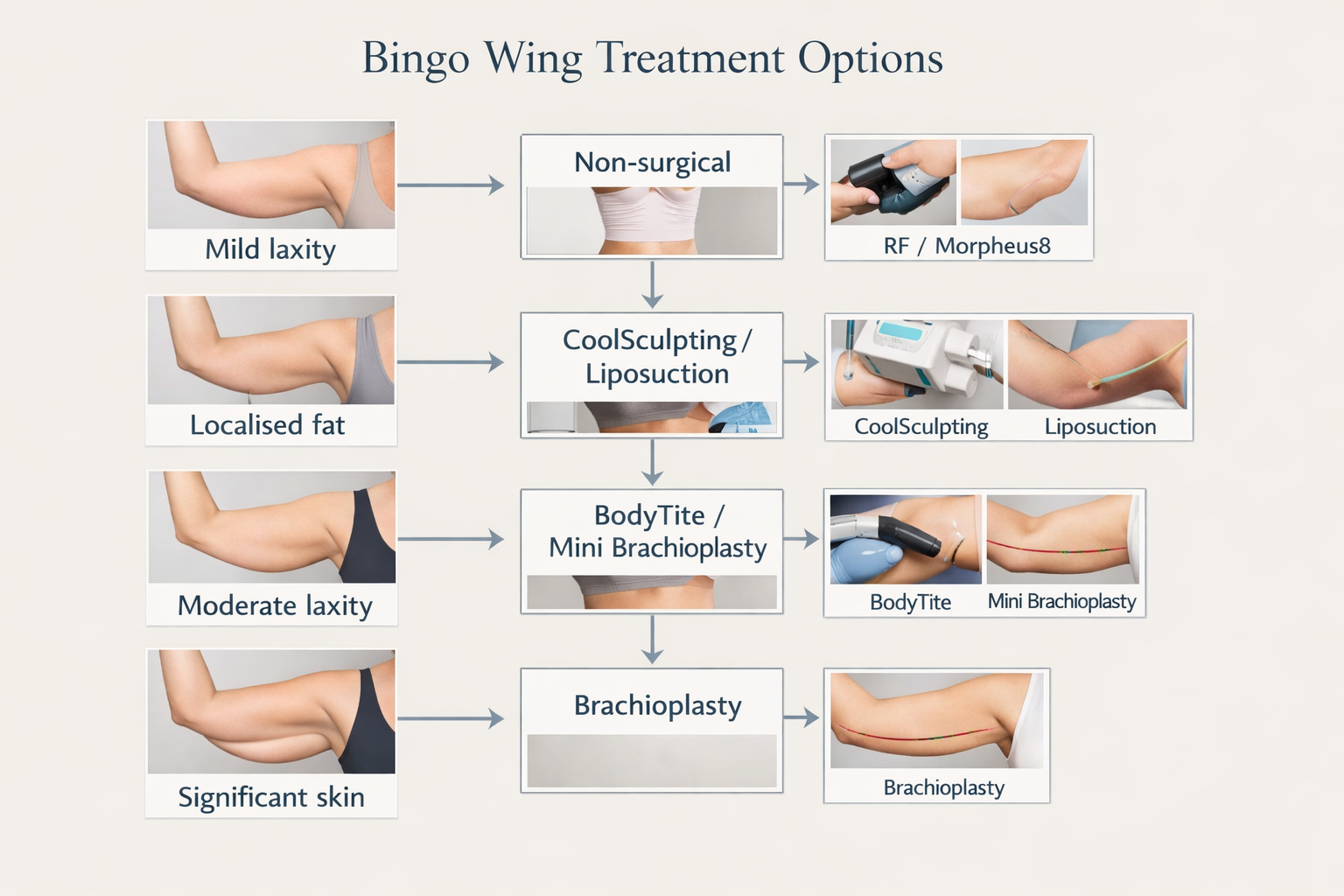
- Mild laxity with good skin elasticity: Non-surgical options such as RF treatments, Morpheus8, HIFU, or Profhilo are likely to be appropriate starting points.
- Localised fat with reasonable skin elasticity: CoolSculpting, fat-dissolving injections, or arm liposuction may be suitable.
- Moderate laxity with some excess fat: BodyTite or a mini brachioplasty may offer the best balance of result and recovery.
- Significant hanging skin: Full brachioplasty is typically the most effective option and the only treatment likely to produce a satisfying outcome.
- Post-bariatric or post-major-weight-loss patients: Surgical excision is almost always required when large amounts of excess skin are present; non-surgical treatments are unlikely to be sufficient.
Suitability also depends on general health, any medications being taken, and whether there are contraindications specific to the chosen treatment. A thorough consultation with a qualified practitioner is essential before proceeding with any option.
Preventing Bingo Wings from Returning
After any treatment — surgical or non-surgical — maintaining results requires ongoing attention to the factors that originally contributed to the problem. Consistent strength training that targets the tricep muscles helps preserve muscle volume and arm definition. Maintaining a stable body weight avoids the skin stretching and laxity that accompanies significant weight fluctuations. A diet rich in lean protein, vitamins C and E, and adequate hydration supports ongoing collagen production. Annual maintenance sessions with non-surgical treatments such as RF or Profhilo can help sustain skin quality as the natural ageing process continues.
Frequently Asked Questions
Can you get rid of bingo wings without surgery?
It depends on the degree of skin laxity and the proportion of fat involved. Mild to moderate laxity can often be meaningfully improved with non-surgical treatments such as Morpheus8, radiofrequency skin tightening, or BodyTite. However, significant loose skin — particularly after major weight loss — is unlikely to respond adequately to non-surgical approaches, and brachioplasty remains the most effective option in those cases.
Do exercises actually work for bingo wings?
Targeted exercises strengthen the tricep muscles and can improve arm tone and definition, which may reduce the appearance of bingo wings when the primary issue is reduced muscle volume. However, exercise cannot remove excess skin or eliminate established localised fat deposits. It is a valuable complement to clinical treatments but not a substitute when skin laxity is the dominant concern.
How many sessions of Morpheus8 are needed for the upper arms?
Most practitioners recommend a course of two to four Morpheus8 sessions for the upper arms, spaced four to six weeks apart. Results continue to develop for up to three months after the final session as collagen remodelling progresses. Individual response varies, and a practitioner will advise on the appropriate number of sessions following an assessment.
Will the scar from a brachioplasty be visible?
A full brachioplasty leaves a permanent scar running along the inner arm from the armpit toward the elbow. The scar is typically placed in a position that is less visible when the arms are at rest, and it usually fades and flattens over twelve to eighteen months. A mini brachioplasty produces a shorter scar confined closer to the armpit. Scar visibility varies between individuals depending on skin type, healing, and aftercare.
Are bingo wings only a concern for women?
No. While bingo wings are more commonly discussed in the context of women — partly due to hormonal influences on fat distribution and skin quality — men also develop loose skin and excess fat on the upper arms as a result of ageing, sarcopenia, and weight changes. The same range of treatments is available to men, and the principles of candidacy assessment are the same.
Does the NHS cover arm lift surgery?
The NHS does not routinely fund brachioplasty for cosmetic reasons. In exceptional circumstances — such as significant functional impairment or skin infections caused by excess skin folds following major weight loss — a referral may be considered, but this is uncommon. Most patients pursue treatment through private clinics.
Choosing the Right Approach to Bingo Wings
Bingo wings develop through a combination of factors — ageing skin, reduced collagen and elastin, sarcopenia, hormonal shifts, and changes in body composition — and the most appropriate treatment depends on which of these factors is dominant in each individual. There is no single solution that works equally well for everyone.
For those with early or mild changes, a combination of consistent strength training, a protein-rich diet, and non-surgical skin tightening treatments may produce a satisfying improvement with minimal downtime. For moderate laxity with some excess fat, minimally invasive options such as BodyTite or a mini brachioplasty offer a meaningful step up in results. For significant hanging skin, particularly following major weight loss, a full arm lift remains the most reliable path to a lasting outcome, with the understanding that a permanent scar is part of that trade-off.
A consultation with a qualified aesthetic practitioner or plastic surgeon is the most reliable way to assess which combination of approaches is appropriate for your specific anatomy, degree of laxity, and goals. Realistic expectations and a clear understanding of what each treatment can and cannot achieve are the foundation of a good outcome.