

Key Takeaways
- CoolSculpting and CoolSculpting Elite use controlled cooling (cryolipolysis) to reduce localised fat deposits by up to 20–25% per treatment cycle in suitable patients — results are not guaranteed and vary between individuals.
- The best London clinics combine CoolSculpting Elite technology, qualified practitioners, thorough body mapping consultations, and transparent aftercare — not just the lowest price.
- Paradoxical adipose hyperplasia (PAH) is a rare but serious risk that patients should discuss with their provider before treatment.
- CoolSculpting is a body contouring treatment, not a weight-loss solution — ideal candidates have pinchable, stubborn fat pockets and are close to their target weight.
- Costs in London typically range from around £300 to £750+ per treatment cycle depending on the area, clinic, and number of applicators used.
What Is CoolSculpting and How Does It Work?
CoolSculpting is an FDA-cleared non-surgical body contouring treatment that uses a process called cryolipolysis — the controlled cooling of subcutaneous fat tissue to trigger the natural death of fat cells. The technology was originally developed by Zeltiq Aesthetics and is now owned by Allergan Aesthetics. It remains one of the most studied non-invasive fat reduction technologies available in the UK.
During a CoolSculpting session, a specialised applicator is placed against the target area and draws the tissue into a cooling panel. The device lowers the temperature of the fat layer to approximately -11°C — cold enough to crystallise fat cells without damaging the overlying skin or surrounding tissue. Once crystallised, the fat cells undergo a process called apoptosis (programmed cell death) and are gradually cleared from the body via the lymphatic system over the following weeks.
Because the fat cells are permanently removed through this natural elimination process, the reduction in that area is considered long-lasting provided the patient maintains a stable weight. CoolSculpting does not prevent new fat cells from forming if significant weight is gained after treatment, so it is not a substitute for a healthy lifestyle.
CoolSculpting vs CoolSculpting Elite: What Is the Difference?
CoolSculpting Elite is the current generation of the technology and represents a meaningful upgrade over the original system. Most leading London clinics now use CoolSculpting Elite rather than the earlier platform, and it is worth confirming which version a clinic operates before booking.
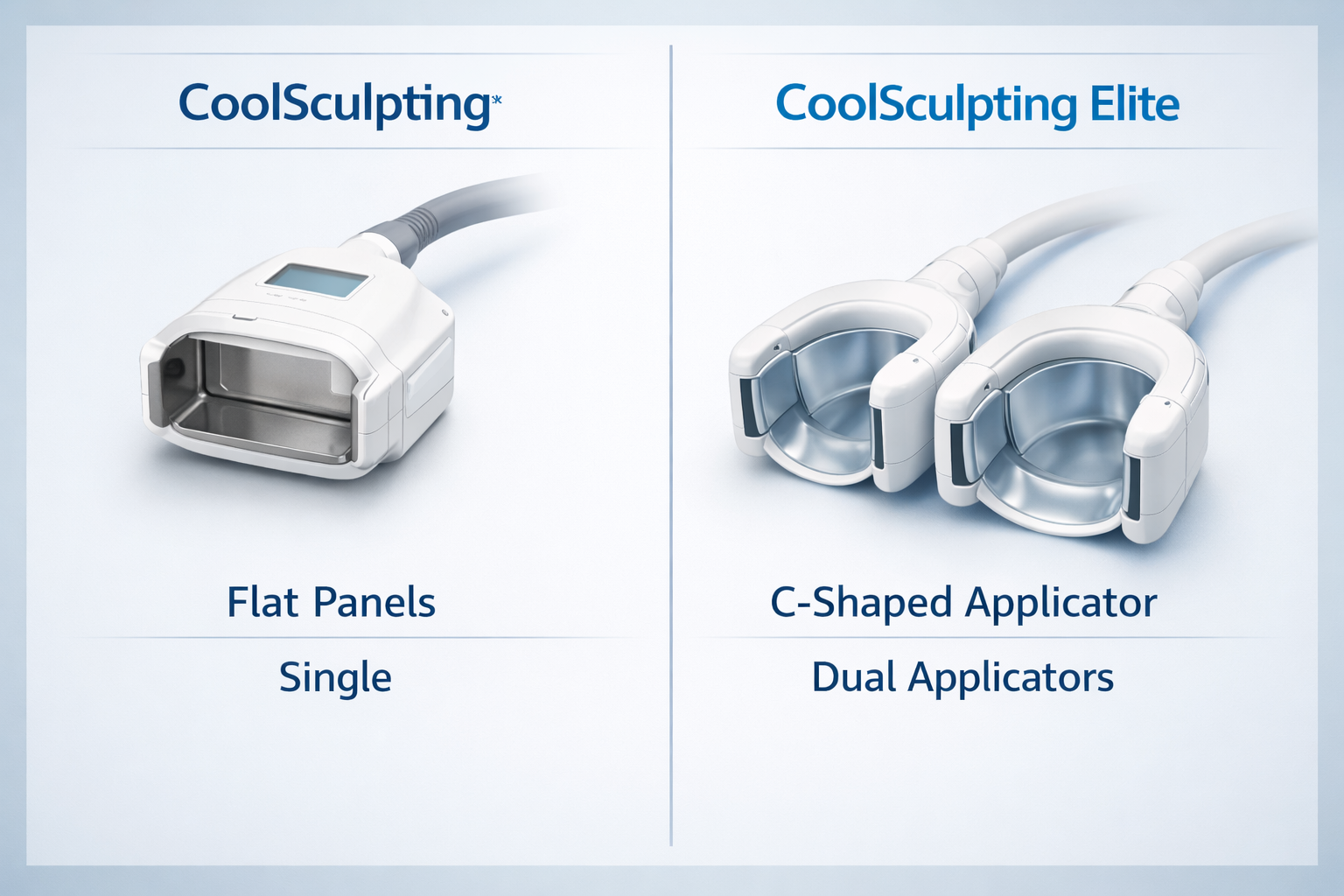
| Feature | CoolSculpting (Original) | CoolSculpting Elite |
|---|---|---|
| Applicator shape | Flat cooling panels | C-shaped applicators for better tissue contact |
| Cooling panel size | Standard | Approximately 18% larger coverage area |
| Simultaneous treatment | Single applicator per session | Dual applicators — two areas treated at once |
| Session efficiency | Standard duration | Faster sessions due to dual applicators |
| Fat reduction per cycle | Up to 20–25% | Up to 20–25% (similar efficacy, improved coverage) |
| Comfort | Standard | Improved fit may reduce discomfort |
The C-shaped applicators in CoolSculpting Elite conform more closely to body contours such as the abdomen and flanks, which can improve tissue contact and treatment consistency. The ability to use dual applicators simultaneously — sometimes called DualSculpting — means both flanks or both inner thighs can be treated in a single appointment, reducing overall treatment time significantly.
Which Areas Can CoolSculpting Treat?
CoolSculpting is designed for localised, pinchable fat deposits rather than generalised body fat. The treatment is most effective where there is sufficient subcutaneous fat tissue for the applicator to draw in and cool effectively. Commonly treated areas in London clinics include:
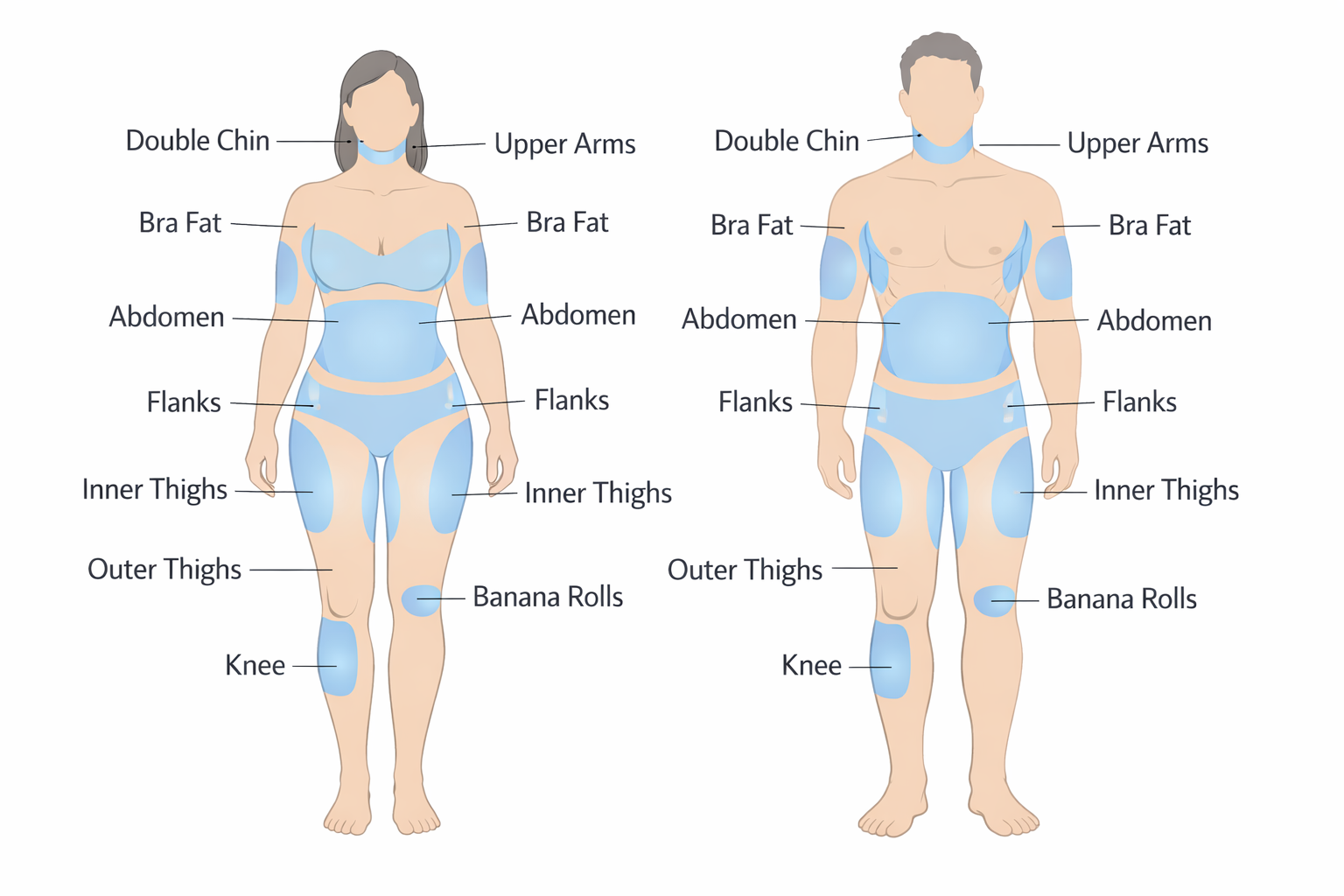
- Abdomen — upper and lower belly fat
- Flanks — love handles and side fat
- Inner and outer thighs — including saddlebags
- Double chin — submental fat, treated with the CoolMini applicator
- Upper arms — bingo wings
- Bra fat and back fat — rolls around the bra line
- Banana rolls — fat beneath the buttocks
- Knee fat pad — inner knee area
- Underbust roll — fat beneath the chest
Not every applicator is suitable for every area. A thorough body mapping consultation with a qualified practitioner is essential to determine which applicators and how many treatment cycles are appropriate for your specific anatomy and goals.
Who May Be a Suitable Candidate?
CoolSculpting is a body contouring treatment, not a weight-loss procedure. It is most appropriate for individuals who are at or near their target weight but have specific stubborn fat pockets that have not responded to diet and exercise. The ideal candidate has visible, pinchable subcutaneous fat in the target area — the applicator cannot effectively treat fat that lies too deep beneath the muscle layer.
A clinical assessment is required before treatment. Factors that may affect suitability include:
- The amount and location of pinchable fat in the target area
- Overall body weight and weight stability
- Skin laxity in the treatment area (loose skin may not improve with fat reduction alone)
- Medical history, including any conditions affecting cold tolerance
- Current medications
- Pregnancy or breastfeeding
CoolSculpting is not appropriate for individuals with cold agglutinin disease, cryoglobulinaemia, paroxysmal cold haemoglobinuria, or other conditions that make cold exposure medically hazardous. These are absolute contraindications and must be disclosed at consultation. Patients with Raynaud’s phenomenon or significant cold sensitivity should also discuss this with their practitioner.
What to Expect During a CoolSculpting Treatment
A typical CoolSculpting appointment at a London clinic follows a structured process. Understanding each stage helps set realistic expectations and reduces anxiety before the first session.
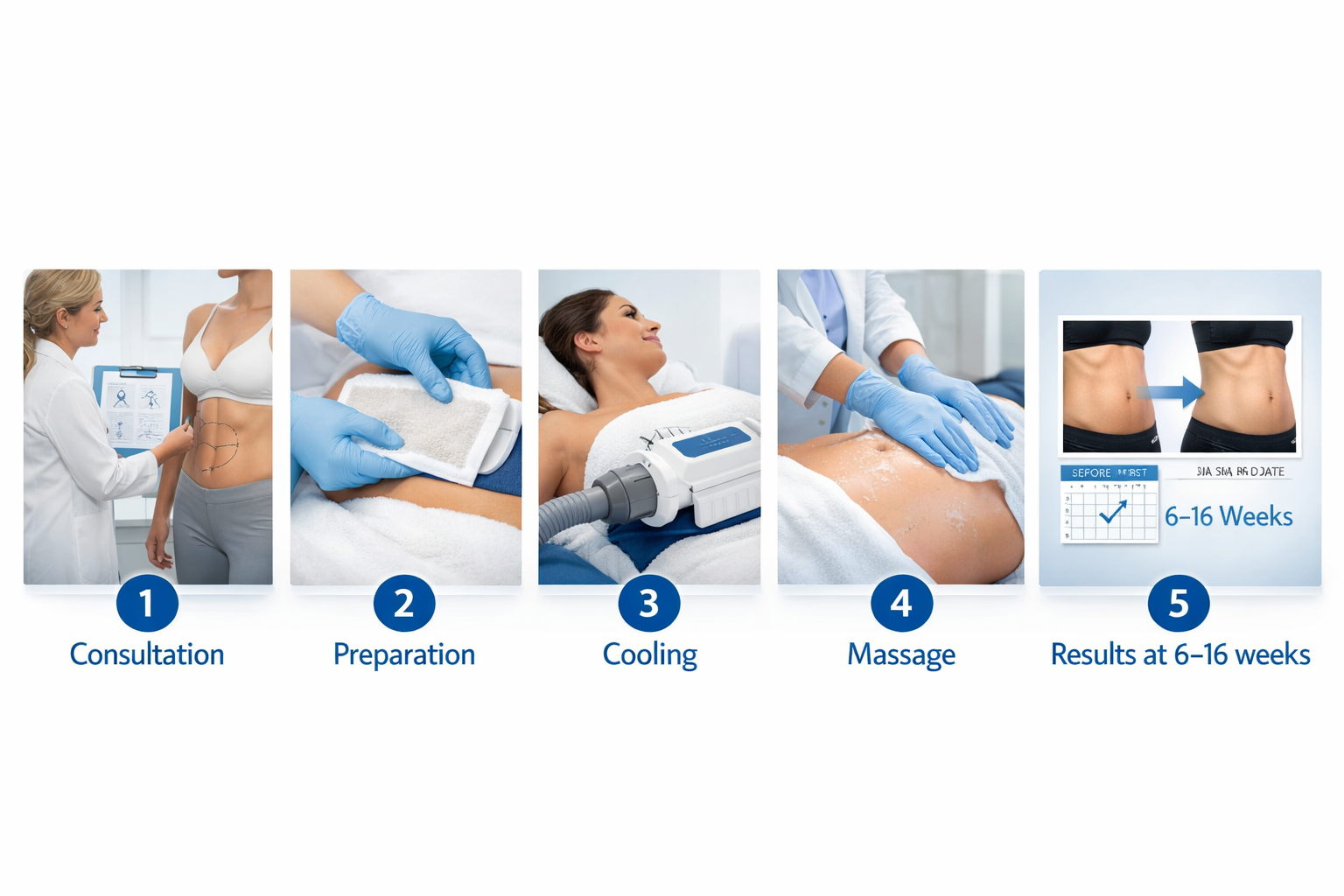
- Consultation and body mapping — A qualified practitioner assesses the target areas, discusses your goals, and creates a tailored treatment plan. Body mapping involves marking the precise placement of applicators to optimise coverage and symmetry.
- Preparation — A gel pad is applied to the skin to protect it from direct contact with the cooling panels. The applicator is then positioned and activated.
- Cooling phase — The applicator draws the tissue in using gentle suction and begins cooling. Most patients experience an intense cold sensation, mild pulling, and possible tingling or aching during the first few minutes. These sensations typically subside as the area becomes numb.
- Massage phase — After the applicator is removed, the treated area is manually massaged for approximately two minutes. This step may be uncomfortable but is considered important for breaking up the crystallised fat cells and may improve results.
- Post-treatment — The area may appear red, feel tender, or show temporary swelling and bruising. Most patients can return to normal activities immediately, as there is minimal downtime with this treatment.
With CoolSculpting Elite’s dual applicators, two areas can be treated simultaneously, which can reduce a full-body contouring session from several hours to a more manageable appointment length.
When Will Results Appear and How Long Do They Last?
CoolSculpting results are not immediate. Because the fat cell elimination process relies on the lymphatic system gradually clearing the treated cells, visible changes typically begin to appear between six and twelve weeks after treatment, with optimal results often seen at around sixteen weeks. Some patients notice earlier changes, while others may take longer — individual variation is significant.
The fat cells that are destroyed through cryolipolysis do not regenerate. In this sense, the reduction achieved in the treated area can be considered a form of permanent fat reduction, provided body weight remains stable. However, remaining fat cells in the area can still enlarge with weight gain, which would reduce the visible benefit of treatment. Maintaining a stable weight after CoolSculpting is important for preserving results.
Some patients achieve their goals in a single treatment cycle per area, while others may benefit from a second session after reviewing their before and after results at a follow-up appointment. A qualified practitioner should advise on whether additional treatment cycles are likely to be beneficial based on the initial outcome.
Risks, Side Effects, and the PAH Warning
CoolSculpting has a well-established safety profile when performed by qualified practitioners using appropriate equipment. Common side effects are temporary and typically resolve within days to weeks. These include redness, swelling, bruising, temporary numbness, tingling, and skin sensitivity in the treated area. The cold sensation during treatment can be intense but is generally well tolerated once the area becomes numb.
A less common but important risk is paradoxical adipose hyperplasia (PAH). PAH is a rare complication in which the treated fat tissue grows larger rather than reducing — the opposite of the intended effect. The exact mechanism is not fully understood, but PAH appears to involve an abnormal proliferative response of fat cells to the cooling stimulus. It is more commonly reported in male patients and in certain treatment areas, though it can occur in anyone.
PAH typically becomes visible several months after treatment and presents as a firm, painless enlargement of the treated area that does not resolve on its own. Surgical intervention, usually liposuction, is generally required to correct it. The case of model Linda Evangelista, who publicly disclosed a PAH diagnosis following CoolSculpting, brought significant attention to this risk and led to increased scrutiny of informed consent practices across the industry.
Patients should be clearly informed about PAH before treatment and should receive written information about the signs to watch for. Any clinic that does not discuss PAH during the consultation process should be viewed with caution. Other risks to discuss include changes in skin sensation, contour irregularities, and the possibility of insufficient fat reduction requiring additional sessions.
How to Choose the Best CoolSculpting Clinic in London
London has a large number of clinics offering fat freezing treatments, and the quality of providers varies considerably. The following criteria can help identify a clinic that prioritises patient safety and clinical outcomes over volume or price.
- Technology generation — Confirm whether the clinic uses CoolSculpting Elite with dual applicators, or an older platform. Some clinics may also offer generic cryolipolysis devices that are not the same as the FDA-cleared CoolSculpting system.
- Diamond Provider status — Allergan Aesthetics awards Diamond Provider status to clinics that meet high standards for treatment volume and patient care. This credential is a useful indicator of experience, though it should not be the only factor considered.
- Qualified practitioners — Treatment should be planned and overseen by a medically qualified practitioner. Ask about the clinical background of the person performing your consultation and treatment.
- Consultation quality — A reputable clinic will offer a thorough free consultation that includes body mapping, a discussion of realistic outcomes, and a clear explanation of risks including PAH. Be cautious of clinics that skip this step or pressure you to book immediately.
- Before and after results — Ask to see before and after photos from actual patients treated at that clinic, ideally for your specific concern and treatment area.
- Transparent pricing — Pricing should be clearly explained per treatment cycle or applicator, with no hidden costs. Clinics offering unusually low prices may be using non-CoolSculpting devices or cutting corners on consultation time.
- Aftercare and follow-up — A follow-up appointment to review results and discuss whether additional treatment cycles are needed is a sign of a patient-centred approach.
- CQC regulation — For clinics providing treatments under medical supervision, Care Quality Commission (CQC) registration is a relevant quality indicator in England.
What Does CoolSculpting Cost in London?
CoolSculpting pricing in London is typically quoted per treatment cycle or per applicator placement rather than per session, because a single appointment may involve multiple applicator placements across different areas. Costs vary depending on the clinic, the treatment area, and the number of cycles required.
As a general guide, prices in London range from approximately £300 to £750 per treatment cycle for most body areas. Smaller areas such as the double chin may be priced lower, while larger or more complex treatment plans covering multiple areas will cost proportionally more. A full abdominal and flank treatment plan involving several applicator placements could cost £1,500 or more in total.
Many London clinics offer 0% finance options, payment plans through providers such as Klarna or Omni Capital, and package pricing for multiple areas. A free consultation is standard at most reputable clinics and should include a detailed cost breakdown before any commitment is made. Be cautious of significantly below-market pricing, which may indicate the use of non-branded cryolipolysis devices rather than the FDA-cleared CoolSculpting system.
Top CoolSculpting Clinic Locations in London
London’s CoolSculpting clinics are concentrated in several key areas, making it practical to find a qualified provider close to where you live or work.
- Harley Street and Marylebone — The highest concentration of established medical aesthetic clinics in London, including several Diamond Provider practices with long track records in non-surgical body contouring. Harley Street remains the benchmark address for medical aesthetics in the UK.
- Belgravia and Chelsea — Several well-regarded clinics operate in this area, including providers recognised in industry awards for CoolSculpting outcomes.
- City of London and Liverpool Street — Convenient for working professionals, with clinics offering lunchtime appointments and efficient DualSculpting sessions using dual applicators.
- Tottenham Court Road and Fitzrovia — Central London location with good transport links and a range of clinic options at varying price points.
- Clapham and South London — Growing number of clinics serving south London patients who prefer not to travel into central London.
- Primrose Hill and North London — Boutique clinics offering personalised care in a less clinical environment, some with Diamond Provider credentials.
When searching for fat freezing London providers, proximity should be balanced against the quality of the consultation, the technology used, and the credentials of the practitioners — a short journey to a more experienced clinic is generally preferable to convenience alone.
CoolSculpting vs Alternative Body Contouring Treatments
CoolSculpting is one of several non-surgical body contouring options available in London. Understanding how it compares to alternatives helps clarify whether it is the most appropriate choice for a given goal.
- Emsculpt Neo — Combines radiofrequency fat reduction with high-intensity electromagnetic muscle stimulation. Unlike CoolSculpting, Emsculpt Neo simultaneously builds muscle and reduces fat, making it more suitable for patients who want both body contouring and muscle definition. It is not a direct substitute for CoolSculpting.
- SculpSure — Uses laser-based hyperthermic technology (heat rather than cold) to reduce fat cells. It may suit patients who are not good candidates for cryolipolysis, though the evidence base is smaller.
- Aqualyx / fat dissolving injections — Injectable treatments that chemically dissolve small, localised fat deposits. More suitable for very small areas such as the double chin or jowls where CoolSculpting applicators may not fit well.
- HIFU body treatments — High-intensity focused ultrasound can target deeper fat layers and may also offer some skin tightening, though results for fat reduction are generally less predictable than cryolipolysis.
- Liposuction — Surgical fat removal remains the most effective option for larger volumes of fat or where precise contouring is required. CoolSculpting is often described as a non-surgical alternative to liposuction for smaller, localised areas, but the two are not equivalent in terms of the volume of fat that can be addressed.
A qualified practitioner should help determine which treatment — or combination of treatments — is most likely to achieve your specific goals based on a clinical assessment.
Frequently Asked Questions
Is CoolSculpting painful?
Most patients experience an intense cold sensation, mild suction pressure, and possible tingling or aching during the first few minutes of each treatment cycle. As the area becomes numb, discomfort typically reduces significantly. The post-treatment massage can be uncomfortable. Overall, CoolSculpting is generally well tolerated, though individual pain thresholds vary.
How many CoolSculpting sessions will I need?
The number of treatment cycles depends on the size of the area, the amount of fat present, and your goals. Some patients achieve satisfactory results from a single session per area; others benefit from a second cycle after reviewing their results at around sixteen weeks. A tailored treatment plan developed at consultation should give you a realistic estimate.
Can CoolSculpting help with weight loss?
No. CoolSculpting is a body contouring treatment designed to reduce localised fat deposits in specific areas. It does not produce meaningful overall weight loss and is not appropriate as a treatment for obesity. Patients who are significantly above their target weight are generally not suitable candidates.
What is the difference between CoolSculpting and generic fat freezing?
CoolSculpting is an FDA-cleared system with a specific clinical evidence base. Generic cryolipolysis devices may look similar but are not the same technology and may not have equivalent safety or efficacy data. When comparing clinics, confirm that the device being used is the genuine CoolSculpting or CoolSculpting Elite system.
How do I know if a London clinic is reputable?
Look for Diamond Provider status, medically qualified practitioners, a thorough free consultation that includes body mapping and a PAH discussion, transparent pricing, and genuine before and after results from their own patients. CQC registration is a further quality indicator for medically supervised clinics.
Is there any downtime after CoolSculpting?
Most patients experience minimal downtime and can return to normal activities immediately after treatment. Temporary redness, swelling, bruising, and numbness in the treated area are common and usually resolve within days to a few weeks. Strenuous exercise on the day of treatment is generally best avoided.
Making an Informed Decision About CoolSculpting in London
CoolSculpting Elite represents a well-established, FDA-cleared approach to non-surgical fat reduction for suitable candidates with localised stubborn fat pockets. When performed by qualified practitioners using genuine technology, it can produce meaningful, long-lasting reductions in targeted areas — but results vary, and it is not appropriate for everyone.
The most important step before booking any treatment is a thorough consultation with a medically qualified practitioner who will assess your suitability honestly, explain the risks including paradoxical adipose hyperplasia, and develop a tailored treatment plan based on your anatomy and goals rather than a standard package. Clinics that invest in proper body mapping, informed consent, and follow-up appointments are more likely to deliver safe, satisfying outcomes than those competing primarily on price.
If you are considering fat freezing in London, use the criteria in this guide to shortlist clinics, ask detailed questions at your free consultation, and take the time to review before and after results from real patients. A well-chosen provider and realistic expectations are the foundation of a positive CoolSculpting experience.