

Key Takeaways
- Botox injections for men — often called Brotox — use the same botulinum toxin type A as treatments for women, but male facial anatomy typically requires a higher unit count due to greater muscle mass and skin thickness.
- The most commonly treated areas include forehead lines, glabellar lines (the “11s”), crow’s feet, the masseter muscle for jawline contouring, and the neck — each with distinct dosing considerations for men.
- Results generally become visible within three to seven days and may last three to six months, with maintenance treatments typically needed two to four times per year.
- Botox also has therapeutic applications for men, including hyperhidrosis (excessive sweating), bruxism (teeth grinding), and chronic migraines.
- Choosing an experienced injector with expertise in masculine facial anatomy is essential to achieving natural-looking results without feminizing the face.
Why Men Are Choosing Botox
Male interest in cosmetic injectables has grown substantially over the past decade. According to data from the American Society of Plastic Surgeons, men now account for hundreds of thousands of botulinum toxin treatments each year in the United States alone, and the trend shows no sign of slowing. Motivations range from wanting to look more competitive in the workplace to feeling more confident on social media and in dating. The stigma that once surrounded male aesthetics has diminished considerably, and the term “Brotox” has entered mainstream conversation as a straightforward shorthand for Botox injections tailored to men.
What drives men to seek treatment is often different from what drives women. Many men describe wanting to look refreshed and less tired rather than dramatically younger. Others are motivated by specific concerns — deep frown lines that make them appear angry, or jaw tension from bruxism that causes chronic discomfort. Understanding these distinct goals is central to why Botox for men is not simply a smaller version of the same treatment women receive.
How Botox Works
Botox is a brand name for a purified form of botulinum toxin type A, derived from Clostridium botulinum. When injected in small, controlled amounts into targeted facial muscles, it temporarily blocks the release of acetylcholine — the chemical messenger that triggers muscle contraction. Without that nerve signal, the treated muscle relaxes, and the overlying skin smooths out. The effect is temporary; nerve signalling gradually recovers over months, which is why maintenance treatments are needed.
Botox is classified as a neuromodulator, a category that also includes Dysport, Xeomin, Jeuveau, and Daxxify. These products share the same mechanism but differ in formulation, onset speed, diffusion characteristics, and duration. Units between brands are not directly interchangeable, so dosing is always brand-specific. For most men seeking cosmetic treatment, Botox remains the most widely used option, though an experienced injector may recommend an alternative neuromodulator based on individual anatomy and goals.
How Botox for Men Differs from Female Treatment
Male and female facial anatomy differ in ways that directly affect how Botox injections should be approached. Men generally have greater facial muscle mass — the frontalis muscle across the forehead and the corrugator complex between the brows tend to be significantly stronger in men than in women. This means that achieving the same degree of muscle relaxation typically requires a higher unit count. Treating a man’s forehead with the same dose used for a woman of similar age may produce little visible effect.
Skin thickness is another key variable. Male skin is on average around 25% thicker than female skin, which can affect how the toxin distributes and how visible surface wrinkles appear. Deeper lines may require more product to soften adequately, and some lines that have become static — present even without facial movement — may not fully resolve with Botox alone.
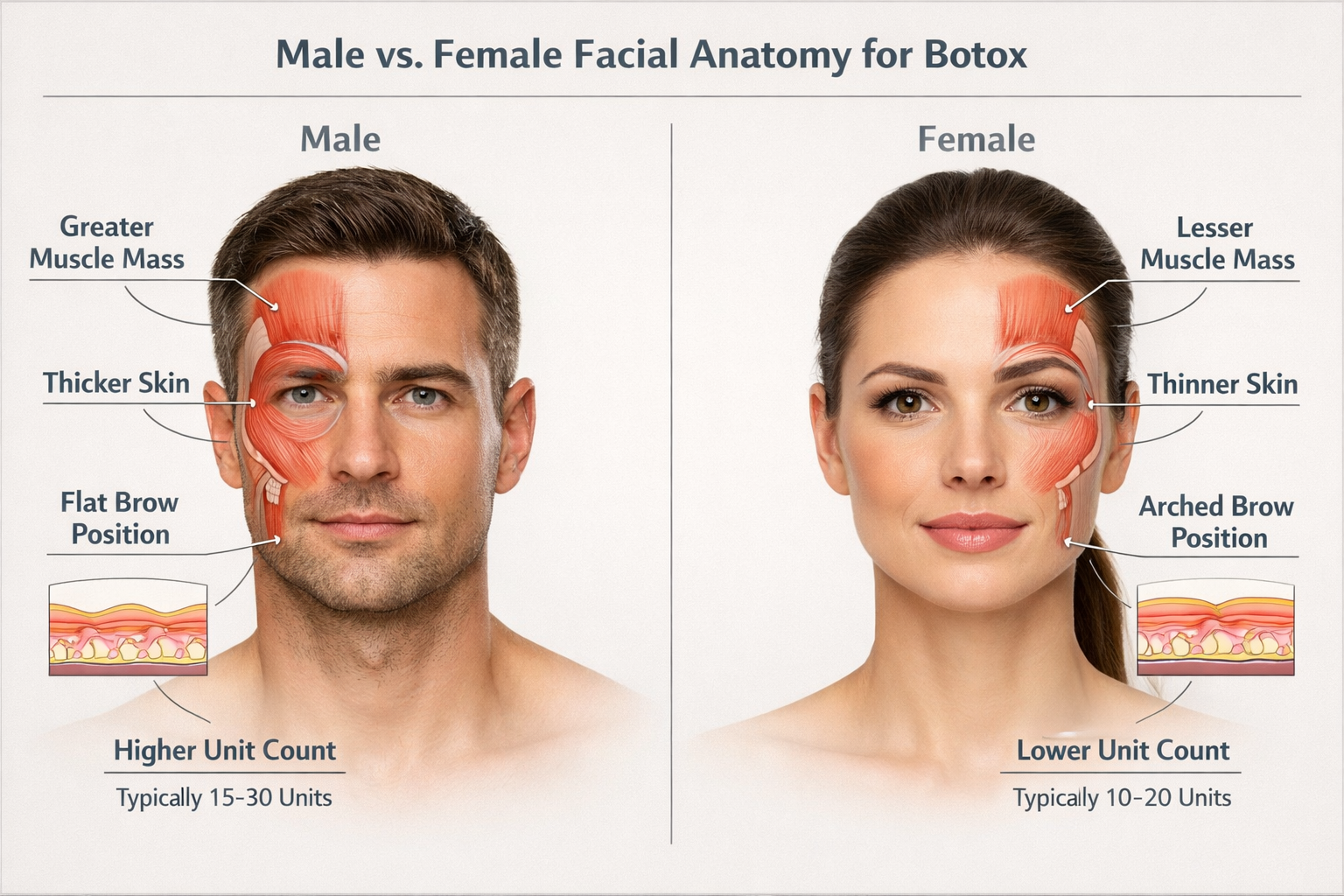
Brow position is perhaps the most clinically important anatomical difference. Women typically have a naturally arched brow that sits above the orbital rim, and many female Botox techniques subtly lift or shape the brow. Men, by contrast, have a flat brow position that sits at or just above the brow bone. An injector who applies a female-oriented technique to a male patient risks creating an arched or elevated brow that looks unnatural and feminized. Preserving the flat brow position is a fundamental goal in male Botox treatment and requires precise placement of injection points.
Common Treatment Areas for Men
Forehead Lines
Horizontal lines across the forehead are among the most common concerns men bring to a consultation. These lines are created by repeated contraction of the frontalis muscle when raising the eyebrows. In men, the frontalis tends to be broader and more powerful, so higher doses are generally needed compared to female patients. The goal is to soften the lines while preserving enough natural movement to avoid a frozen or expressionless appearance — a concern many men raise before their first treatment.
Glabellar Lines and the “11s”
Glabellar lines — the vertical creases between the brows sometimes called the “11s” — are one of the most frequently treated areas in men. These lines are produced by the corrugator complex and procerus muscles and are often associated with a stern or angry resting expression. Men frequently report that colleagues or partners comment that they look irritated even when they are not. Botox injections into this area relax the muscles responsible, softening the lines and creating a more approachable appearance. Because the corrugator muscles in men are typically stronger, the dose required is often meaningfully higher than for female patients.
Crow’s Feet
The fine lines that radiate from the outer corners of the eyes — crow’s feet — develop from repeated squinting and smiling. They are a common treatment area for men of all ages. Botox injections into the orbicularis oculi muscle around the eye can soften these lines effectively. Men often prefer a subtle reduction rather than complete elimination, as some degree of expression around the eyes is considered a natural part of masculine appearance.
Masseter Muscle and Jawline Contouring
Botox injections into the masseter muscle — the large chewing muscle at the angle of the jaw — serve two distinct purposes for men. First, they can reduce the bulk of an overly square or wide jaw, creating a slightly slimmer lower face. Second, and often more relevant for men, masseter Botox is used therapeutically to address bruxism (teeth grinding) and associated jaw tension or TMJ discomfort. Men who clench their jaw during sleep or under stress often develop hypertrophied masseter muscles that cause chronic pain and dental wear. Botox can reduce muscle activity in this area, relieving symptoms over several months. The masseter is a large, powerful muscle, and the doses required are typically higher than for facial expression areas.
Neck and Platysmal Bands
Vertical cords or bands running down the neck — caused by the platysma muscle — become more visible with age and can make the neck appear older than the face. Botox injections into the platysmal bands can soften their appearance, creating a smoother neck profile. This treatment is sometimes called a “Nefertiti lift” when combined with jawline injections. It is a more advanced treatment area that requires an injector with specific experience in neck anatomy.
Other Areas
Additional areas that may be treated in men include the chin (to reduce dimpling caused by the mentalis muscle), the nose (bunny lines from the nasalis muscle), and the upper lip area. Each of these requires careful dosing to avoid affecting nearby muscles involved in speech or eating.
Therapeutic Uses: Beyond Cosmetic Treatment
Botox injections have several well-established medical applications that are particularly relevant to men. Hyperhidrosis — excessive sweating of the underarms, palms, or feet — affects a significant proportion of men and can cause considerable social and professional discomfort. Botox injections into the affected area block the nerve signals that stimulate sweat glands, reducing sweating substantially for several months. This is an FDA-approved use of botulinum toxin and is one of the most consistently effective treatments available for the condition.
Bruxism and TMJ-related jaw pain, as noted above, respond well to masseter Botox in many patients. Chronic migraine is another FDA-approved indication for botulinum toxin, though the treatment protocol for migraines involves a specific injection pattern across the head and neck and is administered by neurologists or headache specialists rather than cosmetic practitioners. Men researching Botox for any of these therapeutic purposes should seek a provider with specific experience in the relevant indication.
What to Expect During Treatment
A Botox appointment for men typically begins with a consultation, during which the injector assesses facial anatomy, discusses aesthetic goals, and identifies the appropriate treatment areas and doses. Facial mapping — marking the injection points on the skin — may be performed before treatment begins.
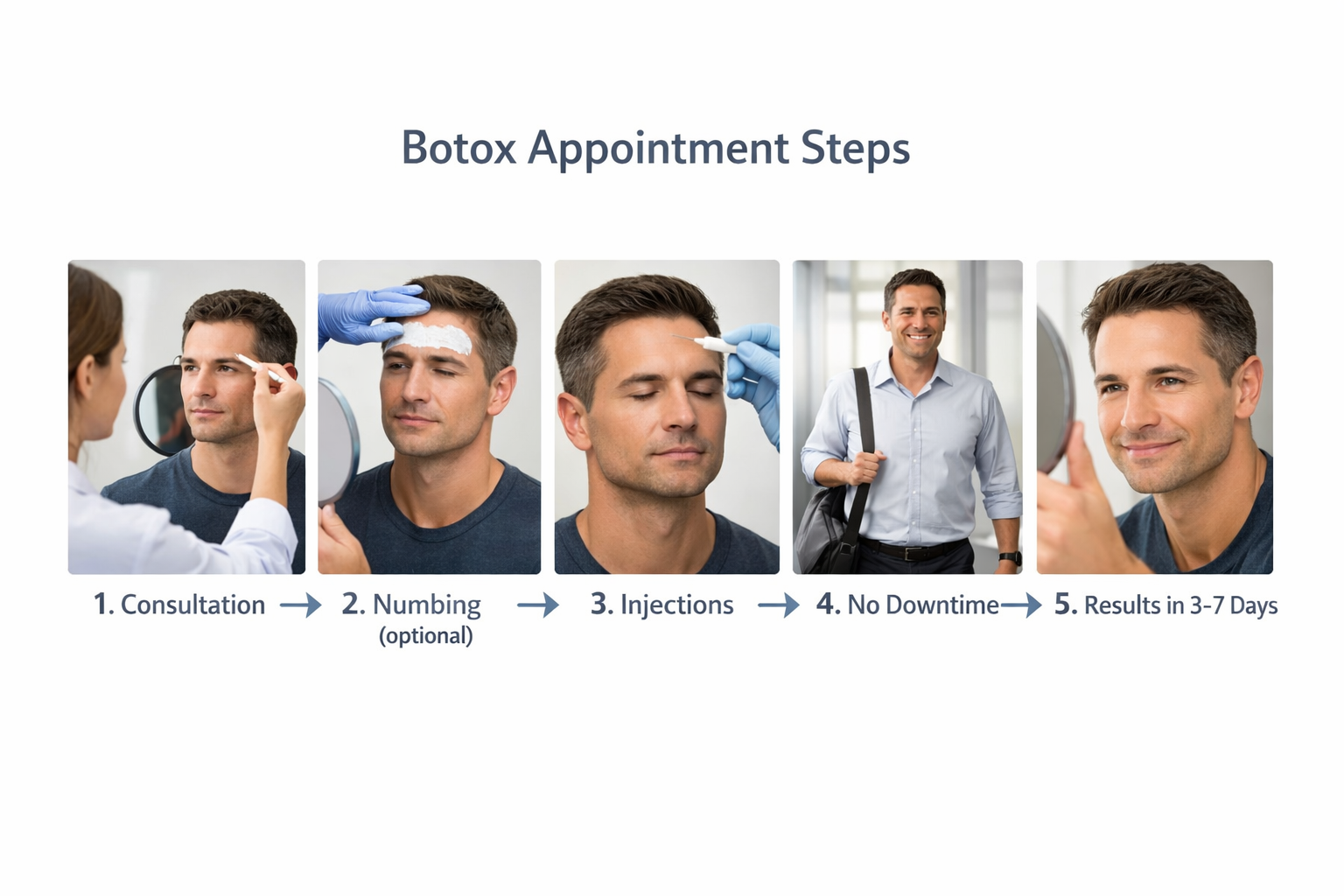
The injections themselves are administered using a very fine needle. Most men find the discomfort mild and comparable to a small pinch. A topical anesthetic or numbing cream can be applied beforehand if preferred, though many patients find it unnecessary. A full upper-face treatment typically takes between ten and thirty minutes, depending on the number of areas being addressed.
There is no downtime after Botox injections. Most men return to work or normal activities immediately. Small red marks or minor swelling at the injection sites usually resolve within a few hours. Bruising is possible, particularly around the eye area, and may take several days to fade. Aftercare instructions typically include avoiding strenuous exercise for 24 hours, not lying flat for several hours after treatment, avoiding alcohol for the remainder of the day, and refraining from rubbing or massaging the treated areas.
Results: Timeline and Longevity
Botox results are not immediate. Most men begin to notice a change within three to seven days as the toxin takes effect and the targeted muscles begin to relax. Full results are generally visible at around two weeks, which is also the standard timeframe for a follow-up review if any touch-up is needed.
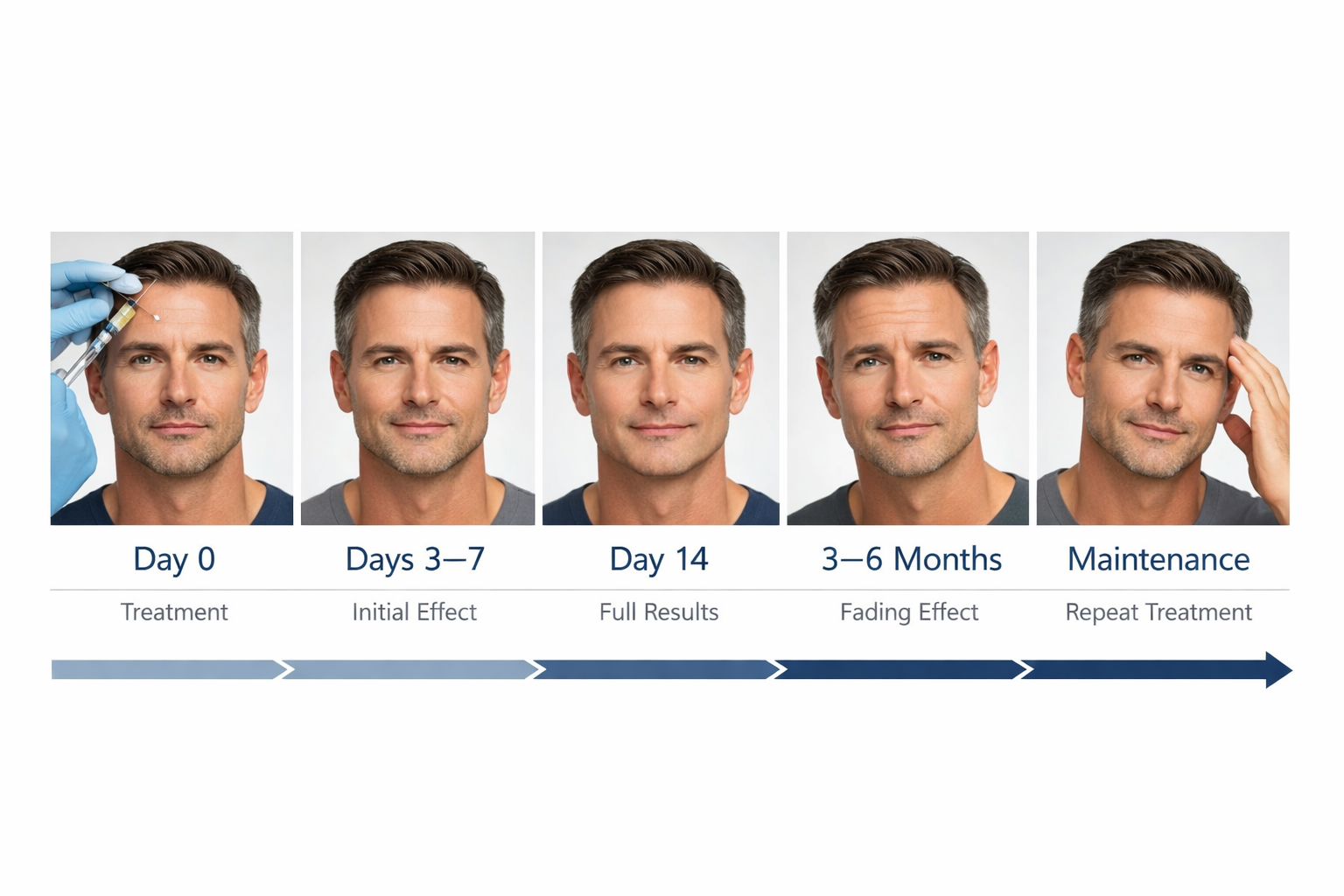
How long results last varies between individuals and depends on factors including the dose used, the strength of the treated muscles, individual metabolism, and the treatment area. For most men, results in cosmetic areas last between three and six months. Because men often have greater muscle mass, some find their results fade slightly faster than women treated with equivalent doses. Maintenance treatments are typically needed two to four times per year to sustain the effect. Over time, with consistent treatment, some patients find that the muscles weaken slightly and results may last a little longer.
Preventative Botox for Men
Preventative Botox refers to starting treatment before deep lines have formed, with the aim of slowing their development. The rationale is straightforward: dynamic wrinkles — those caused by repeated muscle movement — gradually become static lines etched into the skin over years of expression. By reducing muscle activity earlier, the skin is exposed to less repetitive folding, and lines may take longer to become permanent.
Men in their mid-to-late twenties or thirties who notice early expression lines forming, particularly in the glabellar area or across the forehead, may be suitable candidates for a conservative preventative approach. This does not mean eliminating all movement — a very low dose that softens rather than freezes is typically appropriate. Men in their forties and beyond are more likely to be seeking corrective treatment for established lines, which may require higher doses and, in some cases, complementary treatments such as dermal fillers for lines that have become static.
How Much Does Botox Cost for Men?
Botox is typically priced either per unit of toxin used or per treatment area, depending on the clinic. Because men generally require a higher unit count than women for equivalent results — due to greater muscle mass and skin thickness — the cost of treating the same areas tends to be higher for male patients.
As a general reference, per-unit pricing in the United States commonly ranges from around ten to twenty-five dollars per unit, though this varies significantly by location, provider, and clinic type. A full upper-face treatment covering the forehead, glabellar lines, and crow’s feet may cost anywhere from approximately five hundred to twelve hundred dollars for a male patient, depending on the units required. The national average cost per session, across all patients, has been reported at around four hundred to five hundred dollars, but men should budget above this average given their typically higher dosing needs. Therapeutic treatments such as masseter Botox for bruxism or underarm injections for hyperhidrosis may be priced separately and can involve higher unit counts.
Cost should not be the primary factor in choosing a provider. Botox injected by an inexperienced or unqualified practitioner carries meaningful risks, and correcting a poor result is often more difficult and expensive than the original treatment.
Risks and Side Effects
Botox injections are generally well tolerated, but they carry real risks that every patient should understand before proceeding. Common and usually temporary side effects include redness, mild swelling, and bruising at the injection sites. A mild headache in the hours following treatment is occasionally reported.
More significant complications are less common but possible. Brow ptosis — drooping of the brow — can occur if the frontalis muscle is over-treated or if the toxin affects adjacent muscles. In male patients, where the brow naturally sits lower, this risk requires particular attention to injection placement. Eyelid drooping (ptosis) is a rare but recognized complication that can occur if the toxin migrates to the levator palpebrae muscle. Asymmetry between the two sides of the face is another possible outcome, particularly if the underlying muscle anatomy is asymmetric. Most complications from Botox are temporary and resolve as the toxin wears off, but they can persist for several weeks or months.
Botox is not suitable for everyone. Men who are taking certain medications — including blood thinners, aminoglycoside antibiotics, or medications that affect neuromuscular transmission — should discuss this with their provider before treatment. Those with certain neurological conditions, known allergy to botulinum toxin or its components, or active infection at the planned injection site should not receive treatment. A thorough medical history review at consultation is essential.
Choosing the Right Provider
The single most important factor in achieving natural-looking results from Botox injections is the skill and experience of the injector. For male patients specifically, this means choosing a provider who understands masculine facial anatomy — including the flat brow position, the greater muscle mass of the frontalis and corrugator complex, and the aesthetic goals that differ from female treatment.
An experienced injector will conduct a thorough consultation, assess your facial structure at rest and during movement, discuss realistic outcomes, and explain the dose and approach they plan to use. They should be a licensed medical professional — a doctor, nurse prescriber, or equivalent — with specific training in facial injectables. Red flags include providers who offer very low prices without a proper consultation, who cannot explain their dosing rationale, or who have no experience treating male patients.
Questions worth asking at consultation include: How many male patients do you treat regularly? What dose do you typically use for this area in men? How do you approach brow position in male patients? What happens if I am not satisfied with the result? A confident, transparent answer to each of these is a reasonable baseline expectation.
Botox vs. Dermal Fillers for Men
Botox and dermal fillers are often discussed together but address different concerns. Botox injections work by relaxing muscles to reduce dynamic wrinkles — lines caused by movement. Dermal fillers, typically made from hyaluronic acid, add volume to areas that have lost fullness or to define structural features such as the jawline or cheekbones.
For men, fillers may be used to restore volume lost through ageing in the cheeks or temples, to sharpen the jawline, or to address static lines that Botox alone cannot fully resolve. The two treatments are frequently combined — Botox to address expression lines and fillers to restore or enhance structure. A practitioner experienced in male aesthetics will be able to advise on whether one or both approaches are appropriate for a given concern.
Frequently Asked Questions
Will I look frozen or unnatural?
This is the most common concern men raise before their first treatment. A frozen appearance results from over-treatment — using too many units or placing injections incorrectly. An experienced injector working with appropriate doses for male patients will aim to soften lines while preserving natural expression. Many men opt for a conservative first treatment to see how they respond, with the option to add more at a follow-up if needed.
Will Botox make me look feminine?
Botox itself does not feminize the face. The risk of a feminized result comes from applying techniques designed for female anatomy to a male patient — particularly creating an arched brow rather than preserving the flat brow position natural to men. Choosing a provider with specific experience in male facial anatomy significantly reduces this risk.
Does Botox hurt?
Most men describe the injections as a mild pinching sensation. The needles used are very fine, and the procedure is brief. Topical numbing cream is available if preferred, though many patients find it unnecessary. Discomfort is generally minimal and short-lived.
What age should men start Botox?
There is no single correct age. Men in their mid-to-late twenties or thirties with early expression lines may consider a preventative approach. Men in their forties and beyond are more likely to seek treatment for established lines. Suitability depends on individual anatomy, skin condition, and goals rather than age alone.
How soon can I return to work after treatment?
Botox injections involve no downtime. Most men return to work or normal activities immediately after the appointment. Minor redness at injection sites typically fades within a few hours.
Can Botox help with excessive sweating?
Yes. Botox injections for hyperhidrosis — excessive sweating of the underarms, palms, or feet — are an established and FDA-approved treatment. The injections block the nerve signals that activate sweat glands, and results typically last several months before a repeat session is needed.
Are there alternatives to Botox for men?
Other neuromodulators such as Dysport, Xeomin, Jeuveau, and Daxxify work through the same mechanism and may be suitable alternatives depending on individual response and provider preference. For concerns involving volume loss or structural definition, dermal fillers may be more appropriate. Skin quality concerns may be better addressed through treatments such as chemical peels, laser resurfacing, or microneedling. A qualified practitioner can advise on the most appropriate approach for a specific concern.
Is Botox for Men Right for You?
Botox injections can be a practical, minimally invasive option for men who want to address expression lines, reduce jaw tension, manage excessive sweating, or simply look more rested without surgery or significant recovery time. The treatment is well established, the evidence base is substantial, and for most men the procedure is straightforward with predictable results when performed by a skilled provider.
That said, Botox is not a universal solution. Static lines that are present without facial movement may not respond fully to neuromodulator treatment alone. Results are temporary, and maintaining them requires ongoing maintenance treatments. The cost over time adds up, and the quality of the outcome depends heavily on the experience and technique of the injector.
Men who are considering Botox for the first time are best served by booking a thorough consultation with a licensed medical professional who has demonstrable experience treating male patients. A good consultation will assess your anatomy, clarify realistic outcomes, and help you decide whether Botox — or a combination of treatments — is the most appropriate approach for your specific concerns and goals.