

Key Takeaways
- Botox can lift the eyebrows by selectively relaxing the muscles that pull the brow downward, allowing the frontalis muscle to elevate brow position without opposition.
- The typical lift is subtle — usually 1 to 3 millimetres — making this approach best suited to mild to moderate brow drooping rather than significant descent.
- Results generally appear within 3 to 7 days, peak around two weeks, and last approximately 3 to 4 months before a maintenance treatment is needed.
- Injection placement is critical: an experienced injector must assess your individual facial anatomy to achieve a natural-looking result and minimise the risk of complications such as eyelid ptosis or over-arched Spock brows.
- A surgical brow lift remains the more appropriate option for patients with significant skin laxity or substantial brow descent that botulinum toxin cannot adequately address.
What Is a Botox Brow Lift?
A Botox brow lift is a nonsurgical brow lift technique that uses small, precisely placed injections of botulinum toxin type A to elevate the position of the eyebrows. Rather than cutting or repositioning tissue, the treatment works by temporarily altering the balance of muscle forces acting on the brow. The result is a subtle upward shift in brow height that can create a more open, refreshed, and wide-awake appearance — without anaesthesia, incisions, or significant recovery time.
The term “Botox brow lift” is widely used, though the same principle applies to other botulinum toxin neuromodulators such as Dysport, Xeomin, and Daxxify. Each product contains botulinum toxin type A as its active ingredient, and while their formulations differ slightly, the underlying mechanism for brow lifting is the same. Units between brands are not directly interchangeable, so dosing is always brand-specific and determined by a qualified practitioner.
This approach is particularly popular among adults who notice early brow descent, a heavier brow line, or hooded eyes that make them look tired or older than they feel. It is not a replacement for surgery in patients with advanced brow ptosis, but for the right candidate it offers a meaningful improvement with minimal disruption to daily life.
How Does Botox Lift the Eyebrows?
Understanding why a Botox brow lift works requires a brief look at the competing muscles that control brow position. The frontalis muscle runs across the forehead and is the primary elevator of the brow — when it contracts, it pulls the brow upward. Working against it are several depressor muscles whose job is to pull the brow downward and inward. These include the orbicularis oculi (which encircles the eye and depresses the outer brow), the corrugator supercilii, and the procerus — the latter two forming what is often called the glabellar complex, responsible for the frown lines between the brows.
As the face ages, the depressor muscles can gradually overpower the frontalis, contributing to brow drooping and a heavier, more tired appearance. A Botox brow lift works through muscle rebalancing: by injecting small amounts of botulinum toxin into the depressor muscles, the practitioner reduces their downward pull. With less opposition, the frontalis can lift the brow more effectively, raising its resting position by approximately 1 to 3 millimetres. This shift, while modest in absolute terms, can meaningfully open the eye area and soften a heavy or hooded appearance.
The outer portion of the brow is typically the primary target. Injecting into the lateral orbicularis oculi — the muscle fibres that pull the tail of the brow downward — allows the outer brow to lift and arch slightly. Some practitioners also address the glabellar complex to reduce the inward pull that contributes to a furrowed or lowered medial brow. The precise injection pattern depends on the individual’s anatomy, existing brow shape, and aesthetic goals.
Who May Be a Good Candidate?
A Botox brow lift tends to produce the most satisfying results in adults with mild to moderate brow drooping who retain reasonable skin elasticity. Patients in their 30s and 40s are often well-suited, as they typically have enough skin tone for the muscle rebalancing effect to translate into a visible lift. Those in their 50s and beyond may still benefit, but the degree of improvement is likely to be more limited if significant skin laxity is present.
Specific situations where a nonsurgical brow lift may be worth discussing with a practitioner include:
- Mild brow descent that makes the eyes appear heavy or tired
- Hooded eyes caused partly by a lowered brow position rather than excess eyelid skin alone
- Minor brow asymmetry where one side sits slightly lower than the other
- A desire to refine brow arch without committing to surgery
- Younger patients seeking a preventative approach to slow the progression of brow descent
Men can also be good candidates, though the injection pattern and unit requirements typically differ. Male brows are generally positioned lower and flatter than female brows, and the goal is usually to maintain a natural masculine brow shape rather than create a pronounced arch. Because men tend to have greater muscle mass in the forehead and glabellar area, more units of botulinum toxin may be needed to achieve the same degree of muscle rebalancing.
A Botox brow lift is unlikely to be sufficient for patients with significant brow ptosis, substantial excess skin, or deep skin laxity. In these cases, a surgical brow lift will generally produce more reliable and lasting results. A thorough consultation with an experienced injector is essential to determine which approach — or which combination of approaches — is appropriate for your anatomy and goals.
What Results Can You Realistically Expect?
Realistic expectations are important before any aesthetic treatment. A Botox brow lift typically produces a lift of 1 to 3 millimetres in brow height, which is subtle but often visually meaningful. Most patients notice that their eyes appear more open, their brow line looks less heavy, and their overall expression appears more rested. The brow arch may become slightly more defined, particularly at the lateral (outer) portion of the brow.
Results are not immediate. Botulinum toxin takes time to take effect as it gradually reduces nerve signals to the targeted muscles. Most patients begin to notice a change within 3 to 7 days of treatment, with the full effect becoming apparent at around two weeks. This two-week mark is also the appropriate time for a follow-up assessment if any refinement or touch-up is needed.
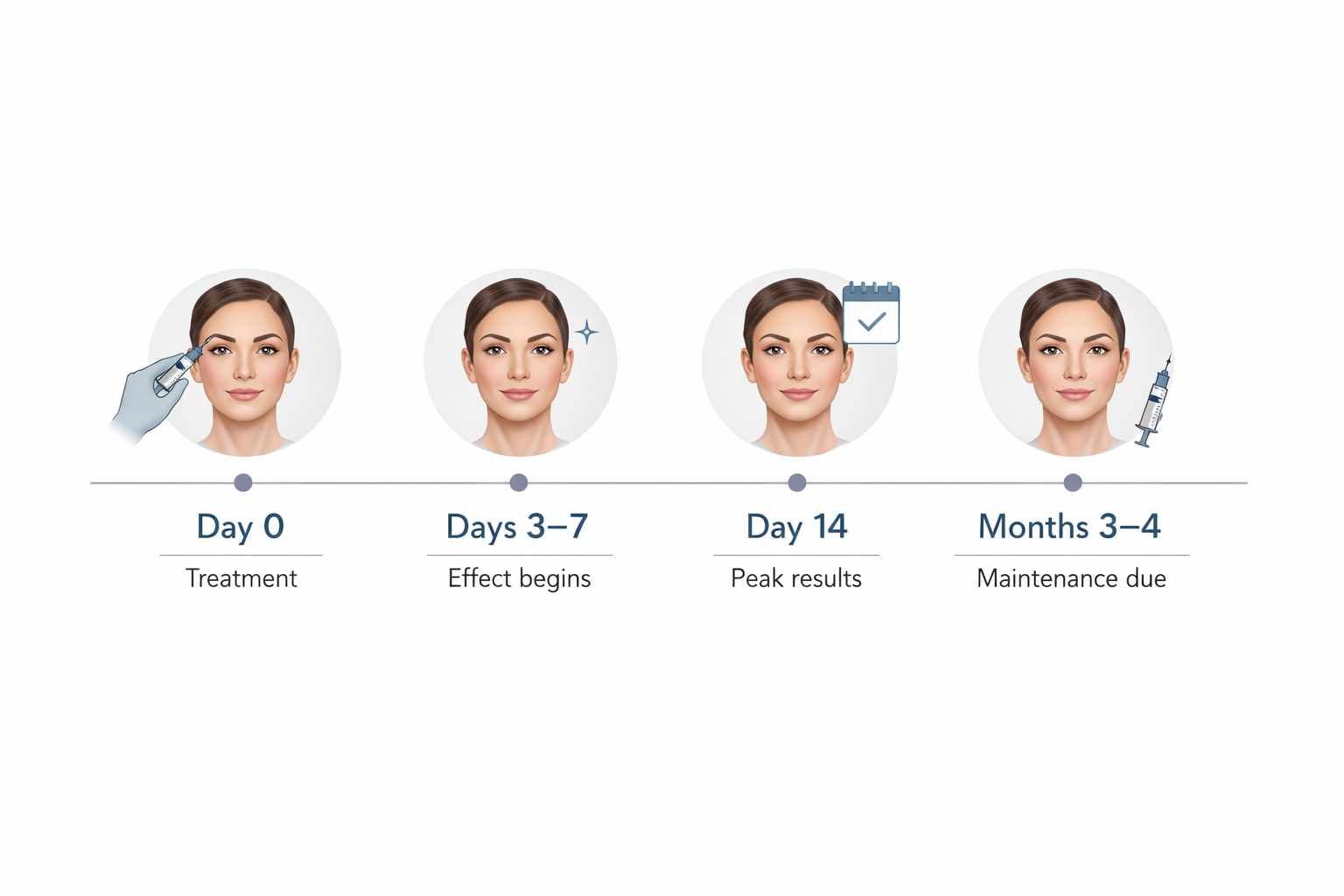
The effects are temporary. Most patients find that results last approximately 3 to 4 months, after which the muscles gradually regain their activity and the brow returns to its pre-treatment position. Regular maintenance treatments are needed to sustain the result over time. Some patients find that with consistent treatment over several years, the muscles may weaken slightly, potentially extending the interval between sessions — though this varies considerably between individuals and is not guaranteed.
It is worth noting that a Botox brow lift cannot replicate the degree of lift achievable through surgery. Patients hoping for a dramatic transformation or a permanent result will not find that with botulinum toxin alone. The treatment is best understood as a subtle, temporary enhancement rather than a structural correction.
The Treatment Experience: What Happens During a Session
A Botox brow lift appointment is typically brief, often completed within 10 to 20 minutes. No general anaesthesia is required, and most patients find the injections tolerable, describing a mild pinching or stinging sensation. A topical numbing cream can be applied beforehand if preferred, though many practitioners find it unnecessary given the small needle size used.
Before any injections are given, a qualified practitioner will assess your facial anatomy — examining your brow position, muscle activity, skin quality, and the relationship between your brow and upper eyelid. This assessment directly informs injection placement, as the precise location and depth of each injection determines whether the outcome is a natural lift or an unintended complication. There is no single universal injection map; the pattern is tailored to each patient.
After the injections, patients can generally return to normal activities immediately. There may be minor redness, swelling, or small marks at the injection sites, which typically resolve within a few hours. Bruising is possible but usually mild and short-lived.
Aftercare: What to Do After Treatment
Following a Botox brow lift, a few straightforward aftercare steps can help support the best possible outcome and reduce the risk of complications:
- Avoid rubbing or massaging the treated area for at least 24 hours to prevent the product from migrating to unintended muscles.
- Stay upright for at least 4 hours after treatment — avoid lying down flat during this period.
- Skip strenuous exercise for the remainder of the day of treatment, as increased blood flow may affect how the product settles.
- Avoid heat exposure — saunas, steam rooms, and very hot baths — for 24 to 48 hours.
- Avoid alcohol on the day of treatment, as it can increase the risk of bruising.
- Do not apply pressure to the forehead or brow area — this includes certain facial massage techniques and some skincare tools.
- Attend your follow-up appointment at around two weeks to assess the result and address any asymmetry or areas that may benefit from a small touch-up.
Risks and Side Effects
Botulinum toxin injections are widely used in aesthetic medicine and have a well-established safety profile when administered by a qualified practitioner. However, like any medical treatment, a Botox brow lift carries potential risks and side effects that patients should understand before proceeding.
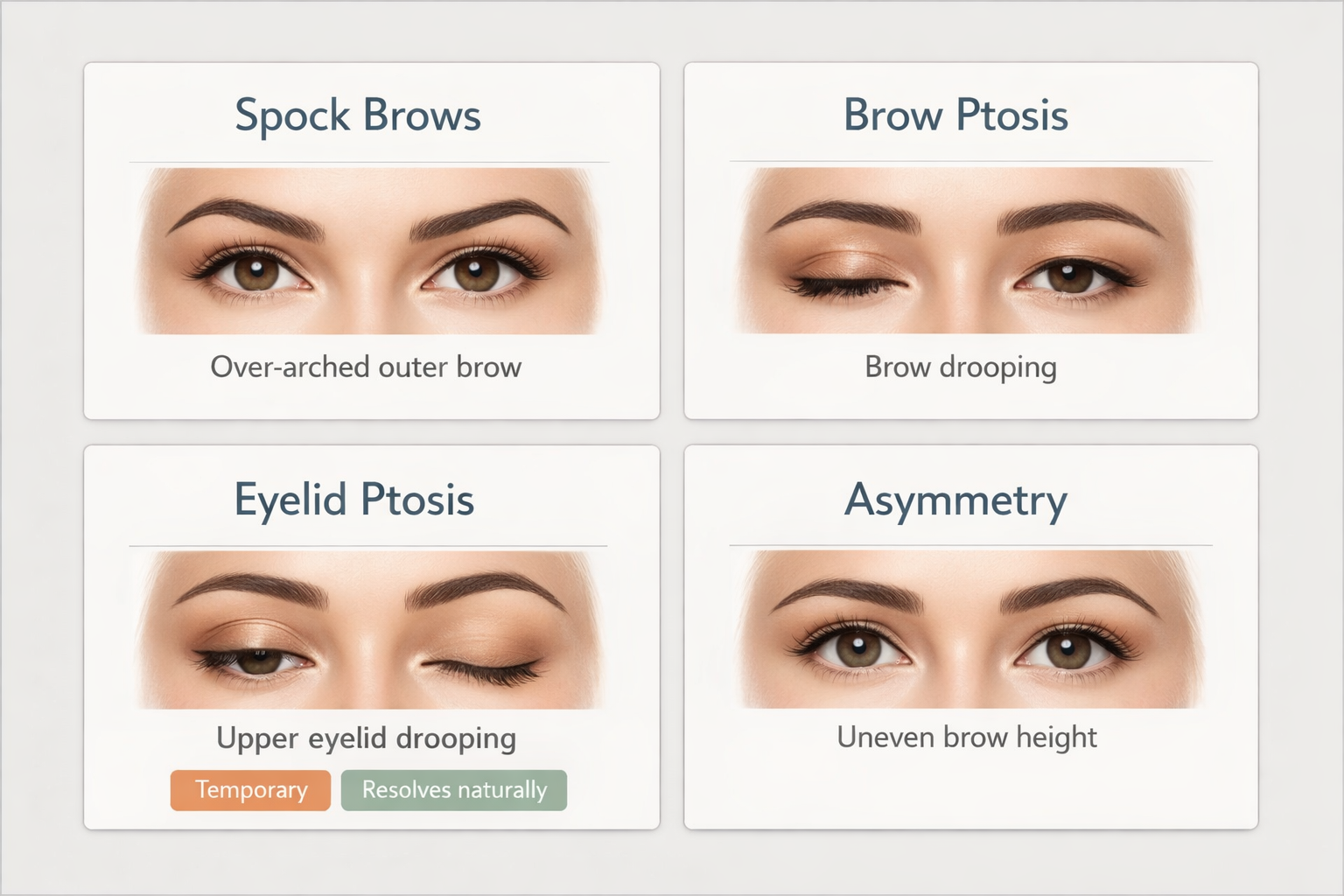
Common and usually temporary side effects include mild bruising at injection sites, localised redness or swelling, and occasionally a mild headache in the hours following treatment. These effects typically resolve within a few days without intervention.
Spock brows are a recognised complication in which the outer portion of the brow becomes over-elevated, creating an unnaturally peaked or arched appearance. This can occur when the lateral frontalis is left too active relative to the medial frontalis. An experienced injector can usually correct this with one or two additional units placed strategically to balance the brow shape. The effect resolves as the product wears off even without correction.
Brow ptosis — a drooping of the brow itself — can occur if too much botulinum toxin is placed in the frontalis muscle, reducing its lifting capacity. This is why careful dosing and injection placement are essential. Brow ptosis from this treatment is temporary and resolves as the product wears off, typically within 4 to 6 weeks.
Eyelid ptosis — drooping of the upper eyelid — is a less common but more noticeable complication that can occur if the product migrates to the levator palpebrae superioris muscle, which holds the eyelid open. The risk is minimised by careful injection technique and following aftercare instructions (particularly avoiding rubbing the area). If eyelid ptosis does occur, prescription apraclonidine eye drops can help temporarily improve eyelid position while the effect resolves naturally.
Asymmetry is possible, particularly if the two sides of the face respond differently to the treatment. Minor asymmetry can often be addressed at a follow-up appointment. Patients should also be aware that some degree of natural facial asymmetry exists before treatment and may become more apparent after.
Patients who are pregnant or breastfeeding, have certain neuromuscular conditions, or are taking specific medications should discuss their medical history fully with their practitioner before treatment, as botulinum toxin may not be appropriate in all circumstances.
Botox Brow Lift vs. Surgical Brow Lift
For patients considering their options, understanding the meaningful differences between a nonsurgical brow lift and a surgical brow lift helps clarify which approach may be more appropriate for a given set of goals and anatomy.
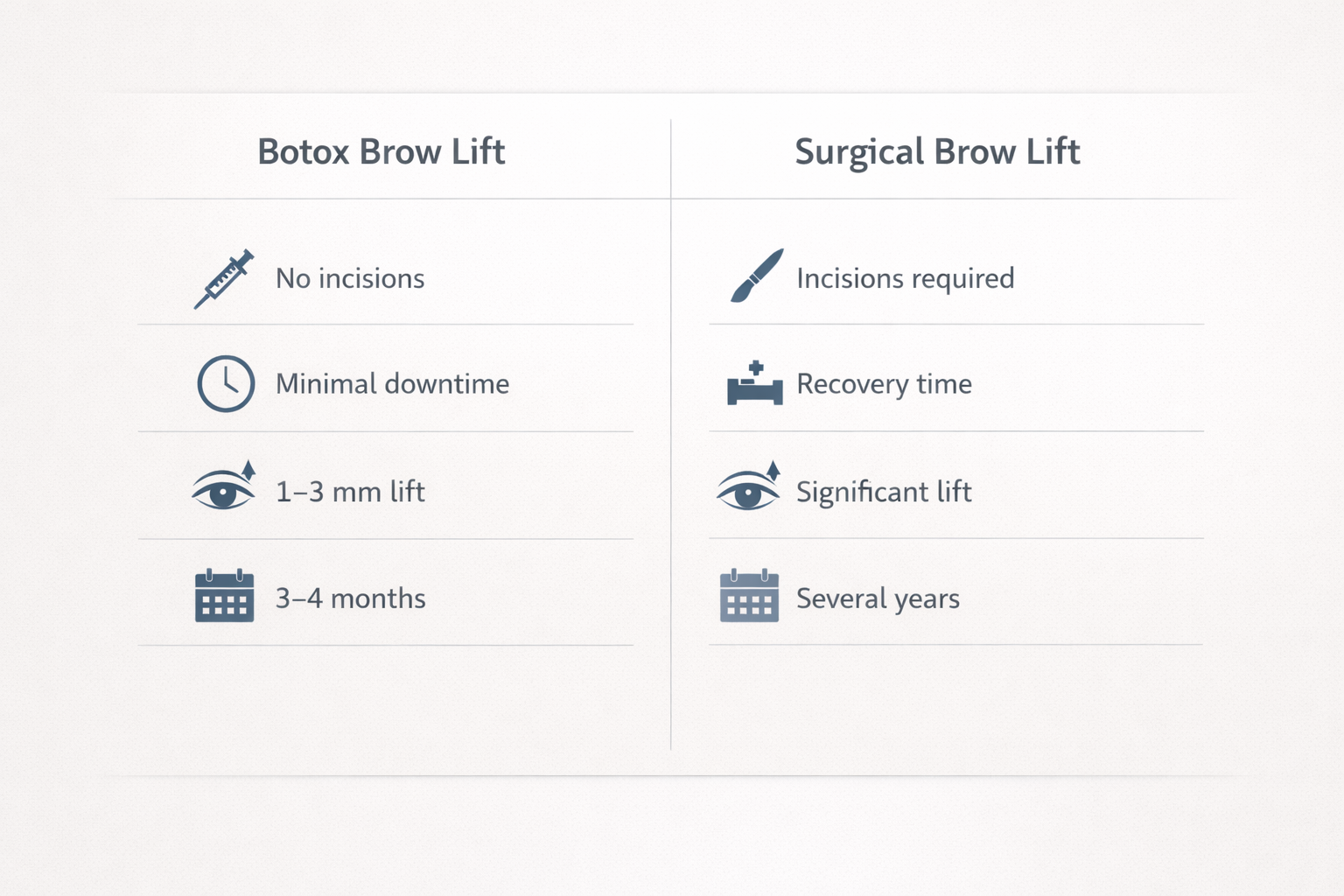
| Factor | Botox Brow Lift | Surgical Brow Lift |
|---|---|---|
| Invasiveness | Non-surgical, injections only | Surgical procedure with incisions |
| Anaesthesia | None or topical numbing | General or local with sedation |
| Degree of lift | Subtle (1–3 mm) | Significant tissue repositioning |
| Duration of results | 3–4 months | Several years (varies by technique) |
| Downtime | Minimal to none | 1–2 weeks or more |
| Ideal candidate | Mild to moderate brow descent, good skin elasticity | Significant brow descent, skin laxity, or excess tissue |
| Maintenance | Every 3–4 months | Generally not required for years |
| Risks | Temporary bruising, ptosis, asymmetry | Scarring, nerve injury, longer recovery |
| Approximate cost per session | Lower per session; cumulative cost over years | Higher upfront; potentially lower long-term |
Surgical brow lift techniques include the endoscopic brow lift, the open (coronal) brow lift, and the limited incision lateral brow lift. Each addresses different degrees and patterns of brow descent. Surgery repositions the underlying tissue and removes or redistributes excess skin, producing a more substantial and longer-lasting correction than botulinum toxin can achieve.
The long-term cost comparison is worth considering. A Botox brow lift session may cost significantly less than surgery upfront, but because maintenance treatments are needed every 3 to 4 months, the cumulative cost over several years can approach or exceed the cost of a surgical procedure. Patients who are good surgical candidates and seeking a lasting result may find surgery more cost-effective over a 5 to 10 year horizon, while those who prefer to avoid surgery or who have mild concerns may find the ongoing injectable approach preferable.
Some patients benefit from both approaches at different stages of life — using botulinum toxin in earlier years when brow descent is mild, and considering surgery later if the degree of descent warrants a more substantial intervention. A combined approach using Botox alongside dermal fillers, Ultherapy, or thread lifts may also extend the benefit for patients who are not yet surgical candidates but want more than botulinum toxin alone can provide.
Combination Treatments for Enhanced Results
For patients who want more than a subtle lift but are not ready for or interested in surgery, combining a Botox brow lift with complementary treatments can extend the result and address related concerns simultaneously.
Dermal fillers placed at the brow or temple can add volume and structural support, complementing the muscle rebalancing effect of botulinum toxin. This combination can be particularly useful when volume loss in the temple area is contributing to brow descent.
Ultherapy uses focused ultrasound energy to stimulate collagen production in the deeper layers of the skin and soft tissue. When used in the brow and forehead area, it may provide a modest additional lift and improve skin quality over several months, working alongside the more immediate effect of botulinum toxin.
Thread lifts use dissolvable sutures to mechanically reposition the brow tissue, offering a more immediate structural lift than energy-based devices. Combining threads with botulinum toxin may extend the duration of the thread lift result by reducing the muscle forces that would otherwise pull the brow back down.
Any combination approach should be planned carefully by a practitioner with experience in facial anatomy and multiple treatment modalities. The goal is always a natural, balanced result — not simply layering treatments for their own sake.
What Happens When the Effect Wears Off?
As botulinum toxin gradually loses its effect — typically over 3 to 4 months — the depressor muscles slowly regain their activity and the brow returns to its pre-treatment position. This process is gradual rather than sudden, so most patients notice a slow return of brow heaviness rather than an abrupt change. There is no rebound effect; the brow simply returns to where it was before treatment.
Planning maintenance treatments before the effect fully wears off helps maintain a consistent result. Many patients schedule their next appointment at around the 3-month mark, before the brow has fully descended again. Over time, some patients find that consistent treatment leads to a gradual reduction in muscle activity, potentially allowing slightly longer intervals between sessions — though this varies between individuals and should not be assumed.
Frequently Asked Questions
How many units of Botox are needed for a brow lift?
The number of units varies depending on the individual’s muscle strength, anatomy, and the specific injection pattern used. Targeting the outer brow area typically requires a relatively small number of units, while addressing the glabellar complex to reduce the inward pull on the brow requires additional units. Your practitioner will determine the appropriate amount during your consultation and assessment. Providing specific unit counts here would not be appropriate, as dosing must be individualised and is brand-specific.
Is a Botox brow lift painful?
Most patients describe the injections as mildly uncomfortable — a brief pinching or stinging sensation — rather than painful. The needles used are very fine, and the procedure is completed quickly. A topical numbing cream can be applied beforehand if you are particularly sensitive, though many patients find this unnecessary.
Can a Botox brow lift fix hooded eyes?
It depends on the cause of the hooding. If hooded eyes are partly the result of a lowered brow position, lifting the brow with botulinum toxin may reduce the appearance of hooding and create a more open eye area. However, if the hooding is primarily caused by excess upper eyelid skin (dermatochalasis), a brow lift alone — surgical or nonsurgical — will not fully address it. Upper eyelid surgery (blepharoplasty) may be more appropriate in that case. A thorough assessment is needed to identify the underlying cause.
Can men get a Botox brow lift?
Yes. Men can benefit from a nonsurgical brow lift, though the approach differs from that used for female patients. Male brows are typically positioned lower and have a flatter, straighter shape. The injection pattern is adjusted to maintain a natural masculine brow position rather than creating a feminine arch. Men generally require more units due to greater muscle mass in the forehead and glabellar area.
How soon can I see results?
Most patients begin to notice a change within 3 to 7 days of treatment. The full effect is usually visible at around two weeks, which is also the recommended time for a follow-up assessment if any refinement is needed.
Are there alternatives to Botox for lifting the brows without surgery?
Yes. Other botulinum toxin neuromodulators such as Dysport, Xeomin, and Daxxify work on the same principle and may be used instead of Botox depending on practitioner preference and patient response. Beyond injectables, options such as Ultherapy, thread lifts, and dermal fillers can complement or partially substitute for botulinum toxin in certain patients. The most appropriate option depends on the degree of brow descent, skin quality, and individual goals.
What is the risk of getting “Spock brows”?
Spock brows — an over-elevated, peaked outer brow — can occur when the injection pattern leaves the lateral frontalis too active relative to the medial portion. This complication is more likely with inexperienced injection technique. An experienced injector will assess your brow dynamics carefully to minimise this risk. If it does occur, it can usually be corrected with a small additional dose placed to balance the brow, and it resolves fully as the product wears off.
Is a Botox Brow Lift Worth Considering for You?
A Botox brow lift is a well-established nonsurgical option for adults with mild to moderate brow drooping who want a subtle, temporary improvement without surgery or significant downtime. The mechanism is sound — muscle rebalancing through targeted botulinum toxin injections — and the results, while modest in scale, can meaningfully refresh the appearance of the upper face when the treatment is well-matched to the patient’s anatomy and goals.
The treatment is not suitable for everyone. Patients with significant brow ptosis, substantial skin laxity, or a desire for lasting structural change are likely to be better served by a surgical brow lift or a combination approach. The temporary nature of the result and the need for regular maintenance treatments are also important practical considerations, particularly when weighing long-term costs against a surgical alternative.
The most important factor in achieving a safe, natural-looking result is the skill and experience of the injector. Injection placement in the brow area requires a detailed understanding of facial anatomy, and small differences in technique can significantly affect the outcome. Choosing a qualified, experienced practitioner and attending a thorough consultation before committing to treatment is the most important step any prospective patient can take.
If you are considering a Botox brow lift, a consultation with a qualified aesthetic practitioner will help clarify whether your anatomy and goals make you a suitable candidate, and whether this approach — alone or in combination with other treatments — is likely to achieve the result you are looking for.