

Key Takeaways
- Botox in the cheeks is used for several distinct purposes: relaxing the depressor anguli oris (DAO) muscle to lift downturned mouth corners, providing a subtle mid-face lift by releasing downward-pulling muscles, and slimming the lower face via masseter reduction.
- Most cheek and lower-face Botox applications are considered off-label use, meaning injector skill and a thorough understanding of facial anatomy are especially important for safe, natural-looking results.
- Botox works by relaxing muscles — it does not replace lost volume. Patients with significant volume loss or skin laxity may achieve better outcomes with dermal fillers, PDO threads, or a combination treatment approach.
- Results typically become visible within 4–7 days and reach full effect at around 10–14 days, lasting approximately 3–4 months before repeat treatments are needed.
- Realistic expectations are essential: Botox in this area produces a subtle lift rather than a dramatic transformation, and candidacy depends on the cause of the concern, not just its appearance.
What Does Botox in the Cheeks Actually Do?
Botox — the brand name for botulinum toxin type A — is most commonly associated with forehead lines and crow’s feet, but it has a range of applications in the mid and lower face that are less widely understood. When practitioners refer to Botox in the cheeks, they may mean several different things depending on the patient’s concern and anatomy.
The three most clinically relevant uses are: relaxing the depressor anguli oris (DAO) muscle to address a downturned smile; applying small doses to the mid-cheek area to reduce the downward pull of certain facial muscles and create a subtle lift; and injecting the masseter muscle — the large chewing muscle at the sides of the jaw — to slim the lower face and reduce jaw tension. Each of these targets a different muscle group and produces a different aesthetic outcome, so understanding which application is relevant to your concern is the first step toward realistic expectations.
It is also worth noting that these applications involve botulinum toxin functioning as a neuromodulator — a substance that temporarily interrupts the nerve signals that cause muscles to contract. The effect is not permanent, and it does not add structure or volume to the face. This distinction matters enormously when deciding whether Botox is the right tool for a particular concern.
The Depressor Anguli Oris and Downturned Mouth Corners
One of the most common reasons patients seek Botox in the lower cheek area is a downturned smile — the appearance of mouth corners that point slightly downward, giving the face a sad or stern resting expression. This is often driven by the depressor anguli oris (DAO), a muscle that runs from the corner of the mouth (the oral commissures) downward toward the chin. When this muscle is overactive or when the surrounding tissues lose volume with age, it can pull the corners of the mouth into a downward position.
Injecting a small amount of botulinum toxin into the DAO relaxes its downward pull, allowing the levator muscles — which naturally lift the corners of the mouth — to work with less opposition. The result is a subtle upward shift of the oral commissures, softening the downturned appearance without altering the natural shape of the mouth. This is sometimes called a Botox smile lift, though the change is typically modest rather than dramatic.
It is important to understand that not all downturned mouth corners are caused by muscle-driven sagging. Volume loss in the cheeks and around the oral commissures, deepening marionette lines, and changes in skin elasticity all contribute to this appearance and respond differently to treatment. A thorough assessment of the lower face — including the relationship between the DAO, the surrounding fat pads, and the degree of skin laxity — is necessary before deciding whether Botox, dermal fillers, or a combination treatment is most appropriate.
Can Botox Lift Sagging Cheeks?
The idea of a non-surgical cheek lift using Botox appeals to many patients, but it is important to be precise about what this can and cannot achieve. The mid-face does not sag primarily because muscles are contracting downward in the same way the DAO does at the mouth corners. Instead, mid-face drooping is largely driven by volume loss in the deep fat pads, collagen loss reducing skin elasticity, and the gradual descent of soft tissue structures with age.
Botox can play a limited supporting role in mid-face rejuvenation by relaxing specific muscles that contribute to a downward pull on the cheek tissue. Some practitioners use small doses in the zygomaticus minor or other mid-face depressor muscles to reduce this pull and allow the face to sit slightly higher. However, the lift produced is subtle — typically in the range of 1–3 millimetres — and is most noticeable in patients who have mild sagging driven partly by muscle activity rather than significant volume loss.
For patients whose cheek sagging is primarily caused by volume loss or significant skin laxity, Botox alone is unlikely to produce a meaningful improvement. In these cases, hyaluronic acid dermal fillers (such as Juvederm or Restylane) placed in the mid-cheek or along the cheekbone can restore structural support and create a more visible lift. PDO thread lifts or, in more advanced cases, surgical intervention may be more appropriate options. An experienced injector will assess which mechanism is driving the concern before recommending a treatment pathway.
Masseter Botox: Face Slimming and Jaw Reduction
Masseter Botox — injections into the masseter muscle at the sides of the jaw — is one of the most well-established off-label uses of botulinum toxin in the lower face. The masseter is the primary chewing muscle, and in some individuals it is enlarged either due to genetics, habitual teeth grinding (bruxism), or jaw clenching. A prominent masseter can create a wide, square jaw appearance that some patients wish to soften.
Relaxing the masseter with botulinum toxin causes the muscle to reduce in bulk over several weeks, gradually slimming the lower face and creating a softer, more tapered jaw contour — sometimes described as a V-shape face effect. This application is particularly popular among patients of East Asian heritage, where a wider jaw is a common aesthetic concern, though it is sought by patients of all backgrounds.
Beyond aesthetics, masseter Botox is also used to reduce the discomfort associated with bruxism and jaw tension, which can cause headaches and tooth wear. Results from masseter treatment typically last slightly longer than standard facial Botox — often 4–6 months — because the masseter is a larger, more active muscle. Multiple treatment sessions may be needed before the full slimming effect becomes apparent, as muscle reduction is gradual.
Who Is a Good Candidate for Cheek Botox?
Candidacy for Botox in the cheek area depends on the specific concern being addressed and its underlying cause. Botox is most likely to produce satisfying results when the concern is primarily muscle-driven rather than caused by volume loss or structural change.
Patients who may benefit most include:
- Those with a downturned smile caused by an overactive depressor anguli oris (DAO) muscle, with relatively good skin elasticity and minimal volume loss around the oral commissures.
- Patients with mild mid-face drooping where muscle activity is a contributing factor, typically those under 50 with good baseline skin quality.
- Individuals with an enlarged masseter muscle seeking lower face slimming or relief from jaw tension and bruxism.
- Adults in good general health with realistic expectations about the degree of change Botox can produce.
Botox in the cheeks is less likely to be the right primary treatment for patients with significant volume loss in the mid-face or around the mouth, pronounced marionette lines caused by structural changes, or advanced skin laxity. These patients may achieve better results with dermal fillers, PDO threads, or a combination treatment that addresses both muscle activity and volume deficit simultaneously.
Botox is not suitable during pregnancy or breastfeeding, for patients with certain neuromuscular conditions such as myasthenia gravis, or for those with active infection at the intended injection site. A full medical history and facial assessment with a board-certified provider is essential before proceeding.
Botox vs. Fillers vs. PDO Threads for the Cheeks
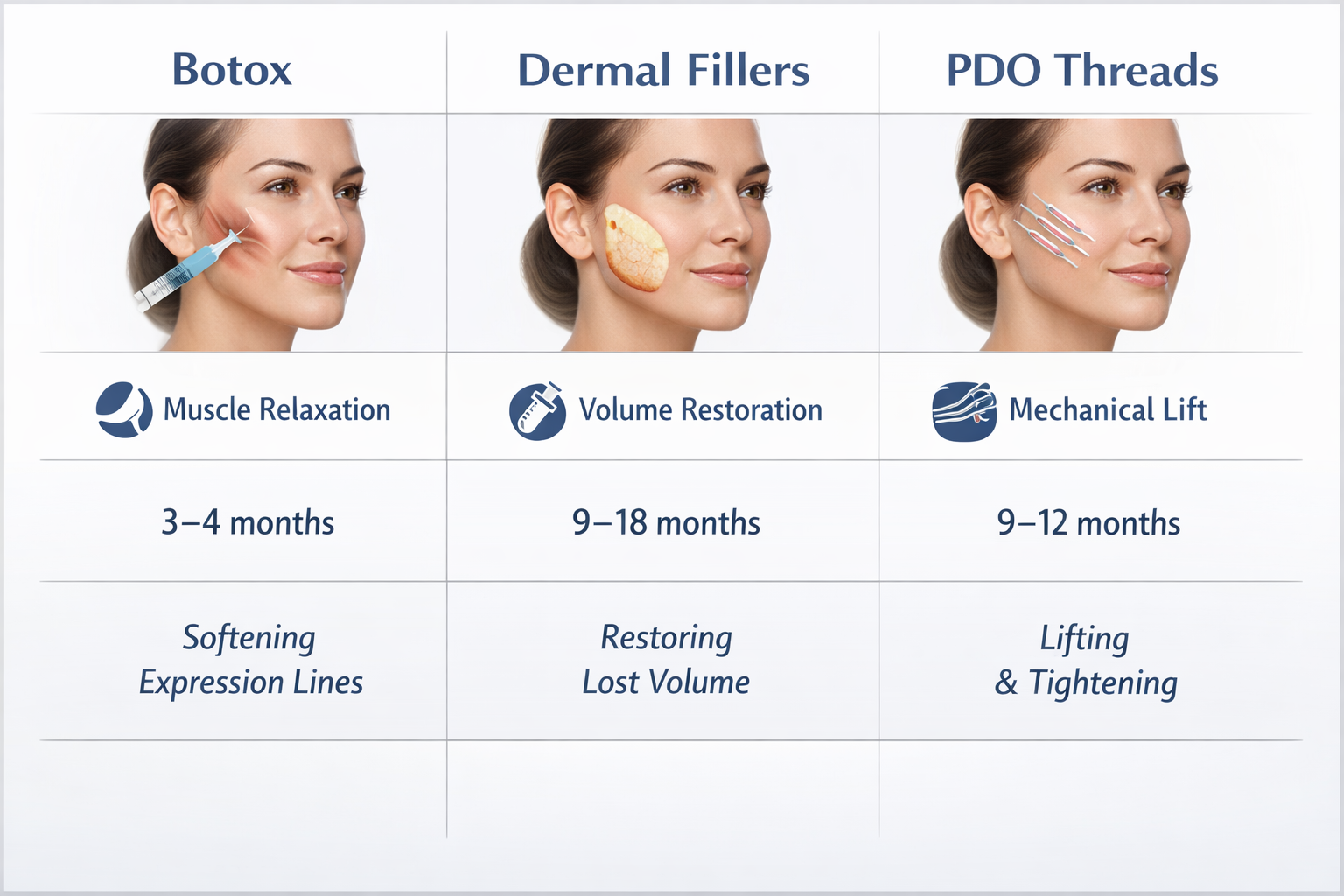
Choosing between Botox, dermal fillers, and PDO threads for cheek and lower-face concerns requires understanding what each treatment actually does and which mechanism is driving the concern. The table below summarises the key differences.
| Treatment | Mechanism | Best For | Onset | Longevity | Downtime | Limitations |
|---|---|---|---|---|---|---|
| Botox (botulinum toxin) | Relaxes specific muscles to reduce downward pull | Muscle-driven downturned corners, jaw slimming, mild lift | 4–7 days (full effect 10–14 days) | 3–4 months (masseter 4–6 months) | Minimal (bruising possible) | Does not add volume; subtle results; repeat treatments needed |
| Dermal Fillers (HA-based) | Adds volume and structural support to soft tissue | Volume loss, marionette lines, cheekbone definition, oral commissure support | Immediate (with some swelling) | 9–18 months depending on product and area | Minimal to mild (swelling, bruising) | Risk of overfilling; requires skilled placement; not suitable for all anatomy |
| PDO Thread Lift | Mechanical lift via absorbable threads; stimulates collagen | Mild to moderate skin laxity, mid-face drooping, jowl definition | Immediate lift; collagen improvement over 2–3 months | 12–18 months | Mild to moderate (swelling, tenderness, 1–3 days) | More invasive than injectables; risk of thread visibility or migration; results vary |
| Surgical Facelift | Repositions and removes excess tissue surgically | Significant sagging, advanced skin laxity, structural facial change | Visible after healing (weeks) | 5–10 years | Significant (1–3 weeks) | Surgical risks; anaesthesia; recovery time; cost |
In practice, many patients benefit from a combination treatment approach — for example, Botox to relax the DAO and reduce downward muscle pull, combined with a small amount of hyaluronic acid filler placed at the oral commissures or along the marionette lines to restore structural support. This combination can address both the muscle-driven and volume-related components of lower-face ageing more comprehensively than either treatment alone.
What Happens During the Procedure?
A cheek or lower-face Botox appointment typically begins with a detailed consultation and facial assessment. A qualified practitioner will examine your facial anatomy, assess the muscles contributing to your concern, evaluate your skin quality and degree of volume loss, and discuss your goals and medical history. This assessment determines whether Botox is appropriate, which specific muscles should be targeted, and whether additional treatments may be beneficial.
The injection process itself is brief, usually taking 10–20 minutes. The skin is cleansed with an antiseptic solution, and a topical anaesthetic cream may be applied beforehand, though many patients find the injections tolerable without it given the fine needles used. The practitioner will inject small, precise amounts of botulinum toxin into the identified muscle points. The number of injection sites and the amount used will vary depending on the treatment area and individual anatomy.
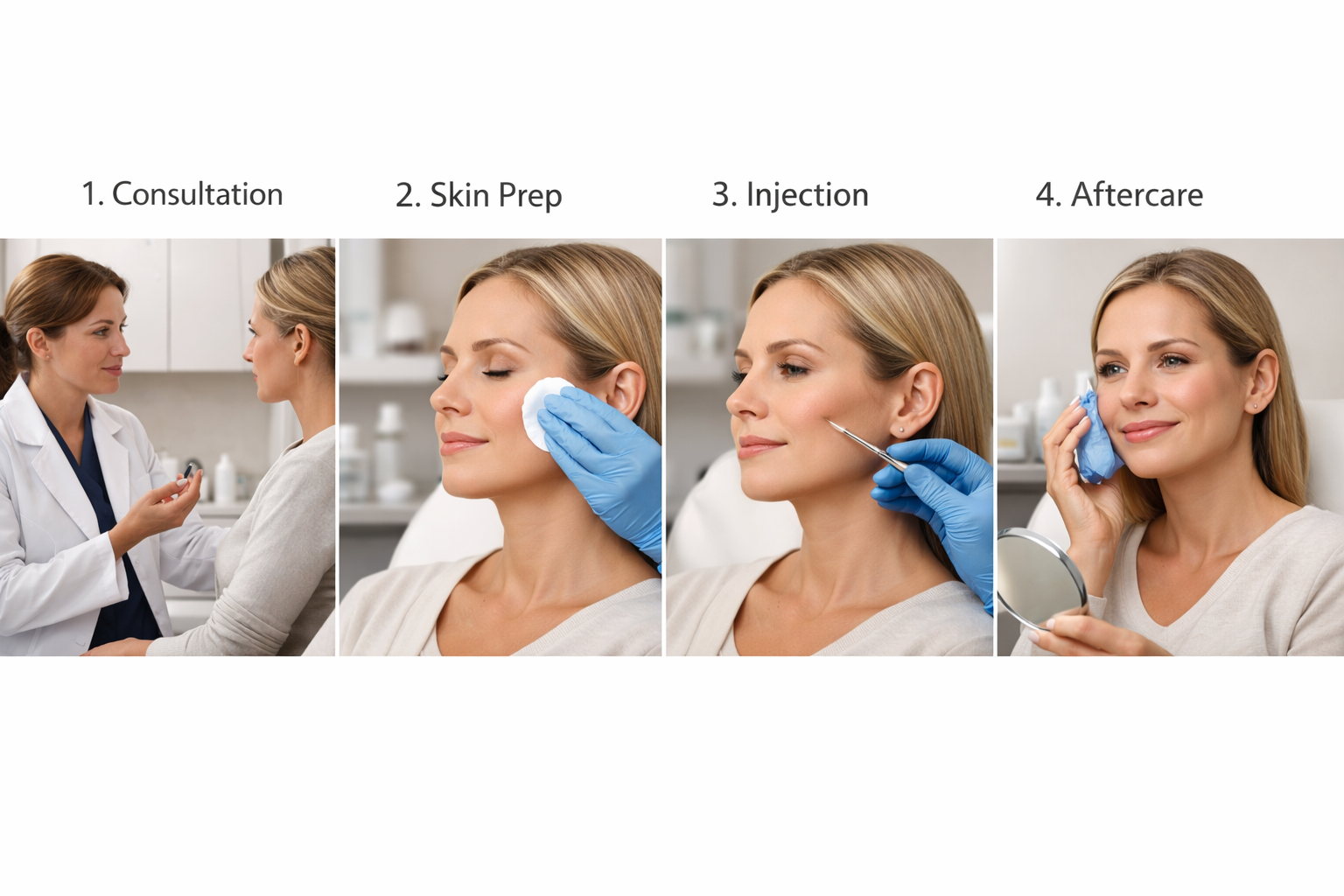
After the injections, patients are typically advised to remain upright for at least four hours, avoid touching or massaging the treated area, and refrain from strenuous exercise, heat exposure (saunas, hot baths), and alcohol for 24–48 hours. These precautions help minimise the risk of the toxin spreading to unintended muscle groups. Most patients return to normal activities the same day.
When Will Results Appear and How Long Do They Last?
Botulinum toxin does not produce immediate visible results. The nerve signal blocking process takes time, and most patients begin to notice changes within 4–7 days of treatment. Full results are generally visible at around 10–14 days, at which point a follow-up appointment may be offered to assess the outcome and make any minor adjustments if needed.
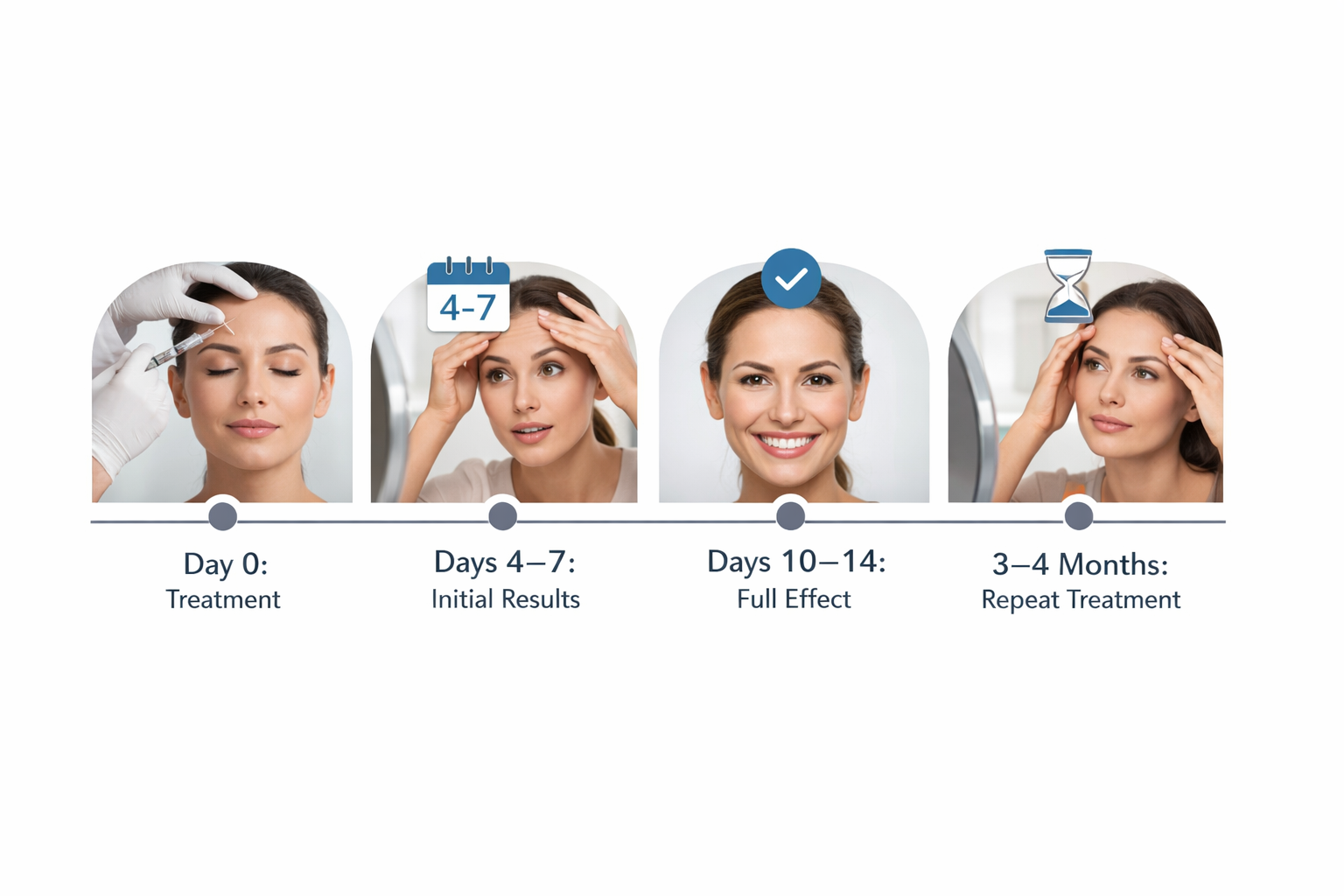
Results from Botox in the cheek and lower-face area typically last 3–4 months for standard applications such as DAO relaxation and mid-face work. Masseter treatment may last slightly longer — often 4–6 months — because the muscle is larger and takes more time to regain its full activity. As the botulinum toxin gradually breaks down, muscle activity returns and the effects fade. Repeat treatments are required to maintain results, and some patients find that with consistent maintenance, the muscles gradually become less active over time, potentially extending the interval between sessions.
Risks, Side Effects, and the Importance of Injector Skill
Botox in the cheek and lower-face area carries a specific set of risks that differ from those associated with standard forehead or glabellar treatments. Because most of these applications are off-label use — meaning they fall outside the original licensed indications for botulinum toxin — the margin for error is narrower and the importance of injector skill is correspondingly greater.
Common side effects include temporary bruising, swelling, redness, and tenderness at the injection sites. These typically resolve within a few days. More significant risks specific to the lower face include:
- Asymmetry: Uneven relaxation of the DAO or surrounding muscles can result in an uneven smile or unequal mouth corners. This is usually temporary and can often be corrected with a small additional dose.
- Unintended muscle weakness: If botulinum toxin spreads to adjacent muscles — such as those controlling lip movement — it can temporarily affect speech, eating, or facial expression. This risk is minimised by precise injection technique and appropriate dosing.
- Overcorrection: Excessive relaxation of the DAO can cause the mouth corners to lift too high, creating an unnatural appearance. An experienced injector will use conservative doses and reassess at follow-up.
- Toxin spread: In rare cases, botulinum toxin may spread beyond the intended area, causing temporary weakness in unintended muscle groups.
Choosing a board-certified provider with specific experience in lower-face anatomy significantly reduces these risks. The lower face is a complex area where muscles interact closely, and the difference between a natural-looking result and an unnatural one often comes down to precise knowledge of facial anatomy and injection technique. Always verify your practitioner’s qualifications and ask to see examples of their work in the specific area you are considering.
How Much Does Cheek Botox Cost?
The cost of Botox in the cheek area varies depending on the specific treatment, the number of units required, the practitioner’s experience, and the clinic’s location. Botulinum toxin is typically priced per unit, with costs generally ranging from approximately £8–£15 per unit in the UK or $10–$25 per unit in the US, though prices vary widely between clinics and regions.
For DAO treatment to address downturned mouth corners, relatively few units are typically needed — often in the range of 2–6 units per side — making this one of the more affordable lower-face applications. Masseter reduction requires considerably more units given the size of the muscle, and costs are correspondingly higher. Mid-face Botox for a subtle lift also varies depending on the number of injection points and the dose used.
Some clinics price lower-face Botox as a flat fee per area rather than per unit, which can make cost comparison easier. It is worth asking during your consultation exactly how many units are planned and what the total cost will be, including any follow-up appointments. Loyalty programmes offered by some clinics or botulinum toxin manufacturers may reduce the cost of repeat treatments over time.
Frequently Asked Questions
Will Botox in my cheeks make me look frozen?
When administered correctly by an experienced injector, Botox in the cheek and lower-face area should not produce a frozen appearance. The goal is to relax specific muscles selectively while preserving natural facial movement. Using conservative doses and reassessing at a follow-up appointment helps ensure the result looks natural. Overcorrection is more likely when too many units are used or when the injection placement is imprecise.
How many units of Botox are needed for the cheeks?
The number of units depends on the specific application. DAO treatment for downturned mouth corners typically requires a small number of units per side. Masseter reduction for jaw slimming requires significantly more due to the muscle’s size. Mid-face applications vary. Your practitioner will determine the appropriate dose based on your individual muscle strength and anatomy during the consultation — there is no universal figure that applies to all patients.
Can Botox replace dermal fillers for cheek volume?
No. Botox works by relaxing muscles and cannot add volume to the face. If your primary concern is volume loss in the cheeks — sunken or hollow mid-face, flattened cheekbones, or deep marionette lines caused by structural changes — dermal fillers are the more appropriate treatment. In some cases, a combination of Botox and fillers addresses both muscle-driven and volume-related concerns more effectively than either treatment alone.
Is Botox in the cheeks safe?
Botulinum toxin has a well-established safety profile when administered by a qualified practitioner. Lower-face and cheek applications carry a slightly higher risk of unintended effects compared to standard areas because the muscles in this region interact closely and most applications are off-label. Choosing a board-certified provider with specific lower-face experience and disclosing your full medical history significantly reduces risk. Botox is not suitable for everyone — your practitioner will assess your suitability during consultation.
When will I see results, and how long will they last?
Initial changes are usually visible within 4–7 days, with full results apparent at around 10–14 days. Results from most cheek and lower-face Botox applications last approximately 3–4 months. Masseter treatment may last slightly longer. Repeat treatments are needed to maintain the effect, and consistent maintenance may gradually reduce muscle activity over time.
Can I combine Botox with other treatments at the same appointment?
Combining Botox with dermal fillers at the same appointment is common and can produce more comprehensive results for lower-face rejuvenation. Your practitioner will advise on the most appropriate sequencing and combination based on your specific concerns and anatomy. Not all treatments can be safely combined at the same session, so this should always be discussed during your consultation.
Is Botox in the Cheeks the Right Choice for Your Concern?
Botox in the cheeks can be a genuinely effective option for the right patient with the right concern — but it is not a universal solution for facial ageing or sagging. Its value lies in addressing muscle-driven concerns: a downturned smile caused by an overactive depressor anguli oris, mild mid-face drooping with a muscular component, or a wide jaw driven by masseter enlargement. In these situations, a skilled injector can produce a subtle lift or slimming effect that looks natural and requires no downtime.
Where Botox is less likely to deliver satisfying results is in patients whose primary concern is volume loss, significant skin laxity, or structural changes that require support rather than muscle relaxation. For these patients, dermal fillers, PDO threads, or a combination treatment approach will typically produce more meaningful improvement. The most important step is an honest assessment of what is actually causing the concern — and that requires a consultation with an experienced, board-certified provider who can evaluate your facial anatomy and recommend the most appropriate pathway.
If you are considering Botox in the cheeks, approach the consultation with realistic expectations and specific questions about which muscles will be targeted, how many units are planned, what results are achievable given your anatomy, and what alternatives might be worth considering. A practitioner who takes time to answer these questions thoroughly is one who is likely to deliver results that genuinely suit your face.