

Key Takeaways
- Laser blackhead removal works by targeting sebaceous glands and reducing excess oil production, rather than physically extracting blackheads on the spot.
- Several laser types are used — including fractional CO2, Nd:YAG, and picosecond lasers — each with different mechanisms, downtime profiles, and suitability considerations.
- Results develop gradually over three to six sessions; maintenance appointments every six to twelve months are typically needed to sustain improvement.
- Skin type assessment using the Fitzpatrick scale is essential before treatment, as some laser wavelengths carry a higher risk of post-inflammatory hyperpigmentation (PIH) in darker skin tones.
- Laser treatment addresses the underlying environment that produces blackheads, making it more durable than manual extraction — but it is not a permanent cure and works best alongside a consistent skincare routine.
What Are Blackheads and Why Do They Keep Coming Back?
Blackheads are a form of non-inflammatory acne known clinically as open comedones. They form when a hair follicle becomes partially blocked by a combination of dead skin cells and sebum — the natural oil produced by the sebaceous glands beneath the skin’s surface. Unlike whiteheads, which are closed comedones sealed beneath a layer of skin, blackheads remain open at the surface. When the trapped sebum is exposed to air, a chemical process called sebum oxidation occurs, turning the plug dark brown or black. The colour is not caused by dirt.
Blackheads are particularly common on the nose, chin, and forehead — areas with a higher density of sebaceous glands — but they can also appear on the chest, back, and shoulders. People with oily skin or enlarged pores tend to be more prone to them. The reason blackheads recur so reliably is that topical treatments address the existing blockage without changing the rate at which the skin produces oil or sheds dead cells. This is precisely where laser treatment offers a different approach.
How Does Laser Blackhead Removal Work?
Laser blackhead removal uses concentrated beams of light energy to target structures within the skin that contribute to blackhead formation. The underlying principle is selective photothermolysis — the ability of specific laser wavelengths to be absorbed by particular targets in the skin, such as sebaceous glands or pigmented material, while leaving surrounding tissue largely unaffected.
Depending on the laser type used, the mechanism of action may include one or more of the following: suppression of sebaceous gland activity to reduce excess oil production; destruction of Cutibacterium acnes (formerly Propionibacterium acnes), the bacteria that contribute to acne development; stimulation of collagen remodelling to tighten enlarged pores; and controlled skin resurfacing to accelerate the shedding of dead skin cells that contribute to pore congestion. Most laser treatments for blackheads work on several of these pathways simultaneously, which is why results tend to be more comprehensive than surface-level exfoliation alone.
It is important to understand that laser treatment does not extract blackheads in the way a manual comedone extractor or HydraFacial does. Instead, it modifies the skin’s environment so that fewer blackheads form over time. This means results are gradual rather than immediate.
Types of Laser Used for Blackhead Removal
Several laser and light-based technologies are used in professional settings to address blackheads and the oily, congested skin that produces them. Each has a different mechanism, downtime profile, and suitability range.
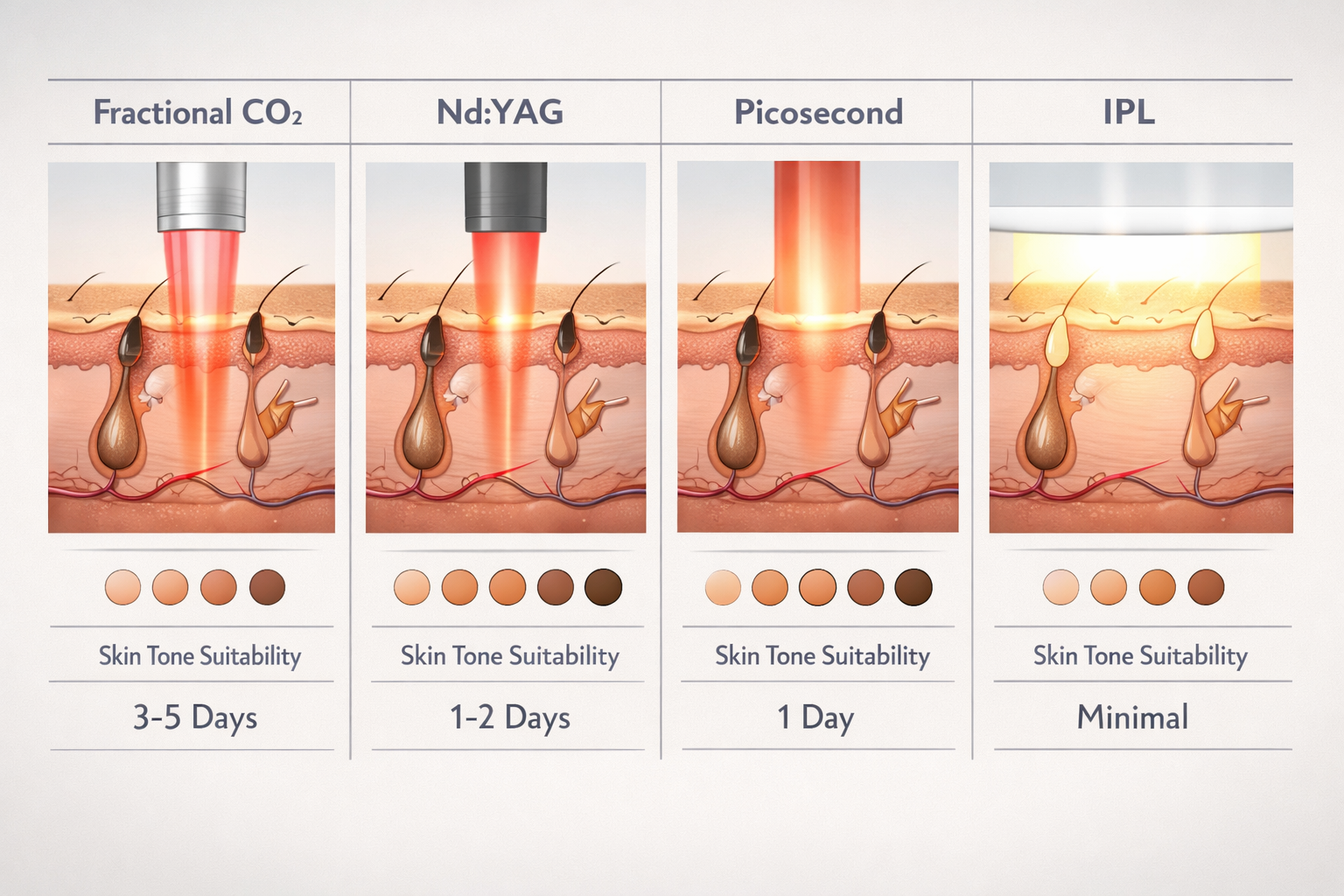
Fractional CO2 Laser
The fractional CO2 laser is an ablative laser that delivers thousands of microscopic columns of thermal energy into the skin, creating controlled micro-channels while leaving surrounding tissue intact. This process triggers significant collagen remodelling and accelerates cellular turnover, helping to clear clogged pores and refine skin texture. Fractional CO2 laser is one of the more powerful options for skin resurfacing and pore minimisation, but it carries a longer recovery period — typically five to ten days of redness, peeling, and mild swelling — compared to non-ablative alternatives. It is generally better suited to lighter Fitzpatrick skin types due to the higher risk of post-inflammatory hyperpigmentation in darker skin tones.
Nd:YAG Laser
The Nd:YAG laser operates at a 1064 nm wavelength, which penetrates more deeply into the dermis and is less readily absorbed by melanin than shorter wavelengths. This makes the Nd:YAG laser one of the safer options for patients with medium to darker skin tones. It targets sebaceous glands directly, reducing sebum production and helping to regulate oil levels over a course of sessions. The Nd:YAG laser is typically non-ablative, meaning the surface of the skin remains intact, and downtime is minimal — usually limited to mild redness for a day or two.
Picosecond Laser
Picosecond laser technology — sometimes referred to as pico laser — delivers ultra-short pulses of energy measured in trillionths of a second. This extremely rapid delivery creates a photoacoustic effect that breaks down congestion and stimulates collagen production with less thermal damage to surrounding tissue than older nanosecond devices. Picosecond lasers such as PicoSure Pro are increasingly used for skin resurfacing, pore refinement, and improving overall skin tone and texture. They are associated with minimal downtime and can be used across a broader range of skin types, though a thorough skin type assessment remains essential.
IPL (Intense Pulsed Light)
Intense Pulsed Light is not technically a laser — it emits a broad spectrum of light wavelengths rather than a single coherent beam. IPL can reduce sebaceous gland activity and address the pigmentation associated with post-inflammatory hyperpigmentation, making it a useful adjunct treatment for acne-prone and blackhead-prone skin. However, IPL is generally considered less precise than dedicated laser devices and requires careful calibration for patients with darker skin tones to avoid unwanted pigmentation changes.
Comparison of Laser Options for Blackheads
| Laser Type | Mechanism | Downtime | Skin Tone Suitability | Primary Benefit for Blackheads |
|---|---|---|---|---|
| Fractional CO2 | Ablative resurfacing, collagen induction | 5–10 days | Lighter skin tones (Fitzpatrick I–III) | Deep pore clearance, skin texture refinement |
| Nd:YAG | Sebaceous gland suppression, deep dermal heating | Minimal (1–2 days) | Broader range including darker tones | Oil regulation, reduced sebum production |
| Picosecond Laser | Photoacoustic effect, collagen stimulation | Minimal | Broad range with assessment | Pore refinement, skin tone improvement |
| IPL | Broad-spectrum light, sebaceous reduction | Minimal | Lighter to medium tones; caution with darker | Oil reduction, pigmentation improvement |
What Happens During a Laser Treatment Session?
Understanding what a laser appointment involves helps set realistic expectations and reduces anxiety before the first session. While the exact protocol varies depending on the device used and the clinic’s approach, the general process follows a consistent pattern.
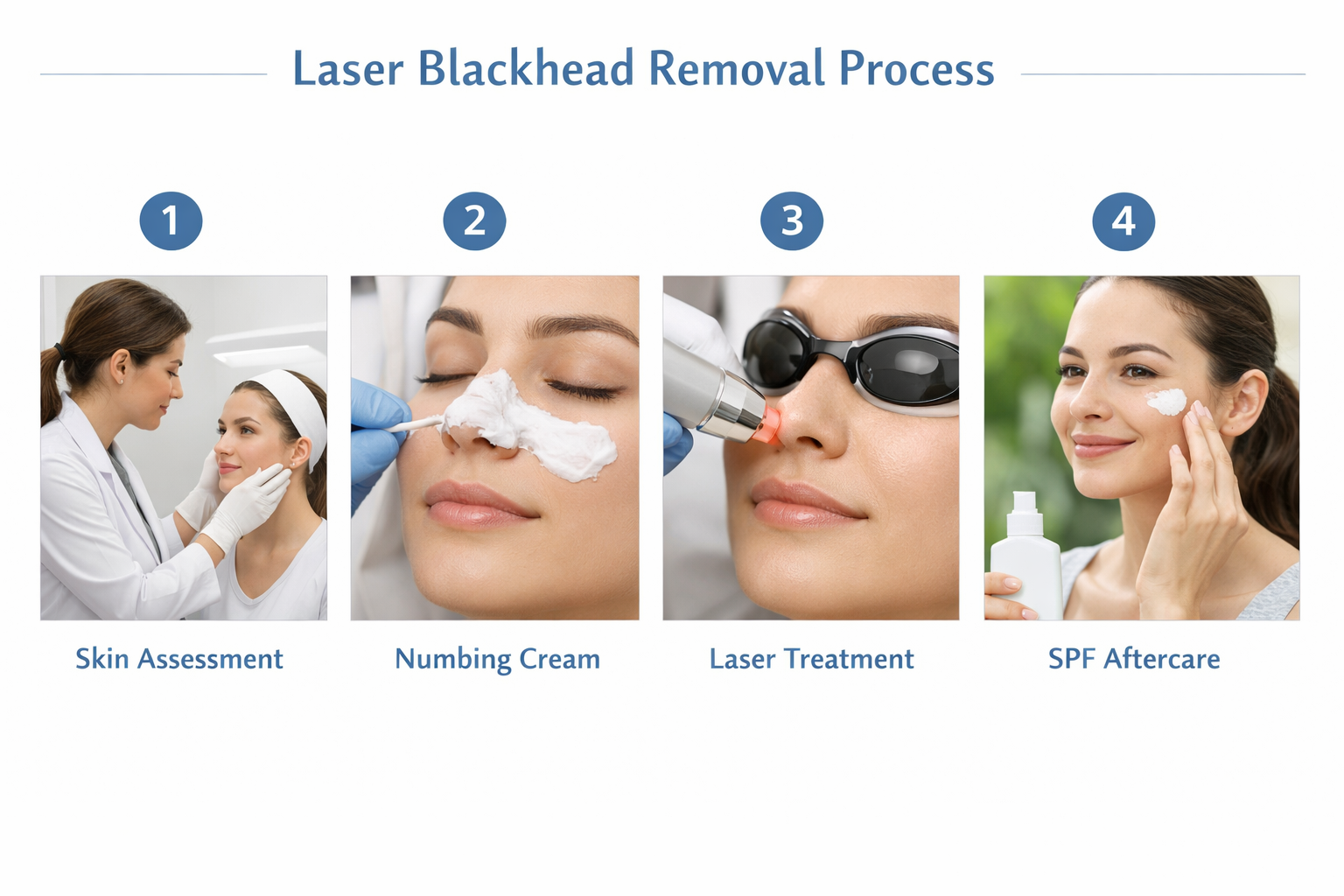
- Consultation and skin type assessment: Before any laser treatment, a qualified practitioner will assess your skin using the Fitzpatrick scale — a classification system that categorises skin tone from Type I (very fair) to Type VI (very dark). This assessment determines which laser wavelength and energy settings are appropriate and safe for your skin.
- Skin preparation: The treatment area is cleansed to remove makeup, sunscreen, and surface oils. A topical numbing cream (topical anaesthetic) is applied and left for approximately 20 to 30 minutes to minimise discomfort during the procedure.
- Laser application: The practitioner passes a handheld laser device over the treatment area in a controlled pattern. Patients typically describe the sensation as a series of brief snapping or warming feelings. A session for the face usually takes between 20 and 45 minutes depending on the area covered and the device used.
- Immediate aftercare: Following treatment, the skin may appear pink or mildly flushed. A soothing serum or cooling gel is often applied, and SPF is recommended before leaving the clinic.
How Many Sessions Are Needed and When Will Results Show?
Laser blackhead removal is not a single-session fix. Most treatment plans involve three to six sessions spaced approximately four to six weeks apart, allowing the skin time to recover and respond between appointments. The number of sessions required depends on the severity of blackhead congestion, the laser type used, individual skin characteristics, and how well the skin responds to treatment.
Noticeable improvement in skin texture, pore appearance, and oil regulation typically becomes visible after the second or third session. The skin’s environment continues to improve as collagen remodelling progresses in the weeks following each appointment. Full results are usually assessed at the end of the initial treatment course.
Because laser treatment reduces sebum production and improves cellular turnover rather than permanently altering the skin’s biology, maintenance sessions are generally recommended every six to twelve months to sustain results. Without maintenance, the sebaceous glands will gradually return to their previous level of activity.
Side Effects and Risks
Laser treatments for blackheads are generally well tolerated when performed by a qualified practitioner using appropriate settings for the patient’s skin type. However, side effects and risks exist and should be understood before committing to treatment.
Common and expected side effects include mild redness, mild swelling, and temporary skin sensitivity in the hours to days following treatment. These effects are more pronounced with ablative lasers such as fractional CO2 and typically resolve within a week. Non-ablative options such as Nd:YAG and picosecond lasers are associated with significantly less downtime.
Post-inflammatory hyperpigmentation (PIH) is one of the more significant risks, particularly for patients with medium to darker skin tones (Fitzpatrick Types IV–VI). PIH occurs when the skin produces excess melanin in response to thermal injury, resulting in darkened patches that can persist for weeks or months. Choosing a practitioner experienced in treating skin of colour and selecting an appropriate laser wavelength — such as the Nd:YAG — substantially reduces this risk, but does not eliminate it entirely.
Rare but more serious risks include blistering, scarring, and infection, which are most likely to occur when treatment is performed with incorrect settings, on contraindicated skin, or without adequate aftercare. Sun sensitivity is increased following laser treatment, making consistent SPF use essential.
Aftercare: What to Do After Laser Treatment
Proper aftercare is critical to achieving good results and minimising the risk of complications. The following guidance applies broadly, though your practitioner will provide instructions specific to the laser used and your skin type.
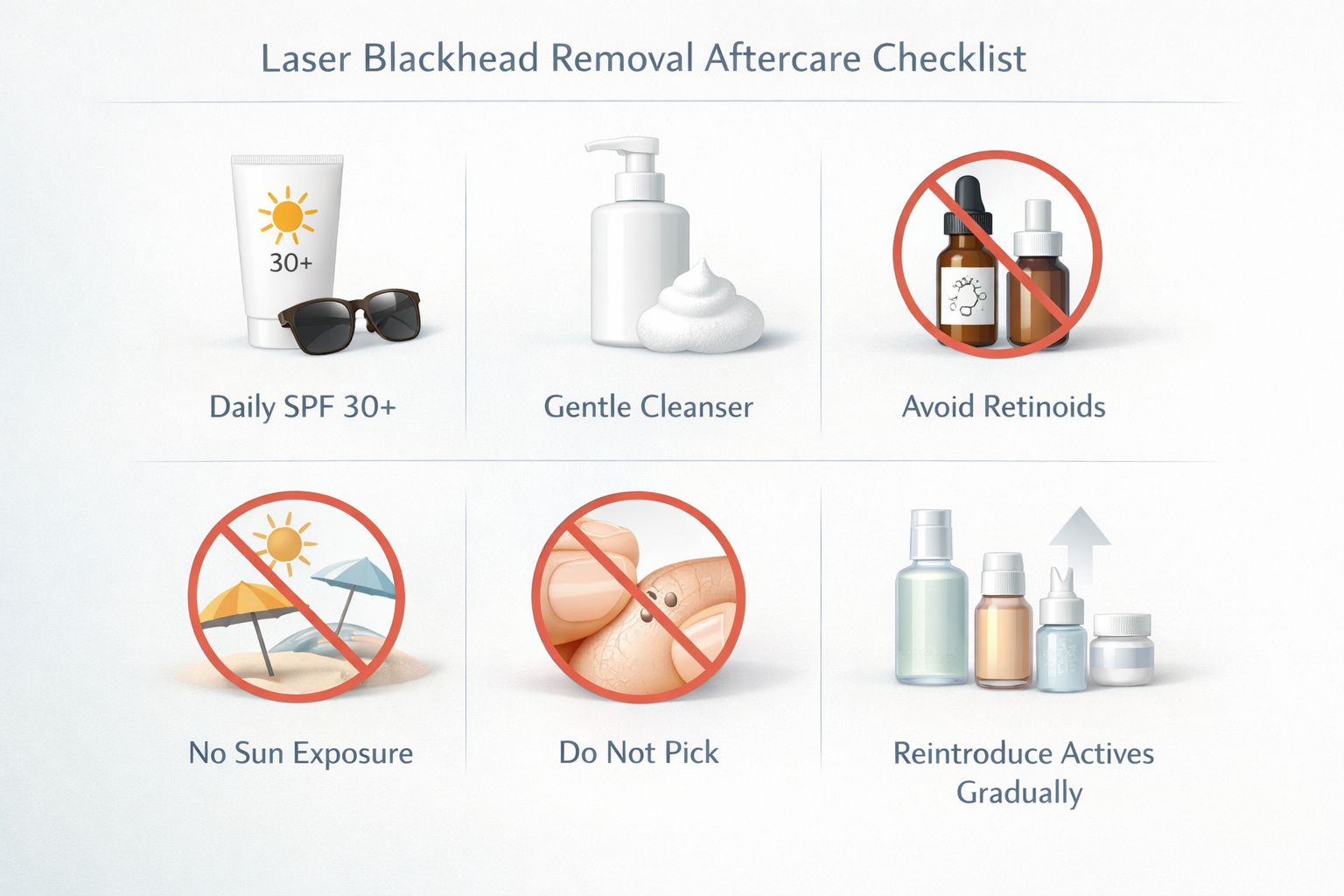
- Sun protection: Apply a broad-spectrum SPF 30 or higher every morning and reapply throughout the day. Avoid direct sun exposure for at least two weeks after treatment. Sun exposure on recently lasered skin significantly increases the risk of PIH and can compromise results.
- Gentle skincare only: Use a mild, fragrance-free cleanser and a simple moisturiser for the first week. Avoid harsh exfoliants, scrubs, and active ingredients such as retinoids, salicylic acid, and glycolic acid until the skin has fully recovered — typically one to two weeks for non-ablative treatments and longer for ablative procedures.
- Avoid heat and friction: Saunas, steam rooms, vigorous exercise, and anything that causes significant sweating or friction should be avoided for several days post-treatment.
- Do not pick or squeeze: Any residual congestion or peeling skin should be left to resolve naturally. Picking increases the risk of scarring and infection.
- Reintroduce actives gradually: Once the skin has healed, reintroducing topical treatments such as retinoids or salicylic acid — under practitioner guidance — can help maintain the improvements achieved through laser treatment.
Laser vs. Other Blackhead Removal Treatments
Laser treatment is one of several professional options for managing persistent blackheads. Understanding how it compares to alternatives helps in choosing the most appropriate approach for your skin and goals.
| Treatment | Mechanism | Addresses Root Cause? | Downtime | Longevity | Best For |
|---|---|---|---|---|---|
| Laser (Nd:YAG / Pico) | Sebaceous suppression, collagen remodelling | Yes | Minimal to moderate | 6–12 months with maintenance | Persistent blackheads, oily skin, pore refinement |
| Fractional CO2 Laser | Ablative resurfacing, deep pore clearance | Partially | 5–10 days | 12+ months with maintenance | Skin texture, enlarged pores, moderate congestion |
| Manual Extraction | Physical removal of comedone plug | No | None to minimal | Days to weeks | Immediate clearance; not a long-term solution |
| Chemical Peel | Exfoliation, cellular turnover | Partially | 2–7 days depending on depth | Weeks to months | Mild to moderate congestion, uneven skin tone |
| HydraFacial | Suction extraction, hydration, serum infusion | No | None | 2–4 weeks | Immediate results, sensitive skin, regular maintenance |
| Microdermabrasion | Mechanical exfoliation | No | None to minimal | Weeks | Surface congestion, mild skin texture concerns |
Manual extraction, while immediately satisfying, poses a meaningful risk of skin trauma, inflammation, and scarring when performed incorrectly — and it does nothing to address the underlying rate of sebum production or the speed of cellular turnover that causes blackheads to return. Laser treatment, by contrast, targets the root cause of blackhead formation, making it a more durable option for patients with persistently oily or congested skin.
Chemical peels using salicylic acid or glycolic acid offer a middle ground — they improve cellular turnover and can reduce pore congestion over a series of treatments, but they do not suppress sebaceous gland activity to the same degree as laser. Many practitioners recommend combining laser sessions with a topical maintenance routine that includes retinoids or salicylic acid to sustain and extend results between appointments.
Who May Be Suitable for Laser Blackhead Removal?
Laser blackhead removal may be worth discussing with a qualified practitioner if you have persistent blackheads that have not responded adequately to topical treatments, oily skin with enlarged pores, or a pattern of recurring congestion despite regular professional facials or extractions. It is particularly relevant for patients who want to address the underlying cause of blackhead formation rather than manage symptoms on an ongoing basis.
Suitability depends on several factors that a practitioner will assess during consultation:
- Skin type and Fitzpatrick classification: Patients with lighter skin tones (Fitzpatrick Types I–III) have the broadest range of laser options available. Patients with medium to darker skin tones (Types IV–VI) can still be treated safely, but the choice of laser wavelength is critical — the Nd:YAG laser is generally preferred — and the practitioner must have demonstrable experience treating skin of colour.
- Medical history and medications: Certain medications, including isotretinoin (Roaccutane), photosensitising drugs, and some antibiotics, may affect laser suitability or require a treatment pause. Active skin infections, open wounds, or inflammatory skin conditions in the treatment area are contraindications.
- Pregnancy and breastfeeding: Laser treatments are generally not recommended during pregnancy or breastfeeding.
- Realistic expectations: Patients who understand that results develop gradually over multiple sessions and require maintenance are more likely to be satisfied with the outcome than those expecting immediate or permanent clearance.
The Role of Combination Treatment
Laser treatment alone is rarely the complete answer for blackhead-prone skin. The best outcomes are typically achieved when laser sessions are integrated into a broader skin management plan. This may include prescription or over-the-counter topical treatments such as retinoids, which regulate cellular turnover and reduce comedone formation, or salicylic acid cleansers, which help keep pores clear between sessions. A practitioner may also recommend periodic HydraFacial or chemical peel treatments alongside laser to address surface congestion while the laser works on the deeper sebaceous environment. Consistent daily sun protection is non-negotiable throughout any laser treatment course.
Frequently Asked Questions
Is laser blackhead removal painful?
Most patients describe the sensation as a series of brief snapping or warming feelings rather than significant pain. A topical numbing cream is applied before treatment to minimise discomfort. Non-ablative lasers such as the Nd:YAG and picosecond laser are generally well tolerated. Ablative treatments such as fractional CO2 laser may cause more noticeable discomfort, which the numbing cream helps to manage.
Is laser blackhead removal permanent?
Laser treatment is not permanent. It reduces sebaceous gland activity and improves the skin’s environment, but the underlying tendency to produce excess sebum and develop blackheads does not disappear entirely. Maintenance sessions every six to twelve months are typically recommended to sustain results. Combining laser with a consistent topical skincare routine helps extend the period between maintenance appointments.
Is laser treatment safe for darker skin tones?
Laser treatment can be safe and effective for patients with darker skin tones, but the choice of laser is critical. The Nd:YAG laser at 1064 nm is generally considered the safest option for Fitzpatrick Types IV–VI because its wavelength is less readily absorbed by melanin, reducing the risk of post-inflammatory hyperpigmentation. It is essential to choose a practitioner with specific experience and training in treating skin of colour. A thorough skin type assessment before treatment is non-negotiable.
How much does laser blackhead removal cost?
Pricing varies considerably depending on the clinic, the laser technology used, the size of the treatment area, and the number of sessions required. In the UK, individual sessions typically range from approximately £100 to £400 or more for advanced devices. Most patients require a course of three to six sessions, so the total investment should be factored into the decision. Some clinics offer package pricing for a full treatment course. A consultation will usually provide a personalised cost estimate based on your specific skin concerns and treatment plan.
Can laser treatment be combined with other blackhead treatments?
Yes, and combination approaches often produce better results than laser alone. Practitioners commonly recommend pairing laser sessions with topical retinoids or salicylic acid for ongoing pore management, and may suggest periodic chemical peels or HydraFacial treatments to address surface congestion between laser appointments. Any combination plan should be guided by a qualified practitioner who can assess how your skin responds and adjust the approach accordingly.
How soon after laser treatment can I wear makeup?
This depends on the laser type used. After non-ablative treatments such as Nd:YAG or picosecond laser, most patients can apply mineral makeup within 24 hours, once any initial redness has settled. After ablative treatments such as fractional CO2 laser, the skin needs more time to heal — typically five to seven days — before makeup is appropriate. Your practitioner will advise based on your specific treatment and skin response.
Is Laser Blackhead Removal the Right Choice for Your Skin?
Laser blackhead removal offers something that most surface-level treatments cannot: a meaningful reduction in the sebaceous gland activity and pore congestion that cause blackheads to keep returning. For patients with persistently oily skin, enlarged pores, or blackheads that have proved resistant to topical treatments and regular facials, a course of laser treatment — particularly with Nd:YAG or picosecond laser — may represent a worthwhile step forward.
The decision should be made with clear expectations. Results develop gradually over multiple sessions, maintenance is required to sustain improvement, and the right laser choice depends heavily on your skin type and Fitzpatrick classification. For patients with darker skin tones, choosing a practitioner with genuine expertise in treating skin of colour is as important as the technology itself.
Laser treatment is most effective when it forms part of a broader skin management plan that includes appropriate topical care and consistent sun protection. If you are considering laser blackhead removal, a consultation with a qualified aesthetic practitioner or dermatologist is the appropriate starting point — they can assess your skin, recommend the most suitable laser type, and set out a realistic treatment plan tailored to your goals.