

Key Takeaways
- Strawberry legs is an umbrella term for dark spots or dots on the legs caused by clogged pores, ingrown hairs, folliculitis, or keratosis pilaris — not a single medical diagnosis.
- The darkened appearance is usually caused by oxidized sebum, dead skin cells, or trapped hair visible through the skin surface.
- Consistent exfoliation, moisturising, and improved shaving technique resolve mild cases for most people within several weeks.
- Professional treatments including laser hair removal and chemical peels may help more persistent cases, but results vary and a clinical assessment is needed to identify the underlying cause.
- The condition is extremely common, harmless, and not related to hygiene.
What Are Strawberry Legs?
Strawberry legs is a colloquial term used to describe the dotted or pitted appearance of leg skin that resembles the surface of a strawberry. Each dark dot corresponds to a hair follicle or pore that appears darkened, enlarged, or congested. The term is not a formal medical diagnosis — it describes a visible pattern that can result from several different underlying causes.
The dark spots are most commonly open comedones: pores or follicles that remain open after hair removal and become filled with a mixture of sebum, dead skin cells, and sometimes bacteria. When this material is exposed to air, oxidized sebum turns dark, creating the characteristic dotted look. In other cases, the dots are caused by ingrown hairs trapped beneath the skin surface, or by the shadow of dark hair visible through the skin in people with coarser or darker hair.
Strawberry legs are extremely common and can affect people of all skin tones and body types. The condition is not a sign of poor hygiene, and no amount of washing alone will change the appearance. Understanding the specific cause is the most important step toward choosing an effective treatment.
What Causes Strawberry Legs?
Several distinct mechanisms can produce the strawberry skin appearance, and more than one cause may be present at the same time.
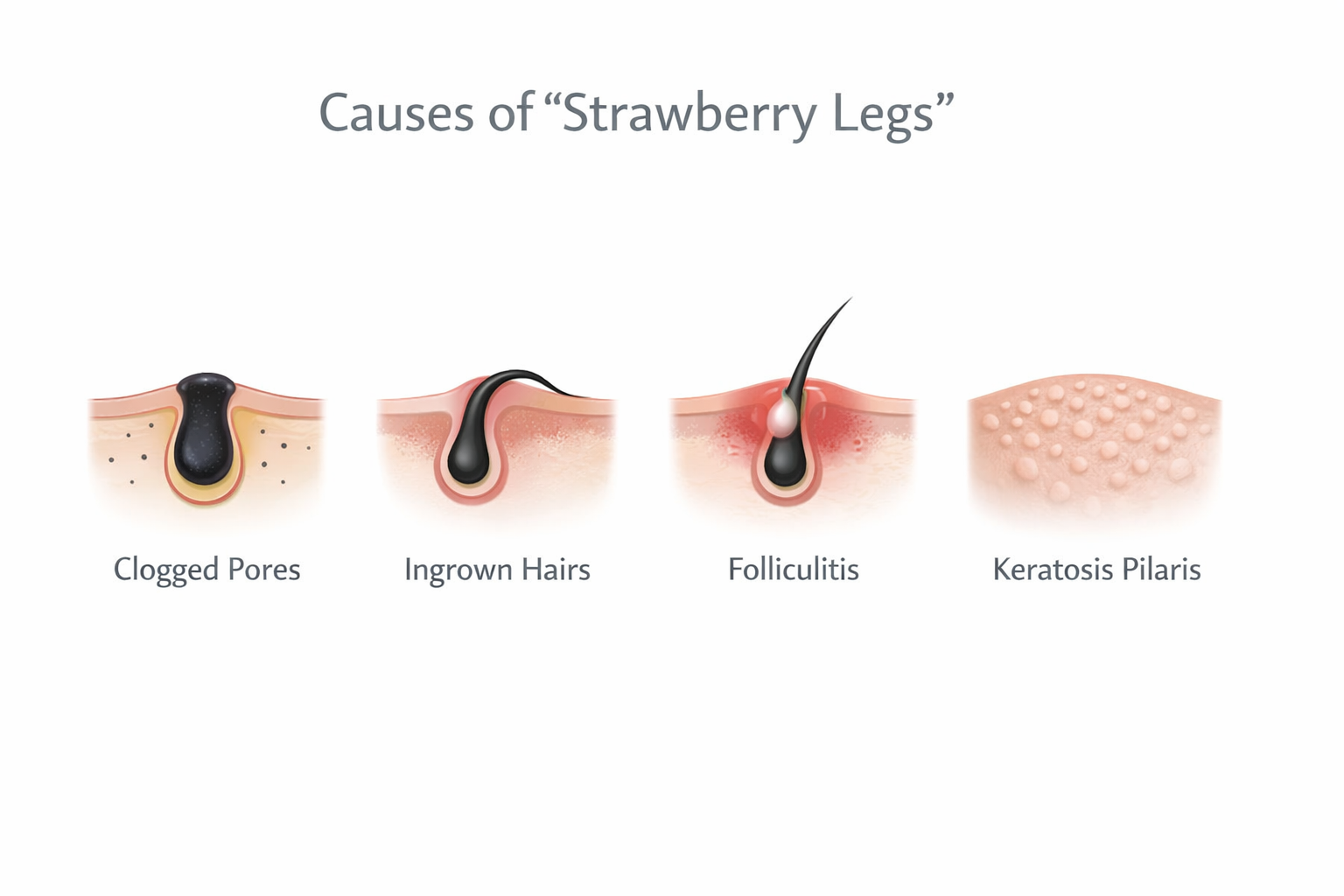
Clogged Pores and Hair Follicle Congestion
The most common cause is hair follicle congestion. When pores become blocked with a combination of sebum, dead skin cells, and environmental debris, the material oxidizes on contact with air and turns dark. This is the same process that creates blackheads on the face. On the legs, the effect is amplified after shaving because the hair is cut at the surface, leaving the follicle opening exposed. Dry skin accelerates this process by increasing the accumulation of dead skin cells around each follicle.
Shaving Technique and Razor Burn
Improper shaving technique is a major contributing factor. Using a dull razor, shaving dry skin without a lubricating gel or cream, or shaving against the direction of hair growth can all cause razor burn, micro-irritation, and inflammation around each follicle. This irritation can lead to darkened pores and, over time, post-inflammatory hyperpigmentation — particularly in people with melanin-rich skin, where the skin’s response to repeated trauma produces more visible dark marks around each follicle.
Ingrown Hairs
Ingrown hairs occur when a hair curls back or grows sideways beneath the skin surface rather than emerging cleanly. They are more common in people with coarse or curly hair and in those who shave frequently. Each ingrown hair creates a small bump or dark spot that contributes to the strawberry appearance. Ingrown hairs can also become inflamed or infected, worsening the overall texture of the skin.
Folliculitis
Folliculitis is an inflammation of the hair follicles, usually caused by bacterial or fungal infection. It produces small red or white-headed bumps around individual follicles and can cause itching, tenderness, and darkening of the surrounding skin. Folliculitis can be triggered by shaving, tight clothing that causes friction, excessive sweating, or exposure to contaminated water. When folliculitis is the underlying cause of strawberry legs, skincare products alone are unlikely to resolve it — a dermatologist may need to assess whether an antibiotic or antifungal treatment is appropriate.
Keratosis Pilaris
Keratosis pilaris (KP) is a common genetic skin condition in which excess keratin production causes plugs to form inside hair follicles, creating small rough bumps — often described as chicken skin. KP most commonly appears on the upper arms and thighs but can affect the lower legs. Unlike clogged pores, keratosis pilaris is not caused by oil or bacteria; it results from the overproduction of keratin, a structural protein. KP tends to be persistent and is not fully curable, though its appearance can be improved with consistent use of chemical exfoliants and moisturisers.
Post-Inflammatory Hyperpigmentation and Skin Tone
In people with deeper skin tones, repeated shaving trauma, ingrown hairs, or folliculitis can trigger post-inflammatory hyperpigmentation (PIH) — a darkening of the skin around each affected follicle as melanin production increases in response to injury. PIH can make the strawberry appearance significantly more pronounced and may persist long after the initial irritation has resolved. This is an important distinction because treatments that address only the surface texture may not adequately address the pigmentation component in melanin-rich skin.
Strawberry Legs vs. Keratosis Pilaris vs. Folliculitis
| Feature | Strawberry Legs (clogged pores) | Keratosis Pilaris | Folliculitis |
|---|---|---|---|
| Appearance | Dark dots, open pores | Small rough bumps, skin-coloured or red | Red or white-headed bumps, may be tender |
| Cause | Oxidized sebum, dead skin, hair shadow | Excess keratin production (genetic) | Bacterial or fungal infection of follicles |
| Common trigger | Shaving, dry skin | Genetics, dry skin, cold weather | Shaving, tight clothing, contaminated water |
| Texture | Usually smooth | Rough, sandpaper-like | Bumpy, may be inflamed |
| At-home treatment | Exfoliation, moisturising, shaving technique | Chemical exfoliants, urea moisturisers | Gentle cleansing; medical treatment may be needed |
| When to see a doctor | If persistent despite consistent care | If severe or causing distress | If spreading, painful, or not resolving |
At-Home Treatments for Strawberry Legs
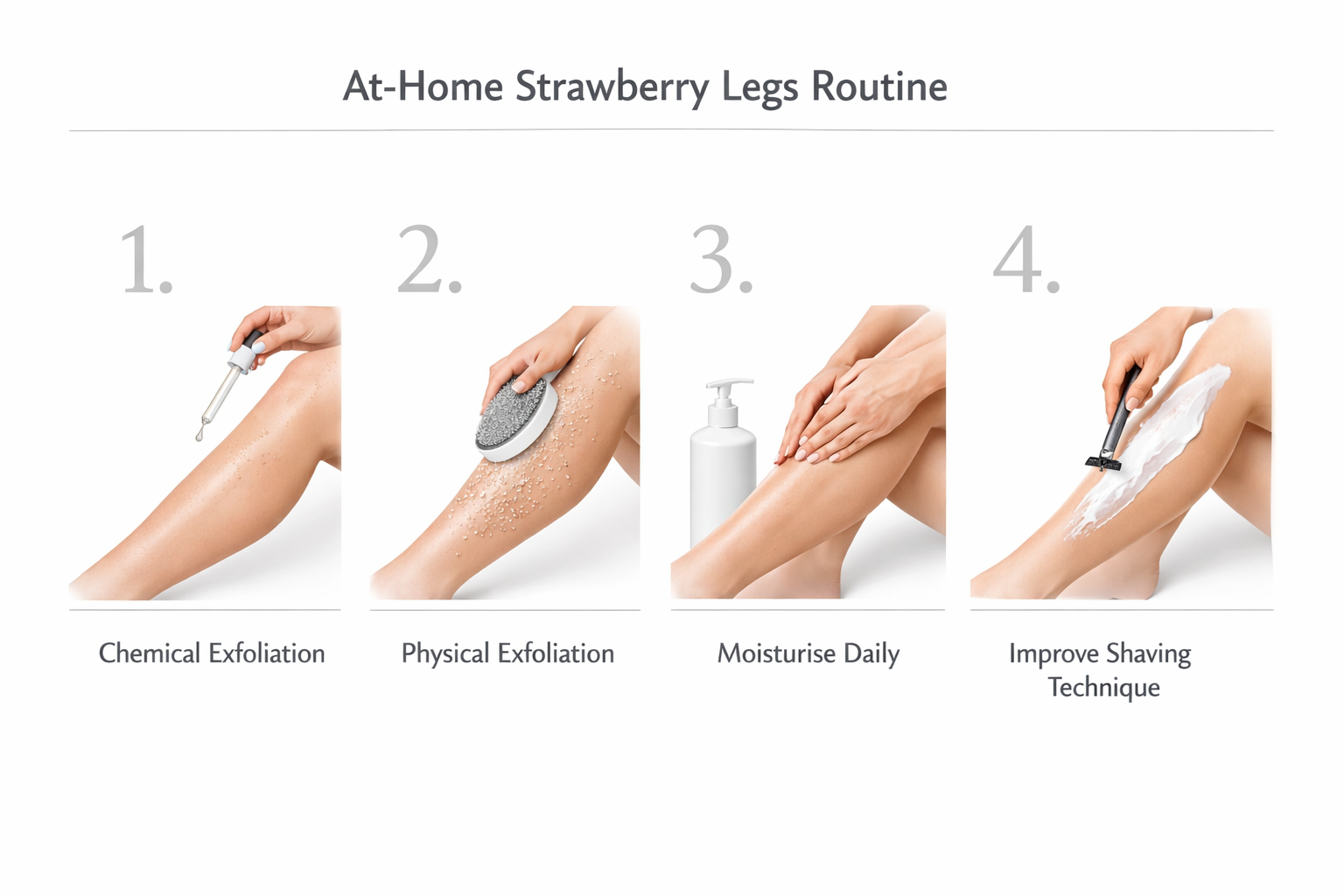
For most people, a consistent skincare routine addressing exfoliation, hydration, and shaving technique will produce noticeable improvement within four to six weeks. The key is consistency rather than intensity — aggressive scrubbing can worsen irritation and inflammation.
Chemical Exfoliation
Chemical exfoliation is generally more effective than physical scrubbing for strawberry legs because it works inside the follicle rather than just on the surface. Alpha-hydroxy acids (AHAs) such as glycolic acid help to loosen dead skin cells and improve overall skin cell turnover. Beta-hydroxy acids (BHAs), particularly salicylic acid, are oil-soluble and can penetrate into the follicle to dissolve the sebum and debris that cause darkened pores. Body washes, lotions, or serums containing salicylic acid or glycolic acid used two to three times per week are a practical starting point. Because AHAs and BHAs can increase sun sensitivity, applying sun protection to treated areas is advisable.
Physical Exfoliation
Physical exfoliation using a gentle body scrub, loofah, or dry brushing can help remove the layer of dead skin cells that accumulates around follicles and contributes to congestion. Dry brushing — using a firm-bristled brush on dry skin before showering — is a popular method that may also support circulation. Physical exfoliation should be gentle; over-scrubbing can cause micro-tears in the skin and worsen inflammation, particularly in people prone to ingrown hairs or folliculitis.
Moisturising
Dry skin worsens follicle congestion by increasing the accumulation of dead skin cells. Daily moisturising after showering, while the skin is still slightly damp, helps maintain the skin barrier and reduces the environment in which clogged pores develop. Moisturisers containing urea, lactic acid, or ceramides are particularly useful for people with keratosis pilaris, as these ingredients help soften keratin plugs and support barrier function.
Improving Shaving Technique
Adjusting shaving technique can significantly reduce the formation of new dark spots and razor burn. Practical steps include using a sharp, clean razor rather than a dull blade; applying a moisturising shaving cream or gel rather than shaving dry; shaving in the direction of hair growth to reduce irritation; and rinsing with cool water after shaving to close pores. Replacing razors frequently — ideally every five to seven shaves — reduces bacterial transfer and dragging on the skin.
Switching Hair Removal Method
Waxing and epilating remove hair from the root rather than cutting it at the surface, which can reduce the shadow effect that contributes to the strawberry appearance. However, waxing can also cause ingrown hairs and folliculitis in some people, particularly those with coarser hair. The most suitable hair removal method depends on individual skin type, hair texture, and the underlying cause of the condition.
Brightening Ingredients for Pigmentation
For people dealing with post-inflammatory hyperpigmentation alongside textural concerns, ingredients such as niacinamide and vitamin C may help to gradually even skin tone by reducing melanin transfer and brightening darkened areas. These are typically applied as serums or lotions and require consistent use over several weeks to show visible results. Retinoids — available over the counter in lower strengths or on prescription as tretinoin — can also support skin cell turnover and may help with both texture and pigmentation, though they can cause initial dryness and irritation.
Professional Treatments for Strawberry Legs
When at-home care does not produce sufficient improvement, or when the underlying cause requires clinical management, several professional treatments may be appropriate. A consultation with a dermatologist or qualified aesthetic practitioner is the recommended starting point, as the most effective treatment depends on the specific cause.
Laser Hair Removal
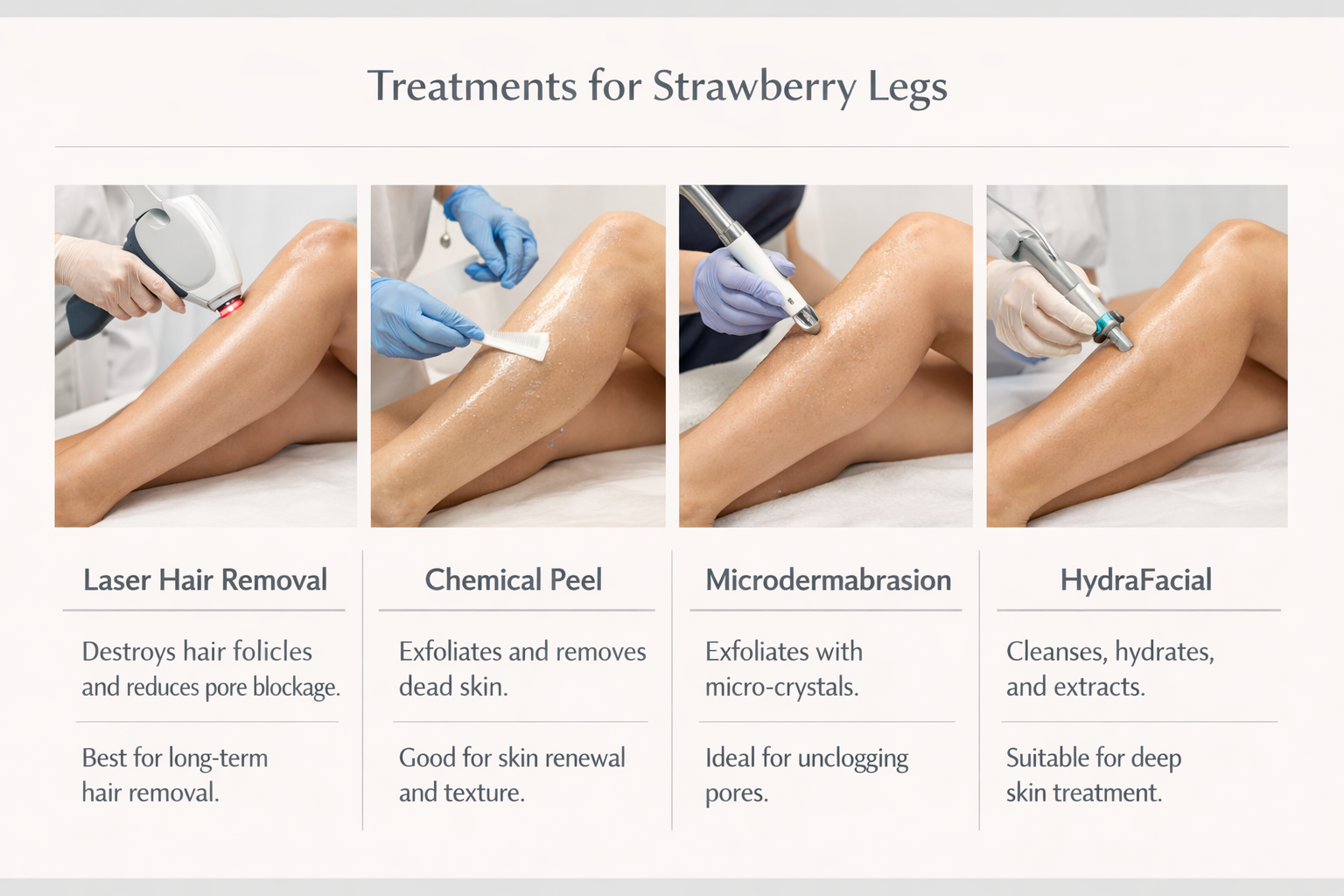
Laser hair removal is often considered the most effective long-term option for strawberry legs caused primarily by hair follicle congestion, ingrown hairs, or the shadow of dark hair beneath the skin. The treatment works by directing concentrated light energy into the hair follicle, damaging the follicle’s ability to produce hair. By reducing or eliminating hair growth at the root, laser hair removal addresses the source of the problem rather than managing its surface effects.
Multiple sessions are typically required — usually six to eight, spaced several weeks apart — because laser treatment is only effective during the active growth phase of the hair cycle. Results vary depending on hair colour, skin tone, and the device used. Laser hair removal is generally less effective on very light or grey hair. It is important to note that while laser hair removal can produce long-lasting reduction, some hair regrowth may occur over time, and maintenance sessions may be needed. The treatment is not suitable during pregnancy and requires a clinical assessment to determine the appropriate device and settings for each individual’s skin tone.
Chemical Peels
Professional chemical peels use higher concentrations of AHAs or BHAs than are available in over-the-counter products, providing a more intensive exfoliation of the skin surface. A glycolic acid or salicylic acid peel applied to the legs can help to unclog pores, improve skin cell turnover, and reduce the appearance of darkened follicles. For people with post-inflammatory hyperpigmentation, peels containing ingredients such as mandelic acid or lactic acid may be better tolerated on melanin-rich skin, as they carry a lower risk of causing further pigmentation changes. A series of treatments is usually recommended, and sun protection is essential during and after a course of peels.
Microdermabrasion
Microdermabrasion is a non-invasive treatment that uses fine crystals or a diamond-tipped wand to physically remove the outermost layer of dead skin cells, promoting skin cell turnover and improving surface texture. It can be useful for mild strawberry legs caused by surface congestion, though it is less effective for deeper follicular issues or keratosis pilaris. Multiple sessions are typically needed, and results are generally more modest than those achieved with laser or chemical peel treatments.
HydraFacial for the Body
HydraFacial is a multi-step treatment that combines cleansing, exfoliation, extraction, and hydration in a single session. When applied to the legs, it can help to clear congested follicles, remove dead skin cells, and deliver hydrating and brightening serums into the skin. HydraFacial is a gentle option that may suit people with sensitive skin or those who are not yet ready for more intensive treatments. It is unlikely to produce the same degree of improvement as laser hair removal for severe cases, but it can be a useful part of a broader treatment plan.
Medical Treatment for Folliculitis
When folliculitis is identified as the underlying cause, a dermatologist may prescribe topical or oral antibiotics for bacterial folliculitis, or antifungal medication for fungal folliculitis. Corticosteroids may be used in some cases to reduce inflammation. Self-treating suspected folliculitis with cosmetic products alone is not recommended, as the wrong approach can allow the infection to spread or worsen.
Myths and Misconceptions
Strawberry legs are a hygiene problem. This is one of the most common misconceptions. The condition results from the structure and behaviour of hair follicles, not from insufficient washing. Excessive scrubbing can actually worsen irritation and inflammation.
Strawberry legs only affect people who shave. While shaving is a common trigger, the condition can also result from keratosis pilaris, folliculitis, or naturally enlarged pores — none of which are caused by hair removal.
Laser hair removal is a guaranteed permanent cure. Laser hair removal can produce significant and long-lasting reduction in hair growth, which often resolves the strawberry appearance in suitable candidates. However, some regrowth can occur over time, and the treatment is not effective for all hair types or skin tones. It also does not address keratosis pilaris or folliculitis.
The condition only affects women. Strawberry legs can affect anyone who has hair follicles on their legs, regardless of gender. Men who shave their legs, or who have naturally coarse or dark leg hair, can experience the same appearance.
Prevention and Long-Term Skin Care
Preventing strawberry legs from returning requires maintaining the habits that address its root causes. A consistent skincare routine combining regular chemical exfoliation two to three times per week, daily moisturising, and careful shaving technique will keep most cases well managed. Replacing razors frequently, using a quality shaving cream, and avoiding dry shaving are practical steps that make a meaningful difference over time.
Seasonal changes can affect the condition. During winter, lower humidity and central heating dry out the skin, increasing follicle congestion and making keratosis pilaris more pronounced. Increasing moisturiser use and maintaining exfoliation through the colder months helps prevent worsening. In summer, more frequent shaving and increased sweating can trigger folliculitis in susceptible individuals; wearing breathable fabrics and showering promptly after exercise can reduce this risk.
For people who have undergone professional treatment, following the aftercare advice provided by their practitioner — including sun protection when using AHAs or BHAs, and avoiding tight clothing after laser sessions — supports the best possible outcome and reduces the risk of post-inflammatory hyperpigmentation.
When to See a Dermatologist
Most cases of strawberry legs respond to consistent at-home care and do not require medical attention. However, a consultation with a dermatologist is advisable in the following situations:
- The dark spots are accompanied by pain, tenderness, swelling, or pus — which may indicate an active folliculitis infection requiring medical treatment.
- The condition has not improved after six to eight weeks of consistent at-home care.
- The bumps are spreading, increasing in number, or becoming more inflamed over time.
- There is significant post-inflammatory hyperpigmentation that is not responding to brightening ingredients.
- You are unsure whether the cause is keratosis pilaris, folliculitis, or another skin condition, as the treatment approach differs significantly between these.
A dermatologist can confirm the underlying cause, recommend prescription-strength treatments such as tretinoin or topical antibiotics where appropriate, and advise on whether professional aesthetic treatments are likely to be beneficial for your specific situation.
Frequently Asked Questions
Are strawberry legs permanent?
Strawberry legs are not necessarily permanent. For most people, consistent exfoliation, moisturising, and improved shaving technique produce visible improvement within four to six weeks. Cases caused by keratosis pilaris tend to be more persistent because KP is a genetic condition, though its appearance can be managed effectively with ongoing care. Professional treatments such as laser hair removal can produce long-lasting improvement in suitable candidates.
Does laser hair removal cure strawberry legs?
Laser hair removal can significantly reduce or resolve strawberry legs when the primary cause is hair follicle congestion, ingrown hairs, or the shadow of dark hair beneath the skin. It is not a cure for keratosis pilaris or folliculitis. Results depend on hair colour, skin tone, and the number of sessions completed. Some hair regrowth may occur over time, and maintenance sessions may be needed.
Can men get strawberry legs?
Yes. Strawberry legs can affect anyone with hair follicles on their legs, regardless of gender. Men with coarse or dark leg hair, or those who shave their legs, may notice the same dotted appearance. The causes and treatments are the same regardless of gender.
Are strawberry legs a hygiene problem?
No. Strawberry legs result from the structure and behaviour of hair follicles and pores, not from insufficient cleansing. The condition is extremely common and is not related to how often or how thoroughly a person washes.
What is the difference between strawberry legs and keratosis pilaris?
Strawberry legs is a broad descriptive term for the dotted appearance of the legs, which can have several causes. Keratosis pilaris is one specific cause — a genetic condition in which excess keratin forms plugs inside hair follicles, creating rough bumps. KP is typically rough to the touch and does not respond to the same treatments as clogged pores caused by shaving. A dermatologist can confirm which condition is present.
How long does treatment take to work?
At-home treatments typically produce noticeable improvement within four to six weeks of consistent use. Professional treatments such as laser hair removal require multiple sessions over several months before the full result is visible. Pigmentation changes caused by post-inflammatory hyperpigmentation may take longer to fade, sometimes three to six months or more, depending on skin tone and the treatment used.
Can waxing cause strawberry legs?
Waxing removes hair from the root, which can reduce the shadow effect that contributes to the strawberry appearance. However, waxing can also trigger ingrown hairs and folliculitis in some people, particularly those with coarser or curlier hair. Whether waxing improves or worsens the appearance depends on the individual’s skin type and hair texture.
Choosing the Right Approach for Your Skin
Strawberry legs is a common and manageable condition, but the most effective approach depends on identifying the underlying cause. Clogged pores and hair follicle congestion caused by shaving respond well to chemical exfoliation, consistent moisturising, and improved shaving technique — and most people see meaningful improvement within a few weeks of starting a structured routine. Keratosis pilaris requires a different focus, with urea-based moisturisers and AHA-containing products forming the backbone of long-term management. Folliculitis may need medical assessment before cosmetic treatments are appropriate.
For people who have not achieved satisfactory results with at-home care, or who are looking for a more lasting solution, professional treatments including laser hair removal and chemical peels offer a clinically supported route to smoother skin. A consultation with a qualified practitioner allows the cause to be confirmed and a treatment plan to be tailored to your skin type, tone, and goals. The condition is harmless, but if it is affecting your confidence or comfort, effective options are available — and the right starting point is understanding what is actually causing it.