

Key Takeaways
- Neck skin is thinner and has fewer oil glands than facial skin, making it more vulnerable to early ageing and slower to respond to topical treatments.
- Neck wrinkles fall into distinct types — horizontal necklace lines, vertical platysmal bands, crepey skin texture, and loose sagging skin — and each type responds differently to treatment.
- Tech neck is an increasingly common concern in younger adults, caused by repeated downward head flexion when using phones and screens.
- Non-surgical options including radiofrequency, HIFU, Profhilo, and anti-wrinkle injections can produce meaningful improvement, though results vary and maintenance is usually required.
- A consistent skincare routine using retinol, hyaluronic acid, peptides, and broad-spectrum SPF is the foundation of both prevention and long-term management.
Why the Neck Is Prone to Wrinkling
The neck is one of the first areas to show visible signs of ageing, yet it is also one of the most neglected in daily skincare routines. Neck skin is structurally thinner than facial skin, contains fewer sebaceous (oil) glands, and has a lower density of collagen-producing fibroblasts. This means it retains less natural moisture, produces less protective sebum, and loses collagen and elastin at a rate that becomes noticeable earlier than many people expect.
Collagen and elastin are the structural proteins responsible for skin firmness and elasticity. From the mid-twenties onwards, collagen production begins to decline gradually. By the time visible neck lines appear — often in the late thirties to forties — significant structural change has already occurred beneath the surface. Elastin fibres, which allow skin to spring back after movement, also degrade with age and UV exposure, contributing to the loose, crepey skin texture many people associate with an ageing neck.
The platysma muscle, a broad, flat muscle running from the chest up through the neck to the lower face, also plays a role. As this muscle loses tone and its attachment to surrounding structures weakens with age, vertical bands can become visible beneath the skin, and the jawline may begin to lose definition. Gravity compounds these changes over decades, pulling already-lax skin downward.
Additional factors that accelerate neck ageing include chronic sun exposure without adequate SPF protection, smoking (which directly impairs collagen and elastin synthesis), significant weight fluctuations, dehydration, poor diet, and genetics. Sleeping position also contributes: consistently sleeping on one side or on the stomach can create compression wrinkles over time, particularly as skin elasticity declines.
Types of Neck Wrinkles
Not all neck wrinkles are the same, and understanding the type present is important because different types respond to different treatments.
Horizontal Necklace Lines
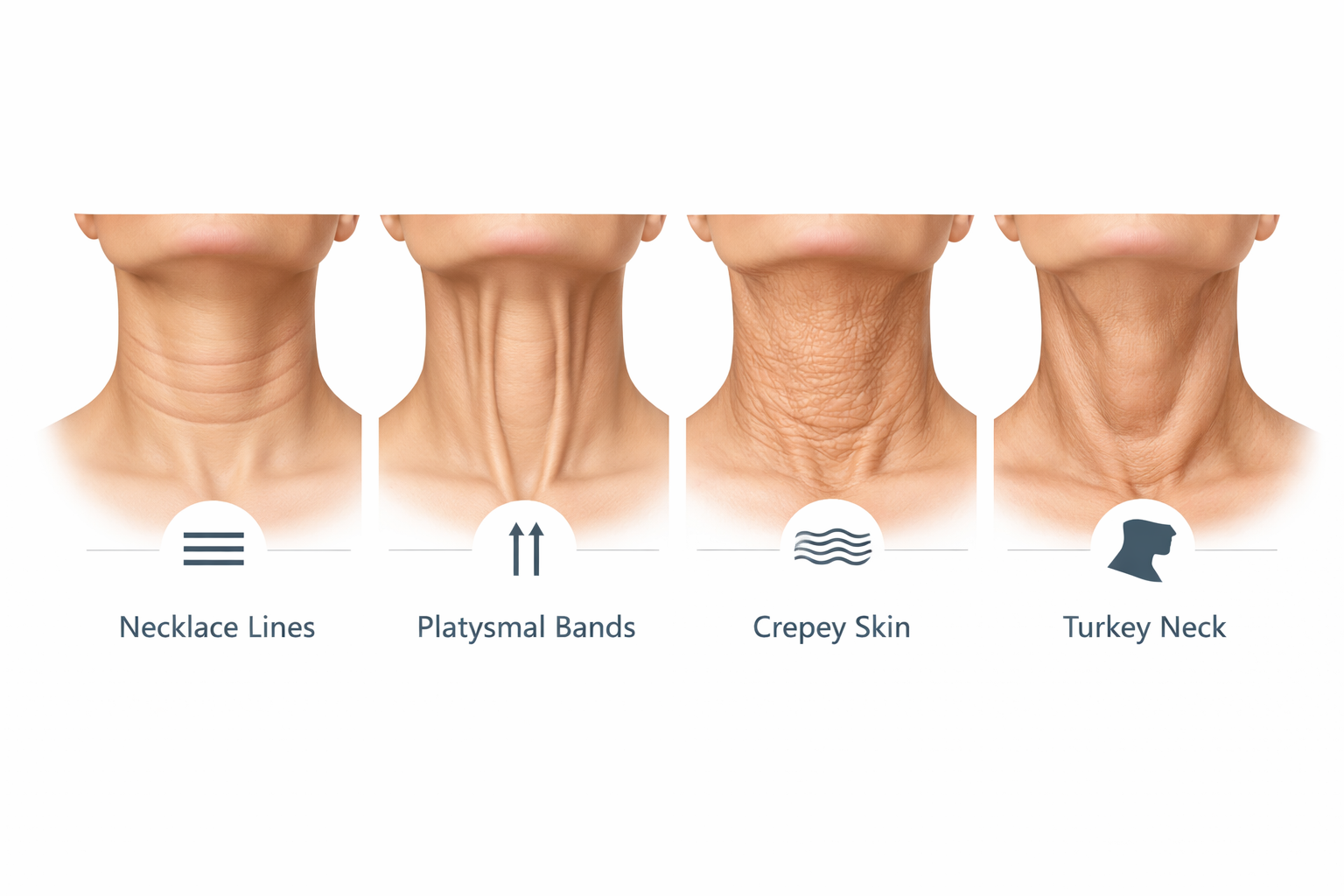
Necklace lines are the horizontal creases that run across the width of the neck. They are partly structural — present even in younger skin as natural skin folds — but deepen significantly with age as collagen and elastin decline. These lines are often the first neck wrinkles people notice and can appear as early as the mid-twenties in those with a genetic predisposition or significant sun exposure history.
Vertical Platysmal Bands
Platysmal bands are vertical cords or ridges that become visible down the front of the neck. They result from the platysma muscle separating along its midline and losing its attachment to surrounding tissue. These bands are more prominent during facial expressions or when the neck muscles are engaged, and they tend to become more visible from the late forties onwards. Anti-wrinkle injections using botulinum toxin are a commonly used non-surgical approach for softening platysmal bands.
Crepey Skin Texture
Crepey skin describes a fine, tissue-paper-like texture caused by significant loss of collagen, elastin, and subcutaneous fat. It differs from deeper wrinkles in that the surface quality of the skin itself has changed. Crepey skin on the neck and décolletage is strongly associated with cumulative UV damage and is one of the more challenging presentations to address with topical products alone.
Turkey Neck and Skin Laxity
The term turkey neck refers to loose, sagging skin beneath the chin and along the neck, often accompanied by jowl formation at the jawline. This presentation involves significant skin laxity and is driven by a combination of volume loss, muscle laxity, fat redistribution, and reduced skin elasticity. It typically becomes more pronounced from the fifties onwards, though rapid weight loss at any age can accelerate its appearance by reducing the subcutaneous fat that previously supported the overlying skin.
Tech Neck: A Growing Concern for Younger Adults
Tech neck describes horizontal neck lines and skin creasing that develop or deepen as a result of repeatedly looking down at phones, tablets, and laptop screens. The repeated flexion of the neck compresses the skin in the same position for extended periods each day, accelerating the formation of horizontal lines that would otherwise appear later in life.
Tech neck is increasingly presenting in adults in their twenties and thirties who would not otherwise be at the stage of significant neck ageing. Ergonomic adjustments — raising screen height to eye level, taking regular breaks from device use, and being mindful of head posture — can reduce the mechanical contribution to these lines. While posture correction alone cannot reverse existing wrinkles, it can slow their progression and improve the response to other treatments.
At-Home Skincare for a Wrinkly Neck
A consistent topical skincare routine is the most accessible starting point for managing neck wrinkles and slowing further deterioration. The neck requires the same active ingredients as the face but with some important adjustments, particularly around concentration and tolerance.
Retinol and Retinoids
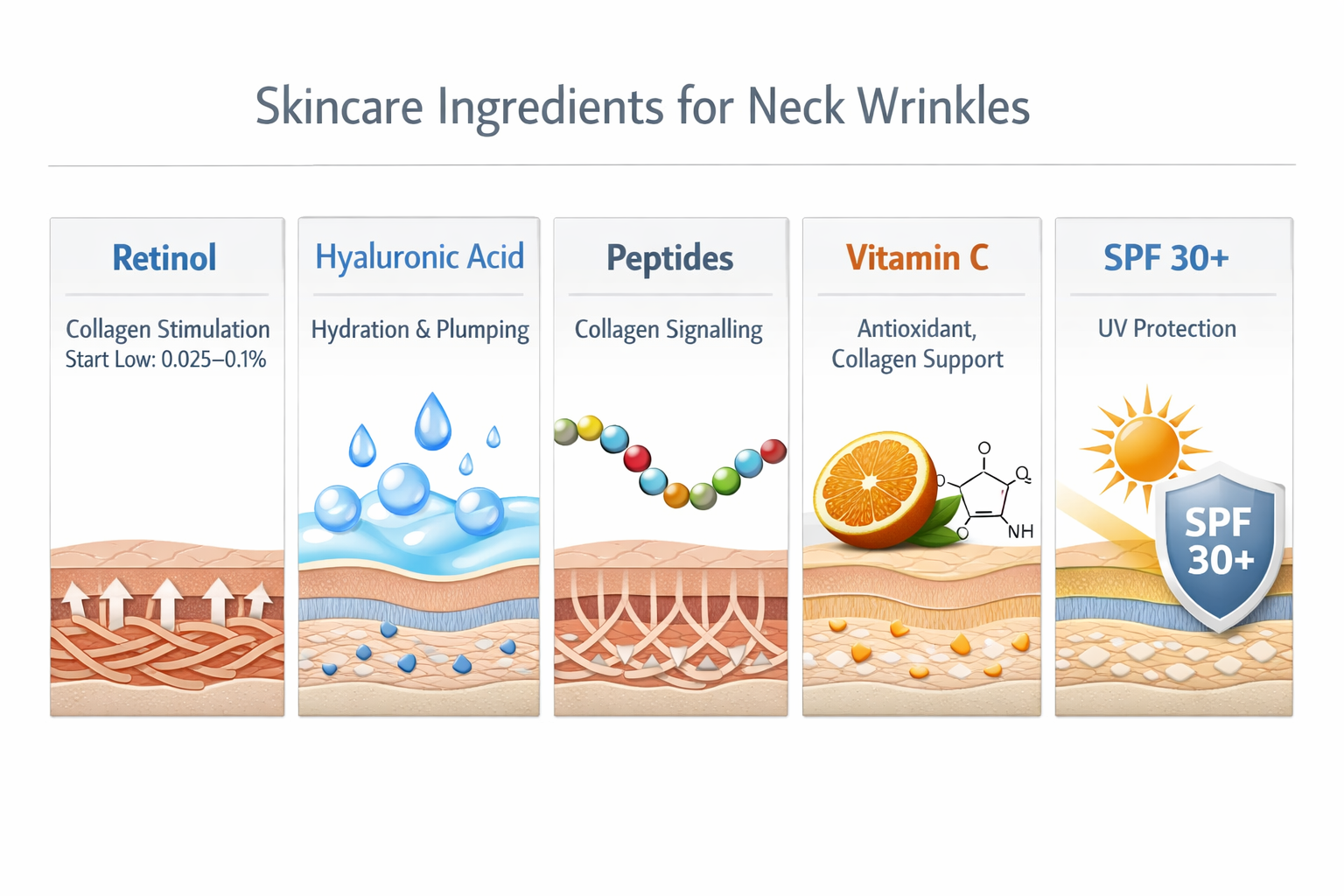
Retinol is one of the most evidence-supported topical ingredients for stimulating collagen production and improving skin texture. However, because neck skin is thinner and more sensitive than facial skin, it is generally advisable to begin with a lower concentration — typically in the 0.025% to 0.1% range — and introduce it gradually, two to three nights per week, before increasing frequency. Pairing retinol with barrier-supporting ingredients such as ceramides and niacinamide can help reduce irritation. Results from retinol for neck wrinkles typically require a minimum of 12 weeks of consistent use before meaningful improvement becomes visible, and continued use is necessary to maintain benefit.
Hyaluronic Acid
Hyaluronic acid is a humectant that draws moisture into the skin, temporarily improving plumpness and reducing the appearance of fine lines. Applied morning and evening to damp skin, a hyaluronic acid serum can improve the surface hydration of neck skin and support its barrier function. It does not stimulate collagen production directly, but well-hydrated skin reflects light more evenly and appears smoother.
Peptides
Peptides are short chains of amino acids that can signal the skin to produce more collagen. Ingredients such as Matrixyl (palmitoyl pentapeptide-4) and Tetrapeptide-21 are commonly included in neck firming creams and serums. Evidence for topical peptides is less robust than for retinoids, but they are generally well tolerated and can be a useful addition for those who cannot use retinol.
Vitamin C and Antioxidants
Vitamin C is an antioxidant that supports collagen synthesis and helps neutralise free radical damage from UV exposure. Applied in the morning before sunscreen, a stable vitamin C serum can contribute to both prevention and gradual improvement in skin tone and texture on the neck and décolletage.
Broad-Spectrum Sunscreen
Daily application of a broad-spectrum SPF 30 or higher sunscreen to the neck and décolletage is arguably the single most impactful preventive measure available. UV radiation is a primary driver of collagen breakdown, elastin degradation, and crepey skin texture. Many people apply sunscreen to the face and stop at the jawline, leaving the neck unprotected. Extending SPF application to the full neck and chest area every morning — and reapplying after sun exposure — significantly reduces cumulative photoageing in these areas.
Professional Treatments for a Wrinkly Neck
When topical skincare is insufficient to address the degree of skin laxity, wrinkle depth, or texture change present, a range of professional treatments may be considered. The most appropriate option depends on the type and severity of neck wrinkles, the patient’s skin quality, medical history, and realistic goals. A qualified practitioner should assess suitability before any treatment is undertaken.
| Treatment | Best For | Mechanism | Downtime | Longevity |
|---|---|---|---|---|
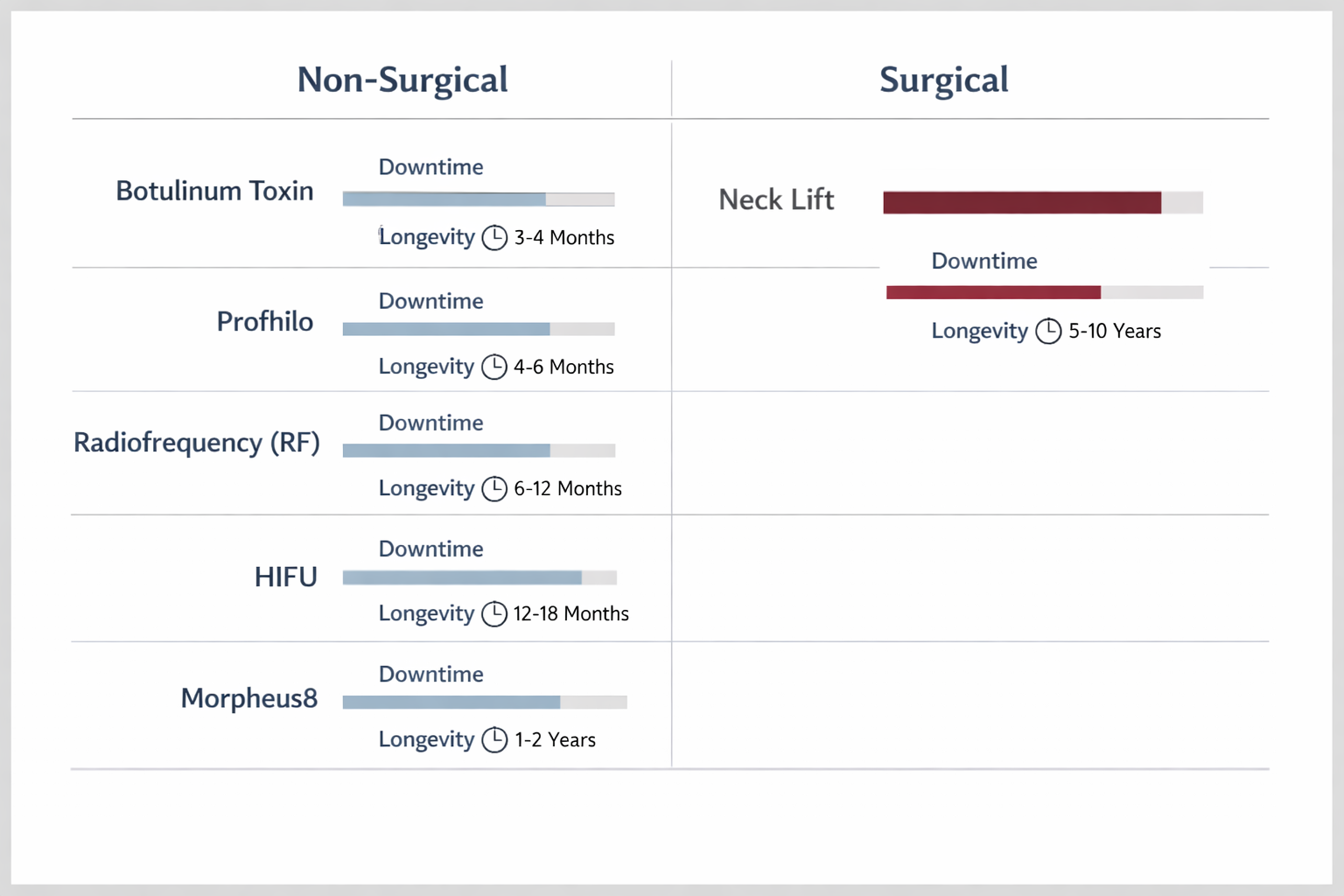
| Anti-wrinkle injections (botulinum toxin) | Platysmal bands, necklace line softening | Relaxes platysma muscle contractions | Minimal | 3–4 months typically |
| Profhilo | Skin laxity, crepey texture, hydration | Bio-remodelling injectable; stimulates collagen and elastin | Minimal | 6–12 months; maintenance advised |
| Radiofrequency (RF) skin tightening | Mild to moderate skin laxity, skin firming | Thermal energy stimulates collagen remodelling | Low to none | 1–2 years with maintenance |
| HIFU (High-Intensity Focused Ultrasound) | Moderate skin laxity, lifting effect | Focused ultrasound energy targets deeper tissue layers | Minimal | 12–18 months typically |
| Morpheus8 (RF microneedling) | Crepey skin, texture, mild to moderate laxity | Combines microneedling with radiofrequency energy | 3–5 days | 12–18 months; maintenance advised |
| Microneedling | Skin texture, fine lines, collagen stimulation | Controlled micro-injuries trigger collagen induction | 2–4 days | Variable; series of sessions usually needed |
| Laser resurfacing | Crepey texture, surface lines, skin quality | Ablative or fractional laser removes/remodels skin layers | Days to weeks depending on type | 1–3 years depending on treatment depth |
| Thread lifting | Mild to moderate sagging, jawline definition | Dissolvable sutures lift and stimulate collagen | Several days | 12–18 months typically |
| Neck lift surgery | Significant skin laxity, turkey neck, platysmal banding | Surgical removal of excess skin and muscle tightening | 2–4 weeks | Several years; most durable option |
Anti-Wrinkle Injections for the Neck
Botulinum toxin injections into the platysma muscle can soften the appearance of vertical platysmal bands and may also help relax the downward pull of the platysma on the lower face, contributing to a subtle lifting effect. This approach, sometimes called a Nefertiti lift when used along the jawline and neck, is a well-established non-surgical option. Results typically last three to four months, after which repeat treatment is needed to maintain the effect. Suitability depends on the degree of banding and the patient’s anatomy; a clinical assessment is essential.
Profhilo for Neck Rejuvenation
Profhilo is a bio-remodelling injectable containing a high concentration of hyaluronic acid that is designed to stimulate the production of collagen and elastin rather than simply add volume. It is administered at specific anatomical points and spreads through the tissue, improving skin quality, hydration, and firmness over several weeks. Profhilo is particularly useful for crepey skin texture and mild skin laxity on the neck and décolletage. A standard course involves two sessions four weeks apart, with maintenance treatments typically recommended every six to twelve months.
Radiofrequency Skin Tightening
Radiofrequency treatments such as Thermage, Venus Freeze, and similar devices deliver controlled thermal energy into the deeper layers of the skin, stimulating collagen remodelling and gradual tightening. Radiofrequency skin tightening is generally well tolerated with minimal downtime and is suitable for mild to moderate skin laxity. Results develop progressively over two to six months as new collagen forms, and maintenance sessions are usually recommended to sustain the effect.
HIFU (High-Intensity Focused Ultrasound)
HIFU delivers focused ultrasound energy to precise depths within the skin and underlying tissue, generating heat that triggers collagen production and tissue contraction. Devices such as Ultherapy are used for non-surgical neck tightening and can reach deeper tissue layers than most surface-based energy treatments. HIFU may cause some discomfort during the procedure, and results typically become most visible over three to six months. It is generally considered suitable for mild to moderate skin laxity rather than significant sagging.
Morpheus8
Morpheus8 combines radiofrequency energy with microneedling, delivering RF energy through fine needles into the deeper layers of the skin. This combination addresses both skin texture and mild to moderate laxity, making it a versatile option for crepey neck skin. Some redness and swelling are expected for several days following treatment. A series of sessions is typically recommended for optimal results.
Surgical Neck Lift
For significant skin laxity, pronounced platysmal banding, or a well-established turkey neck, surgical options including platysmaplasty (surgical tightening of the platysma muscle) and neck lift procedures offer the most durable results. Surgery involves meaningful downtime of two to four weeks and carries the risks associated with any surgical procedure, including anaesthesia, scarring, infection, and asymmetry. It is generally considered when non-surgical treatments are unlikely to achieve the degree of improvement the patient is seeking. Surgical suitability requires thorough assessment by a qualified surgeon.
Neck Exercises: What They Can and Cannot Do
Neck exercises — including chin tilts, jaw stretches, and platysma toning movements — are frequently recommended as a complementary approach to managing neck wrinkles. Regularly engaging the platysma and surrounding muscles may help maintain some muscle tone, which can subtly support the overlying skin. However, it is important to have realistic expectations: neck exercises improve muscle tone, not skin quality. They cannot reverse collagen loss, improve skin elasticity, or address crepey texture. They are best understood as a supportive habit rather than a standalone treatment for a wrinkly neck.
Lifestyle Factors and Prevention
Several everyday habits have a meaningful impact on the rate at which neck wrinkles develop and deepen. Daily broad-spectrum sunscreen application to the neck and décolletage is the most evidence-supported preventive measure. Quitting smoking reduces ongoing collagen and elastin breakdown. Maintaining a stable body weight avoids the repeated stretching and deflation of neck skin that accelerates laxity. Adequate hydration, a diet rich in antioxidants, and sufficient sleep (generally seven to nine hours) all support skin repair and collagen maintenance.
Sleeping position is a less commonly discussed but relevant factor. Consistently sleeping on one side compresses the neck skin in the same position for hours each night, which can contribute to sleep wrinkles over time. Sleeping on the back reduces this compression, and a silk or satin pillowcase creates less friction against the skin than cotton for those who cannot change their sleeping position.
For tech neck specifically, raising phone and screen height to eye level, setting reminders to take posture breaks, and performing gentle neck stretches throughout the day can reduce the mechanical load on neck skin and slow the deepening of horizontal lines.
Realistic Expectations and Combination Approaches
One of the most important things to understand about treating a wrinkly neck is that no single treatment — topical or professional — produces the same result for every patient. Skin quality, age, the type and severity of wrinkles, lifestyle factors, and genetics all influence how well any given treatment works. Topical products require consistent use over months to produce visible change, and their effect is generally more preventive than corrective for established wrinkles.
Professional treatments can produce more significant improvement, but results are rarely permanent. Most non-surgical treatments require maintenance sessions to sustain their effect, and even surgical results change over time as the ageing process continues. Combination approaches — for example, Profhilo to improve skin quality alongside radiofrequency for tightening, or botulinum toxin for platysmal bands alongside a collagen-stimulating treatment for texture — often produce better outcomes than any single modality alone. A practitioner experienced in neck rejuvenation can assess which combination is most appropriate for a given presentation.
Oral collagen peptide supplements have attracted growing interest as a supporting strategy. Some clinical studies suggest that hydrolysed collagen peptides taken daily may support skin hydration and elasticity, though evidence remains developing and supplements should be viewed as a complement to, not a replacement for, topical and professional treatments.
Frequently Asked Questions
At what age do neck wrinkles typically start?
Horizontal necklace lines can appear as early as the mid-twenties in some individuals, particularly those with a genetic predisposition or significant sun exposure history. Deeper lines, platysmal banding, and noticeable skin laxity more commonly develop from the late forties onwards, though tech neck habits are bringing earlier presentations to clinic in younger adults.
Can neck wrinkles be reversed?
Significant reversal of established neck wrinkles generally requires professional treatment. Topical skincare can slow progression and improve skin quality but is unlikely to reverse deep lines or meaningful skin laxity on its own. Non-surgical treatments can produce visible improvement, while surgical options offer the most substantial correction for advanced laxity. The term “reversal” should be used cautiously — improvement is realistic; complete elimination of wrinkles is not.
Does retinol work on neck wrinkles?
Retinol can improve neck skin texture and stimulate collagen production, but it requires consistent use over at least 12 weeks before results become visible. Because neck skin is more sensitive than facial skin, starting with a lower concentration and building up gradually is advisable. Retinol is more effective for fine lines and early texture changes than for deep wrinkles or significant skin laxity.
What is the best non-surgical treatment for a wrinkly neck?
There is no single best non-surgical treatment because the most appropriate option depends on the type of neck wrinkles present. Platysmal bands respond well to botulinum toxin injections. Crepey skin and mild laxity may benefit from Profhilo, radiofrequency, or Morpheus8. Moderate laxity may be better addressed with HIFU or thread lifting. A clinical assessment is the most reliable way to identify which treatment or combination is most suitable for an individual.
Can neck exercises really help with neck wrinkles?
Neck exercises can help maintain platysma muscle tone, which may provide some structural support to the overlying skin. However, they do not improve skin quality, stimulate collagen production, or address skin laxity directly. They are a useful complementary habit but should not be expected to replace skincare or professional treatment for established wrinkles.
Is tech neck permanent?
Tech neck lines are not necessarily permanent, particularly in younger patients where skin elasticity is still relatively good. Reducing the repetitive downward head flexion that causes them — through ergonomic adjustments and posture awareness — can slow their progression. Existing lines may respond to topical retinoids and professional treatments, though deeply established creases are more difficult to address.
Are treatments for a wrinkly neck suitable for men?
Yes. Men experience the same causes of neck ageing as women — collagen and elastin decline, UV damage, platysmal banding, and skin laxity — and the same range of treatments is applicable. Men are an often-overlooked demographic in neck rejuvenation, but the same clinical assessment process applies regardless of gender.
When to Consider a Professional Assessment for Your Neck
A wrinkly neck is a common and natural part of ageing, but the range of available treatments — from targeted skincare to advanced non-surgical procedures — means that meaningful improvement is achievable for many people at different stages. The most important first step is understanding which type of neck wrinkles are present and what is driving them, as this determines which treatments are likely to be most effective.
If topical skincare has not produced the improvement you were hoping for, or if skin laxity, platysmal banding, or crepey texture is a significant concern, a consultation with a qualified aesthetic practitioner or dermatologist can help clarify realistic options. A thorough assessment of your skin quality, anatomy, and goals will allow a practitioner to recommend a treatment plan — whether that involves a single approach or a combination — that is appropriate for your specific presentation. Starting with a clear understanding of what is achievable is the most reliable foundation for a good outcome.