

Key Takeaways
- Textured skin describes any surface irregularity — including bumps, rough patches, enlarged pores, pitted scars, and dullness — and each type may respond better to different treatments.
- Common causes include slowed skin cell turnover, collagen loss, sun damage, acne scarring, keratosis pilaris, and dehydration.
- Chemical exfoliants such as AHAs and BHAs, retinoids, and hydrating ingredients like hyaluronic acid and ceramides form the foundation of an effective at-home skincare routine for textured skin.
- Professional treatments including microneedling, laser resurfacing, and chemical peels can address deeper texture concerns that topical products alone may not resolve.
- Realistic improvement with consistent care often becomes visible within six to eight weeks, though more significant concerns may require a course of professional treatment.
What Is Textured Skin?
Textured skin refers to a skin surface that feels or appears uneven, rough, or bumpy rather than smooth and uniform. It is not a single condition but an umbrella term covering a range of surface irregularities — from enlarged pores and rough patches to post-acne scarring, fine lines, and areas of flakiness. Most people experience some degree of uneven skin texture at some point, and it can affect the face, arms, legs, chest, and back.
Understanding what type of texture you are dealing with matters because the underlying cause determines which approach is most likely to help. Treating keratosis pilaris, for example, looks very different from addressing pitted acne scars or photoaging-related roughness. A professional assessment is the most reliable way to identify the cause and choose an appropriate treatment path.
Types of Textured Skin
Skin texture irregularities fall into several distinct categories. Identifying which type — or combination of types — applies to you helps narrow down the most appropriate treatment options.
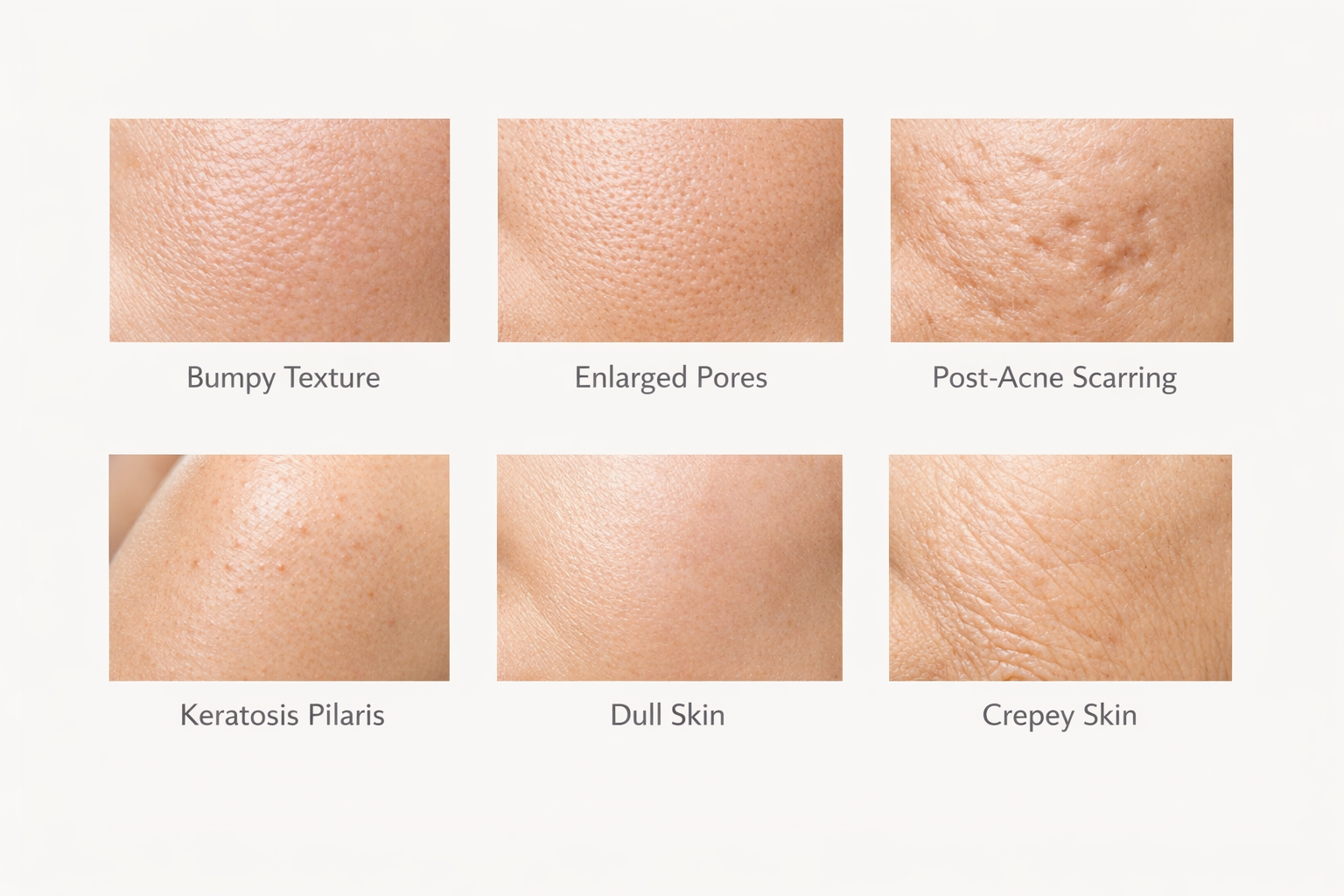
Bumpy or Rough Texture
This is the most common presentation and often results from a buildup of dead skin cells on the surface. When skin cell turnover slows — due to age, dehydration, or environmental factors — dead cells accumulate rather than shedding efficiently, leaving skin feeling rough or sandpaper-like to the touch.
Enlarged or Visible Pores
Pore size is largely determined by genetics, but excess sebum production, sun damage, and reduced skin elasticity can make pores appear larger over time. Clogged pores filled with sebum and dead skin cells also stretch the pore opening, contributing to an uneven surface appearance.
Post-Acne Scarring
After an acne breakout, the skin’s repair process can leave behind textural changes. Shallow depressions (atrophic scars), raised tissue (hypertrophic scars), or pitted areas are all forms of post-acne scarring. These represent structural changes in the dermis and typically require more targeted treatment than surface-level roughness.
Keratosis Pilaris
Keratosis pilaris (KP) — sometimes called “chicken skin” — is a common, harmless condition caused by a buildup of keratin that blocks hair follicles. It produces small, rough bumps, most often on the upper arms, thighs, and cheeks. KP tends to be more noticeable in dry or cold conditions and is often genetic. It does not respond well to standard exfoliation alone and benefits from specific keratolytic ingredients.
Dull or Lacklustre Skin
Dullness is a form of texture concern in which the skin surface lacks radiance and appears flat or grey. It is commonly caused by accumulated dead skin cells, dehydration, poor circulation, or lifestyle factors such as smoking and disrupted sleep. While dullness does not involve physical bumps, it contributes significantly to an uneven complexion.
Crepey or Fine-Line Texture
Crepey skin — thin, lax skin with a fine wrinkled surface — results from collagen loss and reduced skin elasticity associated with ageing and cumulative sun exposure. It is most common around the eyes, neck, and inner arms. This type of texture requires treatments that support collagen production rather than simple exfoliation.
What Causes Textured Skin?
Several factors contribute to uneven skin texture, and in most cases more than one is involved simultaneously.
Slowed Skin Cell Turnover
Healthy skin naturally sheds dead cells and replaces them with new ones in a cycle that takes roughly 28 days in younger adults but slows considerably with age. When this process is disrupted, dead skin cells accumulate on the surface, creating a rough, dull appearance. Encouraging cell turnover is one of the primary goals of both at-home and professional texture treatments.
Sun Damage and Photoaging
Cumulative UV exposure is one of the most significant contributors to textured skin in adults. Photoaging breaks down collagen and elastin fibres in the dermis, leading to roughness, enlarged pores, and uneven skin tone. UV damage also accelerates the formation of fine lines and can cause thickening of the outer skin layer, further contributing to a rough surface texture.
Acne and Post-Acne Changes
Active acne causes inflammation that can damage the surrounding skin tissue. Once a breakout resolves, the skin may heal unevenly, leaving behind pitted scars, raised marks, or areas of hyperpigmentation. Repeated breakouts over time can create a persistently uneven surface that is difficult to address with topical products alone.
Dehydration and a Compromised Skin Barrier
A weakened skin barrier — the outermost protective layer of the skin — allows moisture to escape and irritants to penetrate more easily. Dehydrated skin loses its plumpness and suppleness, making fine lines and rough patches more visible. Conditions such as eczema and rosacea can also compromise the skin barrier and contribute to persistent texture irregularities.
Ageing and Collagen Loss
Collagen production naturally declines from the mid-twenties onwards. As the structural support within the dermis diminishes, skin loses firmness and elasticity, and the surface becomes less smooth. This process is gradual but cumulative, and it is accelerated by sun exposure, smoking, and other environmental stressors.
Keratin Buildup and Follicular Blockage
In keratosis pilaris, excess keratin — the protein that forms the outer layer of skin — accumulates around hair follicles, creating the characteristic small, rough bumps. This is a genetic tendency rather than a hygiene or lifestyle issue, though certain factors such as dry skin and cold weather can worsen it.
At-Home Ingredients for Smoother Skin
A consistent, well-chosen skincare routine for textured skin can produce meaningful improvement over time, particularly for mild to moderate concerns. The most effective approach combines targeted active ingredients with adequate hydration and daily sun protection.
Chemical Exfoliants: AHAs and BHAs
Chemical exfoliants are among the most evidence-supported at-home options for improving skin texture. Alpha hydroxy acids (AHAs) — including glycolic acid and lactic acid — work on the skin surface to dissolve the bonds between dead skin cells, encouraging them to shed more efficiently. Glycolic acid has a smaller molecular size and penetrates more readily; lactic acid is gentler and also provides some hydration, making it better suited to sensitive or dry skin types.
Beta hydroxy acids (BHAs), primarily salicylic acid, are oil-soluble and can penetrate into the pore lining. This makes BHAs particularly useful for bumpy skin caused by clogged pores, blackheads, and acne-prone skin. Using a chemical exfoliant two to three times per week is generally sufficient for most skin types; daily use or combining multiple exfoliating actives can strip the skin barrier and worsen texture over time.
Retinoids
Retinol and prescription-strength retinoids (such as tretinoin) are vitamin A derivatives that accelerate skin cell turnover and stimulate collagen production. Regular use can improve rough texture, reduce the appearance of fine lines, and help fade post-acne marks over time. Retinoids require a gradual introduction — starting with a low concentration two to three nights per week — to minimise initial dryness and irritation. They are not suitable during pregnancy.
Niacinamide
Niacinamide (vitamin B3) is a versatile, well-tolerated ingredient that supports the skin barrier, helps regulate sebum production, and may reduce the appearance of enlarged pores with consistent use. It also has mild brightening properties, making it useful for uneven skin tone alongside texture concerns. Niacinamide is generally suitable for all skin types, including sensitive skin.
Hydrating Ingredients
Hyaluronic acid, glycerin, and ceramides help restore and maintain the skin’s moisture barrier. Dehydrated skin exaggerates the appearance of fine lines and rough patches, so adequate hydration is a foundational step rather than an optional extra. Non-comedogenic moisturisers containing ceramides are particularly useful for those with a compromised skin barrier or conditions such as keratosis pilaris.
Vitamin C
Vitamin C is an antioxidant that helps protect against UV-related damage, supports collagen synthesis, and can improve uneven skin tone. It works well alongside SPF in a morning routine and may help address the dullness and discolouration that often accompany textured skin.
A Note on Over-Exfoliation
Including too many exfoliating actives in a routine — or using them too frequently — can strip the skin of its natural oils, disrupt the skin barrier, and paradoxically worsen texture through dryness, redness, and increased sensitivity. If skin feels tight, stings, or becomes more reactive after introducing an exfoliant, reducing frequency or switching to a gentler option is advisable before adding further actives.
Professional Treatments for Textured Skin
When at-home care produces limited results, or when texture concerns are more significant — such as deep acne scarring, advanced photoaging, or persistent keratosis pilaris — professional treatments can offer more substantial improvement. The most appropriate option depends on the type and severity of the texture concern, skin tone, and individual suitability.
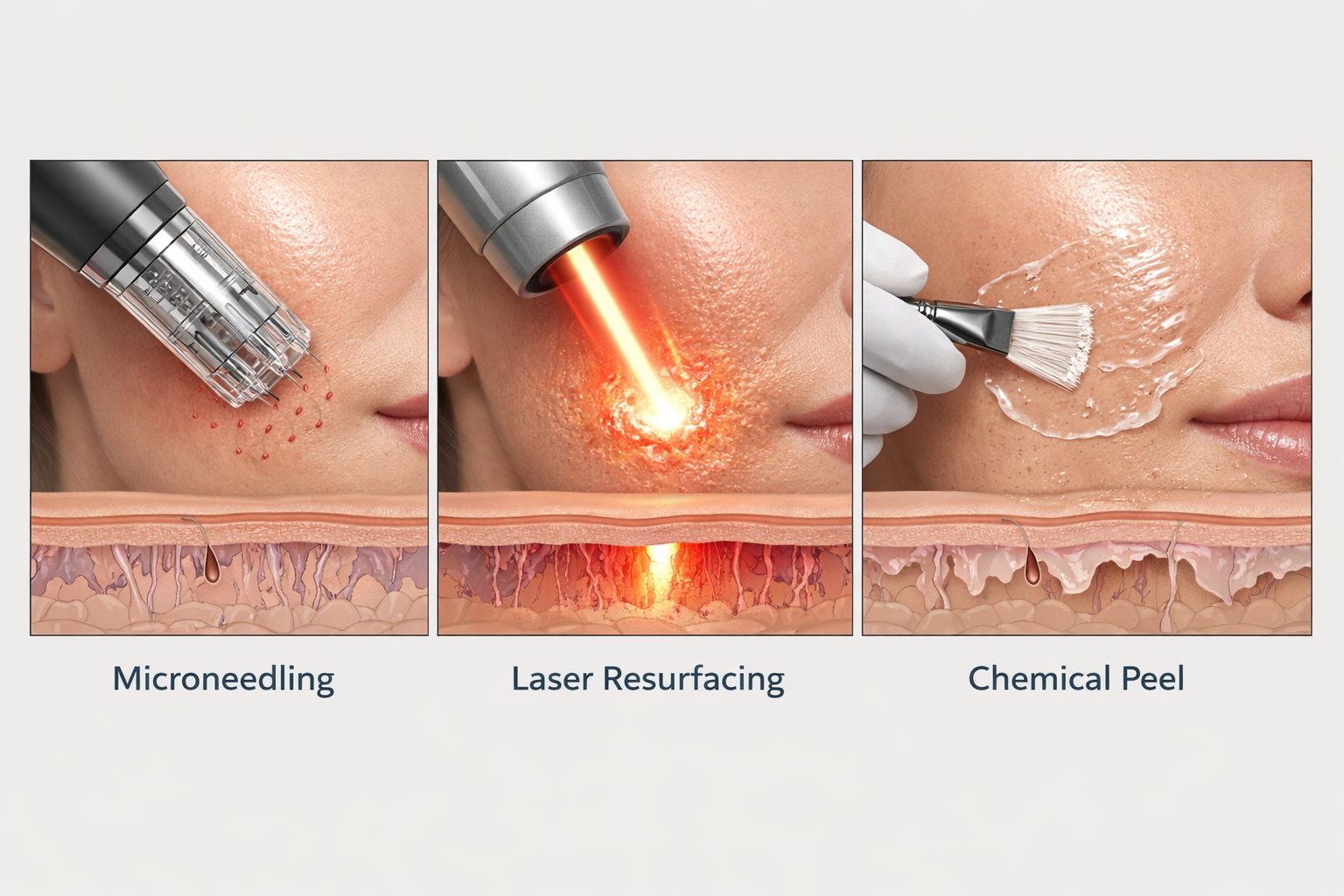
| Treatment | Mechanism | Best For | Downtime | Sessions Typically Needed |
|---|---|---|---|---|
| Microneedling | Creates micro-injuries to stimulate collagen production | Acne scars, enlarged pores, general roughness, all skin tones | 1–3 days redness | 3–6 sessions |
| Laser Resurfacing | Removes or remodels damaged skin layers using targeted light energy | Photoaging, fine lines, acne scars, uneven tone | 3–14 days depending on type | 1–3 sessions |
| Chemical Peel | Applies an acid solution to remove outer skin layers and stimulate renewal | Dullness, mild scarring, uneven tone, rough texture | None to 7 days depending on depth | 1–6 sessions |
| Microdermabrasion | Physical exfoliation of the outer skin layer | Mild roughness, dullness, superficial texture | Minimal | 4–6 sessions |
| HydraFacial / DiamondGlow | Combines cleansing, exfoliation, and hydration in one treatment | Dullness, mild congestion, general skin quality | None | Monthly maintenance |
| RF Microneedling | Combines microneedling with radiofrequency energy for deeper collagen stimulation | Acne scars, skin laxity, deeper texture concerns | 2–5 days | 3–4 sessions |
Microneedling
Microneedling uses a device fitted with fine needles to create controlled micro-channels in the skin. This triggers the skin’s natural wound-healing response, stimulating collagen production and encouraging skin remodelling. It is widely used for post-acne scarring, enlarged pores, and general skin texture improvement. One of microneedling’s notable advantages is its suitability across a broad range of skin tones, including darker skin tones, as it carries a lower risk of post-inflammatory hyperpigmentation compared to some laser treatments. A course of three to six sessions is typically recommended, with results continuing to develop over several months as new collagen forms.
Laser Resurfacing
Laser resurfacing uses targeted light energy to remove or remodel damaged skin layers and stimulate collagen production. Ablative lasers (such as CO2 and Er:YAG) remove the outer skin layer and require more downtime — typically one to two weeks — but can produce significant improvement in deeper texture concerns. Non-ablative and fractional lasers (such as Clear + Brilliant and MOXI) work beneath the surface with less disruption to the outer skin, offering a gentler option with shorter recovery. Laser treatments are generally most effective for photoaging, fine lines, and acne scarring, but suitability varies by skin tone; some laser types carry a higher risk of pigmentation changes in darker skin tones, and a thorough consultation is essential.
Chemical Peels
Professional chemical peels use higher concentrations of acids — such as glycolic acid, lactic acid, salicylic acid, or trichloroacetic acid (TCA) — than are available in over-the-counter products. Superficial peels cause minimal downtime and are useful for dullness and mild texture irregularities. Medium-depth peels penetrate further and can address more significant roughness, uneven tone, and shallow scarring, with a recovery period of several days. The depth of peel recommended will depend on the specific concern and skin type.
Polynucleotides and Collagen Biostimulators
Injectable treatments such as polynucleotides (PDRN) and collagen biostimulators like Profhilo work by stimulating the skin’s own collagen and elastin production from within. These are increasingly used for overall skin quality improvement, including texture, hydration, and firmness, particularly in patients where surface-level treatments alone are insufficient. Results develop gradually over several weeks and typically require an initial course of two to three sessions.
Body-Area Considerations
Textured skin on the face is the most commonly discussed concern, but texture irregularities affect other areas too, and the approach may differ depending on location.
Rough or bumpy skin on the upper arms and thighs is most commonly caused by keratosis pilaris. Regular use of a BHA or AHA body lotion — such as one containing salicylic acid or lactic acid — alongside a non-comedogenic moisturiser can help soften the bumps over time, though KP rarely resolves completely. Avoiding harsh scrubbing, which can worsen irritation, is advisable.
Textured skin on the chest and décolletage is often the result of cumulative sun damage and photoaging, as this area receives significant UV exposure over a lifetime but is frequently neglected in skincare routines. Laser resurfacing and chemical peels can be effective here, alongside consistent daily SPF use to prevent further damage.
Rough patches on the legs may result from general dryness, follicular keratosis, or infrequent exfoliation. Regular moisturising with a ceramide-rich or urea-containing product, combined with gentle chemical exfoliation, is usually the first step.
Skin Tone and Treatment Suitability
Treatment suitability for textured skin is not one-size-fits-all, and skin tone is an important factor in selecting the safest and most effective option. Individuals with medium to darker skin tones (Fitzpatrick types IV–VI) have a higher baseline risk of post-inflammatory hyperpigmentation following certain treatments, particularly ablative lasers and aggressive chemical peels. Microneedling and non-ablative fractional lasers are generally considered safer options across a wider range of skin tones, though a thorough consultation with an experienced practitioner is essential before any professional treatment.
Lifestyle Factors That Affect Skin Texture
Skincare products and professional treatments work best when supported by consistent lifestyle habits. Staying well hydrated supports skin plumpness and barrier function. A diet rich in whole, unprocessed foods — including sources of omega-3 fatty acids, antioxidants, and vitamins C and E — provides the nutritional building blocks for healthy skin cell turnover and collagen production. Conversely, smoking accelerates collagen breakdown and impairs circulation, contributing to dullness and roughness over time.
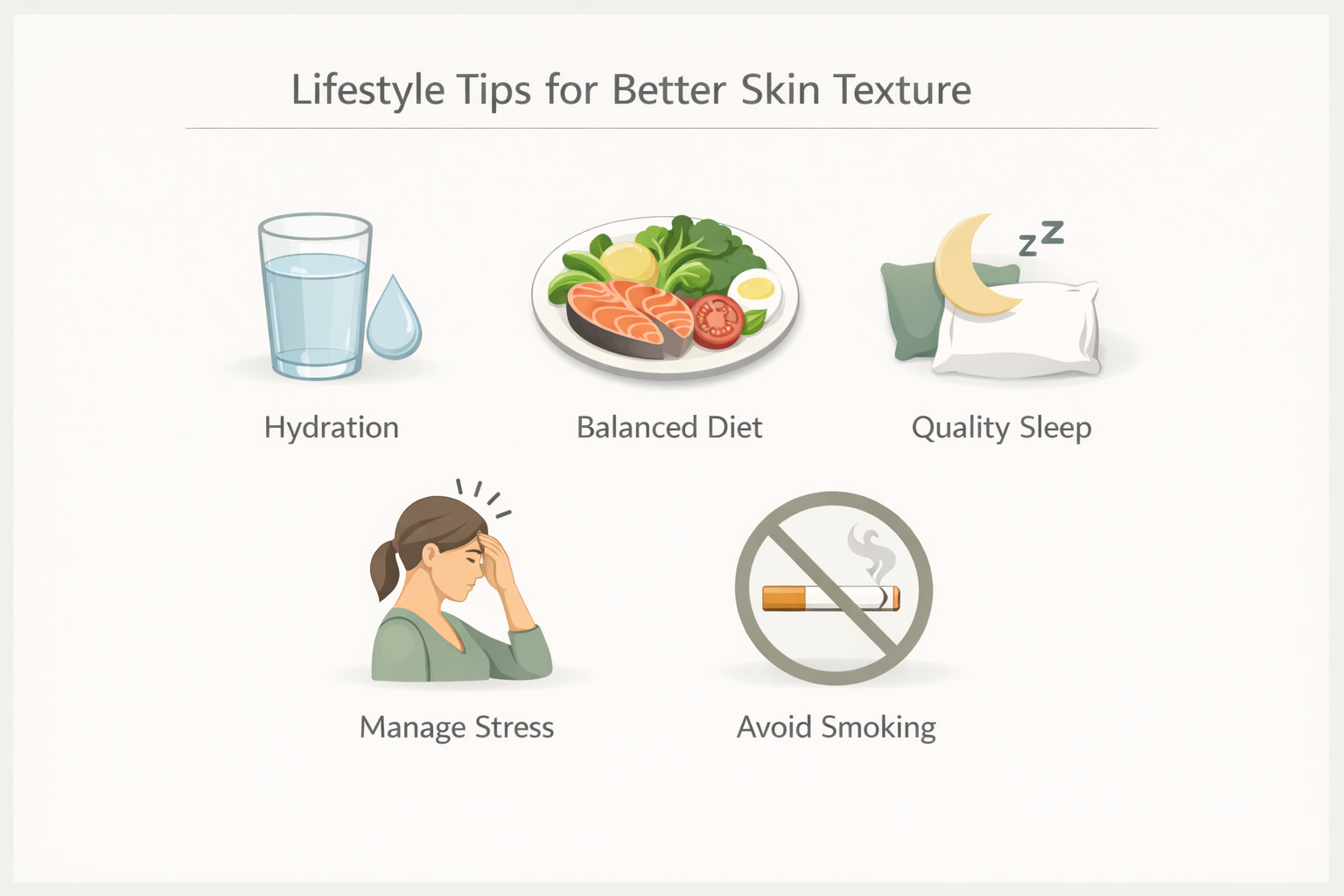
Sleep quality also plays a meaningful role; skin undergoes significant repair and regeneration during sleep, and chronic sleep deprivation can impair this process. Managing stress, which can trigger hormonal fluctuations that worsen acne and sebum production, is another factor worth considering as part of a broader approach to skin texture improvement.
What to Realistically Expect
Many people notice visible improvements in skin texture within six to eight weeks of beginning a consistent at-home routine with appropriate active ingredients. However, more significant concerns — such as deep acne scarring, advanced photoaging, or keratosis pilaris — are unlikely to resolve with topical products alone and may require a course of professional treatment over several months.
Professional treatments typically produce gradual results rather than immediate transformation. Collagen stimulation, for example, continues to develop for three to six months after microneedling or laser resurfacing. Maintenance sessions are often recommended to sustain results, particularly for concerns related to ageing or ongoing sun exposure. Setting realistic expectations before beginning any treatment programme is important, and a qualified practitioner should be able to outline a realistic timeline based on your specific concerns.
Frequently Asked Questions
Can textured skin be permanently fixed?
Skin texture can be significantly improved with the right combination of at-home care and professional treatment, but it is rarely permanently eliminated. Ongoing maintenance — including consistent use of active ingredients, SPF, and periodic professional treatments — is usually needed to sustain results, particularly as ageing and environmental exposure continue over time.
Is textured skin the same as acne?
No. Textured skin is a broad term describing surface irregularities, of which acne is just one possible cause. Textured skin can result from keratosis pilaris, sun damage, dehydration, ageing, or post-acne scarring — none of which involve active acne. Identifying the specific cause is important because the treatment approach differs considerably.
How often should I exfoliate textured skin?
For most skin types, using a chemical exfoliant two to three times per week is sufficient. Daily exfoliation or combining multiple exfoliating actives is generally not recommended, as it can compromise the skin barrier and worsen texture through irritation and dryness. If you are new to chemical exfoliants, starting once a week and gradually increasing frequency allows the skin to adjust.
Which professional treatment is best for acne scars?
Microneedling, RF microneedling, fractional laser resurfacing, and medium-depth chemical peels are among the most commonly used professional treatments for post-acne scarring. The most appropriate option depends on the depth and type of scarring, skin tone, and individual suitability. A consultation with a qualified practitioner is the best way to determine which approach may produce the most meaningful improvement for your specific scars.
Can makeup make textured skin worse?
Makeup does not cause textured skin, but certain products — particularly heavy, pore-blocking formulations — can contribute to congestion and worsen the appearance of enlarged pores over time. Choosing non-comedogenic, fragrance-free products and removing makeup thoroughly each evening helps minimise this risk. A smoothing primer can reduce the visible appearance of texture temporarily, but it does not address the underlying cause.
Is keratosis pilaris treatable?
Keratosis pilaris can be managed and its appearance significantly reduced, but it is a genetic condition that does not have a permanent cure. Regular use of BHA or AHA-containing body products, consistent moisturising with ceramide-rich or urea-based formulations, and avoiding harsh physical scrubbing are the most effective at-home strategies. Professional treatments such as chemical peels or laser therapy may offer additional improvement in more persistent cases.
When to Seek a Professional Assessment for Textured Skin
A consistent at-home skincare routine is a reasonable starting point for mild texture concerns, and many people see meaningful improvement with the right combination of chemical exfoliants, retinoids, and hydrating ingredients. However, professional assessment is worth considering when texture concerns are persistent despite several months of consistent care, when post-acne scarring is deep or widespread, when keratosis pilaris is causing significant distress, or when you are unsure which type of texture you are dealing with and which treatment is most appropriate.
A dermatologist or qualified aesthetic practitioner can assess the specific cause of your texture concerns, recommend a targeted treatment plan, and advise on which professional treatments — whether microneedling, laser resurfacing, chemical peels, or injectable collagen stimulators — may be most suitable for your skin type, tone, and goals. Starting with a thorough consultation ensures that any treatment chosen is both appropriate and safe for your individual circumstances.