

Key Takeaways
- Inner thigh fat is almost exclusively subcutaneous fat — stored just beneath the skin — and is strongly influenced by genetics, oestrogen, and overall body fat percentage.
- Spot reduction is a myth: no exercise or topical product can selectively burn fat from the inner thighs alone. Sustainable fat loss requires a consistent caloric deficit across the whole body.
- Targeted adductor exercises improve muscle tone and definition but will not reduce fat unless combined with overall fat loss through diet and cardiovascular activity.
- For fat that remains stubborn after lifestyle changes, non-surgical body contouring treatments such as cryolipolysis and EMSculpt, or surgical options such as liposuction, may be worth discussing with a qualified practitioner.
- Skin laxity after significant fat loss is a separate concern that may require its own treatment approach, such as radiofrequency or ultrasound skin tightening.
Why Do You Store Fat on Your Inner Thighs?
Inner thigh fat accumulates for a combination of reasons — genetics, hormones, lifestyle, and age — and understanding these factors is the first step toward addressing them realistically. The fat stored in this area is subcutaneous fat: a layer of adipose tissue that sits directly beneath the skin, as opposed to visceral fat, which surrounds the internal organs. Subcutaneous fat in the thighs poses far less metabolic risk than visceral abdominal fat, but it is also considerably more resistant to loss, which is why many people find it so frustrating.
Women are biologically predisposed to store more fat in the lower body — the hips, buttocks, and inner thighs — a pattern known as the gynoid fat pattern, or colloquially as a pear-shaped body. This distribution is largely driven by oestrogen, which directs fat storage toward the lower body during reproductive years to support potential pregnancy and breastfeeding. Men can also develop inner thigh fat, particularly with age or weight gain, but the pattern is less pronounced because testosterone promotes a different fat distribution.
Genetics play a significant role in determining where your body preferentially stores and releases fat. If your parents or close relatives carry weight in the thighs, there is a strong likelihood you will too. This genetic predisposition also influences the order in which your body burns fat — and for many people, the inner thighs are among the last areas to respond to a caloric deficit, which is why this fat is often described as stubborn.
The Role of Hormones in Inner Thigh Fat Storage
Several hormones influence fat distribution, and understanding their roles helps explain why inner thigh fat can be so persistent. Oestrogen is the primary driver of lower-body fat storage in women. During perimenopause and menopause, oestrogen levels decline, and fat distribution often shifts toward the abdomen — but the thigh fat accumulated during reproductive years can remain stubbornly in place. Puberty and pregnancy are also periods when lower-body fat storage increases significantly under hormonal influence.
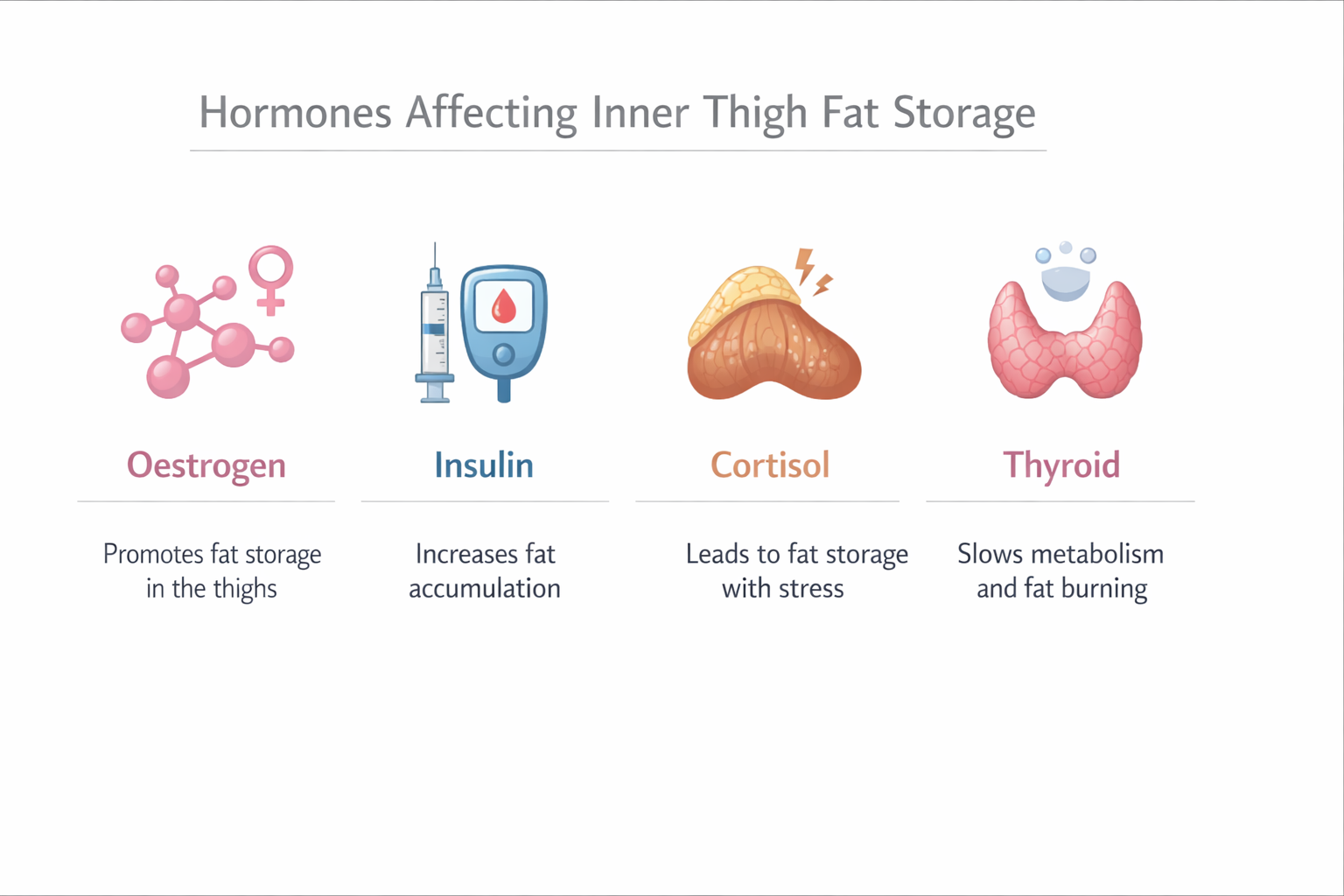
Insulin resistance — a condition in which cells respond less effectively to insulin — promotes fat storage throughout the body, including the thighs. When insulin levels remain chronically elevated, the body is less efficient at using stored fat for energy. Cortisol, the stress hormone, similarly encourages fat storage, particularly when stress is chronic and sleep is poor. Elevated cortisol can also break down lean muscle tissue over time, slowing the metabolism and making fat loss harder. Thyroid hormones regulate overall metabolic rate, and an underactive thyroid can make fat loss across the whole body, including the inner thighs, significantly more difficult.
Age, Muscle Loss, and Changing Body Composition
From the mid-thirties onward, most adults begin to experience sarcopenia — the gradual, age-related loss of lean muscle mass. Because muscle tissue is metabolically active and burns more calories at rest than fat tissue, losing muscle slows the overall metabolic rate. This means that even without changes in diet or activity, body fat percentage tends to increase with age, and areas like the inner thighs may accumulate more fat over time. A sedentary lifestyle accelerates this process, while regular resistance training can help preserve muscle mass and support a healthier body composition.
The Spot Reduction Myth — and What Actually Works
One of the most persistent misconceptions in fitness is the idea that exercising a specific body part will burn the fat overlying it. This is the spot reduction myth, and it has been consistently disproved by research. When the body draws on fat for energy, it does so systemically — drawing from fat stores across the entire body according to a genetically determined pattern — not from the muscle being worked. Performing hundreds of inner thigh squeezes will strengthen the adductor muscles but will not selectively reduce the subcutaneous fat layer above them.
What does work is creating a sustained caloric deficit — consuming fewer calories than the body expends — which prompts the body to draw on stored fat for energy over time. Combined with regular cardiovascular exercise and strength training, a consistent caloric deficit leads to overall body fat reduction. As total body fat decreases, the inner thighs will eventually reduce too, though the timeline and degree of change depend on individual genetics and starting body composition.
Diet Strategies That Support Inner Thigh Fat Loss
No specific food targets inner thigh fat, but a nutrient-dense diet that supports a caloric deficit is the most reliable dietary strategy for reducing overall body fat, including in the thighs. A moderate deficit of around 500 calories per day is generally considered sustainable and is associated with approximately 0.5 kg of fat loss per week, though individual results vary.
Prioritising lean protein — from sources such as chicken, fish, eggs, legumes, and low-fat dairy — helps preserve lean muscle mass during a caloric deficit, which is important for maintaining metabolic rate. Fibre-rich whole foods, including vegetables, fruit, whole grains, and legumes, support satiety and help regulate blood sugar, which in turn supports more stable insulin levels. Reducing processed foods, refined carbohydrates, and added sugars helps limit unnecessary caloric intake and reduces the insulin spikes that can promote fat storage.
Adequate hydration supports lymphatic flow and general metabolic function. Reducing sodium intake can also help minimise water retention, which, while not the same as fat loss, can affect how the thighs look and feel. Alcohol is worth limiting, as it contributes empty calories and can disrupt hormonal balance, including cortisol and oestrogen regulation.
Exercise for Inner Thigh Fat: What Helps and What to Avoid
Exercise plays a dual role in addressing inner thigh fat: cardiovascular activity supports the caloric deficit needed for overall fat loss, while targeted strength work builds and tones the adductor muscles — the group of muscles running along the inner thigh — so that as fat reduces, the area has better definition and shape.
Cardiovascular Exercise
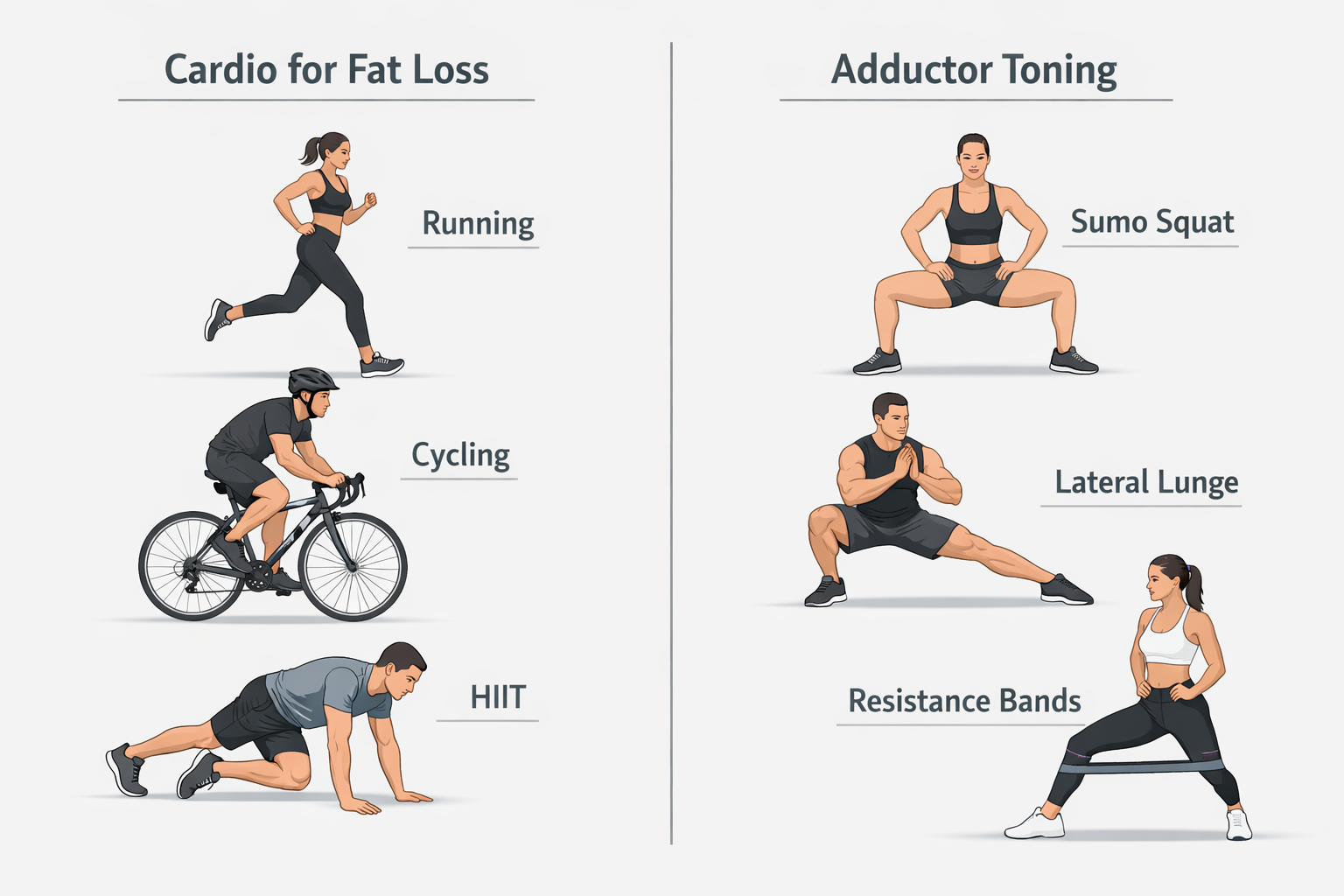
Any form of sustained cardiovascular exercise that elevates the heart rate contributes to overall fat loss. Running, cycling, swimming, brisk walking, and rowing are all effective options. High-intensity interval training (HIIT) can be particularly time-efficient, alternating short bursts of intense effort with recovery periods to maximise caloric expenditure. Aim for at least 150 minutes of moderate-intensity cardio per week, or 75 minutes of vigorous activity, as a general starting point — though individual needs vary.
Adductor-Targeting Strength Exercises
Strengthening the adductor muscles improves the tone and appearance of the inner thighs as fat reduces. Effective exercises include sumo squats, lateral lunges, curtsy lunges, side-lying leg lifts, and inner thigh squeeze exercises using a stability ball or resistance bands. Resistance bands are particularly useful for adding progressive load to adductor exercises without requiring gym equipment. Pilates and barre-based workouts also engage the inner thighs with lower-impact movements that build endurance and tone without adding significant bulk.
An Important Caveat About Exercise Selection
It is worth noting that certain exercise approaches can make the thighs appear larger in the short term by building muscle volume before significant fat loss has occurred. Heavy compound leg exercises performed at high loads — such as heavy barbell squats or leg presses — can increase muscle size in the quadriceps and adductors. If the goal is a leaner, more toned appearance rather than increased muscle size, moderate resistance with higher repetitions, combined with consistent cardio and a caloric deficit, tends to produce better visual results for most people.
Lifestyle Factors That Influence Fat Storage
Diet and exercise are the primary levers for fat loss, but several lifestyle factors can either support or undermine progress. Sleep quality has a direct impact on cortisol regulation: consistently sleeping fewer than seven hours per night is associated with elevated cortisol levels, increased appetite, and greater difficulty losing fat. Prioritising seven to eight hours of quality sleep per night supports hormonal balance and recovery from exercise.
Chronic stress elevates cortisol, which promotes fat storage and can increase cravings for calorie-dense foods. Stress management strategies — whether through exercise, mindfulness, social connection, or professional support — are a meaningful part of a sustainable fat-loss approach. Reducing sedentary behaviour throughout the day, even through simple measures like standing breaks or short walks, also contributes to overall energy expenditure.
When Lifestyle Changes Are Not Enough: Clinical Treatment Options
For some people, inner thigh fat remains stubborn even after sustained lifestyle changes. This is not a failure of effort — it reflects the genetic reality that fat distribution and the order of fat loss are not fully within voluntary control. In these cases, body contouring treatments may offer a meaningful reduction in localised fat. It is important to understand that these treatments are not weight-loss solutions; they are most appropriate for people who are already close to their target weight but have specific areas of resistant fat.
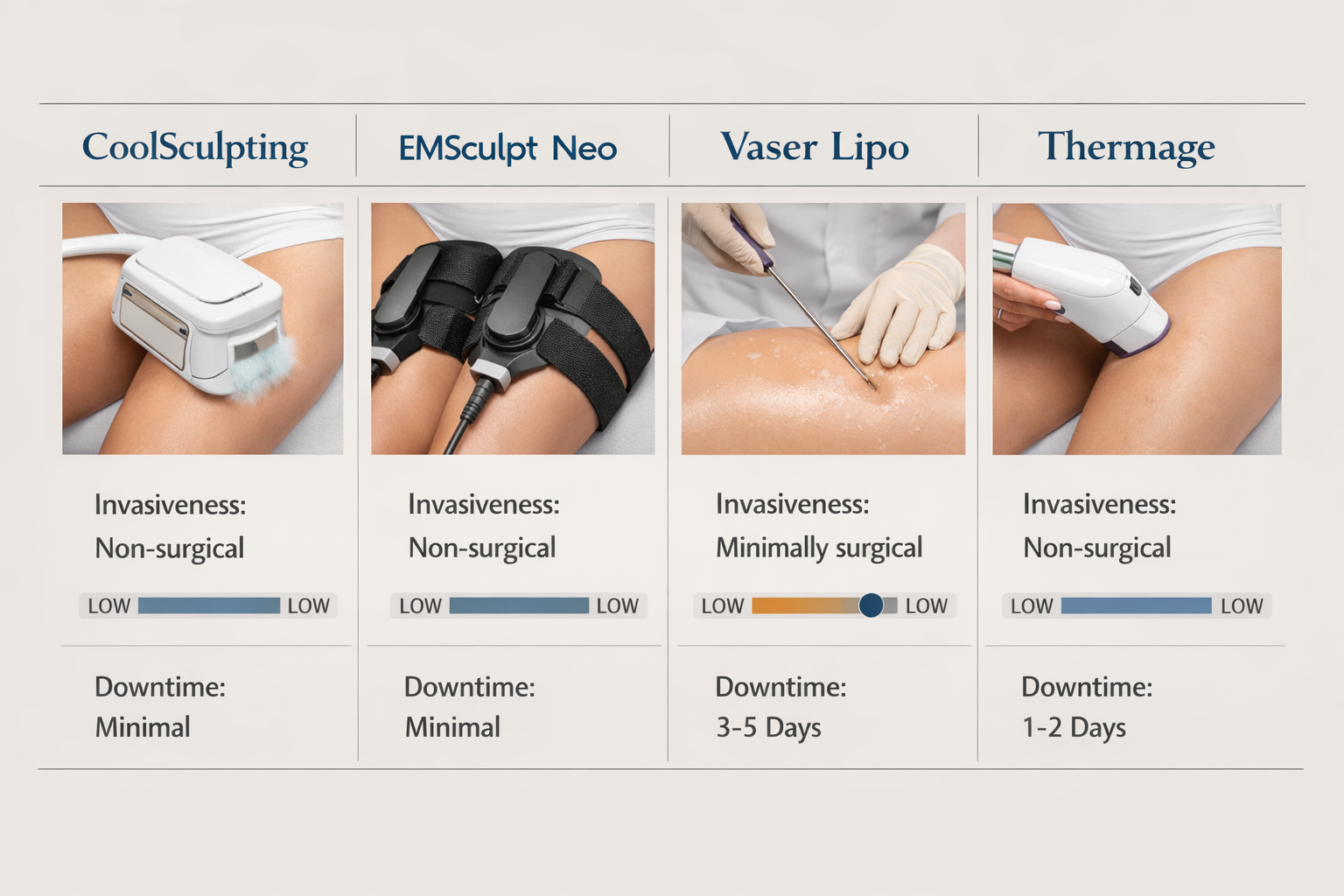
| Treatment | Type | Mechanism | Downtime | Results Timeline | Best Suited For |
|---|---|---|---|---|---|
| CoolSculpting (Cryolipolysis) | Non-surgical | Controlled cooling destroys fat cells | Minimal (1–3 days mild soreness) | 8–16 weeks | Pinchable fat, near target weight |
| EMSculpt / EMSculpt Neo | Non-surgical | Electromagnetic muscle stimulation ± radiofrequency | None | 4–8 weeks after course | Muscle toning + modest fat reduction |
| Vaser Lipo / SmartLipo | Minimally surgical | Ultrasound or laser energy liquefies fat before removal | 1–2 weeks | 3–6 months (final) | Moderate fat volume, skin with some elasticity |
| Traditional Liposuction | Surgical | Mechanical removal of fat via cannula | 2–4 weeks | 3–6 months (final) | Larger fat volumes, good skin tone |
| Thermage CPT / Ultherapy | Non-surgical | Radiofrequency or ultrasound stimulates collagen | None to minimal | 3–6 months | Skin laxity after fat loss |
CoolSculpting (Cryolipolysis) for Inner Thighs
CoolSculpting uses controlled cooling — a process known as cryolipolysis — to selectively damage and destroy fat cells without harming the surrounding skin or tissue. The treated fat cells are gradually cleared by the lymphatic system over the following weeks, with results typically becoming visible between eight and sixteen weeks after treatment. CoolSculpting is FDA-cleared for use on the inner thighs and is one of the most studied non-surgical fat-reduction technologies available. Clinical studies have reported reductions in the treated fat layer of approximately 20–25% per session, though individual results vary considerably.
CoolSculpting is best suited to people who have a pinchable layer of fat in the inner thigh area and are already close to their target weight. It is not appropriate for people with significant weight to lose, and it is not a treatment for obesity. A rare but recognised complication is paradoxical adipose hyperplasia — a condition in which the treated area paradoxically increases in size rather than decreasing. This occurs in a small percentage of cases and is more commonly reported in men. A thorough consultation with a qualified practitioner is essential to assess suitability and discuss risks.
EMSculpt and EMSculpt Neo
EMSculpt uses high-intensity focused electromagnetic energy to stimulate powerful muscle contractions in the treated area — contractions that are far more intense than those achievable through voluntary exercise. EMSculpt Neo combines this with radiofrequency energy to simultaneously reduce fat and build muscle. For the inner thighs, EMSculpt-based treatments may help improve muscle tone and contribute to modest fat reduction, though the evidence base for thigh-specific outcomes is less extensive than for abdominal or gluteal applications. Multiple sessions are typically required, and results develop gradually over four to eight weeks after completing a course of treatment.
Surgical Options: Liposuction and Thigh Lift
For people with a larger volume of inner thigh fat, or for those who have not achieved their desired result with non-surgical approaches, liposuction remains the most direct and predictable method of fat removal. Vaser liposuction and SmartLipo use ultrasound or laser energy to liquefy fat before it is removed, which can allow for more precise contouring and may cause less bruising than traditional liposuction. Recovery typically involves one to two weeks of restricted activity, with compression garments worn for several weeks. Final results are usually visible at three to six months once swelling has fully resolved.
A thigh lift — a surgical procedure that removes excess skin and fat — may be considered when there is significant skin laxity alongside fat excess, particularly after substantial weight loss. This is a more involved procedure with a longer recovery and carries the risks associated with any surgery, including scarring, infection, and anaesthetic complications. Surgical options should always be discussed with a qualified plastic or cosmetic surgeon who can assess anatomy, skin quality, and realistic expectations.
Addressing Skin Laxity After Fat Loss
When inner thigh fat is reduced — whether through lifestyle changes or clinical treatment — skin laxity can become more apparent. The skin in the inner thigh area is relatively thin and may not contract fully after fat loss, particularly in older patients or those who have lost a significant amount of fat. Thigh chafing and skin rubbing can also become more noticeable as the skin loses some of its previous support.
Non-surgical skin tightening treatments such as Thermage CPT (radiofrequency) and Ultherapy (focused ultrasound) work by stimulating collagen production in the deeper layers of the skin, gradually improving firmness and texture over three to six months. These treatments are most effective for mild to moderate skin laxity and are not a substitute for surgical skin removal in cases of significant excess skin. A practitioner can assess whether skin tightening is likely to be beneficial based on the degree of laxity and skin quality.
How Long Does It Take to Lose Inner Thigh Fat?
Realistic timelines depend on starting body composition, the size of the caloric deficit, exercise consistency, and individual genetics. With a consistent caloric deficit and regular exercise, most people begin to notice changes in overall body composition within four to eight weeks, though visible changes in the inner thighs specifically may take longer given that this area is often among the last to respond. Meaningful, sustained fat loss across the body — including the thighs — typically requires three to six months of consistent effort.
For clinical treatments, CoolSculpting results generally become visible at eight to twelve weeks and continue to develop for up to four months. EMSculpt results are typically noticeable four to eight weeks after completing a treatment course. Surgical liposuction results are visible sooner but final contouring outcomes are usually assessed at three to six months once post-operative swelling has resolved. Sustainable fat loss — achieved gradually through lifestyle changes — is more likely to be maintained long-term than rapid approaches, which often result in regain.
Frequently Asked Questions
Can you spot-reduce inner thigh fat with exercise?
No. The spot reduction myth has been consistently disproved by research. Exercise strengthens and tones the adductor muscles of the inner thigh but does not selectively burn the fat overlying them. Fat loss occurs systemically in response to a caloric deficit, and the body determines the order in which fat stores are used based on genetics and hormonal factors.
What hormone causes inner thigh fat?
Oestrogen is the primary hormonal driver of lower-body fat storage in women, directing fat toward the hips, buttocks, and inner thighs during reproductive years. Insulin resistance, elevated cortisol from chronic stress, and thyroid dysfunction can all contribute to fat storage more broadly, including in the thighs. Hormonal changes during puberty, pregnancy, perimenopause, and menopause can all influence where and how much fat is stored.
Is inner thigh fat harmful to health?
Inner thigh fat is subcutaneous fat — stored beneath the skin rather than around the organs — and carries significantly less metabolic risk than visceral abdominal fat. While excess body fat of any kind is associated with health considerations, subcutaneous thigh fat is not independently linked to the same cardiovascular and metabolic risks as visceral fat. The primary concerns for most people are functional (thigh chafing, clothing fit) and aesthetic rather than medical.
How many CoolSculpting sessions are needed for the inner thighs?
Most people require one to two sessions per area to achieve a noticeable reduction, though this depends on the volume of fat present and the individual’s goals. A qualified practitioner will assess the area during a consultation and recommend a treatment plan. Results from each session develop over eight to sixteen weeks, so it is important to allow sufficient time before assessing whether additional sessions are needed.
Will inner thigh fat come back after treatment?
Clinical fat-reduction treatments such as CoolSculpting destroy fat cells, which do not regenerate. However, remaining fat cells in the area can still enlarge if significant weight is gained after treatment. Maintaining results requires ongoing attention to diet, exercise, and overall body weight. Lifestyle-based fat loss carries the same caveat: fat can return if a caloric surplus is sustained over time.
Does thigh chafing mean I have too much inner thigh fat?
Not necessarily. Thigh rubbing and chafing are related to the proximity of the inner thighs during movement and are influenced by body shape, muscle mass, and overall thigh circumference — not fat alone. Many people with a healthy body composition experience thigh chafing. Reducing inner thigh fat may reduce rubbing for some people, but it is not a guaranteed outcome.
Making an Informed Decision About Inner Thigh Fat
Inner thigh fat is a genuinely stubborn area for many people, and the frustration it causes is understandable. The biology is real: oestrogen, genetics, and the body’s fat-burning hierarchy all work against rapid or targeted reduction in this area. The most reliable path to reducing inner thigh fat remains a combination of a sustained caloric deficit, regular cardiovascular exercise, and adductor-strengthening work — approached with realistic expectations about timelines and the limits of what lifestyle changes can achieve for any individual.
For those who have made consistent lifestyle changes and still find the inner thighs resistant, non-surgical body contouring treatments such as cryolipolysis or EMSculpt Neo may offer a meaningful additional reduction. These are not weight-loss tools, and they work best when used to address specific areas of stubborn fat in people who are already close to their target weight. Surgical options such as liposuction provide more significant and predictable fat removal but carry greater risks and recovery demands.
If skin laxity is a concern alongside fat reduction, this is worth discussing separately with a practitioner, as it may require a different treatment approach. A thorough consultation with a qualified aesthetic practitioner or cosmetic surgeon — one who takes time to understand your goals, assess your anatomy, and explain realistic outcomes — is the most important step before committing to any clinical treatment.