

Key Takeaways
- Forehead wrinkles are classified as dynamic (caused by muscle movement) or static (visible at rest), and the most effective treatment depends on which type you have.
- Botulinum toxin injections remain the most widely used professional treatment for dynamic forehead lines, with results typically lasting three to six months.
- Static wrinkles and volume-related changes may respond better to dermal fillers, biostimulatory fillers, laser resurfacing, or radiofrequency microneedling.
- A combination approach — for example, a neuromodulator paired with a collagen-stimulating treatment — often produces more comprehensive and natural-looking results than any single treatment alone.
- Daily broad-spectrum sunscreen and a retinoid-based skincare routine are the most evidence-supported at-home strategies for both prevention and maintenance.
What Causes Forehead Wrinkles?
Forehead wrinkles develop through a combination of intrinsic ageing and external factors. The frontalis muscle — the broad muscle responsible for raising the eyebrows — contracts repeatedly throughout the day. Over time, these repetitive movements etch horizontal lines into the overlying skin. Separately, the glabellar complex of muscles between the brows produces vertical frown lines, sometimes called glabellar lines or the “11s”, through a similar mechanism.
Beneath the surface, collagen and elastin — the structural proteins that keep skin firm and resilient — decline gradually from the mid-twenties onward. UV exposure accelerates this process significantly, breaking down collagen fibres and impairing the skin’s ability to repair itself. Smoking restricts blood flow to the skin and reduces collagen synthesis, while chronic stress, poor sleep, excess alcohol, and a diet high in processed foods can all contribute to premature ageing. Genetics also plays a meaningful role in how early and how deeply lines develop.
Dynamic vs. Static Wrinkles: Why the Distinction Matters
Understanding whether your forehead lines are dynamic or static is the single most important step in choosing an appropriate treatment. Dynamic wrinkles appear when the face is in motion — when you raise your eyebrows, frown, or squint — and they relax when the face is at rest. These are caused by repeated muscle contraction and respond well to neuromodulator injections that temporarily reduce muscle activity.
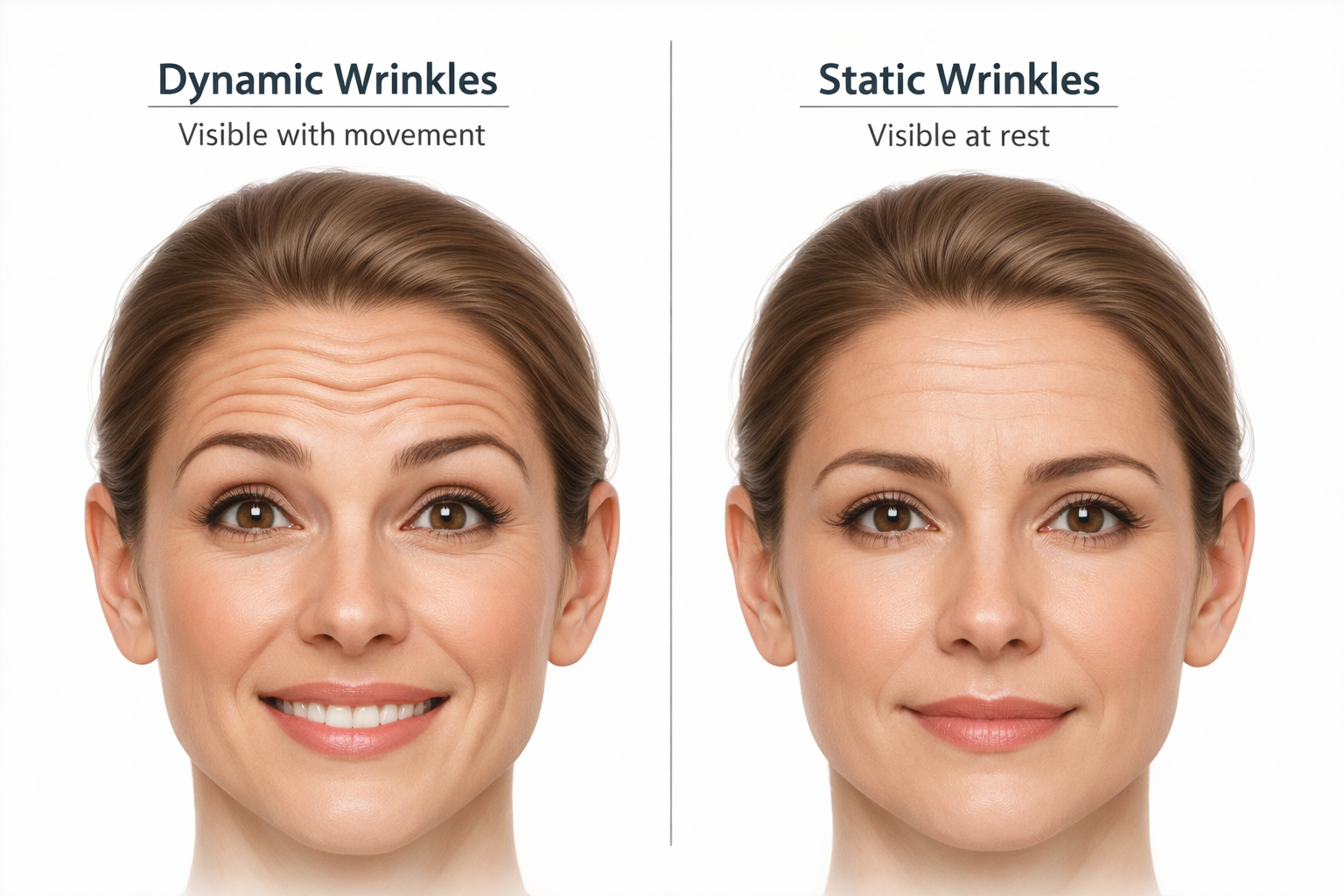
Static wrinkles are visible even when the face is completely relaxed. They develop as collagen and elastin decline and the skin loses its ability to spring back after movement. Static lines require treatments that address skin quality, volume, or structural support rather than muscle activity alone. Many patients have a combination of both types, which is why a personalized treatment plan often involves more than one approach.
| Feature | Dynamic Wrinkles | Static Wrinkles |
|---|---|---|
| Visible at rest? | No (early stage) or faintly | Yes |
| Primary cause | Repetitive muscle movement | Collagen loss, volume depletion, skin laxity |
| Best-matched treatments | Botulinum toxin (neuromodulator) | Fillers, laser, RF microneedling, retinoids |
| Preventive approach | Early neuromodulator use, sun protection | Retinoids, SPF, collagen stimulation |
Professional Treatments for Forehead Wrinkles
1. Botulinum Toxin (Botox and Alternatives)
Botulinum toxin injections are the most commonly performed aesthetic procedure for horizontal forehead lines and glabellar lines. The treatment works by temporarily blocking the nerve signals that cause the frontalis muscle and glabellar complex to contract, allowing the overlying skin to smooth out. Results typically become visible within three to five days and reach their full effect at around ten to fourteen days. The duration of effect is generally three to six months, after which the muscle activity gradually returns and retreatment is needed to maintain results.
Several botulinum toxin formulations are available beyond the well-known Botox brand, including Dysport, Xeomin, Jeuveau, and Daxxify. These products share the same active mechanism but differ in formulation, onset characteristics, and in some cases duration. Daxxify, for example, has been associated with longer-lasting results in clinical studies, though individual response varies. A qualified practitioner will select the most appropriate product based on your anatomy, treatment history, and goals.
The number of units required varies depending on muscle strength, the area being treated, and the degree of correction desired. Forehead lines and glabellar lines are FDA-approved treatment sites for botulinum toxin. Side effects can include temporary bruising, swelling, headache, and — less commonly — a slight heaviness of the brow or eyelid if the product migrates. These effects are generally temporary. Preventive Botox, sometimes called baby Botox, involves lower doses used earlier in life to slow the formation of static lines before they become established.
Men and botulinum toxin: Male patients typically have greater frontalis muscle mass and may require higher doses to achieve comparable relaxation. Practitioners experienced in treating male patients will adjust dosing and injection placement accordingly to preserve a natural, masculine brow position.
2. Dermal Fillers
Hyaluronic acid dermal fillers such as JUVÉDERM and Restylane can be used to soften deep static forehead lines by adding volume beneath the skin’s surface. Hyaluronic acid is a naturally occurring substance in the body that attracts and retains water, providing immediate plumping and hydration. Results are visible immediately and can last from six months to over a year depending on the product used, the area treated, and individual metabolism.
Fillers are generally more appropriate for established static wrinkles than for dynamic lines, and they are often used in combination with botulinum toxin for patients who have both types. Risks include bruising, swelling, asymmetry, and — in rare cases — vascular complications, which is why treatment should only be performed by a trained and experienced practitioner. Hyaluronic acid fillers have the advantage of being reversible using an enzyme called hyaluronidase if correction is needed.
3. Biostimulatory Fillers
Biostimulatory fillers such as Sculptra (poly-L-lactic acid), Radiesse (calcium hydroxylapatite), and Ellansé work differently from hyaluronic acid fillers. Rather than providing immediate volume, these products stimulate the body’s own collagen production over weeks to months, gradually improving skin firmness, texture, and wrinkle depth. Results develop more slowly but may last longer — in some cases up to two years or more. Biostimulatory fillers are particularly useful for patients with significant skin laxity or collagen loss who want a more gradual, natural-looking improvement. They are not reversible in the same way as hyaluronic acid products, so careful patient selection and practitioner experience are important.
4. Laser Resurfacing
Laser resurfacing treatments target the skin’s surface and deeper layers to stimulate collagen production and improve skin texture, tone, and fine line depth. Ablative lasers such as the CO2 laser remove the outer layers of skin and produce more dramatic results, but they require meaningful downtime — typically one to two weeks of redness, peeling, and sensitivity. Non-ablative lasers such as Fraxel, Clear + Brilliant, and LaseMD work beneath the surface without removing skin, offering a gentler approach with less downtime but usually requiring a series of sessions to achieve comparable improvement.
Laser resurfacing is well-suited to patients with static wrinkles, sun damage, and uneven skin texture. It is less effective for deep dynamic lines caused by active muscle movement. Skin type is an important consideration, as certain laser wavelengths carry a higher risk of pigmentation changes in darker skin tones. A thorough consultation is essential to determine the most appropriate laser type and settings for your skin.
5. Radiofrequency Microneedling
Radiofrequency microneedling combines the collagen-stimulating effect of microneedling with the tissue-tightening effect of radiofrequency (RF) energy delivered through fine needles into the dermis. Devices such as the Genius RF microneedling system deliver controlled heat at precise depths, triggering a wound-healing response that promotes new collagen and elastin formation. This makes radiofrequency microneedling particularly useful for patients with skin laxity, fine lines, and textural concerns who want meaningful improvement with less downtime than ablative laser.
A course of two to four sessions spaced four to six weeks apart is typically recommended, with results continuing to develop over three to six months as collagen remodelling progresses. Temporary redness and mild swelling are common in the days following treatment. The procedure is generally suitable for a wider range of skin tones than ablative laser resurfacing.
6. Chemical Peels
Chemical peels use acids — such as glycolic acid, trichloroacetic acid (TCA), or salicylic acid — to exfoliate the skin’s surface and stimulate cellular renewal. Superficial peels address fine lines, dullness, and mild texture irregularities with minimal downtime. Medium-depth peels penetrate further and can improve moderate static wrinkles and sun damage, but they require several days of recovery. Deep peels produce more significant results but involve substantial downtime and carry a higher risk of side effects, including pigmentation changes and scarring in susceptible individuals.
Chemical peels are most effective for fine to moderate static lines and are often used as part of a broader treatment programme alongside other modalities. They are not the primary treatment for deep dynamic forehead lines.
7. Skin Tightening and Ultrasound Treatments
Radiofrequency skin tightening devices such as Thermage use RF energy delivered to the skin’s surface and deeper layers to stimulate collagen contraction and new collagen formation, improving skin firmness over time. Ultherapy uses focused ultrasound energy to target the deeper structural layers of the skin, producing a gradual lifting and tightening effect. Both treatments are non-invasive, require no downtime, and are best suited to patients with mild to moderate skin laxity who want a subtle, progressive improvement. Results develop over two to six months and a single treatment session may be sufficient for some patients, though individual response varies.
At-Home and Skincare Treatments
Professional treatments produce the most significant and lasting improvements, but a consistent skincare routine plays an important role in both prevention and maintenance. The following ingredients have the strongest evidence base for addressing forehead wrinkles at home.

- Retinoids: Prescription tretinoin and over-the-counter retinol are vitamin A derivatives that increase cell turnover, stimulate collagen production, and improve fine lines over time. Retinoids are among the most extensively studied topical anti-ageing ingredients. They require consistent use over several months before meaningful improvement becomes visible, and they can cause initial dryness and sensitivity, particularly at higher concentrations.
- Broad-spectrum sunscreen: Daily use of a broad-spectrum SPF 30 or higher is the most important preventive measure for forehead wrinkles. UV exposure is a primary driver of collagen breakdown and photoageing, and sunscreen use consistently reduces this damage regardless of age.
- Vitamin C serum: Topical vitamin C is an antioxidant that helps neutralise UV-induced free radical damage, supports collagen synthesis, and may improve skin brightness. It works well alongside retinoids and sunscreen as part of a morning routine.
- Peptides: Peptide-containing moisturisers signal the skin to produce more collagen and may help improve skin firmness and fine line appearance with regular use, though the evidence is less robust than for retinoids.
- Hyaluronic acid moisturiser: Topical hyaluronic acid attracts moisture to the skin’s surface, temporarily plumping fine lines and improving skin texture. It does not penetrate deeply enough to replace injectable hyaluronic acid but is a useful hydrating step in any routine.
Forehead Wrinkle Treatments by Age
The most appropriate treatment approach changes depending on your age, skin condition, and whether your goal is prevention or correction.
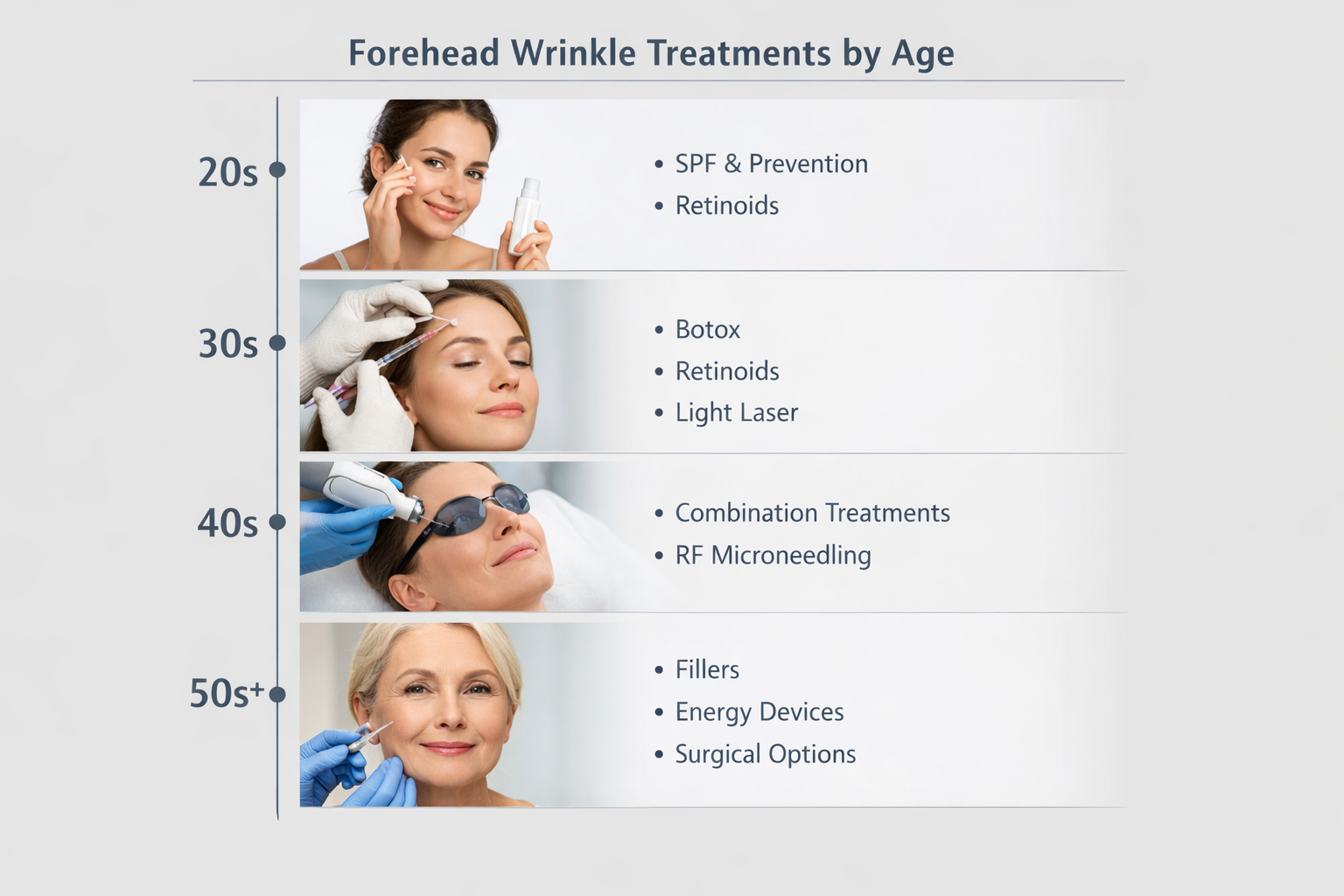
In your 20s: The focus at this stage is almost entirely preventive. Daily broad-spectrum sunscreen, a vitamin C serum, and a gentle retinoid introduced gradually are the most impactful steps. Some individuals in their late 20s begin to notice early dynamic lines and may consider low-dose preventive Botox to slow the transition from dynamic to static wrinkles.
In your 30s: Dynamic forehead lines often become more pronounced, and early static lines may begin to appear. Botulinum toxin is commonly introduced at this stage for horizontal forehead lines and glabellar lines. A retinoid should be a consistent part of the skincare routine, and professional treatments such as non-ablative laser or light chemical peels can address early textural changes.
In your 40s: Static wrinkles become more established as collagen loss accelerates. A combination approach is often most effective — botulinum toxin for dynamic lines alongside a collagen-stimulating treatment such as radiofrequency microneedling, a biostimulatory filler, or medium-depth laser resurfacing for static lines and skin laxity.
In your 50s and beyond: Volume loss, skin laxity, and deeper static wrinkles are the primary concerns. Treatment plans at this stage often combine neuromodulators, dermal or biostimulatory fillers, and energy-based treatments. Surgical options such as a brow lift may be appropriate for patients with significant brow descent or deep furrows that do not respond adequately to non-surgical approaches, though these involve longer recovery and carry surgical risks.
Combination Treatment Strategies
Many patients achieve the most comprehensive and natural-looking results through a combination of treatments rather than a single modality. A common and well-supported approach is pairing botulinum toxin with a collagen-stimulating treatment: the neuromodulator addresses active muscle movement while the second treatment improves skin quality, texture, and volume. For example, Botox for the frontalis and glabellar lines combined with a course of radiofrequency microneedling can address both dynamic and static components simultaneously.
Similarly, patients with deeper static lines may benefit from hyaluronic acid filler to soften the line immediately, followed by a biostimulatory filler or laser treatment to build longer-term collagen support. A qualified practitioner will assess your specific wrinkle pattern, skin quality, and goals before recommending a combination strategy, as not every combination is appropriate for every patient.
Lifestyle Factors That Affect Forehead Wrinkles
Treatment outcomes are influenced by lifestyle habits that either accelerate or slow the ageing process. Smoking is one of the most damaging factors, reducing skin blood flow and impairing collagen synthesis — patients who smoke typically see less durable results from professional treatments. Chronic UV exposure without adequate sun protection continues to break down collagen between treatment sessions, reducing the longevity of any improvement achieved.
Poor sleep elevates cortisol levels, which can suppress collagen production and impair skin repair. A diet rich in antioxidants — from vegetables, fruits, and foods containing vitamins C and E — supports the skin’s natural defence against oxidative stress. Staying well hydrated and limiting alcohol consumption also contribute to better skin quality over time. These factors do not replace professional treatment, but they meaningfully influence how well the skin responds and how long results last.
Frequently Asked Questions
How long does Botox last for forehead wrinkles?
Botulinum toxin injections for forehead lines typically last three to six months. Duration varies depending on the product used, the dose, individual metabolism, and how active the treated muscles are. Some patients find that with consistent treatment over time, they can extend the interval between sessions as the muscles gradually weaken.
Can deep forehead wrinkles be treated without surgery?
Deep static forehead wrinkles can often be significantly improved without surgery using a combination of non-surgical treatments — such as dermal fillers, biostimulatory fillers, radiofrequency microneedling, or ablative laser resurfacing. However, very deep furrows or those accompanied by significant brow descent may not achieve the same degree of correction as a surgical brow lift. A consultation with an experienced practitioner will help clarify realistic expectations for your specific situation.
What is the best at-home treatment for forehead wrinkles?
Prescription tretinoin (a retinoid) and daily broad-spectrum sunscreen have the strongest evidence base among at-home options. Vitamin C serum and peptide moisturisers are useful supporting ingredients. At-home treatments can improve fine lines and slow further ageing, but they cannot replicate the results of professional procedures for moderate to deep wrinkles.
Is Botox safe to use long-term for forehead wrinkles?
Botulinum toxin has been used in aesthetic medicine for several decades and has a well-established safety profile when administered by a qualified practitioner. Long-term use does not appear to cause permanent harm to the treated muscles, though some degree of muscle atrophy may occur with very frequent treatment. Regular clinical assessment helps ensure that dosing and placement remain appropriate over time.
What is preventive Botox and when should it be considered?
Preventive Botox refers to the use of low-dose botulinum toxin in younger patients — typically in the mid-to-late 20s or early 30s — before static lines have fully formed. The rationale is that reducing repetitive muscle movement during the years when collagen is still relatively abundant may slow the transition from dynamic to permanent static wrinkles. It is not necessary or appropriate for everyone, and the decision should be made in consultation with a qualified practitioner based on individual anatomy and skin condition.
How many units of Botox are needed for forehead wrinkles?
The number of units required varies considerably between individuals. Horizontal forehead lines typically require approximately ten to twenty-four units, while glabellar lines may require up to twenty to forty units depending on muscle mass and the degree of correction desired. Male patients generally require higher doses due to greater muscle bulk. A practitioner will assess your anatomy before recommending a specific dose.
Choosing the Right Treatment for Your Forehead Wrinkles
The best treatment for forehead wrinkles is not a single universal answer — it depends on whether your lines are dynamic, static, or a combination of both; your age and skin condition; your tolerance for downtime; and your goals for improvement. Botulinum toxin remains the most effective and widely used option for dynamic horizontal forehead lines and glabellar lines, with a strong evidence base and a predictable safety profile. Static wrinkles and skin laxity respond better to treatments that address collagen stimulation and volume — whether through fillers, laser resurfacing, or radiofrequency microneedling.
A personalized treatment plan developed with a qualified aesthetic practitioner or dermatologist will take into account your wrinkle severity, skin type, medical history, and realistic expectations. Starting with a thorough consultation allows you to understand which treatments are most appropriate for your specific concerns, what results are realistically achievable, and how to maintain those results over time. Alongside any professional treatment, a consistent skincare routine anchored by retinoids and broad-spectrum sunscreen remains one of the most impactful long-term investments you can make for your skin.