

Key Takeaways
- Facial volume loss results from simultaneous changes in three structural layers: fat pad descent and shrinkage, declining collagen and elastin production, and gradual bone resorption.
- The process typically begins in the mid-twenties and accelerates after forty, with menopause, rapid weight loss, and GLP-1 medications such as semaglutide all capable of speeding it up significantly.
- Non-surgical volume restoration options include hyaluronic acid fillers, collagen biostimulators such as Sculptra and Radiesse, and skin-remodelling treatments such as Profhilo — each with different mechanisms, timelines, and suitable candidates.
- Surgical options including fat grafting and facelift surgery offer longer-lasting structural correction for more advanced volume loss.
- A personalised clinical assessment is essential before any treatment, as the right approach depends on the degree of loss, the areas affected, skin quality, and individual anatomy.
What Is Facial Volume Loss?
Facial volume loss refers to the gradual reduction in the structural fullness of the face — the soft tissue, fat, and underlying bone that give a youthful face its characteristic roundness and lift. As these structures diminish over time, the face can take on a flatter, more angular, or hollowed appearance. Cheeks lose their projection, temples become concave, the under-eye area deepens, and the jawline softens. The overall effect is often described as a gaunt or tired appearance, even when a person feels well-rested.
Understanding facial volume loss matters because it is one of the primary drivers of visible ageing — arguably more significant than wrinkles alone. Restoring lost volume, rather than simply relaxing muscles or tightening skin, is now a central principle of modern aesthetic medicine. Treatments have evolved considerably, and a range of non-surgical and surgical options exist to address different degrees of loss across different facial zones.
Why Does the Face Lose Volume? The Three-Layer Explanation
Most people associate facial ageing with skin changes, but volume loss is driven by simultaneous changes across three distinct structural layers. Understanding all three helps explain why the face can look deflated even when the skin itself appears relatively smooth.
1. Fat Pad Descent and Shrinkage
The face contains multiple discrete facial fat compartments — both deep and superficial — that sit in specific anatomical positions and give the face its contoured shape. With age, these fat pads shrink in volume and lose their structural support, causing them to descend. Fat that once sat high on the cheekbone gradually shifts downward, contributing to midface deflation, deepened nasolabial folds, and the early formation of jowls. This fat pad descent is one of the most visible contributors to an aged facial appearance.
2. Collagen and Elastin Decline
Collagen and elastin production slows progressively from the mid-twenties onward. Collagen provides structural firmness to the dermis, while elastin allows skin to spring back after movement. As both proteins decline, the skin becomes thinner, less resilient, and less able to maintain its position over the underlying structures. Reduced collagen also means the extracellular matrix — the scaffolding that holds skin cells in place — becomes less dense, contributing to skin laxity and a loss of surface plumpness.
3. Bone Resorption
The craniofacial skeleton is not static. Bone resorption — the gradual loss of bone density and volume in the facial skeleton — occurs throughout adult life and accelerates after middle age. The orbital rim widens and deepens, the midface skeleton retracts, and the mandible loses height and projection. This skeletal change reduces the foundation on which soft tissue rests, meaning that even if fat and collagen were preserved, the underlying support structure would still diminish. Bone resorption is a frequently overlooked contributor to the hollow temples, sunken cheeks, and softened jawline that characterise advanced facial ageing.
What Causes or Accelerates Facial Volume Loss?
The natural ageing process is the primary cause, but several factors can accelerate or worsen the degree of volume loss a person experiences.
- Age: The most consistent driver. Changes begin subtly in the twenties and become more noticeable through the thirties, forties, and beyond.
- Menopause and hormonal changes: Oestrogen loss during menopause significantly accelerates collagen breakdown and fat redistribution, often causing a rapid and noticeable change in facial fullness within a few years of onset.
- Rapid or significant weight loss: Losing a large amount of body weight reduces subcutaneous fat throughout the body, including the face. The skin may not contract proportionally, leaving a deflated or sagging appearance.
- GLP-1 medications (Ozempic face): The widespread use of semaglutide-based medications such as Ozempic and Wegovy for weight management has brought increased attention to what is now commonly called Ozempic face — accelerated facial hollowing resulting from rapid weight loss. Because GLP-1 medications can produce significant weight reduction over a relatively short period, the facial consequences can be more pronounced than with gradual lifestyle-based weight loss. This is an increasingly common concern in aesthetic consultations.
- Sun damage and UV exposure: Chronic UV exposure degrades collagen and elastin in the dermis and accelerates photoageing, compounding the structural changes of intrinsic ageing.
- Smoking: Smoking generates oxidative stress that damages collagen fibres and impairs circulation, accelerating skin thinning and volume loss.
- Genetics: Hereditary predisposition influences the rate at which fat pads diminish, bone density is lost, and collagen production declines. Some individuals notice significant facial hollowing in their thirties; others retain volume well into their fifties.
- Poor nutrition and sleep: Nutrient deficiencies — particularly in protein, vitamin C, and zinc — can impair collagen synthesis. Chronic poor sleep elevates cortisol, which accelerates collagen breakdown.
Decade-by-Decade Facial Ageing: When Does Volume Loss Begin?
Facial volume loss is not a sudden event. It follows a broadly predictable progression, though the pace varies considerably between individuals.
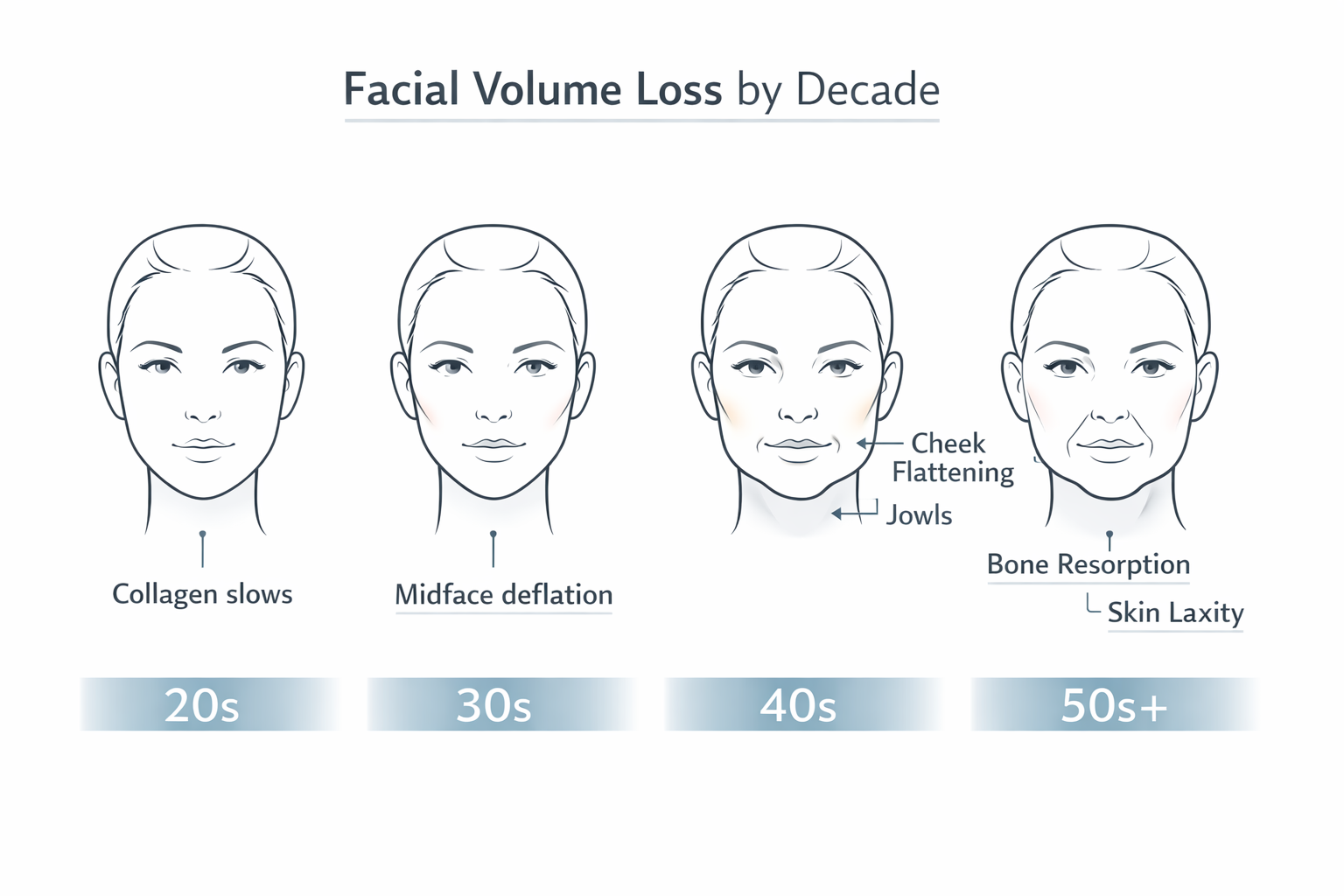
Twenties: Collagen and elastin production begins to slow, though changes are rarely visible. The face retains its youthful inverted triangle of youth shape — broad across the upper face and cheeks, tapering to the chin — with fat pads sitting in their optimal positions.
Thirties: Early midface deflation may become apparent, particularly under the eyes and in the upper cheeks. Nasolabial folds begin to deepen slightly. Temple hollowing may start in those with a genetic predisposition or low body fat. Skin laxity is minimal but collagen loss is measurable.
Forties: Volume loss becomes more clinically apparent. The cheeks flatten, the tear trough deepens, and the jawline begins to soften. The inverted triangle of youth starts to invert further — the face appears heavier in the lower third as fat descends. Bone resorption is now a contributing factor.
Fifties and beyond: Menopause accelerates collagen loss in women. Bone resorption is more pronounced. The face may appear skeletonised in the upper and midface, with jowling and marionette lines more evident in the lower face. Significant skin laxity accompanies the volume deficit, which influences treatment planning.
Areas of the Face Most Affected
Volume loss does not affect the face uniformly. Certain zones are consistently more vulnerable and tend to show changes earlier or more dramatically.
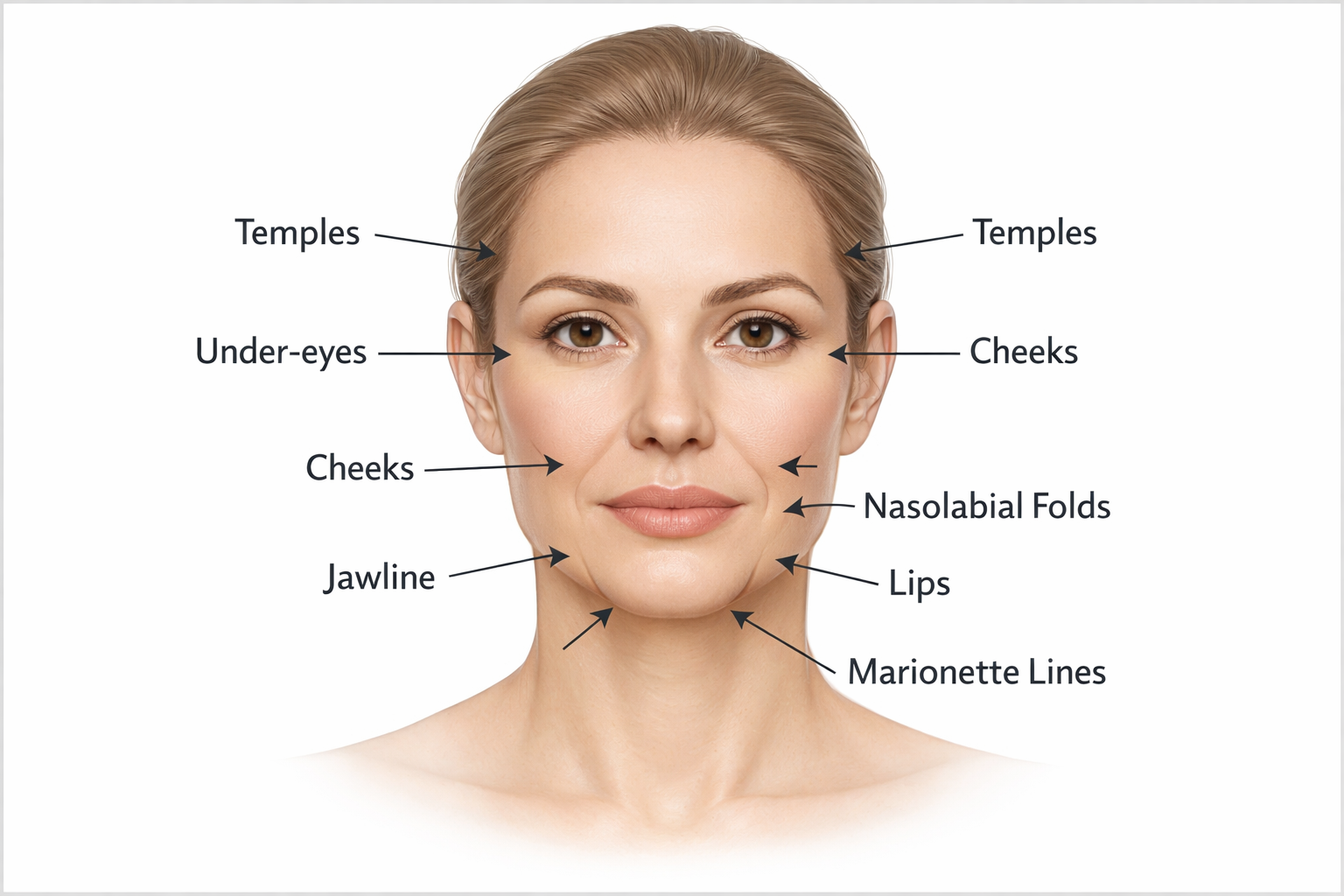
| Area | Common Signs | Typical Treatment Approaches |
|---|---|---|
| Temples | Temple hollowing, concave appearance, visible temporal vessels | HA filler, Sculptra, Radiesse |
| Cheeks / Midface | Sunken cheeks, midface deflation, loss of cheekbone projection | HA filler, Sculptra, fat grafting |
| Under-eyes | Tear trough hollowing, dark shadows, tired appearance | HA filler (specialist placement), Profhilo |
| Nasolabial folds | Deepened lines from nose to mouth corners | HA filler, Sculptra |
| Jawline | Softened definition, early jowl formation | HA filler, thread lift, facelift |
| Lips | Thinning, loss of definition, downturned corners | HA lip filler |
| Marionette lines | Lines from mouth corners to chin, oral commissure descent | HA filler, Sculptra |
Non-Surgical Treatments for Facial Volume Loss
Non-surgical volume restoration has advanced considerably and now offers a range of approaches suited to different degrees of loss, different areas, and different patient priorities. No single treatment addresses every aspect of facial volume loss, and combination approaches are increasingly used in clinical practice.
Hyaluronic Acid Dermal Fillers
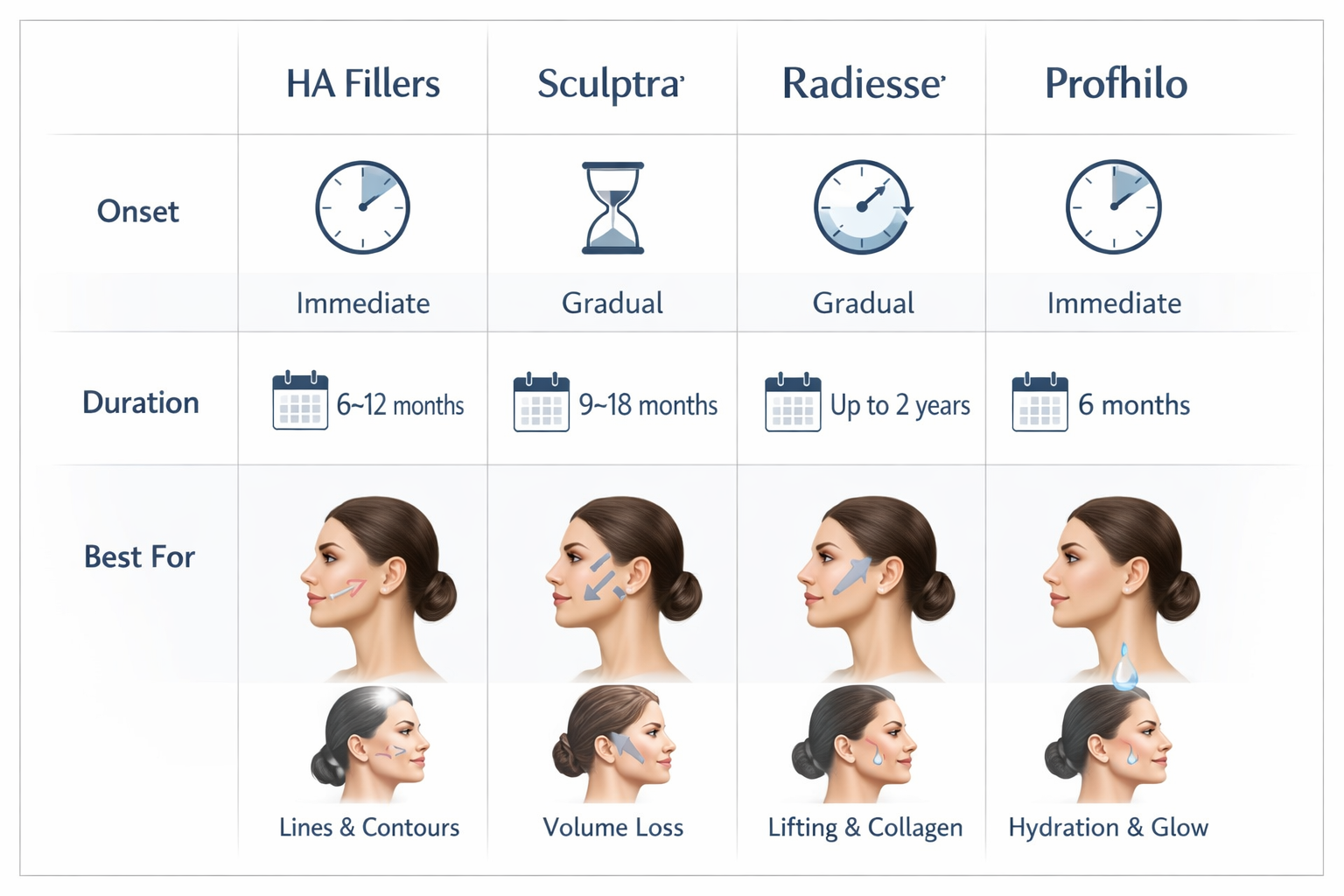
Hyaluronic acid (HA) fillers are the most widely used non-surgical treatment for facial volume loss. Hyaluronic acid is a naturally occurring substance in the body that attracts and retains water, and injectable HA fillers use a cross-linked gel formulation to add immediate structural volume to targeted areas. Different product formulations vary in their density, elasticity, and lifting capacity, allowing practitioners to select an appropriate product for each treatment zone — from the firm support needed in the cheeks to the softer consistency required near the tear trough.
Results from hyaluronic acid fillers are visible immediately and typically last between nine and eighteen months, depending on the product used, the area treated, and individual metabolism. HA fillers are reversible using an enzyme called hyaluronidase, which is an important safety consideration. Risks include bruising, swelling, asymmetry, and — in rare cases with serious consequences — vascular occlusion, which underscores the importance of treatment by a qualified and experienced practitioner.
Sculptra (Poly-L-Lactic Acid)
Sculptra contains poly-L-lactic acid (PLLA), a collagen biostimulator that works differently from HA fillers. Rather than adding immediate volume, Sculptra stimulates the body’s own fibroblasts to produce new collagen over a period of weeks to months. The result is a gradual, natural-looking improvement in facial fullness and skin quality. Multiple treatment sessions are typically required — often two to three — and results may last up to two years or longer in some patients. Sculptra is particularly suited to patients with diffuse volume loss across the midface and temples who prefer a subtle, progressive outcome rather than an immediate change.
Radiesse (Calcium Hydroxylapatite)
Radiesse contains calcium hydroxylapatite (CaHA) microspheres suspended in a gel carrier. It provides both immediate volume correction and longer-term collagen stimulation as the carrier gel is absorbed and the CaHA particles act as a scaffold for new tissue. Radiesse is often used for structural areas such as the cheeks and jawline and may be suitable for patients who want both an immediate result and ongoing biostimulation. It is not reversible in the same way as HA fillers, which is a relevant consideration during treatment planning.
Profhilo and Skin Boosters
Profhilo is a bio-remodelling treatment containing a high concentration of hyaluronic acid in an un-cross-linked form. Unlike conventional dermal fillers, Profhilo does not add structural volume; instead, it disperses through the tissue to improve skin hydration, elasticity, and overall quality. It is particularly useful for patients with skin laxity and poor skin texture accompanying volume loss, and it is often used alongside structural fillers or biostimulators as part of a combination approach. Results typically require two initial sessions four weeks apart, with maintenance every six months.
Platelet-Rich Plasma (PRP) and Microneedling
Platelet-rich plasma (PRP) therapy uses growth factors derived from the patient’s own blood to stimulate collagen production and tissue regeneration. It does not restore structural volume directly but may improve skin quality and thickness over time. RF microneedling devices such as Morpheus8 combine microneedling with radiofrequency energy to stimulate collagen and tighten skin, which can complement volume restoration treatments by improving the skin envelope. Evidence for these treatments in the context of volume loss is still developing, and results vary.
Thread Lifts
Absorbable thread lifts such as Silhouette Soft use barbed sutures placed under the skin to mechanically lift descended tissue and stimulate collagen production. They do not restore lost volume but can reposition descended fat pads and improve facial contour. Thread lifts are generally suited to mild to moderate tissue descent and are not a substitute for volume restoration in significantly deflated faces.
Surgical Options for Facial Volume Loss
For patients with significant or advanced facial volume loss — particularly where skin laxity is also pronounced — surgical options may offer more durable and comprehensive correction.
Fat Grafting (Autologous Fat Transfer)
Fat grafting involves harvesting fat from another area of the body, processing it, and injecting it into the face to restore volume. Because the transferred fat is the patient’s own tissue, there is no risk of allergic reaction, and results can be long-lasting — though a proportion of the transferred fat is typically reabsorbed in the months following treatment, and the final result may take six months to fully establish. Fat grafting is often performed alongside facelift surgery but can also be carried out as a standalone procedure. It is particularly suited to patients with significant midface deflation who also have suitable donor fat available.
Facelift Surgery
A facelift — particularly a SMAS (superficial musculoaponeurotic system) facelift — addresses both tissue descent and skin laxity by repositioning the deeper facial structures and removing excess skin. While a facelift does not directly replace lost volume, it can be combined with fat grafting or implants to address both structural descent and volume deficit simultaneously. Facelift surgery carries the risks associated with any surgical procedure, including anaesthesia, scarring, infection, and a recovery period of several weeks.
Facial Implants
Solid silicone implants placed over the cheekbones or chin can provide permanent structural augmentation in areas where volume loss is pronounced. Implants are a surgical option suited to patients who want a long-term solution and have realistic expectations about the nature of the result. They are not appropriate for all patients and require careful assessment of facial anatomy and patient goals.
Combination Treatment Approaches
In clinical practice, the most comprehensive results for facial volume loss are often achieved through combination treatment rather than a single modality. A common approach might involve using a collagen biostimulator such as Sculptra to address diffuse volume loss and improve skin quality over time, while using targeted hyaluronic acid filler to correct specific areas such as the tear trough or lip borders. Profhilo or RF microneedling may be added to address skin laxity and texture. This layered approach — treating bone-level support, fat compartment volume, and skin quality in sequence — reflects the multi-layer nature of the problem and tends to produce more natural-looking outcomes than addressing a single layer in isolation.
Can Facial Volume Loss Be Prevented?
Prevention cannot halt the natural ageing process, but certain lifestyle and skincare habits may slow the rate of collagen loss and help preserve skin quality for longer.
- Daily broad-spectrum SPF: Consistent use of SPF 30 or higher is one of the most evidence-supported steps for reducing photoageing and collagen degradation from UV exposure.
- Retinoids: Topical retinoids (vitamin A derivatives) are among the most studied skincare ingredients for stimulating collagen production and improving dermal thickness over time.
- Vitamin C and peptides: Topical vitamin C supports collagen synthesis and provides antioxidant protection. Peptide-based skincare may support the extracellular matrix, though evidence for specific formulations varies.
- Collagen-supporting diet: Adequate dietary protein, vitamin C, zinc, and antioxidant-rich foods support the body’s collagen synthesis pathways. Foods such as oily fish, leafy greens, and bone broth are commonly cited, though dietary effects on facial volume specifically are difficult to quantify.
- Avoiding smoking: Smoking accelerates collagen breakdown and impairs skin circulation; cessation is one of the most impactful steps for preserving skin quality.
- Adequate sleep and stress management: Chronic elevated cortisol accelerates collagen degradation; consistent sleep supports tissue repair and regeneration.
- Gradual rather than rapid weight loss: Where weight loss is a goal, a gradual approach gives the skin more time to adapt and may reduce the degree of facial hollowing compared with rapid loss.
Is Facial Volume Loss Reversible?
Facial volume loss is partially reversible with treatment, but it is important to have realistic expectations. Non-surgical treatments such as hyaluronic acid fillers can restore the appearance of lost volume effectively and immediately, but the results are temporary and require maintenance. Collagen biostimulators such as Sculptra address the underlying collagen deficit more directly, but they cannot replace bone that has been resorbed or permanently restore fat pads that have atrophied. Surgical options such as fat grafting offer more durable correction but carry greater procedural risk and recovery time.
The goal of treatment is generally to restore a natural, refreshed appearance rather than to recreate the exact face of a younger decade. The most successful outcomes tend to result from a thorough clinical assessment, a realistic discussion of what each treatment can and cannot achieve, and a staged approach that respects the patient’s anatomy and preferences.
Frequently Asked Questions
At what age does facial volume loss typically become noticeable?
Most people begin to notice subtle changes in their thirties, particularly under the eyes and in the upper cheeks. More pronounced midface deflation and temple hollowing tend to become apparent in the forties, with significant changes often accelerating around menopause in women. However, genetics, lifestyle, and body weight all influence the timeline considerably.
Can exercise restore facial volume?
Facial exercises cannot restore lost fat pad volume, reverse bone resorption, or replace depleted collagen. While some evidence suggests that targeted facial exercises may modestly improve muscle tone and facial fullness in specific populations, they are not a substitute for the structural changes that drive visible volume loss. Exercise that causes significant overall weight loss may actually worsen facial hollowing.
Will gaining weight restore volume to my face?
Weight gain can increase subcutaneous fat throughout the body, including the face, and may partially restore a fuller appearance in people who have lost significant weight. However, it does not address collagen loss, bone resorption, or fat pad descent, and intentional weight gain is not a recommended or reliable treatment strategy for facial volume loss.
How long do dermal fillers last for volume loss?
Hyaluronic acid fillers used for facial volume restoration typically last between nine and eighteen months, depending on the product, the area treated, and individual factors such as metabolism and activity level. Denser, more cross-linked products used in structural areas such as the cheeks tend to last longer than softer products used in more mobile areas.
Is Sculptra better than dermal fillers for volume loss?
Sculptra and hyaluronic acid fillers serve different purposes and are not directly interchangeable. HA fillers provide immediate, targeted volume correction and are reversible. Sculptra works gradually by stimulating collagen production and is better suited to diffuse volume loss across larger areas. Many practitioners use both in combination. The most appropriate choice depends on the areas affected, the degree of loss, and the patient’s preferences regarding onset and maintenance.
What is Ozempic face and can it be treated?
Ozempic face is a colloquial term for the accelerated facial hollowing that can occur with rapid weight loss associated with GLP-1 receptor agonist medications such as semaglutide (Ozempic, Wegovy). The facial volume loss itself is not caused by the medication directly but by the significant and often rapid reduction in body fat. It can be addressed with the same non-surgical and surgical approaches used for age-related volume loss, including HA fillers and collagen biostimulators, though treatment planning should account for whether weight loss is ongoing or stabilised.
Is treatment for facial volume loss safe?
Non-surgical treatments such as dermal fillers and biostimulators are generally considered safe when performed by appropriately trained and qualified practitioners using licensed products. Risks exist and include bruising, swelling, asymmetry, nodule formation, and — in rare but serious cases — vascular complications with injectable treatments. Surgical options carry the risks associated with any operative procedure. A thorough consultation, honest discussion of risks, and treatment by a qualified professional are essential for patient safety.
When to Seek a Clinical Assessment for Facial Volume Loss
If you have noticed changes in facial fullness — hollow temples, sunken cheeks, deepening under-eye shadows, or a generally gaunt or tired appearance — a consultation with a qualified aesthetic practitioner or dermatologist is the appropriate first step. A clinical assessment will identify which structural layers are most affected, which areas are the priority, and which treatment or combination of treatments may be most suitable for your anatomy, skin quality, and goals. There is no single correct approach to restoring facial volume, and the best outcomes come from a personalised plan rather than a one-size-fits-all treatment. Early intervention, when volume loss is mild to moderate, generally allows for more conservative and natural-looking correction than waiting until changes are advanced.