

Key Takeaways
- Chest wrinkles form through a combination of intrinsic ageing, photoageing, sleep position, and lifestyle factors — understanding the cause helps guide the right approach.
- Daily broad-spectrum SPF 30+ and a consistent décolleté skincare routine are the most evidence-supported preventative steps available.
- Clinical treatments such as radiofrequency microneedling, fractional laser, biostimulatory fillers, and Profhilo can improve skin laxity and texture, but results vary and multiple sessions are usually needed.
- A combination treatment approach is often more effective than any single procedure, and a qualified practitioner should assess your skin before recommending a plan.
- Prevention is significantly easier than reversal — starting early, even in your twenties or thirties, can meaningfully slow the progression of décolletage ageing.
Why the Chest Ages Differently
The décolletage — the area covering the chest, upper breast, and lower neck — is one of the first regions to show visible signs of ageing, yet it is frequently overlooked in daily skincare routines. The skin in this area is structurally thinner than facial skin, contains fewer oil glands to maintain natural moisture, and has less underlying fat to cushion it from mechanical stress. These anatomical factors make the chest particularly vulnerable to both intrinsic ageing and external damage.
Collagen and elastin — the proteins responsible for skin firmness and resilience — decline gradually from the mid-twenties onwards. On the chest, this decline is compounded by years of UV exposure, often without the protection routinely applied to the face. The result is a combination of fine lines, deeper cleavage wrinkles, crepey skin texture, and skin laxity that can appear earlier and progress faster than equivalent changes on the face.
Understanding why chest wrinkles form is the starting point for choosing an approach that is realistic and appropriate for your skin.
What Causes Chest Wrinkles?
Chest wrinkles rarely have a single cause. Most people develop them through a combination of the following factors, and identifying which are most relevant to you helps determine whether prevention, at-home care, or clinical treatment is the most appropriate next step.
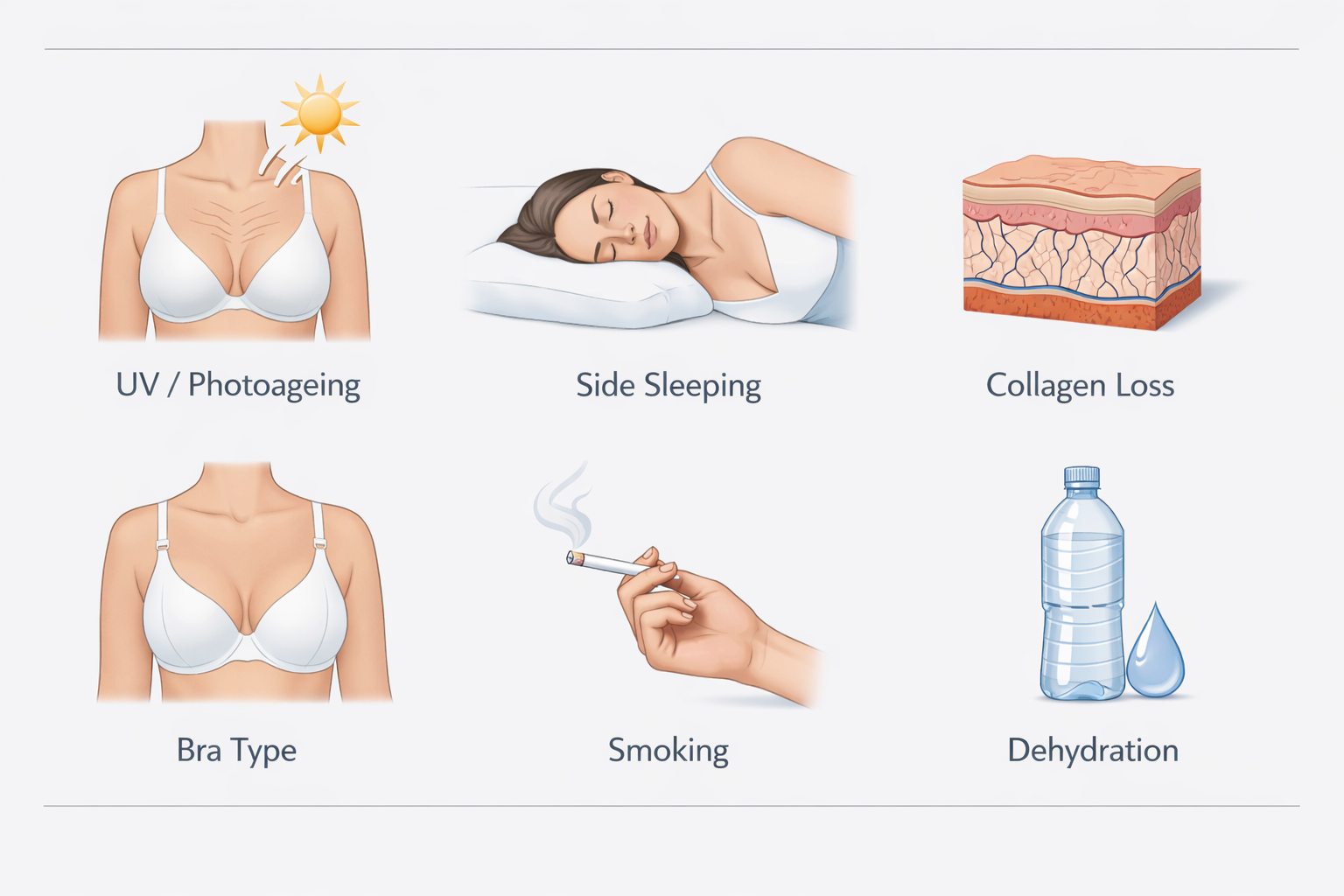
Photoageing and UV Damage
Chronic UV exposure is one of the most significant drivers of premature chest ageing. UV rays penetrate the dermis and damage dermal fibroblasts — the cells responsible for producing collagen and elastin fibres. Over time, this leads to photoageing: a pattern of skin changes that includes fine lines, uneven pigmentation, redness, and a loss of skin elasticity. The chest is frequently exposed to the sun during outdoor activities, yet sunscreen application to this area is inconsistent for many people, accelerating cumulative damage.
Sleep Position and Compression Wrinkles
Side sleeping is a well-recognised but underappreciated cause of cleavage wrinkles. When you sleep on your side, the weight of the breasts compresses the skin between them for hours at a time, night after night. These compression wrinkles begin as temporary creases that disappear after waking, but over years they can become etched into the skin as static wrinkles — lines that remain visible even when the skin is at rest. Back sleeping is the most effective way to prevent this type of mechanical wrinkling, though it is not always practical. Silicone chest pads worn overnight can help hold the skin flat and reduce compression during side sleeping.
Natural Collagen and Elastin Decline
Intrinsic ageing — the biological process of collagen and elastin loss that occurs regardless of lifestyle — affects the chest as it does every area of the body. As elastin fibres lose their ability to spring back and collagen production slows, the skin becomes thinner, less resilient, and more prone to wrinkling. Hormonal changes, particularly the decline in oestrogen during perimenopause and menopause, can accelerate this process, as oestrogen plays a role in maintaining skin thickness and moisture retention.
Breast Size, Bra Type, and Mechanical Stress
Larger breast size increases the gravitational and mechanical forces acting on the décolletage skin, which can contribute to earlier wrinkling. Certain bra styles — particularly push-up bras and tight sports bras worn for extended periods — can press the breasts together and create repeated skin folding. While this is rarely the primary cause of chest wrinkles, it is a contributing factor that is worth considering alongside other causes.
Smoking, Dehydration, and Other Lifestyle Factors
Smoking accelerates collagen breakdown through oxidative stress and impairs the skin’s ability to repair itself. Chronic dehydration compromises the skin barrier, reducing the skin’s ability to retain moisture and making fine lines more visible. Applying fragrance or perfume directly to the chest — a common habit — can cause low-grade irritation and photosensitivity that contributes to skin damage over time. Topical steroid use on the chest, when prolonged, can cause skin thinning that makes wrinkles more apparent.
Dynamic Wrinkles vs. Static Wrinkles: Why the Distinction Matters
Chest wrinkles can be classified into two types, and understanding the difference helps set realistic expectations for treatment. Dynamic wrinkles appear during movement or compression — such as the temporary creases that form when the breasts are pressed together — and may partially resolve when the skin is relaxed. Static wrinkles are present at rest and reflect structural changes in the dermis, including collagen loss and reduced elastin. Most people with visible chest wrinkles have a combination of both types.
This distinction matters clinically because different treatments target different mechanisms. Treatments that stimulate collagen production — such as radiofrequency microneedling or biostimulatory fillers — are better suited to static wrinkles and skin laxity. Addressing compression wrinkles from sleep position requires behavioural change or physical barriers such as silicone chest pads, rather than clinical intervention alone.
Preventing Chest Wrinkles: What Actually Helps
Prevention is considerably more straightforward than reversal. The following measures are supported by dermatological evidence and are most effective when started early — ideally in the twenties or thirties, before significant structural changes have occurred.
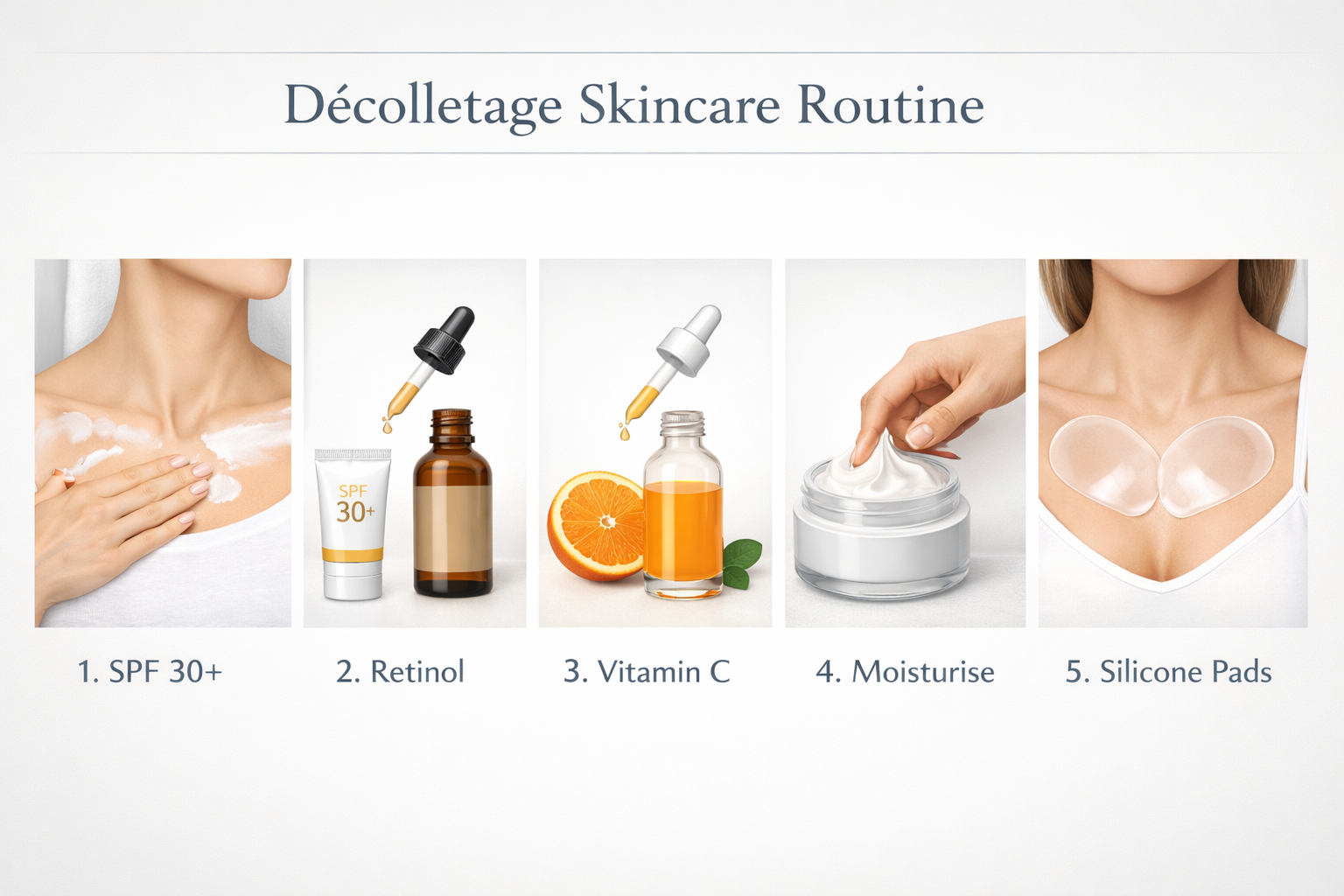
Daily Broad-Spectrum Sunscreen
Applying a broad-spectrum SPF 30+ sunscreen to the chest every morning is the single most impactful preventative step available. UV protection limits photoageing, reduces the risk of pigmentation, and helps preserve the collagen and elastin that remain. Sunscreen should be reapplied after swimming or sweating. UPF-rated clothing provides an additional layer of protection during prolonged sun exposure.
Retinol for Chest Wrinkles
Retinol — a vitamin A derivative — is one of the most studied topical ingredients for stimulating collagen production and improving skin texture. Retinol for chest wrinkles can be applied in the same way as on the face, though the chest skin may be more sensitive initially. Starting with a low concentration two to three times per week and gradually increasing frequency helps minimise irritation. Retinoids should be applied at night and followed by sunscreen the next morning, as they increase photosensitivity.
Vitamin C Serum and Antioxidants
Vitamin C serum applied to the décolletage provides antioxidant protection against free radical damage caused by UV rays and environmental pollutants. It also supports collagen synthesis and may help improve uneven skin tone over time. Vitamin C is best applied in the morning before sunscreen. Peptides and niacinamide are additional ingredients that may support skin barrier function and collagen stimulation, though the evidence for their use on the chest specifically is less robust than for retinol.
Hydration and Skin Barrier Support
A hyaluronic acid moisturiser applied to the chest helps maintain surface hydration and temporarily plumps the appearance of fine lines. Keeping the skin barrier intact — by avoiding harsh soaps, excessive exfoliation, and known irritants such as fragrance applied directly to the skin — reduces transepidermal water loss and supports the skin’s natural repair processes. Gentle exfoliation once or twice a week can improve product absorption without compromising the barrier.
Sleep Position and Silicone Chest Pads
Transitioning to back sleeping removes the nightly compression that drives cleavage wrinkles. For those who find this difficult, silicone chest pads offer a practical alternative. These medical-grade silicone patches are worn against the skin overnight and work by holding the décolletage skin flat, reducing folding and the moisture loss that occurs when skin creases. Some users report visible improvement in compression wrinkles with consistent use over several weeks, though robust clinical trial data on their long-term efficacy remains limited.
Clinical Treatments for Chest Wrinkles
When at-home measures are insufficient or when wrinkles are already established, a range of professional treatments may help improve the appearance of the décolletage. The chest presents specific challenges compared to the face: the skin is thinner, heals more slowly, and is at higher risk of post-inflammatory hyperpigmentation — particularly in individuals with medium to darker skin tones. A careful, staged approach is important, and a qualified practitioner should assess your skin and medical history before recommending any treatment.
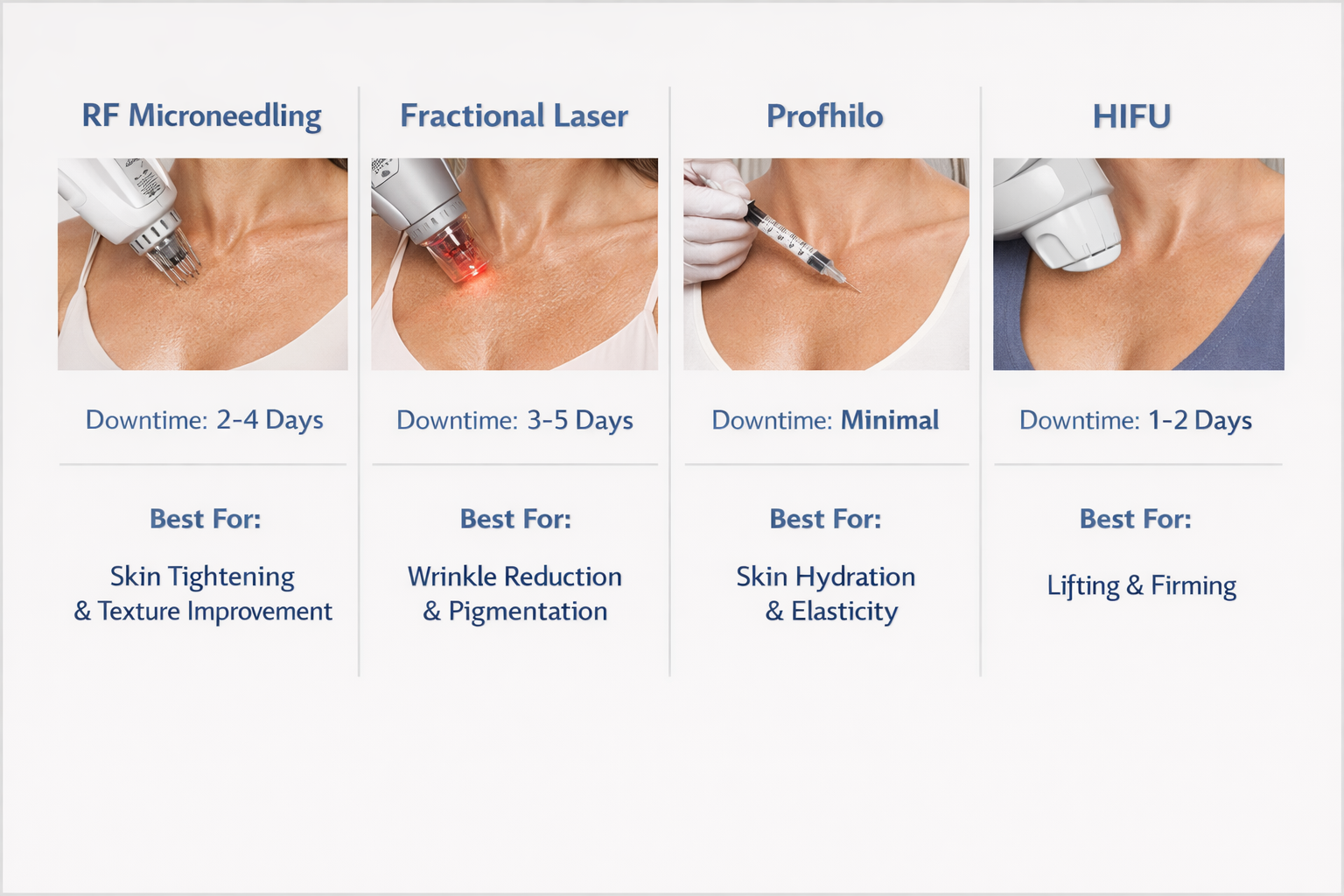
Treatment Comparison Overview
| Treatment | Mechanism | Best For | Sessions Typically Needed | Downtime |
|---|---|---|---|---|
| Radiofrequency microneedling (e.g. Morpheus8) | Micro-injuries + RF energy stimulate collagen and elastin | Skin laxity, crepey texture, fine lines | 2–4 | 3–7 days redness/swelling |
| Fractional laser / CO2 laser | Controlled thermal injury triggers collagen remodelling | Deeper wrinkles, texture, pigmentation | 1–3 | Up to 2 weeks |
| IPL (Intense Pulsed Light) | Broad-spectrum light targets pigment and vascular lesions | Sun damage, redness, uneven tone | 3–5 | Minimal to 5 days |
| Profhilo / bio-remodelling injectables | High-concentration HA stimulates collagen and elastin remodelling | Skin quality, hydration, mild laxity | 2–3 (then maintenance) | Minimal |
| Biostimulatory fillers (Sculptra, Radiesse) | Stimulate fibroblast activity and new collagen production | Volume loss, deeper lines, skin laxity | 2–3 | Minimal to moderate |
| Dermal fillers (HA-based) | Direct volume replacement and hydration | Specific deep lines, volume deficit | 1–2 | Minimal |
| HIFU / Ultherapy | Focused ultrasound energy tightens deeper tissue layers | Skin laxity, mild to moderate sagging | 1–2 | Minimal |
| Chemical peel | Controlled exfoliation promotes skin renewal | Surface texture, mild pigmentation | 3–6 | 3–10 days depending on depth |
Radiofrequency Microneedling
Radiofrequency microneedling — delivered by devices such as Morpheus8 — combines fine needle micro-injuries with radiofrequency energy delivered into the dermis. This dual mechanism triggers a wound-healing response that stimulates collagen and elastin production, improving skin laxity and crepey texture over several weeks to months. The chest responds well to this approach, though the treatment parameters need to be carefully adjusted for the thinner skin of the décolletage. Most patients require two to four sessions spaced four to six weeks apart, with visible improvement continuing for up to six months after the final session.
Fractional Laser and CO2 Laser Resurfacing
Fractional laser treatments create microscopic columns of thermal injury in the skin, leaving surrounding tissue intact to support faster healing. This controlled damage stimulates collagen remodelling and can improve deeper static wrinkles, uneven texture, and sun-damaged skin. CO2 laser resurfacing is more aggressive and typically requires more downtime — up to two weeks — but may produce more significant results for established chest wrinkles. Individuals with darker skin tones face a higher risk of post-inflammatory hyperpigmentation from ablative laser treatments, and this risk should be discussed thoroughly with a practitioner before proceeding.
IPL Photofacial
Intense Pulsed Light (IPL) is particularly effective for the pigmentation and redness associated with photoageing rather than for wrinkles directly. It works by delivering broad-spectrum light that targets melanin and haemoglobin in the skin, reducing sunspots, broken capillaries, and uneven tone. IPL is often used as part of a combination treatment approach alongside collagen-stimulating procedures to address the full range of décolletage concerns simultaneously.
Profhilo and Bio-Remodelling Injectables
Profhilo is a high-concentration hyaluronic acid injectable that works differently from conventional dermal fillers. Rather than adding volume to a specific area, it disperses through the tissue and stimulates fibroblasts to produce new collagen and elastin. On the chest, Profhilo is typically injected at several points across the décolletage and can improve overall skin quality, hydration, and mild skin laxity. Two sessions spaced four weeks apart are the standard initial protocol, with maintenance treatments every six to twelve months. Results are generally subtle and progressive rather than immediately dramatic.
Biostimulatory Fillers
Biostimulatory fillers such as Sculptra (poly-L-lactic acid) and Radiesse (calcium hydroxylapatite) work by stimulating the body’s own collagen production rather than simply replacing lost volume. On the chest, these products can address deeper lines, skin laxity, and volume loss over a series of sessions. Results develop gradually over two to three months as new collagen forms, and effects may last one to two years depending on the product and individual response. These treatments carry a different risk profile from standard HA fillers and require an experienced injector familiar with chest anatomy.
HIFU and Ultherapy
High-intensity focused ultrasound (HIFU), delivered by devices such as Ultherapy, targets the deeper structural layers of the skin with focused ultrasound energy. This stimulates collagen contraction and new collagen production, producing a gradual tightening effect over two to three months. HIFU is a non-invasive chest rejuvenation option with minimal downtime, making it suitable for patients with mild to moderate skin laxity who prefer to avoid injectable treatments. Results are generally more modest than those achieved with radiofrequency microneedling or laser resurfacing.
Chemical Peels
Chemical peels applied to the chest use acids — such as glycolic acid, trichloroacetic acid (TCA), or combination formulas — to remove the outer layers of skin and stimulate renewal. Superficial peels improve surface texture and mild pigmentation with minimal downtime, while medium-depth peels can address more significant sun damage. The chest heals more slowly than the face, so peel depth should be conservative, and strict sun avoidance is essential during recovery.
The Case for Combination Treatment
Chest wrinkles rarely have a single cause, and a single treatment rarely addresses all aspects of décolletage ageing. A combination treatment approach — for example, IPL to address pigmentation and redness, followed by radiofrequency microneedling to improve skin laxity and texture, with Profhilo to enhance overall skin quality — allows each modality to target a different component of the problem. This staged approach also reduces the risk of overloading the skin, which heals more slowly in the chest area than on the face. A practitioner experienced in décolletage treatment will typically assess the full picture before recommending a sequenced plan rather than a single procedure.
Who May Not Be Suitable for Clinical Treatment
Not everyone is a candidate for clinical chest wrinkle treatments. Relevant contraindications vary by procedure but may include active skin infections or inflammatory conditions in the treatment area, pregnancy or breastfeeding, certain autoimmune conditions, use of photosensitising medications, a history of keloid scarring, and implanted electronic devices such as pacemakers (relevant for radiofrequency treatments). Individuals with a history of cold sores may need antiviral prophylaxis before laser or resurfacing procedures. A thorough consultation and medical history review is essential before any treatment is undertaken.
Collagen Banking: A Preventative Approach for Younger Patients
An emerging concept in aesthetic medicine is collagen banking — using collagen-stimulating treatments proactively in the late twenties or thirties, before significant structural loss has occurred, to build a reserve of collagen that slows the visible effects of ageing. Treatments such as Profhilo, low-dose radiofrequency microneedling, or biostimulatory fillers used at an early stage may help maintain skin quality over time. The evidence base for this approach is still developing, and it is not appropriate for everyone, but it represents a meaningful shift from purely reactive treatment toward longer-term skin health planning.
Frequently Asked Questions
Can chest wrinkles be reversed?
Established static wrinkles cannot be completely reversed, but their appearance can often be meaningfully improved with the right combination of skincare and clinical treatment. Collagen-stimulating procedures can improve skin texture and laxity over time, while consistent sun protection and retinol use can slow further progression. Realistic expectations are important — significant improvement is achievable, but complete elimination of deep wrinkles is unlikely.
How long do clinical treatment results last?
This varies considerably by treatment. Profhilo results typically last six to twelve months before a maintenance session is needed. Radiofrequency microneedling results may last one to two years, depending on the number of sessions and ongoing skincare. Biostimulatory fillers such as Sculptra can produce results lasting up to two years. All results are influenced by ongoing UV exposure, lifestyle, and the natural ageing process, which continues regardless of treatment.
Are silicone chest pads effective?
Silicone chest pads can help reduce compression wrinkles caused by side sleeping when used consistently. They work by physically preventing the skin from folding during sleep and by creating a moist microenvironment that may support skin hydration. They are not a substitute for clinical treatment of established wrinkles, but they are a reasonable and low-risk addition to a prevention strategy.
Is retinol safe to use on the chest?
Retinol is generally safe for use on the chest, but the skin in this area can be more reactive than facial skin. Starting with a low concentration — around 0.025% to 0.1% — applied two to three times per week and gradually increasing is advisable. Avoid applying retinol to broken or irritated skin, and always follow with broad-spectrum sunscreen the following morning. If significant irritation occurs, reduce frequency or concentration and consult a dermatologist or aesthetic practitioner.
Does skin tone affect treatment options?
Yes. Individuals with medium to darker skin tones (Fitzpatrick types IV–VI) face a higher risk of post-inflammatory hyperpigmentation from ablative laser treatments and aggressive chemical peels. For these patients, radiofrequency microneedling, Profhilo, and biostimulatory fillers are often safer first-line options. IPL settings also need to be carefully adjusted for darker skin tones. A practitioner experienced in treating diverse skin types should be consulted before any energy-based treatment is undertaken.
How many sessions will I need?
The number of sessions depends on the treatment chosen, the severity of the wrinkles, and your individual skin response. Most collagen-stimulating treatments require a minimum of two to four sessions to produce meaningful results, with improvements continuing for several months after the final session. A practitioner will typically reassess after the initial course before recommending further treatment.
Making an Informed Decision About Chest Wrinkle Treatment
Chest wrinkles are a common and understandable concern, and there are genuinely effective options available — both at home and in a clinical setting. The most important first step is understanding which factors are driving your particular pattern of décolletage ageing, since this determines which approach is most likely to help. For many people, a consistent décolleté skincare routine built around broad-spectrum SPF 30+, retinol, and a good moisturiser will produce meaningful improvement over time, particularly when started before significant structural changes have occurred.
For established skin laxity, crepey texture, or deeper cleavage wrinkles, clinical treatments can offer more significant improvement — but they work best when chosen carefully, staged appropriately, and combined with ongoing sun protection and skincare. No single treatment addresses every aspect of chest ageing, and results vary between individuals. A consultation with a qualified aesthetic practitioner or dermatologist who can assess your skin in person, review your medical history, and recommend a personalised plan is the most reliable way to identify what is appropriate for you.