

Key Takeaways
- Radiofrequency (RF) treatment uses electromagnetic energy to heat subdermal tissue and stimulate collagen remodelling — it is not a laser, despite the common term “RF laser treatment.”
- RF devices range from non-invasive surface treatments (Thermage) to minimally invasive fractional RF microneedling systems (Morpheus8, Genius RF), each reaching different treatment depths.
- RF is suitable for all skin tones because it does not target skin pigment, making it a useful option where certain laser treatments carry a higher risk for darker skin.
- Results develop gradually over weeks to months as new collagen forms; most patients require one to three initial sessions and periodic maintenance sessions to sustain improvement.
- RF treatment is not risk-free, and in October 2025 the FDA issued a safety communication regarding RF microneedling devices — choosing a qualified practitioner and an FDA-cleared device is important.
What Does “RF Laser Treatment” Actually Mean?
The phrase “RF laser treatment” is widely used by patients searching for skin tightening procedures, but it combines two distinct technologies. Radiofrequency (RF) treatment and laser treatment are separate energy-based approaches that work through entirely different mechanisms. Understanding this distinction helps patients ask better questions and choose the right procedure for their concern.
Radiofrequency energy is a form of electromagnetic energy delivered as an alternating electrical current. When applied to the skin, this current generates heat through tissue impedance — the natural resistance of biological tissue to electrical flow. The resulting controlled thermal injury stimulates the body’s wound healing cascade, activating fibroblasts to produce new collagen and elastin. This process, known as neocollagenesis, gradually firms and tightens the skin over weeks to months.
Laser treatment, by contrast, uses focused light energy at specific wavelengths to target chromophores — pigment molecules such as melanin or haemoglobin — or to ablate the skin surface. Ablative lasers (such as fractional CO2 or Er:YAG) remove the outer skin layers to trigger resurfacing. Non-ablative lasers heat deeper tissue without surface removal. Because lasers rely on chromophore absorption, some laser types carry a higher risk of pigmentation changes in darker skin tones.
The term “RF laser treatment” has become a colloquial shorthand for energy-based skin rejuvenation in general. In practice, it most often refers to radiofrequency skin tightening or fractional RF microneedling. This article uses the term as patients search for it, while clarifying the actual technology involved.
How Radiofrequency Energy Works on the Skin
RF devices deliver radiofrequency energy through electrodes placed on or inserted into the skin. The energy passes through tissue, generating heat at a controlled depth. The key biological events occur in the dermis and subdermal tissue, where collagen fibres are most concentrated.
At temperatures typically between 60°C and 70°C, existing collagen fibres undergo thermal coagulation — they contract and partially denature, producing an immediate mild tightening effect. More importantly, this controlled thermal injury triggers the wound healing cascade: fibroblasts migrate to the treated area and begin synthesising new collagen and elastin over the following weeks. This process of collagen remodelling and neocollagenesis continues for three to six months after treatment, which is why the most visible results appear gradually rather than immediately.
The depth of heating depends on the device type, electrode configuration, and energy settings. Monopolar RF devices (such as Thermage) deliver energy that penetrates more deeply, reaching the subdermal tissue and the SMAS (superficial musculoaponeurotic system) layer. Bipolar RF devices concentrate energy between two electrodes and typically treat a shallower, more defined zone. Fractional RF microneedling systems combine insulated needles with RF energy delivery, allowing precise treatment depth control and creating discrete thermal coagulation zones within the dermis.
Types of RF Devices and What Distinguishes Them
The RF device landscape has expanded considerably, and different systems suit different concerns and skin types. Understanding the main categories helps patients have more informed conversations with their practitioner.
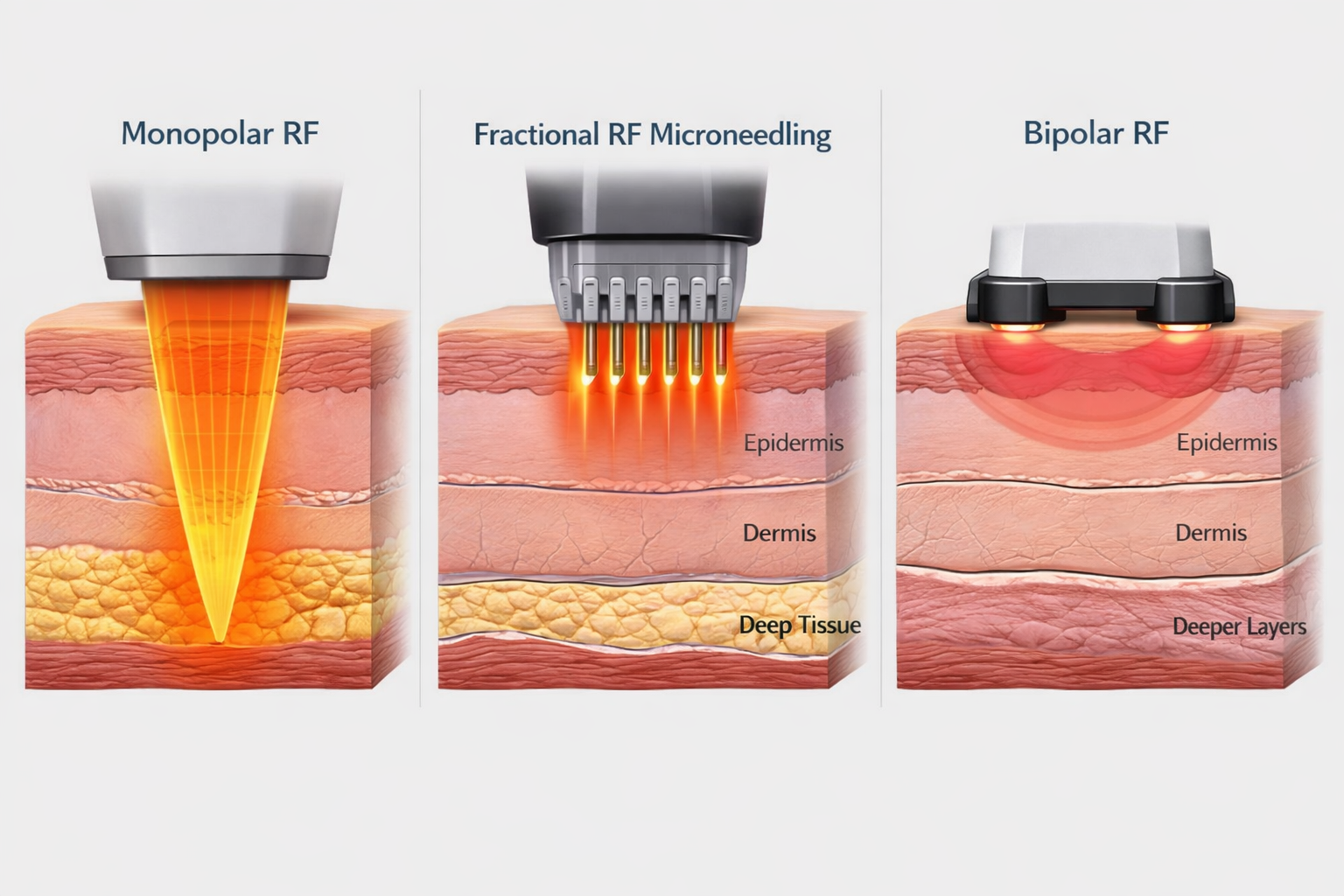
Monopolar RF (Thermage)
Thermage is one of the most established monopolar RF platforms. It delivers radiofrequency energy through a single treatment tip, with a return electrode placed elsewhere on the body to complete the circuit. This configuration allows energy to travel deeper into subdermal tissue, making Thermage a commonly used option for facial and body skin laxity, including jowls, neck laxity, and crepey skin on the abdomen or arms. Treatment is typically performed in a single session, with results developing over three to six months. Thermage is a non-invasive skin tightening procedure with no needles and minimal downtime.
Fractional RF Microneedling (Morpheus8, Genius RF, Virtue RF, Vivace, Profound)
Fractional RF microneedling is a minimally invasive approach that combines microneedling with radiofrequency energy delivery. Insulated microneedles penetrate the skin to a preset depth, then emit RF energy at the needle tips, creating precise thermal coagulation zones within the dermis and subdermal tissue. This dual mechanism — physical micro-injury plus thermal stimulation — produces a robust wound healing response and collagen remodelling effect.
Morpheus8 is among the most widely recognised fractional RF microneedling devices, capable of reaching depths of up to 8mm with its deeper applicator tips. Genius RF uses real-time impedance monitoring to adjust energy delivery during treatment. Profound RF is designed specifically to target elastin production alongside collagen. These devices are used for acne scars, enlarged pores, uneven skin texture, fine lines, wrinkles, and skin laxity. Because the RF energy is delivered below the skin surface through insulated needles, the risk of surface pigmentation changes is lower than with some laser treatments, making fractional RF microneedling a useful option for patients with darker skin tones.
Non-Invasive Bipolar and Multipolar RF (Exilis, EndyMed)
Bipolar and multipolar RF devices deliver energy between two or more electrodes on the skin surface, concentrating heat in a defined zone without needles. These systems are fully non-invasive and are used for mild to moderate skin laxity, skin rejuvenation, and body contouring. They typically require a series of sessions and produce more gradual results than fractional RF microneedling.
Quick Comparison: RF Treatment vs Laser vs HIFU vs Microneedling
| Feature | RF Treatment (non-invasive) | Fractional RF Microneedling | Laser (ablative/non-ablative) | HIFU | Microneedling (no RF) |
|---|---|---|---|---|---|
| Mechanism | Electromagnetic heat via tissue impedance | RF energy via insulated needles + micro-injury | Light energy targeting chromophores or surface | Focused ultrasound energy | Mechanical micro-injury only |
| Treatment depth | Dermis to subdermal (varies by device) | Dermis to subdermal (up to 8mm) | Epidermis to mid-dermis (varies) | SMAS layer (4.5mm and deeper) | Superficial dermis |
| Primary goal | Skin tightening, collagen remodelling | Skin tightening, texture, acne scars, pores | Resurfacing, pigmentation, texture, tightening | Deep lifting, SMAS tightening | Texture, mild scarring, skin quality |
| Skin tone suitability | All skin tones | All skin tones | Varies; some types higher risk for darker skin | All skin tones | All skin tones |
| Downtime | Minimal (hours to 1–2 days) | 2–5 days (redness, swelling, pinpoint marks) | 1 day to 2+ weeks (ablative) | Minimal to mild | 1–3 days |
| Sessions typically needed | 1–3 initial; maintenance every 6–12 months | 1–3 initial; maintenance every 12–18 months | 1–6 depending on type and concern | 1–2 initial; annual maintenance | 3–6 sessions |
| Results longevity | 1–2 years with maintenance | Up to 2 years or more with maintenance | Varies widely by type | 1–2 years | Several months |
| Approximate cost per session | $500–$4,000 | $600–$2,400 | $300–$4,500 | $800–$3,500 | $200–$700 |
| Best suited for | Mild–moderate laxity, body areas | Acne scars, texture, moderate laxity | Pigmentation, resurfacing, sun damage | Deep facial lifting, SMAS laxity | Mild texture, early scarring |
What Conditions Can RF Treatment Address?
RF treatment is used across a range of skin and tissue concerns, though the degree of improvement varies by individual, device, and treatment depth.
- Skin laxity: Mild to moderate sagging on the face, jawline, jowls, neck, and body areas such as the abdomen, inner arms, and thighs.
- Fine lines and wrinkles: Periorbital lines, forehead lines, and superficial facial wrinkles may improve as collagen and elastin production increases.
- Acne scars: Fractional RF microneedling has clinical evidence supporting its use for atrophic acne scarring, including rolling and boxcar scars.
- Enlarged pores and uneven skin texture: The combination of micro-injury and thermal stimulation can improve skin texture and reduce the appearance of enlarged pores.
- Crepey skin: Thin, crepey skin on the neck, chest (décolletage), and body may respond to RF-induced collagen remodelling.
- Neck bands and under-chin laxity: RF treatment is commonly used for submental and neck laxity as a non-surgical alternative.
- Striae (stretch marks): Some RF devices are used for stretch marks, though evidence is more limited in this area.
RF treatment is generally less effective for significant skin pigmentation, vascular concerns, or sun damage compared to laser treatments specifically designed for those targets. A qualified practitioner can assess which technology — or combination — best matches a patient’s primary concern.
Who May Be a Suitable Candidate?
RF treatment may be appropriate for adults experiencing mild to moderate skin laxity, early signs of ageing, acne scarring, or uneven skin texture who prefer a non-surgical or minimally invasive approach. Because radiofrequency energy does not depend on skin pigment absorption, RF treatment is suitable for all skin tones, including darker skin types where certain laser treatments carry a higher risk of post-inflammatory hyperpigmentation.
Patients with realistic expectations who understand that results develop gradually over months — rather than immediately — tend to be better suited to RF treatment. It is not a replacement for surgical procedures such as a facelift in cases of significant skin laxity or excess skin.
Who Should Avoid RF Treatment?
RF treatment is not appropriate for everyone. A thorough consultation with a qualified practitioner is necessary to assess individual suitability. Contraindications and cautions typically include:
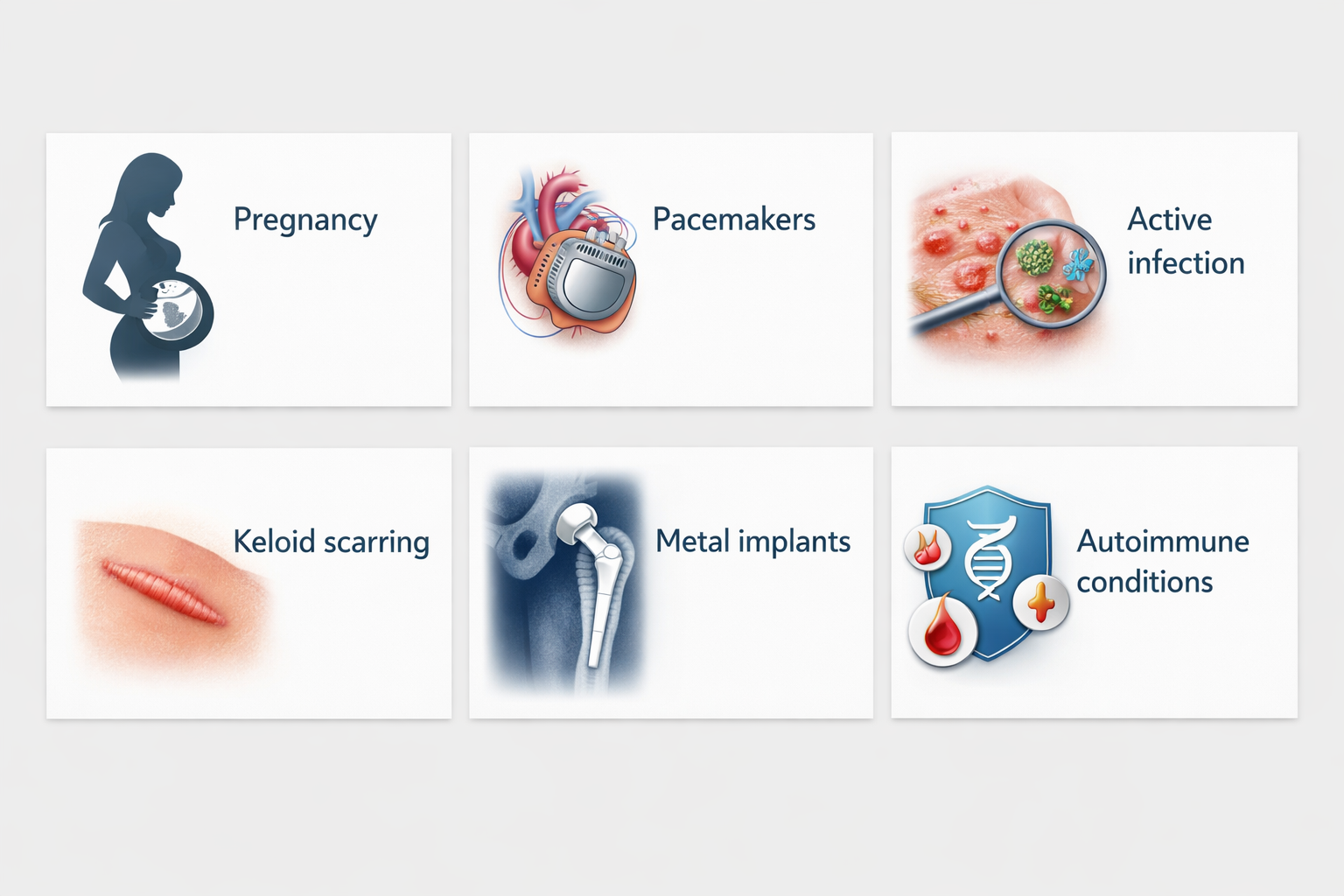
- Pregnancy or breastfeeding
- Active skin infection, open wounds, or inflammatory skin conditions in the treatment area
- Implanted electronic devices such as pacemakers or defibrillators (particularly relevant for monopolar RF)
- Metal implants or plates in the treatment area
- History of keloid scarring (particularly for fractional RF microneedling)
- Certain autoimmune conditions or connective tissue disorders
- Active isotretinoin use or recent use (timing guidance varies by practitioner)
- Unrealistic expectations regarding the degree of improvement achievable without surgery
Patients should disclose their full medical history, current medications, and any previous aesthetic procedures before treatment.
Safety Considerations and the October 2025 FDA Communication
RF treatment has a well-established safety profile when performed by trained practitioners using appropriate devices and settings. Common side effects include temporary redness, swelling, warmth, and mild discomfort during and after treatment. Fractional RF microneedling may cause pinpoint bleeding, bruising, and skin sensitivity for several days.
Less common but more serious risks include burns, blistering, scarring, and changes in skin pigmentation. These risks are higher when treatment is performed by inadequately trained practitioners, when inappropriate energy settings are used, or when devices are not properly maintained.
In October 2025, the US Food and Drug Administration (FDA) issued a safety communication specifically regarding RF microneedling devices. The communication highlighted reports of adverse events including burns and scarring, and emphasised the importance of using FDA-cleared devices, ensuring practitioners are properly trained, and following manufacturer guidelines for device operation. Patients considering fractional RF microneedling should ask their provider about the specific device being used, its regulatory clearance status, and the practitioner’s training and experience with that device.
Choosing a board-certified dermatologist, plastic surgeon, or appropriately qualified aesthetic practitioner with documented experience in energy-based devices significantly reduces the risk of adverse outcomes.
What to Expect: Before, During, and After Treatment
Before Treatment
A consultation should include a full skin assessment, discussion of medical history and contraindications, and a clear explanation of the proposed device, settings, expected outcomes, and risks. Patients are typically advised to avoid sun exposure, retinoids, and certain active skincare ingredients in the days before treatment. Topical anaesthetic cream is usually applied before fractional RF microneedling to reduce discomfort.
During Treatment
Non-invasive RF treatments such as Thermage involve a handheld device moved across the skin surface, delivering pulses of radiofrequency energy. Patients typically feel warmth and occasional heat sensations. Fractional RF microneedling involves the insertion of fine needles into the skin at a controlled depth, followed by RF energy delivery. With topical anaesthetic, most patients describe the sensation as pressure and warmth rather than sharp pain, though individual tolerance varies. A full-face session typically takes 30 to 90 minutes depending on the device and areas treated.
After Treatment and Recovery
Non-invasive RF treatments generally involve minimal downtime — redness and warmth may resolve within hours to a day. Fractional RF microneedling typically causes redness, swelling, and pinpoint marks that resolve over two to five days. Sun protection with a broad-spectrum SPF is essential after any RF treatment. Patients are usually advised to avoid active skincare ingredients such as retinoids and acids for several days post-treatment and to keep the skin well moisturised during healing.
When Results Appear and How Long They Last
RF treatment results follow a predictable timeline driven by the biology of collagen remodelling. Immediately after treatment, some patients notice mild skin firmness from thermal collagen contraction, but this is subtle. The more significant improvement emerges as new collagen and elastin are synthesised over the following weeks and months.
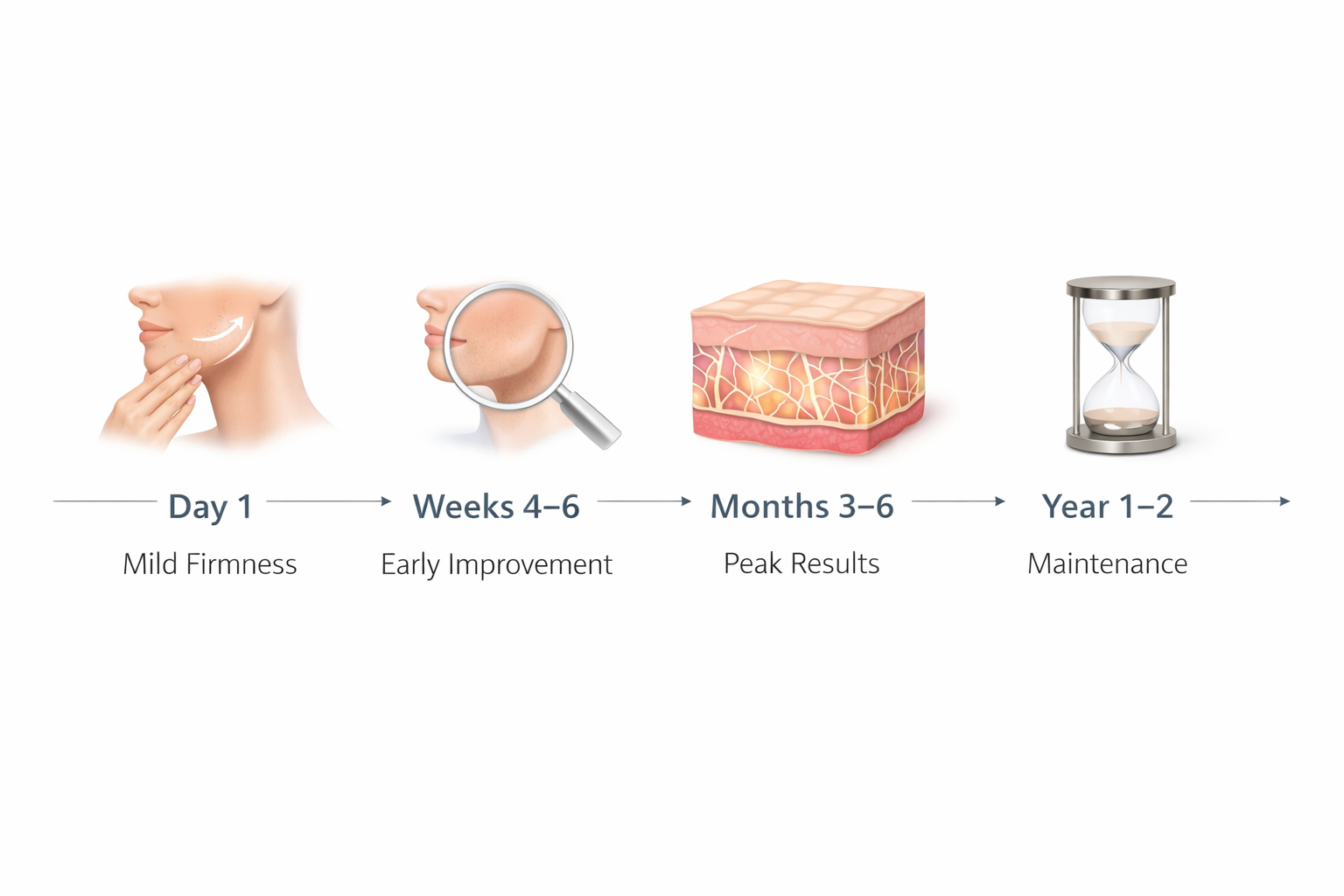
- Immediately after: Mild firmness from collagen contraction; redness and swelling are common.
- 4–6 weeks: Early visible improvement in skin texture and tone as initial collagen remodelling begins.
- 3–6 months: Peak results as neocollagenesis reaches its maximum effect; skin tightening and texture improvement are most apparent.
- Maintenance: Results from non-invasive RF typically last one to two years; fractional RF microneedling results may last two years or longer. Maintenance sessions every six to twelve months help sustain improvement as the natural ageing process continues.
Individual results vary depending on age, degree of skin laxity, skin quality, lifestyle factors, and the number of treatment sessions completed. Patients with mild to moderate laxity generally see more noticeable improvement than those with significant skin excess.
RF Treatment for Body Areas
RF treatment is not limited to the face. Non-invasive RF devices such as Thermage and Exilis are used for body skin tightening on areas including the abdomen, inner arms, thighs, and knees — areas where crepey or lax skin is common after weight loss or with ageing. Fractional RF microneedling can also be applied to body areas for skin texture improvement and stretch marks, though evidence for some body indications is less robust than for facial applications.
Body RF treatments typically require more sessions than facial treatments due to the larger surface area and greater degree of laxity often present. A realistic discussion of expected improvement versus surgical body contouring options is an important part of the consultation process.
Combination Treatments
RF treatment is increasingly used as part of a combination treatment approach rather than as a standalone procedure. Common combinations include RF with dermal fillers (to address both volume loss and skin laxity), RF with laser resurfacing (to target both skin texture and tightening), and RF with HIFU (to address different tissue depths simultaneously). Combining modalities can produce more comprehensive results than either treatment alone, but also increases cost, recovery time, and the complexity of the treatment plan. A qualified practitioner can advise on whether a combination approach is appropriate based on individual goals and skin assessment.
Frequently Asked Questions
Is RF treatment the same as laser treatment?
No. Radiofrequency treatment uses electromagnetic energy to heat tissue through electrical resistance, while laser treatment uses focused light energy. The two technologies work through different mechanisms and are suited to different concerns. The term “RF laser treatment” is a colloquial phrase rather than a precise medical description.
Is RF treatment safe for darker skin tones?
RF treatment is generally considered suitable for all skin tones because it does not target melanin (skin pigment). This is an advantage over certain laser treatments, which carry a higher risk of pigmentation changes in darker skin. However, individual assessment is still necessary, and practitioner experience with diverse skin types matters.
How many RF treatment sessions will I need?
Most patients begin with one to three sessions spaced four to eight weeks apart, depending on the device and the concern being treated. Maintenance sessions every six to twelve months are typically recommended to sustain results as the skin continues to age naturally.
Does RF treatment hurt?
Non-invasive RF treatments are generally well tolerated, with patients describing warmth and occasional heat sensations. Fractional RF microneedling involves needle insertion and is more uncomfortable; topical anaesthetic cream is routinely applied beforehand. Most patients find the procedure manageable with adequate preparation.
What is the difference between Morpheus8 and Thermage?
Morpheus8 is a fractional RF microneedling device that delivers radiofrequency energy through insulated needles inserted into the skin, making it minimally invasive with a recovery period of several days. Thermage is a non-invasive monopolar RF device that treats the skin surface without needles, with minimal downtime. Morpheus8 may be better suited for acne scars, texture, and moderate laxity; Thermage is often chosen for patients who prefer no needles and minimal recovery.
Can RF treatment replace a surgical facelift?
RF treatment can improve mild to moderate skin laxity and delay the need for surgery for some patients, but it cannot replicate the degree of lifting and tightening achievable with a surgical facelift. Patients with significant skin excess or advanced laxity are unlikely to achieve equivalent results from RF treatment alone.
What should I ask my practitioner before RF treatment?
Useful questions include: Which specific device will be used, and is it FDA-cleared or appropriately regulated? What is your training and experience with this device? How many sessions do you recommend for my concern? What results are realistic for my skin type and degree of laxity? What are the risks and how will they be managed?
Deciding Whether RF Treatment May Be Right for You
RF treatment — whether non-invasive skin tightening or fractional RF microneedling — offers a clinically supported approach to collagen remodelling, skin laxity, and texture improvement that suits a wide range of patients, including those with darker skin tones. Its key strengths are its skin type inclusivity, the range of available devices for different concerns and depths, and its ability to stimulate genuine biological change in the dermis and subdermal tissue rather than simply masking surface appearance.
Its limitations are equally important to understand. Results develop gradually and are not permanent; maintenance sessions are part of the long-term commitment. Significant skin laxity may not respond adequately to RF treatment alone. The October 2025 FDA safety communication on RF microneedling devices is a reminder that provider selection and device quality matter — this is not a treatment to seek on price alone.
For patients whose primary concern is pigmentation, sun damage, or surface resurfacing, laser treatment may be a more targeted option. For those seeking deep structural lifting, HIFU targeting the SMAS layer may be worth discussing. Many patients benefit from a combination treatment approach tailored to their specific anatomy and goals.
A consultation with a board-certified dermatologist or qualified aesthetic practitioner who can assess your skin, discuss realistic outcomes, and recommend the most appropriate energy-based device for your concern is the most reliable starting point for making an informed decision.