

Quick Comparison
| Feature | HIFU | Morpheus8 |
|---|---|---|
| Technology | Focused ultrasound energy | RF microneedling (radiofrequency + microneedles) |
| Mechanism | Thermal coagulation at targeted tissue depths | Controlled thermal injury via gold microneedles delivering RF energy |
| Treatment depth | 1.5mm, 3mm, 4.5mm (and up to SMAS layer ~13mm) | 1–8mm into dermis and subdermis |
| Primary goal | Deep lifting, SMAS layer tightening | Skin texture improvement, tightening, subdermal remodelling |
| Common treatment areas | Face, neck, jawline, brow, décolletage | Face, neck, jowls, abdomen, thighs, arms, buttocks, periorbital area |
| Downtime | Minimal — mild redness resolving within hours | 2–5 days social downtime; redness, swelling, pinpoint marks |
| Results onset | 2–3 months (gradual collagen remodelling) | 4–6 weeks (earlier visible improvement) |
| Results longevity | Approximately 12–18 months | Up to 2–3 years with optimal response |
| Sessions typically needed | 1–2 per year | 1–3 sessions depending on concern |
| Skin texture improvement | Limited | Significant — addresses pores, acne scarring, fine lines |
| Suitable for darker skin tones | Generally yes | Yes — lower post-inflammatory hyperpigmentation risk than some laser devices |
| Topical anaesthetic used | Not always required | Numbing cream routinely applied |
| Approximate UK cost per session | From ~£400 | ~£350–£1,000 depending on area and provider |
What Is HIFU and How Does It Work?
HIFU — High-Intensity Focused Ultrasound — is a non-invasive energy-based device treatment that delivers focused ultrasound energy to precise depths beneath the skin’s surface. The ultrasound waves converge at a single focal point, generating heat through thermal coagulation without damaging the overlying skin. This controlled thermal injury triggers the body’s natural wound healing response, stimulating neocollagenesis — the production of new collagen — and gradually tightening the treated tissue.
One of HIFU’s defining characteristics is its ability to reach the SMAS layer (superficial musculoaponeurotic system), the same fibromuscular layer that surgeons address during a traditional facelift. Standard HIFU cartridges target depths of 1.5mm, 3mm, and 4.5mm, while some devices can reach deeper still. By delivering energy at the SMAS layer, HIFU can produce a degree of structural lifting that purely superficial treatments cannot replicate. This is why HIFU is often described as a non-surgical facelift alternative, though it is important to understand that results are more modest than surgical intervention.
Ultherapy is the most widely recognised branded HIFU device and holds FDA clearance for brow lifting and neck tightening. A meaningful distinction worth noting is that Ultherapy uses real-time ultrasound imaging to visualise tissue layers before energy delivery, whereas many standard HIFU devices do not offer this imaging guidance. This difference can affect precision and practitioner confidence in targeting the correct depth.
What Is Morpheus8 and How Does It Work?
Morpheus8 is an RF microneedling device that combines two established technologies: microneedling and radiofrequency energy. During treatment, an array of gold microneedles penetrates the skin to a programmable depth — typically between 1mm and 8mm — and delivers bipolar radiofrequency energy directly into the dermis and subdermis at the point of needle insertion. This creates controlled thermal injury at multiple tissue depths simultaneously.
The dual action of physical microneedle penetration and RF heat delivery stimulates collagen remodelling and elastin production through the wound healing response. Because the RF energy is delivered beneath the skin surface rather than through it, Morpheus8 carries a lower risk of post-inflammatory hyperpigmentation compared with some laser-based resurfacing devices, making it a consideration for a broader range of skin types including darker Fitzpatrick skin tones.
Beyond lifting and tightening, Morpheus8 addresses skin texture improvement at the dermal level. The microneedle channels and thermal stimulus can improve the appearance of acne scarring, enlarged pores, and fine lines — concerns that HIFU’s ultrasound mechanism does not directly target. Morpheus8 is also used on body areas including the abdomen, thighs, arms, and buttocks, extending its application well beyond the face and neck.
Treatment Depth: Why It Matters
Treatment depth is one of the most clinically meaningful differences between HIFU and Morpheus8, and understanding it helps clarify which device may be better suited to a particular concern.
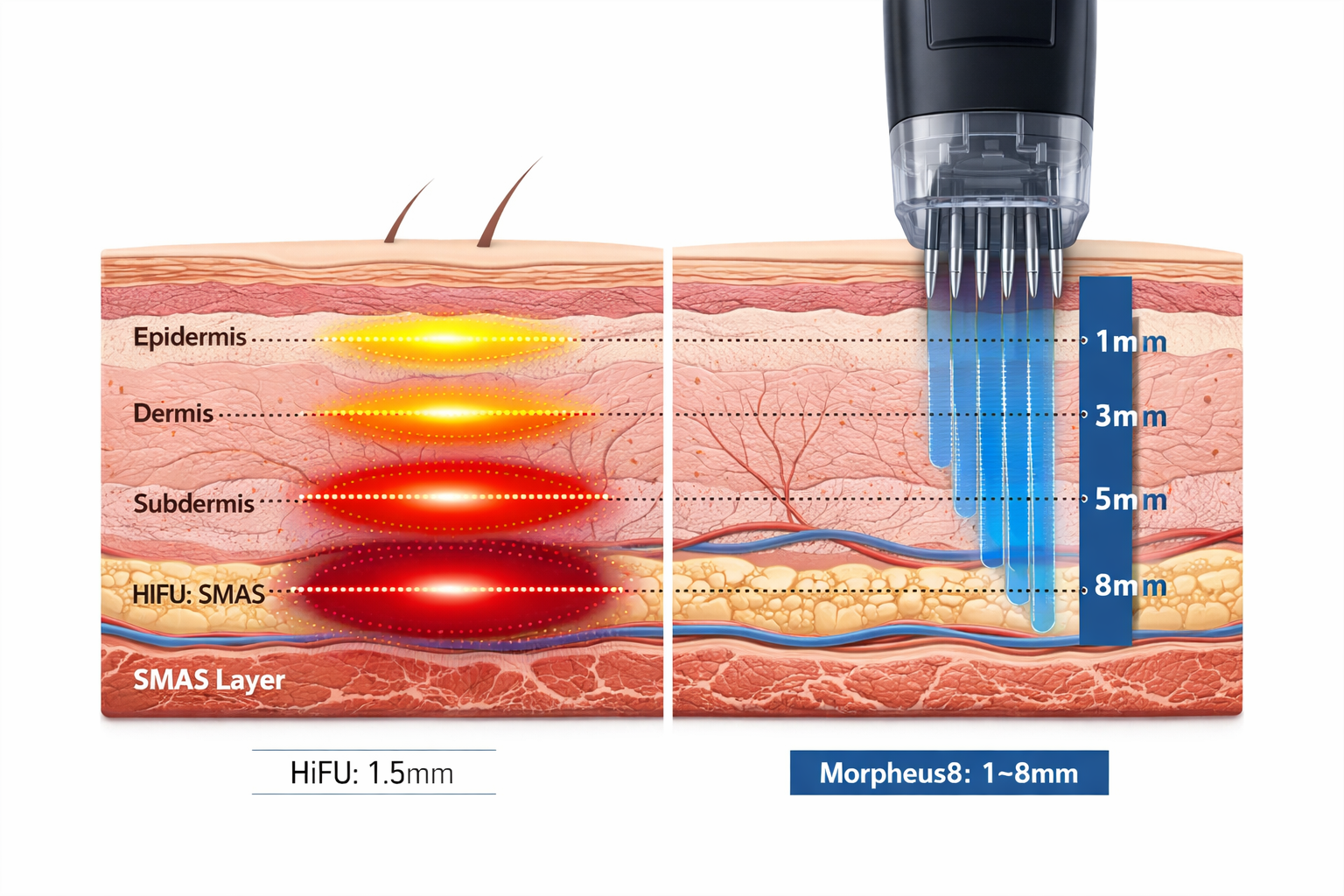
HIFU targets discrete focal points at fixed depths — typically 1.5mm (superficial dermis), 3mm (deep dermis), and 4.5mm (SMAS layer). The energy bypasses the epidermis entirely and creates isolated coagulation zones at each depth. This makes HIFU particularly effective for structural lifting at the SMAS layer, but it does not treat the skin surface or the full dermal thickness in a continuous way.
Morpheus8 delivers RF energy across a programmable range from 1mm to 8mm, allowing the practitioner to adjust needle depth according to the treatment area and the patient’s anatomy. In subdermal burst mode, energy can be directed into the fatty layer beneath the dermis, which may contribute to mild fat remodelling in addition to skin tightening. This adjustable, multi-layer penetration means Morpheus8 can address both superficial skin quality concerns and deeper structural laxity within a single session, though it does not reach the SMAS layer in the way HIFU does.
In practical terms: if the primary concern is structural facial lifting — particularly jowls, brow descent, or significant neck laxity — HIFU’s SMAS-level energy delivery may offer a more targeted approach. If the concern includes skin texture, pore size, acne scarring, or body skin laxity alongside tightening, Morpheus8’s adjustable depth and surface-level remodelling capability may be more appropriate.
Treatment Areas: Where Each Device Can Be Used
HIFU is primarily used on the face, neck, jawline, brow, and décolletage. Its mechanism is well suited to areas where structural lifting is the dominant goal. The brow lift application is one of the most commonly cited uses, and neck laxity is another area where HIFU’s deep energy delivery can produce meaningful tightening over time. HIFU is generally not used on body areas such as the abdomen or thighs, as the device is optimised for facial anatomy and the SMAS layer.
Morpheus8 has a broader treatment area profile. In addition to the face, neck, and jowls, it is used on the periorbital area (around the eyes), abdomen, inner thighs, upper arms, and buttocks. For body applications, Morpheus8 can address skin laxity following weight loss, improve the appearance of stretch marks, and tighten loose skin in areas where HIFU is not typically applied. This versatility makes Morpheus8 a more flexible option for patients with both facial and body concerns.
What to Expect During Each Treatment
A HIFU session typically begins with cleansing the treatment area and applying an ultrasound gel. The practitioner moves the handpiece across the skin in a systematic pattern, delivering focused ultrasound energy at each target depth. Most patients describe the sensation as a series of brief, deep heat pulses or a prickling discomfort — often rated around 5–6 out of 10 on a pain scale without anaesthetic. A topical anaesthetic is not always required, though some clinics offer numbing cream for comfort. A full-face HIFU session generally takes 60–90 minutes.
Morpheus8 treatment begins with the application of a numbing cream, which is left in place for approximately 30–45 minutes before the procedure starts. This is standard practice because the microneedle penetration and RF energy delivery can be uncomfortable without adequate anaesthesia. Once the skin is numb, the practitioner applies the Morpheus8 handpiece in a stamping motion across the treatment area. With topical anaesthetic in place, most patients rate discomfort at around 3–4 out of 10. A facial session typically takes 30–60 minutes depending on the number of areas treated.
Downtime and Recovery
HIFU has minimal downtime. Most patients experience mild redness and slight swelling immediately after treatment, which typically resolves within a few hours. Some patients notice a mild tingling or tenderness in the treated area for a day or two, but social downtime is generally very short — many patients return to normal activities the same day. This makes HIFU a practical option for those who cannot accommodate visible recovery time.
Morpheus8 involves more noticeable post-treatment effects. Redness, swelling, and pinpoint bleeding at the needle insertion sites are common immediately after the procedure. A grid-like pattern of small marks may be visible on the skin for 24–48 hours. Most patients experience 2–5 days of social downtime, during which the skin may appear flushed and feel sensitive. Sun avoidance and gentle skincare are important during the recovery period, and active ingredients such as retinoids or acids should be paused until the skin has healed. The more significant downtime reflects the more intensive nature of the treatment and the deeper tissue disruption involved.
Results: Timeline, Longevity, and Realistic Expectations
Both HIFU and Morpheus8 work by stimulating the body’s own collagen remodelling process, which means results develop gradually rather than appearing immediately after treatment.
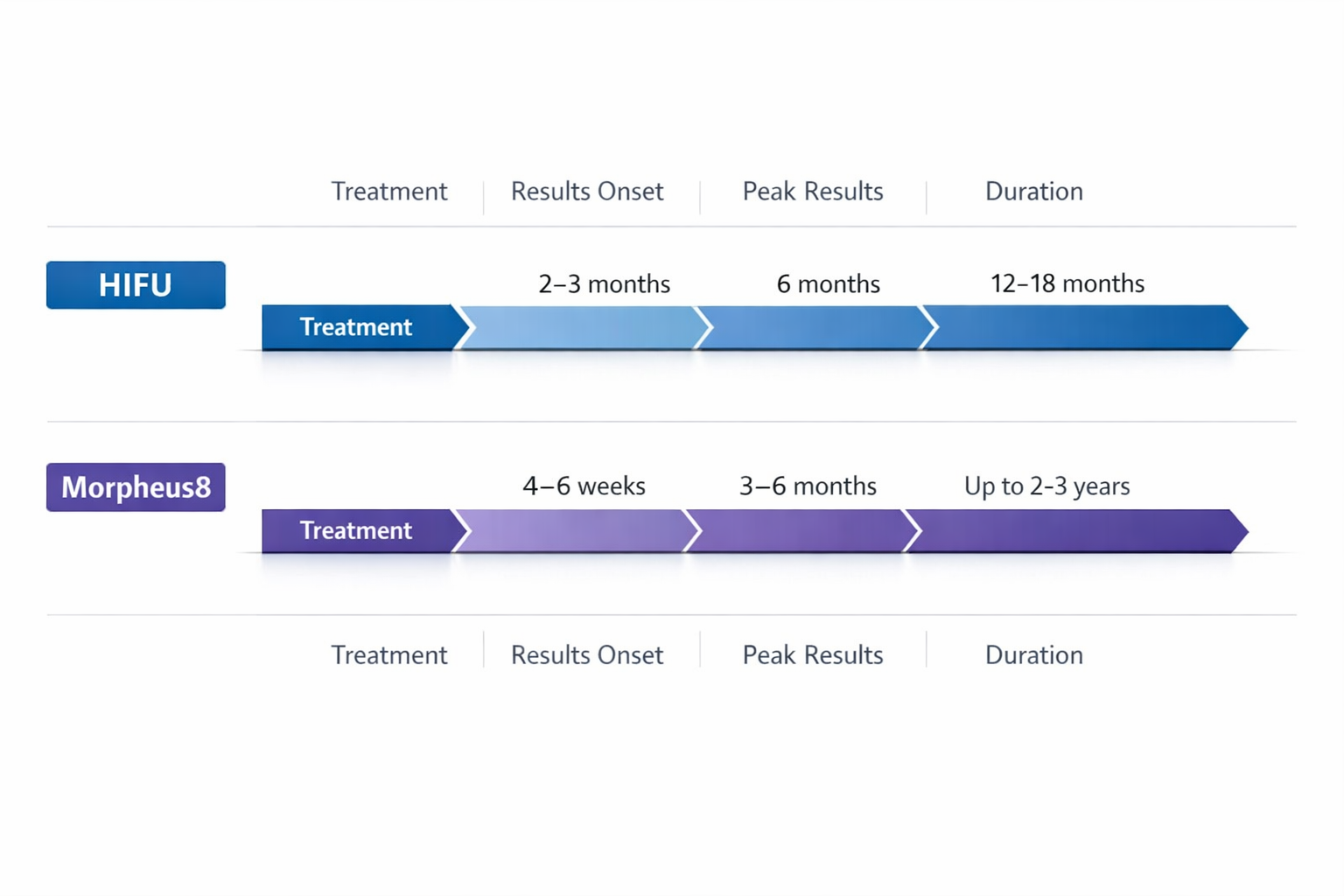
With HIFU, visible improvement typically begins to emerge at around 2–3 months as new collagen matures and the treated tissue contracts. Results may continue to develop for up to 6 months. The lifting and tightening effect is generally maintained for approximately 12–18 months, after which a maintenance session is usually recommended. The gradual onset can be a limitation for patients seeking faster visible change.
Morpheus8 tends to produce earlier visible results, with many patients noticing skin texture improvement and early tightening from around 4–6 weeks after treatment. Full results, including the benefit of ongoing collagen remodelling, typically develop over 3–6 months. With an optimal response, results from Morpheus8 may last up to 2–3 years, though individual variation is significant and maintenance sessions are still advisable. The earlier onset and potentially longer duration are frequently cited advantages, though it is important to note that results depend on the patient’s age, skin condition, lifestyle, and the number of sessions completed.
Neither treatment produces permanent results. Ageing continues after treatment, and the longevity figures cited represent typical ranges rather than guaranteed outcomes. A clinical assessment is required to set realistic expectations for any individual patient.
Candidate Suitability: Who May Benefit from Each Treatment
HIFU tends to be most effective for patients with mild to moderate skin laxity who are seeking structural lifting — particularly of the brow, midface, jawline, and neck. It is commonly considered for patients aged approximately 35 and above who are beginning to notice sagging skin but are not yet candidates for or interested in surgical intervention. HIFU is generally not the most effective choice for patients with very significant skin laxity, as the degree of lifting achievable non-surgically has clear limits.
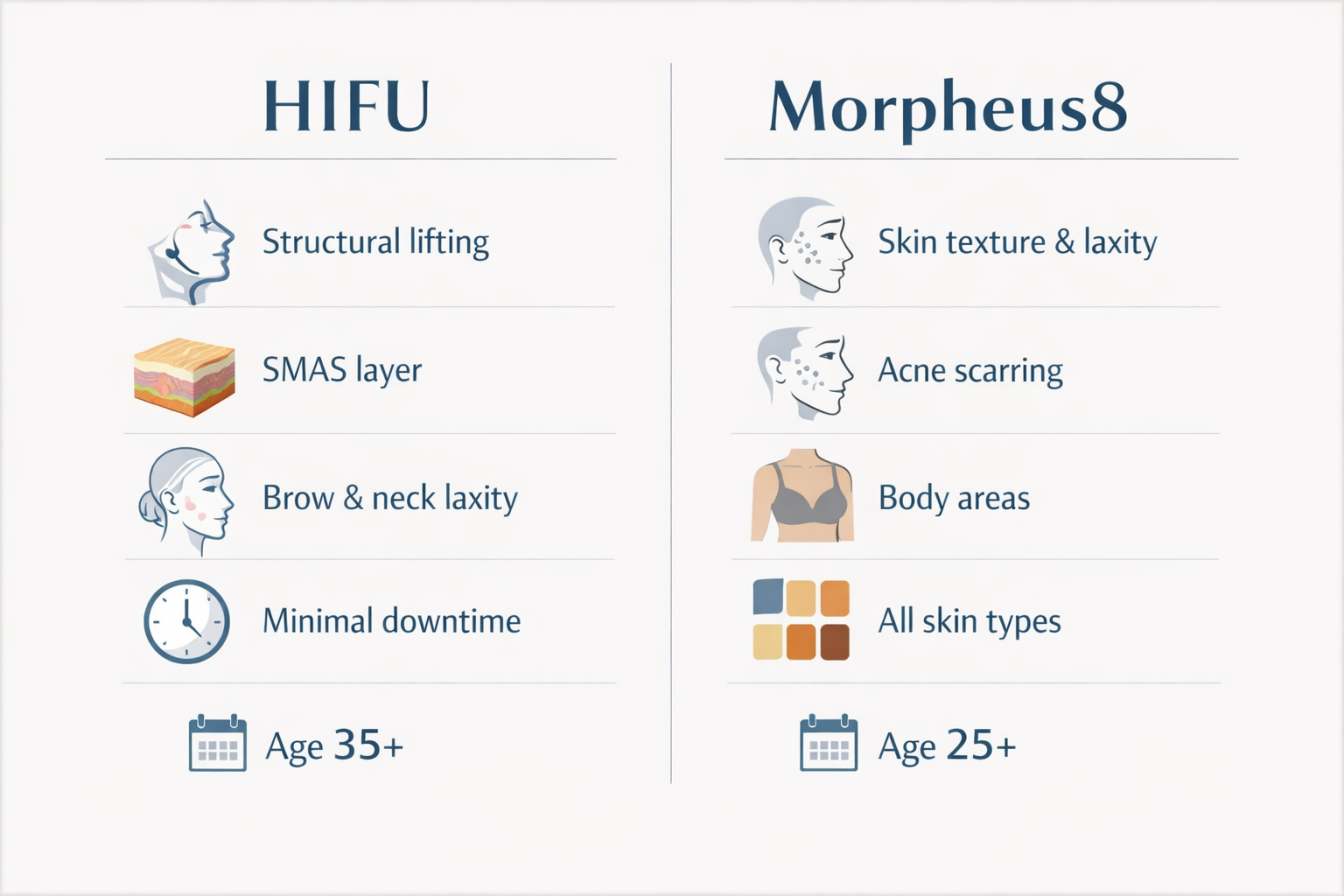
Morpheus8 may be suitable from a younger age — some practitioners consider it for patients in their mid-to-late twenties as a preventative collagen stimulation treatment, as well as for older patients with more established skin laxity. It is particularly well suited to patients whose concerns include skin texture alongside laxity: acne scarring, enlarged pores, uneven skin tone, and fine lines all respond to the RF microneedling mechanism. Morpheus8’s lower risk of post-inflammatory hyperpigmentation compared with ablative laser devices makes it a more accessible option for patients with darker skin tones, though a thorough assessment of Fitzpatrick skin type and individual risk factors is still essential before treatment.
Patients who cannot tolerate needles or who have a low threshold for downtime may find HIFU more manageable. Those who are comfortable with a short recovery period and want to address both texture and laxity in a single treatment course may find Morpheus8 offers broader benefit.
Skin Type Considerations and Post-Inflammatory Hyperpigmentation
Post-inflammatory hyperpigmentation (PIH) — darkening of the skin following inflammation or injury — is a meaningful consideration when choosing between energy-based devices, particularly for patients with medium to darker skin tones (Fitzpatrick types IV–VI). Some laser and light-based treatments carry a higher PIH risk in these skin types because energy is absorbed by melanin in the epidermis.
Both HIFU and Morpheus8 are generally considered suitable across a range of skin types, but for different reasons. HIFU bypasses the epidermis entirely, delivering energy to deeper tissue layers without surface disruption. Morpheus8 uses insulated gold microneedles that deliver RF energy at the needle tip rather than through the skin surface, which reduces the risk of epidermal heat damage and PIH compared with non-insulated devices or ablative lasers. However, no energy-based device is entirely without risk for any skin type, and a thorough consultation with a practitioner experienced in treating diverse skin tones is essential.
Can HIFU and Morpheus8 Be Combined?
Combining HIFU and Morpheus8 in a treatment protocol — sometimes referred to informally as a “collagen bomb” approach — is an option that some practitioners offer for patients seeking comprehensive skin rejuvenation. The rationale is that the two devices target different tissue depths and mechanisms: HIFU addresses the SMAS layer and deep structural lifting, while Morpheus8 remodels the dermis and subdermis and improves surface skin quality. Used together, they may offer more complete coverage across tissue layers than either treatment alone.
When combining both treatments, practitioners typically space sessions 4–8 weeks apart to allow the initial inflammatory response from each treatment to resolve before introducing the next stimulus. A peer-reviewed study published in the journal Lasers in Surgery and Medicine (available via PubMed/PMC) examined combination HIFU and radiofrequency therapy and found that the combined approach produced greater improvements in skin laxity than either modality used independently, though the authors noted that larger controlled trials are needed to confirm these findings.
Combination protocols increase the overall cost and treatment burden, and they are not necessary for every patient. A practitioner assessment is needed to determine whether a combined approach is appropriate for a specific individual’s concerns, anatomy, and budget.
Cost Considerations
In the UK, HIFU treatment typically starts from around £400 per session for a facial treatment, though pricing varies considerably between providers and depends on the device used and the areas covered. Morpheus8 pricing ranges from approximately £350 to £1,000 per session depending on the treatment area, the number of passes, and the clinic.
A useful way to think about cost is in terms of total annual investment rather than per-session price. HIFU generally requires one to two sessions per year to maintain results. Morpheus8 may require an initial course of two to three sessions, but with results potentially lasting longer between maintenance treatments. Over a two-to-three-year period, the total cost of each approach may be more comparable than the per-session figures suggest. That said, individual treatment plans vary, and a practitioner will advise on the number of sessions appropriate for a specific concern.
Risks and Limitations
Both treatments are generally well tolerated when performed by a trained and experienced practitioner using appropriate equipment, but neither is without risk.
HIFU risks include temporary redness, swelling, tingling, and in rare cases, bruising or nerve sensitivity in the treated area. There have been reports of fat atrophy (unintended reduction of facial fat) with HIFU when energy is delivered incorrectly, which underlines the importance of practitioner skill and appropriate device settings. HIFU is not suitable for patients with active skin infections, open wounds, severe skin laxity beyond the device’s capability, certain implanted devices, or during pregnancy.
Morpheus8 risks include redness, swelling, pinpoint bleeding, bruising, and the grid-pattern marks that typically resolve within a few days. As with any microneedling procedure, there is a small risk of infection if post-treatment care instructions are not followed. Post-inflammatory hyperpigmentation is possible, particularly in higher Fitzpatrick skin types, though the insulated needle design reduces this risk compared with some alternatives. Morpheus8 is not suitable for patients with active acne, skin infections, certain autoimmune conditions, or implanted electronic devices in the treatment area.
For both treatments, results are not guaranteed, and individual response varies. Patients with very significant skin laxity may find that non-surgical options provide limited improvement and that a surgical consultation is more appropriate.
Alternatives Worth Considering
HIFU and Morpheus8 are not the only non-surgical options for skin tightening and rejuvenation. Thermage uses monopolar radiofrequency energy to heat the dermis and stimulate collagen production without needles, and may suit patients who want RF-based tightening without microneedle penetration. PDO thread lifts offer a more immediate mechanical lifting effect using dissolvable sutures placed beneath the skin, though they carry their own risk profile. Profhilo, a high-concentration hyaluronic acid injectable, stimulates collagen and elastin production and improves skin quality, though it does not produce the same degree of structural lifting as HIFU. CO₂ laser resurfacing offers significant skin texture improvement and tightening but involves considerably more downtime and a higher PIH risk in darker skin tones. Traditional microneedling without RF energy is a lower-intensity option for skin texture improvement with minimal downtime, though it does not address deeper laxity.
The most appropriate treatment depends on the individual’s specific concerns, skin type, downtime tolerance, and budget — factors that a qualified practitioner can assess during a consultation.
Frequently Asked Questions
How many sessions of HIFU or Morpheus8 will I need?
HIFU is often performed as a single annual session, though some patients benefit from two sessions in the first year. Morpheus8 is typically delivered as a course of two to three sessions spaced four to six weeks apart, followed by maintenance treatments as needed. The exact number depends on the individual’s skin condition, age, and treatment goals.
Which treatment is more painful?
HIFU is generally described as a series of brief, deep heat pulses and is often rated around 5–6 out of 10 for discomfort without anaesthetic. Morpheus8 involves microneedle penetration, but a topical anaesthetic (numbing cream) is routinely applied beforehand, reducing discomfort to approximately 3–4 out of 10 for most patients. Pain tolerance varies between individuals.
Is Morpheus8 better than HIFU for jowls?
Both treatments can address jowl laxity, but through different mechanisms. HIFU’s ability to target the SMAS layer makes it particularly suited to structural lifting of the lower face and jowl area. Morpheus8 can tighten the skin and subdermal tissue in the jowl region and may also improve skin quality in the area. For significant jowl laxity, a practitioner may recommend one or both treatments, or discuss whether a surgical assessment is more appropriate.
Can Morpheus8 be used on the body?
Yes. Morpheus8 is used on body areas including the abdomen, inner thighs, upper arms, and buttocks to address skin laxity, stretch marks, and loose skin. HIFU is primarily designed for facial and neck applications and is not typically used on body areas in the same way.
How long before I see results from each treatment?
Morpheus8 results typically begin to appear from around 4–6 weeks after treatment, with full results developing over 3–6 months. HIFU results generally emerge more gradually, with visible improvement from around 2–3 months and continued development for up to 6 months. Both treatments stimulate collagen remodelling, which takes time to produce visible change.
Are HIFU and Morpheus8 suitable for all skin types?
Both treatments are generally considered suitable across a range of skin types. Morpheus8’s insulated gold microneedle design reduces the risk of post-inflammatory hyperpigmentation compared with some laser devices, making it a consideration for patients with darker skin tones. However, individual assessment by an experienced practitioner is essential before treatment regardless of skin type.
Can I have HIFU and Morpheus8 at the same time?
The two treatments are not typically performed in the same session. When used as part of a combination protocol, they are usually spaced 4–8 weeks apart to allow the skin to recover between treatments. Whether a combined approach is appropriate depends on individual assessment.
HIFU or Morpheus8: Matching the Treatment to Your Goals
HIFU and Morpheus8 are both effective non-surgical treatments for skin laxity and collagen stimulation, but they are not interchangeable. The right choice depends on what you are trying to achieve, your skin type, your tolerance for downtime, and your overall treatment priorities.
HIFU may be worth discussing with a practitioner if your primary concern is structural lifting — particularly of the brow, midface, jawline, or neck — and you want minimal downtime. Its ability to reach the SMAS layer gives it a depth of action that few non-surgical treatments can match for pure lifting, and a single annual session suits patients who prefer a low-maintenance approach.
Morpheus8 may be a better fit if your concerns include skin texture alongside laxity — acne scarring, enlarged pores, fine lines, or uneven skin quality — or if you want to treat body areas as well as the face. Its adjustable treatment depth, broader area coverage, and potentially longer-lasting results make it a versatile option, though the 2–5 days of social downtime and the need for an initial course of sessions are factors to weigh.
For patients with both significant laxity and texture concerns, a combination protocol using both devices may offer more comprehensive improvement than either treatment alone, though this increases cost and treatment time. A thorough consultation with a qualified and experienced practitioner is the most reliable way to determine which approach — or which combination — is appropriate for your individual anatomy, skin type, and goals.