

Quick Comparison
| Feature | Melasma | Age Spots (Solar Lentigines) |
|---|---|---|
| Other names | Chloasma, mask of pregnancy | Sun spots, liver spots, solar lentigines |
| Primary cause | Hormonal fluctuations, UV exposure, genetic predisposition | Cumulative UV exposure, ageing skin |
| Appearance | Large, blotchy, irregular patches; grey-brown or brown | Small, clearly defined, round or oval; tan to dark brown |
| Pattern | Symmetrical pigmentation across both sides of the face | Asymmetrical; appear individually or in clusters |
| Common locations | Cheeks, forehead, upper lip, chin, nose | Face, hands, shoulders, chest, forearms |
| Who is affected | Predominantly women; medium-to-darker skin tones; reproductive years | Both sexes; more common after 40; fair-skinned individuals |
| Pigmentation depth | Epidermal, dermal, or mixed | Primarily epidermal pigmentation |
| Chronic nature | Chronic condition with relapse risk; requires long-term management | Stable; can be permanently removed with treatment |
| Key treatments | Topical hydroquinone, tranexamic acid, combination therapy, strict sun protection | IPL, laser therapy, cryotherapy, topical brightening actives |
| Laser suitability | Caution required; aggressive laser can worsen melasma | Generally responds well to laser and IPL |
What Is Melasma?
Melasma is a form of hyperpigmentation characterised by brown or grey-brown patches that typically appear symmetrically across the face. The cheeks, forehead, upper lip, chin, and bridge of the nose are the most commonly affected areas. Unlike many other pigmentation conditions, melasma is driven primarily by hormonal fluctuations rather than sun damage alone, which is why it is so strongly associated with pregnancy — earning it the alternative name chloasma, or the “mask of pregnancy.”
Oestrogen and progesterone are thought to stimulate melanocytes (the pigment-producing cells in the skin) to increase melanin production. This is why melasma frequently develops or worsens during pregnancy, while taking oral contraceptives, during menopause, or when using hormone replacement therapy. UV exposure acts as a powerful exacerbating trigger — even brief sun exposure can darken existing patches significantly. Visible light and blue light have also been identified as triggers, which is clinically important because standard sunscreens that only block UV rays may not provide adequate protection for melasma-prone skin.
Melasma affects approximately 90% women, though around 10% of cases occur in men — a fact that often surprises people. It is more prevalent in individuals with medium-to-darker Fitzpatrick skin types (III–VI), particularly those of Hispanic, Asian, Middle Eastern, and African descent. Genetic predisposition also plays a role; a family history of melasma increases the likelihood of developing it.
Crucially, melasma is a chronic condition. Even after successful treatment, it can relapse — particularly with sun exposure, hormonal changes, or pregnancy. This distinguishes it fundamentally from age spots, which can often be permanently removed.
What Are Age Spots?
Age spots — medically known as solar lentigines, and sometimes called sun spots or liver spots — are flat, well-defined areas of increased pigmentation that develop as a result of cumulative UV exposure over many years. The term “liver spots” is a historical misnomer; these spots have no connection to liver function. Solar lentigines is the most accurate clinical term.
Age spots form when melanocytes in chronically sun-exposed skin become hyperactive and deposit excess melanin in localised clusters. Unlike the diffuse, blotchy appearance of melasma, age spots tend to be small (typically a few millimetres to around a centimetre), round or oval, and have sharper, more clearly defined borders. They can appear individually or in clusters and are distributed asymmetrically across sun-exposed areas including the face, hands, shoulders, chest, and forearms.
Age spots become more common after the age of 40, when the skin’s natural cell turnover slows and the cumulative effects of decades of UV exposure become visible. They affect both men and women equally and are more common in individuals with fair skin and a history of significant sun exposure or tanning bed use. Unlike melasma, age spots are not driven by hormonal changes, and they do not typically worsen with hormonal fluctuations.
Because age spots represent primarily epidermal pigmentation with a well-understood cause, they generally respond more predictably to treatment than melasma. With appropriate intervention, age spots can often be significantly lightened or removed, and they are less likely to recur if sun protection is maintained.
How to Tell Them Apart: A Practical Self-Check
Melasma and age spots can look similar at a glance, but several characteristics help distinguish them. Working through the following questions can help you identify which condition you may be dealing with — though a professional skin consultation remains the most reliable way to confirm a diagnosis.
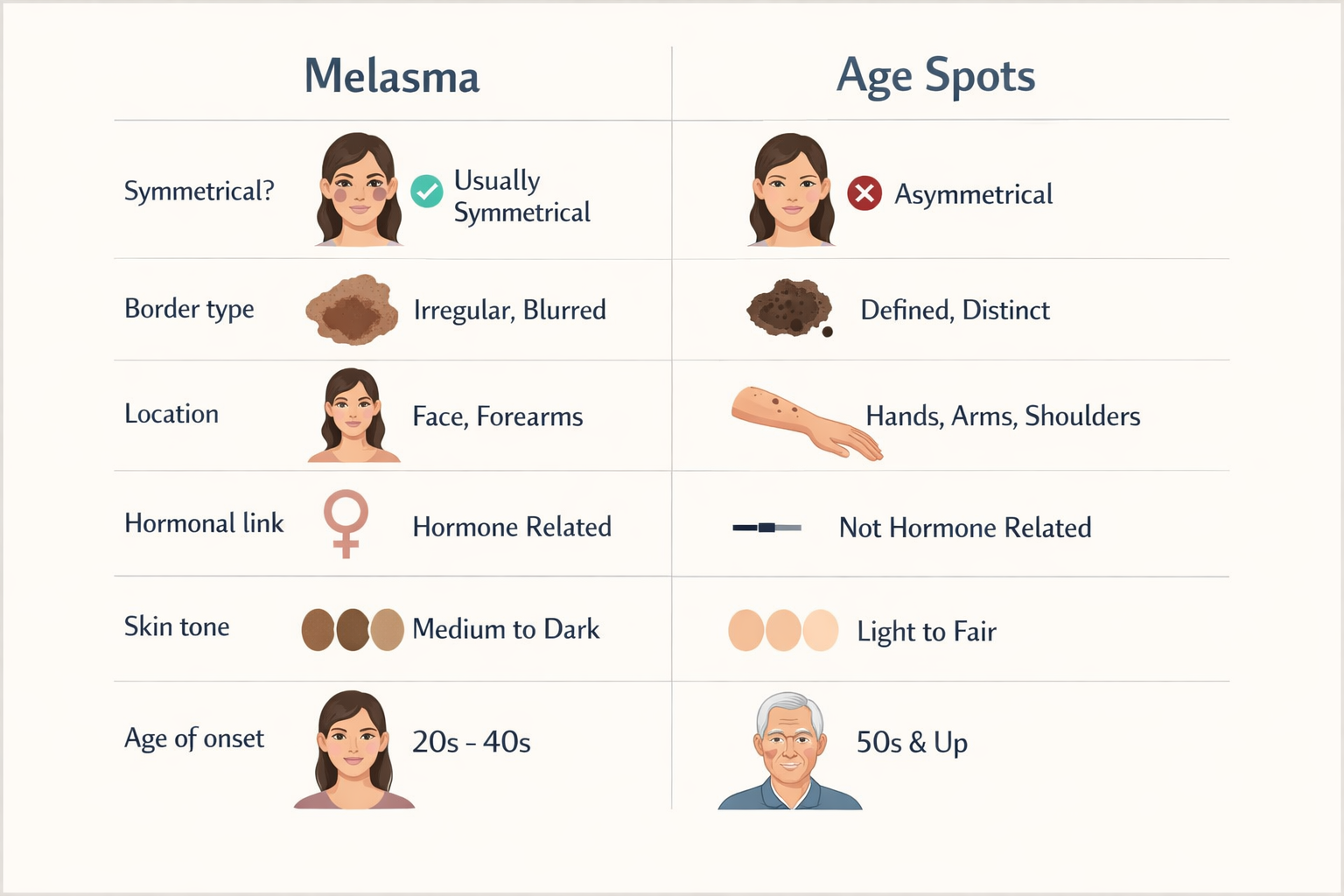
- Symmetry: Melasma typically appears symmetrically — the same pattern on both cheeks, or across the forehead and upper lip simultaneously. Age spots tend to appear randomly and asymmetrically.
- Size and borders: Melasma patches are usually larger and have indistinct, irregular borders that blend into surrounding skin. Age spots are smaller with sharper, more clearly defined edges.
- Location: Melasma is almost exclusively facial. Age spots appear on any sun-exposed area, including the hands, shoulders, and chest.
- Hormonal history: If your pigmentation appeared or worsened during pregnancy, while taking the contraceptive pill, or around menopause, melasma is more likely.
- Skin tone: Melasma is significantly more common in medium-to-darker skin tones. Age spots are more common in fair-skinned individuals with high sun exposure histories.
- Age of onset: Melasma can develop at any age during the reproductive years. Age spots become more common after 40.
A dermatologist can confirm the diagnosis using a Wood’s lamp examination — a handheld UV light that helps determine whether pigmentation is epidermal (surface-level) or dermal (deeper in the skin). This distinction matters because epidermal pigmentation generally responds better to topical treatments and certain laser therapies, while dermal pigmentation is more difficult to treat. Melasma can be epidermal, dermal, or mixed, which is one reason it is more challenging to manage than age spots.
When a Dark Spot May Be Neither
Not every dark patch on the skin is melasma or an age spot. Post-inflammatory hyperpigmentation (PIH) is a separate condition that develops after skin injury or inflammation — such as acne, eczema, a burn, or a procedure — and can resemble both conditions. PIH tends to follow the shape of the original injury and fades gradually over months, though it can be persistent in darker skin tones.
More importantly, some dark spots require medical evaluation to rule out skin cancer. You should seek prompt assessment from a dermatologist or GP if a spot or patch:
- is changing in size, shape, or colour;
- has an irregular or notched border;
- contains multiple colours within a single lesion;
- is raised, itchy, bleeding, or crusting;
- appears suddenly and grows quickly.
These features can be associated with melanoma or other skin lesions that require professional diagnosis. Melasma and solar lentigines are benign conditions, but self-diagnosis should never replace a clinical assessment when any of the above warning signs are present.
Treatment Options for Melasma
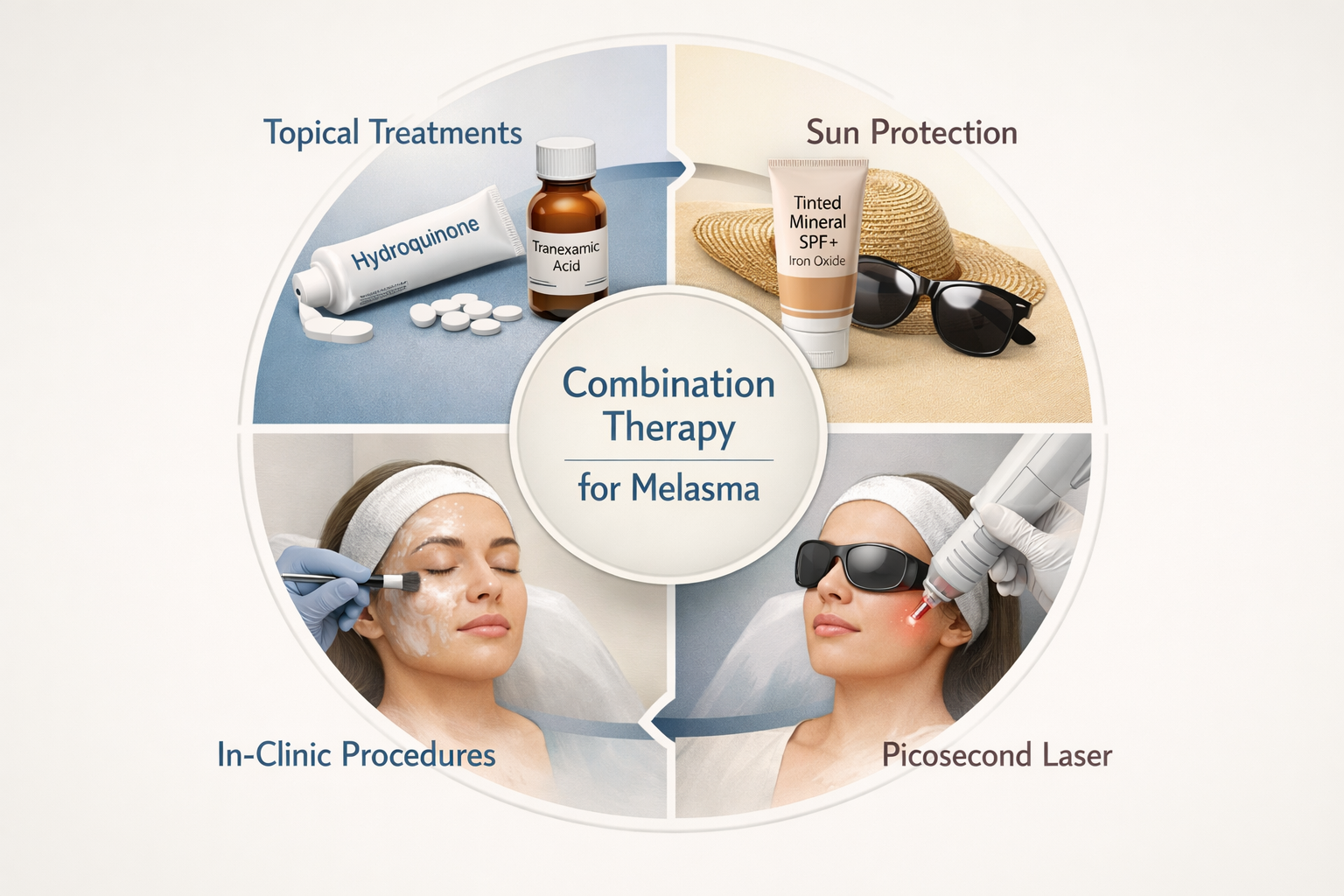
Melasma is one of the more challenging pigmentation conditions to treat because of its chronic nature and relapse risk. Effective management typically requires a combination therapy approach — addressing pigmentation with topical agents, protecting against triggers with rigorous sun protection, and using in-clinic procedures selectively and carefully.
Topical Treatments
Topical hydroquinone remains the most widely studied skin lightening agent for melasma and is considered a gold standard in many clinical settings. It works by inhibiting the enzyme responsible for melanin production. Prescription-strength formulations (typically 4%) are more effective than over-the-counter concentrations. A triple combination cream containing hydroquinone, tretinoin (a retinoid), and a mild corticosteroid — sometimes known by the brand name Tri-Luma — has strong clinical evidence for melasma and is commonly used under dermatological supervision.
Tranexamic acid has emerged as a well-tolerated alternative, available in both topical and oral forms, with growing evidence for its effectiveness in reducing melasma pigmentation. Azelaic acid, kojic acid, niacinamide, and cysteamine are additional brightening actives that may be used as part of a personalised treatment plan, particularly for those who cannot use hydroquinone. Retinoids support cell turnover and enhance the penetration of other active ingredients.
Sun Protection — Including Visible Light
Daily broad-spectrum SPF 50+ sunscreen is non-negotiable for melasma management. However, standard UV-blocking sunscreens may not be sufficient on their own. Research indicates that visible light — including blue light from screens and indoor lighting — can trigger melanin overproduction in melasma-prone skin, independently of UV rays. Tinted mineral sunscreens containing iron oxide have been shown to block visible light more effectively than untinted formulations, making them a clinically meaningful choice for melasma patients. Zinc oxide and titanium dioxide-based mineral sunscreens are generally preferred over chemical filters for sensitive or reactive skin.
In-Clinic Procedures for Melasma
Chemical peels using glycolic acid, salicylic acid, or trichloroacetic acid (TCA) can help reduce epidermal melasma when used as part of a supervised programme. They work by accelerating cell turnover and reducing superficial pigmentation. Results are gradual and multiple sessions are typically required.
Laser treatment for melasma requires careful consideration. Aggressive laser therapies can paradoxically worsen melasma by triggering post-inflammatory hyperpigmentation — a particular risk in individuals with darker Fitzpatrick skin types. The heat generated by some laser devices stimulates melanocytes rather than suppressing them. Picosecond lasers such as PicoSure and PicoWay, which deliver energy in extremely short pulses, are generally considered lower-risk options for melasma than older nanosecond devices, but even these should be used cautiously and only by experienced practitioners. Any laser treatment for melasma should be preceded by a period of topical preparation and followed by strict sun protection.
Because melasma is a chronic condition, treatment outcomes should be framed as management rather than cure. Pigmentation may improve significantly with treatment, but maintenance therapy and ongoing sun protection are usually necessary to prevent relapse.
Treatment Options for Age Spots
Age spots (solar lentigines) generally respond more predictably to treatment than melasma, and in many cases can be significantly lightened or removed. Because they represent primarily epidermal pigmentation without an ongoing hormonal driver, the risk of recurrence is lower — provided sun protection is maintained.
Topical Brightening Actives
Over-the-counter brightening creams containing niacinamide, kojic acid, azelaic acid, or alpha-arbutin can gradually fade mild age spots over several months. Prescription-strength topical hydroquinone and retinoids can accelerate this process. Topical treatments are most effective for lighter, more superficial spots and are often used to maintain results after a procedure.
Laser and Light-Based Treatments
IPL (intense pulsed light) and laser pigmentation treatments are highly effective for solar lentigines. IPL delivers broad-spectrum light that targets melanin deposits, causing the pigment to break up and rise to the surface before flaking away. Q-switched and picosecond lasers such as PicoSure and PicoWay can target melanin with precision, making them well-suited to discrete, well-defined age spots. Unlike melasma, age spots do not carry the same risk of laser-induced worsening, though skin tone and individual response should always be assessed before treatment.
Results from laser and IPL treatment for age spots can be significant, often after one to three sessions. The treated area may temporarily darken before the pigment clears, which is a normal part of the process. Downtime is typically minimal — some redness and mild crusting for a few days — but this varies depending on the device and settings used.
Other Procedures
Cryotherapy (freezing with liquid nitrogen) is a straightforward option for isolated age spots and is commonly used in dermatology settings. Microdermabrasion can improve the appearance of superficial age spots by removing the outermost layer of skin, though results are generally more modest than laser-based approaches. Chemical peels are also effective for age spots, particularly when multiple spots are present across a larger area.
Can You Treat Melasma and Age Spots the Same Way?
Not reliably. While both conditions involve melanin overproduction and both benefit from sun protection, the underlying mechanisms differ enough that treatment approaches should be tailored to the specific diagnosis. Applying aggressive laser treatment to what is assumed to be age spots, when the condition is actually melasma, carries a real risk of worsening the pigmentation and triggering post-inflammatory hyperpigmentation — particularly in individuals with darker skin tones.
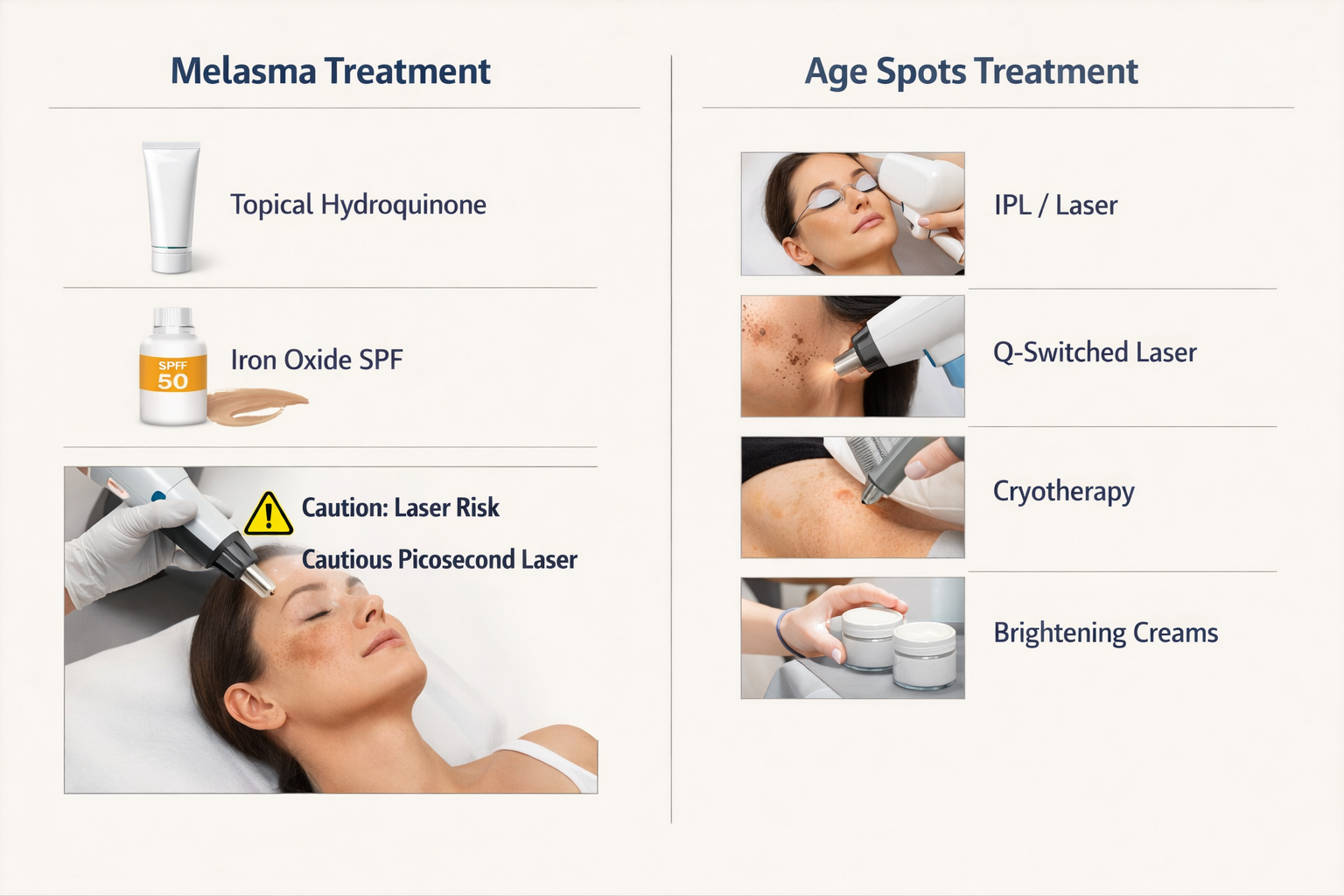
This is one of the most important reasons to seek a professional skin consultation and accurate diagnosis before beginning any treatment. A dermatologist or experienced aesthetic practitioner can assess the pattern, depth, and likely cause of your pigmentation — using tools such as a Wood’s lamp examination if needed — and recommend a treatment plan appropriate to your specific condition, skin tone, and Fitzpatrick skin type.
Prevention and Long-Term Skin Protection
For both melasma and age spots, daily sun protection is the single most important preventive measure. UV exposure is a trigger or cause for both conditions, and without consistent protection, treatments are unlikely to deliver lasting results.
- Apply a broad-spectrum SPF 50+ sunscreen every morning, regardless of weather or season.
- For melasma specifically, choose a tinted mineral sunscreen containing iron oxide to protect against visible light as well as UV rays.
- Reapply sunscreen every two hours when outdoors, or after swimming or sweating.
- Wear protective clothing, wide-brimmed hats, and seek shade during peak UV hours.
- Avoid tanning beds entirely.
- If melasma is hormonally driven, discuss alternative contraceptive options with your GP if oral contraceptives appear to be a trigger.
For melasma, long-term maintenance therapy — typically a combination of topical brightening actives and strict sun protection — is usually necessary even after pigmentation has improved. Seasonal flares are common, particularly in spring and summer. For age spots, maintaining sun protection after treatment significantly reduces the likelihood of new spots forming.
Frequently Asked Questions
Can melasma turn into age spots?
No. Melasma and age spots are distinct conditions with different causes. Melasma does not transform into solar lentigines. However, both conditions can coexist on the same person, which can make visual differentiation more difficult without professional assessment.
Do age spots go away on their own?
Age spots do not typically fade significantly without treatment. They may become slightly less noticeable in winter when UV exposure is lower, but they generally persist and can darken further with continued sun exposure. Topical treatments and in-clinic procedures can reduce their appearance effectively.
Can men get melasma?
Yes. Although melasma predominantly affects women, approximately 10% of cases occur in men. Male melasma is often associated with sun exposure and genetic predisposition rather than hormonal fluctuations, though the condition presents and is managed similarly.
Is laser treatment safe for melasma?
Laser treatment for melasma requires careful selection and expertise. Aggressive or high-heat laser devices can worsen melasma by stimulating melanocytes and triggering post-inflammatory hyperpigmentation. Picosecond lasers are generally considered lower-risk options, but any laser approach should be preceded by topical preparation and followed by strict sun protection. A thorough consultation with an experienced practitioner is essential before proceeding.
What is the difference between melasma and post-inflammatory hyperpigmentation?
Post-inflammatory hyperpigmentation (PIH) develops after skin injury or inflammation — such as acne, eczema, or a procedure — and tends to follow the shape of the original injury. Melasma is driven by hormonal fluctuations and UV exposure and appears in characteristic symmetrical patterns on the face. Both involve excess melanin, but their causes, patterns, and management differ.
How long does it take to see results from melasma treatment?
Topical treatments for melasma typically require consistent use over eight to twelve weeks before meaningful improvement becomes visible. In-clinic procedures may accelerate results, but melasma management is generally a gradual process. Realistic expectations and a long-term approach are important, as melasma can recur even after successful treatment.
Can I use the same brightening cream for both melasma and age spots?
Some topical brightening actives — such as niacinamide, azelaic acid, and kojic acid — may help both conditions to a degree. However, the most effective treatment plans are tailored to the specific diagnosis. Prescription-strength options and in-clinic procedures differ significantly between the two conditions, which is why professional assessment is recommended before starting treatment.
Getting the Right Diagnosis Before Starting Treatment
Melasma and age spots are both manageable forms of hyperpigmentation, but they respond differently to treatment and require different long-term strategies. Melasma is a chronic, hormonally influenced condition that demands careful, sustained management — including combination therapy, strict sun protection with iron oxide-containing sunscreens, and cautious use of laser treatments. Age spots, caused by cumulative UV exposure, are generally more straightforward to treat and can often be significantly reduced or removed with laser, IPL, or chemical peels.
The most important step before beginning any treatment is obtaining an accurate diagnosis. Treating melasma as though it were age spots — particularly with aggressive laser therapy — can worsen pigmentation and cause additional skin concerns, especially in individuals with darker Fitzpatrick skin types. A professional skin consultation with a qualified dermatologist or experienced aesthetic practitioner allows for proper assessment of pigmentation depth, pattern, and cause, and ensures that any treatment plan is appropriate for your skin tone, medical history, and individual goals.
If you are unsure which condition you have, or if any spot is changing in appearance, seeking professional advice is always the right first step.