

Quick Comparison
| Characteristic | Microdermabrasion | Microneedling |
|---|---|---|
| Treatment type | Non-invasive mechanical exfoliation | Minimally invasive collagen induction therapy |
| Mechanism | Abrasive tip or crystal spray removes dead skin cells from the epidermis | Fine needles create controlled micro-injuries in the dermis to trigger wound healing response |
| Depth of treatment | Epidermis (surface layer only) | Epidermis and upper dermis |
| Primary goals | Brightening, smoothing texture, unclogging pores, mild discolouration | Acne scars, skin laxity, enlarged pores, deeper wrinkles, stretch marks |
| Discomfort | Minimal; no numbing required | Mild to moderate; topical numbing cream used |
| Session duration | 30–60 minutes | 45–90 minutes (including numbing time) |
| Downtime | Minimal; mild redness for a few hours | 1–3 days; redness, swelling, possible pinpoint bleeding |
| Results onset | Immediately visible brightening | Gradual improvement over 4–12 weeks as collagen builds |
| Longevity of results | Approximately 4 weeks; frequent maintenance needed | Several months; longer-lasting structural improvement |
| Number of sessions | Course of 6–10 for best results; monthly maintenance | Course of 3–6 sessions; less frequent maintenance |
| Approximate UK cost per session | £45–£160 | £80–£300 (standard); £120–£400 (RF microneedling) |
| Suitable for darker skin tones | Generally yes | Generally yes (with appropriate needle depth and settings) |
| Advanced variants | Hydradermabrasion | RF microneedling, PRP microneedling (Vampire Facial) |
How Microdermabrasion Works
Microdermabrasion is a non-invasive skin resurfacing treatment that uses mechanical exfoliation to remove the outermost layer of dead skin cells from the epidermis — specifically the stratum corneum. A handheld device passes over the skin using either a diamond-tipped wand or a fine spray of aluminium oxide crystals (crystal microdermabrasion), combined with gentle suction to lift away the loosened skin cells. The process accelerates skin cell turnover and leaves the surface smoother, brighter, and more receptive to skincare products.
Because microdermabrasion works exclusively at the surface level, it does not penetrate into the dermis or stimulate the deeper structural changes associated with collagen production. The treatment is entirely painless for most people, requires no topical numbing cream, and is often described as a lunchtime treatment — meaning patients can return to normal activities immediately afterwards. A session typically lasts between 30 and 60 minutes depending on the areas treated.
An increasingly popular evolution of this treatment is hydradermabrasion, which combines the mechanical exfoliation of standard microdermabrasion with the simultaneous infusion of hydrating serums into the skin. Hydradermabrasion is particularly well suited to patients with dry or dehydrated skin who want exfoliation alongside an immediate boost in moisture and radiance.
How Microneedling Works
Microneedling — also known as collagen induction therapy — uses a motorised pen device (dermapen) or a roller covered in fine needles (dermaroller) to create thousands of controlled micro-injuries across the skin’s surface. These microscopic punctures pass through the epidermis and into the upper dermis, triggering the skin’s natural wound healing response. As the skin repairs itself, it produces new collagen and elastin, gradually remodelling the treated tissue over several weeks.
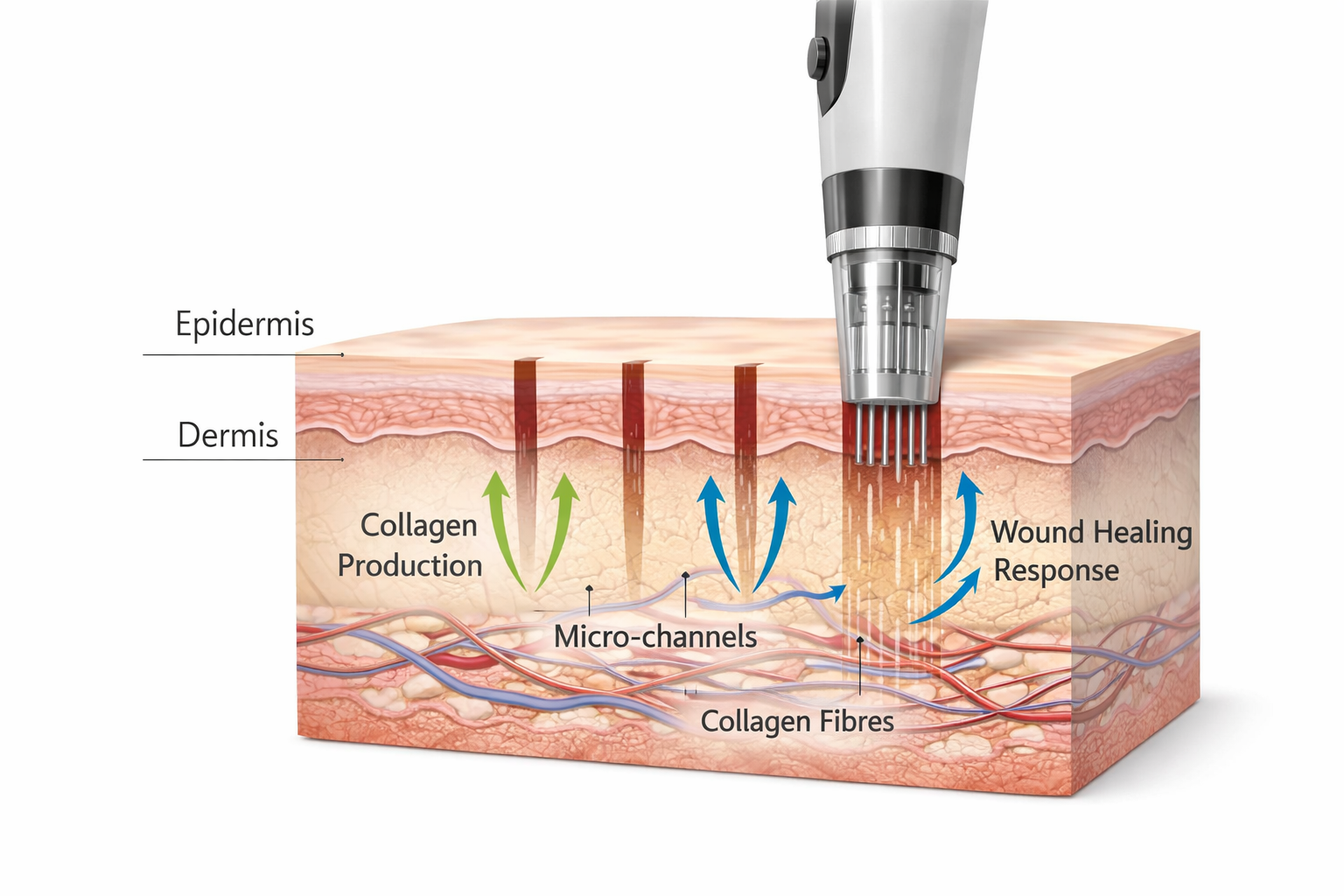
This wound healing cascade is what distinguishes microneedling from surface-level treatments. Rather than simply removing dead skin cells, microneedling stimulates structural change within the dermis — improving skin firmness, reducing the appearance of acne scars, and addressing concerns such as enlarged pores and skin laxity that cannot be meaningfully reached by epidermal exfoliation alone.
A topical numbing cream is applied before treatment, typically for 20–30 minutes, to minimise discomfort. The needling itself usually takes 15–45 minutes depending on the area. Most patients experience redness and mild swelling for one to three days afterwards, and some notice pinpoint bleeding during the procedure, which is a normal part of the controlled injury process. Results develop gradually as collagen builds, with visible improvement often becoming apparent between four and twelve weeks after treatment.
Which Skin Concerns Does Each Treatment Address?
Both treatments can improve fine lines, uneven skin tone, dull complexion, and mild textural irregularities, but their suitability diverges significantly when it comes to deeper or more structural concerns.
Microdermabrasion is generally well suited to:
- Dull or lacklustre skin and uneven surface texture
- Mild hyperpigmentation, sunspots, and age spots caused by photoaging
- Blackheads and superficially clogged pores
- Very fine lines at the surface level
- Mild sun damage and early signs of premature ageing
- Skincare maintenance and regular skin brightening between other treatments
Microneedling may be more appropriate for:
- Moderate to deep acne scars, including rolling and boxcar scars
- Enlarged pores that have not responded to surface treatments
- Skin laxity and loss of firmness in the face, neck, or décolletage
- Stretch marks and surgical scars
- Deeper wrinkles and lines requiring structural collagen stimulation
- Melasma when combined with appropriate topical agents (under clinical supervision)
- Hair loss (alopecia) when applied to the scalp — though evidence in this area is still developing
It is worth noting that microdermabrasion is unlikely to produce meaningful improvement in deep acne scars or significant skin laxity, as these concerns require treatment at the level of the dermis. Conversely, microneedling may be more than necessary for a patient whose primary goal is simply brighter, smoother skin with no structural concerns.
Downtime, Recovery, and the Treatment Experience
The recovery profile of these two treatments is one of the most practically important differences for many patients.
Microdermabrasion involves virtually no downtime. Most patients experience mild redness and temporary skin sensitivity for a few hours after treatment, and some notice slight dryness or flaking over the following day or two. Makeup can usually be applied the same day, and there are no significant restrictions on daily activities. This makes microdermabrasion a practical option for patients with busy schedules or those who cannot accommodate visible recovery time.
Microneedling requires a short but more noticeable recovery period. Immediately after treatment, the skin typically appears red and slightly swollen — similar in appearance to moderate sunburn. This usually settles within one to three days, though some patients with sensitive skin or those treated at greater needle depths may experience redness for slightly longer. Pinpoint bleeding during the procedure is normal and resolves quickly. Peeling or flaking may occur in the days following treatment as the skin renews itself.
Post-treatment aftercare is important for both treatments but particularly so after microneedling. Patients are generally advised to avoid direct sun exposure, strenuous exercise, hot baths, retinoids, exfoliating products, and makeup for at least 48 hours after microneedling. SPF is essential following either treatment, as freshly treated skin is more vulnerable to UV damage and pigmentation changes. A qualified aesthetic practitioner will provide specific aftercare guidance based on the treatment performed and the individual’s skin type.
Results: What to Expect and How Long They Last
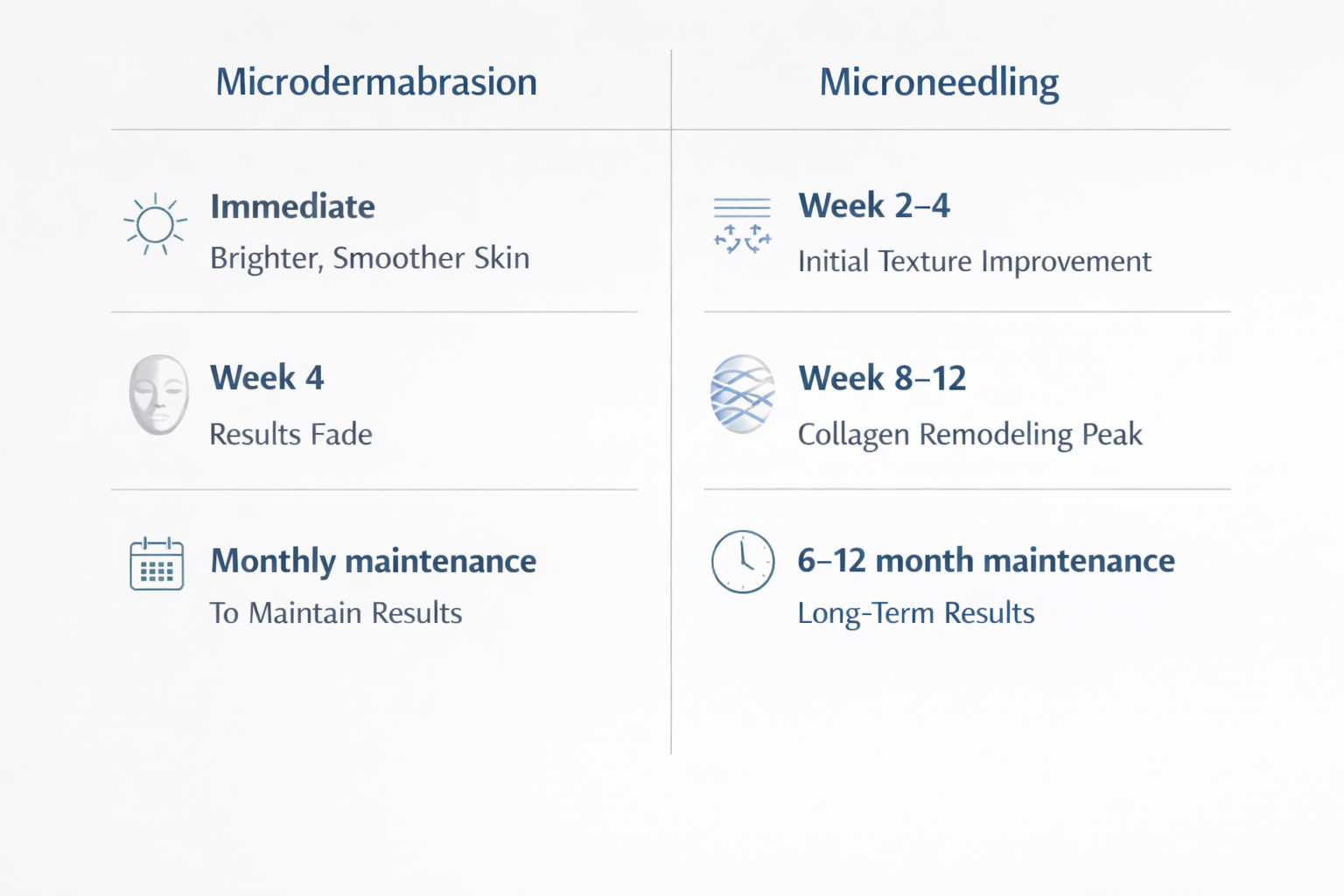
Microdermabrasion produces an immediate improvement in skin brightness and smoothness that many patients notice straight after their appointment. However, because the treatment works only at the surface level, these results are relatively short-lived — typically lasting around four weeks before the skin returns to its previous state. Regular maintenance sessions, often monthly, are needed to sustain the benefits. A typical treatment course consists of six to ten sessions, after which ongoing monthly or bi-monthly appointments help maintain the results.
Microneedling results follow a different timeline. Because the improvement depends on the skin’s natural collagen production and remodelling process, changes are gradual rather than immediate. Many patients notice initial improvements in skin texture and tone within two to four weeks of their first session, with more significant changes — particularly in acne scar depth and skin firmness — becoming visible over eight to twelve weeks. A standard treatment course of three to six sessions, spaced four to six weeks apart, is typically recommended for optimal results. The structural changes achieved through collagen induction therapy tend to be longer-lasting than those from surface exfoliation, though maintenance sessions every six to twelve months may help sustain the outcome.
Advanced Treatment Variants
Both microdermabrasion and microneedling have evolved beyond their standard forms, and understanding the available variants can help patients and practitioners select the most appropriate option.
Hydradermabrasion
Hydradermabrasion combines mechanical exfoliation with the simultaneous delivery of hydrating and nourishing serums into the skin. Unlike standard crystal microdermabrasion, which focuses purely on removing dead skin cells, hydradermabrasion adds an active infusion step that can be tailored to specific concerns such as dehydration, dullness, or mild congestion. It is generally well tolerated by most skin types, including sensitive skin, and produces a noticeably plumper, more radiant result immediately after treatment.
RF Microneedling (Radiofrequency Microneedling)
RF microneedling combines the controlled micro-injuries of standard microneedling with the delivery of radiofrequency energy through the needle tips directly into the dermis. This dual mechanism stimulates both the wound healing response and additional thermal collagen contraction, making RF microneedling particularly effective for skin laxity, deeper wrinkles, and acne scarring. It is generally considered a more intensive treatment than standard microneedling, with a slightly longer recovery period and a higher cost per session (approximately £120–£400 in the UK). RF microneedling is also considered safer for darker skin tones than laser-based skin tightening treatments, as the energy is delivered below the skin surface rather than through it.
PRP Microneedling (Vampire Facial)
Platelet-rich plasma (PRP) microneedling — sometimes called the Vampire Facial — involves applying a concentration of the patient’s own platelets, derived from a small blood sample, to the skin during or after the microneedling procedure. The micro-channels created by the needles allow the PRP to penetrate more effectively, potentially enhancing the collagen stimulation and healing response. PRP microneedling is used for skin rejuvenation, acne scarring, and hair loss, though the evidence base for some of these applications is still developing and results vary between individuals.
At-Home Devices: What You Should Know
At-home microdermabrasion kits and at-home dermaroller devices are widely available and frequently searched, but they carry important limitations and risks that are worth understanding before use.
At-home microdermabrasion devices use gentler abrasive tips than professional equipment and work only at the most superficial skin level. They can provide mild exfoliation and brightening but are unlikely to replicate the results of a professional treatment. Used correctly and infrequently, they are generally low-risk for most skin types.
At-home dermarollers present greater safety concerns. Consumer-grade devices typically use shorter needle lengths than professional equipment, but incorrect technique, inadequate sterilisation, or overuse can cause skin damage, infection, or post-inflammatory hyperpigmentation — particularly in individuals with darker skin tones or active skin conditions. Professional microneedling performed by a qualified aesthetic practitioner uses sterile, single-use needle cartridges and allows for precise depth control that cannot be replicated at home. For any concern beyond basic maintenance exfoliation, a professional assessment is strongly recommended before using at-home needling devices.
Suitability, Skin Types, and Contraindications
Both treatments are broadly suitable for a range of skin types and tones, but there are important individual factors to consider before proceeding with either.
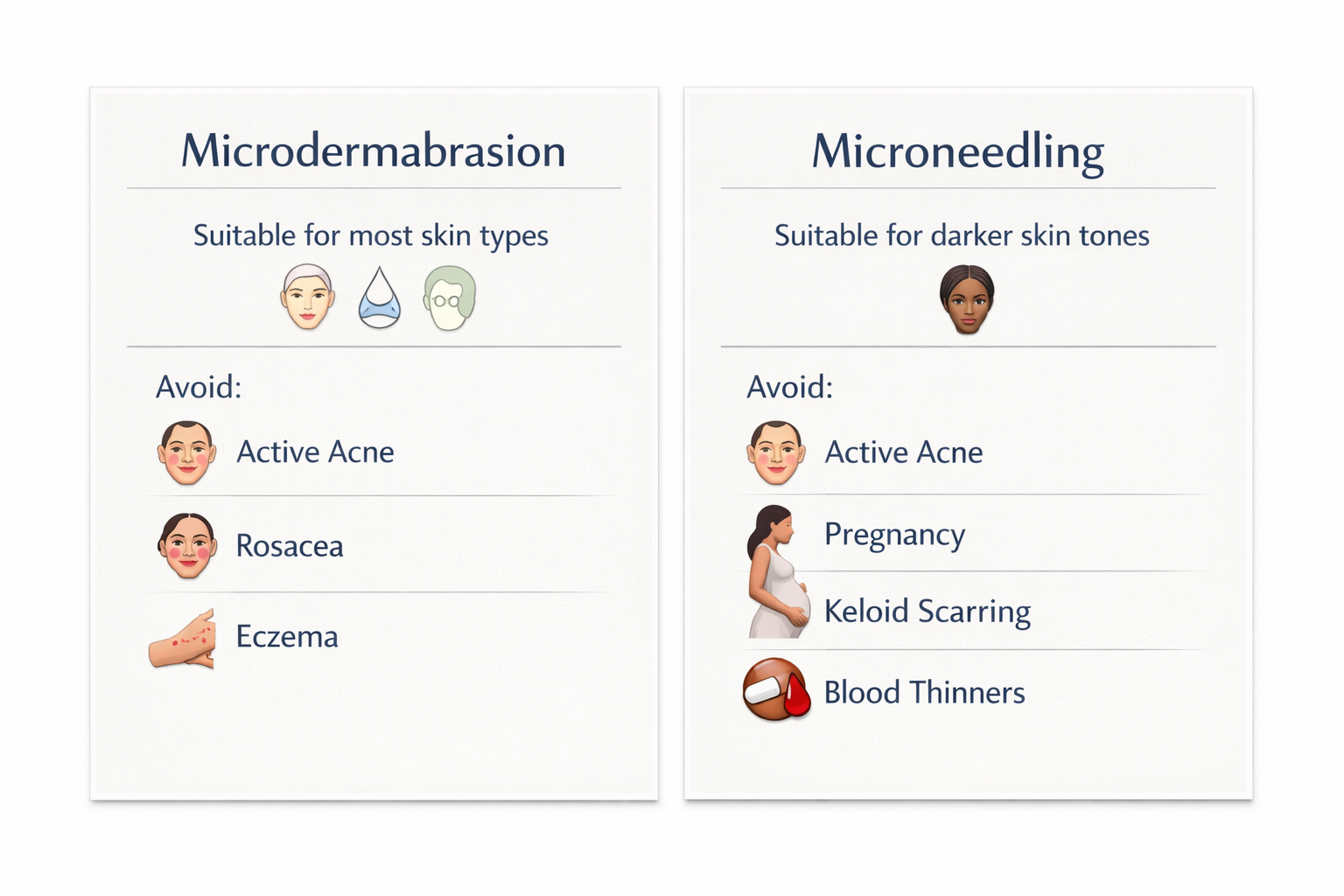
Microdermabrasion is generally well tolerated by most skin types, including sensitive skin, when performed at an appropriate intensity. It is not recommended for individuals with active acne breakouts, rosacea, eczema, psoriasis, or open wounds in the treatment area, as the mechanical abrasion can aggravate these conditions. Patients with very sensitive or reactive skin may find that even gentle microdermabrasion causes temporary irritation.
Microneedling is also suitable for most skin types and tones, including darker skin tones — an advantage over some laser-based resurfacing treatments, which carry a higher risk of post-inflammatory hyperpigmentation in patients with more melanin-rich skin. However, microneedling should be avoided in patients with active acne, open skin infections, eczema, psoriasis, or rosacea in the treatment area. It is also contraindicated during pregnancy, in patients taking blood-thinning medications, and in those with a history of keloid scarring. Patients with certain implanted devices should discuss suitability with their practitioner before undergoing RF microneedling specifically.
A thorough consultation with a qualified aesthetic practitioner is essential before either treatment. This allows for a proper assessment of skin type, medical history, current medications, and individual goals — all of which influence whether a treatment is appropriate and how it should be performed.
Cost Comparison: UK Pricing
Microdermabrasion is generally the more affordable option per session. In the UK, prices typically range from approximately £45 to £160 per session depending on the clinic, location, and whether standard or hydradermabrasion is performed. Because results are short-lived and regular maintenance is needed, the cumulative cost of ongoing monthly sessions should be factored into any budget consideration.
Microneedling costs more per session — typically £80 to £300 for standard microneedling in the UK, rising to £120–£400 per session for RF microneedling. PRP microneedling may cost more still, depending on the clinic and whether PRP preparation is included. However, because microneedling produces longer-lasting structural results and requires fewer maintenance sessions over time, the overall cost difference between the two treatments may be less significant when considered across a full year of treatment.
Neither treatment is typically available on the NHS, and most private health insurance policies do not cover cosmetic skin treatments. Clinics may offer package pricing for a course of sessions, which can reduce the per-session cost.
Choosing a Qualified Practitioner
The safety and effectiveness of both treatments depend significantly on the skill and qualifications of the person performing them. In the UK, microdermabrasion is often performed by beauty therapists with a Level 3 or Level 4 qualification in aesthetic treatments. Microneedling, particularly at deeper needle depths or when combined with RF energy or PRP, should be performed by a practitioner with appropriate medical or advanced aesthetic qualifications and, ideally, medical supervision or oversight.
When choosing a clinic, it is reasonable to ask about the practitioner’s specific training and qualifications, the type of device used, whether single-use sterile needle cartridges are used for microneedling, and what aftercare support is provided. A reputable clinic will offer a thorough consultation before any treatment and will not pressure patients into proceeding if the treatment is not appropriate for their skin.
Can You Combine Microdermabrasion and Microneedling?
Microdermabrasion and microneedling are not performed in the same session. Combining both treatments at once would over-stress the skin barrier and significantly increase the risk of irritation, sensitivity, and adverse reactions. However, the two treatments can be used as part of a planned treatment programme, with appropriate spacing between sessions. For example, some patients use microdermabrasion as a regular maintenance treatment between less frequent microneedling courses. Any combined approach should be planned by a qualified aesthetic practitioner who can assess the skin’s response and adjust the schedule accordingly.
Frequently Asked Questions
Which is better for acne scars — microdermabrasion or microneedling?
For moderate to deep acne scars, microneedling is generally the more effective option. Its ability to stimulate collagen production within the dermis allows for genuine structural remodelling of scar tissue over time. Microdermabrasion can improve the surface texture around scars and may help with mild post-inflammatory discolouration, but it does not reach the depth needed to address the underlying scar architecture.
Is microneedling painful?
Most patients find microneedling tolerable when a topical numbing cream is applied beforehand. During the procedure, a sensation of pressure or mild scratching is common. Areas with thinner skin, such as around the nose or forehead, may feel more sensitive. Without numbing cream, the procedure would be significantly more uncomfortable, which is why it is a standard part of the treatment protocol.
How many sessions will I need?
For microdermabrasion, a course of six to ten sessions is typically recommended for best results, followed by monthly maintenance. For microneedling, most patients undergo three to six sessions spaced four to six weeks apart, with maintenance sessions every six to twelve months. The exact number of sessions depends on the individual’s skin concerns, starting condition, and how their skin responds to treatment.
Is microneedling safe for darker skin tones?
Microneedling is generally considered safe for darker skin tones and is often preferred over laser resurfacing for patients with higher Fitzpatrick skin types, as it carries a lower risk of post-inflammatory hyperpigmentation. However, appropriate needle depth and technique are important, and treatment should be performed by a practitioner experienced in treating diverse skin tones.
Can I have microdermabrasion if I have sensitive skin?
Microdermabrasion can be performed on sensitive skin, but the intensity of the treatment should be adjusted accordingly. A patch test or lower-intensity setting may be appropriate for first-time patients with reactive skin. Individuals with active rosacea, eczema, or psoriasis should avoid microdermabrasion until these conditions are well controlled, and should discuss suitability with a practitioner before proceeding.
How soon after microneedling will I see results?
Initial improvements in skin texture and tone may be noticeable within two to four weeks of a first microneedling session. More significant changes — particularly in acne scar depth, skin firmness, and enlarged pores — typically become visible over eight to twelve weeks as new collagen matures. Results continue to develop between sessions, which is why the full benefit of a treatment course is usually assessed several weeks after the final session.
Are there risks with at-home dermarollers?
At-home dermarollers carry real risks if used incorrectly, including skin damage, infection, and hyperpigmentation — particularly in individuals with darker skin tones or active skin conditions. Professional microneedling uses sterile single-use cartridges and allows for precise depth control that at-home devices cannot replicate. For any meaningful skin concern, a professional assessment is advisable before using at-home needling tools.
Microdermabrasion or Microneedling: Matching the Treatment to Your Goals
Microdermabrasion and microneedling are both effective treatments, but they serve meaningfully different purposes. Microdermabrasion is a practical, low-downtime option for patients who want regular skin brightening, smoother surface texture, and a refreshed complexion without any recovery time. It works well as part of an ongoing skincare maintenance routine and is accessible, affordable, and suitable for most skin types.
Microneedling is the more appropriate choice when the goal is structural skin improvement — reducing the appearance of acne scars, addressing skin laxity, treating enlarged pores, or achieving longer-lasting collagen stimulation. It requires a short recovery period and a higher investment per session, but the results tend to be more durable and address concerns that surface-level exfoliation cannot reach. Advanced options such as RF microneedling and PRP microneedling extend these benefits further for patients with more significant concerns.
Neither treatment is universally superior — the right choice depends on your specific skin concerns, lifestyle, budget, and tolerance for downtime. A consultation with a qualified aesthetic practitioner is the most reliable way to assess which treatment, or combination of treatments, is likely to be most beneficial for your individual skin. A good practitioner will take a thorough history, examine your skin carefully, and recommend a realistic treatment plan based on your goals rather than a one-size-fits-all approach.