

Key Takeaways
- Cryolipolysis (fat freezing) uses controlled cooling to trigger the natural death of subcutaneous fat cells, which are then gradually cleared by the body’s lymphatic system over several weeks.
- Clinical studies report an average fat reduction of approximately 15–28% in the treated area, with results typically visible from three weeks and optimal at three to six months post-treatment.
- Fat freezing reduces localized fat deposits — it is not a weight loss treatment and does not affect visceral fat (the deeper fat around internal organs).
- The procedure is generally well tolerated with no downtime, though rare but serious risks exist, including paradoxical adipose hyperplasia (PAH).
- Good candidates are those close to a healthy weight with pinchable subcutaneous fat and realistic expectations; a consultation with a qualified practitioner is essential before proceeding.
What Is Fat Freezing (Cryolipolysis)?
Fat freezing is the consumer-facing name for cryolipolysis, a non-invasive body contouring procedure that selectively destroys fat cells using precisely controlled cooling. The technology was developed by Harvard scientists Dieter Manstein and R. Rox Anderson, who observed that children who ate ice lollies sometimes developed localized fat loss in their cheeks — a phenomenon caused by the sensitivity of fat cells to cold temperatures. This observation led to the development of a clinical device that could replicate the effect safely and predictably on targeted areas of the body.
CoolSculpting is the most widely recognized branded form of cryolipolysis and received FDA clearance for the flanks in 2010, followed by the abdomen in 2012. Since then, the technology has been used in an estimated 17 million or more treatments worldwide. Various applicator types — including the CoolSculpting Elite, CoolAdvantage, and smaller applicators for areas such as the chin — allow the treatment to be adapted to different body areas and fat pocket sizes.
How Does Fat Freezing Work?
The mechanism behind cryolipolysis relies on a key biological difference: subcutaneous fat cells (adipocytes) are significantly more sensitive to cold than the overlying skin and surrounding tissues. During a fat freezing session, a suction applicator draws the targeted tissue between two cooling panels. The device then lowers the temperature of the fat layer to a precise range — typically between approximately −11°C and +5°C — for a controlled period, usually 35 to 75 minutes depending on the applicator and area being treated.
At these temperatures, the lipids within fat cells undergo a phase transition, essentially crystallizing. This triggers a process called cellular apoptosis — a form of programmed, controlled cell death — without damaging the skin, nerves, or surrounding structures. Over the following weeks, the body’s immune system dispatches macrophages (specialized immune cells) to identify and engulf the damaged adipocytes. The cellular debris is then processed and eliminated gradually through the lymphatic system. Because this clearance process takes time, results are not immediate; visible changes typically begin around three weeks after treatment, with the most significant fat cell elimination occurring over three to six months.
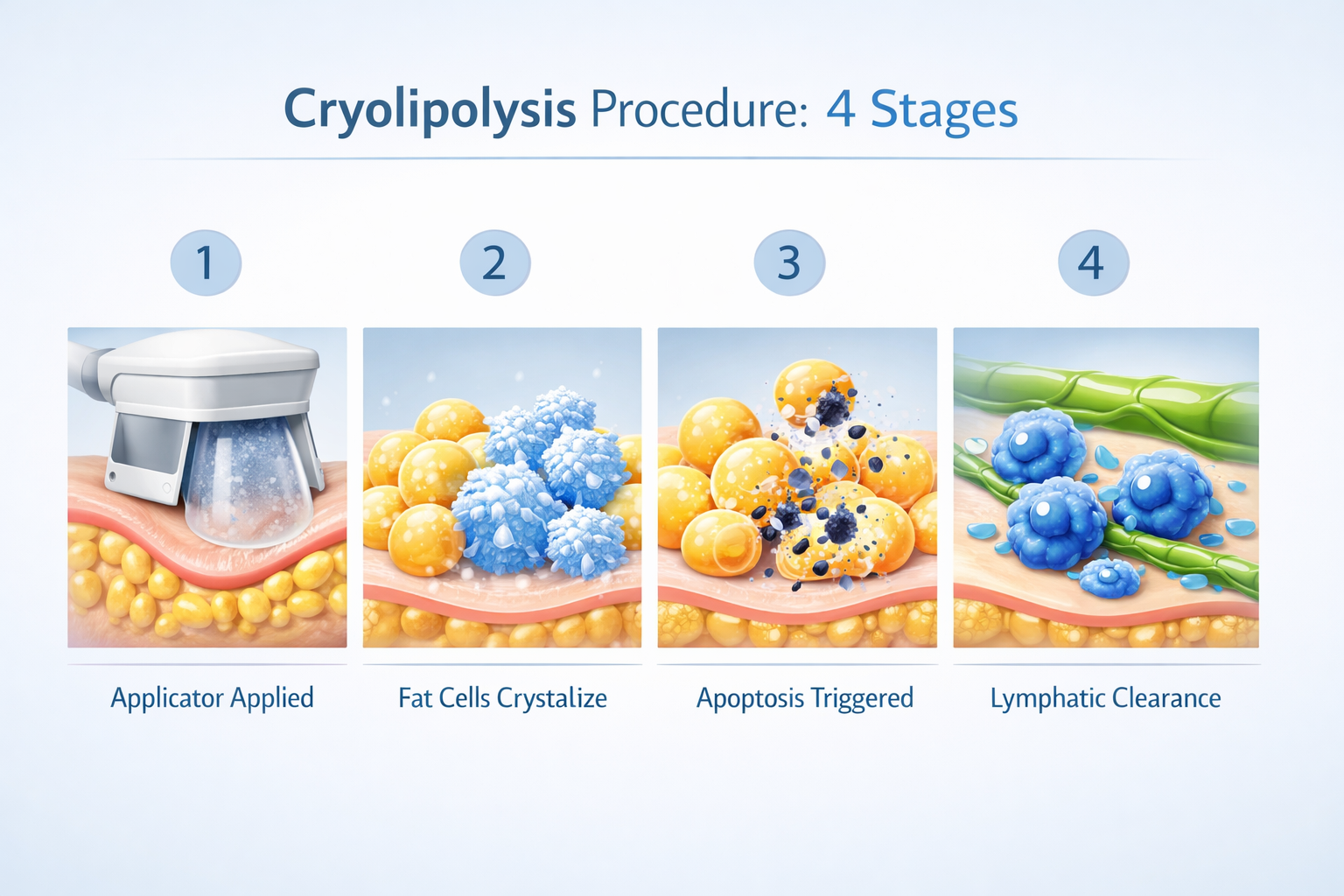
It is important to understand that cryolipolysis permanently destroys the treated fat cells. However, the remaining fat cells in the area can still enlarge if a person gains weight after treatment, which is why maintaining a stable weight is important for preserving results.
Does Fat Freezing Really Work? What the Evidence Shows
The short answer is yes — cryolipolysis does reduce subcutaneous fat in the treated area for most patients, and this is supported by a reasonable body of clinical evidence. A 2023 peer-reviewed review published in IJS Global Health assessed the benefits and drawbacks of cryolipolysis and confirmed meaningful fat reduction outcomes alongside an acceptable safety profile when performed by experienced providers. Multiple studies report an average reduction of approximately 15–28% in subcutaneous fat thickness in the treated area, measured at around four months post-treatment.
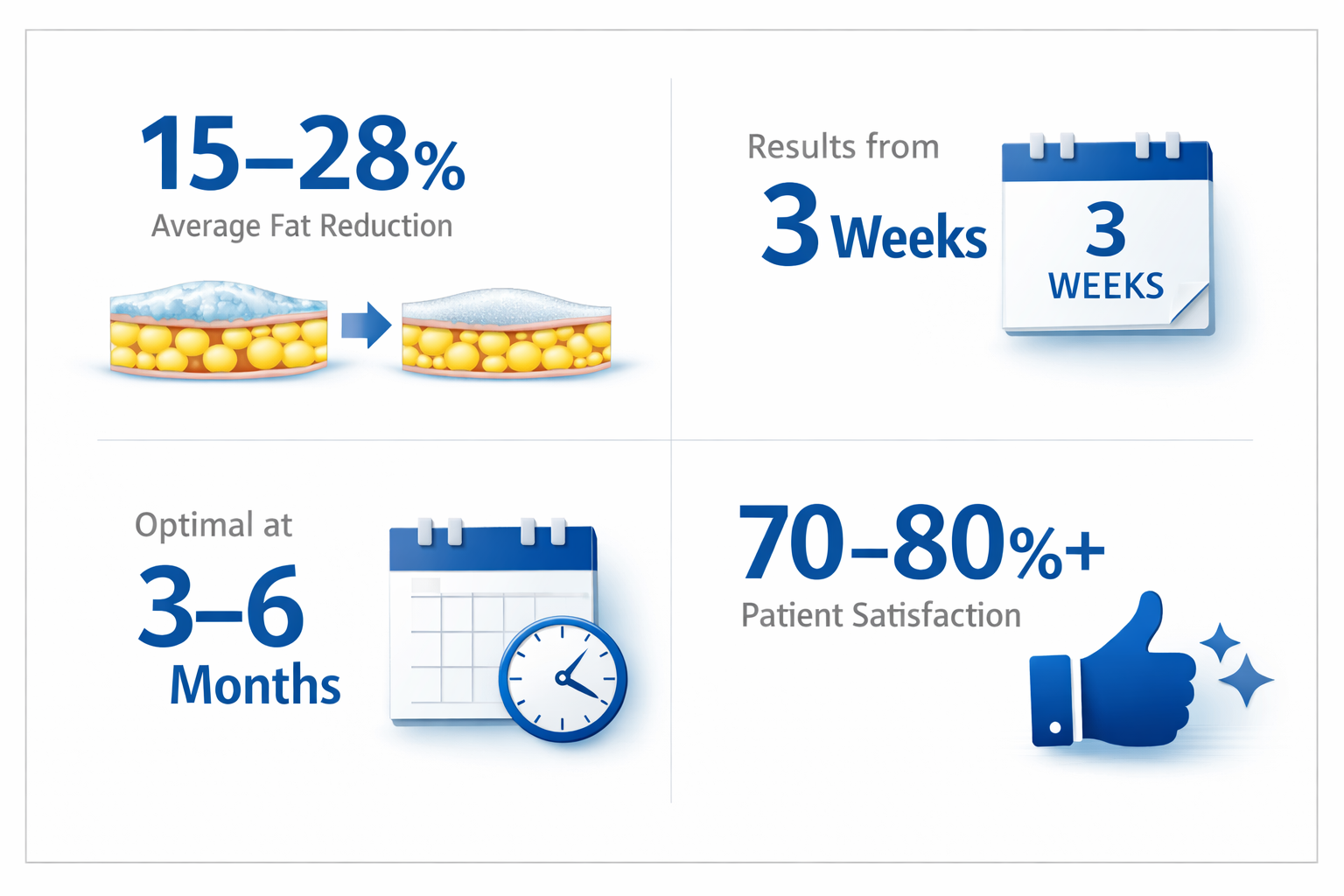
Patient satisfaction rates in clinical literature are generally high, with many studies reporting satisfaction levels above 70–80%. However, individual results vary considerably depending on factors including the area treated, the amount of subcutaneous fat present, the number of treatment sessions completed, and individual biological response. Some patients see modest changes; others report more noticeable contouring improvements. A single session per area is often sufficient for mild to moderate fat deposits, while more prominent stubborn fat pockets may benefit from two or more treatment cycles, typically spaced six to eight weeks apart to allow full clearance of the first round.
It is equally important to be clear about what fat freezing cannot do. It does not reduce visceral fat — the deeper fat that surrounds internal organs and is associated with metabolic health risks. Visceral fat is not accessible to the cooling applicator and is not affected by cryolipolysis. The treatment is designed for localized fat deposits that are pinchable and sit just beneath the skin surface. It is also not a substitute for diet and exercise, and it does not produce the dramatic overall body transformation that significant weight loss can achieve.
What Areas Can Be Treated?
Cryolipolysis applicators have been developed for a range of body areas where stubborn fat pockets commonly persist despite diet and exercise. Treatable areas typically include:
- Abdomen (upper and lower)
- Flanks (love handles)
- Inner and outer thighs
- Upper arms
- Bra fat (back and side rolls)
- Double chin (submental area)
- Beneath the buttocks (banana roll)
- Chest area in some male patients
The suitability of a specific area depends on whether there is sufficient pinchable subcutaneous fat to be drawn into the applicator. Areas with very little fat, significant skin laxity, or underlying anatomical considerations may not be appropriate. A thorough consultation with a qualified practitioner is necessary to assess each area individually.
What Happens During a Fat Freezing Session?
A fat freezing appointment typically begins with a consultation or pre-treatment assessment to confirm suitability and agree on the areas to be treated. A protective gel pad is placed on the skin to shield it from direct contact with the cooling panels. The applicator is then positioned over the target area and suction draws the tissue into the device.
During the first few minutes, patients commonly experience an intense cold sensation, pulling, and mild pressure. As the tissue numbs, most people find the sensation becomes more tolerable, and many read, use their phone, or rest during the session. Each treatment cycle lasts approximately 35 to 75 minutes per area. At the end of the cycle, the applicator is removed and the treated area — which may appear temporarily firm, red, or slightly raised — is massaged for a few minutes. This post-treatment massage is thought to help break down the crystallized fat cells and may improve outcomes.
There is no anaesthesia required and no needles are involved. Most patients return to normal activities immediately after the appointment, making fat freezing a genuinely no downtime procedure in most cases.
Side Effects and Risks of Fat Freezing
Fat freezing has a well-established safety profile when performed using properly calibrated, FDA-cleared devices by an experienced provider. Common side effects are generally mild and temporary, resolving within days to a few weeks:
- Redness and skin flushing in the treated area
- Temporary firmness or a sensation of stiffness
- Bruising or swelling
- Numbness, tingling, or altered skin sensitivity
- Mild aching or cramping in the hours following treatment
More persistent or serious complications are uncommon but do occur. The most clinically significant rare risk is paradoxical adipose hyperplasia (PAH) — a counterintuitive reaction in which the treated fat tissue enlarges rather than reduces. PAH is estimated to occur in fewer than 1% of treatment cycles, though some analyses suggest the rate may be higher in male patients. The mechanism is not fully understood, but the result is a firm, enlarged, and often painless mass in the treated area that does not resolve on its own and typically requires surgical intervention such as liposuction to correct. Patients should be informed of this risk before treatment and should report any unusual firmness or enlargement in the weeks following a session.
Other rare but reported complications include skin necrosis (tissue damage), persistent dysesthesia (abnormal skin sensation lasting several months), and frostbite-like lesions. These are more likely to occur with improperly calibrated devices or inadequate technique, which underscores the importance of choosing a reputable clinic using genuine, properly maintained equipment.
Home Fat Freezing Devices: A Serious Safety Warning
A number of consumer-grade fat freezing devices are marketed online and in beauty retail settings. These devices are not equivalent to clinical cryolipolysis equipment and carry meaningful risks. Without precise temperature calibration, protective gel pads, and appropriate applicator design, home devices can cause skin necrosis, frostbite injuries, and nerve damage. Clinical fat freezing works because the cooling is applied at a specific, controlled temperature for a specific duration — conditions that consumer devices cannot reliably replicate.
Regulatory bodies and medical organizations consistently advise against the use of unauthorized home fat freezing devices. If you are considering cryolipolysis, the treatment should only be performed in a clinical setting using FDA-cleared equipment operated by a trained and qualified practitioner.
Who Is a Good Candidate for Fat Freezing?
Cryolipolysis tends to produce the most satisfying outcomes for patients who meet specific criteria. A good candidate is generally someone who:
- Is close to their healthy weight — typically a BMI of 30 or below
- Has one or more localized fat deposits that are pinchable and do not respond to diet and exercise
- Has realistic expectations about the degree of improvement achievable
- Has stable body weight and is committed to maintaining it after treatment
- Is in good general health without relevant contraindications
Fat freezing is not appropriate for everyone. It is not a treatment for obesity and will not produce meaningful results in patients whose primary concern is overall body weight rather than localized stubborn fat pockets. Patients with significant skin laxity in the target area may find that reducing the underlying fat makes loose skin more visible, and may need to consider whether a skin-tightening treatment would be more appropriate or complementary.
Cryolipolysis is generally not recommended for patients with cryoglobulinemia, cold agglutinin disease, or paroxysmal cold hemoglobinuria (conditions in which cold exposure can trigger serious systemic reactions), as well as those with Raynaud’s phenomenon, open wounds, or active skin conditions in the treatment area. Pregnancy and breastfeeding are also contraindications. A full medical history review at consultation is essential to identify any individual factors that may affect suitability.
How Long Do Fat Freezing Results Last?
The fat cells destroyed by cryolipolysis are permanently eliminated — they do not regenerate. In this sense, the fat cell reduction achieved is long-lasting. However, the remaining fat cells in the body, including those in the treated area, retain the capacity to store more fat if caloric intake consistently exceeds expenditure. Weight gain after treatment can therefore diminish or reverse the visible results, even though the specific cells that were destroyed are gone.
Patients who maintain a stable weight through a balanced diet and regular physical activity tend to preserve their results over the long term. Some patients choose to have additional treatment cycles in the same area to achieve further fat reduction, or to address adjacent areas as their body contouring goals evolve.
Fat Freezing vs Liposuction
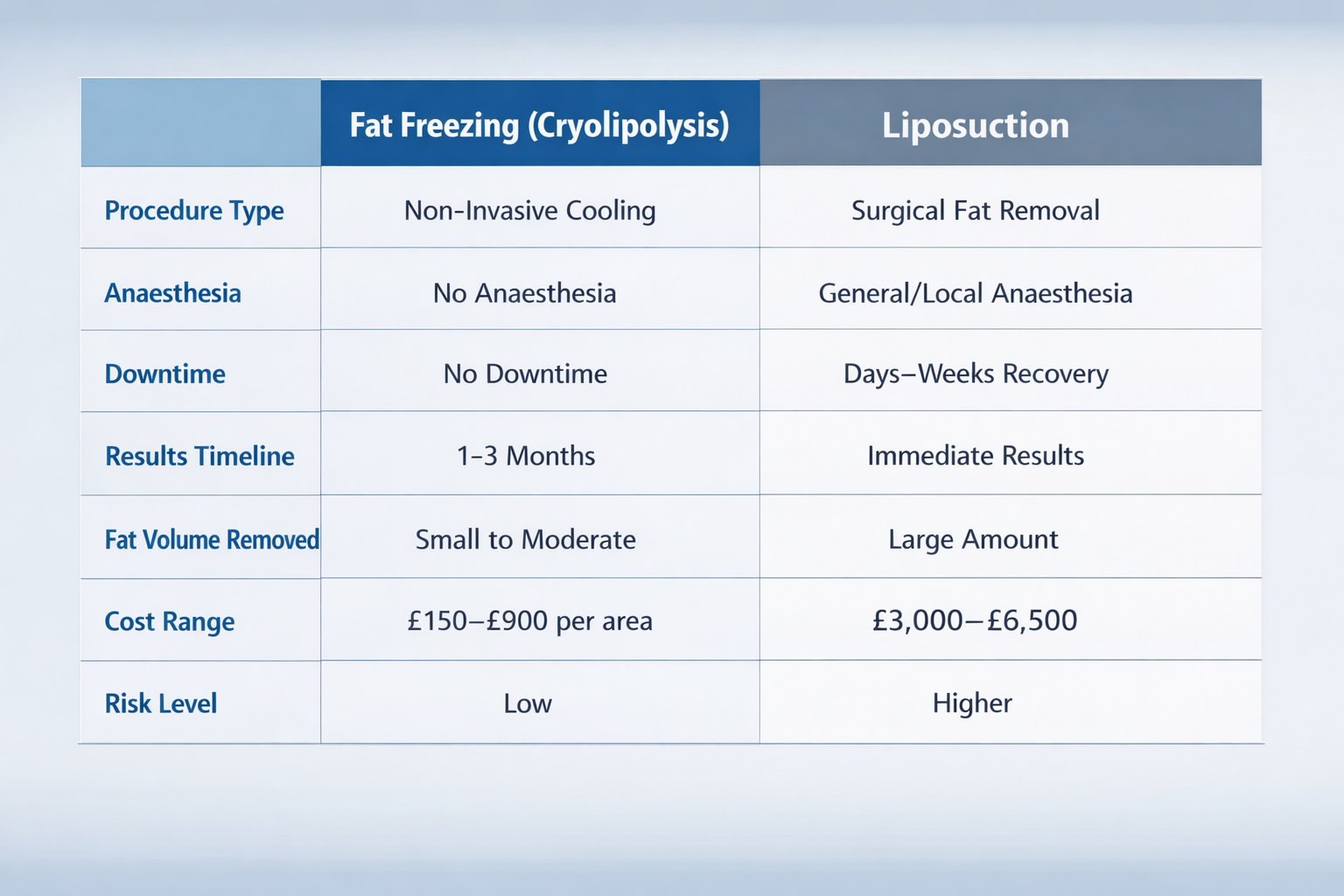
Liposuction remains the surgical gold standard for fat removal and can achieve more dramatic, immediate results than cryolipolysis. A single liposuction procedure can remove larger volumes of fat across multiple areas in one session, with results visible once post-operative swelling resolves. However, liposuction involves general or local anaesthesia, incisions, a recovery period of several days to weeks, and carries the risks associated with surgery including infection, scarring, and anaesthetic complications. In the UK, liposuction typically costs between £3,000 and £6,500 depending on the extent of treatment.
Cryolipolysis is better suited to patients who want to address specific stubborn fat pockets without surgery, anaesthesia, or recovery time. It produces more modest results than liposuction but with a significantly lower risk profile and no downtime. The two treatments are not directly competing for the same patient group — liposuction is more appropriate for larger volume fat removal, while fat freezing is better positioned as a non-surgical body sculpting option for targeted areas.
Fat Freezing vs Other Non-Surgical Alternatives
Several non-invasive body contouring treatments exist alongside cryolipolysis, each using a different mechanism to reduce or remodel fat.
SculpSure uses laser energy (laser lipolysis) rather than cold to heat and destroy fat cells. It targets a similar patient profile to cryolipolysis and produces comparable fat reduction results, though the treatment experience differs — SculpSure sessions involve heat and tingling rather than cold and numbness, and each cycle takes approximately 25 minutes. Some patients find one more comfortable than the other, and the choice between them may come down to personal preference, the area being treated, and clinic availability.
EMSCULPT and similar devices use high-intensity focused electromagnetic energy to stimulate powerful muscle contractions, primarily targeting muscle definition rather than fat reduction. EMSCULPT may be complementary to cryolipolysis for patients who want both fat reduction and improved muscle tone in the same area.
Radiofrequency treatments focus primarily on skin tightening and collagen stimulation, making them more relevant for patients whose concern is skin laxity rather than fat volume.
GLP-1 receptor agonist medications (such as semaglutide) represent an emerging and increasingly popular approach to body weight management. These injectable medications work systemically to reduce appetite and promote weight loss, including reduction of both subcutaneous and visceral fat. For patients whose primary goal is overall weight reduction rather than localized body sculpting, GLP-1 medications may be a more appropriate first consideration. However, they involve ongoing medication use, systemic effects, and a different risk and benefit profile to cryolipolysis. Some patients use both approaches — medication for overall weight management and cryolipolysis for residual stubborn fat pockets that persist after weight loss.
How Much Does Fat Freezing Cost in the UK?
UK pricing for cryolipolysis varies depending on the clinic, the device used, the area treated, and the number of applicators or cycles required. As a general guide, individual treatment cycles typically range from approximately £150 to £900 per area. Full treatment courses addressing multiple areas or requiring several sessions can cost between £1,000 and £4,000 or more. Clinics using branded CoolSculpting technology with genuine applicators tend to sit at the higher end of the pricing range.
Fat freezing is not available on the NHS and is not covered by health insurance as it is a cosmetic procedure. When comparing costs, it is worth considering not just the price per session but the total number of sessions likely needed to achieve the desired result, and whether the clinic uses properly maintained, FDA-cleared equipment.
How to Choose a Reputable Fat Freezing Clinic
The safety and effectiveness of cryolipolysis depend significantly on the quality of the equipment used and the experience of the practitioner performing the treatment. When evaluating clinics, consider the following:
- Does the clinic use FDA-cleared cryolipolysis devices, such as genuine CoolSculpting equipment, rather than unbranded or generic alternatives?
- Is the practitioner trained and experienced in body contouring treatments, and can they explain the procedure, risks, and realistic outcomes clearly?
- Does the clinic offer a thorough consultation before treatment, including a review of your medical history and an honest assessment of whether you are a suitable candidate?
- Are before and after results from real patients available to review?
- Is the clinic transparent about the risk of paradoxical adipose hyperplasia and other potential complications?
A reputable clinic will never pressure you into treatment or make guarantees about results. If a consultation feels rushed or the practitioner is unable to answer your questions clearly, it is reasonable to seek a second opinion.
Frequently Asked Questions
Is fat freezing the same as losing weight?
No. Fat reduction and weight loss are different things. Cryolipolysis destroys a proportion of fat cells in a specific area, which may reduce the visible size of that area. However, the number of fat cells eliminated is relatively small in the context of total body fat, so the change on the scales is typically minimal. Fat freezing is a body sculpting tool, not a weight management treatment.
How many sessions will I need?
Many patients see satisfactory results from a single treatment cycle per area. Those with more prominent stubborn fat pockets, or who want a greater degree of reduction, may benefit from two or more sessions in the same area, typically spaced six to eight weeks apart. The number of sessions needed should be discussed at consultation based on your individual anatomy and goals.
When will I see results from fat freezing?
Initial changes may become visible from around three weeks after treatment as the body begins clearing destroyed fat cells. The most noticeable improvements typically appear between two and four months post-treatment, with some patients continuing to see gradual changes up to six months after their session.
Is fat freezing permanent?
The fat cells destroyed by cryolipolysis do not regenerate, so the reduction in fat cell number in the treated area is permanent. However, remaining fat cells can still enlarge with weight gain, which can reduce or reverse the visible results. Maintaining a stable weight is important for preserving the outcome.
What is paradoxical adipose hyperplasia and how common is it?
Paradoxical adipose hyperplasia (PAH) is a rare complication in which the treated fat tissue enlarges rather than reduces following cryolipolysis. It appears as a firm, painless mass in the treated area and does not resolve without intervention — typically liposuction. PAH is estimated to occur in fewer than 1% of treatment cycles, though it may be more common in male patients. It is important to discuss this risk with your practitioner before treatment.
Can fat freezing treat my stomach if I have a lot of weight to lose?
Cryolipolysis is most effective for localized subcutaneous fat deposits in patients who are close to a healthy weight. It is not designed for patients with significant excess weight or obesity, and it cannot address visceral fat (the deeper fat around internal organs). If you have a substantial amount of weight to lose, a conversation with your GP or a medical weight management specialist would be a more appropriate starting point.
Is Fat Freezing the Right Choice for Your Body Contouring Goals?
Cryolipolysis is a well-evidenced, non-surgical option for reducing localized stubborn fat pockets that persist despite a healthy lifestyle. For the right candidate — someone close to a healthy weight, with pinchable subcutaneous fat and realistic expectations — it can produce meaningful, lasting improvements in body contour without surgery, anaesthesia, or recovery time.
It is not a solution for overall weight loss, it cannot address visceral fat, and it works best as a complement to — not a replacement for — a balanced diet and regular exercise. Results vary between individuals, and the treatment carries a small but real risk of complications, including paradoxical adipose hyperplasia, which should be discussed openly before proceeding.
If you are considering fat freezing, a consultation with a qualified practitioner using FDA-cleared equipment is the essential first step. A thorough assessment of your anatomy, health history, and goals will help determine whether cryolipolysis is the most appropriate option, or whether an alternative approach — surgical or non-surgical — may better match what you are hoping to achieve.