

Quick Comparison
| Feature | Emsculpt NEO | CoolSculpting Elite |
|---|---|---|
| Primary technology | HIFEM + radiofrequency (RF) energy | Cryolipolysis (controlled cooling) |
| Main goal | Muscle building + fat reduction | Fat reduction |
| Target tissue | Muscle and subcutaneous fat | Subcutaneous fat |
| Common treatment areas | Abdomen, buttocks, arms, thighs, calves | Abdomen, flanks, thighs, chin, arms, bra fat |
| Session length | Approximately 30 minutes | Approximately 35–60 minutes per area |
| Typical sessions needed | 4 sessions (standard protocol) | 1–3 sessions per area |
| Downtime | None (mild muscle soreness possible) | Minimal (temporary redness, swelling, numbness) |
| Visible results timeline | Gradual; optimal around 3 months | Gradual; optimal around 2–4 months |
| Fat reduction (clinical data) | Up to 30% (Emsculpt NEO) | Up to 25% per treated area |
| Muscle improvement | Up to 25% increase in muscle mass | None |
| Notable risk | Contraindicated with metal implants, pacemakers | Paradoxical adipose hyperplasia (PAH) |
| FDA clearance | FDA-cleared | FDA-cleared |
What Is Emsculpt and How Does It Work?
Emsculpt is a non-invasive body contouring device that uses HIFEM technology — High-Intensity Focused Electromagnetic energy — to stimulate muscle contractions far beyond what voluntary exercise can achieve. During a single 30-minute session, the device induces approximately 20,000 supramaximal muscle contractions, a level of intensity that causes rapid muscle fibre remodelling and, over time, measurable muscle hypertrophy and increased muscle density.
The current generation device, Emsculpt NEO, combines HIFEM with radiofrequency (RF) energy, delivering simultaneous muscle stimulation and heat-based fat disruption in a single treatment. The RF component raises the temperature of subcutaneous fat cells to a point that triggers fat cell apoptosis — a process of programmed cell death — while the HIFEM component drives muscle remodelling. Clinical studies on Emsculpt NEO report an average reduction of up to 30% in subcutaneous fat and up to a 25% increase in muscle mass in treated areas, though individual results vary and depend on baseline body composition, lifestyle, and adherence to the full treatment protocol.
The original Emsculpt device used HIFEM alone and remains available at some clinics, but Emsculpt NEO has largely become the standard offering because of its dual-action mechanism. If you are researching this treatment, it is worth confirming which generation of device a clinic uses.
What Is CoolSculpting and How Does It Work?
CoolSculpting is a non-invasive fat reduction treatment based on cryolipolysis — the controlled application of cooling to selectively destroy subcutaneous fat cells. The principle behind cryolipolysis is that fat cells are more vulnerable to cold temperatures than the surrounding skin and tissue. A cooling applicator is placed against the skin, drawing the targeted tissue into contact with cooling panels that reduce the temperature of the fat layer to a point that triggers fat cell apoptosis. The damaged fat cells are then gradually cleared by the lymphatic system over the following weeks and months.
CoolSculpting Elite is the current generation of the device, featuring redesigned applicators that can treat two areas simultaneously and cover a larger surface area per session compared with earlier versions. Clinical data for CoolSculpting consistently show an average fat reduction of approximately 20–25% per treated area, with results developing gradually over two to four months as the body processes and eliminates the affected fat cells. Because fat cells that undergo apoptosis are permanently removed, the fat reduction in the treated area is considered long-lasting, provided body weight remains stable.
CoolSculpting does not affect muscle tissue. It is a fat reduction treatment, not a muscle-building or body-toning treatment. This distinction is central to understanding which treatment may be more appropriate for a given goal.
Key Differences Between Emsculpt and CoolSculpting
The most important difference between these two treatments is what they target. CoolSculpting addresses stubborn fat pockets using cryolipolysis, while Emsculpt NEO addresses both fat and muscle simultaneously using HIFEM and RF energy. A patient whose primary concern is reducing a specific area of unwanted fat — such as love handles, belly fat, or bra fat — is a different candidate from someone who wants to improve muscle definition and tone alongside fat reduction.
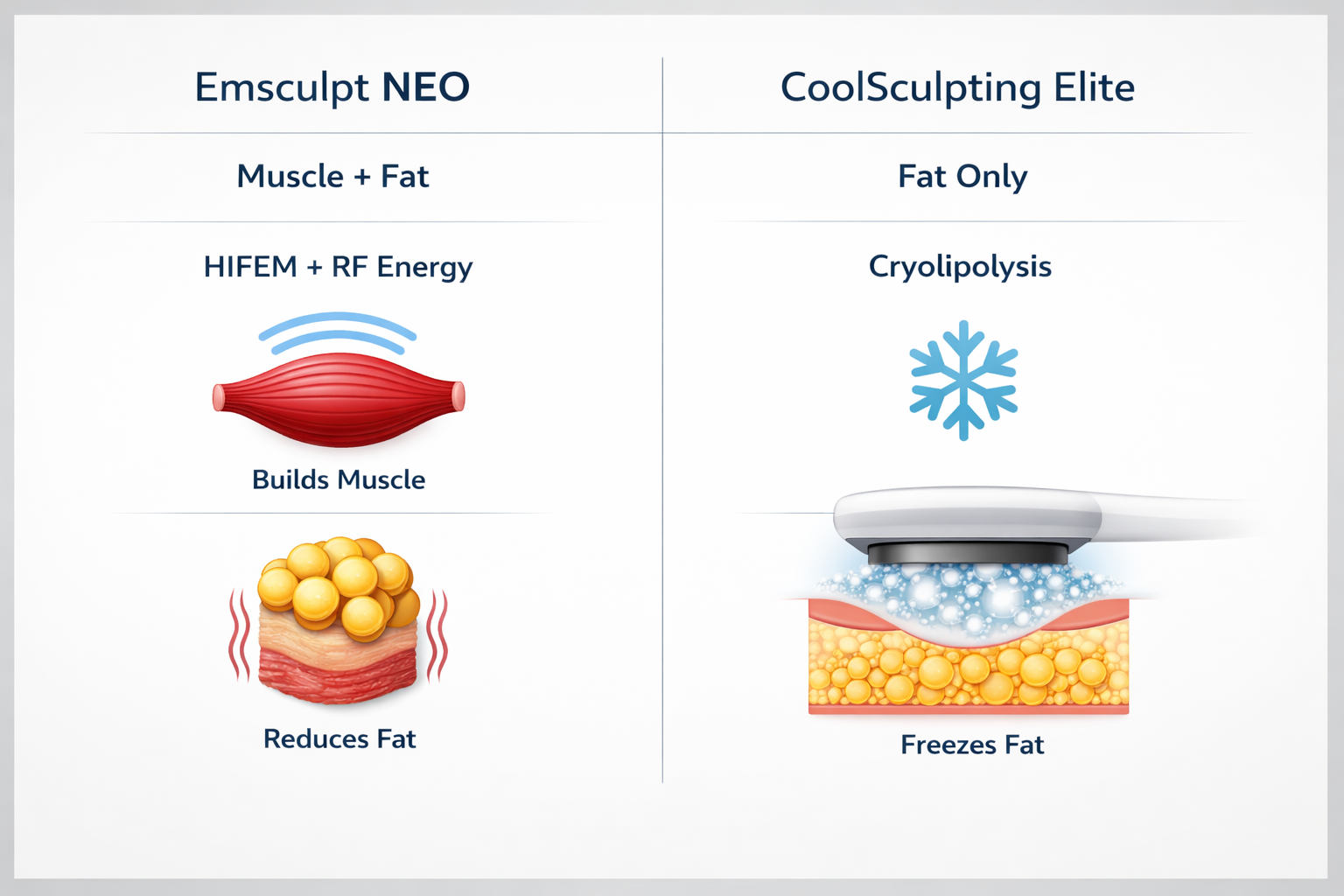
The treatment experience also differs considerably. CoolSculpting involves a cold, suction-like sensation as the applicator draws tissue against the cooling panels. Most patients describe an initial intense cold followed by numbness as the area becomes desensitised. Sessions typically last 35 to 60 minutes per area. Emsculpt NEO sessions last approximately 30 minutes and produce an intense sensation of involuntary muscle contractions — often described as an extremely intense workout — combined with a warming sensation from the RF component. Neither treatment requires anaesthesia or sedation.
Recovery differs too. Emsculpt NEO typically causes no downtime, though muscle soreness similar to post-exercise discomfort is common for one to two days after each session. CoolSculpting may cause temporary redness, swelling, bruising, and numbness in the treated area, which can persist for several days to a few weeks. Both treatments are generally described as having no downtime in the sense that patients can return to normal activities immediately, but the post-treatment experience is not identical.
Treatment Areas
Both treatments can address the abdomen, flanks, and thighs, but their approved and commonly used treatment areas diverge in meaningful ways. CoolSculpting has a broader range of applicators designed for areas including the chin, upper arms, inner and outer thighs, bra fat, and underneath the buttocks. It is particularly well suited to areas where a defined pocket of fat can be drawn into the applicator.
Emsculpt NEO is used on the abdomen, buttocks, arms, thighs, and calves. It is one of the few non-invasive treatments that can address the buttocks with a lifting and toning effect — a meaningful distinction for patients seeking a non-surgical alternative to a Brazilian butt lift. The calves are also a treatment area for Emsculpt NEO, which has no equivalent in the CoolSculpting range.
Results: What to Expect and When
Neither treatment produces immediate visible results. Both work through biological processes — fat cell clearance via the lymphatic system for CoolSculpting, and muscle remodelling combined with fat cell apoptosis for Emsculpt NEO — that take weeks to months to manifest visibly.
For CoolSculpting, most patients begin to notice changes at around four to six weeks, with optimal results typically visible at two to four months after treatment. For Emsculpt NEO, muscle changes may be felt before they are visible, with optimal results generally appearing around three months after completing the four-session treatment protocol. Some patients report noticing improved muscle tone and firmness within a few weeks of completing their sessions.
It is important to understand that before and after results shown in clinical studies and clinic marketing represent averages across a study population. Individual outcomes depend on factors including starting body composition, age, hormonal status, diet, exercise habits, and how consistently the full treatment protocol is completed. Neither treatment is a substitute for a healthy lifestyle, and results are best maintained when patients continue regular physical activity and a balanced diet.
Maintenance sessions are relevant for both treatments. Fat cells eliminated by CoolSculpting do not return, but remaining fat cells in the body can still enlarge with weight gain. Emsculpt NEO results, particularly the muscle component, may diminish over time without ongoing physical activity or periodic maintenance sessions, typically recommended every three to six months depending on individual goals.
Side Effects and Safety Considerations
Both treatments are FDA-cleared and have established safety profiles, but each carries specific risks that patients should understand before proceeding.
CoolSculpting Side Effects and PAH Risk
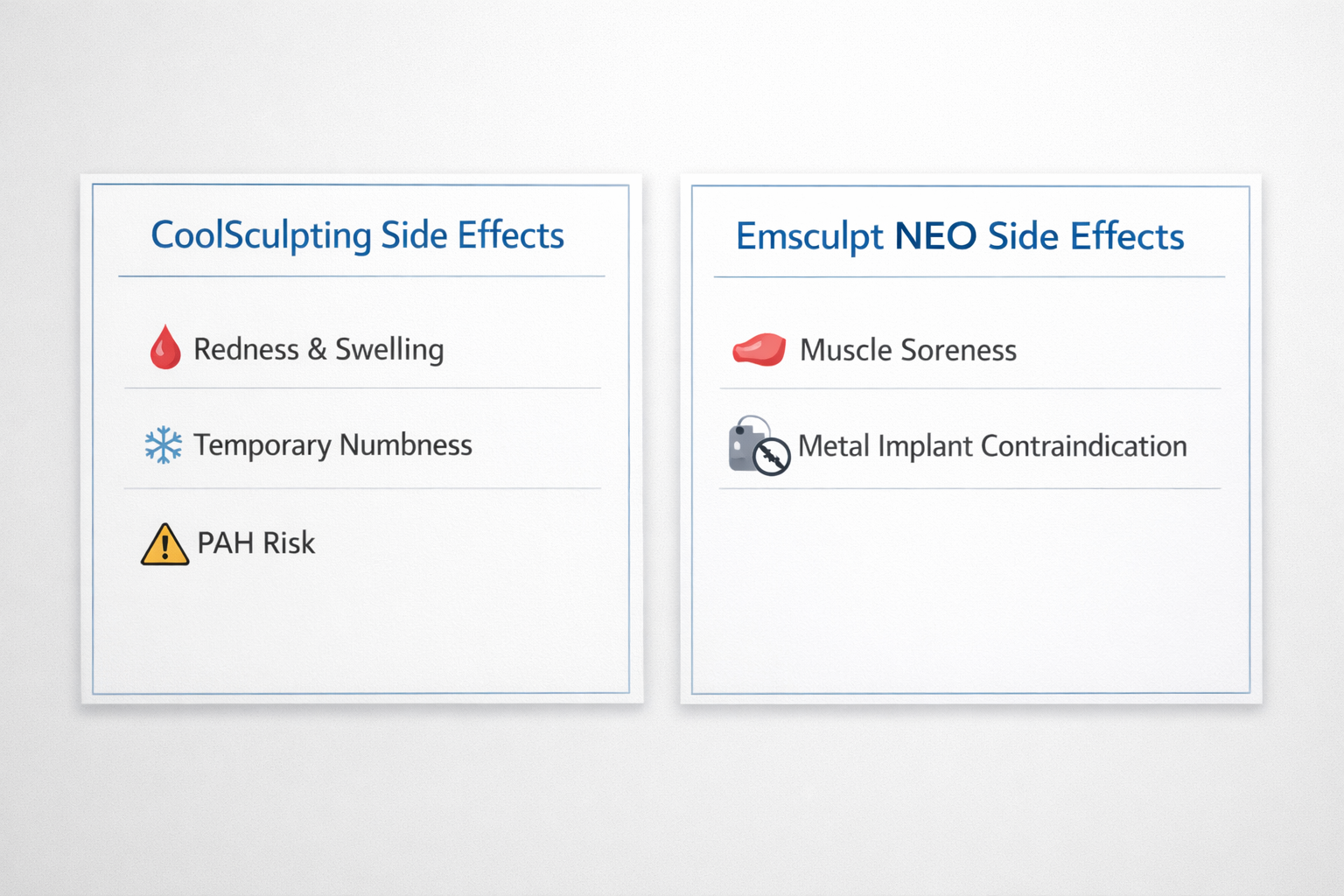
Common side effects of CoolSculpting include temporary redness, swelling, bruising, tingling, and numbness at the treatment site. These typically resolve within days to a few weeks. A less common but clinically significant complication is paradoxical adipose hyperplasia (PAH) — a condition in which the treated fat tissue enlarges rather than reduces, resulting in a firm, painless mass in the treated area. PAH does not resolve on its own and typically requires surgical intervention such as liposuction to correct.
The incidence of PAH has been a subject of ongoing research. Earlier estimates placed the rate at around 1 in 4,000 treatments, but more recent data suggest the true incidence may be higher. A 2024 article published in the Journal of the American Academy of Dermatology highlighted that PAH may be underreported. The condition gained wider public attention following a lawsuit by model Linda Evangelista, who reported PAH after CoolSculpting treatments. Patients considering CoolSculpting should discuss PAH risk explicitly with their practitioner, including which anatomical areas carry higher risk and what options exist if PAH occurs.
Emsculpt NEO Side Effects and Contraindications
Emsculpt NEO is generally well tolerated. The most commonly reported side effect is temporary muscle soreness, which is expected given the intensity of the supramaximal contractions induced during treatment. Temporary redness or warmth at the treatment site from the RF component is also possible.
Emsculpt NEO has important contraindications that must be assessed before treatment. The electromagnetic energy used in HIFEM technology means the device is contraindicated for patients with metal implants in or near the treatment area, including surgical plates, screws, or IUDs if treating the abdomen. Patients with pacemakers or other implanted electronic devices should not undergo Emsculpt NEO. Pregnancy is also a contraindication. A thorough medical history review is essential before treatment.
CoolSculpting contraindications include cold-related conditions such as cryoglobulinaemia, cold agglutinin disease, and paroxysmal cold haemoglobinuria. Patients with these conditions should not undergo cryolipolysis. Raynaud’s phenomenon and areas with impaired skin sensation or circulation may also be contraindications depending on clinical assessment.
Who Is the Ideal Candidate for Each Treatment?
Both treatments are designed for patients who are at or near a healthy weight and have specific areas of concern that have not responded adequately to diet and exercise. Neither treatment is appropriate as a general weight loss solution or as a treatment for obesity.
Ideal Candidates for CoolSculpting
- Patients with well-defined stubborn fat deposits in areas such as the abdomen, flanks, thighs, or chin
- Those whose primary goal is fat reduction rather than muscle improvement
- Patients who want to target a specific, pinchable area of fat
- Those without cold-related medical conditions or contraindications
- Patients who prefer a treatment that requires fewer sessions for fat reduction alone
Ideal Candidates for Emsculpt NEO
- Patients who want both fat reduction and improved muscle tone or definition
- Those with an athletic or active lifestyle who want to enhance muscle definition in specific areas
- Patients seeking a non-surgical buttock lifting or toning effect
- Those recovering from a period of reduced activity who want to rebuild muscle tone
- Patients without metal implants, pacemakers, or other electromagnetic contraindications
- Those interested in functional benefits such as improved core strength alongside aesthetic improvement
Beyond aesthetics, Emsculpt NEO has been discussed in the context of functional fitness benefits — improved core engagement, posture support, and muscle activation — though these applications are still being explored in clinical research and should not be considered a substitute for medically supervised rehabilitation.
Can You Combine Emsculpt and CoolSculpting?
Using both treatments as part of a body sculpting treatment plan is a strategy some practitioners recommend for patients who want comprehensive results — significant fat reduction alongside meaningful muscle improvement. Because the two treatments target different tissues through different mechanisms, they are not in direct competition; they can be genuinely complementary.
A common sequencing approach is to complete CoolSculpting first to reduce the volume of subcutaneous fat in the target area, then follow with Emsculpt NEO to build and define the underlying muscle once the fat layer has reduced. This sequence allows the muscle-building effects of Emsculpt NEO to become more visible as the overlying fat diminishes. Some practitioners take the opposite approach or run treatments concurrently depending on the patient’s goals and anatomy.
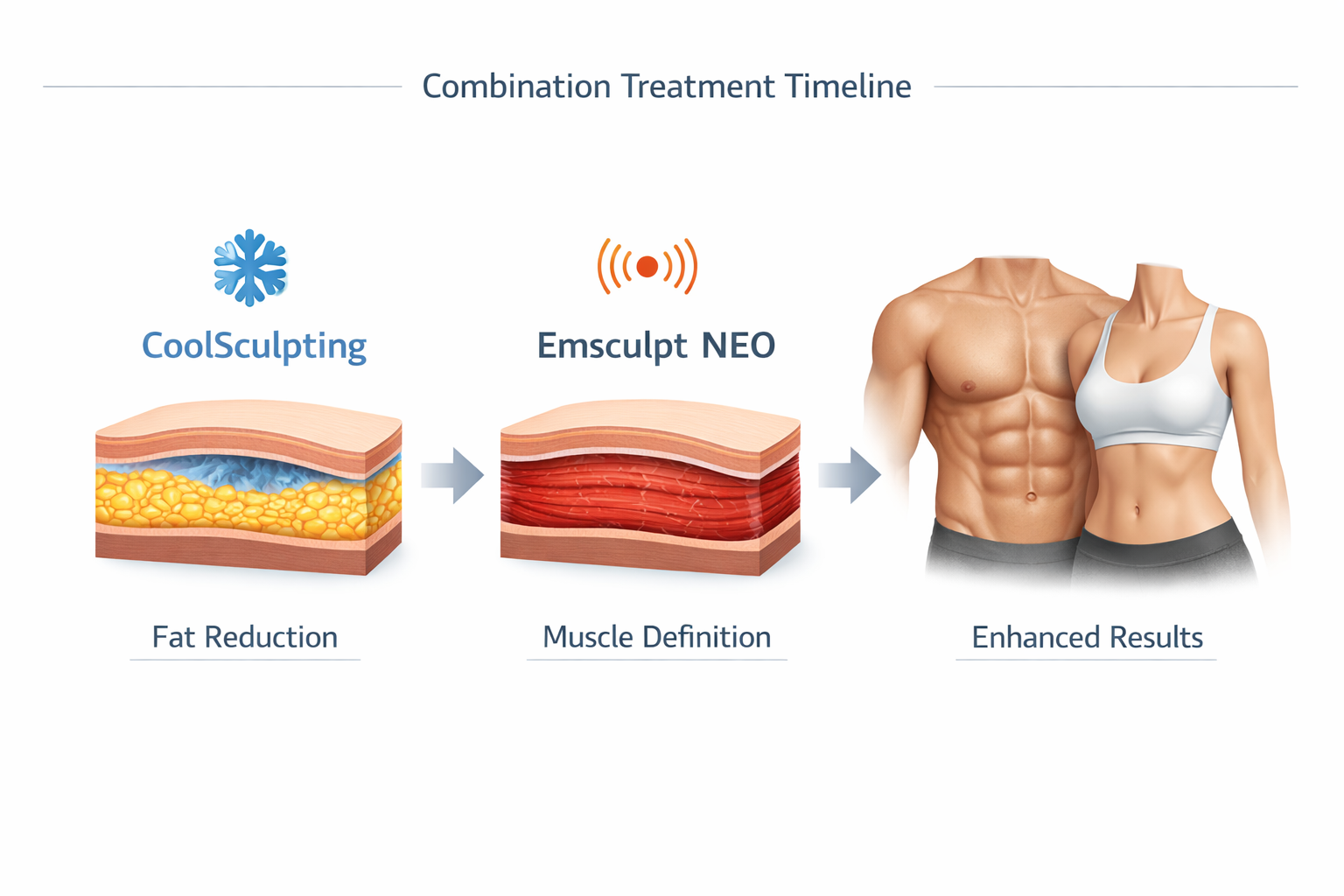
A combination treatment approach increases the overall cost and time commitment, and not every patient will need or benefit from both. A thorough consultation with a qualified practitioner is the appropriate starting point for determining whether a combined approach is warranted for a specific patient’s goals and anatomy.
Cost Considerations
Pricing for both treatments varies considerably depending on the clinic, geographic location, the number of areas treated, and whether package pricing is offered. As a general guide, Emsculpt NEO sessions are typically priced in the range of £500 to £1,000 per session in the UK, with the standard four-session protocol representing a total investment of £2,000 to £4,000 or more. CoolSculpting pricing is usually calculated per applicator cycle, with costs varying based on how many areas are treated and how many cycles are required per area.
Neither treatment is typically covered by health insurance, as both are elective cosmetic procedures. Clinics frequently offer package pricing that reduces the per-session cost, and it is worth asking about this during consultation. Be cautious of significantly discounted pricing that may indicate an older device generation or less experienced practitioners.
Frequently Asked Questions
Is Emsculpt NEO better than the original Emsculpt?
Emsculpt NEO combines HIFEM technology with radiofrequency energy, allowing it to reduce subcutaneous fat and build muscle simultaneously in a single session. The original Emsculpt used HIFEM alone and did not include an RF component for fat reduction. For most patients, Emsculpt NEO offers a more comprehensive outcome, though the original device may still be appropriate in specific clinical contexts. Confirm which device a clinic uses before booking.
Does CoolSculpting permanently remove fat cells?
Fat cells destroyed through cryolipolysis undergo apoptosis and are gradually cleared by the body’s lymphatic system. These specific cells do not regenerate. However, remaining fat cells in the body can still enlarge if body weight increases significantly, which can reduce the visible benefit of treatment over time. Maintaining a stable weight helps preserve results.
How many sessions of each treatment are typically needed?
The standard Emsculpt NEO treatment protocol involves four sessions spaced two to three days apart, though some patients undergo additional sessions depending on their goals. CoolSculpting typically requires one to three sessions per treatment area, with some areas achieving satisfactory results after a single session. Both treatment protocols should be determined during a clinical consultation based on individual assessment.
Can either treatment help with loose or sagging skin?
CoolSculpting targets fat only and does not have a meaningful skin-tightening effect. Emsculpt NEO’s RF component delivers some degree of tissue warming that may have a mild skin-tightening benefit, though it is not primarily indicated for skin laxity. Patients with significant loose skin may need to discuss additional or alternative treatments with their practitioner.
How soon can I return to normal activities after each treatment?
Both treatments are generally described as having no downtime. After Emsculpt NEO, patients can return to normal activities immediately, though muscle soreness similar to post-exercise discomfort may be present for one to two days. After CoolSculpting, temporary redness, swelling, and numbness are common and may last from a few days to a few weeks, but most patients resume normal activities the same day.
Who should avoid CoolSculpting?
CoolSculpting is contraindicated for patients with cold-related conditions including cryoglobulinaemia, cold agglutinin disease, and paroxysmal cold haemoglobinuria. It is also not appropriate for patients with impaired circulation or sensation in the treatment area, or those with known sensitivity to cold. A full medical history review is required before treatment.
Is there a risk of paradoxical adipose hyperplasia with CoolSculpting?
Yes. Paradoxical adipose hyperplasia (PAH) is a recognised complication of cryolipolysis in which the treated fat tissue enlarges rather than reduces. It does not resolve without intervention and typically requires surgical correction. The exact incidence rate is debated, but recent research suggests it may be higher than originally reported. Patients should discuss this risk explicitly with their practitioner before proceeding.
Emsculpt or CoolSculpting: Matching the Treatment to Your Goal
Emsculpt NEO and CoolSculpting are both effective, FDA-cleared non-invasive body contouring treatments, but they are not interchangeable. The right choice depends primarily on what you want to achieve.
If your main concern is reducing a specific area of stubborn fat — love handles, belly fat, a double chin, or bra fat — and muscle tone is not a priority, CoolSculpting Elite may be the more targeted option. It has a wider range of applicators, can treat areas that Emsculpt NEO cannot, and delivers clinically meaningful fat reduction without the need for multiple closely spaced sessions. The PAH risk is real and should be discussed openly, but for most patients it remains a low-probability outcome when treatment is performed by an experienced practitioner using appropriate technique.
If you want to improve muscle definition and tone alongside fat reduction — or if you are specifically interested in the abdomen, buttocks, or calves — Emsculpt NEO offers a dual-action approach that CoolSculpting cannot replicate. It is particularly worth considering for patients with an active lifestyle who want to enhance visible muscle definition, or for those seeking a non-surgical buttock lifting effect.
For patients with more complex goals, a combination treatment approach using both technologies in sequence may offer the most comprehensive outcome, though this requires a higher investment of time and cost. A consultation with a qualified practitioner who offers both treatments and can assess your anatomy, medical history, and goals without a commercial bias toward one device is the most reliable way to determine which approach — or combination — is appropriate for you.