

Key Takeaways
- Ultrasonic cavitation uses low-frequency ultrasound waves to disrupt fat cell membranes, releasing their contents for elimination through the lymphatic system and liver.
- It is a non-invasive fat reduction treatment with no downtime, suited to people close to their target weight who want to address stubborn fat deposits in specific areas.
- Results are gradual — most people need 6–12 sessions and may see measurable circumference reduction over several weeks, not immediately after a single appointment.
- Outcomes vary considerably depending on operator skill, the device used, individual metabolism, and lifestyle habits maintained after treatment.
- Ultrasonic cavitation is not a weight-loss treatment and is not appropriate for significant obesity; a clinical assessment is required to confirm suitability.
What Is Ultrasonic Cavitation?
Ultrasonic cavitation — also referred to as cavi-lipo or ultrasonic lipolysis — is a non-invasive body contouring treatment that uses low-frequency ultrasound waves to target and disrupt subcutaneous fat cells. Unlike surgical liposuction, it requires no incisions, no anaesthesia, and no recovery period. The treatment is designed to reduce localised stubborn fat deposits and reshape specific body areas rather than produce overall weight loss.
The technique has been used in aesthetic clinics for over a decade and is often combined with radiofrequency skin tightening or lymphatic drainage massage to enhance results. It is sometimes marketed as a non-surgical liposuction alternative, though this comparison should be understood with realistic expectations — the degree of fat reduction achievable is considerably more modest than surgical intervention.
How Does Ultrasonic Cavitation Work?
During an ultrasonic cavitation session, a handheld transducer is moved across the skin over the target area. The device emits low-frequency ultrasound waves — typically in the 20–40 kHz range — that penetrate the skin and reach the layer of subcutaneous fat beneath. These waves create a rapid compression-expansion impulse within the fat tissue, causing microscopic bubbles to form around fat cell membranes. This is the cavitation phenomenon: the bubbles expand and then collapse with enough force to disrupt the structural integrity of the fat cell membrane.
Once the fat cell membranes are disrupted, their contents — primarily triglycerides and fatty acids — are released into the surrounding interstitial fluid. The lymphatic system then transports these byproducts away from the treatment area. They are eventually processed by the liver and eliminated through the body’s natural metabolic elimination pathways, including urine and sweat. This process takes time, which is why results appear gradually over days and weeks rather than immediately after a session.
It is important to understand that ultrasonic cavitation targets adipose tissue — the fat stored beneath the skin — and does not affect muscle tissue or deeper visceral fat. The treatment produces a controlled thermal effect in the tissue, which some practitioners combine with radiofrequency skin tightening to also address skin laxity in the treated area.
Which Areas Can Be Treated?
Ultrasonic cavitation can be applied to most areas of the body where localised stubborn fat deposits are present. Commonly treated zones include:
- Abdomen — the most frequently requested area
- Flanks — often called love handles
- Thighs — both inner and outer
- Buttocks
- Upper arms
- Bra bulge — the area around the back and sides of the bra line
- Saddlebags — outer thigh deposits
- Chin and jawline — though this requires a smaller applicator and careful technique
The treatment is not suitable for areas overlying bone, organs, or major blood vessels. Practitioners should assess each area individually before proceeding.
Who Is an Ideal Candidate?
Ultrasonic cavitation is best suited to adults who are already close to a healthy body weight — typically within approximately 10–15 pounds of their target — and who have specific areas of stubborn fat that have not responded well to diet and exercise. It is a body sculpting and reshaping tool, not a method for significant weight reduction.
An ideal candidate is generally someone who:
- Has a BMI within a moderate range and is not significantly overweight
- Maintains a reasonably active lifestyle and a balanced diet
- Has realistic expectations about the degree of change achievable
- Is in good general health with no relevant contraindications
- Understands that multiple sessions and lifestyle maintenance are required
People with significant obesity are unlikely to achieve meaningful results from ultrasonic cavitation and may be better served by medical weight management programmes before considering any body contouring treatment.
Who Should Avoid Ultrasonic Cavitation?
A number of medical conditions and circumstances make ultrasonic cavitation unsuitable. A thorough consultation with a qualified practitioner is essential before treatment. Contraindications typically include:
- Pregnancy and breastfeeding — ultrasound energy and the release of fatty acids into the bloodstream are not considered safe during these periods
- Liver or kidney disease — the liver is responsible for processing the fatty acids released during treatment; impaired liver function means these byproducts cannot be safely metabolised, increasing the risk of harm
- Pacemakers or metal implants — ultrasound waves can interfere with electronic devices and may cause heating around metal implants in the treatment area
- Cardiovascular conditions and uncontrolled hypertension — the temporary increase in circulating fatty acids and blood lipid levels places additional demand on the cardiovascular system
- Bleeding disorders or anticoagulant therapy
- Active skin infections, open wounds, or inflammatory skin conditions in the treatment area
- Cancer or a history of cancer in the treatment area
- Epilepsy or neurological conditions
Understanding the reasoning behind these contraindications matters. The liver’s role is particularly important: when fat cell membranes are disrupted, a significant quantity of fatty acids enters circulation simultaneously. In a healthy individual, the liver processes these efficiently. In someone with compromised liver function, this sudden metabolic load can be harmful. This is also why avoiding alcohol for 48–72 hours before and after treatment is strongly advised — alcohol competes with fatty acid metabolism in the liver.
What Happens During a Session?
A typical ultrasonic cavitation session follows a straightforward sequence:
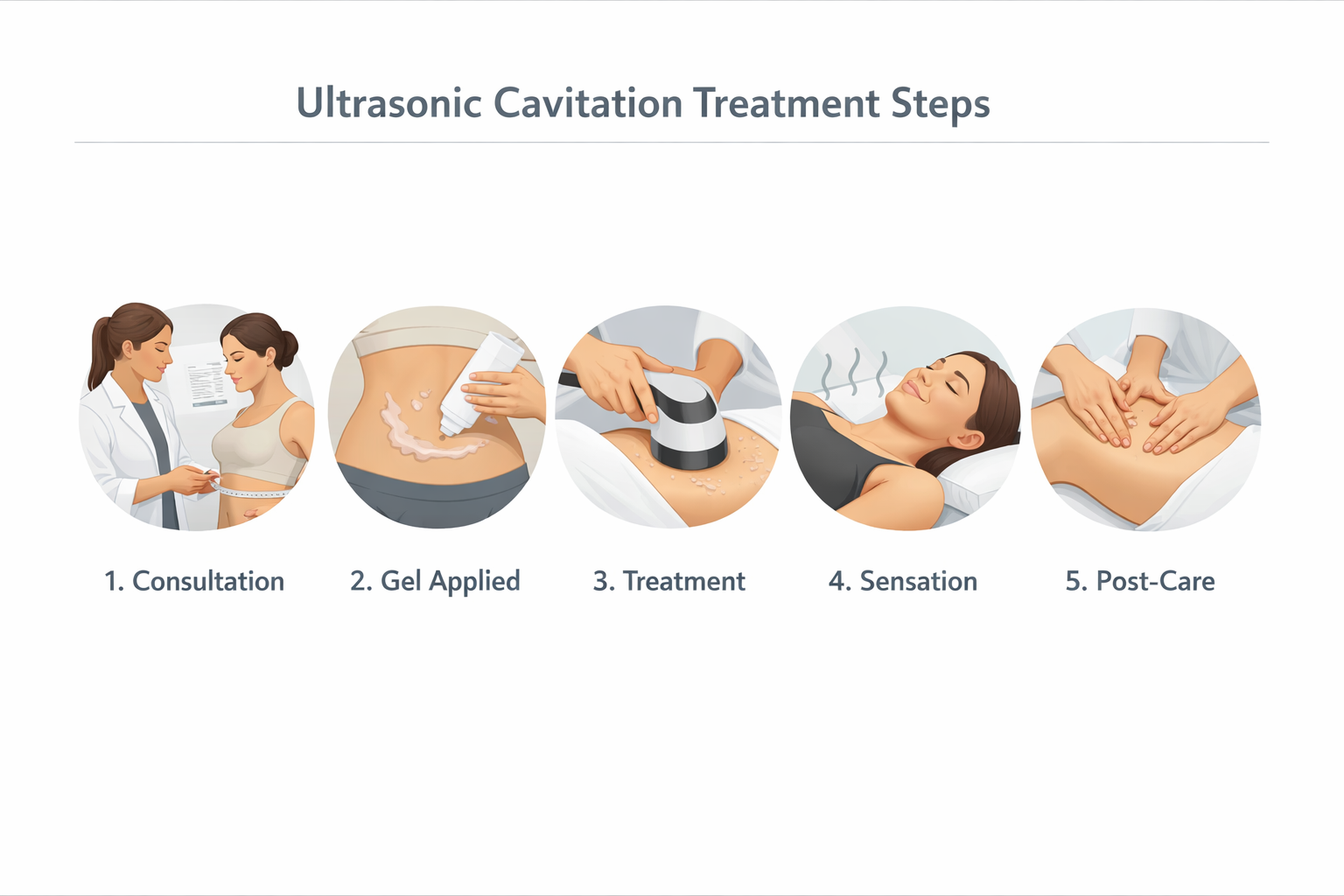
- Consultation and area assessment — the practitioner reviews your health history, confirms suitability, and identifies the target area.
- Measurements — baseline circumference measurements are taken so that results can be tracked objectively.
- Gel application — a conductive gel is applied to the skin, similar to the gel used in ultrasound imaging, to ensure good contact between the transducer and the skin surface.
- Treatment — the handheld transducer is moved in slow, circular motions over the target area. Most people describe the sensation as a warm, buzzing feeling, similar to a deep massage. A faint ringing sound (tinnitus) may be noticed during treatment due to the ultrasound frequency — this is temporary and resolves quickly.
- Post-treatment — the gel is removed, and the practitioner may perform a brief lymphatic drainage massage to support the movement of released fat byproducts through the lymphatic system.
Sessions typically last between 30 and 60 minutes depending on the size of the area being treated. No anaesthesia is required, and most people return to normal activities immediately afterwards.
How Many Sessions Are Needed and When Will Results Appear?
Most practitioners recommend a course of 6 to 12 sessions for optimal results, with sessions spaced approximately 5 to 10 days apart. This interval allows the lymphatic system time to clear the released fat byproducts before the next treatment.
Results from ultrasonic cavitation are gradual. A realistic timeline looks something like this:
- Sessions 1–3 (weeks 1–3): Some people notice mild softening of the treated area or slight circumference reduction. Changes at this stage are subtle and may not yet be visible.
- Sessions 4–6 (weeks 4–6): Measurable circumference reduction becomes more likely. Some studies and clinical reports suggest reductions of 1–5 cm in circumference are achievable in responsive individuals, though this varies considerably.
- Sessions 7–12 and beyond (weeks 7–12): Cumulative improvement continues. Final results may not be fully apparent until 8–12 weeks after the last session, as the body continues to process and eliminate fat byproducts.
Maintenance sessions — typically once every 1–3 months — may be recommended to sustain results over time. The fat cells that are destroyed do not regenerate, but remaining fat cells can still enlarge if caloric intake consistently exceeds expenditure. Lifestyle habits therefore play a significant role in how long results are maintained.
Side Effects and Risks
Ultrasonic cavitation has a generally manageable side effect profile when performed by a qualified technician using an appropriate device. Common and expected effects include:
- Mild redness or skin warmth in the treated area, resolving within a few hours
- Temporary tinnitus (a ringing or buzzing sensation in the ears) during or shortly after treatment — this is caused by the ultrasound frequency and typically resolves within minutes
- Mild swelling or a feeling of fullness in the treated area
- Increased thirst and temporary dehydration as the body processes released fat byproducts
- A temporary increase in blood lipid levels as fatty acids enter circulation — this is why the treatment is contraindicated in people with cardiovascular or liver conditions
Less common but more significant risks are largely associated with operator error or the use of poorly calibrated devices. These include uneven results, surface irregularities, and in rare cases, burns or blisters from excessive energy delivery. This is one of the most important and underappreciated aspects of ultrasonic cavitation: the skill and experience of the practitioner, and the quality of the device used, are major determinants of both safety and outcome. Choosing a clinic with trained, licensed practitioners and professional-grade equipment significantly reduces these risks.
Patient satisfaction data from platforms such as RealSelf suggests a “Worth It” rating of approximately 57% for ultrasonic cavitation — lower than some competing treatments. This reflects the variability in outcomes and the importance of realistic expectations, appropriate candidate selection, and treatment quality.
Aftercare Protocol
Following each session, a structured aftercare protocol supports the body’s ability to eliminate the released fat byproducts efficiently and helps maximise results:
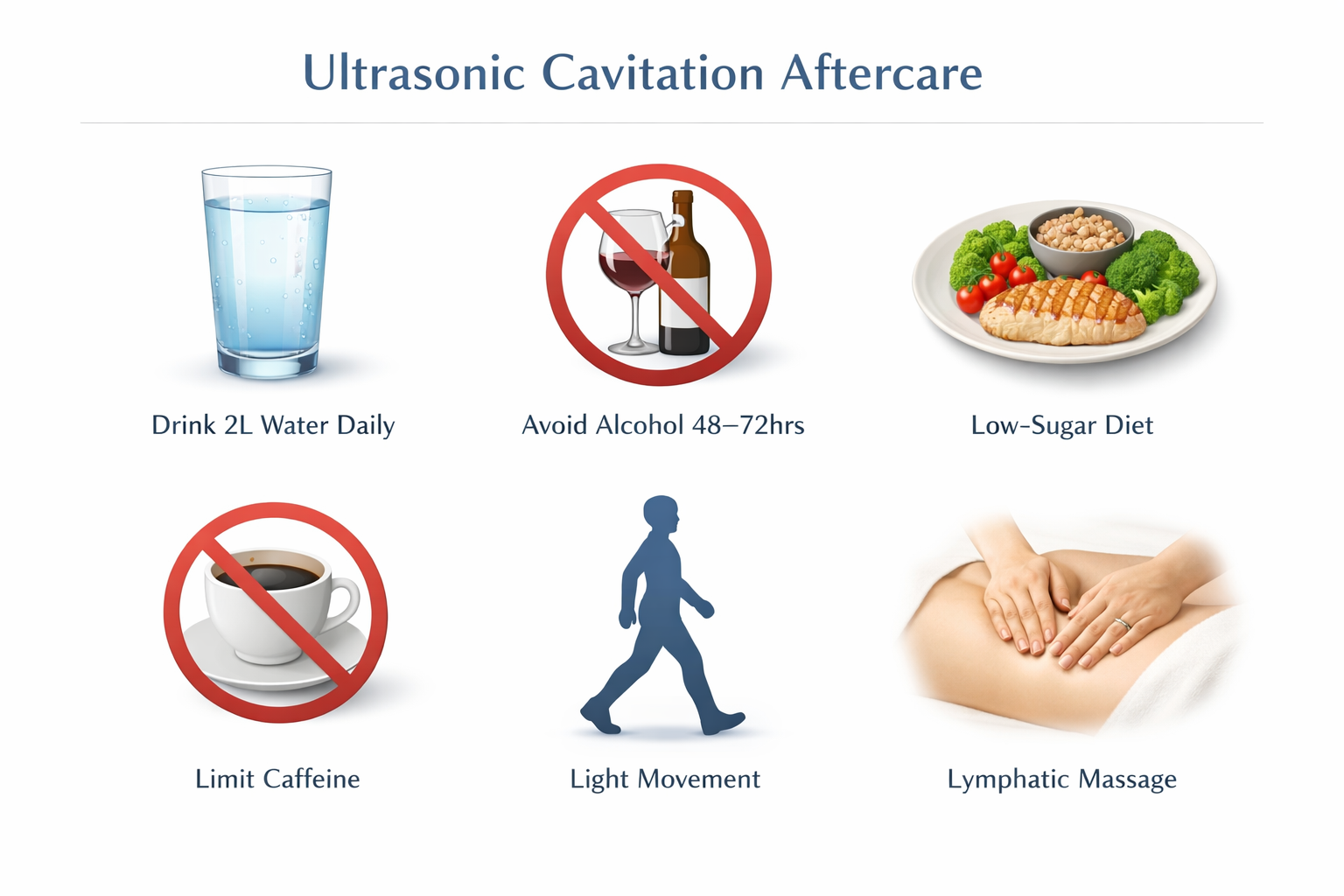
- Hydration: Drink at least 2 litres of water daily in the days following treatment. Adequate hydration supports lymphatic drainage and helps the kidneys process metabolic waste.
- Avoid alcohol: Refrain from alcohol for at least 48–72 hours post-treatment. The liver prioritises alcohol metabolism over fatty acid processing, which can slow elimination and increase the burden on the organ.
- Diet: Follow a low-carbohydrate, low-sugar diet in the days after treatment to avoid providing additional energy that could be stored as fat, counteracting the treatment’s effects.
- Avoid caffeine: Some practitioners advise limiting caffeine for 24–48 hours post-treatment, as it can affect circulation and hydration.
- Light movement: Gentle exercise such as walking supports lymphatic circulation and helps move released fat byproducts through the system more efficiently.
- Lymphatic drainage massage: Some clinics include this as part of the treatment protocol; it can be beneficial between sessions as well.
Ultrasonic Cavitation vs. Other Body Contouring Treatments
Understanding how ultrasonic cavitation compares to other non-invasive and surgical options helps in making an informed decision about which approach may be most appropriate for a given goal.
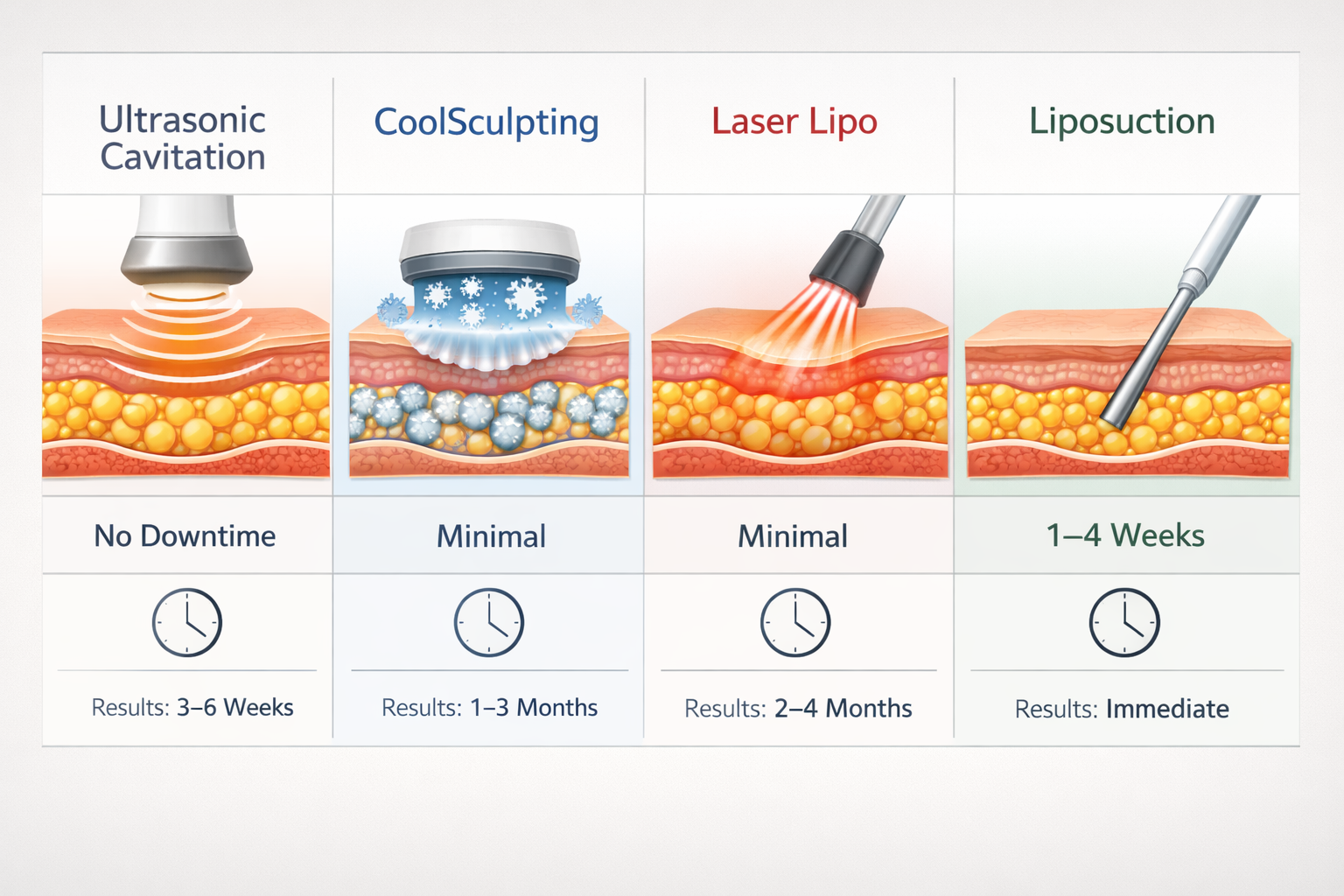
| Treatment | Mechanism | Invasiveness | Downtime | Results Timeline | Best Suited For | Limitations |
|---|---|---|---|---|---|---|
| Ultrasonic Cavitation | Low-frequency ultrasound disrupts fat cell membranes | Non-invasive | None | Gradual; 6–12 weeks | Localised stubborn fat; body reshaping | Modest results; multiple sessions needed; operator-dependent |
| CoolSculpting (Cryolipolysis) | Controlled cooling freezes and destroys fat cells | Non-invasive | Minimal (1–3 days tenderness) | 8–16 weeks | Defined fat bulges; FDA-cleared for specific areas | Higher cost per area; paradoxical adipose hyperplasia (rare) |
| Laser Lipo (e.g., SculpSure) | Laser heat disrupts fat cells; also stimulates collagen | Non-invasive | Minimal | 6–12 weeks | Fat reduction with some skin tightening benefit | Heat discomfort during treatment; multiple sessions |
| Liposuction | Surgical removal of fat via cannula | Surgical | 1–4 weeks | Immediate; final at 3–6 months | Larger volume fat removal; more dramatic reshaping | Surgical risks; anaesthesia; recovery; cost |
| EMSculpt / EMSculpt Neo | Electromagnetic energy stimulates supramaximal muscle contractions; Neo adds RF for fat | Non-invasive | None | 4–8 weeks | Muscle definition and toning; moderate fat reduction (Neo) | Not primarily a fat reduction tool; cost; limited areas |
Ultrasonic cavitation occupies a specific niche: it is most useful for targeted body sculpting in people who are already close to their goal weight and want to address localised areas of stubborn fat without surgery or significant downtime. CoolSculpting has a more established clinical evidence base and FDA-cleared status for specific body areas, which gives some practitioners and patients greater confidence in its outcomes. Liposuction remains the most effective option for significant fat volume reduction but carries the risks and recovery associated with surgery. Laser lipo offers a similar non-invasive approach to cavitation with the added benefit of collagen stimulation and skin tightening. EMSculpt and EMSculpt Neo serve a different primary goal — muscle building and toning — though EMSculpt Neo also incorporates radiofrequency for fat reduction.
Combination Treatment Protocols
Many aesthetic clinics now offer ultrasonic cavitation as part of a combined body contouring protocol rather than as a standalone treatment. A common combination pairs cavitation with radiofrequency skin tightening in the same session: cavitation disrupts the fat cells while RF energy heats the deeper dermal layers to stimulate collagen remodeling and improve skin laxity. This is particularly relevant for areas such as the abdomen or inner thighs, where skin looseness may accompany fat reduction.
Adding a lymphatic drainage massage — either manually or using a mechanical device — after each cavitation session supports the clearance of released fat byproducts and may improve the speed and consistency of results. Some protocols also incorporate body wraps or compression garments between sessions. While these additions are widely used in clinical practice, the independent evidence base for each component of combined protocols is still developing, and patients should ask their practitioner to explain the rationale for any recommended combination.
At-Home Ultrasonic Cavitation Devices
A growing number of at-home ultrasonic cavitation devices are available for consumer purchase. These devices operate at lower energy levels than professional clinic equipment — typically because higher-powered devices require trained operators and appropriate clinical settings to be used safely. The lower power output means that at-home devices are unlikely to produce results comparable to professional treatments, and the evidence for their efficacy is considerably more limited.
At-home devices may offer some benefit for mild skin firmness or as a maintenance tool between professional sessions, but they should not be viewed as a substitute for clinic-based treatment. Improper use — including applying the device over contraindicated areas or using it without adequate gel contact — carries a small risk of skin irritation or superficial burns. Anyone considering an at-home device should research the specific product carefully and ideally discuss it with a qualified practitioner first.
How Much Does Ultrasonic Cavitation Cost?
The cost of ultrasonic cavitation varies depending on the clinic, geographic location, the area being treated, and whether sessions are purchased individually or as part of a package. As a general guide:
- Per session: approximately £100–£400 (or $150–$500 in the US), with most sessions falling in the £150–£280 range
- Full course (6–12 sessions): approximately £900–£2,400 depending on the number of sessions and areas treated
- Package deals: many clinics offer discounted pricing for pre-purchased courses, which can reduce the per-session cost meaningfully
Ultrasonic cavitation is a cosmetic elective treatment and is not covered by health insurance. When evaluating cost, it is worth considering the total investment across a full recommended course rather than the per-session price alone, and comparing this against the likely degree of improvement and the alternatives available.
Frequently Asked Questions
Is ultrasonic cavitation permanent?
The fat cells that are disrupted and eliminated during ultrasonic cavitation do not regenerate. In that sense, the reduction in fat cell number in the treated area can be considered permanent. However, remaining fat cells can still enlarge if caloric intake increases significantly, which means results can diminish over time without appropriate lifestyle maintenance. Maintenance sessions every one to three months are often recommended to sustain outcomes.
Does ultrasonic cavitation hurt?
Most people find the treatment comfortable. The most common sensations are warmth and a mild buzzing or vibration from the transducer. A temporary ringing in the ears (tinnitus) may occur during the session due to the ultrasound frequency, but this resolves quickly. The treatment does not require anaesthesia and is generally well tolerated.
How many sessions will I need?
The typical recommendation is 6 to 12 sessions, spaced approximately one week apart. The exact number depends on the area being treated, the volume of fat present, individual response, and the results achieved. A practitioner should reassess progress after each session and adjust the plan accordingly.
Is ultrasonic cavitation the same as weight loss?
No. Ultrasonic cavitation is a targeted body sculpting treatment, not a weight-loss intervention. The amount of fat eliminated through the treatment is not sufficient to produce meaningful changes on the scale. Its purpose is to reshape specific areas and reduce localised stubborn fat deposits, not to treat obesity or replace a healthy diet and exercise programme.
Is ultrasonic cavitation FDA-cleared?
Some ultrasonic cavitation devices have received FDA clearance for specific uses, but the regulatory status varies by device and country. FDA clearance for a device does not automatically mean it is approved for every application or that all devices on the market meet the same standard. Patients should ask their clinic which specific device is being used and confirm its regulatory status.
Can I have ultrasonic cavitation if I have had previous cosmetic procedures?
This depends on the type and location of previous procedures. Surgical implants, metal components, or recent injectable treatments in the area may affect suitability. A full medical history should be disclosed during the consultation so the practitioner can assess whether treatment is appropriate.
Why do I need to drink so much water after treatment?
After ultrasonic cavitation, the lymphatic system is transporting released fatty acids and cellular debris away from the treated area. Adequate hydration — at least 2 litres of water daily — supports lymphatic flow and helps the kidneys process and excrete metabolic waste products efficiently. Dehydration can slow this process and may reduce the effectiveness of the treatment.
Is Ultrasonic Cavitation the Right Choice for Your Goals?
Ultrasonic cavitation is a legitimate non-invasive fat reduction option for the right candidate, but it is not a universal solution. It works best for people who are already close to their target weight, have realistic expectations, and are committed to the lifestyle habits — hydration, diet, light exercise — that support and sustain results. For someone looking to address a specific area of stubborn fat without surgery or downtime, it is a reasonable option to explore.
Where it is less likely to deliver satisfying results is in people expecting dramatic transformation, those with significant excess weight, or those unwilling to commit to a full course of sessions and appropriate aftercare. The variability in outcomes — reflected in patient satisfaction data — is real, and much of it comes down to candidate selection, operator skill, and post-treatment lifestyle. Choosing a clinic with qualified technicians, professional-grade equipment, and a transparent approach to realistic outcomes is as important as the treatment itself.
If you are considering ultrasonic cavitation, a thorough consultation with a licensed practitioner is the appropriate starting point. A good practitioner will assess your suitability honestly, explain what results are realistic for your specific situation, and discuss whether cavitation alone or a combination approach — such as cavitation with radiofrequency skin tightening — may better serve your goals.