

Key Takeaways
- Emsculpt uses High-Intensity Focused Electromagnetic (HIFEM) technology to trigger supramaximal muscle contractions, simultaneously stimulating muscle growth and promoting fat cell breakdown.
- Clinical studies suggest an average increase in muscle mass of around 16–25% and a reduction in subcutaneous fat of approximately 19–30%, though individual results vary considerably.
- Emsculpt NEO, the upgraded version, adds radiofrequency energy to the original HIFEM technology, targeting fat reduction and muscle building in a single session.
- The treatment is not a weight-loss solution; it is best suited to individuals who are already near a healthy weight and want to address stubborn localised fat or improve muscle definition.
- Absolute contraindications include pacemakers, implanted defibrillators, and pregnancy; a thorough consultation with a qualified practitioner is essential before proceeding.
Emsculpt has attracted significant attention as a non-invasive body contouring treatment that claims to do something no other device had previously combined: build muscle and reduce fat simultaneously, without needles, surgery, or recovery time. For patients frustrated by stubborn areas that resist diet and exercise, that proposition is understandably appealing. But what does the clinical evidence actually show, how does the treatment work in practice, and who is genuinely likely to benefit?
This guide covers the science behind Emsculpt and its upgraded version Emsculpt NEO, realistic expectations for body sculpting results, treatment experience, safety considerations, and how the technology compares to alternatives such as CoolSculpting and fat-dissolving injectables. The aim is to give you a clear, balanced picture before you attend a consultation.
What Is Emsculpt and How Does It Work?
Emsculpt is a non-invasive body contouring device developed by BTL Industries. It delivers High-Intensity Focused Electromagnetic (HIFEM) energy through a paddle-shaped applicator placed against the skin. This electromagnetic energy penetrates the skin and fat layer to reach the underlying muscle tissue, inducing what are known as supramaximal muscle contractions — contractions far more intense than anything achievable through voluntary exercise.
During a standard 30-minute session, the device triggers approximately 20,000 muscle contractions in the target area. The muscles respond to this extreme stimulus by remodelling their internal structure: muscle fibres are broken down and rebuilt stronger and denser, a process similar to — but significantly more intense than — the physiological response to resistance training. At the same time, the metabolic demand created by these contractions causes nearby fat cells to release fatty acids. When this release exceeds the cells’ capacity to process those fatty acids, the cells undergo a process called apoptosis — essentially programmed cell death. The body then clears the resulting debris through the lymphatic system over the following weeks.
It is important to understand that Emsculpt targets subcutaneous fat — the fat stored just beneath the skin — rather than visceral fat deeper in the abdomen. It is not a treatment for obesity or significant weight loss, and it does not address the metabolic factors that drive weight gain.
Emsculpt NEO: What Is the Difference?
Emsculpt NEO is the second-generation device from BTL Industries, cleared by the FDA in 2020. It combines the original HIFEM technology with radiofrequency (RF) energy delivered simultaneously through the same applicator. The radiofrequency energy heats the muscle and fat tissue before the electromagnetic contractions begin, which is intended to enhance fat cell apoptosis and improve the efficiency of muscle remodelling in a single 30-minute session.
Clinical data associated with Emsculpt NEO suggests a greater average reduction in subcutaneous fat — approximately 30% — compared to around 19% reported for the original Emsculpt device, alongside a muscle mass increase of approximately 25% versus 16% for the original. These figures come largely from manufacturer-associated studies and should be interpreted with appropriate caution; independent peer-reviewed research, including a systematic review published in the journal Aesthetic Plastic Surgery, confirms meaningful improvements in both muscle volume and fat reduction but notes that much of the available evidence is industry-funded and that study populations are often small.
Emsculpt NEO is also approved for use in patients with a BMI of up to 35, whereas the original Emsculpt was generally recommended for those closer to their ideal weight. This makes NEO potentially suitable for a slightly broader range of patients, though a clinical assessment remains essential to determine individual suitability.
When choosing between the two, the key practical question is whether the clinic you are considering uses a genuine BTL-manufactured device. Cheaper imitation machines using similar marketing language exist in the market and have not undergone the same clinical validation. Asking to see the device’s certification and confirming the practitioner’s training with the specific equipment is a reasonable step before committing to a treatment course.
Treatment Areas
Emsculpt and Emsculpt NEO are FDA-cleared for use across several body areas. The abdomen is the most commonly treated region, where the goal is typically to improve core muscle definition and reduce the appearance of lower belly fat. The buttocks are another primary area, where the treatment is used to lift and firm the gluteal muscles without the risks associated with surgical augmentation.
Additional treatment areas include:
- Thighs — inner, outer, and front surfaces, for improved tone and modest fat reduction
- Upper arms — targeting the biceps and triceps to improve definition
- Calves — for muscle shaping and definition
- Flanks — the sides of the abdomen, sometimes called love handles, where subcutaneous fat reduction may be combined with core strengthening
Emsculpt has also been studied in the context of diastasis recti — the separation of the abdominal muscles that commonly occurs during pregnancy. Some clinical evidence suggests the treatment may help reduce the gap between the separated muscles, making it a consideration for postpartum women who have not responded to physiotherapy alone. This is a specific clinical application that requires careful assessment by a practitioner experienced in postpartum care.
What Happens During a Session?
A typical Emsculpt or Emsculpt NEO session lasts approximately 30 minutes per treatment area. The applicator is secured against the skin using a belt or strap, and the device is activated at a low intensity before being gradually increased to a therapeutic level based on your comfort and tolerance.
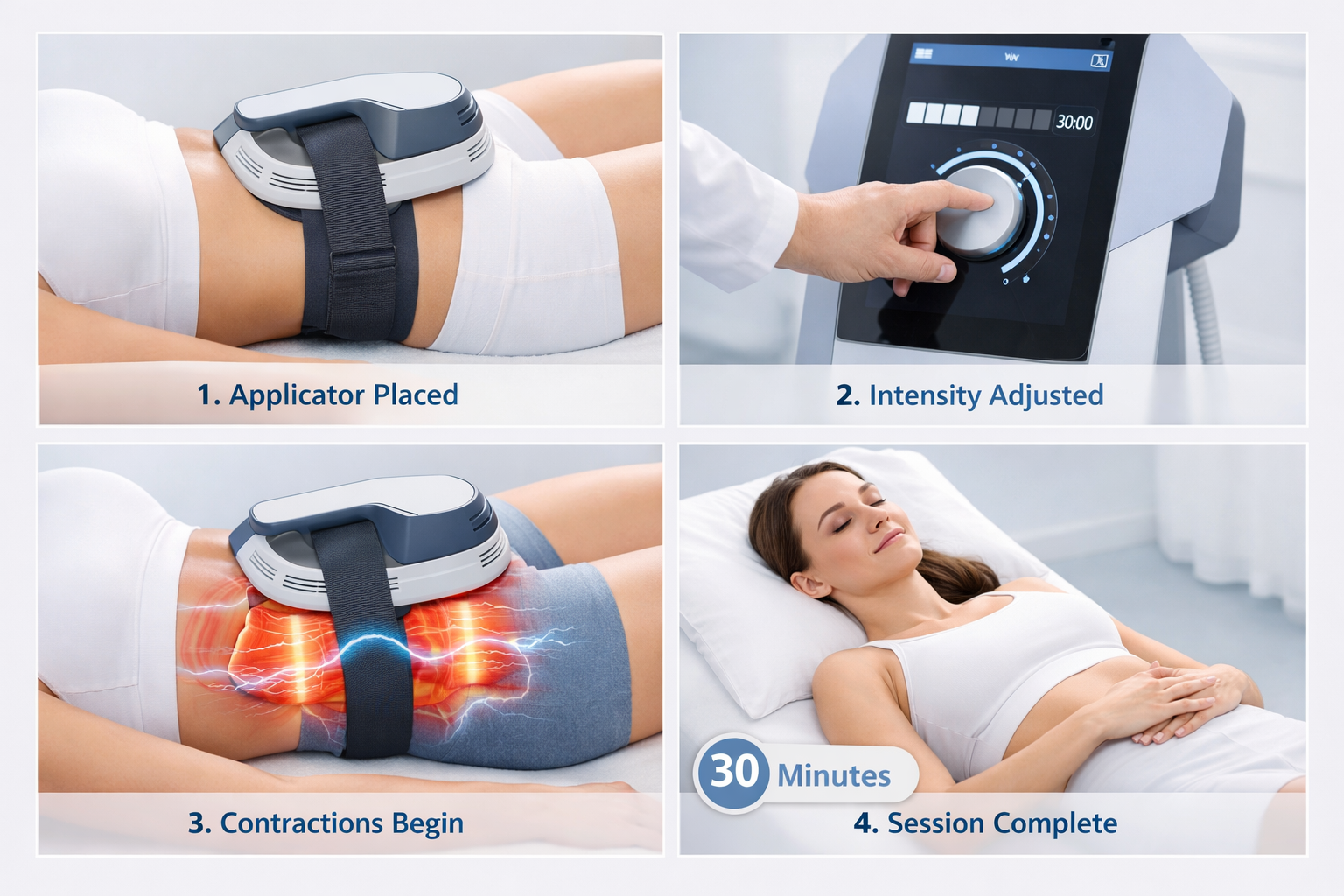
The sensation is distinctive and unlike anything most patients have experienced before. The supramaximal muscle contractions feel like an intense, involuntary flexing — not painful in the conventional sense, but unfamiliar and sometimes uncomfortable, particularly as the intensity increases. Most patients describe it as feeling like an extremely demanding workout compressed into half an hour. Between contraction sequences, the device delivers rapid tapping pulses designed to help flush lactic acid from the muscles, which may reduce post-treatment soreness.
No anaesthesia or numbing is required. You remain fully clothed from the waist up (or in appropriate clothing for the treatment area) and can typically return to normal activities immediately after the session. There is no downtime in the conventional sense, though muscle soreness similar to delayed-onset muscle soreness (DOMS) after exercise is common in the 24–72 hours following treatment.
How Many Sessions Are Needed and How Long Do Results Last?
The standard treatment course recommended by BTL Industries consists of four sessions, typically spaced two to three days apart over a two-week period. This concentrated schedule is designed to maximise the cumulative effect on muscle remodelling and fat cell apoptosis before the body’s adaptive response diminishes the stimulus.
Results do not appear immediately after the first session. Because the changes involve genuine physiological remodelling of muscle tissue and the gradual clearance of damaged fat cells through the lymphatic system, visible improvements typically begin to emerge around four weeks after completing the course. Peak body sculpting results are generally observed at approximately three months post-treatment, when muscle remodelling is more complete and fat cell clearance has progressed.
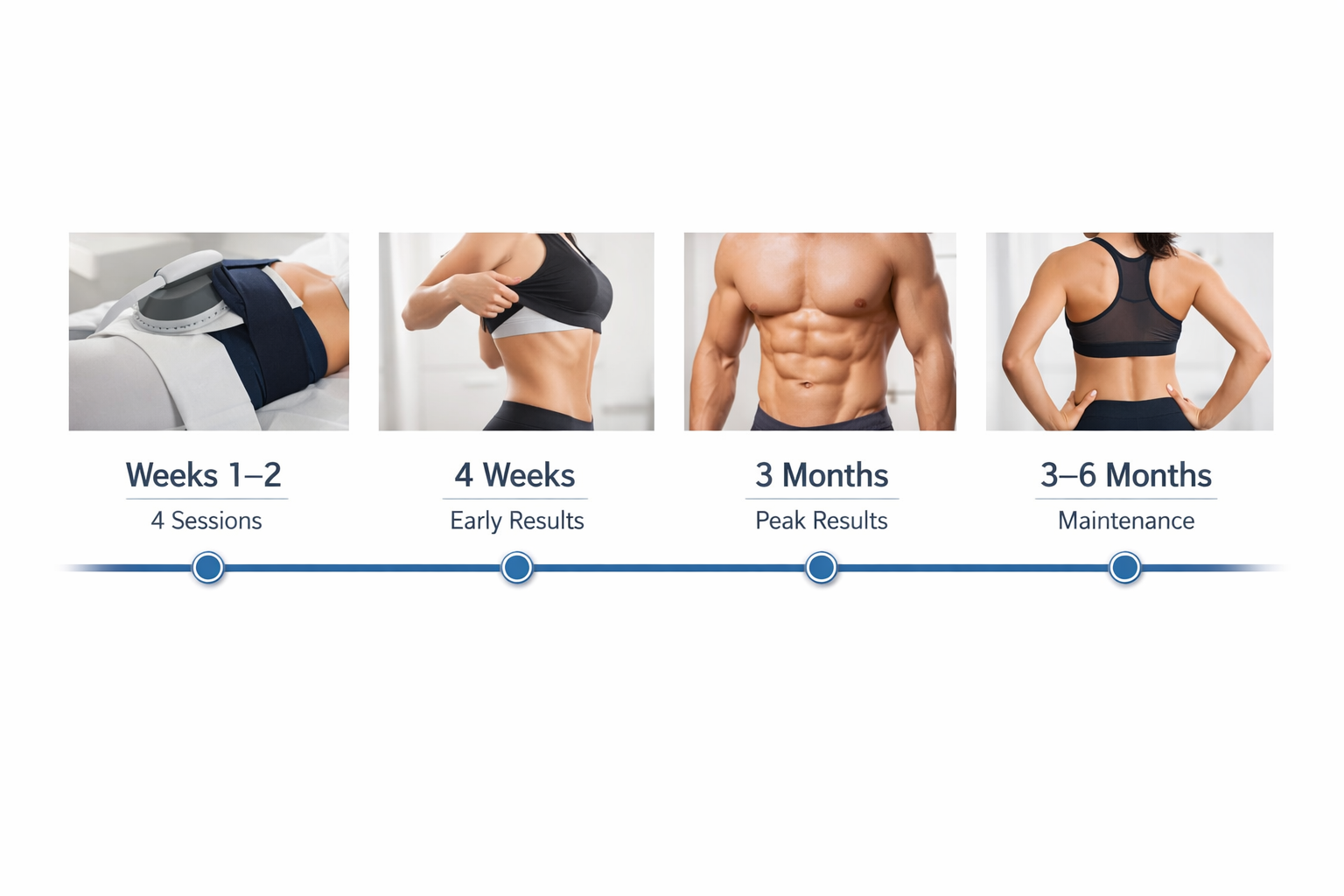
The fat reduction component of Emsculpt results is considered long-lasting, because the destroyed fat cells do not regenerate. However, remaining fat cells can still enlarge with weight gain, so maintaining a stable weight is important for preserving results. The muscle-building effects are more dependent on ongoing activity: without regular exercise or periodic maintenance sessions, the additional muscle mass gained through treatment will gradually diminish over time, just as it would if you stopped exercising. Most practitioners recommend maintenance sessions every three to six months to sustain the muscle-related benefits.
Who May Be a Suitable Candidate?
Emsculpt is most likely to benefit individuals who are already at or near a healthy weight and are looking to address stubborn localised fat deposits or improve muscle definition in specific areas that have not responded adequately to diet and exercise. It is not a substitute for weight loss and is unlikely to produce satisfying results in patients with significant excess body fat.
Patients who may be worth discussing Emsculpt with a qualified practitioner include:
- Those with a BMI within a healthy or slightly overweight range (Emsculpt NEO extends this to BMI up to 35)
- Individuals with localised subcutaneous fat in treatable areas despite an otherwise active lifestyle
- Postpartum women seeking to address diastasis recti or weakened core muscles, once cleared by their healthcare provider
- Patients wanting gluteal lifting or definition without surgical intervention
- Those who want to complement an existing fitness routine with targeted muscle stimulation
Who May Not Be Suitable?
Emsculpt has several absolute contraindications that must be assessed before treatment. The electromagnetic energy used by the device can interfere with or damage implanted electronic devices, making the following conditions absolute contraindications:
- Pacemakers or implanted cardiac defibrillators (ICDs)
- Metal implants in or near the treatment area (including some orthopaedic hardware, copper IUDs near the abdomen, and certain surgical clips)
- Pregnancy
- Active malignancy in or near the treatment area
- Hernia in the treatment area
- Epilepsy (due to the electromagnetic stimulus)
Relative contraindications — situations requiring careful clinical judgement — include recent surgery in the treatment area, significant cardiovascular disease, and certain bleeding disorders. A thorough medical history review at consultation is not optional; it is a clinical necessity. Any practitioner who does not conduct a detailed suitability assessment before booking you for treatment should be approached with caution.
Side Effects and Safety
Emsculpt has a well-established safety profile in appropriately selected patients. The most commonly reported side effect is muscle soreness in the treated area, which typically resolves within 24–72 hours and is physiologically similar to the soreness experienced after an intense workout. Mild redness or warmth at the applicator site is also common and usually resolves within a few hours.
Serious adverse events in healthy, appropriately screened candidates are rare. However, the treatment should only be performed by a qualified practitioner using a genuine, certified device. The risk of harm increases significantly when treatment is performed on contraindicated patients or using uncertified imitation devices that may not deliver controlled, consistent energy levels.
Emsculpt does not carry the risks associated with surgical body contouring procedures such as liposuction — there is no anaesthesia, no incisions, no risk of infection from wounds, and no extended recovery period. This makes it a meaningful option for patients who want body contouring results but are not candidates for or do not wish to undergo surgery.
How Does Emsculpt Compare to Other Body Contouring Options?
Understanding where Emsculpt sits relative to other treatments helps clarify whether it is the right approach for a given goal. The most common comparisons are with CoolSculpting (cryolipolysis), fat-dissolving injectables such as Aqualyx or Lemon Bottle, and surgical liposuction.
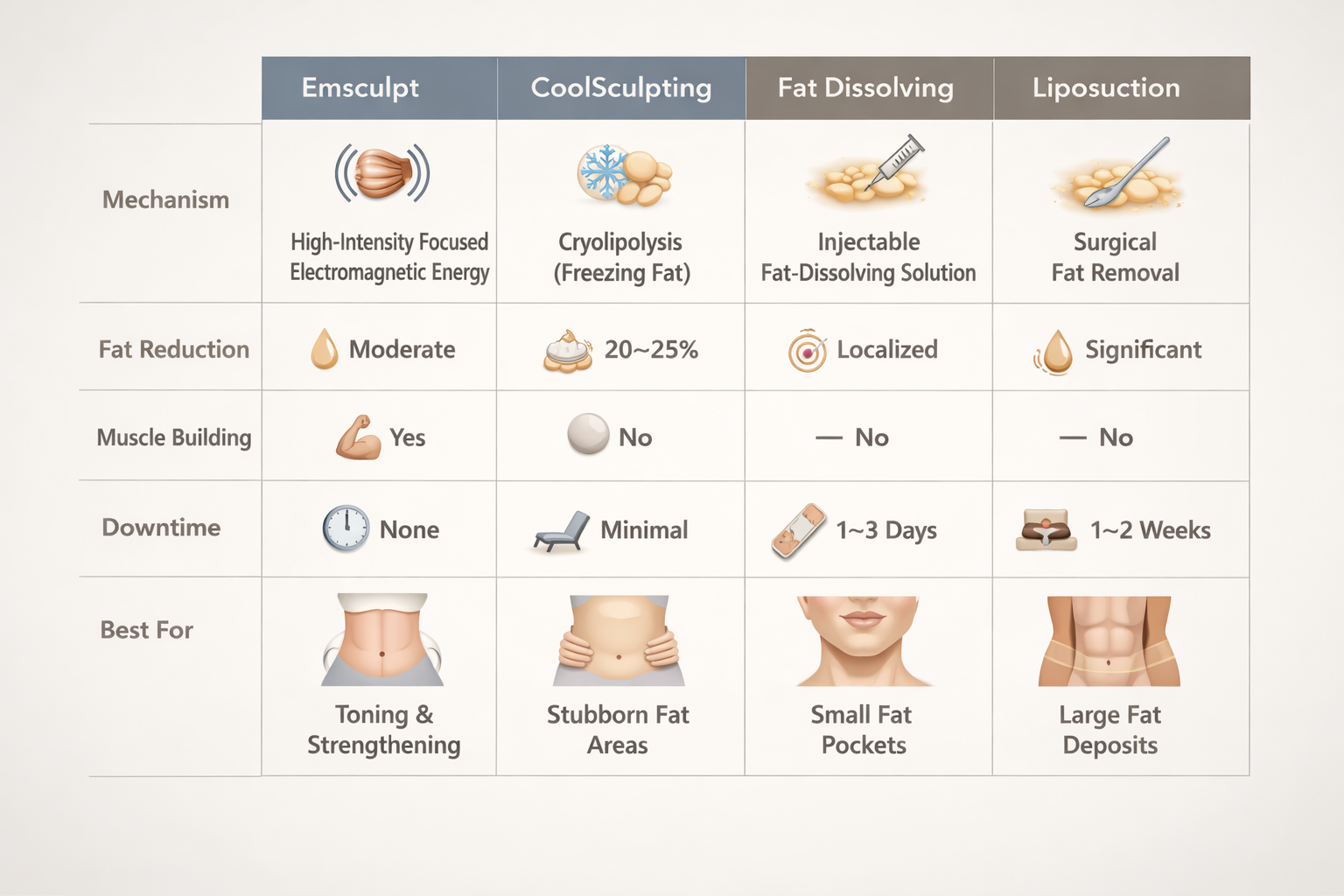
Emsculpt vs. CoolSculpting: CoolSculpting uses cryolipolysis — controlled cooling — to freeze and destroy fat cells. It is effective for subcutaneous fat reduction but does not stimulate muscle growth. Emsculpt addresses both fat and muscle simultaneously, making it a better fit for patients whose primary goal includes improving muscle definition rather than fat reduction alone. CoolSculpting may produce more pronounced fat reduction in some areas, while Emsculpt offers the unique dual benefit of muscle building.
Emsculpt vs. fat-dissolving injectables: Treatments such as Aqualyx and Lemon Bottle use injectable solutions to chemically break down fat cells in small, localised areas. They are typically used for smaller, more precise areas — such as under the chin, inner knees, or small pockets of fat — where a device applicator may not be practical. Fat dissolvers do not build muscle. Emsculpt covers larger muscle groups and offers the muscle-building component that injectables cannot provide. Some patients and practitioners consider combining the two approaches — using injectables for precise small-area fat reduction alongside Emsculpt for broader muscle toning — though this should be discussed individually with a qualified practitioner.
Emsculpt vs. liposuction: Surgical liposuction remains the most effective single intervention for significant fat removal and body reshaping. It produces more dramatic and immediate fat reduction than any non-invasive device. However, it carries the risks of surgery, requires anaesthesia, involves recovery time, and is not appropriate for patients seeking modest improvements or those who are not surgical candidates. Emsculpt is not a replacement for liposuction in patients with substantial fat deposits, but it may be a reasonable alternative for those with modest, localised concerns who prefer a non-surgical approach.
UK Cost Considerations
In the United Kingdom, Emsculpt and Emsculpt NEO pricing varies considerably depending on the clinic’s location, the device used, the treatment area, and the number of sessions included in a package. As a general guide, individual sessions typically range from approximately £200 to £600, with a standard course of four sessions costing between £800 and £3,000 depending on the area and provider. London clinics, particularly those on or near Harley Street, tend to sit at the higher end of this range.
When comparing prices, it is worth confirming that the clinic is using a genuine BTL-certified Emsculpt or Emsculpt NEO device rather than a cheaper imitation machine. Significantly lower prices can sometimes indicate the use of uncertified equipment that has not undergone the same clinical validation. Asking the clinic directly about their device certification and the practitioner’s specific training is a reasonable and appropriate question.
Maintenance sessions, typically recommended every three to six months to sustain muscle-related results, should also be factored into the overall cost consideration when evaluating whether the treatment represents good value for your goals.
Frequently Asked Questions
Does Emsculpt actually build real muscle?
Clinical studies, including independent peer-reviewed research, confirm that Emsculpt produces measurable increases in muscle volume and density, verified through MRI, CT, and ultrasound imaging. The muscle changes are physiologically real, though the degree of improvement varies between individuals and depends on baseline muscle mass, treatment area, and adherence to the recommended course.
Is Emsculpt painful?
Most patients describe the sensation as intense and unfamiliar rather than painful. The involuntary supramaximal muscle contractions feel like an extremely demanding workout. Discomfort levels vary between individuals and treatment areas. Post-treatment muscle soreness is common and typically resolves within a few days.
How soon will I see results from Emsculpt?
Visible changes typically begin to appear around four weeks after completing a treatment course, with peak results generally observed at approximately three months. This timeline reflects the gradual nature of muscle remodelling and fat cell clearance through the lymphatic system.
Can Emsculpt help with diastasis recti?
Some clinical evidence suggests Emsculpt may help reduce the muscle separation associated with diastasis recti, making it a consideration for postpartum patients. This is a specific application that requires assessment by a practitioner experienced in postpartum care, and it should not be attempted without appropriate clinical evaluation.
Will the fat come back after Emsculpt?
Fat cells destroyed through apoptosis do not regenerate. However, remaining fat cells can still enlarge if significant weight is gained after treatment. Maintaining a stable weight through diet and activity is important for preserving fat reduction results long-term.
Can Emsculpt be combined with other treatments?
Combining Emsculpt with complementary treatments — such as fat-dissolving injectables for small localised areas, or skin-tightening procedures — is something some practitioners offer as part of a broader body contouring plan. Whether combination treatment is appropriate depends on individual goals, anatomy, and medical history, and should be discussed at a thorough consultation.
How do I know if a clinic is using a genuine Emsculpt device?
Ask the clinic to confirm they use a BTL Industries-certified Emsculpt or Emsculpt NEO device and that the practitioner has received specific training on the equipment. Genuine devices carry BTL certification, and reputable clinics will be transparent about this. Be cautious of significantly below-market pricing, which can sometimes indicate the use of uncertified imitation machines.
Is Emsculpt Worth Considering for Your Goals?
Emsculpt occupies a genuinely distinct position in the non-invasive body contouring landscape. Its ability to simultaneously stimulate muscle growth and promote subcutaneous fat reduction through HIFEM technology — and in the case of Emsculpt NEO, combined radiofrequency energy — sets it apart from treatments that address only fat or only skin quality. For patients who are already near a healthy weight and want to improve muscle definition or address stubborn localised fat that has not responded to exercise, the treatment may offer meaningful, measurable results.
The evidence base is encouraging but not without limitations. Much of the available clinical data is manufacturer-associated, study populations are often small, and individual responses vary. The treatment is not appropriate for everyone, and the contraindications — particularly for those with implanted electronic devices or metal implants — are clinically significant. It is also not a solution for patients seeking substantial fat removal or weight loss; for those goals, surgical options or a medically supervised weight management programme are more appropriate starting points.
If Emsculpt aligns with your goals and you do not have contraindications, the most useful next step is a consultation with a qualified practitioner who uses a certified BTL device and can assess your individual anatomy, discuss realistic outcomes, and recommend a treatment plan tailored to your specific concerns. Going in with clear, realistic expectations — and an understanding of what the treatment can and cannot achieve — will help you make a genuinely informed decision.