

Quick Comparison
| Feature | IPL (Intense Pulsed Light) | BBL (BroadBand Light) |
|---|---|---|
| Technology | Broad-spectrum pulsed light, multiple manufacturers | Advanced broadband light therapy, Sciton devices only |
| Wavelength range | Typically 515–1200 nm (varies by device) | Up to 1400 nm with precision-controlled filters |
| Primary targets | Melanin, haemoglobin (chromophores) | Melanin, haemoglobin, plus deeper collagen stimulation |
| Conditions treated | Sun spots, rosacea, vascular lesions, hair removal | Sun damage, pigmentation, rosacea, fine lines, skin texture |
| Session time | 20–45 minutes (face) | Under 30 minutes; BBL HERO under 5 minutes |
| Downtime | Minimal — mild redness 24–48 hours | Minimal — mild redness 24–48 hours |
| Skin type suitability | Fitzpatrick types I–III most suitable; caution with IV–VI | Fitzpatrick types I–IV with appropriate settings; caution with V–VI |
| Sessions typically needed | 3–5 sessions | 3–4 sessions (fewer with BBL HERO) |
| Results duration | 6–12 months with maintenance | 6–12+ months; potentially longer with Forever Young BBL protocol |
| Cost per session | Generally lower | Generally higher |
| Gene expression research | Not established | Stanford University research suggests cellular-level changes |
Both IPL and BBL use pulses of broad-spectrum light to target skin concerns such as sun damage, pigmentation, and redness. They share the same fundamental principle — delivering light energy to specific chromophores in the skin — but they differ meaningfully in device technology, precision, treatment speed, and the depth of evidence behind them. Understanding those differences can help you ask better questions during a consultation and set realistic expectations before committing to a treatment series.
What Is IPL (Intense Pulsed Light)?
Intense pulsed light, commonly abbreviated as IPL, is a non-invasive light therapy that delivers multiple wavelengths of light simultaneously to the skin. Unlike a laser, which emits a single focused wavelength, IPL uses polychromatic light across a broad spectrum — typically ranging from around 515 nm to 1200 nm depending on the device and the filters applied. Interchangeable filters allow practitioners to narrow the wavelength range and target specific chromophores: melanin in pigmented lesions such as sun spots and freckles, or haemoglobin in vascular lesions such as broken capillaries and rosacea-related redness.
IPL devices are manufactured by dozens of companies, which means the quality, energy output, and cooling technology vary considerably between clinics. This variability is worth noting when comparing results across different providers. The treatment is widely used for photorejuvenation — a broad term for using light energy to improve the overall appearance of sun-damaged or ageing skin — and is also commonly used for hair removal, which distinguishes it from BBL.
During an IPL photofacial, the device delivers rapid pulses of light through a handheld applicator placed against the skin. The light energy is absorbed by the targeted chromophores, generating heat that damages the unwanted cells or structures while leaving surrounding tissue largely unaffected. The body then clears the damaged material over the following days and weeks, gradually improving the appearance of pigmentation, redness, and uneven skin tone.
What Is BBL (BroadBand Light)?
BroadBand Light, or BBL, is a specific form of broadband light therapy developed and manufactured exclusively by Sciton, a US-based medical device company. BBL uses a similar principle to IPL — delivering broad-spectrum light to target chromophores in the skin — but the Sciton platform incorporates more advanced engineering, including dual-lamp technology, sapphire crystal thermoelectric cooling sensors, and a wider wavelength range of up to 1400 nm. These features allow for more precise energy delivery and better contact cooling, which may improve both comfort and safety during treatment.
Because BBL is produced by a single manufacturer, the technology is more standardised across clinics that offer it. Practitioners using a Sciton device are working with the same platform, which makes it easier to compare outcomes and follow established treatment protocols. The most well-known of these protocols is Forever Young BBL, a maintenance-focused programme designed to address the cumulative effects of sun damage and skin ageing through regular treatment sessions over time.
A newer variant, BBL HERO (High Energy Rapid Output), delivers higher energy levels at greater speed, reducing full-face treatment time to under five minutes in some cases. BBL HERO is particularly suited to patients who want efficient sessions without compromising on energy delivery. The Sciton platform also includes Forever Bare BBL for hair reduction and other condition-specific protocols, making it a versatile system within a single device family.
How Do IPL and BBL Work on the Skin?
Both treatments rely on the principle of selective photothermolysis — using specific wavelengths of light to heat and damage targeted structures (chromophores) without significantly affecting the surrounding skin. The two main chromophores targeted are melanin, which absorbs light in the green-to-yellow spectrum and is responsible for pigmented lesions, and haemoglobin, which absorbs light in the yellow-to-orange spectrum and is responsible for the red appearance of vascular lesions such as telangiectasias and rosacea-related flushing.
When light energy is absorbed by melanin in a sun spot or age spot, the pigment heats up and the cells containing it are damaged. Over the following days, the spot typically darkens before gradually flaking away — a normal part of the healing process that patients should be prepared for. When haemoglobin in dilated blood vessels absorbs the light energy, the vessel wall is damaged and the body reabsorbs it, reducing visible redness over time.
Beyond targeting chromophores, both IPL and BBL stimulate collagen production in the dermis. The controlled heat delivered to the upper dermal layers triggers a wound-healing response, encouraging the production of new collagen and elastin fibres. This contributes to improvements in skin texture, fine lines, and overall skin vitality over a series of treatments — effects that become more apparent in the weeks following each session rather than immediately after.
The BBL Gene Expression Difference
One of the most frequently cited differentiators for BBL — and one that is rarely explained clearly — is research from Stanford University suggesting that BBL treatment may alter gene expression in skin cells. The research indicated that regular BBL treatment, particularly using the Forever Young BBL protocol, was associated with changes in the expression of genes linked to skin ageing, with treated skin showing a gene expression profile more consistent with younger skin on histological analysis.
In plain terms, this suggests that BBL may do more than simply remove surface pigmentation or reduce redness — it may influence how skin cells behave at a biological level, potentially slowing some aspects of the visible ageing process. The research noted changes in over a thousand ageing-associated genes. However, it is important to approach this finding with appropriate context: this research was conducted by scientists with ties to Sciton, the BBL manufacturer, and independent replication in large-scale peer-reviewed trials is limited. The findings are genuinely interesting and represent a meaningful scientific distinction from standard IPL, but they should not be interpreted as proof that BBL reverses ageing or produces permanent results. A qualified practitioner can help you understand what this research may or may not mean for your individual treatment goals.
Conditions Treated: IPL vs BBL
What IPL May Help With
- Sun damage and sun spots (solar lentigines)
- Age spots and freckles
- Rosacea and facial flushing
- Broken capillaries and telangiectasias
- Diffuse redness and uneven skin tone
- Mild hyperpigmentation
- Enlarged pores and mild acne
- Unwanted hair (a use not shared by BBL in the same way)
What BBL May Help With
- Sun damage reversal and age spots
- Rosacea, redness, and vascular lesions
- Freckles and discoloration
- Uneven skin texture and tone
- Fine lines and early signs of skin ageing
- Acne and acne-related redness
- Skin vitality and overall photorejuvenation
- Hair removal (via Forever Bare BBL protocol)
The overlap between the two lists is significant. For the most common concerns — sun spots, rosacea, and general skin rejuvenation — both treatments can produce meaningful improvements. The practical difference often comes down to the precision and consistency of the device being used, the skill of the practitioner, and the specific protocol applied rather than a categorical superiority of one technology over the other.
Skin Type Suitability and Safety
Skin type candidacy is one of the most important safety considerations for any light-based treatment. Both IPL and BBL work most predictably on lighter skin tones — specifically Fitzpatrick skin types I through III — because the contrast between the target chromophore (melanin in a pigmented lesion) and the surrounding skin is greatest. When the surrounding skin contains more melanin, as in medium to darker skin tones (Fitzpatrick types IV through VI), there is a greater risk that the light energy will be absorbed by the skin itself rather than the targeted lesion, potentially causing pigment changes, burns, or post-inflammatory hyperpigmentation.
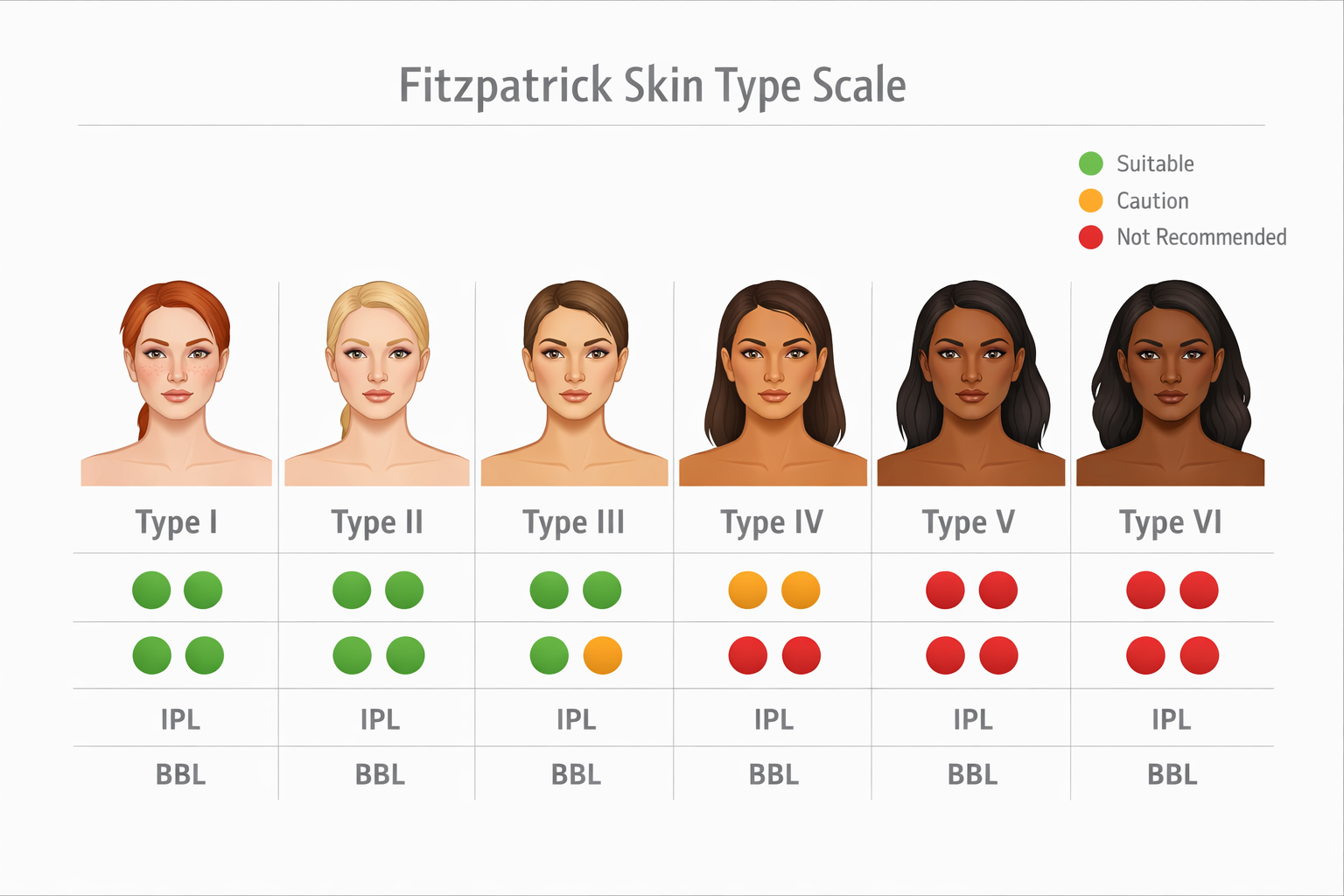
BBL, particularly with the advanced settings available on the Sciton platform, may offer slightly more flexibility for Fitzpatrick type IV skin when used by an experienced practitioner with appropriate protocols. However, neither treatment is considered reliably safe for Fitzpatrick types V and VI without specialist expertise and careful device calibration. If you have a medium to darker skin tone, it is essential to consult with a practitioner who has specific experience treating your skin type with light-based devices, and to ask directly about the settings and protocols they would use.
Other factors that may affect suitability include recent sun exposure or tanning, active skin infections, certain medications (particularly photosensitising drugs), pregnancy, and a history of keloid scarring. A thorough consultation and patch test before a full treatment series is standard practice and should not be skipped.
What to Expect During Treatment
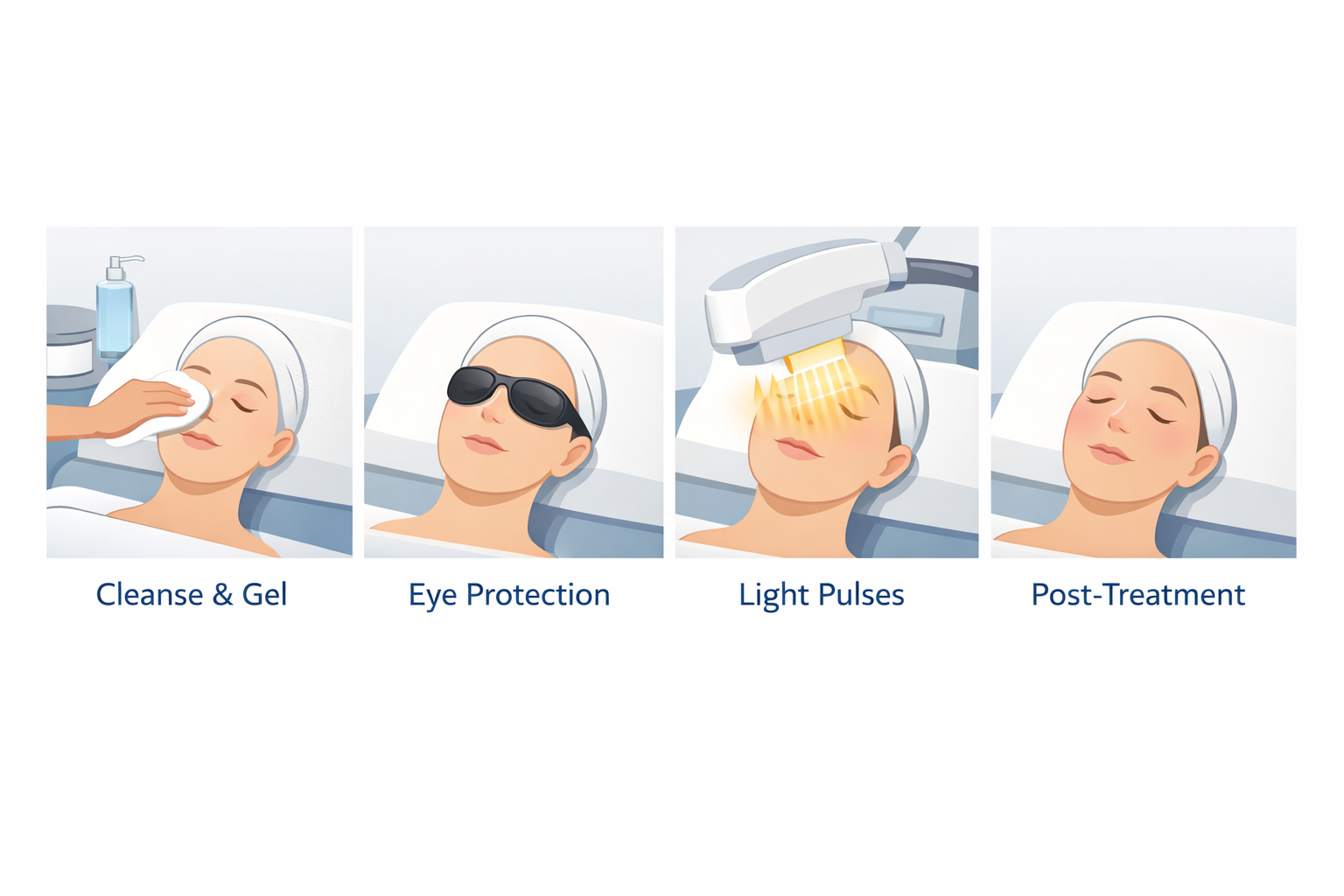
Both IPL and BBL treatments follow a broadly similar process. The skin is cleansed and a cooling gel is applied to the treatment area. Protective eyewear is worn throughout the session. The practitioner passes the handheld device over the skin, delivering pulses of light in a systematic pattern. Most patients describe the sensation as similar to a rubber band snapping against the skin — brief and tolerable, though some areas may be more sensitive than others.
A standard IPL session for the face typically takes between 20 and 45 minutes. A BBL session is generally faster, often under 30 minutes for a full face, and BBL HERO can complete a facial treatment in under five minutes due to its high-energy rapid-output design. The BBL platform also uses sapphire cooling technology to maintain skin comfort throughout, which many patients find makes the experience more comfortable than older IPL devices.
After treatment, the skin typically appears mildly red and may feel warm, similar to mild sunburn. This usually settles within 24 to 48 hours. Pigmented spots often darken in the days following treatment before gradually flaking away — this is a normal and expected part of the process, not a complication. Patients are advised to avoid direct sun exposure, apply broad-spectrum SPF daily, and avoid harsh skincare products for at least a week after each session.
Results, Sessions, and Longevity
Most patients require a series of treatments to achieve their desired outcome rather than a single session. For IPL, a typical treatment series involves three to five sessions spaced four to six weeks apart. BBL protocols often recommend three to four sessions, with BBL HERO sometimes achieving comparable results in fewer visits due to its higher energy output. Visible improvement is usually noticeable after the first or second session, with the full benefit of a treatment series becoming apparent over the following weeks as collagen stimulation continues and the skin clears treated pigmentation.
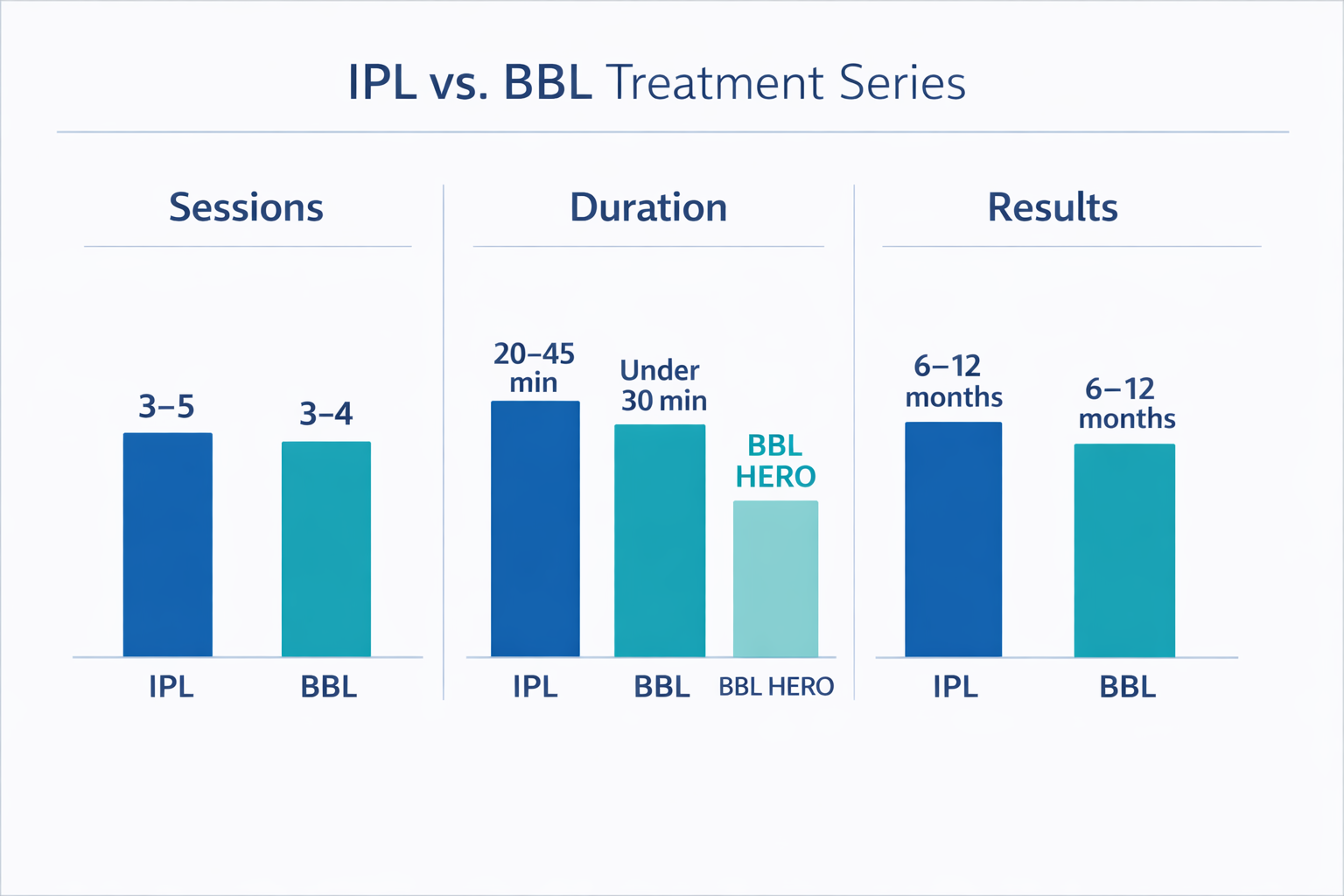
Results from both treatments are not permanent. Sun damage, hormonal changes, and the natural ageing process will continue to affect the skin over time. Maintenance treatments — typically one to two sessions per year — are generally recommended to sustain results. The Forever Young BBL protocol is specifically designed around this concept, using regular maintenance sessions to support ongoing skin health rather than treating concerns reactively. Some practitioners and patients report that consistent long-term BBL maintenance produces cumulative improvements in skin quality that go beyond what a single course of treatment achieves.
Individual results vary depending on the severity of the initial concern, skin type, lifestyle factors such as sun exposure, and the quality of the device and practitioner. Realistic expectations are important: both treatments can produce meaningful improvements in sun-damaged or uneven skin, but neither replaces more intensive interventions for significant pigmentation disorders, deep wrinkles, or structural skin changes.
Cost Comparison: IPL vs BBL
IPL is generally the more affordable option on a per-session basis. Depending on the clinic, location, and treatment area, IPL sessions typically cost less than equivalent BBL sessions. However, the total cost of a treatment programme depends on the number of sessions required, and BBL’s potentially faster results may mean fewer sessions are needed to achieve a comparable outcome — narrowing the overall cost difference.
BBL’s higher per-session cost reflects the investment in Sciton’s proprietary technology, which is manufactured to a consistent standard and carries a higher device cost for clinics. IPL devices vary widely in quality and price, which means a lower-cost IPL session at one clinic may not be equivalent to a higher-cost IPL session at another. When comparing costs, it is worth asking about the specific device being used, the practitioner’s experience, and whether the quoted price includes a consultation and patch test.
Package pricing is common for both treatments, and committing to a full series upfront often reduces the per-session cost. Maintenance treatments should also be factored into the long-term cost of either option. A transparent discussion about the likely number of sessions and the total programme cost is a reasonable expectation from any reputable clinic.
Is BBL Worth the Extra Cost?
For many patients with straightforward concerns — mild sun spots, diffuse redness, or general photorejuvenation — a well-performed IPL treatment on a quality device can deliver results that are comparable to BBL at a lower cost. The technology gap between a high-quality IPL device and a Sciton BBL system is meaningful but not always clinically decisive for common skin concerns in lighter skin types.
BBL may offer a more compelling case for patients who want faster sessions (particularly with BBL HERO), those who are interested in the Forever Young BBL maintenance protocol for long-term skin health, or those whose skin type or concern complexity benefits from the greater precision and energy control of the Sciton platform. The gene expression research, while not yet independently replicated at scale, does suggest a biological mechanism that goes beyond surface-level pigment removal — which may be relevant for patients focused on proactive skin ageing prevention rather than reactive correction.
Ultimately, the question of whether BBL is worth the additional investment depends on your specific skin concerns, your skin type, the quality of IPL available in your area, and your long-term skincare goals. A consultation with a practitioner experienced in both technologies is the most reliable way to assess which option is likely to deliver the best value for your individual situation.
Combining Light Treatments with Other Procedures
Neither IPL nor BBL needs to be used in isolation. Both treatments address surface-level pigmentation and vascular concerns effectively, but they have limited impact on deeper structural changes such as significant volume loss, deep static wrinkles, or pronounced skin laxity. Combining a course of IPL or BBL with complementary treatments — such as microneedling for texture and collagen remodelling, chemical peels for superficial resurfacing, or injectable treatments for volume and line correction — can address a broader range of concerns than any single modality alone.
Timing matters when combining treatments. Light-based treatments and chemical peels, for example, are generally not performed on the same day, and the sequence of treatments should be planned carefully to avoid overlapping recovery periods or compromising results. A practitioner who offers multiple treatment modalities is better placed to design a coordinated plan that addresses your full range of concerns safely and efficiently.
Frequently Asked Questions
Is BBL the same as IPL?
BBL and IPL share the same fundamental principle — using broad-spectrum pulsed light to target chromophores in the skin — but BBL is a specific, proprietary technology manufactured exclusively by Sciton. BBL devices incorporate more advanced engineering, including dual-lamp technology, sapphire cooling, and a wider wavelength range, which distinguishes them from standard IPL devices. All BBL is a form of intense pulsed light, but not all IPL is BBL.
Which treatment is better for rosacea?
Both IPL and BBL can be effective for reducing the redness, flushing, and visible blood vessels associated with rosacea. BBL’s precision settings may offer an advantage for patients with more complex presentations or those who have not responded well to standard IPL. The most important factor is the experience of the practitioner and the quality of the device being used, rather than the technology category alone.
How many sessions will I need?
Most patients require three to five IPL sessions or three to four BBL sessions for a primary treatment course, spaced four to six weeks apart. The exact number depends on the severity of the concern, skin type, and the device used. Maintenance treatments — typically one to two sessions per year — are usually recommended to sustain results over time.
Is it painful?
Most patients describe both IPL and BBL as mildly uncomfortable rather than painful. The sensation is commonly compared to a rubber band snapping against the skin. BBL devices with sapphire cooling technology tend to be well-tolerated. Sensitivity varies by treatment area and individual pain threshold. Topical anaesthetic cream is not routinely required but can be applied beforehand if a patient is particularly sensitive.
Can IPL or BBL be used on darker skin tones?
Both treatments carry a higher risk of adverse effects — including burns and post-inflammatory hyperpigmentation — on darker skin tones (Fitzpatrick types V and VI). BBL with carefully adjusted settings may be used cautiously on Fitzpatrick type IV skin by experienced practitioners, but neither treatment is considered standard for very dark skin tones. Patients with medium to darker skin should seek a practitioner with specific expertise in treating their skin type with light-based devices.
What is Forever Young BBL?
Forever Young BBL is a specific treatment protocol using the Sciton BBL device, designed around regular maintenance sessions to support long-term skin health and address the cumulative effects of sun damage and ageing. It is associated with the Stanford University gene expression research suggesting that consistent BBL treatment may influence how skin cells age at a biological level. It is not a single treatment but an ongoing programme typically involving annual or biannual maintenance sessions after an initial course.
Can I have IPL or BBL if I have a tan?
Active tanning — whether from sun exposure or self-tanning products — significantly increases the risk of adverse effects from both IPL and BBL. Most practitioners recommend avoiding sun exposure and tanning for at least four weeks before treatment and throughout a treatment series. Broad-spectrum SPF should be worn daily during and after a treatment course.
IPL or BBL: Matching the Treatment to Your Goals
For patients with lighter skin tones and straightforward concerns — sun spots, mild rosacea, or general skin rejuvenation — a well-performed IPL photofacial on a quality device can deliver meaningful results at a lower cost per session. IPL remains a clinically established, widely available non-invasive light therapy with a strong track record for photorejuvenation, and its dual use for hair removal makes it a practical choice for patients addressing multiple concerns.
BBL, delivered through the Sciton platform, offers a more standardised and technologically advanced approach that may be particularly relevant for patients seeking faster treatment times (especially with BBL HERO), those interested in the Forever Young BBL maintenance protocol, or those whose skin type or concern complexity benefits from greater device precision. The emerging gene expression research adds a scientifically interesting dimension to BBL’s long-term skin health claims, though independent evidence is still developing.
Neither treatment is universally superior. The right choice depends on your skin type, the specific concerns you want to address, the quality of the devices and practitioners available to you, and your budget for both the initial course and ongoing maintenance treatments. A consultation with a qualified, experienced practitioner — ideally one who offers both technologies — is the most reliable starting point for making an informed decision tailored to your skin.