

Key Takeaways
- Lumi Eyes is a polynucleotide skin booster derived from salmon DNA, designed to improve skin quality in the periorbital area rather than add volume.
- It may help with dark circles caused by skin thinning, dehydration, and poor skin texture — but it is less effective for structural hollowing or pigmentation-based dark circles.
- A typical treatment course involves two to three sessions spaced three to four weeks apart, with gradual results developing over six to twelve weeks.
- Lumi Eyes is generally worth considering for patients with early to moderate under-eye ageing, crepey skin, or mild vascular shadowing — but it is not the right choice for everyone.
- A consultation with a qualified practitioner is essential to determine whether Lumi Eyes, tear trough filler, or a combined approach best matches your concerns.
What Is Lumi Eyes?
Lumi Eyes is an injectable polynucleotide skin booster specifically formulated for the delicate skin around the eyes. Its active ingredient is PDRN (polydeoxyribonucleotide), a purified form of salmon DNA that has been used in regenerative medicine for several decades. The formulation contains 2 mg/ml of polynucleotides and is injected into the dermis of the periorbital area using a fine needle or cannula technique.
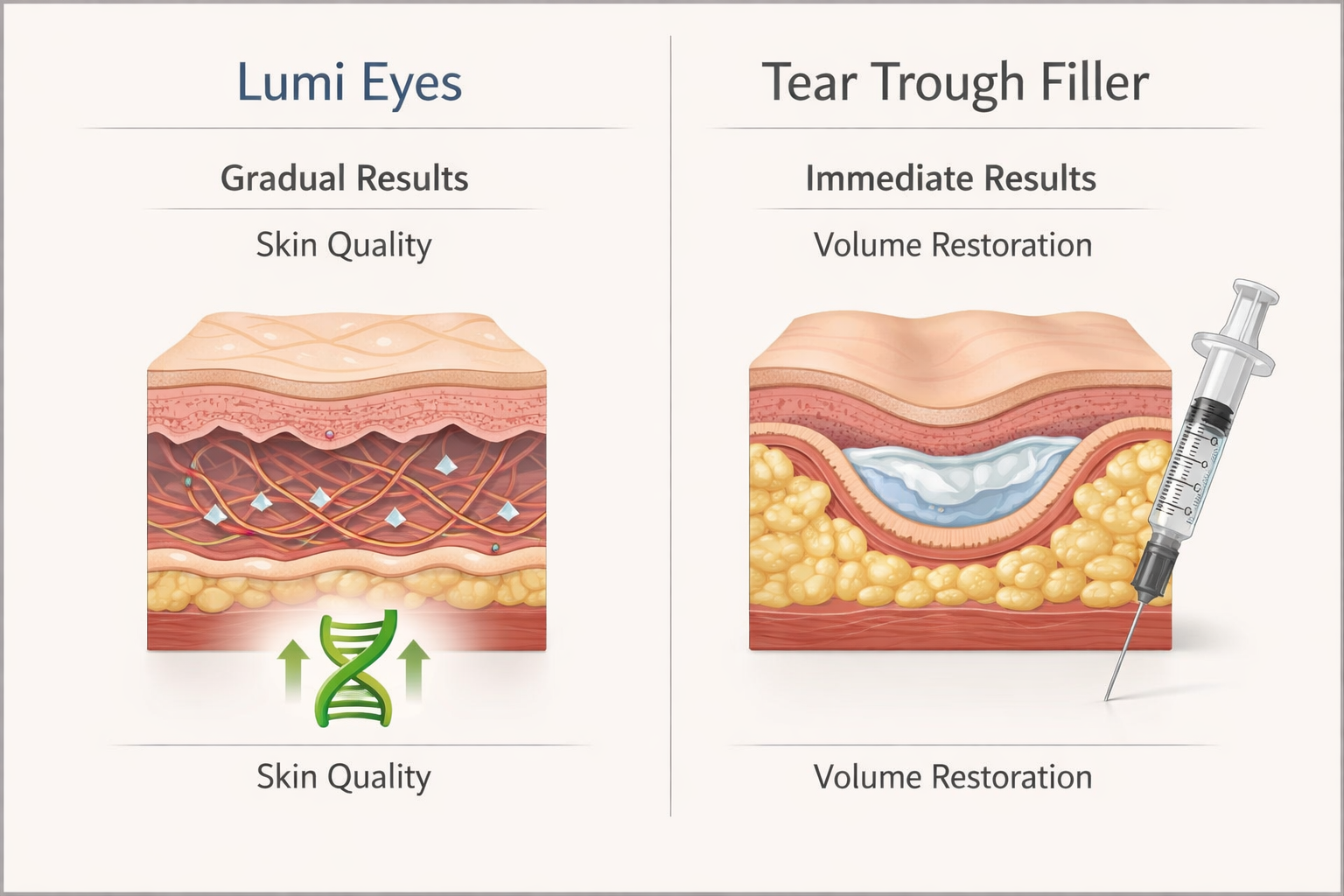
Unlike hyaluronic acid fillers, Lumi Eyes does not add volume or physically fill a hollow. Instead, it works by stimulating the skin’s own repair processes — encouraging collagen and elastin production, improving hydration, and supporting tissue regeneration at a cellular level. This makes it a fundamentally different type of treatment from tear trough filler, even though both are used in the same area.
Lumi Eyes sits within a broader category of polynucleotide injectables that includes brands such as Plinest, Jalupro, and Nucleofill. Each formulation differs in PDRN concentration, molecular weight, and intended patient profile. Lumi Eyes, at 2 mg/ml, has a relatively modest concentration compared to some alternatives, which is a relevant consideration when evaluating its suitability for more advanced signs of ageing.
How Does Lumi Eyes Work?
PDRN molecules interact with adenosine A2A receptors in skin tissue, triggering a cascade of regenerative activity. This includes stimulation of fibroblasts — the cells responsible for producing collagen and elastin — as well as promotion of angiogenesis (the formation of new capillary networks) and an anti-inflammatory effect. The result is a gradual improvement in skin quality, hydration, and structural integrity rather than an immediate visible change.
In the under-eye area specifically, these mechanisms may help to strengthen capillary walls, which can reduce the appearance of vascular shadowing — the bluish or purplish tint caused by blood vessels showing through thin skin. Improved lymphatic drainage may also reduce mild puffiness. Over time, increased collagen density can improve skin thickness, reduce the appearance of fine lines, and address the crepey skin texture that commonly develops in this area with age.
It is important to understand that these changes are progressive. Lumi Eyes does not produce the kind of immediate transformation associated with dermal fillers. Most patients begin to notice improvements two to four weeks after their first session, with more meaningful changes becoming visible at six to twelve weeks, typically after completing a full treatment course.
What Can Lumi Eyes Treat — and What It Cannot
Under-eye concerns are not all the same, and this distinction matters enormously when evaluating whether Lumi Eyes is the right treatment. The main causes of under-eye appearance issues include pigmentation (melanin-based dark circles), vascular visibility, structural hollowing due to volume loss, skin thinning and dehydration, fine lines, and puffiness. Lumi Eyes addresses some of these more effectively than others.
Where Lumi Eyes may help:
- Skin thinning and dehydration in the periorbital area
- Fine lines and crepey skin texture under the eyes
- Mild vascular shadowing caused by visible capillaries through thin skin
- Mild puffiness related to poor lymphatic drainage
- Early loss of skin elasticity and overall skin quality
- A tired or fatigued appearance linked to skin condition rather than anatomy
Where Lumi Eyes is less likely to help:
- Structural hollowing or a deep tear trough — this typically requires tear trough filler or a combination approach
- Pigmentation-based dark circles caused by excess melanin — these may respond better to topical treatments, chemical peels, or laser
- Significant volume loss — polynucleotides do not replace lost fat or bone
- Severe skin laxity or pronounced crow’s feet — more advanced treatments may be needed
A thorough assessment by an experienced practitioner should identify which type of under-eye concern is present before any treatment is recommended. Misidentifying the cause is one of the most common reasons patients are disappointed with results from any under-eye treatment.
Lumi Eyes vs Tear Trough Filler: Key Differences
The most common comparison patients make is between Lumi Eyes and tear trough filler. These treatments work differently, suit different concerns, and produce different types of results. Understanding the distinction helps clarify which may be more appropriate for a given patient.
| Feature | Lumi Eyes (Polynucleotide) | Tear Trough Filler (Hyaluronic Acid) |
|---|---|---|
| Mechanism | Stimulates collagen, elastin, tissue regeneration | Physically fills volume deficit with hyaluronic acid |
| Primary goal | Improve skin quality, hydration, texture | Restore volume, reduce hollow appearance |
| Onset of results | Gradual — 2 to 12 weeks | Immediate to within days |
| Sessions needed | 2–3 sessions, 3–4 weeks apart | Often 1 session; top-up as needed |
| Longevity | 6–18 months with maintenance | Typically 9–18 months depending on product |
| Best suited for | Skin thinning, crepey texture, vascular shadowing, dehydration | Structural hollowing, volume loss, deep tear trough |
| Downtime | Minimal — mild swelling or redness 24–48 hours | Minimal — bruising possible, swelling common |
| Risk of overfilling | Not applicable | Possible; Tyndall effect if placed too superficially |
| Reversible | No — results are gradual and natural | Yes — hyaluronidase can dissolve HA filler |
Some patients benefit from a combined approach — using Lumi Eyes to improve skin quality and texture while using a small amount of hyaluronic acid filler to address any structural hollowing. This layered strategy can produce more comprehensive natural-looking results than either treatment alone, and is worth discussing with a practitioner who is experienced in both techniques.
What to Expect During a Lumi Eyes Treatment
A Lumi Eyes appointment typically takes around 30 minutes from start to finish. Most clinics apply a topical numbing cream to the under-eye area beforehand to minimize discomfort, as the skin in this region is thin and sensitive. The practitioner then administers a series of small injections into the dermis using a fine needle, targeting the periorbital area systematically.
The injections themselves are generally described as mildly uncomfortable rather than painful, though individual tolerance varies. Some patients experience a slight stinging or pressure sensation during the procedure. Immediately afterwards, small raised bumps or wheals may be visible at the injection sites — these typically settle within a few hours.
Following treatment, most patients experience mild swelling, redness, or bruising in the treated area. This usually resolves within 24 to 48 hours, making Lumi Eyes a genuinely minimal downtime procedure for most people. Practitioners generally advise avoiding strenuous exercise, alcohol, and heat exposure such as saunas or steam rooms for 24 to 48 hours after each session. Sun protection is also recommended during the recovery period.
A standard treatment course consists of two to three sessions spaced three to four weeks apart. Some practitioners recommend a fourth session for patients with more advanced concerns or those seeking longer-lasting results. Annual or biannual maintenance sessions are typically suggested to sustain the improvements achieved.
Results: What Is Realistic and When to Expect Them
Lumi Eyes produces gradual, progressive improvements rather than dramatic immediate changes. This is one of the most important expectations to set before starting treatment. Patients who approach Lumi Eyes expecting the kind of visible transformation associated with filler are likely to be disappointed — at least in the short term.
A realistic results timeline looks broadly like this:
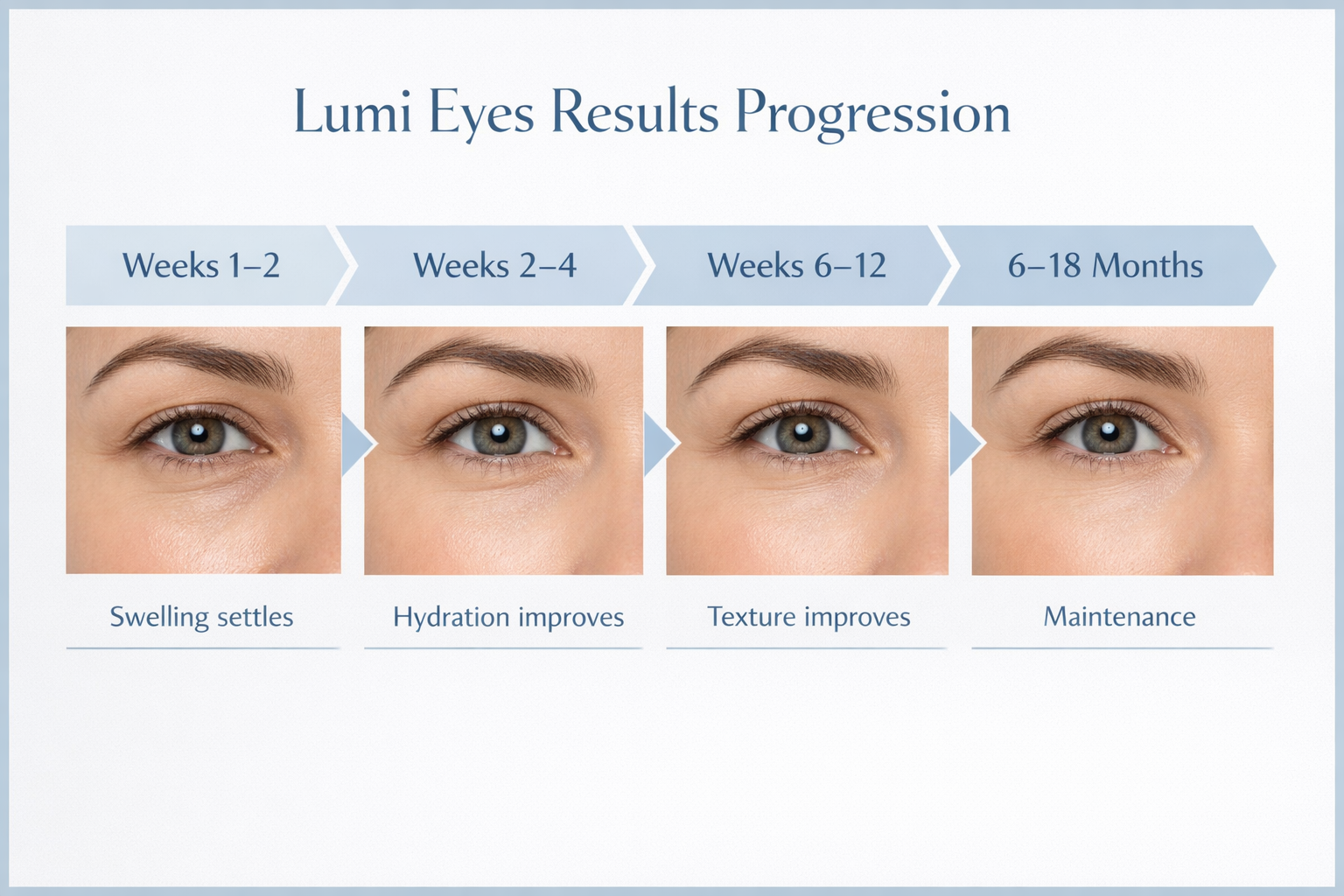
- Weeks 1–2: Mild swelling from the injections settles. Little visible change in skin appearance at this stage.
- Weeks 2–4: Some patients begin to notice improved skin hydration and a subtle brightening effect. Skin may feel softer.
- Weeks 6–12: More meaningful improvements in skin texture, fine lines, and under-eye appearance become visible as collagen remodelling progresses. This is typically when patients see the most noticeable change.
- 6–18 months: Results from a completed course may last in this range, depending on the individual’s skin, age, lifestyle, and whether maintenance sessions are undertaken.
Clinical research on polynucleotide injections for periorbital rejuvenation is growing. A study published in a peer-reviewed journal examining polynucleotide injections for under-eye rhytides reported improvements in patient-reported outcomes using validated measures, though the authors noted that larger controlled trials are still needed. The evidence base for polynucleotides in aesthetic medicine is developing positively, but it remains less extensive than that for established treatments such as hyaluronic acid fillers or botulinum toxin.
Lumi Eyes vs Other Polynucleotide Brands
Lumi Eyes is not the only polynucleotide product available for under-eye rejuvenation. Understanding how it compares to alternatives within the same treatment category helps set appropriate expectations.
Plinest contains a higher concentration of polynucleotides and is often considered more suitable for patients with more advanced signs of ageing or greater skin laxity. Some practitioners prefer Plinest for older patients or those with more pronounced concerns, while Lumi Eyes may be more appropriate for earlier-stage treatment or younger patients.
Jalupro combines amino acids with polynucleotides and is sometimes used for broader facial skin quality improvement rather than specifically targeting the periorbital area.
Profhilo is a high-concentration hyaluronic acid skin booster rather than a polynucleotide product. It works differently — primarily through intense hydration and bioremodelling — and is more commonly used across the face and neck rather than specifically under the eyes.
The choice between these products should be guided by the practitioner’s assessment of the patient’s skin condition, age, and specific concerns. Lumi Eyes’ 2 mg/ml PDRN concentration is on the lower end of the polynucleotide spectrum, which is worth acknowledging honestly — it may be sufficient for mild to moderate concerns but may not deliver the same degree of improvement as higher-concentration alternatives in patients with more significant skin changes.
Side Effects and Safety Considerations
Lumi Eyes has a well-established safety profile when administered by a qualified practitioner with appropriate training in periorbital injections. The most commonly reported side effects are mild and temporary:
- Swelling and redness at injection sites (usually resolves within 24–48 hours)
- Bruising, particularly given the delicate vasculature of the under-eye area
- Temporary small lumps or wheals at injection points
- Mild tenderness in the treated area
Serious complications are rare but possible with any injectable treatment in the periorbital region. The under-eye area is anatomically complex, and injections should only be performed by practitioners with specific training and experience in this area.
An important contraindication that is frequently overlooked is fish allergy. Because Lumi Eyes is derived from salmon DNA, it is contraindicated in patients with a known allergy to fish or fish products. Patients should always disclose any known allergies during their consultation. Lumi Eyes is also not recommended during pregnancy or breastfeeding, in the presence of active skin infections in the treatment area, or in patients taking certain medications that affect clotting. A thorough medical history review before treatment is essential.
Who May Be a Good Candidate for Lumi Eyes
Lumi Eyes tends to produce the most satisfying results in patients whose under-eye concerns are primarily related to skin quality rather than structural anatomy. Candidates who may benefit include:
- Adults with early to moderate signs of under-eye ageing — fine lines, skin thinning, mild dehydration
- Patients with crepey skin texture in the periorbital area
- Those with mild vascular shadowing contributing to a dark or tired appearance
- Patients who are not suitable for or do not wish to have hyaluronic acid filler
- Those seeking gradual, natural-looking results rather than an immediate change
- Patients looking to maintain or improve overall skin quality as part of a longer-term approach
Lumi Eyes is less likely to be the right choice for:
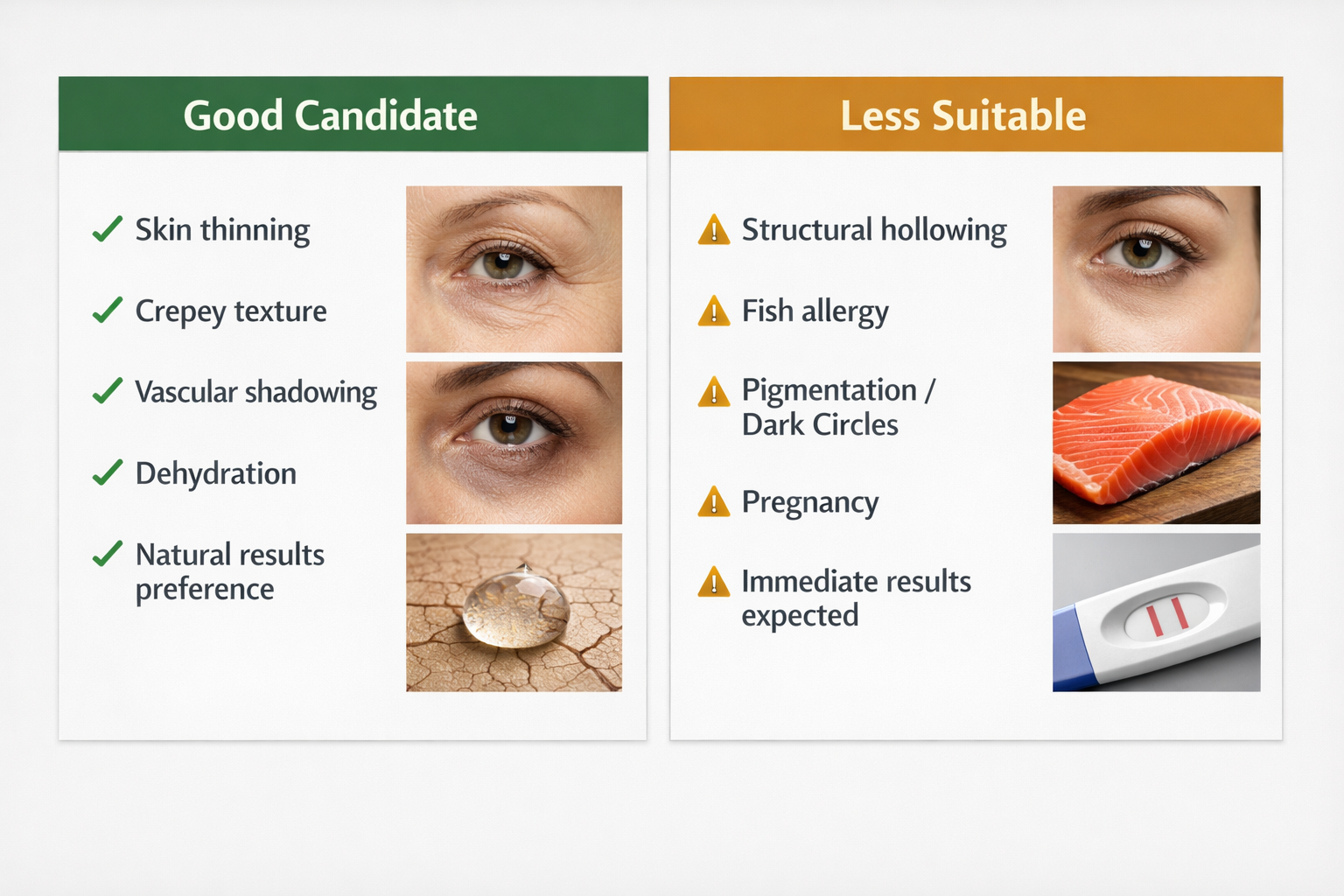
- Patients with significant structural hollowing or a deep tear trough — filler or a combination approach is usually more appropriate
- Those with predominantly pigmentation-based dark circles
- Patients with a fish allergy
- Those who are pregnant or breastfeeding
- Anyone expecting immediate or dramatic results
- Patients with severe skin laxity or advanced periorbital ageing, where higher-concentration polynucleotides or other treatments may be more effective
How Much Does Lumi Eyes Cost?
Pricing for Lumi Eyes varies considerably across the UK depending on the clinic, practitioner experience, and location. Individual sessions typically range from approximately £72 at budget providers to £200–£300 or more at established medical aesthetic clinics. Many clinics offer package pricing for a full treatment course of three sessions, which can represent a modest saving compared to paying per session.
When evaluating cost, it is worth considering the total investment for a complete course rather than the per-session price. A three-session course at a reputable clinic might cost £300–£600 in total, with annual maintenance sessions adding to the ongoing commitment. Comparing this to the cost of tear trough filler — which may achieve more immediate results for structural concerns in a single session — is a useful exercise when deciding which approach offers better value for a specific concern.
Price should not be the primary factor when choosing a provider for periorbital injections. The under-eye area carries meaningful anatomical risk, and practitioner experience and qualifications matter significantly.
Pros and Cons of Lumi Eyes
Potential advantages:
- Stimulates the skin’s own regenerative processes for gradual, natural improvement
- Addresses skin quality, hydration, and texture — not just surface appearance
- Minimal downtime for most patients
- May improve vascular shadowing and crepey skin that filler cannot address
- Can be combined with other treatments for a more comprehensive result
- Results may last 6–18 months with appropriate maintenance
Meaningful limitations:
- Results are gradual — not suitable for patients wanting immediate change
- Multiple sessions are required to complete a course
- Lower PDRN concentration than some competitor products
- Not effective for structural hollowing or pigmentation-based dark circles
- Contraindicated in patients with fish allergy
- Evidence base, while growing, is less established than for some other treatments
- Results vary between individuals and are not guaranteed
Frequently Asked Questions
How many Lumi Eyes sessions will I need?
Most practitioners recommend a course of two to three sessions spaced three to four weeks apart. Some patients with more advanced concerns may benefit from a fourth session. Maintenance sessions every six to twelve months are typically advised to sustain results.
Can Lumi Eyes be combined with tear trough filler?
Yes, and this is a common approach for patients who have both skin quality concerns and structural hollowing. The two treatments address different aspects of under-eye appearance and can complement each other well. A practitioner experienced in both techniques can advise on sequencing and timing.
Is Lumi Eyes painful?
Most patients describe the injections as mildly uncomfortable rather than painful. A topical numbing cream is usually applied beforehand to reduce discomfort. The under-eye area is sensitive, so some stinging or pressure during injection is normal.
How long do Lumi Eyes results last?
Results from a completed course typically last between six and eighteen months, depending on the individual’s skin, age, and lifestyle. Annual or biannual maintenance sessions help to sustain the improvements over time.
Can I have Lumi Eyes if I have a fish allergy?
No. Lumi Eyes is derived from salmon DNA and is contraindicated in patients with a known fish allergy. Always disclose any allergies during your consultation. Alternative polynucleotide products derived from different sources may be available, but this should be discussed with your practitioner.
Will Lumi Eyes fix my dark circles completely?
It depends on the cause. Lumi Eyes may meaningfully improve dark circles caused by skin thinning, dehydration, or vascular shadowing. It is unlikely to significantly improve dark circles caused primarily by pigmentation or structural hollowing. A proper assessment is needed to identify the underlying cause before any treatment is recommended.
Is there any downtime after Lumi Eyes?
Downtime is generally minimal. Most patients experience mild swelling, redness, or bruising for 24 to 48 hours. Avoiding exercise, alcohol, and heat exposure during this period is usually advised. Most people are comfortable returning to normal activities the following day.
Is Lumi Eyes Worth Considering?
Lumi Eyes is worth considering for patients whose under-eye concerns centre on skin quality — specifically skin thinning, dehydration, fine lines, crepey texture, or mild vascular shadowing. For these concerns, the treatment offers a biologically rational approach: stimulating the skin’s own regenerative capacity through PDRN-based tissue regeneration rather than masking the problem with volume. The gradual nature of the results is a genuine advantage for patients seeking subtle, natural-looking improvement rather than an obvious change.
However, Lumi Eyes is not a universal solution for under-eye concerns, and it is important to be honest about its limitations. It will not correct structural hollowing, significant volume loss, or pigmentation-based dark circles. Its PDRN concentration is modest compared to some alternatives, and the evidence base — while encouraging — is still developing. Patients who expect immediate or dramatic results are likely to be disappointed.
The treatment is most likely to deliver satisfying outcomes when it is chosen for the right reasons, administered by an experienced practitioner, and completed as a full course with appropriate maintenance. If you are considering Lumi Eyes, a thorough consultation with a qualified practitioner who can assess the specific cause of your under-eye concerns — and discuss whether Lumi Eyes, tear trough filler, a combination approach, or an alternative treatment is most appropriate — is the most important first step.