
Jowl Filler in London
As the lower face loses structural support over time, the jawline can appear less defined, with soft tissue settling around the jaw and creating the appearance of jowls. Jowl filler is a non-surgical treatment designed to support contour around the jawline, using dermal fillers to help re-establish balance across the chin and jawline without surgery.
What Is Jowl Filler?
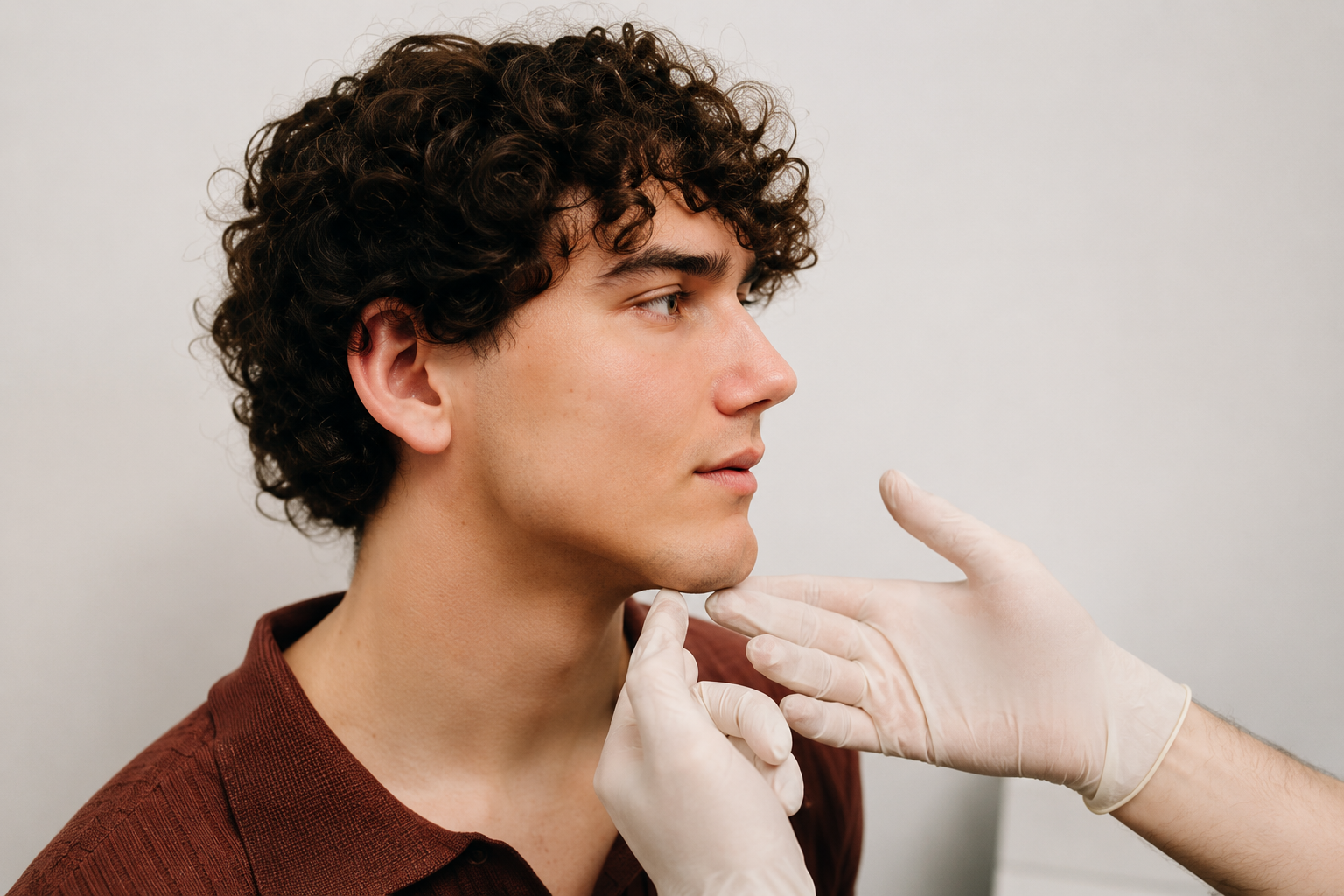
Jowl filler is a type of filler treatment that uses dermal fillers to sculpt and support the lower face, where lost volume has changed the line of the jaw. The product is placed around the jaw to provide structural support rather than sitting superficially on the skin.
Hyaluronic acid, the substance most jawline dermal fillers are based on, occurs naturally in the body, which is part of why these formulations are generally well tolerated and, in many cases, reversible if a change of plan is needed. The gel itself varies in density depending on the area being treated and the degree of support required.
In a jowl-specific application, filler is often injected into the skin and deeper layers of the skin along the mandibular border and the pre-jowl sulcus, the natural dip between the chin and the jowl, to help create a more continuous line along the jawline. The clinical approach is anatomy-led rather than a fixed formula, and forms part of a wider category of related treatments used to address changes in skin and structure across the lower face and jawline.
Who This Treatment May Suit
Jaw filler and jawline filler treatments in London may be considered by adults who notice softening around the jawline, a loss of definition along the jaw and chin, or early signs of sagging jowls that have developed gradually with age or volume loss. It is typically discussed during consultation as one option among several for lower-face concerns, including filler for men seeking a more defined jawline.
Suitability depends on factors including jaw and chin anatomy, skin elasticity, the degree of skin laxity present, and the patient’s goals. A clinical assessment is required before any treatment plan can be confirmed.
Improving Lower Face Definition and Jaw Contour
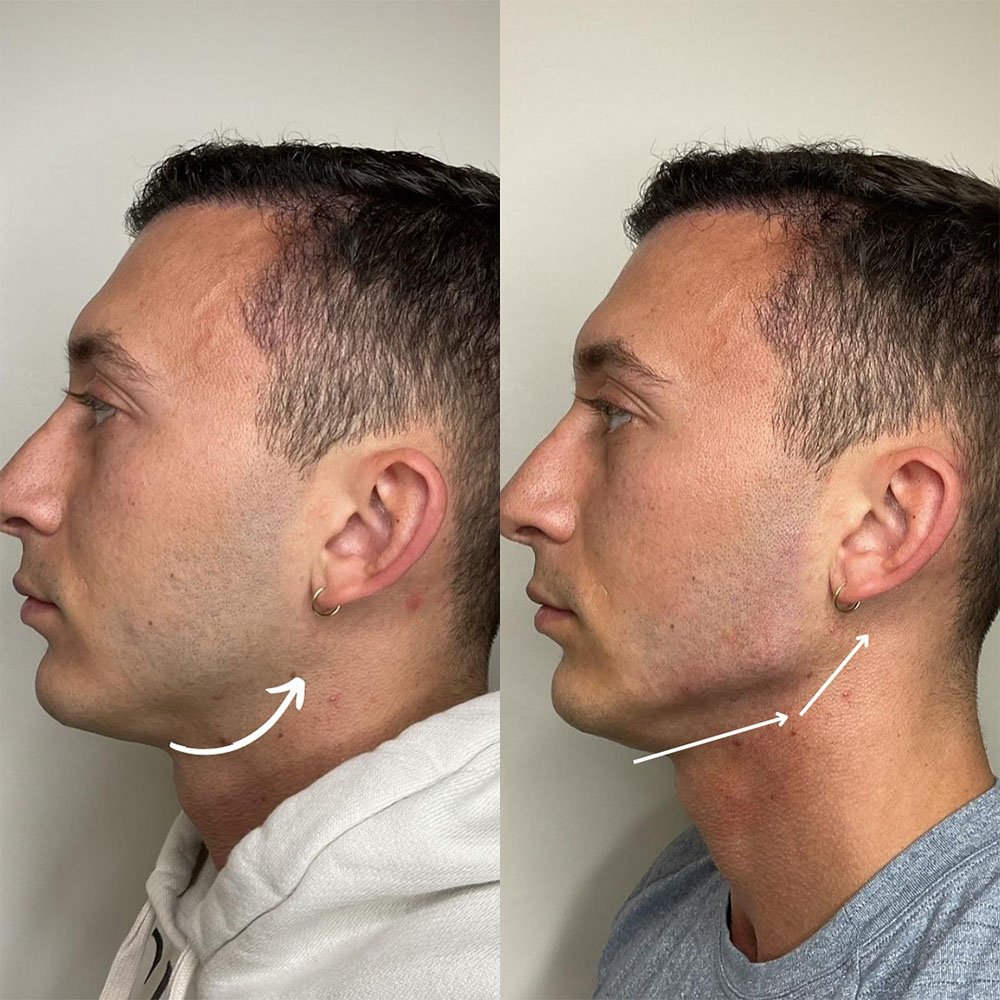
Patients often seek this treatment because they feel their jawline has become less distinct over time, with descending tissue and a reduction in collagen and elastin production in the skin contributing to a softer profile and, in some cases, the appearance of a double chin. Jowls filler treatment is intended to help restore jawline definition and re-establish a clearer transition between the jaw and neck.
Rather than aiming for a dramatic change, the approach is generally structured around subtle, proportionate improvement that respects each patient’s unique facial structure and existing facial features.
Consultation and Pricing
Treatment suitability, the personalised treatment plan, and final cost are confirmed after consultation and clinical assessment. Pricing depends on anatomy, treatment scope, product volume, number of areas treated, and clinical complexity.
The figures below represent general market guidance only, based on publicly advertised prices reviewed in June 2026 across 8 London clinics. These are not our clinic’s prices and may not include consultation fees, promotional offers, product volume differences, technique variation, or individual treatment planning.
- 1ml treatment: about £300–£500
- Per ml (broader treatment): about £350–£700
- Single treatment area: about £400–£700
- Full jawline and jowl contouring: about £700–£1,200
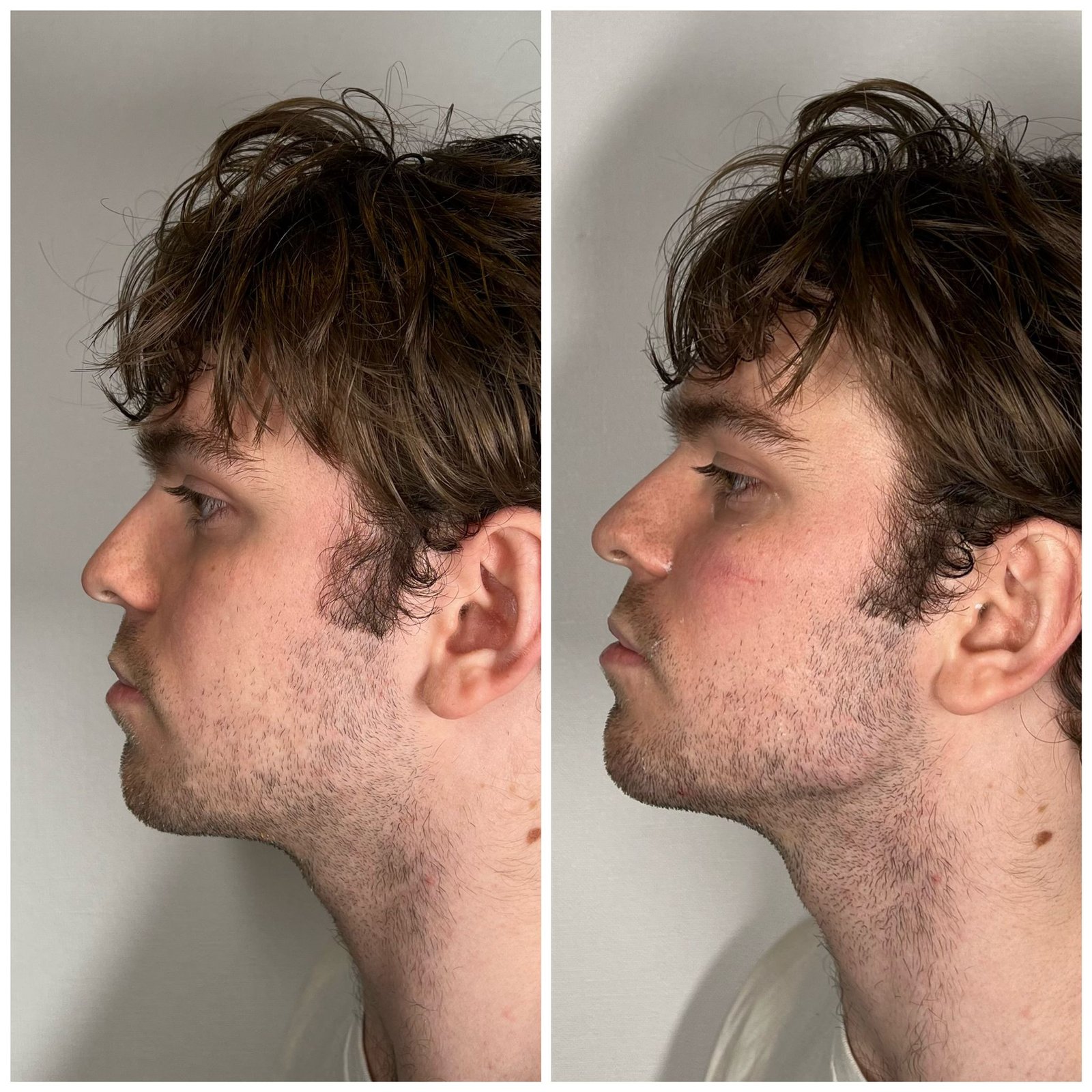
Before and After Jowl Filler
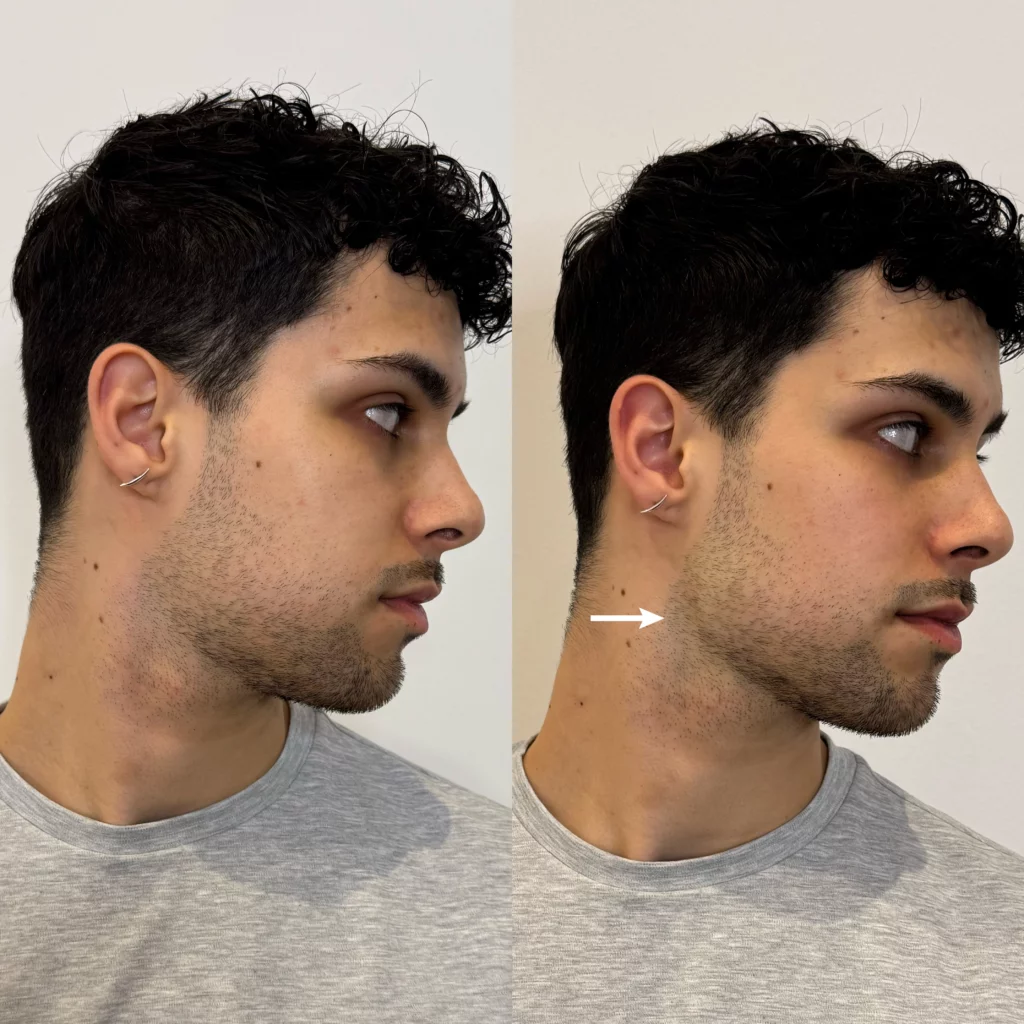
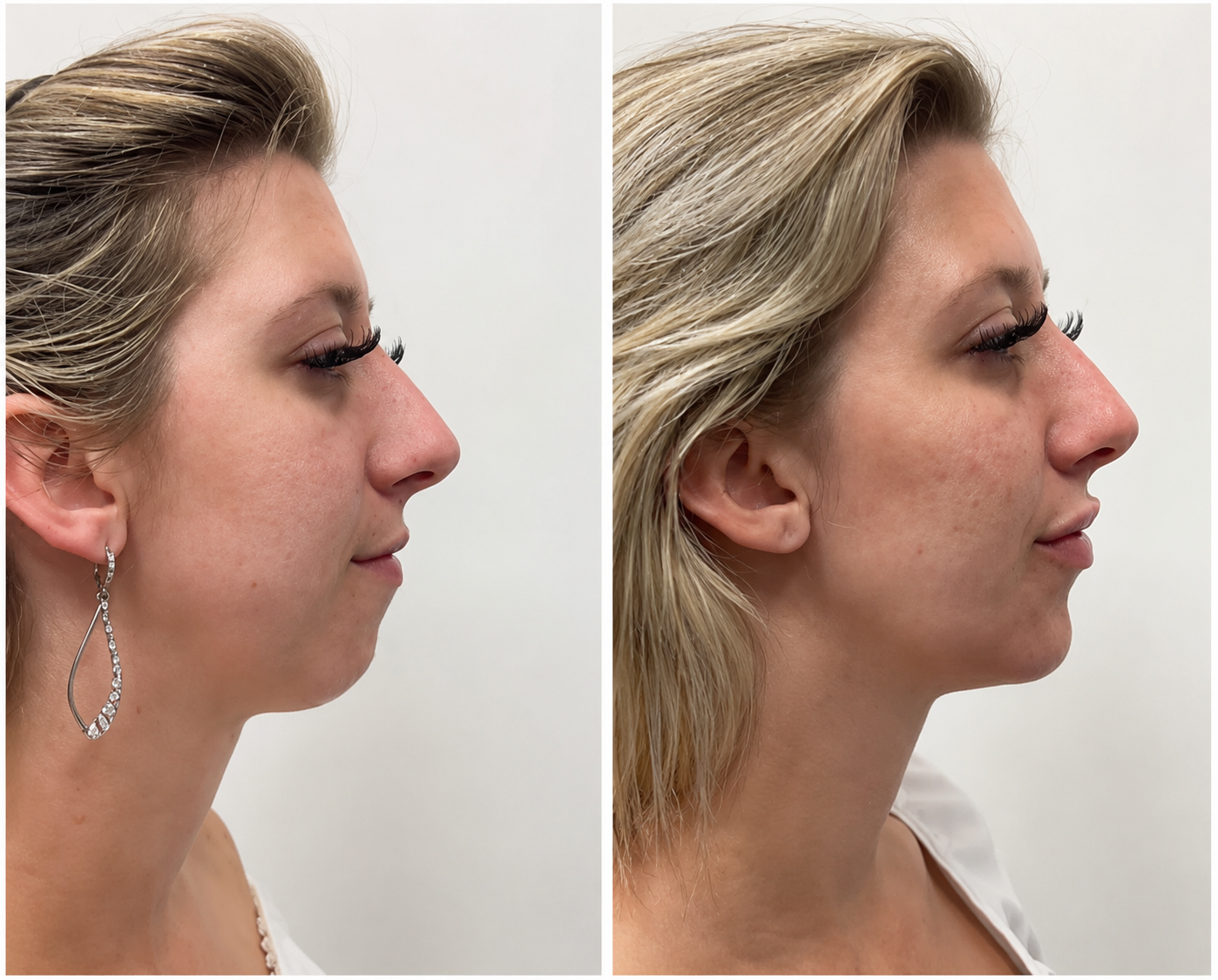
Jowl filler treatment is intended to improve the visual transition between the jaw and neck by addressing localised volume loss around the jawline. Structural changes of this kind tend to settle gradually as swelling resolves and the filler injections integrate with the surrounding tissue.
Visible changes patients may typically notice:
- A softer-looking transition between the jaw and the neck
- Reduced appearance of jowls and softened jowls along the mandible
- A more defined jawline on profile and at certain angles
- Improved balance between the chin and jawline and the cheek area
How Filler Placement Supports the Jaw Contour
Filler used for treating jowls is generally placed at a deeper level along the jawline, where it can provide structural support and add volume to the skin rather than simply sitting at the surface. This placement is intended to help the skin in the lower face read as a more continuous line.
The pre-jowl sulcus, where the chin meets the jowl, is often a focus area, since softening this specific dip can influence how the rest of the jawline appears. Product choice and placement are adapted to each patient’s tissue thickness and bone structure as part of a bespoke treatment plan.
- Filler placed along the mandibular border to firm the skin’s contour
- Pre-jowl sulcus addressed to smooth the jaw-to-jowl transition
- Denser, structural gels typically selected for the jowl area
- Volume distributed to maintain natural movement and expression
Results, Longevity and Recovery
Initial changes are often visible within a few days once any swelling has settled, with the final contour becoming clearer over the following two to three weeks as part of the natural ageing process being addressed gradually.
Reported longevity for jawline fillers in this area is generally in the region of nine to fourteen months, though this varies between individuals. Most patients experience minimal downtime, with some redness or swelling typically resolving within a few days.
- Initial change: visible within several days
- Fully settled appearance: around two to three weeks
- Reported longevity: approximately 9 to 14 months
- Recovery: minimal downtime; mild swelling or tenderness is common in the short term
Safety, Risks and Important Considerations
Dermal filler treatment for minor jowls or more pronounced sagging requires careful clinical assessment, an appropriate choice of product, a clear understanding of facial anatomy, and informed consent before any procedure begins. Every injectable treatment carries potential risks and considerations that should be discussed in advance.
Possible effects can include bruising, swelling, tenderness, asymmetry, or, less commonly, more significant complications, and these should be reviewed during consultation rather than assumed to be negligible. As with any non-surgical treatment, it should never be presented as without risk.
Consideration | Why It Matters | What Is Usually Assessed |
Anatomy of the jaw and chin | Determines safe injection depth and product placement | Bone structure, tissue thickness, and existing asymmetry |
Medical history | Certain conditions or medications can affect suitability | Allergies, bleeding risk, prior reactions to filler |
Product selection | Different gels behave differently around the jawline | Density, elasticity, and expected longevity |
Previous aesthetic treatments | Past filler, microneedling treatment, or other procedures can affect planning | Location, volume, and timing of prior treatment |
Realistic expectations | Helps ensure the plan matches achievable outcomes | Patient goals against anatomical possibility |
Why Choose London Aesthetics for Jowl Filler
Treatment at London Aesthetics is built around individual anatomical assessment, with planning led by clinical judgement rather than a standard package applied to every patient.

Our Specialists and Clinical Team
Jowl filler treatment at our clinic is delivered through a structured pathway combining aesthetic technique with appropriate medical oversight, where prescription products are involved.
- Angelika is a fully insured UK aesthetic practitioner with over eight years of international medical experience, holding an overseas medical degree and practising under full UK certification and insurance for injectable treatment.
- Dr. Ivan is a GMC-registered prescriber who provides the required face-to-face consultations and issues prescriptions for prescription-only products where clinically appropriate.

Personalised Treatment Planning
Every tailored treatment plan for jowl filler is developed from individual clinical assessment, taking into account anatomy, medical history, and the patient’s specific aesthetic goals before any product is selected.

Safety, Prescribing and Medical Standards
Where prescription-only products are required, Dr. Ivan provides the necessary consultation and prescribing, ensuring treatment follows a compliant pathway aligned with UK medical aesthetic standards.

Natural-Looking Results and Facial Balance
Angelika’s technique is centred on subtle, structured outcomes that aim to respect each patient’s existing facial proportions rather than impose a uniform or overly defined jawline on every face.

Aftercare and Ongoing Support
Patients receive specific aftercare guidance following treatment, along with the option of a follow-up review to assess how the area has settled and whether further planning is needed to ensure the treatment plan continues to suit the patient.
Treatment standards at a glance:
- Clinical assessment precedes every treatment plan
- Internationally trained technique within UK safety and insurance standards
- GMC-registered prescribing support where clinically required
- Aftercare guidance provided after each session
- Focus on proportionate, anatomy-led outcomes over standardised results
Angelika is an aesthetic practitioner and not a medical doctor. Where prescription-only products are clinically indicated, Dr. Ivan, a GMC-registered prescriber, carries out the necessary face-to-face consultation and prescribing. Treatment is available only to patients aged 18 and over.
Frequently Asked Questions
What does jowl filler do?
Jowl filler is a non-surgical treatment designed to support the lower face where soft tissue has settled, helping to soften the visual break between the jaw and the neck. It typically uses dermal fillers placed along the jawline and pre-jowl area to provide structural support rather than dramatic volumisation, offering an alternative to surgical correction for patients who want to address sagging skin without going under the knife. The aim is generally a more continuous jawline contour, determined during consultation based on individual anatomy.
Who is usually a suitable candidate for jowl filler?
Suitable candidates are typically adults who have noticed gradual softening around the jaw or early signs of sagging jowls that they would like to address. Suitability depends on several factors, including skin elasticity, the extent of skin laxity, jaw and chin anatomy, and any relevant medical history. Not everyone is automatically appropriate for this treatment, which is why a clinical assessment is carried out before any plan is agreed, helping to confirm whether jowl filler is a reasonable option for that individual’s concerns.
How painful is jowl filler?
Discomfort levels vary between patients and depend partly on individual sensitivity and the technique used. Many clinics apply a topical anaesthetic to the area beforehand to help minimise sensation during injection, and some filler products also contain a local anaesthetic component. Most patients describe the sensation as a brief pressure or mild stinging rather than significant pain, and this typically passes quickly once the injection is complete. Your practitioner can adjust the approach if additional comfort is needed.
How long do jowl filler results usually last?
Reported longevity for jawline fillers generally falls in the range of approximately nine to fourteen months, although this varies depending on the individual, the product used, and lifestyle factors such as metabolism. Some patients choose to return for a top-up before the effect has fully diminished, while others wait longer between sessions. Because results are not permanent, a maintenance plan is often discussed during consultation so expectations around timing and follow-up treatment are clear from the outset.
Are there risks or side effects with jowl filler?
As with any injectable treatment, jowl filler carries potential risks and should never be considered entirely without them. Commonly reported effects include temporary bruising, swelling, tenderness, or mild asymmetry in the days following treatment. Less common but more significant complications can occur, which is why a thorough clinical assessment and informed consent process take place before any treatment begins. Your practitioner will discuss the relevant risks specific to your anatomy and medical history during the consultation, before any decision to proceed is made.
Is there any downtime after a jowl filler?
Most patients experience minimal downtime following jowl filler treatment, though some redness, swelling, or tenderness around the injection sites is common in the first few days. These effects are usually temporary and tend to resolve as the area settles. Many people are able to return to their normal daily activities shortly after their appointment, though strenuous exercise and certain skincare products are often advised against for a short period. Specific aftercare guidance is provided after treatment to support a smooth recovery process.
Can jowl filler be dissolved or reversed?
Hyaluronic acid-based fillers, including those typically used for jowl treatment, can usually be dissolved using a specific enzyme if a patient wishes to reverse the effect or if a clinical adjustment is needed. This is one of the reasons hyaluronic acid fillers are often favoured over more permanent alternatives for this area. Dissolving is a separate clinical procedure that requires its own assessment and is not guaranteed to fully restore the pre-treatment appearance in every case. Your practitioner can discuss this option in more detail during the consultation.
How is the right treatment plan decided?
The treatment plan for jowl filler is developed following a face-to-face clinical assessment that considers jaw and facial anatomy, skin quality, medical history, and the patient’s specific goals. Product type, the amount used, and the precise injection technique are then selected based on these findings rather than applied as a standard package. Where prescription-only products form part of the plan, Dr. Ivan provides the required consultation and prescribing. This individualised approach is intended to ensure the proposed treatment is appropriate before any session is scheduled.