

Hyperpigmentation is one of the most common skin concerns seen in aesthetic and dermatology clinics, yet it is frequently misunderstood. The term describes any area of skin that appears darker than the surrounding tissue, and it can affect people of all skin tones, ages, and backgrounds. Understanding what causes hyperpigmentation — and why certain types respond differently to treatment — is essential before exploring any approach to managing it.
Key Takeaways
- Hyperpigmentation occurs when melanin, the pigment responsible for skin colour, is produced in excess or distributed unevenly within the skin.
- The most common causes include sun exposure, hormonal changes, post-inflammatory responses, and certain medications or medical conditions.
- Different types of hyperpigmentation have different underlying mechanisms, which means they respond differently to treatment.
- Skin tone influences both the likelihood of developing hyperpigmentation and the suitability of certain treatments.
- A professional assessment is important before starting any treatment, as the wrong approach can worsen pigmentation rather than improve it.
What Is Hyperpigmentation?
Hyperpigmentation is a broad term for any condition in which patches of skin become darker than the baseline skin tone. This darkening occurs because of an increase in melanin — the natural pigment produced by specialised cells called melanocytes — either in the amount produced, the way it is distributed, or both. Melanin itself is not harmful; it is the body’s primary defence against ultraviolet radiation. However, when melanin production becomes dysregulated, it can result in visible dark spots, patches, or uneven skin tone that many people find distressing.
Hyperpigmentation is not a single condition. It is an umbrella term that covers several distinct types, each with its own cause, depth within the skin, and response to treatment. Some forms are superficial, sitting within the outermost layers of the epidermis, while others are deposited more deeply in the dermis, making them considerably harder to treat. Correctly identifying the type and cause of hyperpigmentation is the first step toward selecting an appropriate management strategy.
How Melanin Production Becomes Disrupted
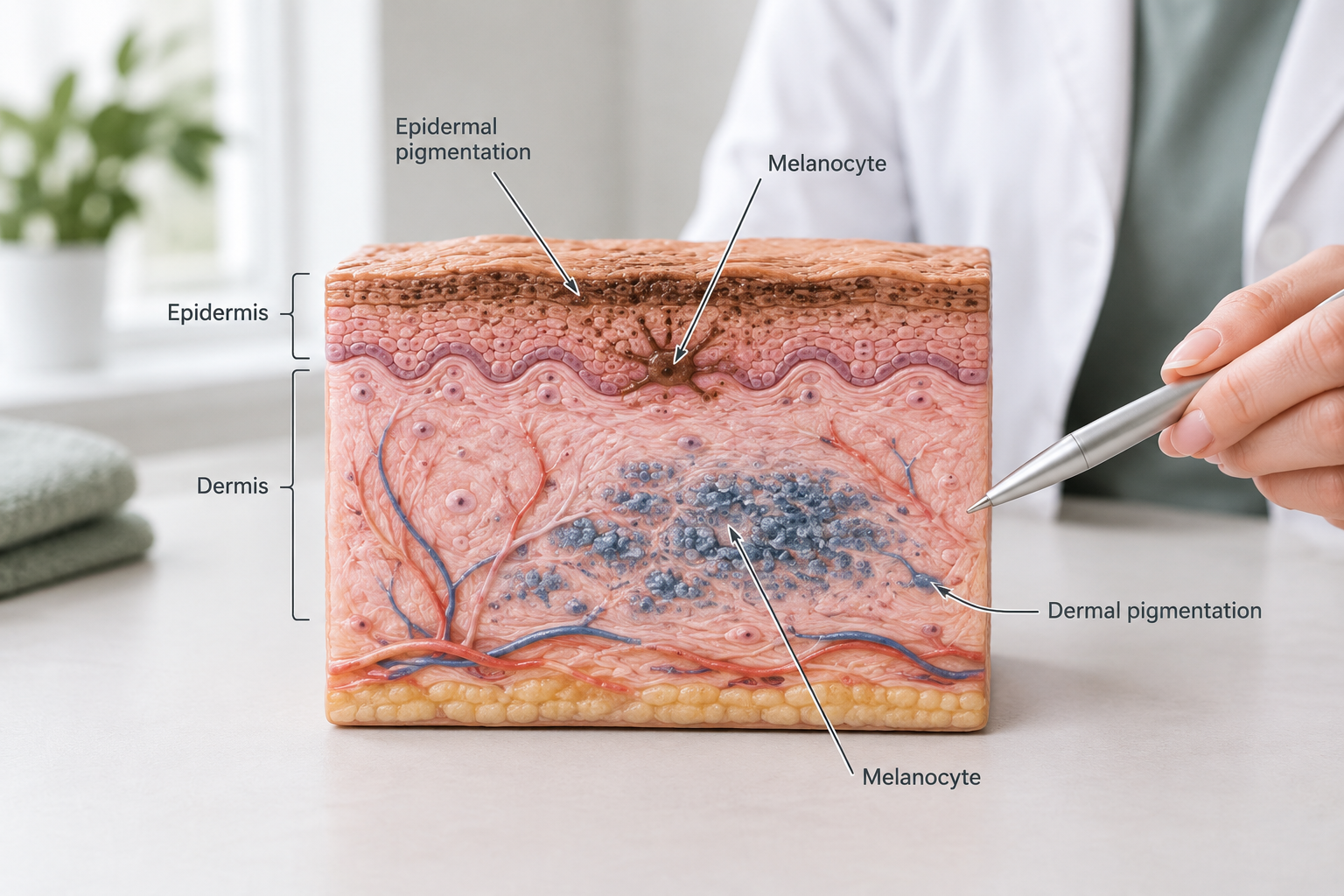
Melanocytes are found in the basal layer of the epidermis and produce melanin through a process called melanogenesis. The key enzyme involved is tyrosinase, which converts the amino acid tyrosine into melanin precursors. Under normal circumstances, melanin is transferred to surrounding keratinocytes (skin cells) in a regulated way, providing an even skin tone. When this process is disrupted — by UV radiation, inflammation, hormonal signals, or other triggers — melanocytes can overproduce melanin or distribute it unevenly, leading to localised darkening.
The depth at which excess melanin is deposited matters clinically. Epidermal pigmentation tends to appear brown and responds more readily to topical treatments and certain light-based therapies. Dermal pigmentation appears grey or blue-grey and is significantly more resistant to treatment. Mixed pigmentation, which involves both layers, is the most complex to address and often requires a combination approach over an extended period.
The Main Types of Hyperpigmentation
Recognising the specific type of hyperpigmentation helps explain why it developed and what may realistically be achieved with treatment.
Melasma
Melasma is a chronic form of hyperpigmentation characterised by symmetrical, irregular brown or grey-brown patches, most commonly appearing on the cheeks, forehead, upper lip, and chin. It is strongly associated with hormonal influences, particularly oestrogen and progesterone, which is why it is significantly more prevalent in women — especially during pregnancy, when it is sometimes called the “mask of pregnancy” — and in those using hormonal contraceptives or hormone replacement therapy. UV exposure is a major trigger and aggravating factor, even in people who already have melasma. Melasma tends to be a mixed epidermal and dermal condition, making it one of the more challenging types to treat. It is also prone to recurrence, particularly with ongoing sun exposure or hormonal fluctuation.
Post-Inflammatory Hyperpigmentation
Post-inflammatory hyperpigmentation (PIH) develops after skin injury or inflammation. When the skin experiences trauma — from acne, eczema, psoriasis, a burn, an insect bite, or even an aggressive cosmetic procedure — the inflammatory response can stimulate melanocytes to overproduce melanin as part of the healing process. The resulting dark marks are left behind after the original lesion has resolved. PIH is more common and tends to be more pronounced in people with medium to dark skin tones (Fitzpatrick skin types III to VI), because their melanocytes are inherently more active. In lighter skin tones, PIH may appear pink or red initially before transitioning to brown. With appropriate sun protection and time, mild PIH can fade on its own, though this process may take many months.
Solar Lentigines and Sun Damage
Solar lentigines — commonly called age spots, liver spots, or sun spots — are flat, well-defined brown patches that develop on areas of skin with cumulative sun exposure, such as the face, hands, forearms, and décolletage. They are caused by long-term UV radiation stimulating localised clusters of melanocytes to produce excess melanin. Unlike freckles, which are genetically determined and may fade in winter, solar lentigines tend to persist and gradually increase in number and size with age and continued sun exposure. They are most common in people over 40 but can appear earlier in those with significant UV exposure history or lighter skin types.
Freckles (Ephelides)
Freckles are small, flat, light-brown spots that result from a genetic predisposition to uneven melanin distribution in response to UV exposure. They are most common in people with fair skin and red or light hair and tend to be more visible in summer and less so in winter. Freckles are not a sign of skin damage in the same way that solar lentigines are, though they do indicate UV sensitivity. Many people choose to embrace freckles, while others seek to reduce their appearance.
Drug-Induced and Medical Hyperpigmentation
Certain medications can trigger hyperpigmentation as a side effect. These include some antimalarial drugs, tetracycline antibiotics, amiodarone (used for heart rhythm disorders), chemotherapy agents, and non-steroidal anti-inflammatory drugs used long-term. The mechanism varies: some drugs directly stimulate melanin production, others deposit pigment within the skin themselves, and some increase photosensitivity, making the skin more reactive to UV radiation. Medical conditions such as Addison’s disease, haemochromatosis, and some thyroid disorders can also cause diffuse or localised skin darkening. If medication or an underlying medical condition is suspected as a cause, this should be assessed by a doctor before any cosmetic treatment is considered.
Periorbital Hyperpigmentation
Dark circles under the eyes are a common concern that can involve true pigmentation, but they may also result from vascular visibility (where blood vessels show through thin under-eye skin), volume loss creating shadowing, or a combination of these factors. Periorbital hyperpigmentation as a distinct entity is more common in people with darker skin tones and has a genetic component. Distinguishing the underlying cause is important, because a treatment targeting pigmentation will not address hollowness or vascular discolouration, and vice versa.
Key Risk Factors and Triggers
Several factors increase the likelihood of developing hyperpigmentation or make existing pigmentation worse. Understanding these helps both in prevention and in managing expectations around treatment.
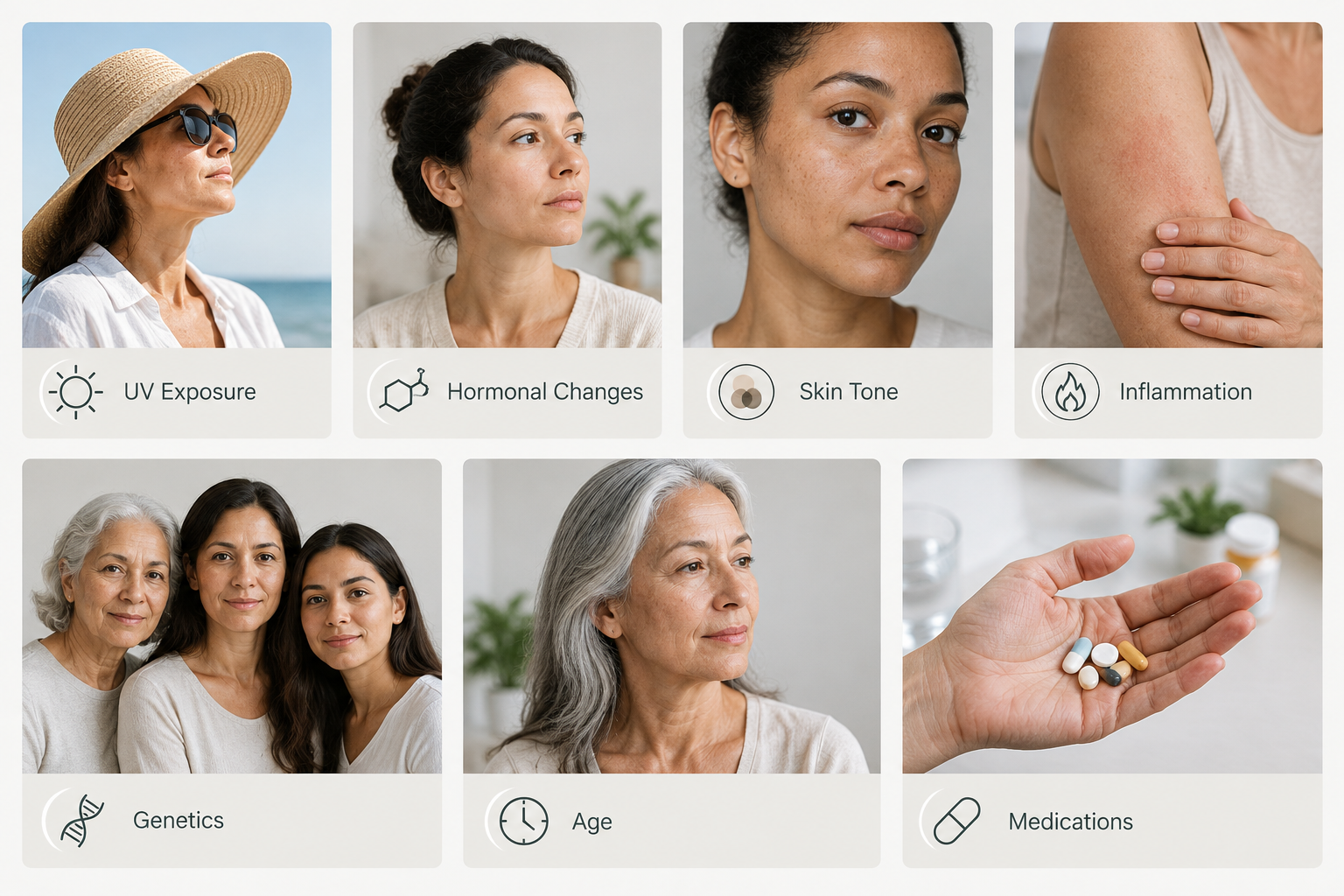
- UV exposure: Ultraviolet radiation is the single most significant external trigger for most forms of hyperpigmentation. It stimulates melanocyte activity directly and worsens virtually every type of pigmentation disorder. Consistent, broad-spectrum sun protection is considered foundational to any hyperpigmentation management plan.
- Hormonal changes: Pregnancy, hormonal contraception, and hormone replacement therapy are strongly associated with melasma. Hormonal fluctuations can activate melanocytes even in the absence of significant UV exposure, though UV remains an important co-trigger.
- Skin tone: People with medium to dark skin tones have more active melanocytes and are more prone to post-inflammatory hyperpigmentation. They also face a higher risk of certain treatments — such as laser therapy or chemical peels — causing PIH if not carefully selected and applied.
- Inflammation and skin trauma: Any process that causes skin inflammation — acne, eczema, injury, or an overly aggressive treatment — can trigger PIH. This is why treating active acne and managing inflammatory skin conditions is an important part of preventing pigmentation.
- Genetics: A family history of melasma, freckles, or other pigmentation conditions increases individual susceptibility.
- Age: Cumulative UV exposure over time increases the prevalence of solar lentigines and uneven skin tone. Skin cell turnover also slows with age, meaning pigmented cells take longer to shed naturally.
- Medications and medical conditions: As noted above, certain drugs and systemic conditions can directly cause or worsen hyperpigmentation.
How Hyperpigmentation Is Assessed
A thorough assessment by a qualified practitioner is important before any treatment is started. In a clinical setting, this typically involves a detailed history — including sun exposure habits, hormonal history, medications, previous skin treatments, and family history — alongside a visual examination of the affected areas. A Wood’s lamp (a UV light device) may be used to help determine whether pigmentation is primarily epidermal or dermal, as epidermal pigmentation becomes more visible under Wood’s lamp examination while dermal pigmentation does not. This distinction has practical implications for treatment selection.
It is also important to rule out conditions that can mimic hyperpigmentation but require medical rather than cosmetic management. Any pigmented lesion that is new, changing in size or colour, irregular in border, or associated with other symptoms should be evaluated by a dermatologist or doctor before cosmetic treatment is considered.
Treatment Approaches for Hyperpigmentation
Treatment for hyperpigmentation aims to reduce excess melanin production, accelerate the removal of pigmented cells, or both. No single treatment works equally well for all types of hyperpigmentation, and results vary considerably between individuals. A realistic expectation is improvement rather than complete elimination, particularly for deeper or more chronic pigmentation such as melasma.
Topical Treatments
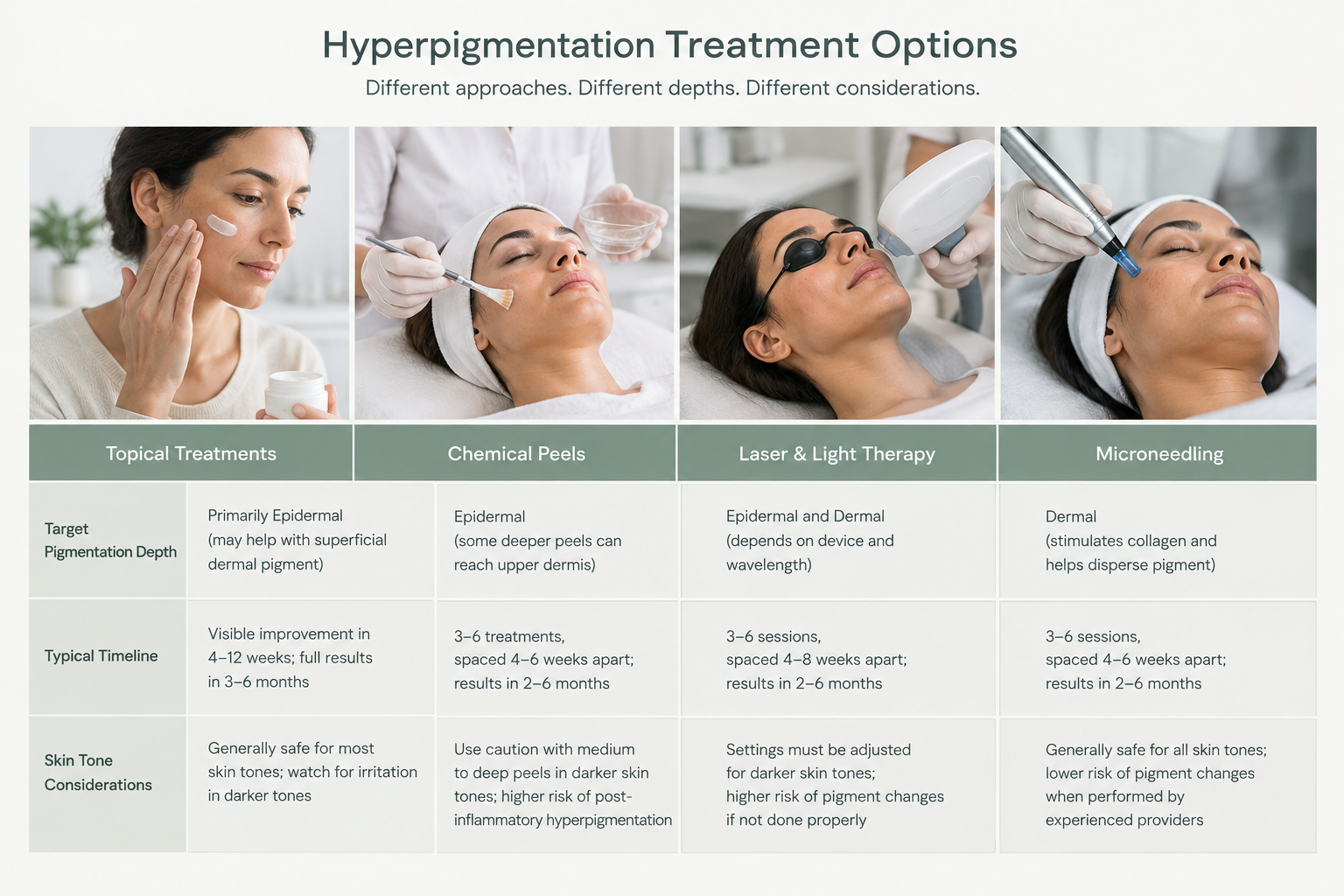
Topical agents are often the first line of management for hyperpigmentation. Ingredients with evidence supporting their use in reducing melanin production or accelerating pigment clearance include hydroquinone (a melanin synthesis inhibitor, available at varying strengths and subject to regulatory restrictions in some countries), azelaic acid, kojic acid, niacinamide, tranexamic acid, retinoids (including tretinoin), and vitamin C (ascorbic acid). These ingredients work through different mechanisms — some inhibit tyrosinase activity, others promote cell turnover, and some reduce the transfer of melanin to skin cells. Combination formulations are commonly used in clinical practice. Results from topical treatments typically require consistent use over several months and are maintained only with ongoing application and sun protection.
Chemical Peels
Chemical peels use acids — such as glycolic acid, lactic acid, salicylic acid, or trichloroacetic acid (TCA) — to exfoliate the skin and accelerate the removal of pigmented surface cells. Superficial peels may help with mild epidermal pigmentation, while medium-depth peels can address more established pigmentation. The depth of the peel must be carefully matched to the patient’s skin tone and pigmentation type, as peels that are too aggressive can trigger PIH, particularly in darker skin tones. Multiple sessions are usually required, and downtime varies from minimal (superficial peels) to several days of peeling and redness (medium-depth peels).
Laser and Light-Based Treatments
Laser treatments and intense pulsed light (IPL) therapy can target melanin in the skin using specific wavelengths of light energy. Devices such as Q-switched Nd:YAG lasers, picosecond lasers, and fractional lasers are used for various types of pigmentation. IPL is commonly used for solar lentigines and diffuse sun damage. These treatments can be effective for epidermal pigmentation in suitable candidates, but they carry a meaningful risk of PIH in people with darker skin tones and must be selected and calibrated carefully. Melasma, in particular, can worsen with certain laser treatments if not approached with caution. A practitioner experienced in treating diverse skin tones is essential.
Microneedling
Microneedling creates controlled micro-injuries in the skin to stimulate collagen production and, when combined with topical agents such as tranexamic acid or vitamin C, may help improve pigmentation. It is generally considered lower risk for darker skin tones than laser treatments, though PIH remains a possible side effect. Evidence for microneedling specifically for hyperpigmentation is still developing, and it is often used as part of a combination approach rather than as a standalone treatment.
Sun Protection as a Non-Negotiable Foundation
Broad-spectrum sunscreen with an SPF of 30 or higher, applied daily and reapplied throughout the day, is considered essential for anyone managing hyperpigmentation. UV exposure stimulates melanocyte activity and will undermine the results of any topical or procedural treatment. Physical sunscreens containing zinc oxide or titanium dioxide are often preferred for sensitive or reactive skin. Sun-protective clothing, hats, and avoiding peak UV hours are additional measures that support treatment outcomes.
Who Should Seek a Professional Assessment
Anyone experiencing new, changing, or unexplained skin darkening should seek a professional assessment rather than self-treating. This is particularly important if the pigmentation is associated with other symptoms, if it appears on unusual areas of the body, or if it has developed rapidly. People who have tried over-the-counter products without improvement, those with darker skin tones considering laser or peel treatments, and anyone with a history of melasma considering hormonal treatments or pregnancy should discuss their skin concerns with a qualified practitioner before proceeding.
A professional assessment can identify the type and likely cause of hyperpigmentation, rule out conditions requiring medical management, assess skin tone and sensitivity, and recommend a treatment plan that balances effectiveness with safety for the individual’s specific skin profile.
Frequently Asked Questions
Can hyperpigmentation go away on its own?
Some forms of hyperpigmentation, particularly mild post-inflammatory hyperpigmentation in lighter skin tones, may fade gradually over months without treatment, especially with consistent sun protection. However, melasma, solar lentigines, and deeper pigmentation are unlikely to resolve without active management. The timeline for natural fading varies considerably between individuals and skin types.
Is hyperpigmentation the same as melasma?
No. Melasma is one specific type of hyperpigmentation, characterised by its hormonal associations, symmetrical distribution, and tendency to affect the face. Hyperpigmentation is the broader term that includes melasma, post-inflammatory hyperpigmentation, solar lentigines, freckles, and other conditions involving excess melanin.
Does hyperpigmentation affect all skin tones equally?
Hyperpigmentation can affect any skin tone, but people with medium to dark skin tones (Fitzpatrick types III–VI) are more prone to certain types, particularly post-inflammatory hyperpigmentation, and may experience more pronounced pigmentation changes. They also face a higher risk of treatment-related PIH if certain procedures are not carefully selected and performed.
Can skincare products alone clear hyperpigmentation?
Topical treatments can meaningfully improve many types of epidermal hyperpigmentation with consistent use over several months, but they are unlikely to fully resolve deeper or more established pigmentation on their own. A combination of topical agents, professional treatments, and rigorous sun protection typically produces the best outcomes. Results vary between individuals and depend on the type and severity of pigmentation.
Is it safe to use skin-lightening products bought online?
Some over-the-counter skin-lightening products contain ingredients at concentrations that are safe and regulated, while others — particularly those sold without clear ingredient labelling — may contain mercury, high-concentration hydroquinone, or corticosteroids at levels that can cause serious harm, including skin damage, systemic toxicity, and paradoxical worsening of pigmentation. It is advisable to use only products from reputable sources and to seek professional guidance before starting any treatment for hyperpigmentation.
How long does treatment for hyperpigmentation take?
Treatment timelines vary depending on the type of hyperpigmentation, its depth, the treatments used, and individual skin response. Topical treatments typically require three to six months of consistent use before meaningful improvement is visible. Professional treatments such as chemical peels or laser therapy may show results more quickly, but usually require multiple sessions. Melasma in particular is a long-term condition that requires ongoing management rather than a one-time treatment.
Understanding Hyperpigmentation Before Choosing a Treatment Path
Hyperpigmentation is a complex and varied skin concern with multiple possible causes, each requiring a different approach. Identifying whether dark patches are the result of sun damage, hormonal changes, post-inflammatory responses, medication, or an underlying medical condition is not always straightforward, and the distinction matters significantly for treatment selection. Choosing the wrong treatment — or using an aggressive approach without professional guidance — can worsen pigmentation rather than improve it, particularly in people with darker skin tones.
If you are concerned about uneven skin tone, dark patches, or persistent pigmentation, a consultation with a qualified aesthetic practitioner or dermatologist is a sensible first step. A thorough assessment can clarify the type and cause of your hyperpigmentation, identify any factors that need to be addressed before treatment begins, and help you understand what realistic improvement may look like for your specific skin. Managing expectations is an important part of this process: most types of hyperpigmentation can be meaningfully improved with the right approach, but complete elimination is not always achievable, and maintenance is often required to sustain results over time.