

Milia under the eye are small, white or yellowish cysts that sit just beneath the surface of the skin and are among the most common concerns patients raise during aesthetic consultations. Although they are harmless, they can be persistent and difficult to remove without professional help, particularly in the delicate skin around the eye area. This article explains what milia are, why they form under the eyes, which removal methods are available, and what patients can realistically expect from treatment.
Key Takeaways
- Milia under the eye are small keratin-filled cysts that sit just below the skin surface and do not resolve on their own as reliably as milia elsewhere on the face.
- They are not caused by poor hygiene and are not contagious; they form when dead skin cells become trapped beneath the skin rather than shedding normally.
- Professional removal by a trained practitioner is the most reliable approach for under-eye milia, as the skin in this area is thin and sensitive.
- Several removal methods are available, including manual extraction, electrocautery, laser treatment, and chemical exfoliation, each with different suitability profiles.
- Preventive skincare adjustments may help reduce the likelihood of new milia forming after treatment.
What Are Milia?
Milia (singular: milium) are tiny epidermal inclusion cysts, typically measuring between one and three millimetres in diameter. They appear as firm, dome-shaped white or pale yellow bumps and are filled with keratin, the same structural protein that makes up hair and nails. Unlike whiteheads or pustules, milia have no visible pore opening and do not contain pus or sebum. They sit within the epidermis, the outermost layer of the skin, rather than deeper in the dermis.
Milia are classified as either primary or secondary. Primary milia arise spontaneously when keratin becomes trapped in small follicular structures or sweat ducts during normal skin cell turnover. Secondary milia develop in response to skin trauma, such as burns, blistering conditions, prolonged use of occlusive topical products, or certain dermatological procedures. Both types can appear under the eyes, though primary milia are more common in this location.
Why Do Milia Form Under the Eyes?
The skin beneath the eyes is significantly thinner than skin elsewhere on the face, with fewer sebaceous glands and a more delicate structure. This anatomy makes the under-eye area particularly prone to keratin becoming trapped rather than shedding through normal desquamation. When dead skin cells cannot reach the surface and exfoliate naturally, they accumulate and form a small cyst.
Several factors may contribute to the development of milia in this area. Heavy or occlusive eye creams and makeup products can create a barrier that interferes with normal skin cell shedding. Sun damage over time can thicken the outer layers of the skin and impair the natural exfoliation process. Certain skincare ingredients, particularly rich emollients and some mineral-based formulations, may also be associated with milia formation in susceptible individuals, though the relationship is not fully established for every product type.
Genetics also plays a role. Some people are simply more prone to developing milia regardless of their skincare habits. Age is another contributing factor, as the skin’s natural cell turnover rate slows with time, making it easier for keratin to become trapped. Milia under the eyes are seen across all age groups, including newborns, though in infants they typically resolve without intervention within a few weeks.
Can Milia Under the Eye Resolve Without Treatment?
In newborns and young infants, milia almost always resolve spontaneously within the first few weeks of life as the skin matures. In adults, primary milia under the eyes occasionally resolve on their own over several months, but this is less predictable than in infants. Many adult milia persist indefinitely without any intervention because the cyst wall is intact and there is no natural pathway for the keratin contents to escape.
Secondary milia, which develop after skin trauma or as a response to a topical product, may resolve if the underlying cause is removed, but this is not guaranteed. Attempting to squeeze or pick at milia at home is not recommended, particularly in the under-eye area. The skin here is fragile, and improper manipulation can cause bruising, scarring, post-inflammatory hyperpigmentation, or infection without successfully removing the cyst.
Professional Milia Removal Methods
A qualified practitioner can assess the milia and recommend the most appropriate removal method based on the number of cysts, their depth, the patient’s skin type, and any relevant medical history. Several established techniques are used for under-eye milia removal, and the choice between them depends on clinical judgement rather than a single universal approach.
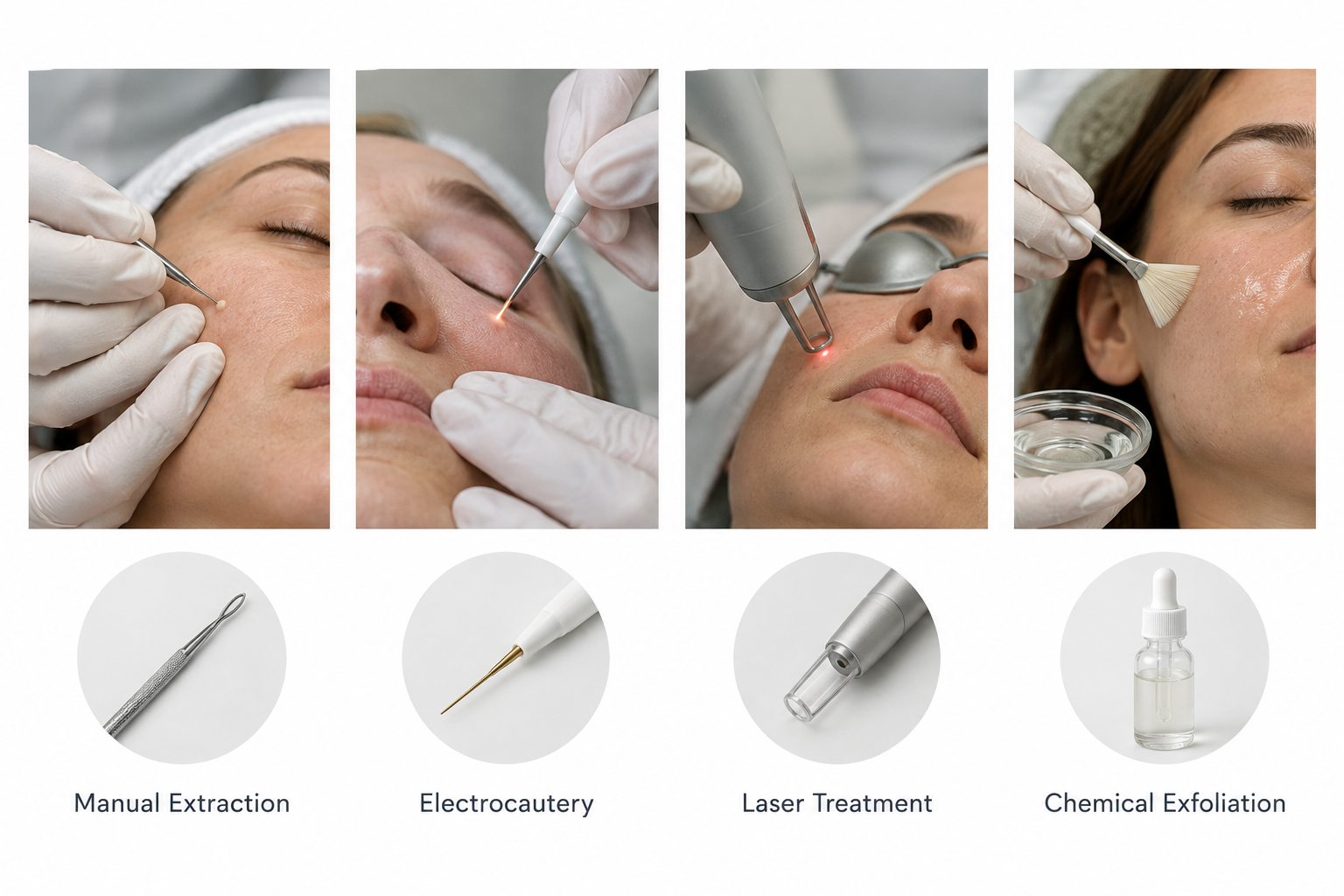
Manual Extraction
Manual extraction is the most widely used method for removing milia and is generally considered the first-line approach for accessible, superficial cysts. The practitioner uses a sterile lancet or fine needle to create a small opening in the skin over the milium, then gently expresses the keratin contents using a comedone extractor or light manual pressure. When performed correctly by a trained professional, manual extraction is precise, immediate, and leaves minimal marking in most cases.
Because the under-eye skin is thin and close to the eye itself, manual extraction in this area requires care and experience. Patients may notice mild redness or a small mark at the extraction site, which typically settles within a day or two. The risk of scarring is low when the procedure is performed by a skilled practitioner, but it is not zero, particularly if the cyst is deeper or the skin is fragile.
Electrocautery and Diathermy
Electrocautery, sometimes called diathermy or electrodesiccation, uses a fine electrical current to precisely destroy the cyst wall and contents. A very fine probe delivers a controlled amount of heat energy to the milium, causing it to break down. This method can be effective for milia that are slightly deeper or more resistant to manual extraction, and it allows the practitioner to treat multiple cysts in a single session.
The under-eye area requires particular caution with electrocautery due to the proximity of the eye and the thinness of the surrounding skin. Protective eye shields are typically used during treatment. Mild crusting or a small scab may form at the treated site and usually resolves within one to two weeks. There is a small risk of post-inflammatory pigmentation, particularly in patients with darker skin tones, and this should be discussed during the consultation.
Laser Treatment
Certain laser systems, including ablative fractional lasers and carbon dioxide lasers, can be used to treat milia by precisely vaporising the cyst contents and wall. Laser treatment may be particularly useful when there are multiple milia spread across a wider area, or when a patient also wishes to address other skin quality concerns such as fine lines or skin texture around the eyes at the same time.
Laser treatment for under-eye milia typically requires protective eye shields and may involve a short period of redness and mild swelling after the procedure. Recovery time varies depending on the laser type and settings used. Ablative approaches generally involve more downtime than non-ablative options. Laser treatment for milia is not universally available and may not be the most cost-effective approach for a small number of isolated cysts. A practitioner can advise whether laser treatment is appropriate based on the clinical picture.
Chemical Exfoliation
Topical chemical exfoliants, including retinoids and alpha-hydroxy acids such as glycolic acid, are sometimes used as part of a longer-term management strategy for milia-prone skin rather than as a direct removal method. These ingredients work by accelerating skin cell turnover, which may help prevent new milia from forming and can, over time, encourage superficial milia to migrate closer to the skin surface where they may resolve more easily.
Chemical exfoliation is generally not a rapid solution for established milia under the eyes. Retinoids in particular require careful use in the under-eye area due to the sensitivity of the skin, and they are not suitable for everyone, including those who are pregnant or breastfeeding. A skincare professional or dermatologist can advise on appropriate formulations and concentrations for the periorbital area.
What Happens During a Milia Removal Appointment?
A milia removal consultation typically begins with the practitioner examining the affected area to confirm the diagnosis and assess the number, size, and depth of the cysts. It is important to distinguish milia from other skin conditions that can appear similar, such as syringomas, xanthelasma, or closed comedones, as these require different management approaches.
Once the appropriate removal method has been agreed, the skin is cleansed and, depending on the technique, a topical anaesthetic cream may be applied to improve comfort, though many patients find manual extraction tolerable without anaesthesia. The procedure itself is usually brief, often taking between fifteen and thirty minutes depending on the number of milia being treated. Patients can typically return to their normal activities the same day, though the treated area may appear slightly red or marked for a short period.
A follow-up appointment may be recommended to assess healing and to address any remaining or new milia. Patients with a tendency to develop milia repeatedly may benefit from periodic maintenance appointments alongside adjustments to their skincare routine.
Risks and Limitations of Under-Eye Milia Removal
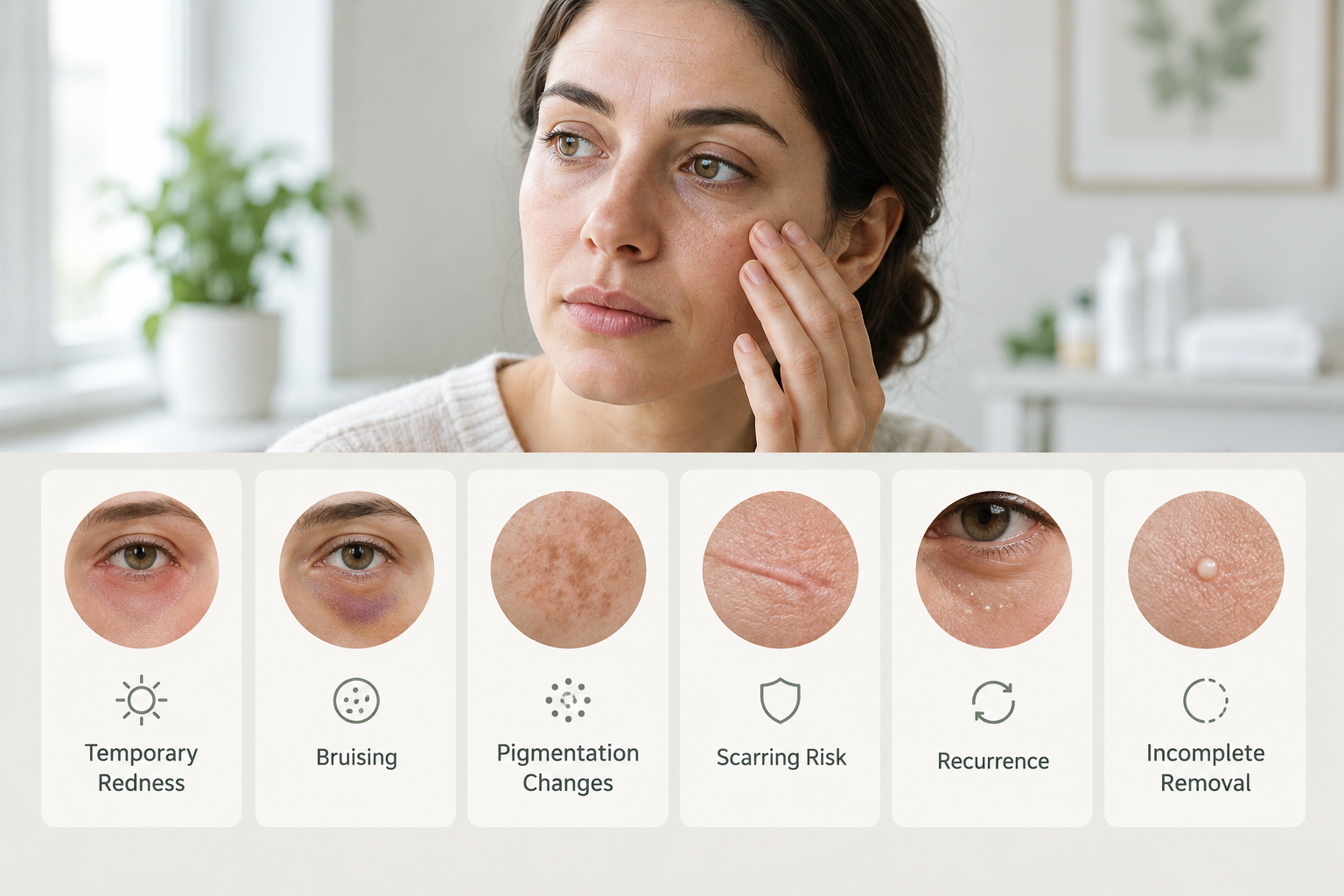
Milia removal under the eyes is generally considered a low-risk procedure when performed by a trained and experienced practitioner, but it is not without potential side effects. Understanding these before treatment helps patients make an informed decision.
- Temporary redness and marking: Mild redness, a small mark, or a tiny scab at the extraction site is common and usually resolves within a few days.
- Bruising: The under-eye area has a rich blood supply and delicate skin, making bruising a possibility, particularly with manual extraction or electrocautery.
- Post-inflammatory hyperpigmentation: Patients with medium to darker skin tones may be at higher risk of temporary darkening at the treated site. This usually fades over weeks to months but can occasionally be more persistent.
- Scarring: The risk of scarring is low with appropriate technique but increases if the skin is manipulated too aggressively or if aftercare instructions are not followed.
- Recurrence: Milia can recur after removal, particularly if the underlying contributing factors, such as occlusive skincare products or impaired skin cell turnover, are not addressed.
- Incomplete removal: Deeper milia may not be fully removed in a single session and may require a follow-up treatment.
Patients should inform their practitioner of any relevant medical history, including bleeding disorders, skin conditions such as eczema or rosacea in the treatment area, a history of keloid scarring, or any medications that may affect skin healing or sensitivity.
Who May Be Suitable for Professional Milia Removal?
Most adults with confirmed milia under the eyes are potential candidates for professional removal. Suitability depends on a clinical assessment rather than a simple checklist, but the following factors are generally relevant.
Patients who are likely to benefit most are those with persistent milia that have not resolved over several months, those who find the appearance of milia under the eyes a source of concern, and those who have already tried adjusting their skincare routine without improvement. Patients with a small number of superficial milia are often well suited to manual extraction as a straightforward first approach.
Certain patients may require additional consideration or may not be suitable for specific removal methods. These include patients who are pregnant or breastfeeding, those with active skin infections or inflammatory skin conditions in the treatment area, those with a history of abnormal scarring, and those taking medications such as anticoagulants that increase bleeding risk. A thorough consultation allows the practitioner to identify the most appropriate approach for each individual.
Skincare Adjustments to Help Prevent Milia Recurrence
Removing existing milia does not prevent new ones from forming if the contributing factors remain unchanged. Reviewing and adjusting the skincare routine used around the eyes is an important part of long-term management for milia-prone individuals.
Switching from heavy, occlusive eye creams to lighter, non-comedogenic formulations may help reduce the likelihood of new milia developing. Incorporating a gentle exfoliating ingredient, such as a low-concentration retinol or a mild hydroxy acid, into the skincare routine can support more regular skin cell turnover, though these should be introduced gradually and with appropriate sun protection. Avoiding excessive layering of products around the eye area and ensuring that makeup is thoroughly removed each evening are also practical steps that may help.

Sun protection is relevant because cumulative ultraviolet exposure can impair the skin’s natural exfoliation process and contribute to the thickening of the outer skin layers. Using a broad-spectrum sunscreen daily and wearing sunglasses that provide UV protection around the eye area are sensible preventive measures.
Alternatives to Professional Removal
For patients who are not ready for a clinical procedure or who have very superficial milia, some practitioners may suggest a period of consistent use of topical retinoids or exfoliating acids as an initial approach. These are not guaranteed to remove established milia but may support skin cell turnover and prevent new cysts from forming.
Facial treatments such as microdermabrasion or superficial chemical peels may also be discussed as adjunctive options for patients with milia-prone skin, as they can help maintain a more regular exfoliation cycle. However, these treatments are generally not sufficient to remove established milia on their own and are more useful as part of a preventive maintenance strategy.
It is worth noting that no over-the-counter product is clinically established to reliably remove existing milia. Products marketed specifically for milia removal should be approached with realistic expectations, and any product applied near the eyes should be chosen carefully to avoid irritation or damage to the delicate periorbital skin.
Frequently Asked Questions
Are milia under the eyes dangerous?
Milia are benign and do not pose any health risk. They are not contagious, do not become cancerous, and do not affect vision or eye health. The primary reason patients seek removal is cosmetic concern rather than medical necessity.
Can I remove milia under my eyes at home?
Attempting to squeeze, pierce, or pick at milia at home is not recommended, particularly in the under-eye area. The skin here is very thin and close to the eye, and improper manipulation can cause bruising, scarring, infection, or post-inflammatory pigmentation without successfully removing the cyst. Professional removal by a trained practitioner is the safer and more reliable approach.
How many sessions will I need?
Many patients have their milia successfully removed in a single appointment. However, the number of sessions required depends on how many milia are present, their depth, and whether new milia develop after treatment. Patients with a tendency to form milia repeatedly may benefit from periodic maintenance appointments.
Will milia removal leave a scar?
The risk of scarring from professional milia removal is low when the procedure is performed correctly by an experienced practitioner. A small temporary mark or scab at the extraction site is common but usually heals without permanent scarring. Following aftercare instructions, including avoiding picking at any crusting, helps minimise this risk.
How long does it take for the skin to heal after milia removal?
Most patients see the treated area settle within a few days to two weeks, depending on the removal method used. Manual extraction typically involves the shortest recovery, while electrocautery or laser treatment may involve a slightly longer healing period. The practitioner will provide specific aftercare guidance based on the method used.
Can milia come back after removal?
Yes, milia can recur after removal, particularly if the underlying contributing factors are not addressed. Adjusting the skincare routine, incorporating appropriate exfoliation, and protecting the skin from sun damage may help reduce the likelihood of recurrence, but there is no guarantee that new milia will not form.
Is milia removal painful?
Most patients find professional milia removal tolerable. Manual extraction may cause a brief sensation of pressure or mild discomfort. Electrocautery and laser treatment may involve a slight stinging sensation. Topical anaesthetic cream can be applied beforehand to improve comfort if needed.
Is Professional Milia Removal Under the Eye Worth Considering?
For patients with persistent milia under the eyes that have not resolved on their own and are causing cosmetic concern, professional removal is a well-established and generally straightforward option. The procedure is typically brief, recovery is usually short, and the results are immediate in most cases. The main limitations to consider are the possibility of recurrence if contributing factors are not addressed, the small risk of temporary side effects such as bruising or pigmentation changes, and the fact that the under-eye area requires particular care due to its delicate anatomy.
Choosing a practitioner with experience in periorbital skin treatments is important, as the proximity of the eye and the thinness of the surrounding skin mean that technique and clinical judgement matter. A thorough consultation before any procedure allows the practitioner to confirm the diagnosis, discuss the most appropriate removal method for the individual, and set realistic expectations about outcomes and aftercare.
If you are considering milia removal under the eyes, a consultation with a qualified aesthetic practitioner or dermatologist is the appropriate first step. They can assess your specific situation, explain the options available, and help you decide on the most suitable approach for your skin.