

Milia are small, white or yellowish cysts that sit just beneath the skin’s surface, most commonly appearing around the eyes, nose, and cheeks. Although they are harmless, many people find them cosmetically frustrating because they do not respond to squeezing or standard skincare in the way that a typical spot would. Understanding what milia are, why they form, and which removal methods are genuinely safe can help you make an informed decision about how to address them.
Key Takeaways
- Milia are keratin-filled cysts that sit beneath the skin’s surface and cannot be safely squeezed out at home without risk of scarring or infection.
- Professional extraction by a trained practitioner is the most reliable and safest removal method for established milia.
- Topical retinoids and gentle exfoliation may help prevent new milia from forming and can support clearance of superficial cysts over time.
- Most milia in newborns resolve on their own within a few weeks and do not require treatment.
- Secondary milia linked to skin conditions, medications, or trauma may require a different management approach than primary milia.
What Are Milia and Why Do They Form?
Milia are tiny epidermal inclusion cysts filled with keratin, a protein naturally produced by skin cells. Unlike a whitehead or comedone, milia are not connected to a pore opening, which is why they cannot be cleared by washing or gentle pressure. The keratin becomes trapped beneath a thin layer of skin and forms a firm, pearlescent bump that typically measures between one and two millimetres in diameter.
Dermatologists classify milia into two main categories. Primary milia arise spontaneously when dead skin cells become trapped in small pockets near hair follicles or sweat glands. They are particularly common in newborns, where they affect up to half of all babies and resolve without intervention within a few weeks. In adults, primary milia most often appear around the eyelids and on the cheeks. Secondary milia develop as a result of skin damage or an underlying condition. Causes include blistering skin disorders such as epidermolysis bullosa or bullous pemphigoid, prolonged use of topical corticosteroids, dermabrasion, laser resurfacing, burns, or certain medications. Identifying whether milia are primary or secondary matters because secondary milia may require treatment of the underlying cause alongside any cosmetic removal.
Heavy occlusive skincare products, particularly those containing petrolatum, lanolin, or certain mineral oils, are sometimes associated with milia formation around the eye area in adults, though the relationship is not fully established in clinical literature. Sun-damaged skin may also be more prone to milia because ultraviolet exposure can impair the skin’s normal exfoliation process.
Can You Remove Milia at Home?
Attempting to extract milia at home by squeezing, picking, or using a needle carries a meaningful risk of scarring, post-inflammatory hyperpigmentation, and bacterial infection, particularly around the delicate skin near the eyes. Because milia sit beneath an intact layer of epidermis rather than within an open pore, applying pressure rarely dislodges the cyst and more often causes surrounding tissue damage. Home extraction is not recommended by dermatologists or aesthetic practitioners.
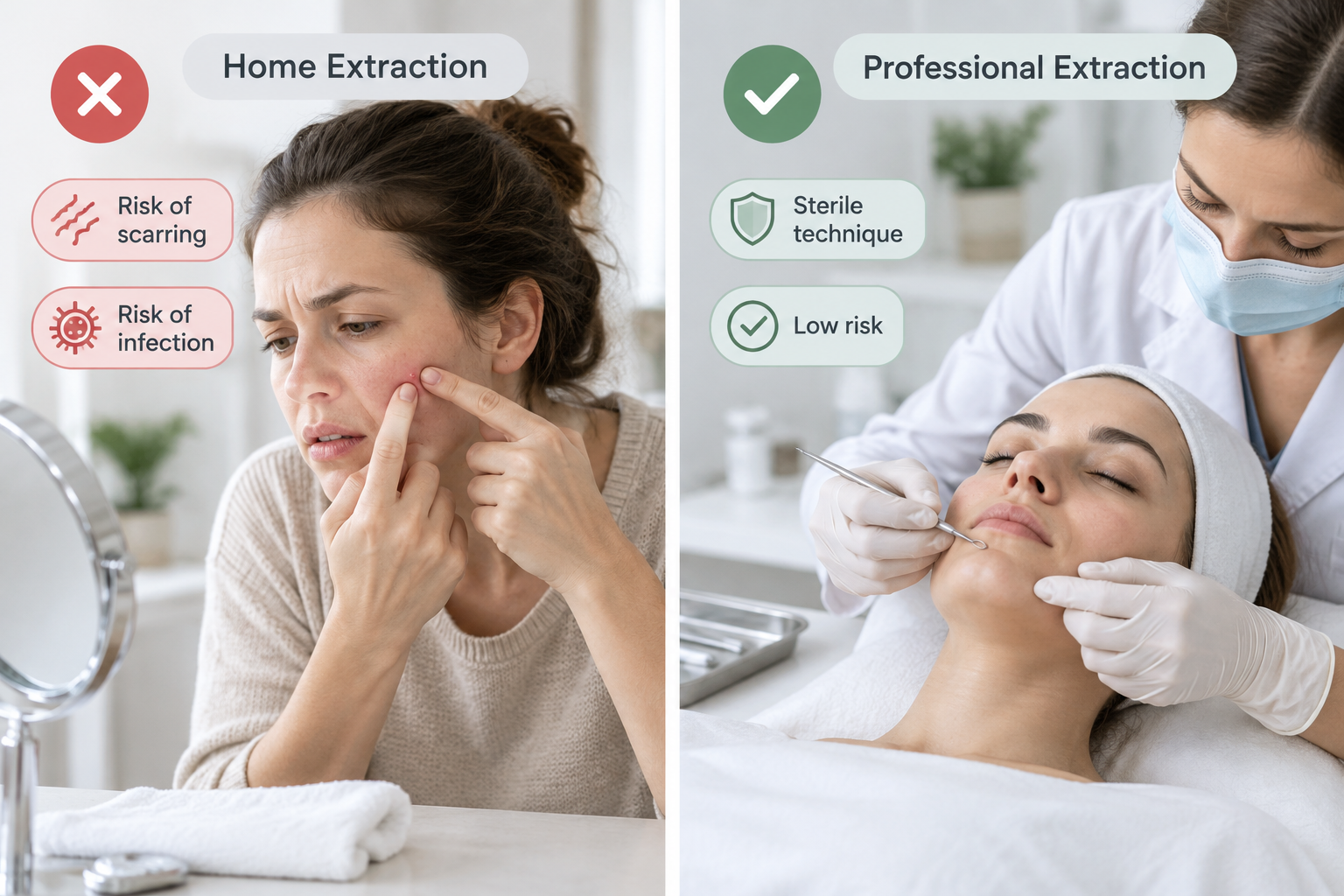
There are, however, supportive measures that may help prevent new milia from forming and may encourage gradual clearance of very superficial cysts over several weeks or months. These approaches work by promoting skin cell turnover rather than physically removing the cyst.
Gentle Chemical Exfoliation
Alpha hydroxy acids such as glycolic acid and lactic acid, and beta hydroxy acids such as salicylic acid, can help accelerate the shedding of dead skin cells from the surface. Used consistently in appropriate concentrations, these ingredients may thin the overlying skin enough to allow superficial milia to resolve more quickly. They are not a rapid solution and are unlikely to clear established or deeper milia on their own. Products containing these acids should be introduced gradually, particularly around the eye area where skin is thinner and more reactive.
Topical Retinoids
Retinoids, including over-the-counter retinol and prescription-strength tretinoin, promote cellular turnover and may help prevent keratin from accumulating beneath the skin’s surface. Some dermatologists recommend low-concentration retinoid formulations as part of a longer-term strategy for milia-prone skin. Results are gradual and typically take several weeks to months to become apparent. Retinoids are not suitable during pregnancy and can cause initial dryness, redness, and peeling, so they should be introduced carefully and used with adequate sun protection.
Reviewing Your Skincare Products
If milia are appearing repeatedly in the same area, reviewing the ingredients in your moisturisers, eye creams, and sunscreens may be worthwhile. Switching to lighter, non-comedogenic formulations may reduce the likelihood of new cysts forming, though this alone will not remove existing milia.
Professional Milia Removal Methods
Professional removal by a qualified practitioner remains the most effective and safest approach for clearing established milia. Several techniques are used in clinical and aesthetic settings, and the most appropriate method depends on the number of milia, their location, depth, and the patient’s skin type.
Manual Extraction
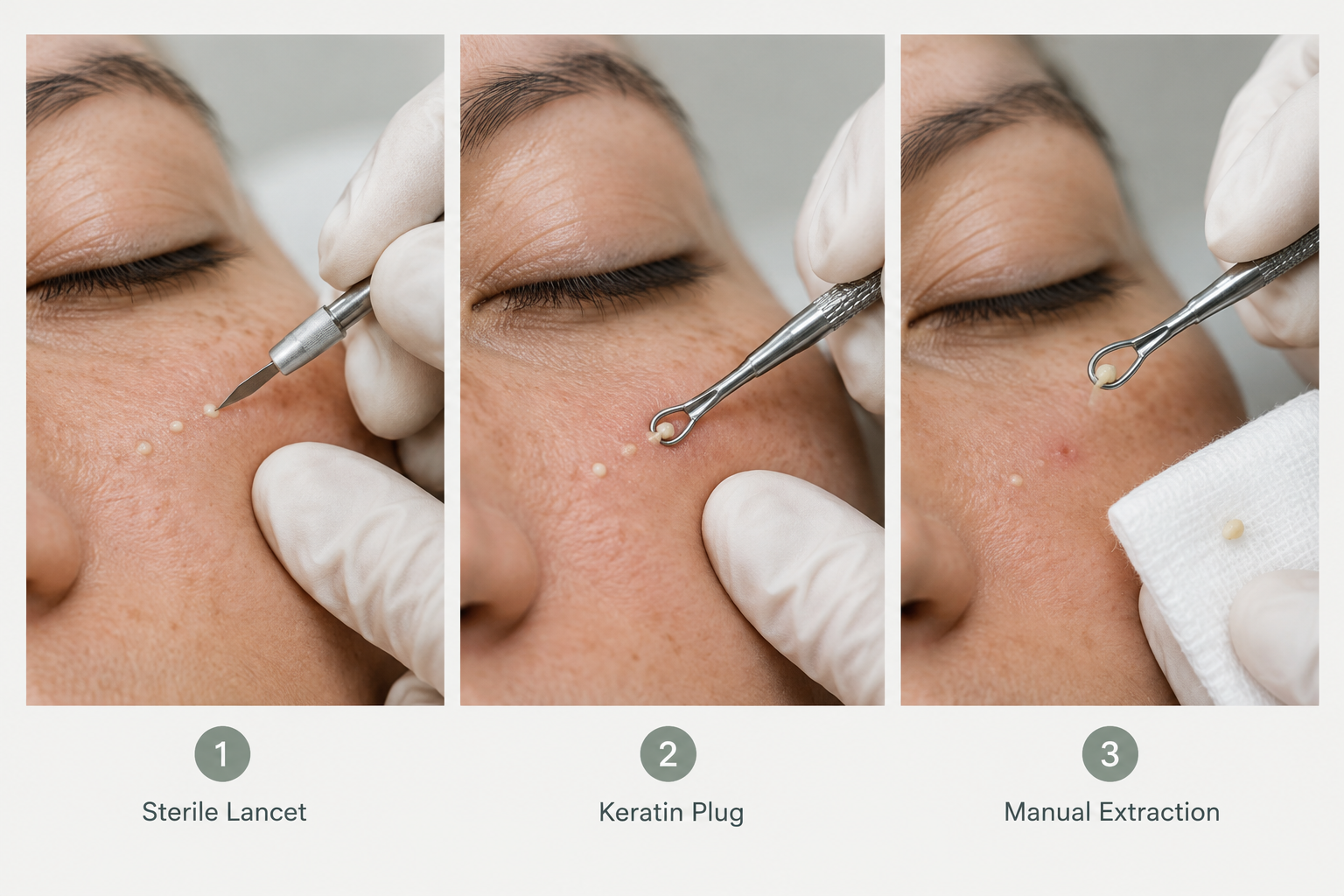
Manual extraction is the most widely used professional technique for milia removal. The practitioner uses a sterile lancet or fine needle to make a small incision in the overlying skin, then gently expresses the keratin plug using a comedone extractor or light manual pressure. When performed correctly in a clinical environment, the procedure is precise, causes minimal trauma to surrounding tissue, and leaves no significant mark in most cases. Mild redness at the treatment site typically resolves within a few hours to a day. The procedure itself is usually well tolerated, though some patients describe a brief sharp sensation at the moment of incision.
It is important that manual extraction is carried out by a trained professional rather than attempted at home. Practitioners working in aesthetic clinics, dermatology practices, or medical spas are appropriately trained to perform this procedure safely. Attempting the same technique without proper training, sterile equipment, and adequate lighting significantly increases the risk of complications.
Electrocautery and Diathermy
Electrocautery uses a fine electrical current to precisely destroy the milia cyst. A small probe delivers controlled heat to the lesion, causing the keratin contents to break down. This technique can be particularly useful for milia that are too small or too numerous for individual manual extraction, and it may be preferred for milia located in areas where incision is less practical. Minor crusting or scabbing at the treated site is expected and usually resolves within one to two weeks. There is a small risk of post-inflammatory pigmentation, particularly in individuals with darker skin tones, so this should be discussed with the practitioner beforehand.
Laser Treatment for Milia
Certain laser systems, including ablative fractional lasers and carbon dioxide lasers, can be used to vaporise milia. Laser treatment may be considered when milia are numerous, when they are located in areas that are difficult to treat manually, or when a patient also wishes to address surrounding skin texture or sun damage at the same time. Laser milia removal typically involves a short recovery period during which the skin may appear red and feel sensitive. The risk of pigmentation changes is relevant here as well, and a thorough consultation including a discussion of skin type and photosensitivity is important before proceeding.
Chemical Peels
Medium-depth chemical peels using agents such as trichloroacetic acid can improve skin cell turnover across a broader area and may help reduce the recurrence of milia in patients who develop them frequently. A chemical peel is less targeted than manual extraction and is unlikely to clear individual established milia as effectively, but it may be a useful adjunct treatment for milia-prone skin, particularly when combined with other approaches. Downtime varies depending on peel depth and individual skin response.
Cryotherapy
Cryotherapy involves applying liquid nitrogen to freeze and destroy the milia cyst. It is used less commonly for milia than for other benign skin lesions but may be appropriate in certain cases. The treated area typically blisters and crusts before healing. As with other destructive techniques, there is a risk of pigmentation change, and cryotherapy is generally used with caution on darker skin tones.
What to Expect During and After Professional Treatment
A professional milia removal appointment typically begins with a skin assessment to confirm the diagnosis and identify the type and depth of the cysts. The practitioner will cleanse the treatment area and may apply a topical anaesthetic cream if a larger number of milia are being treated, though for a small number of lesions this is often unnecessary. The removal procedure itself is usually brief, lasting anywhere from a few minutes to around half an hour depending on the number of milia being addressed.
After manual extraction, the skin at each treated site may appear slightly red or have a small mark that resembles a minor scratch. This typically settles within twenty-four to forty-eight hours. After laser or electrocautery treatment, a short period of crusting is expected, and patients are usually advised to keep the area clean, avoid picking at any scabs, and apply a gentle moisturiser. Sun protection is important during the healing period regardless of which technique was used, as treated skin is temporarily more vulnerable to ultraviolet damage and pigmentation changes.
Most patients can return to normal activities immediately or within a day or two, depending on the extent of treatment. Makeup can usually be applied once any open areas have healed, which is typically within a few days for extraction and slightly longer after laser or electrocautery.
Risks and Limitations of Milia Removal
Professional milia removal is generally considered low-risk when performed by a qualified practitioner using appropriate technique and sterile equipment. However, as with any skin procedure, there are potential side effects and limitations that patients should understand before proceeding.
- Scarring: Although uncommon with careful technique, any procedure that breaks the skin carries a small risk of scarring. This risk is higher with home extraction attempts.
- Post-inflammatory hyperpigmentation: Temporary darkening of the skin at the treatment site can occur, particularly in individuals with medium to darker skin tones. This usually fades over several weeks to months but may be prolonged without adequate sun protection.
- Infection: Any break in the skin creates a potential entry point for bacteria. Using sterile equipment and following aftercare instructions reduces this risk significantly.
- Recurrence: Removing existing milia does not prevent new ones from forming. Patients with a tendency to develop milia may benefit from ongoing skincare adjustments and periodic professional treatments.
- Incomplete removal: Deeper milia may not be fully cleared in a single session, and some cysts may require a follow-up appointment.
Who Is Suitable for Professional Milia Removal?
Most adults with established milia that have not resolved on their own are reasonable candidates for professional removal. Suitability depends on several factors that a practitioner will assess during a consultation.
Patients with active skin infections, open wounds, or inflammatory skin conditions such as active eczema or rosacea in the treatment area may need to wait until the skin has settled before undergoing removal. Individuals taking medications that affect skin healing, such as systemic retinoids or anticoagulants, should inform their practitioner, as these may influence the choice of technique or timing. Pregnancy is a relevant consideration for certain treatments, particularly those involving chemical agents or laser energy, and should always be disclosed.
Patients with a history of keloid scarring should discuss this with their practitioner before any procedure that involves breaking the skin. For individuals with darker skin tones, the risk of post-inflammatory pigmentation is a meaningful factor in choosing between available techniques, and a practitioner experienced in treating a range of skin tones is important.
Milia in Newborns: A Different Situation
Neonatal milia are extremely common and are considered a normal finding in newborns. They typically appear on the nose, cheeks, chin, and forehead and are caused by retained keratin in immature skin structures. Unlike adult milia, neonatal milia almost always resolve spontaneously within two to four weeks without any treatment. Parents are advised not to attempt to squeeze or remove them, as this can cause skin damage and infection. If milia in a newborn persist beyond a few months or appear in unusual locations, a paediatric assessment is appropriate.
Preventing Milia from Returning
Because milia tend to recur in susceptible individuals, a longer-term skincare strategy is often more useful than a single removal appointment. Consistent use of a gentle exfoliating acid, a retinoid appropriate for the individual’s skin type and tolerance, and a lightweight non-comedogenic moisturiser may help reduce the frequency with which new milia develop. Broad-spectrum sun protection is important both for general skin health and because sun damage can impair the skin’s natural exfoliation process.
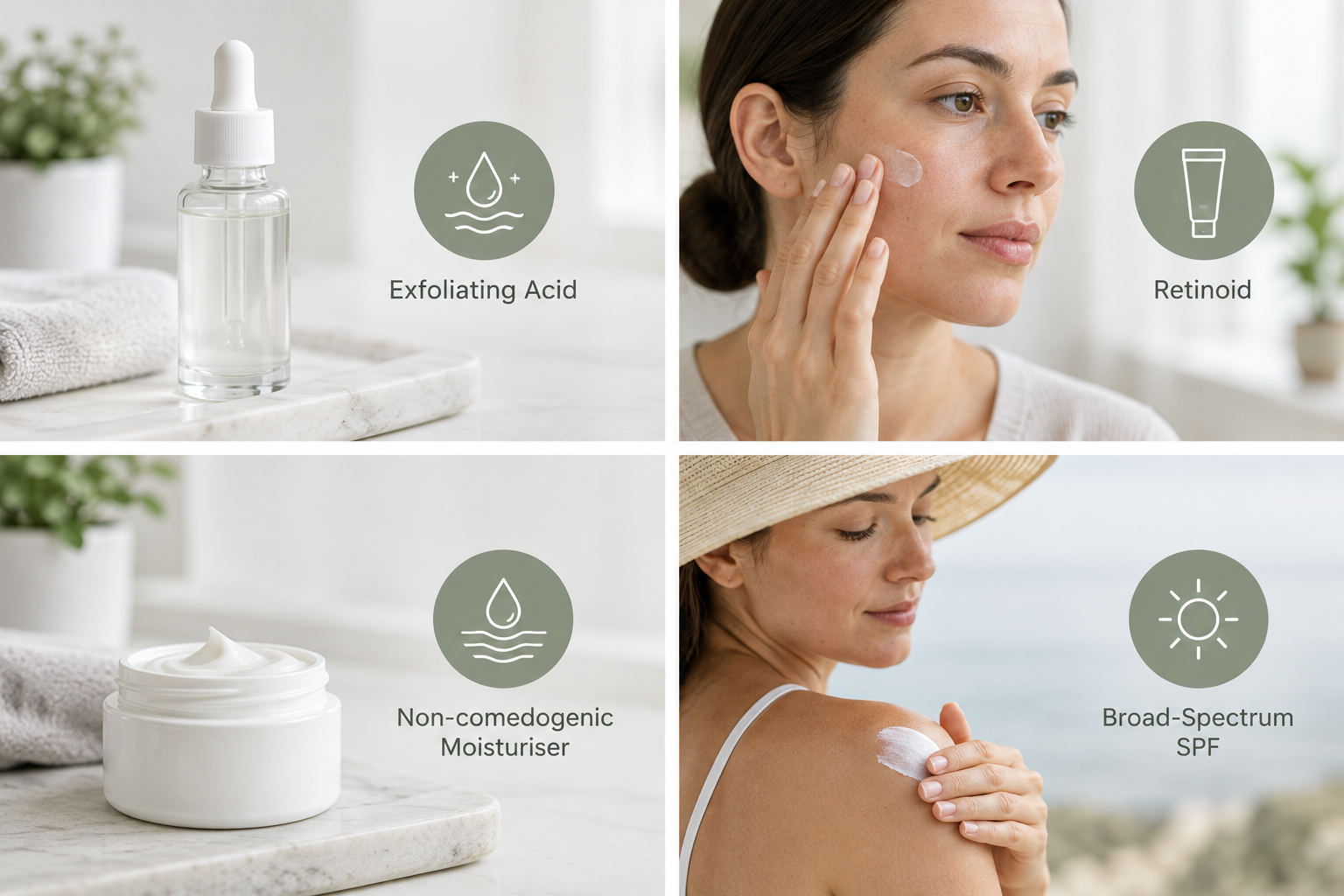
Avoiding heavy occlusive products around the eye area, particularly those with thick emollient bases, may also be beneficial for individuals who notice milia forming repeatedly in that region. If milia continue to develop despite these measures, a dermatology review may help identify whether an underlying skin condition or medication is contributing.
Alternatives to Milia Removal Procedures
For patients who prefer not to undergo a removal procedure, or for whom milia are very superficial and mild, a structured topical skincare approach may be a reasonable first step. This typically involves a combination of regular gentle exfoliation, a retinoid used consistently over several months, and a review of current skincare products. Results from this approach are slower and less predictable than professional extraction, and it is unlikely to clear established milia as effectively.
Some patients choose to leave milia untreated, particularly if the cysts are small, few in number, and not causing cosmetic concern. Because milia are benign and do not carry health risks, watchful waiting is always a valid option. A proportion of adult milia do resolve spontaneously over months, though this is less predictable than in newborns.
Frequently Asked Questions
Can I pop milia at home?
Squeezing or attempting to pop milia at home is not recommended. Unlike a standard spot, milia sit beneath an intact layer of skin and cannot be expressed through a pore. Applying pressure typically causes skin trauma without clearing the cyst, and introduces a risk of scarring, infection, and pigmentation changes. Professional extraction using a sterile lancet is a much safer and more effective approach.
How long does it take for milia to go away on their own?
In newborns, milia usually resolve within two to four weeks without any treatment. In adults, primary milia may persist for months or even years without intervention. Some do resolve spontaneously, but this is less predictable than in infants. Professional removal is the most reliable way to clear established adult milia.
Does toothpaste or baking soda remove milia?
There is no clinical evidence that toothpaste, baking soda, or similar home remedies are effective for removing milia. These substances can irritate or damage the skin barrier, particularly around the sensitive eye area, and their use is not supported by dermatological guidance.
Will milia come back after professional removal?
Professional removal clears existing milia but does not prevent new ones from forming. Individuals who are prone to milia may benefit from ongoing skincare adjustments, including regular gentle exfoliation and retinoid use, to reduce recurrence. Periodic professional treatments may also be appropriate for those who develop milia frequently.
Is milia removal painful?
Manual extraction of milia typically involves a brief sharp sensation at the moment of incision but is generally well tolerated without anaesthetic for small numbers of lesions. For larger treatment sessions, a topical numbing cream may be applied beforehand. Laser and electrocautery techniques may cause a mild stinging or heat sensation during treatment.
Can retinol get rid of milia?
Topical retinoids, including retinol, promote skin cell turnover and may help prevent new milia from forming and support gradual clearance of very superficial cysts over time. They are unlikely to clear established or deeper milia as effectively as professional extraction. Results from retinoid use typically take several weeks to months to become apparent.
Are milia the same as whiteheads?
Milia and whiteheads are distinct conditions. Whiteheads are a form of comedone that forms within a pore and can be cleared by appropriate skincare or extraction. Milia are keratin-filled cysts that sit beneath an intact layer of skin with no connection to a pore opening, which is why standard acne treatments and pore-clearing products are not effective for removing them.
Choosing the Right Approach for Your Milia
The most appropriate way to address milia depends on whether they are primary or secondary, how long they have been present, their location, and your skin type and history. For most adults with established milia that have not resolved on their own, professional extraction by a qualified practitioner offers the most reliable and predictable outcome. The procedure is straightforward, recovery is minimal, and when performed correctly the risk of lasting side effects is low.
Topical approaches using exfoliating acids and retinoids have a useful role in prevention and may support gradual clearance of superficial cysts, but they are not a substitute for professional removal of established lesions. Home extraction attempts carry a meaningful risk of skin damage and are best avoided regardless of how tempting it may be to address the cysts yourself.
If you are unsure whether what you are seeing is milia or another type of skin lesion, a consultation with a dermatologist or qualified aesthetic practitioner is a sensible first step. A clinical assessment can confirm the diagnosis, identify any contributing factors, and help you choose the removal method most appropriate for your skin. Secondary milia in particular may require investigation of an underlying cause before cosmetic treatment is considered.