

Microneedling creates thousands of microscopic channels in the skin, and those temporary openings change the rules for everything you apply to your face — including makeup. Most practitioners recommend waiting at least 24 to 72 hours before applying any cosmetic products, but the exact timing depends on the depth of treatment, your skin’s individual response, and the type of makeup you plan to use. This guide explains the reasoning behind those recommendations, what can go wrong if you apply makeup too soon, and how to reintroduce cosmetics safely as your skin heals.
Key Takeaways
- Most practitioners advise waiting a minimum of 24 hours before applying makeup after standard microneedling, with 48 to 72 hours being a more cautious and commonly recommended window.
- Applying makeup too soon after microneedling carries a genuine risk of introducing bacteria, irritants, or allergens into open microchannels, which can lead to infection, breakouts, or prolonged inflammation.
- Deeper or more aggressive microneedling sessions — including radiofrequency microneedling — may require a longer makeup-free period than standard treatments.
- Mineral-based, fragrance-free products are generally better tolerated when you do begin reintroducing makeup, though individual skin sensitivity varies.
- Your treating practitioner’s specific aftercare instructions should always take priority over general guidance.
What Microneedling Does to Your Skin
Microneedling — also called collagen induction therapy — uses a device fitted with fine needles to create controlled micro-injuries across the skin’s surface. These micro-injuries stimulate the skin’s natural wound-healing response, encouraging the production of collagen and elastin. The treatment is used to address a range of concerns including fine lines, acne scarring, enlarged pores, uneven skin texture, and general skin quality. Needle depths typically range from 0.5 mm for superficial skin quality treatments to 2.5 mm or more for deeper scar revision, and the depth used directly affects how long the skin remains vulnerable after the session.
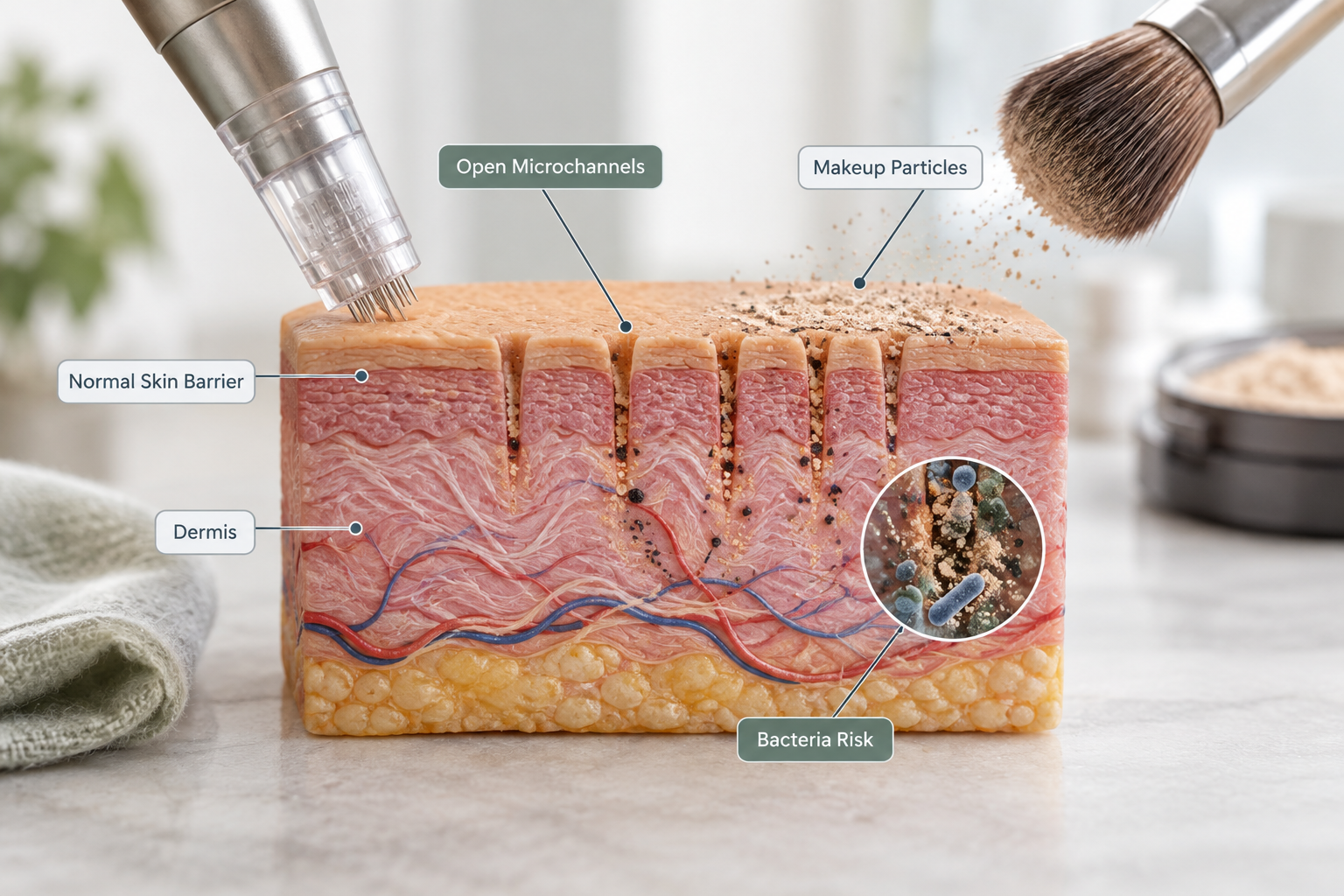
Immediately after microneedling, the skin’s protective barrier is temporarily compromised. The microchannels created during treatment remain open for a variable period — generally between four and 24 hours depending on needle depth and individual healing capacity. During this window, the skin is significantly more permeable than usual, which is why some practitioners use the post-treatment period to apply serums such as hyaluronic acid or growth factors. That same permeability, however, means that anything applied to the skin — including makeup — can penetrate far more deeply than it would under normal circumstances.
Why the Timing of Makeup Application Matters
The concern with applying makeup too soon after microneedling is not simply about surface irritation. When the skin’s barrier is disrupted, ingredients that are ordinarily safe for topical use can enter the deeper layers of the dermis through the open microchannels. Many conventional makeup products contain preservatives, fragrances, dyes, and occlusive agents that are formulated for intact skin. When these ingredients bypass the normal barrier, they can trigger an inflammatory response, cause contact dermatitis, or introduce bacteria that increase the risk of post-treatment infection.
Foundation, concealer, and powder products — particularly those with heavy coverage — can also physically block the microchannels during the early healing phase. This occlusion may trap bacteria against the skin surface and interfere with the normal cellular repair process. Brushes, sponges, and applicators used to apply makeup carry their own microbial load, even when cleaned regularly, and pressing these tools against freshly needled skin adds another potential route for contamination.
Beyond infection risk, applying makeup prematurely can contribute to milia (small keratin-filled cysts), closed comedones, or a prolonged period of redness and sensitivity. These outcomes are not inevitable, but they are a meaningful reason why post-treatment aftercare instructions consistently advise a makeup-free period.
Recommended Waiting Times After Microneedling
There is no single universally agreed waiting period, and recommendations vary between practitioners and treatment protocols. The following general timeframes reflect commonly cited clinical guidance, but they should be treated as a starting point rather than a fixed rule.
Standard Microneedling (Superficial to Mid-Depth)
For standard microneedling sessions using needle depths of approximately 0.5 mm to 1.5 mm, many practitioners recommend avoiding all makeup for a minimum of 24 hours. A more conservative and widely recommended approach is to wait 48 to 72 hours, particularly if the skin shows visible redness, swelling, or pinpoint bleeding after treatment. At 72 hours, the majority of microchannels will have closed and the initial inflammatory phase will have largely resolved for most patients, though individual healing rates vary considerably.
Deeper Microneedling Sessions
Treatments using needle depths above 1.5 mm — often used for acne scarring or more significant textural concerns — create a more pronounced skin response. Redness, swelling, and skin sensitivity may persist for three to five days or longer. In these cases, practitioners commonly advise waiting at least 72 hours before applying any cosmetic product, and some recommend extending the makeup-free period to five to seven days depending on how the skin is healing.
Radiofrequency Microneedling
Radiofrequency (RF) microneedling combines the mechanical action of needles with radiofrequency energy delivered into the dermis. This combination produces a more intense tissue response than standard microneedling alone. Downtime is typically longer, and the skin may remain visibly red, swollen, or sensitive for several days. Most practitioners advising on RF microneedling aftercare recommend avoiding makeup for at least 48 to 72 hours as a minimum, with some protocols extending this to five days or beyond for more aggressive treatment settings.
Microneedling with Topical Serums or PRP
When microneedling is combined with platelet-rich plasma (PRP) or active serums applied during the treatment, the skin’s surface may have additional residue that requires time to absorb. Applying makeup over these active ingredients before they have fully integrated into the skin may reduce their effectiveness and increase the risk of an adverse reaction. The makeup-free window in these cases is generally consistent with standard microneedling guidance, though your practitioner may advise a slightly longer period.
Signs Your Skin May Not Be Ready for Makeup
Even after the minimum recommended waiting period has passed, it is worth assessing your skin’s condition before reaching for foundation or concealer. Skin that is still visibly red, warm to the touch, or showing signs of active inflammation is not yet ready for cosmetic coverage. Applying makeup over actively inflamed skin can trap heat, slow the resolution of redness, and increase the likelihood of a reaction to product ingredients.
Peeling or flaking skin — which commonly appears two to four days after microneedling as the outer layer of treated skin sheds — is another reason to delay makeup application. Applying foundation over peeling skin tends to emphasize the texture rather than conceal it, and the mechanical action of blending can disrupt the fragile new skin forming underneath. Allowing the peeling process to complete naturally, without interference from cosmetic products or physical exfoliation, generally produces a better outcome.
If you notice any signs of infection — including increasing redness, warmth, swelling, pus, or crusting beyond what your practitioner described as normal — contact your clinic before applying any products and seek appropriate medical advice.
How to Reintroduce Makeup Safely After Microneedling
When your skin has sufficiently recovered and your practitioner has confirmed it is appropriate to resume cosmetics, a gradual reintroduction is generally advisable rather than returning immediately to a full makeup routine.
Choose Mineral-Based Products Where Possible
Mineral makeup — formulated with ingredients such as zinc oxide and titanium dioxide — is often recommended as a first step back into cosmetics after skin treatments. These formulations are typically free from fragrances, parabens, and synthetic dyes, and zinc oxide in particular has mild anti-inflammatory and antimicrobial properties. Loose mineral powder or a lightweight mineral foundation tends to sit more gently on recovering skin than heavy liquid or cream formulations. That said, not all mineral products are equally gentle, and it is still worth checking ingredient lists for potential irritants.
Avoid Certain Ingredients During Early Recovery
During the first week after microneedling, it is generally advisable to avoid makeup products containing alcohol, strong fragrances, retinol, AHAs (alpha-hydroxy acids), BHAs (beta-hydroxy acids), or vitamin C in high concentrations. These ingredients can cause stinging, irritation, or an exaggerated inflammatory response on skin that is still in the recovery phase. Your practitioner may provide a specific list of ingredients to avoid based on the products they use in their clinic and your individual skin history.
Use Clean Applicators
When you do resume applying makeup, use freshly cleaned brushes, sponges, or applicators — or consider using disposable applicators for the first few applications. Reusing applicators that were last used before your treatment introduces bacteria that have had time to multiply on the tool’s surface. Applying these to skin that is still in the healing phase increases the risk of breakouts or infection, even if the microchannels have technically closed.
Apply with a Light Touch
Avoid rubbing or pressing firmly when applying makeup to recently treated skin. The new collagen remodelling process that microneedling initiates continues beneath the surface for weeks after treatment, and the skin’s surface may remain more sensitive than usual for several days. A gentle patting or pressing motion is preferable to dragging or blending with pressure, which can cause irritation or disrupt the healing skin surface.
What to Use on Your Skin Instead of Makeup During Recovery
In the first 24 to 72 hours after microneedling, the focus of skincare should be on supporting the skin’s natural healing process rather than covering or enhancing its appearance. Most practitioners recommend a simplified routine during this period.
A gentle, fragrance-free cleanser used with lukewarm water is typically appropriate from the evening of treatment or the following morning, depending on your practitioner’s specific instructions. Avoid hot water, steam, and vigorous scrubbing during the first few days. A plain, fragrance-free moisturiser or a practitioner-recommended healing balm can help maintain hydration and support barrier recovery. Hyaluronic acid serums are commonly used in the immediate post-treatment period and are generally well tolerated, though again, your practitioner’s guidance should take precedence.
Broad-spectrum SPF is an important part of post-microneedling care. Treated skin is more susceptible to UV-induced pigmentation changes, and sun protection should be applied as soon as the skin is ready to tolerate it — typically from the morning after treatment. Choose a mineral SPF formulation if possible, as chemical sunscreen filters can cause stinging on compromised skin. Avoiding direct sun exposure and wearing a hat when outdoors is advisable for at least one to two weeks after treatment.
Factors That Affect Your Individual Recovery Timeline
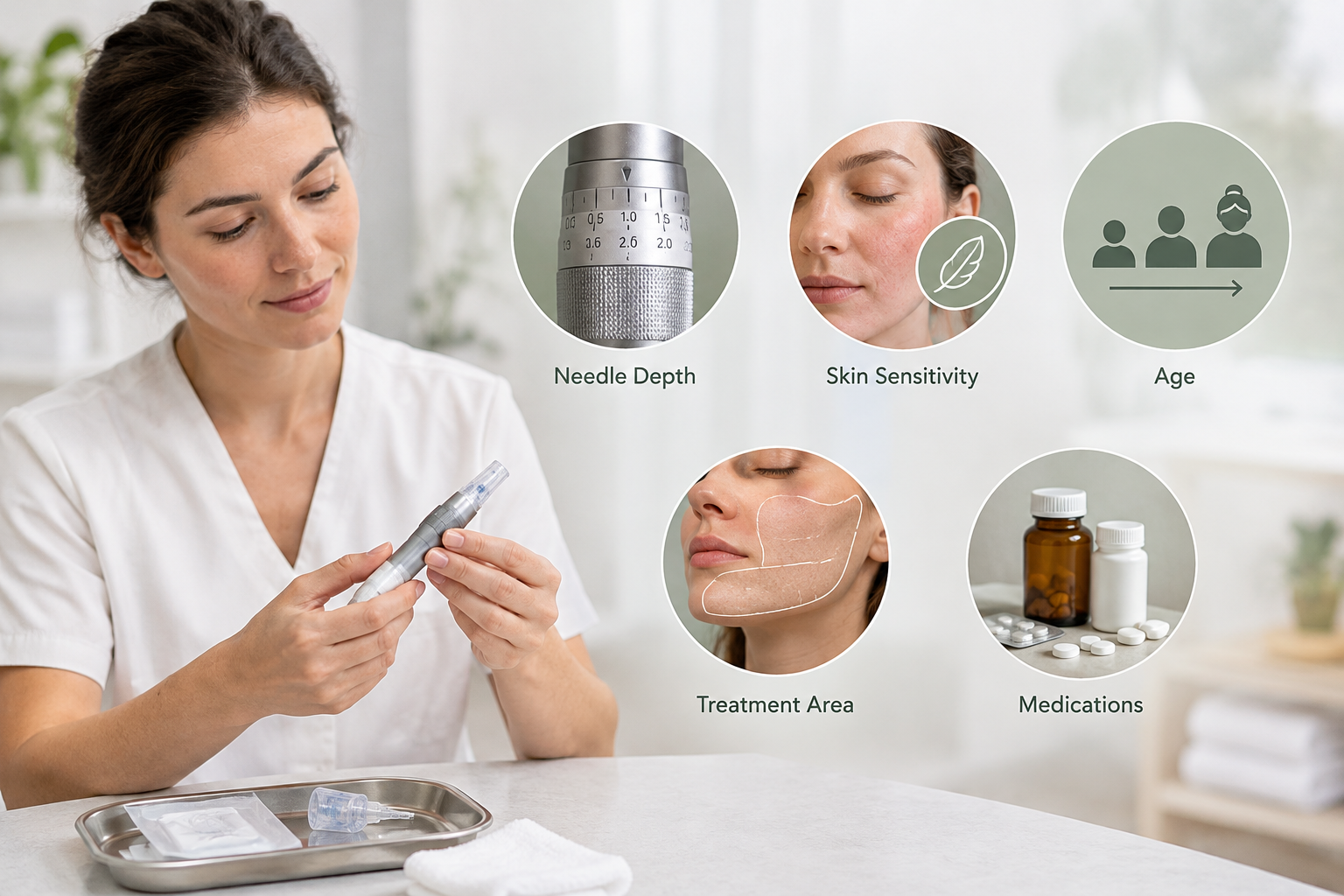
The timeframe within which your skin is ready for makeup after microneedling is influenced by several individual and treatment-related factors. Understanding these can help set realistic expectations before your appointment.
- Needle depth and treatment intensity: Deeper needle penetration and higher pass counts create a more significant skin response and extend the recovery period.
- Skin type and sensitivity: Individuals with sensitive skin, rosacea, or a history of reactive skin may experience a more pronounced and prolonged inflammatory response.
- Age and healing capacity: Skin healing generally slows with age, which can extend the period before the skin is ready to tolerate cosmetic products.
- Treatment area: The face heals relatively quickly due to its rich blood supply, but areas such as the neck or décolletage may take longer to recover.
- Concurrent skincare actives: Using retinoids, exfoliating acids, or other active ingredients in the days before treatment can increase skin sensitivity and affect recovery time.
- Medications: Certain medications, including blood thinners and immunosuppressants, can affect healing. Always disclose your full medication list to your practitioner before treatment.
- Number of sessions: Skin that has undergone multiple microneedling sessions over a treatment course may respond differently to each session as collagen remodelling progresses.
Frequently Asked Questions
Can I wear makeup the same day as microneedling?
Applying makeup on the same day as microneedling is not recommended by most practitioners. The microchannels created during treatment remain open for several hours, and applying cosmetic products during this window significantly increases the risk of introducing bacteria, irritants, or allergens into the skin. Waiting at least 24 hours — and ideally 48 to 72 hours — is the more commonly advised approach.
What happens if I apply makeup too soon after microneedling?
Applying makeup before the skin has adequately recovered can lead to several unwanted outcomes. These include increased redness and irritation, contact dermatitis from ingredients penetrating the disrupted barrier, bacterial infection, post-treatment breakouts, and in some cases, milia or closed comedones. The risk varies depending on the products used and the individual’s skin, but the consequences can extend the overall recovery period and affect the final result of the treatment.
Is mineral makeup safe to use after microneedling?
Mineral makeup is generally considered a more suitable option than conventional liquid or cream foundations when reintroducing cosmetics after microneedling, primarily because it tends to contain fewer potential irritants. However, mineral makeup should still not be applied until the recommended waiting period has passed and the skin shows no signs of active inflammation. Not all mineral products are equally gentle, so checking the full ingredient list and following your practitioner’s advice remains important.
Can I wear SPF after microneedling?
Sun protection is an important part of post-microneedling aftercare, and most practitioners recommend applying a broad-spectrum SPF from the morning after treatment. A mineral SPF containing zinc oxide or titanium dioxide is generally better tolerated on recently treated skin than chemical sunscreen formulations, which can cause stinging. Avoiding direct sun exposure and wearing protective clothing is also advisable during the recovery period.
How long does redness last after microneedling?
Redness after standard microneedling typically resolves within 24 to 48 hours for most patients, though some individuals experience redness for up to three to five days. Deeper treatments or RF microneedling can produce redness that persists for longer. The presence of visible redness is a useful indicator that the skin is still in the active inflammatory phase and is not yet ready for makeup application.
Can I exercise or sweat after microneedling?
Sweating introduces bacteria and salt to the skin surface, which can be problematic while the microchannels remain open. Most practitioners advise avoiding strenuous exercise, saunas, steam rooms, and hot showers for at least 24 to 48 hours after microneedling. This guidance is separate from the makeup question but is part of the same broader principle of protecting the skin during the early recovery window.
Does the type of microneedling device affect how long I should wait before wearing makeup?
Yes, the device and treatment settings can influence recovery time. Automated microneedling pens, dermarollers, and RF microneedling devices all create different patterns and depths of micro-injury. RF microneedling in particular tends to produce a more significant tissue response and a longer recovery period than standard automated microneedling. Your practitioner will advise on the appropriate makeup-free window based on the specific device and settings used in your treatment.
Planning Your Microneedling Appointment Around Your Schedule
Understanding the post-treatment makeup restriction before you book your appointment allows you to plan around it more effectively. If you have a significant event — a wedding, a formal occasion, or a professional commitment where you need to wear makeup — scheduling microneedling at least one week beforehand is a reasonable approach for most standard treatments. This allows adequate time for the initial recovery phase to complete and for any residual redness or peeling to resolve before you need to apply cosmetics.
Avoid scheduling microneedling immediately before a holiday involving significant sun exposure, as UV radiation on recently treated skin increases the risk of post-inflammatory hyperpigmentation, particularly in individuals with medium to darker skin tones. Discussing your schedule, skin concerns, and any upcoming commitments with your practitioner during the consultation allows them to recommend the most appropriate treatment timing and depth for your individual situation.
If you are considering microneedling for the first time, a patch of skin that is less visible — or a less aggressive initial session — can give you a clearer sense of how your skin responds before committing to a full-face treatment ahead of an important occasion. A qualified practitioner can advise on the most appropriate approach based on your skin type, concerns, and lifestyle.