

Glutathione has become one of the most discussed compounds in aesthetic medicine, appearing in everything from oral supplements to intravenous infusions and topical serums. Interest centres largely on its potential to brighten skin tone, reduce hyperpigmentation, and support overall skin health. However, the evidence behind different delivery methods varies considerably, and understanding what glutathione can and cannot realistically do is essential before making any treatment decision.
Key Takeaways
- Glutathione is a naturally occurring antioxidant produced by the body, and its role in skin pigmentation has made it a focus of aesthetic research.
- Evidence for skin-brightening effects is most consistent for intravenous and oral glutathione, though study quality varies and results are not guaranteed.
- Topical glutathione has limited skin penetration, which may reduce its effectiveness compared to systemic delivery methods.
- Intravenous glutathione carries specific safety considerations and should only be administered by a qualified medical professional in a clinical setting.
- Individual results depend on skin type, baseline pigmentation, treatment frequency, and other factors; a clinical assessment is required to determine suitability.
What Is Glutathione?
Glutathione is a tripeptide — a small molecule made from three amino acids: glutamine, cysteine, and glycine. It is produced naturally in virtually every cell of the human body, with the highest concentrations found in the liver. Physiologically, glutathione functions as the body’s primary endogenous antioxidant, neutralising free radicals, supporting immune function, and assisting in the detoxification of harmful compounds. Levels of glutathione naturally decline with age, chronic illness, poor nutrition, and prolonged oxidative stress.
In aesthetic medicine, interest in glutathione centres on its ability to influence melanin synthesis — the biological process that determines skin colour. Melanin is produced by specialised cells called melanocytes, and its overproduction or uneven distribution leads to conditions such as melasma, post-inflammatory hyperpigmentation, and general uneven skin tone. Glutathione appears to interact with this process at a biochemical level, which is why it has attracted attention as a potential skin-brightening agent.
How Glutathione May Affect Skin Pigmentation
The primary mechanism through which glutathione may influence skin tone involves the enzyme tyrosinase, which plays a central role in melanin production. Glutathione is thought to inhibit tyrosinase activity, thereby reducing the synthesis of eumelanin — the darker form of melanin — and potentially shifting production toward phaeomelanin, which produces lighter, more yellow-red pigmentation. This shift in melanin type, rather than a simple reduction in total melanin, is believed to contribute to the skin-brightening effect observed in some studies.
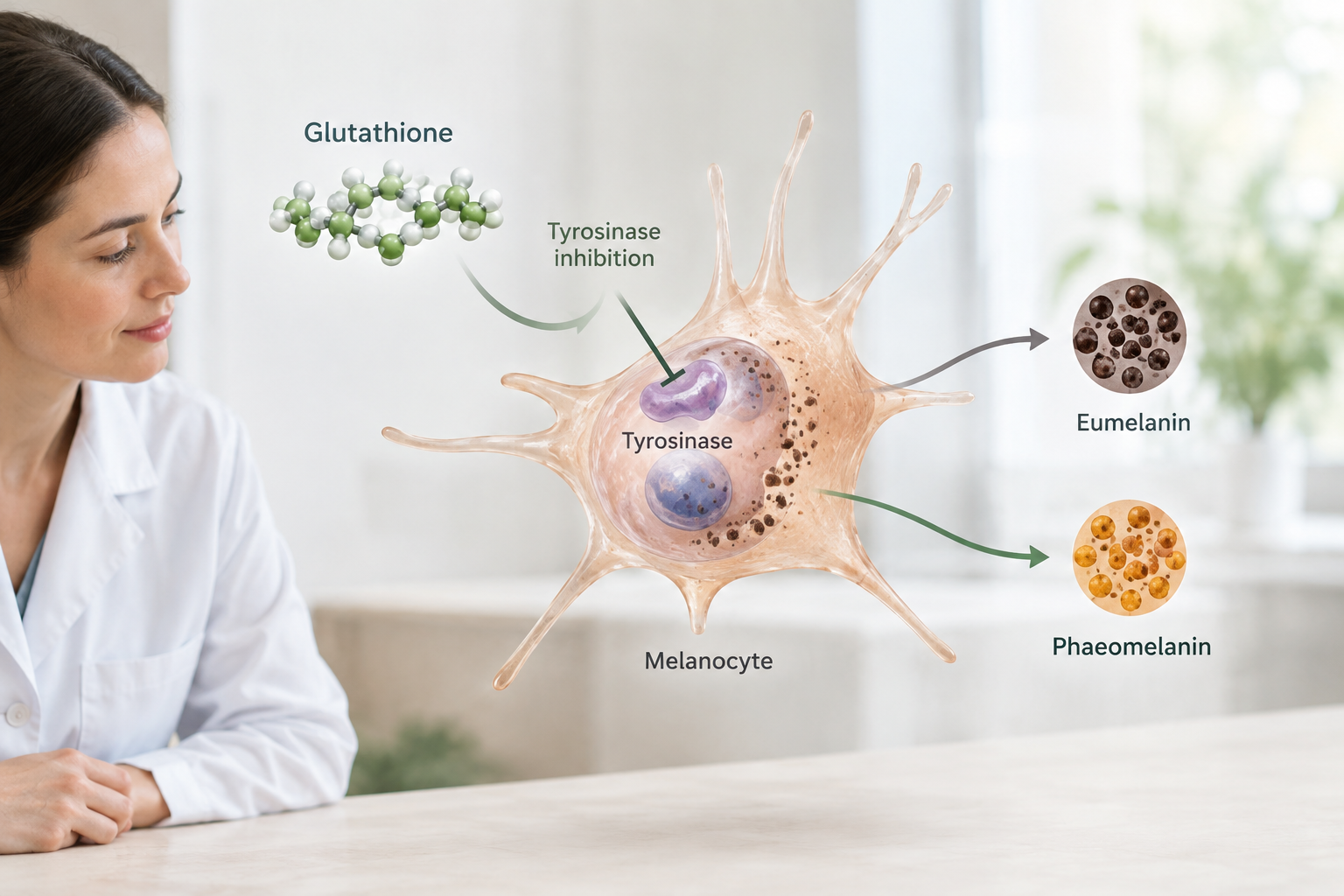
Glutathione also exerts antioxidant effects that may indirectly benefit skin appearance. Oxidative stress is known to upregulate melanin production, so reducing free radical activity may help moderate pigmentation over time. Additionally, glutathione supports the regeneration of other antioxidants, including vitamins C and E, which themselves have established roles in skin health and pigmentation management. These interconnected mechanisms mean that glutathione’s skin effects are likely multifactorial rather than the result of a single direct action.
Delivery Methods and Their Evidence Base
Glutathione is available in several forms for aesthetic use, and the delivery method significantly affects how much of the compound reaches the skin and whether a meaningful clinical effect is achievable. The main routes are oral supplementation, intravenous infusion, and topical application.
Oral Glutathione
Oral glutathione supplements are widely available and represent the most accessible form. Historically, there were concerns that oral glutathione was poorly absorbed because digestive enzymes break down the tripeptide before it can enter systemic circulation. However, more recent research — including a randomised, double-blind, placebo-controlled trial published in Clinical, Cosmetic and Investigational Dermatology — has suggested that oral glutathione supplementation at doses of 250–500 mg per day may produce measurable reductions in melanin index and improvements in skin luminosity over eight to twelve weeks. Liposomal formulations and sublingual preparations have been developed specifically to improve bioavailability, and some evidence suggests these may be more effective than standard oral tablets, though comparative data remain limited.
It is important to note that most published studies on oral glutathione involve relatively small sample sizes and short follow-up periods. The evidence is promising but not yet conclusive, and results vary between individuals. Oral supplementation is generally considered the lowest-risk delivery method, though it is not without considerations, particularly regarding long-term use and interactions with medications.
Intravenous Glutathione
Intravenous (IV) glutathione administration bypasses the digestive system entirely, delivering the compound directly into the bloodstream and achieving higher plasma concentrations than oral supplementation. This route has been used in clinical settings for decades, primarily for medical indications such as supporting liver function and reducing chemotherapy-related side effects. Its use for skin brightening is more recent and remains an area of active discussion among dermatologists and aesthetic practitioners.
Some clinical observations and smaller studies suggest that IV glutathione may produce more rapid and pronounced skin-brightening effects compared to oral supplementation, particularly for individuals with moderate to significant hyperpigmentation. However, the evidence base for IV glutathione specifically for cosmetic skin brightening is less robust than for some other aesthetic treatments, and regulatory positions on this use vary by country. IV administration carries inherent procedural risks, including infection at the injection site, allergic reactions, and — with repeated high-dose use — potential concerns about oxidative balance and other systemic effects. IV glutathione for skin brightening should only be administered by a qualified medical professional following a thorough health assessment.
Topical Glutathione
Topical glutathione products — including creams, serums, and masks — are widely marketed for skin brightening. The primary limitation of topical glutathione is its molecular size and hydrophilic nature, which make it difficult for the compound to penetrate the stratum corneum (the outermost layer of skin) in meaningful quantities. Most of the glutathione applied topically is unlikely to reach the melanocytes in the deeper layers of the epidermis where pigmentation is regulated. Some formulations use encapsulation technologies or penetration enhancers to try to address this limitation, but robust clinical evidence demonstrating significant skin-brightening effects from topical glutathione alone remains limited. Topical products may still offer surface-level antioxidant benefits and can complement other treatments, but they are unlikely to produce the same degree of pigmentation change as systemic delivery methods.
Potential Skin Benefits of Glutathione
Based on available evidence, the following skin-related benefits have been associated with glutathione use, particularly through oral and intravenous routes. These are potential benefits supported by varying levels of evidence, not guaranteed outcomes.
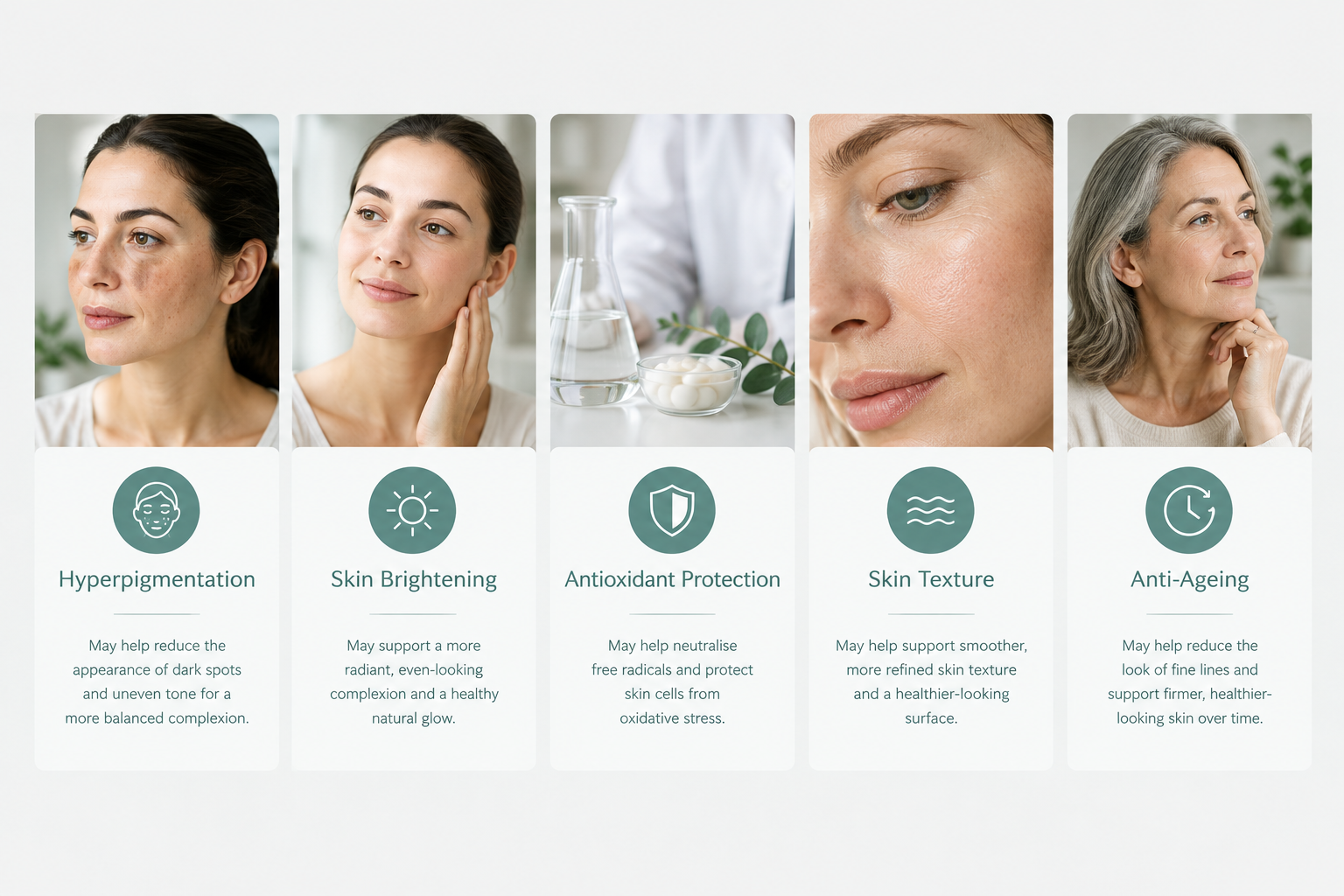
- Reduction in hyperpigmentation: Glutathione may help reduce the appearance of dark spots, melasma, and post-inflammatory hyperpigmentation by modulating melanin synthesis through tyrosinase inhibition.
- Overall skin brightening and luminosity: Some studies report improvements in skin radiance and a more even skin tone following consistent glutathione supplementation, likely related to both reduced melanin production and antioxidant activity.
- Antioxidant protection: By neutralising free radicals, glutathione may help protect skin cells from oxidative damage caused by UV exposure, pollution, and other environmental stressors — factors that contribute to premature skin ageing and uneven pigmentation.
- Support for skin texture and quality: Some patients and practitioners report improvements in skin smoothness and overall quality, though the evidence for this specific benefit is less well established than for pigmentation effects.
- Potential anti-ageing effects: Oxidative stress is a recognised contributor to skin ageing, and glutathione’s antioxidant properties may offer some protective benefit, though this should not be overstated given the current evidence.
Who May Be Suitable for Glutathione Treatment
Glutathione treatments may be worth discussing with a qualified practitioner if you have concerns about hyperpigmentation, melasma, uneven skin tone, or dull complexion that has not responded adequately to topical treatments alone. Individuals with Fitzpatrick skin types III to VI — those with medium to darker skin tones — are often the focus of glutathione research because they are more prone to hyperpigmentation and may see more noticeable changes in skin tone.
Oral supplementation is generally considered suitable for a broader range of individuals, subject to a health assessment and review of any existing medications or conditions. Intravenous glutathione requires a more thorough medical evaluation and is not appropriate for everyone. A clinical consultation is essential to determine which delivery method, if any, is appropriate for your specific skin concerns, health history, and goals.
Who May Not Be Suitable
Glutathione treatment in any form may not be appropriate for certain individuals. A qualified practitioner should be consulted before starting any glutathione regimen if you:
- Are pregnant or breastfeeding, as safety data in these populations is insufficient.
- Have a known allergy to glutathione or any component of the supplement or infusion formulation.
- Have a history of asthma, as some reports have associated IV glutathione with bronchospasm in susceptible individuals.
- Are taking medications that may interact with glutathione, including certain chemotherapy agents.
- Have significant liver or kidney disease, which may affect how glutathione is processed.
- Have a history of skin conditions that may be affected by changes in melanin production.
This list is not exhaustive. A thorough medical history and clinical assessment are necessary before any treatment is initiated.
Realistic Results and What to Expect
Glutathione is not a rapid skin-whitening agent, and expectations should be calibrated accordingly. Most clinical studies that report positive outcomes describe gradual improvements in skin tone and pigmentation over a period of eight to twenty-four weeks of consistent use. The degree of change varies considerably between individuals and depends on factors including baseline skin tone, the type and severity of pigmentation, the delivery method used, treatment frequency, and adherence to a consistent regimen.
For oral glutathione, visible changes — if they occur — are typically subtle and progressive rather than dramatic. Intravenous administration may produce more noticeable effects in some individuals, but results are still variable and not guaranteed. It is also important to understand that glutathione does not permanently alter melanin-producing cells; once treatment is discontinued, melanin production may gradually return to baseline levels, particularly if sun exposure and other pigmentation triggers are not managed. Ongoing maintenance, combined with appropriate sun protection, is generally necessary to sustain any improvements achieved.
Risks and Side Effects
Glutathione is generally considered well tolerated when used appropriately, but it is not without potential risks, particularly at higher doses or with intravenous administration.
Oral Glutathione
Oral glutathione supplements are associated with a relatively low risk of adverse effects at commonly used doses. Some individuals report mild gastrointestinal symptoms such as bloating or abdominal discomfort. Long-term high-dose supplementation has raised theoretical concerns about disrupting the body’s natural antioxidant balance, though this has not been conclusively demonstrated in clinical studies at typical supplementation doses.
Intravenous Glutathione
IV glutathione carries a higher risk profile than oral supplementation. Reported adverse effects include injection site reactions, allergic responses ranging from mild skin reactions to, in rare cases, more serious hypersensitivity reactions, and potential effects on renal function with prolonged high-dose use. There have been case reports of Stevens-Johnson syndrome associated with IV glutathione use for skin lightening, though this appears to be rare. Regulatory bodies in several countries have issued warnings about unlicensed IV glutathione preparations used for cosmetic skin lightening, underscoring the importance of receiving treatment only from a qualified medical professional using properly sourced, pharmaceutical-grade products.
Topical Glutathione
Topical products are generally well tolerated, with the main risks being contact dermatitis or skin irritation in sensitive individuals. The risk of systemic effects from topical application is considered low given the limited skin penetration of glutathione.
Combining Glutathione with Other Skin Treatments
Glutathione is frequently used alongside other skin-brightening and antioxidant treatments. Vitamin C (ascorbic acid) is a particularly common combination partner because it shares antioxidant properties, independently inhibits tyrosinase, and helps regenerate oxidised glutathione back to its active form. This synergistic relationship means that combining the two may offer complementary benefits for pigmentation management, though clinical evidence specifically for this combination in aesthetic use remains limited.
Other treatments sometimes used alongside glutathione for hyperpigmentation include topical agents such as niacinamide, kojic acid, and azelaic acid, as well as in-clinic procedures such as chemical peels, laser treatments, and microneedling. The appropriateness of combining glutathione with any other treatment depends on individual skin concerns, skin type, and overall treatment plan, and should be guided by a qualified practitioner.
Alternatives to Glutathione for Skin Brightening
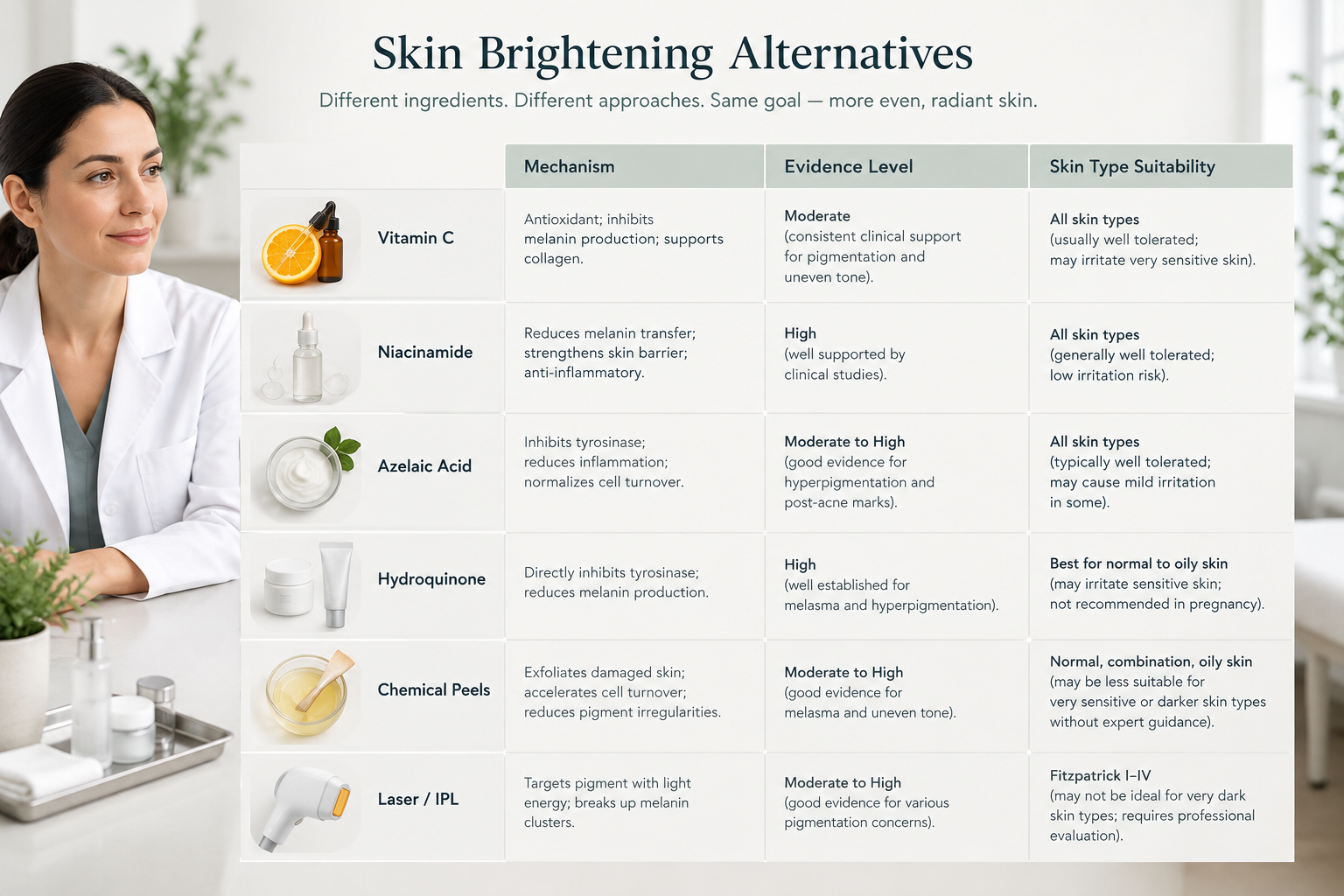
Several other evidence-based options exist for individuals seeking to address hyperpigmentation and uneven skin tone. These include:
- Topical hydroquinone: Considered a gold-standard depigmenting agent in many clinical guidelines, though its use is regulated or restricted in some countries due to safety concerns with long-term use.
- Topical retinoids: Vitamin A derivatives such as tretinoin have well-established evidence for improving skin tone, texture, and pigmentation through multiple mechanisms.
- Azelaic acid: A naturally derived acid with tyrosinase-inhibiting properties and a good safety profile, suitable for a range of skin types including sensitive skin.
- Kojic acid and niacinamide: Topical agents with evidence for modest pigmentation improvement and generally good tolerability.
- Chemical peels: Superficial to medium-depth peels using agents such as glycolic acid or trichloroacetic acid can improve pigmentation and skin texture, with results depending on peel depth and skin type.
- Laser and light-based treatments: Devices targeting melanin, such as Q-switched Nd:YAG lasers, can be effective for certain types of hyperpigmentation, though they require careful patient selection, particularly for darker skin tones where the risk of post-inflammatory hyperpigmentation is higher.
The most appropriate approach to hyperpigmentation depends on the underlying cause, skin type, and individual circumstances. A dermatologist or qualified aesthetic practitioner can help identify the most suitable treatment strategy.
Frequently Asked Questions
How long does it take to see results from glutathione?
Most studies reporting positive outcomes describe gradual changes over eight to twenty-four weeks of consistent use. Results vary between individuals, and some people may see minimal change. Intravenous administration may produce effects more quickly than oral supplementation in some cases, but this is not universal.
Is glutathione safe for all skin types?
Glutathione has been studied across a range of skin types, and oral supplementation is generally considered well tolerated. However, suitability depends on individual health factors, and a clinical assessment is required before starting any treatment. Intravenous glutathione requires a more thorough medical evaluation.
Will the skin-brightening effects of glutathione be permanent?
Glutathione does not permanently alter melanocyte function. If treatment is discontinued and pigmentation triggers such as sun exposure are not managed, skin tone may gradually return toward its baseline. Ongoing maintenance and consistent sun protection are generally necessary to sustain results.
Can I take glutathione supplements alongside other medications?
Glutathione may interact with certain medications, including some chemotherapy drugs. Always disclose all medications and supplements to your practitioner before starting glutathione in any form.
Is intravenous glutathione regulated for cosmetic use?
Regulatory status varies by country. In several jurisdictions, IV glutathione is not specifically licensed for cosmetic skin brightening, and some regulatory bodies have issued safety warnings about its use for this purpose. It is essential to seek treatment from a qualified medical professional using pharmaceutical-grade products and to understand the regulatory context in your country.
Does glutathione work better when combined with vitamin C?
Vitamin C and glutathione have complementary antioxidant mechanisms, and vitamin C helps regenerate active glutathione. Some practitioners combine the two for this reason, and the combination is commonly used in clinical practice. However, robust clinical trial evidence specifically demonstrating superior outcomes from the combination compared to either agent alone remains limited.
Are topical glutathione products worth using?
Topical glutathione faces significant absorption challenges due to the molecule’s size and properties. While topical products may offer surface antioxidant benefits, they are unlikely to produce the same degree of pigmentation change as oral or intravenous glutathione. They may be a useful adjunct to other treatments but should not be expected to deliver dramatic results on their own.
Is Glutathione the Right Approach for Your Skin Concerns?
Glutathione offers a genuinely interesting mechanism for addressing hyperpigmentation and supporting skin health, and the evidence — particularly for oral supplementation — is more substantive than for many other widely marketed skin-brightening compounds. That said, it is not a transformative solution for all skin concerns, results are gradual and variable, and the delivery method matters considerably in terms of both effectiveness and safety.
For individuals with hyperpigmentation, melasma, or uneven skin tone who are looking for a systemic approach to complement topical treatments, glutathione may be worth discussing with a qualified practitioner. Intravenous glutathione may be appropriate for some individuals but requires careful medical assessment and should never be sought from unregulated providers. Topical glutathione products are low-risk but should be approached with realistic expectations about their limitations.
A consultation with a dermatologist or experienced aesthetic practitioner is the most reliable way to determine whether glutathione — and which form of it — is appropriate for your specific skin type, concerns, and health profile. They can also help you understand how glutathione fits within a broader, evidence-informed approach to pigmentation management that may include sun protection, topical actives, and in-clinic treatments.