Frown Lines Botox in London
Vertical lines between the eyebrows — often called the “elevens” or glabellar lines — develop gradually through repeated facial muscle contraction during everyday expression. Over time, these frown lines can deepen into more permanent creases, giving an impression of tension, tiredness, or displeasure that may not reflect how a person actually feels. For patients who have begun to notice deeper lines persisting even at rest, this area of treatment is among the most commonly addressed through cosmetic injectable treatments in London.
Botox for glabellar lines in London can be an effective way to smooth and soften lines that remain visible at rest. Suitability is confirmed individually through a face-to-face clinical assessment.
What Is Frown Lines Botox?
The glabella is the area between your eyebrows. Frown line treatment uses precise botulinum toxin injections in the corrugator supercilii and procerus, the muscles that draw the brows inward and downward. Botox works by temporarily relaxing the muscles responsible for this movement, reducing repeated folding of the skin.
Botulinum toxin injections are classified as a prescription-only medicine in the UK. This means treatment cannot be administered without an appropriate face-to-face consultation, clinical assessment, and, where required, prescribing by a qualified, registered prescriber. As a Botox clinic in London, we do not proceed with any injectable treatment without first confirming suitability through proper clinical review — treatment is not appropriate for all patients, and medical history, skin condition, and aesthetic goals must be carefully evaluated.
The glabellar area is one of the most commonly treated regions in aesthetic medicine because dynamic frown lines here are strongly linked to muscle movement. For many patients, addressing this specific treatment area produces a meaningful improvement in overall facial appearance. Botox is commonly used in this region because injections work precisely and predictably when administered by an experienced practitioner — though individual outcomes vary and cannot be guaranteed.
Who This Treatment May Suit
Anti-wrinkle injections may suit adults aged 18 and over who have dynamic lines between the brows or deep frown lines that remain visible at rest. The depth, pattern and underlying muscle activity influence whether this approach is appropriate.
Suitability depends on a range of individual factors and must be established through a face-to-face consultation rather than assumed. Patients with very deeply set static lines may find that Botox alone is not sufficient, and a combined approach using Botox and dermal filler may be discussed where clinically appropriate. Personalised treatment plans are developed based on anatomy, medical history, and the patient’s specific goals — there is no uniform approach applied across all patients.
Addressing Frown Lines Without Limiting Natural Expression Excessively
One of the most common concerns patients raise before frown line treatment is whether forehead Botox results will look unnatural or leave the upper face without movement. Careful assessment of how the glabellar muscles interact with surrounding structures, including any horizontal forehead lines above, allows the treating practitioner to plan injection placement that reduces visible creasing while preserving meaningful expression. When treating forehead lines, the relationship between the corrugator, frontalis, and procerus muscles must be considered together to achieve a balanced outcome.
The aim is not to eliminate all muscle activity but to reduce the degree of repeated, forceful contraction that drives deeper lines. A well-planned Botox wrinkle treatment in this area should leave patients looking more rested and less tense rather than appearing altered, though natural results vary between individuals and the best outcome for each patient is discussed honestly at consultation. Forehead Botox starts to take effect within a few days, with the fuller picture emerging over approximately two weeks.
Consultation and Pricing
Treatment suitability, the injection plan, and the final Botox cost are confirmed only after a face-to-face consultation and clinical assessment. At our clinic in London, pricing depends on the complexity of the glabellar area, the amount of Botox required, individual muscle activity, and whether additional areas — such as horizontal lines across the forehead or lines around the mouth — are included in the session. We offer a free consultation for patients considering anti-wrinkle injections so that suitability, realistic expectations, and costs can be discussed without obligation.
The following figures represent general London market guidance only, based on publicly advertised prices reviewed in May 2026 across multiple London clinics. These are not our clinic’s prices and may not account for prescribing requirements, individual anatomy, or full personalised treatment planning.
- Frown lines (1 area): about £180–£250
- Frown lines combined with forehead (2 areas): about £250–£330
- Three areas (frown, forehead, crow’s feet): about £300–£400
- Specialised or advanced placement: variable, based on clinical assessment
- Consultation and assessment: variable per clinic
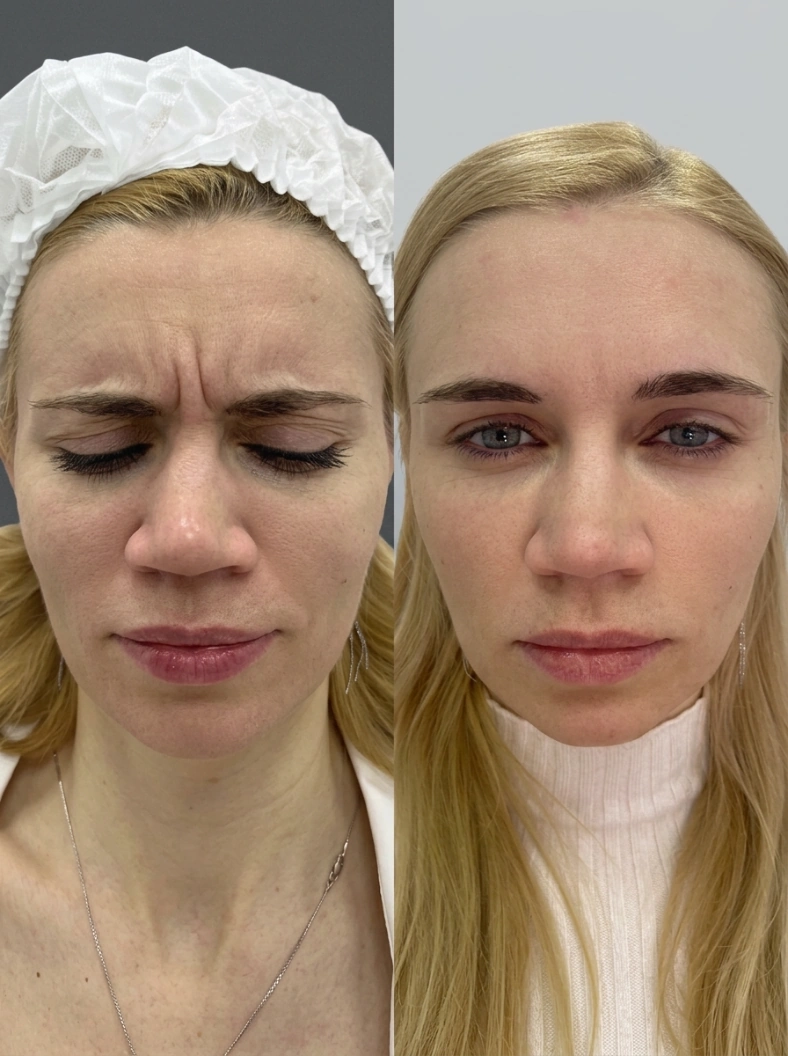
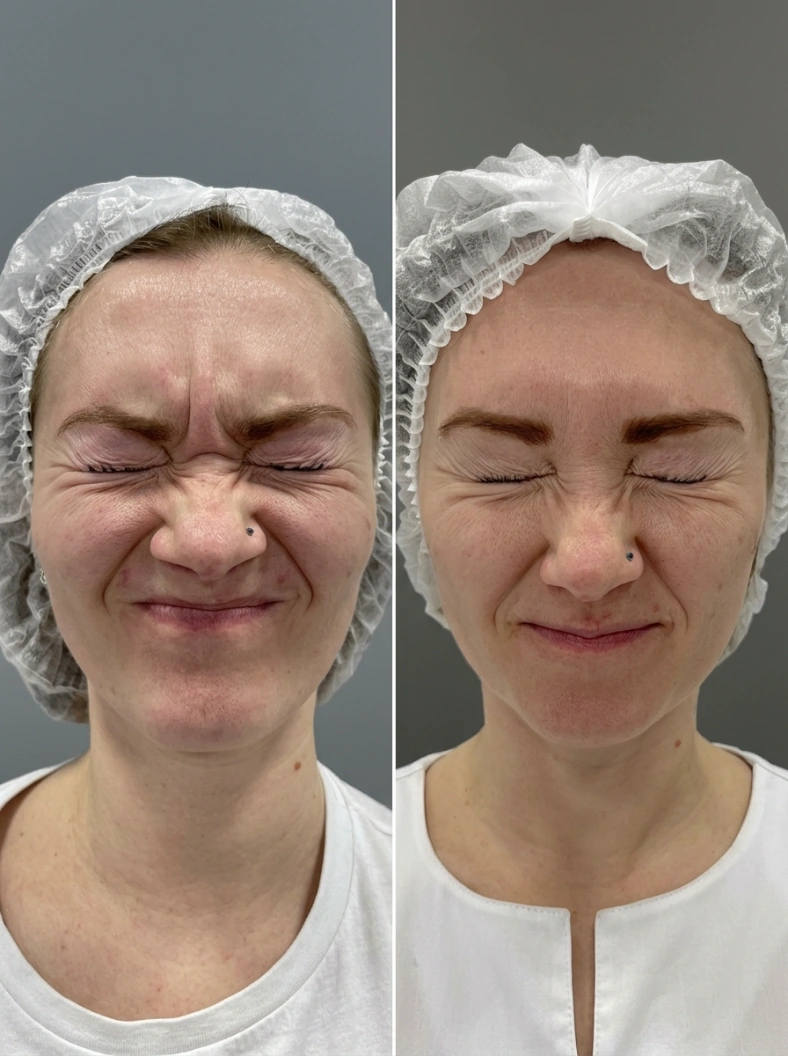
Before and After Frown Lines Botox
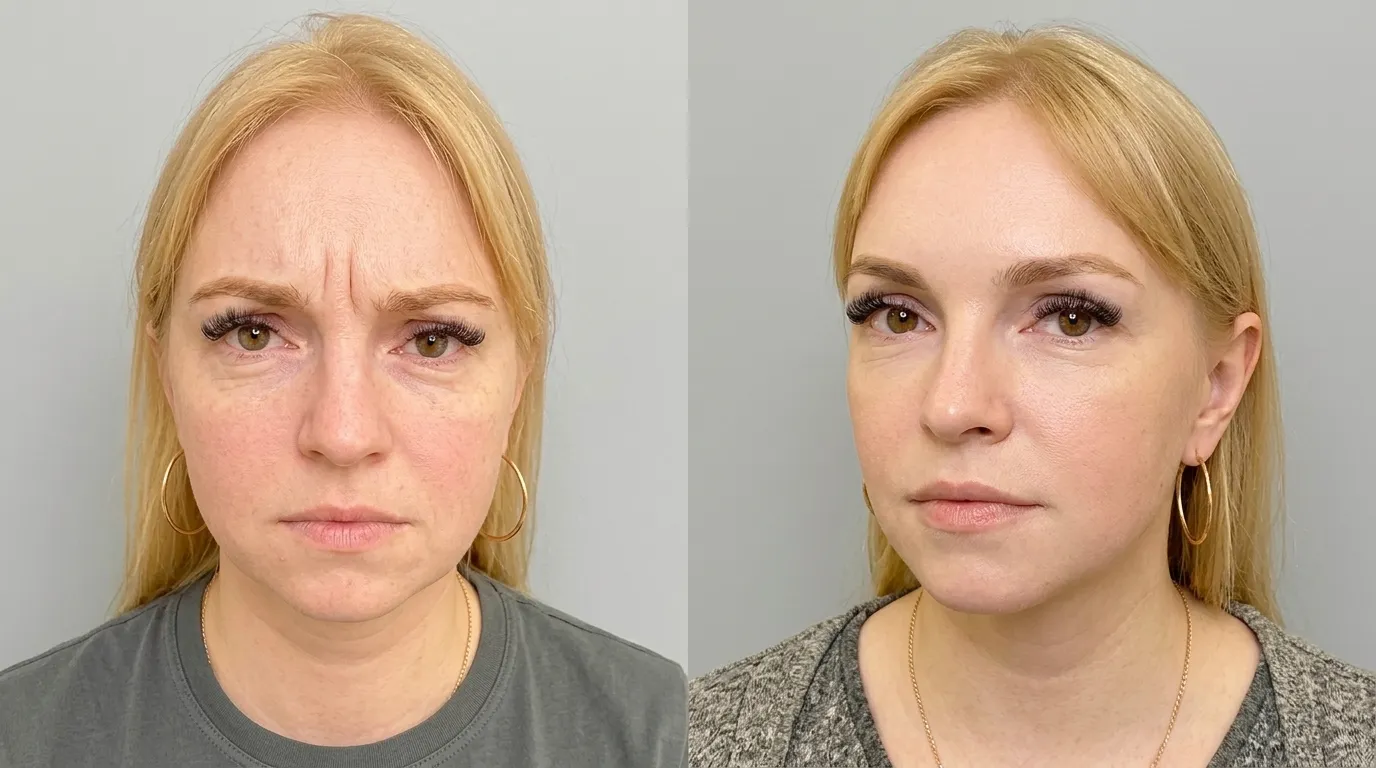
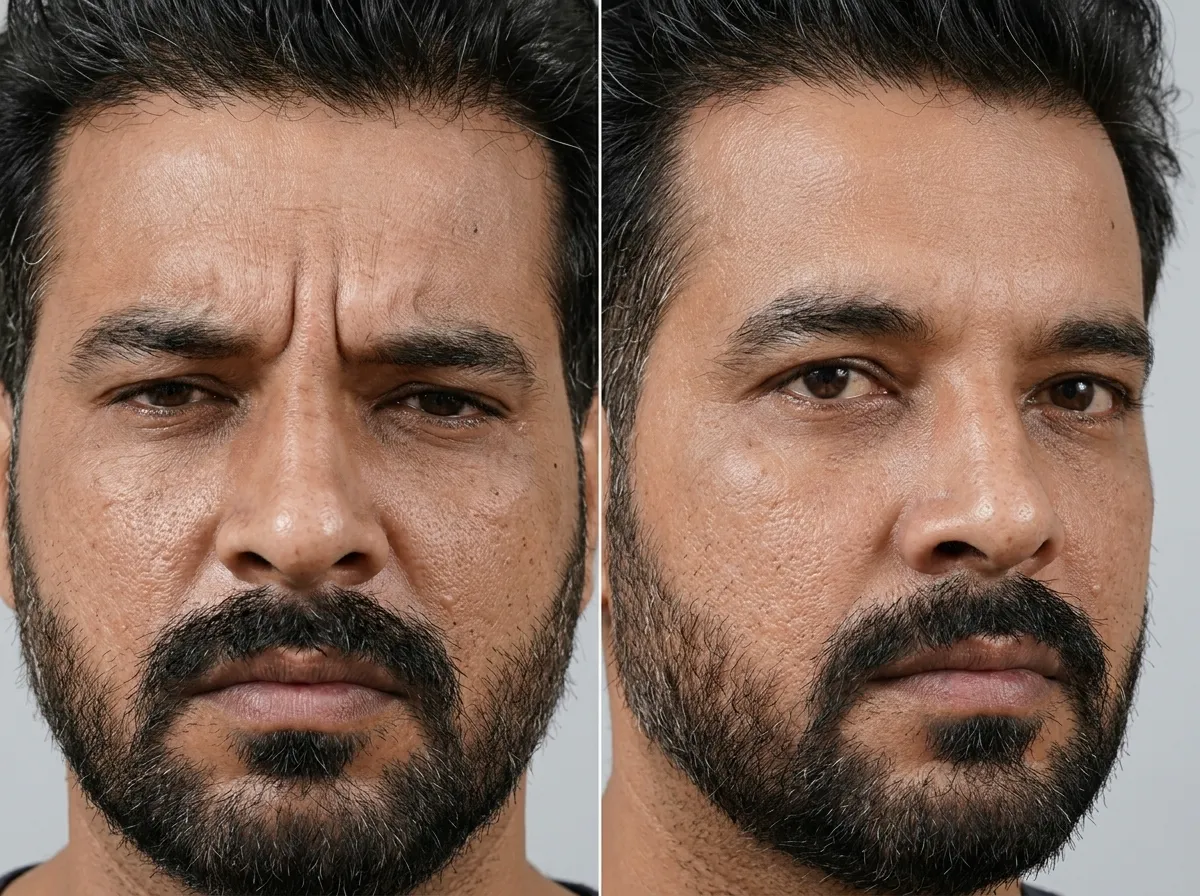
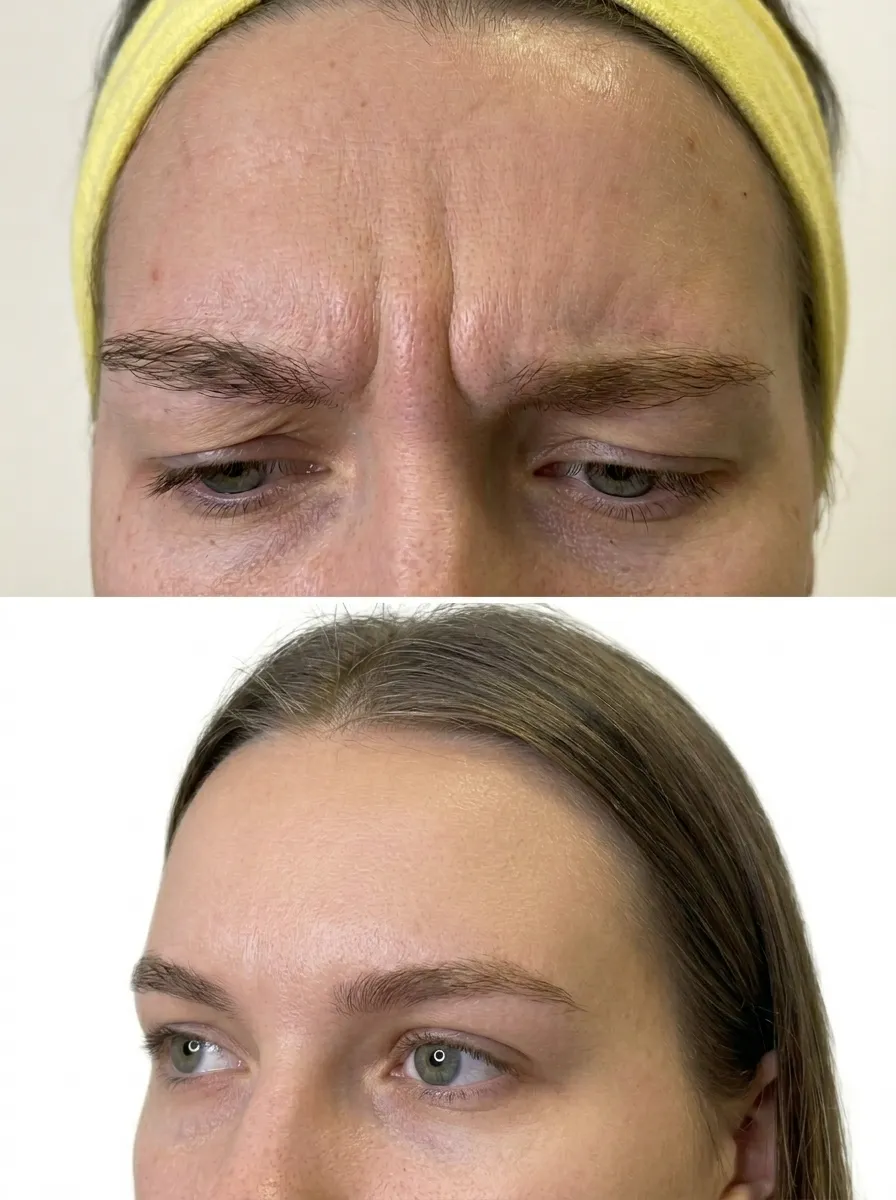
Before treatment, patients typically present with visible vertical creasing between the brows, sometimes alongside horizontal forehead lines or fine lines elsewhere in the upper face. The depth and character of these lines vary depending on age, skin condition, and the degree of underlying muscle activity. For patients with moderate to deep lines, forehead Botox treatment represents one of the most established cosmetic treatments available for this area without surgery.
Following botulinum toxin injections, patients may begin to notice a gradual softening of the treated area as the effects of forehead Botox develop progressively. Results are not immediate and emerge over the following days, with most patients describing the change as a more youthful and relaxed appearance rather than any dramatic alteration.
Patients may typically observe:
- Reduced depth of vertical glabellar lines both at rest and during expression
- Softening of horizontal lines in the upper face where these have been included in the treatment plan
- A more open, rested appearance without an obviously cosmetic alteration
- Reduction in fine lines and wrinkles that were previously driven by repeated muscle movement
How Muscle Activity Drives Glabellar Line Formation
The corrugator supercilii and procerus are the specific muscles in the forehead responsible for the inward and downward movement of the brows during concentration, squinting, and moments of emotional expression. Botox works by temporarily interrupting the nerve signals that instruct these targeted forehead muscles to contract — this is how injections work to reduce the appearance of creasing over time. With repetitive daily use over months and years, these facial muscles gradually imprint their activity into the overlying dermal tissue, producing lines that become increasingly visible even when the face is at rest.
Understanding which muscles are contributing to visible frown lines guides the placement and the appropriate amount of Botox required in each session. A detailed assessment of the area of treatment at consultation allows the practitioner to plan a targeted approach — this is what makes personalised treatment plans clinically preferable to fixed-dose protocols. Botox is effective precisely because it addresses the muscular source of the concern rather than simply treating the surface, which is why it is considered the best treatment for dynamic expression lines in this region.
Results, Longevity and Recovery
Most patients begin to notice early changes within three to five days of their Botox injections, with forehead Botox results developing more fully over approximately two weeks. The onset of visible change can vary depending on individual metabolism, the degree of activity in the targeted forehead muscles, and the dose administered during the session. In the hours after your treatment, the area may appear slightly red or feel mildly tender at the injection sites, though this typically resolves quickly.
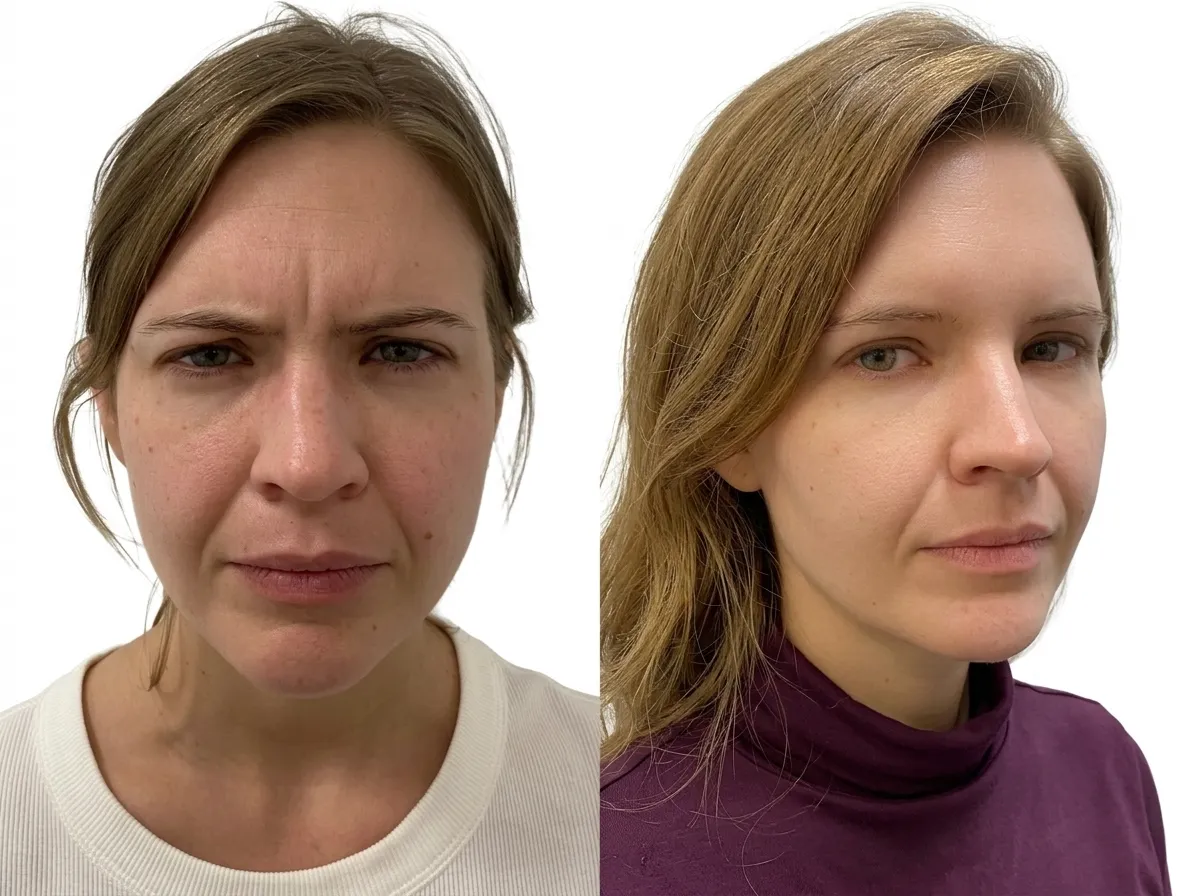
Results from frown line treatment typically last around 3 to 4 months for most patients, although muscle strength, lifestyle and metabolic rate can affect longevity.
Safety, Risks and Important Considerations
Botulinum toxin injections are a prescription-only medicine and must be preceded by a face-to-face consultation, clinical assessment, and appropriate prescribing. As a place for Botox in central London, we follow strict clinical protocols to ensure that treatments in the UK are delivered safely and responsibly. The injection plan for the glabellar area must account for adjacent muscle groups, brow position, and individual facial dynamics to reduce the likelihood of unwanted outcomes.
Temporary side effects can occur and may include localised redness, mild swelling, bruising at the injection site, or — less commonly — asymmetry or an unintended effect on neighbouring muscles. These effects are typically short-lived, but patients should be fully informed before proceeding. This is not a trivial cosmetic procedure, and choosing a properly regulated clinic for Botox with the appropriate prescribing pathway in place is essential to reaching the best outcome safely.
Why Choose London Aesthetics for Frown Lines Botox
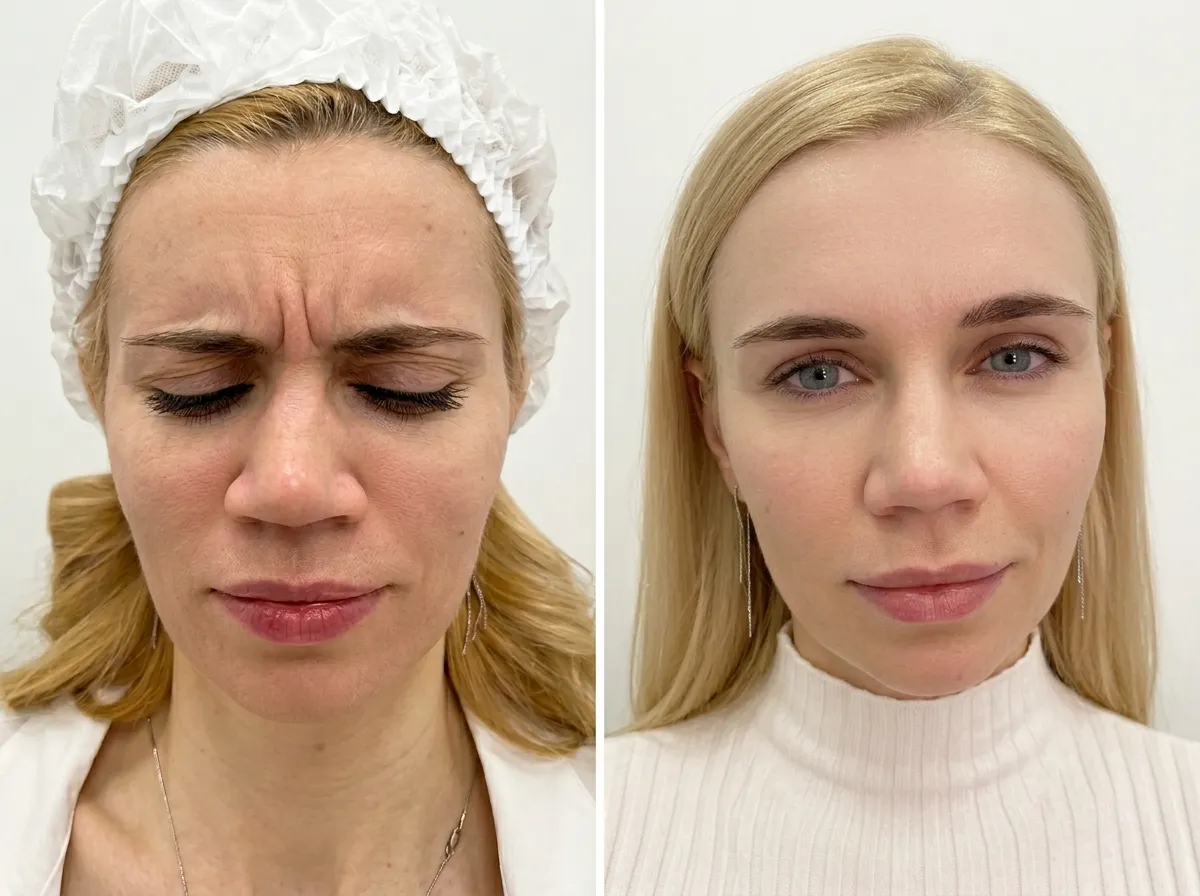
Our approach to frown line treatment at this Harley Street clinic is guided by clinical assessment, careful planning, and a commitment to natural results that look considered rather than obvious. Every patient who attends our Botox clinic in central London is assessed individually — there is no fixed template applied regardless of anatomy or concern.
Our Specialists and Clinical Team
Our aesthetic treatments are delivered by a team with complementary roles and clearly defined clinical responsibilities.
- Angelika is a fully insured aesthetic practitioner with over 8 years of international medical experience and an overseas medical degree. She practises in the UK under full certification and insurance for injectable treatments, combining advanced international techniques with strict UK safety standards. Her clinical approach focuses on subtle, structured, and naturally refined outcomes — particularly in delicate areas such as forehead Botox, London patients seek refined upper-face work.
- Dr. Ivan is a GMC-registered prescriber who provides the required face-to-face consultations and issues prescriptions for prescription-only products, including botulinum toxin, where clinically appropriate.
Responsible Consultation and Treatment Planning
Every treatment at our Harley Street clinic begins with a thorough consultation to confirm suitability, discuss realistic expectations, and establish the most appropriate personalised treatment approach for each individual.
Safety, Prescribing and Medical Standards
All prescription-only aesthetic treatments are subject to the appropriate prescribing pathway, including a face-to-face consultation with Dr. Ivan before botulinum toxin injections can proceed.
Natural-Looking Results and Controlled Outcomes
The clinical priority is to reduce the visible depth of frown lines and forehead wrinkles in a way that maintains natural expression — outcomes are discussed openly at consultation, so patients can choose to get Botox with a clear understanding of what is realistic.
Aftercare and Ongoing Support
Patients receive clear aftercare guidance following their forehead Botox treatment and are encouraged to contact the clinic with any concerns during the recovery period.
- Free consultation for all new patients considering anti-wrinkle injections
- Personalised treatment plans based on detailed facial assessment
- Appropriate prescribing pathway for all prescription-only products at this clinic in London
- Honest discussion of realistic expectations and potential side effects
- Central London location with accessible aftercare and follow-up support
London Aesthetics treatments are carried out by Angelika, an aesthetic practitioner — not a medical doctor. GMC-registered prescriber Dr. Ivan provides face-to-face consultations and issues prescriptions for prescription-only products where clinically required. All treatments are available to patients aged 18 and over only.
Frequently Asked Questions
What does frown lines Botox do?
Botulinum toxin injections targeting the glabellar area work by temporarily blocking the nerve signals that instruct the facial muscles between the brows to contract. As these targeted forehead muscles relax, the overlying skin experiences less repeated mechanical folding, allowing existing vertical lines to soften in appearance and reducing the conditions that drive new wrinkles from forming. The effect is not permanent — muscle activity gradually recovers over the months following injection, at which point patients may return for a further assessment if they wish to maintain their results. Treatment outcome depends on individual anatomy and cannot be guaranteed.
Who is usually a suitable candidate for frown lines Botox?
Ideal candidates for Botox in the glabellar area are adults aged 18 and over who have visible vertical lines between the brows — either lines that appear during expression or fine lines and wrinkles that have become visible at rest — and who are in generally good health with no contraindications to botulinum toxin. Suitability is confirmed only after a face-to-face consultation at our clinic in London that covers medical history, skin condition, muscle activity, and treatment goals. Patients who are pregnant, breastfeeding, or have certain neurological conditions are not suitable for this specific treatment.
How painful is frown lines Botox?
Most patients find injections in the glabellar area tolerable, describing a brief, sharp sensation at each injection point that passes quickly. The treatment involves several small injections using very fine needles across a limited area of treatment, and the overall session is generally brief. Discomfort levels vary between individuals depending on personal pain threshold and the specific muscles being targeted. A topical anaesthetic cream can be applied to the area before treatment for patients who are particularly concerned about discomfort, and this is discussed as part of the pre-treatment consultation.
How long do frown lines Botox results usually last?
Results from botulinum toxin injections in the glabellar area typically last in the region of three to four months for most patients, though individual longevity varies. Factors including muscle mass, metabolic rate, lifestyle habits, and the amount of Botox used during the session all influence how long the effects persist. Patients with stronger or more active corrugator muscles may notice a shorter duration than those with less pronounced muscle activity. A follow-up consultation at the clinic can be arranged when the patient begins to notice the natural return of muscle movement and wishes to discuss further forehead Botox treatment.
Are there risks or side effects with frown lines Botox?
As with any injectable cosmetic treatment, frown line Botox carries the potential for side effects, and patients should be fully informed before proceeding. Common, short-lived effects include localised redness, minor swelling, or small bruising at the injection sites, which typically resolve within a few days. Less commonly, temporary asymmetry or an unintended effect on adjacent muscles may occur, potentially influencing brow position. These effects usually resolve as the product wears off naturally. Rare but more significant complications are possible, which is why this specific treatment must be delivered following proper clinical assessment and through the appropriate prescribing pathway.
Is there any downtime after frown lines Botox?
Most patients are able to return to their usual daily activities on the same day, as there is generally no significant recovery period required after anti-wrinkle injections in this area. Some mild localised effects — such as minor redness or occasional bruising at the injection sites — may be visible in the hours after your treatment but typically settle quickly. Patients are advised to avoid strenuous physical exercise and excessive heat for the 24 hours before treatment and on the day of their appointment, and to refrain from rubbing or applying firm pressure to the treated area in the hours after their treatment is complete.
Can frown lines Botox be reversed, adjusted, or allowed to wear off if needed?
Unlike hyaluronic acid dermal filler treatments, the effects of botulinum toxin cannot be dissolved using a neutralising agent. However, the effects are entirely temporary — muscle activity in the treated area recovers gradually over the weeks and months following injection, and any unwanted effect will resolve naturally as the product wears off. If a patient’s result is not as expected following forehead Botox, the treating practitioner will account for this when planning any future session. This is precisely why a careful, conservative approach to dosing and placement at the initial session is clinically preferable for achieving the best outcome.
How is the right treatment plan decided?
The treatment plan for frown line Botox is determined at a face-to-face consultation that considers the patient’s visible concern, the degree and pattern of muscle activity in the glabellar region, skin condition, medical history, and the outcome the patient is hoping to achieve. The appropriate dose, injection points, and area of treatment are all confirmed at this stage — this is what makes personalised treatment plans at a reputable clinic in London preferable to fixed-protocol approaches. Where botulinum toxin is required as a prescription-only product, Dr. Ivan reviews the patient and issues the prescription before any forehead Botox treatment can proceed.