

Eye bags are one of the most common aesthetic concerns that prompt people to seek professional advice. They can appear at any age, vary considerably in severity, and may be driven by very different underlying factors — which is why understanding the cause matters before considering any treatment. This article explains the main reasons eye bags develop, how different mechanisms produce different types of under-eye changes, and what that means for anyone thinking about their options.
Key Takeaways
- Eye bags can result from several distinct causes, including fat prolapse, fluid retention, skin laxity, volume loss, and pigmentation — and these often overlap.
- Genetics plays a significant role; some people develop prominent under-eye bags in their twenties or thirties regardless of lifestyle.
- Ageing changes the fat compartments, skin, and supporting structures around the eye, making under-eye puffiness more pronounced over time.
- Lifestyle factors such as sleep quality, salt intake, alcohol, and allergies can worsen the appearance of eye bags, particularly fluid-related puffiness.
- Identifying the specific cause is essential before choosing any treatment, because different types of under-eye changes respond to different approaches.
What Are Eye Bags?
The term “eye bags” typically refers to a puffy, swollen, or bulging appearance in the lower eyelid area. Clinically, this region is known as the infraorbital area, and the changes people notice can involve several different anatomical structures: the fat pads that sit beneath the eye, the skin overlying them, the muscles of the lower eyelid, and the bony orbital rim below. Because multiple structures are involved, the appearance of eye bags is rarely caused by a single factor. What looks like simple puffiness to the naked eye may involve fat prolapse, fluid accumulation, skin thinning, or a combination of all three.
It is also worth distinguishing between true eye bags — which involve structural changes to the lower eyelid — and dark circles, which are a separate concern related to pigmentation or the visibility of blood vessels through thin skin. The two often coexist, but they have different causes and respond to different treatments. This article focuses primarily on the puffiness and bulging associated with eye bags, while acknowledging that under-eye concerns frequently overlap.
The Role of Orbital Fat Prolapse
One of the most significant structural causes of eye bags is the forward displacement of the orbital fat pads. The eye sits within a bony socket called the orbit, and surrounding it are several compartments of fat that act as cushioning. These fat pads are held in place by a thin fibrous layer called the orbital septum. When the orbital septum weakens — which happens naturally with age, but can also occur earlier due to genetics — the fat pads are no longer held firmly in position and begin to push forward, creating visible bulges beneath the lower eyelid.
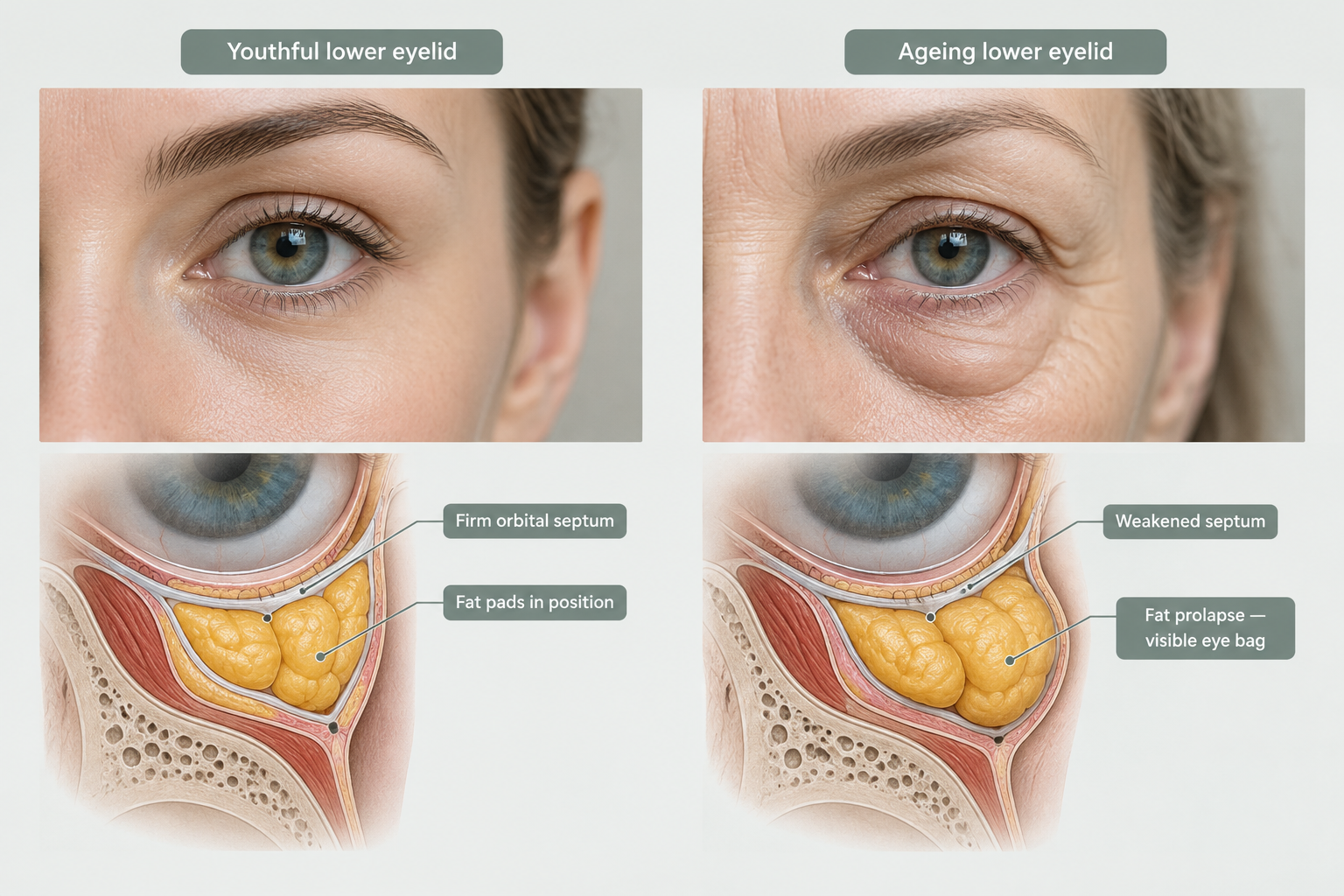
This type of eye bag is structural rather than fluid-related, which means it does not fluctuate significantly with sleep or hydration. The bulging tends to be consistent and may cast a shadow that contributes to a tired or aged appearance. Orbital fat prolapse is one of the primary reasons that surgical lower blepharoplasty — a procedure that repositions or removes excess fat — remains a commonly performed option for persistent, structurally driven eye bags. Non-surgical approaches may soften the appearance but are unlikely to fully correct significant fat prolapse.
How Ageing Changes the Under-Eye Area
Ageing affects the under-eye area through several simultaneous processes, and understanding these helps explain why eye bags often become more noticeable as people get older. The skin around the eyes is among the thinnest on the body, and it loses collagen and elastin over time, becoming less firm and more prone to sagging. This skin laxity means that even modest changes in the underlying fat or fluid are more visible at the surface.
At the same time, the midface — the area of the cheek below the eye — loses volume with age. The fat compartments of the cheek descend and diminish, creating a hollow or groove known as the tear trough. This tear trough deformity can make the transition between the lower eyelid and the cheek appear more abrupt, accentuating the appearance of eye bags even when the bags themselves have not significantly worsened. The combination of fat prolapse above and volume loss below creates a shadow and contour change that many people describe as looking permanently tired.
Bone resorption also contributes. The orbital rim — the bony edge of the eye socket — gradually recedes with age, reducing the structural support beneath the lower eyelid and allowing soft tissues to descend further. This skeletal change is one reason why under-eye concerns tend to become more complex to address in older patients, often requiring a combination of approaches rather than a single treatment.
Genetics and Hereditary Factors
Genetics is one of the most important and least controllable contributors to eye bags. Some individuals inherit a tendency toward a weaker orbital septum, larger orbital fat compartments, or thinner lower eyelid skin — all of which predispose them to developing visible eye bags at a younger age. It is not uncommon for people in their twenties or early thirties to present with prominent under-eye bags that are clearly familial, having observed the same feature in a parent or grandparent.
Ethnicity can also influence the anatomy of the periorbital area, affecting the distribution of fat, the prominence of the orbital rim, and the thickness of the overlying skin. These anatomical differences mean that the appearance of eye bags and the most appropriate treatment approach can vary between individuals, and a thorough clinical assessment is always necessary before any intervention is considered.
For those with a strong genetic predisposition, lifestyle modifications alone are unlikely to produce a significant improvement. Understanding this can help set realistic expectations and guide conversations with a practitioner about which options may be worth exploring.
Fluid Retention and Puffiness
Not all under-eye puffiness is structural. Fluid retention — the accumulation of excess fluid in the soft tissues beneath the eye — is a common and often temporary cause of morning puffiness. The skin around the eyes is loosely attached to the underlying tissue, which makes it particularly susceptible to fluid accumulation. When fluid collects in this area, it creates a swollen appearance that may be more pronounced on waking and tends to reduce as the day progresses and gravity assists drainage.
Several factors can promote fluid retention in the under-eye area. A high-salt diet encourages the body to retain water, which can manifest as facial puffiness including around the eyes. Alcohol consumption has a similar effect, partly through dehydration and partly through its influence on fluid balance. Sleeping flat, without any elevation of the head, allows fluid to pool in the face overnight, contributing to morning puffiness that resolves within a few hours of being upright.
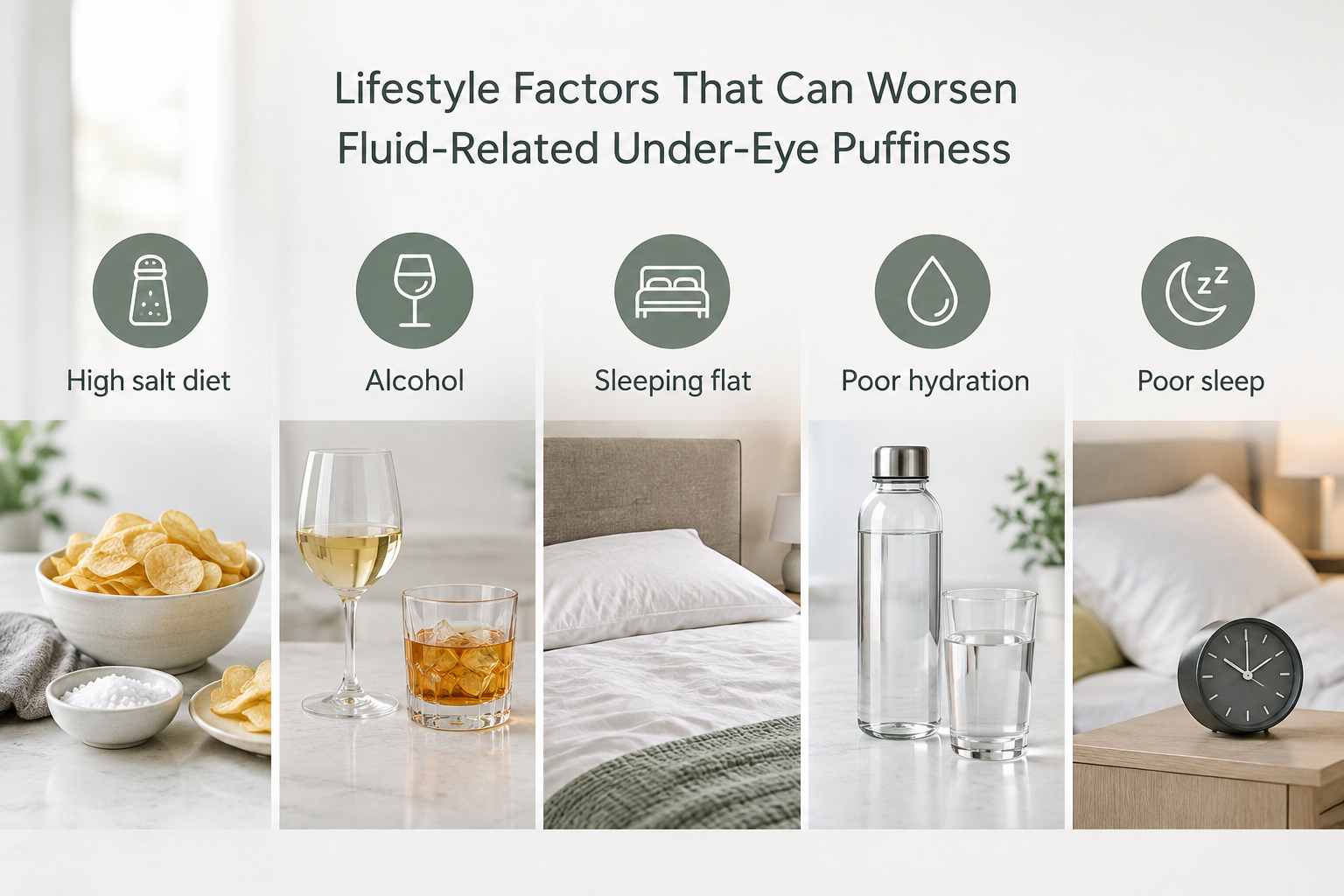
Fluid-related puffiness is generally more responsive to lifestyle changes than structural eye bags. Reducing salt and alcohol intake, staying well hydrated, and sleeping with the head slightly elevated may all help reduce the severity of fluid-driven under-eye swelling. However, if puffiness is persistent throughout the day or does not respond to these measures, a structural or medical cause is more likely.
Allergies and Inflammatory Causes
Allergic reactions — whether seasonal, environmental, or contact-related — are a frequently overlooked cause of under-eye puffiness. When the body responds to an allergen, it releases histamine and other inflammatory mediators that cause blood vessels to dilate and become more permeable. This increased vascular permeability allows fluid to leak into surrounding tissues, producing swelling and puffiness around the eyes. Allergic shiners — a darkening beneath the eyes associated with nasal congestion and impaired venous drainage — can accompany this puffiness and contribute to the overall appearance of eye bags.
Common triggers include pollen, dust mites, pet dander, and certain skincare or cosmetic products applied near the eye. Identifying and managing the underlying allergy — through avoidance, antihistamines, or specialist allergy assessment — can significantly reduce inflammation-related under-eye puffiness. If allergic causes are suspected, addressing them before pursuing aesthetic treatments is advisable, as ongoing inflammation may affect both the appearance of the area and the suitability of certain procedures.
Chronic rubbing of the eyes, which often accompanies allergic conditions, can also contribute to skin thickening, pigmentation changes, and over time may weaken the delicate structures of the lower eyelid, potentially worsening the appearance of eye bags.
Sleep, Fatigue and Lifestyle Factors
Poor sleep quality and insufficient sleep are strongly associated with a more pronounced under-eye appearance. During sleep, the body regulates fluid balance and repairs tissues; when sleep is disrupted or inadequate, these processes are impaired. Fatigue also causes blood vessels beneath the thin under-eye skin to dilate, making the area appear darker and more swollen. The pale, fatigued complexion that accompanies poor sleep can make existing eye bags appear more prominent by reducing overall skin tone and contrast.
Smoking accelerates the breakdown of collagen and elastin in the skin, contributing to premature skin laxity around the eyes. Ultraviolet exposure has a similar effect, degrading the structural proteins that keep the lower eyelid skin firm. Both factors can worsen the appearance of eye bags over time by reducing the skin’s ability to support the underlying fat compartments. Sun protection and avoiding smoking are therefore relevant not only to general skin health but specifically to the periorbital area.
Stress, which often accompanies poor sleep and lifestyle imbalance, can elevate cortisol levels. Chronically elevated cortisol may contribute to fluid retention and skin thinning, both of which can worsen the under-eye area. While these lifestyle factors are rarely the sole cause of significant eye bags, they can meaningfully influence how pronounced the appearance is on any given day.
Medical Conditions That Can Cause Under-Eye Puffiness
In some cases, persistent or sudden-onset under-eye puffiness may have an underlying medical cause that warrants investigation. Thyroid disorders — particularly hypothyroidism, where the thyroid gland is underactive — can cause generalised facial puffiness and periorbital swelling due to the accumulation of a substance called mucin in the tissues. This type of swelling, known as myxoedema, has a characteristic doughy quality and is accompanied by other systemic symptoms such as fatigue, weight gain, and cold intolerance.
Kidney disease can impair the body’s ability to regulate fluid balance, leading to periorbital oedema that is often most noticeable in the morning. Cardiovascular conditions affecting the heart’s pumping efficiency may also cause fluid to accumulate in dependent tissues, including the face. Certain medications — including some antihypertensives, corticosteroids, and non-steroidal anti-inflammatory drugs — can cause or worsen fluid retention and periorbital puffiness as a side effect.
If under-eye puffiness is sudden in onset, severe, associated with other symptoms such as shortness of breath, ankle swelling, or changes in urination, or does not respond to lifestyle measures, a medical evaluation is appropriate before any aesthetic assessment. Aesthetic practitioners should take a thorough medical history and may recommend that a patient consult their general practitioner if a medical cause is suspected.
Skin Thinning, Pigmentation and Vascular Visibility
The skin beneath the eye is naturally thinner than skin elsewhere on the face, and it becomes progressively thinner with age, sun damage, and certain lifestyle factors. As the skin thins, the structures beneath it — including blood vessels and the orbicularis oculi muscle — become more visible through the surface. This vascular visibility can create a bluish or purplish discolouration that is often described as dark circles, but it can also contribute to the overall shadowed, sunken appearance that accompanies eye bags.
Hyperpigmentation — an increase in melanin production in the skin — is another contributor to the darkened appearance beneath the eye. This can be triggered by sun exposure, post-inflammatory changes following skin irritation or allergy, or hormonal influences. Pigmentation-related under-eye concerns are distinct from structural eye bags, though the two frequently coexist and can be difficult to distinguish without a careful clinical assessment.
Understanding whether the primary concern is puffiness, pigmentation, hollowness, or a combination is essential for selecting an appropriate treatment approach. Treatments that address volume loss, for example, may not improve pigmentation, and vice versa. A practitioner experienced in periorbital aesthetics will assess each of these components individually before recommending any intervention.
Volume Loss and the Tear Trough
Volume loss in the midface is closely linked to the appearance of eye bags, even when the eye bags themselves are not particularly large. As the cheek fat descends and diminishes with age, the tear trough — the groove that runs from the inner corner of the eye toward the cheek — becomes more pronounced. This creates a shadow and a step-off between the lower eyelid and the cheek that can make the under-eye area look hollow, tired, and aged.
In some patients, the primary concern is not puffiness but hollowness — a sunken appearance beneath the eye that results from volume depletion rather than fat prolapse. This distinction is clinically important because the two conditions may require different approaches. Treating hollowness with a volume-restoring approach such as hyaluronic acid filler in the tear trough may be appropriate in carefully selected patients, but this is a technically demanding area where the risk of complications is higher than in other facial regions. Clinical assessment by an experienced practitioner is essential to determine whether volume restoration is appropriate and safe for an individual patient.
Why Identifying the Cause Matters Before Treatment
The range of causes described above illustrates why there is no single universal treatment for eye bags. A patient with fluid-related morning puffiness driven by dietary habits may benefit significantly from lifestyle changes alone. A patient with early orbital fat prolapse and mild skin laxity may be a candidate for non-surgical approaches such as skin-tightening treatments or carefully placed injectable treatments. A patient with significant structural fat prolapse and skin excess may ultimately require surgical assessment for lower blepharoplasty to achieve a meaningful improvement.
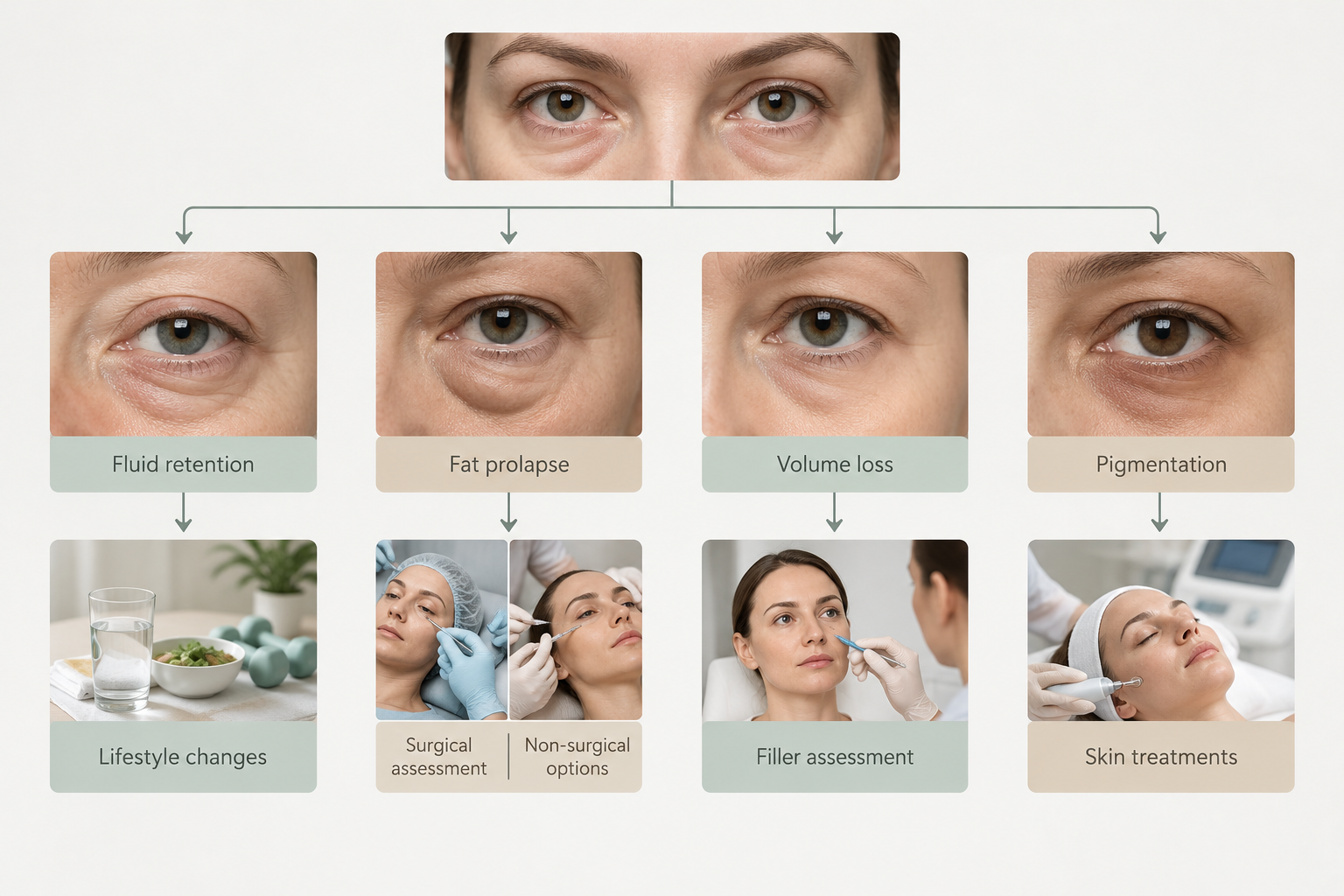
Attempting to treat eye bags without first identifying the underlying cause risks producing disappointing results or, in some cases, worsening the appearance. For example, adding volume to an area that already has fat prolapse may increase puffiness rather than reduce it. Conversely, a patient whose primary concern is hollowness may not benefit from treatments aimed at reducing puffiness. This is why a thorough consultation with a qualified practitioner — one who can assess the anatomy, skin quality, and contributing factors — is the essential first step before any treatment decision is made.
Frequently Asked Questions
Can eye bags go away on their own?
Fluid-related puffiness that fluctuates with sleep, diet, or allergies may reduce significantly with lifestyle changes. Structural eye bags caused by fat prolapse, skin laxity, or volume loss are unlikely to resolve without treatment, as these involve changes to the anatomy of the lower eyelid that do not reverse spontaneously.
At what age do eye bags typically develop?
There is no fixed age. Some people notice eye bags in their twenties due to genetic factors, while others develop them gradually through their thirties, forties, and beyond as ageing changes accumulate. The onset and severity depend on a combination of genetics, anatomy, lifestyle, and overall skin health.
Are eye bags a sign of a health problem?
In most cases, eye bags are a cosmetic concern rather than a medical one. However, sudden or severe periorbital swelling, puffiness accompanied by other symptoms such as fatigue, weight changes, or ankle swelling, or puffiness that does not respond to lifestyle measures may warrant a medical evaluation to rule out thyroid, kidney, or cardiovascular causes.
Does drinking more water help with eye bags?
Staying well hydrated supports overall skin health and may help reduce fluid retention-related puffiness, particularly when combined with reducing salt and alcohol intake. However, hydration alone is unlikely to significantly improve structural eye bags caused by fat prolapse or skin laxity.
Can skincare products reduce eye bags?
Some topical ingredients — such as caffeine, which may temporarily constrict blood vessels and reduce mild puffiness, or retinoids, which may support collagen production over time — can modestly improve the appearance of the under-eye area. However, topical products are unlikely to produce significant improvement in structural eye bags and should be viewed as a supportive measure rather than a primary treatment.
Is it possible to prevent eye bags from developing?
While genetic predisposition cannot be changed, certain lifestyle measures may slow the progression of age-related under-eye changes. These include consistent sun protection, avoiding smoking, maintaining good sleep habits, limiting salt and alcohol intake, and managing allergies effectively. These measures support skin quality and reduce fluid-related puffiness, though they cannot prevent structural changes entirely.
Understanding Your Eye Bags Before Seeking Treatment
Eye bags are rarely straightforward. The same under-eye appearance can result from fat prolapse, fluid retention, volume loss, skin laxity, pigmentation, or a combination of several of these factors — and each has different implications for treatment. Recognising which factors are most relevant to your own situation is the most important step before exploring any aesthetic or medical option.
If you are considering treatment for eye bags, a consultation with a qualified aesthetic practitioner or oculoplastic specialist who can assess the anatomy and contributing factors is the appropriate starting point. A thorough assessment will help determine whether lifestyle changes, non-surgical treatments, or a surgical approach may be most suitable for your specific concerns — and will ensure that any treatment recommended is genuinely matched to the cause rather than applied generically. Realistic expectations, a clear understanding of the likely benefits and limitations of any proposed approach, and an honest discussion about the range of options available are all part of making an informed decision.