

Exosome therapy is gaining attention as a non-surgical option for people experiencing thinning hair or early hair loss. The treatment uses cell-derived signalling particles to deliver growth factors and other biological messengers directly to the scalp, with the aim of supporting hair follicle activity. While clinical research is still developing, early evidence and growing clinical interest have made exosomes for hair a topic worth understanding carefully before deciding whether a consultation is worthwhile.
Key Takeaways
- Exosomes are tiny extracellular vesicles derived from stem cells that carry growth factors, proteins, and genetic signals capable of influencing follicle behaviour.
- The treatment is typically delivered via scalp injections or microneedling and is aimed at people with early-to-moderate hair thinning rather than complete follicle loss.
- Clinical evidence is still emerging; results vary between individuals and multiple sessions are often recommended.
- Exosome therapy is not a cure for hair loss and works best as part of a broader hair health strategy, ideally guided by a qualified practitioner.
- Suitability depends on the underlying cause of hair loss, medical history, and individual scalp condition, making a thorough assessment essential before treatment.
What Are Exosomes and How Do They Relate to Hair Loss?
Exosomes are extracellular vesicles — extremely small particles, typically between 30 and 150 nanometres in diameter — that are naturally released by cells as part of normal biological communication. They carry a cargo of proteins, lipids, messenger RNA, and microRNA that can influence the behaviour of recipient cells. In a clinical context, the exosomes used in aesthetic and regenerative treatments are most commonly derived from mesenchymal stem cells, which are known for their role in tissue repair and regeneration.
Hair loss, regardless of its cause, often involves a disruption to the normal hair growth cycle. Each hair follicle cycles through phases of active growth (anagen), transition (catagen), and rest (telogen). In conditions such as androgenetic alopecia — the most common form of pattern hair loss in both men and women — follicles progressively miniaturise, producing finer and shorter hairs until they eventually become inactive. Inflammatory scalp conditions, nutritional deficiencies, hormonal changes, and stress can also push follicles prematurely into the resting phase. Exosome therapy is proposed to work by delivering biological signals that may help shift follicles back toward the active growth phase and support the surrounding scalp environment.
How Exosome Therapy for Hair Works
The mechanism behind exosome hair treatment centres on intercellular communication. When exosomes derived from stem cells are introduced to the scalp, they are thought to interact with dermal papilla cells — the specialised cells at the base of each hair follicle that regulate follicle cycling and hair shaft production. The growth factors and signalling molecules carried by exosomes, including vascular endothelial growth factor (VEGF), platelet-derived growth factor (PDGF), and various Wnt pathway activators, may help stimulate follicle activity, improve local blood supply, and reduce inflammation in the scalp tissue.
Unlike platelet-rich plasma (PRP), which uses the patient’s own blood to concentrate growth factors, exosome preparations are typically manufactured from donor stem cell lines and standardised to contain a defined concentration of vesicles and associated bioactive molecules. This standardisation is one reason proponents suggest exosomes may offer a more consistent biological signal than PRP, though direct head-to-head clinical comparisons remain limited. It is important to note that the regulatory status of exosome products varies significantly between countries, and not all commercially available preparations have undergone the same level of independent clinical scrutiny.
What the Treatment Involves
A typical exosome hair treatment session begins with a scalp assessment to evaluate the pattern and extent of hair thinning, scalp health, and any contributing factors. The practitioner will usually cleanse the scalp and may apply a topical anaesthetic to reduce discomfort during the procedure.
Exosomes are most commonly delivered to the scalp using one of two methods. The first is direct microinjection, where small amounts of the exosome solution are injected at multiple points across the thinning areas of the scalp. The second approach combines exosomes with microneedling, a technique that creates controlled micro-channels in the skin to enhance absorption of topically applied solutions. Some practitioners use both methods in combination. The session typically takes between 45 minutes and 90 minutes depending on the area being treated and the delivery method used.
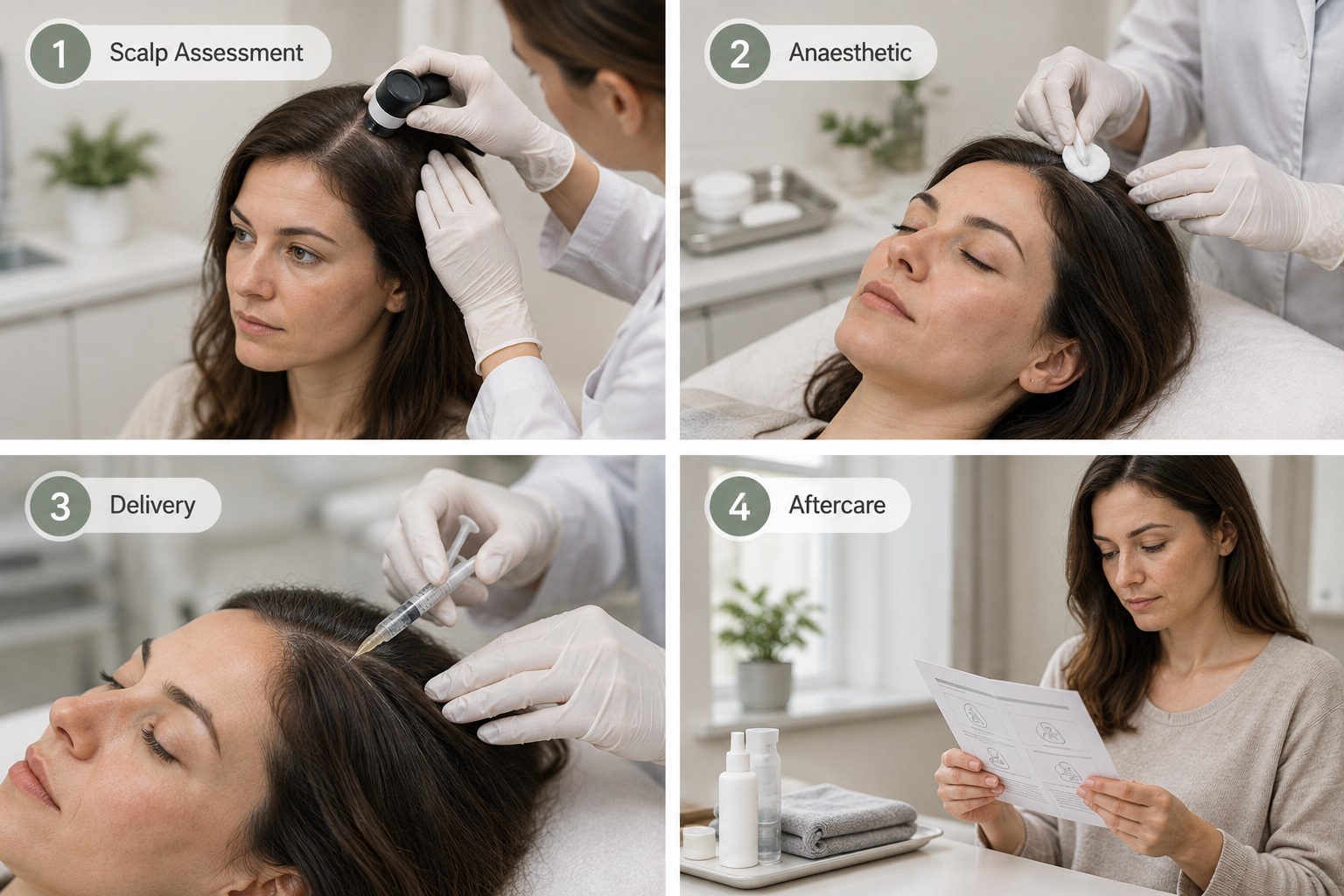
Most treatment protocols recommend an initial course of two to four sessions spaced several weeks apart, followed by maintenance treatments at intervals that depend on individual response. Because hair follicle cycling is a slow biological process, visible changes in hair density or thickness are generally not expected immediately after the first session.
Who May Be Suitable for Exosome Hair Treatment
Exosome therapy for hair thinning is generally considered most appropriate for individuals in the earlier stages of hair loss, where follicles are still present and potentially active rather than permanently lost. Candidates who may be worth discussing the treatment with a qualified practitioner include those experiencing:
- Early-to-moderate androgenetic alopecia (pattern hair loss) in men or women
- Diffuse hair thinning without complete follicle loss
- Hair shedding related to stress, hormonal changes, or post-illness recovery (telogen effluvium)
- Reduced hair density following certain medical treatments, where follicles remain viable
- Scalp conditions associated with inflammation that may be contributing to hair thinning
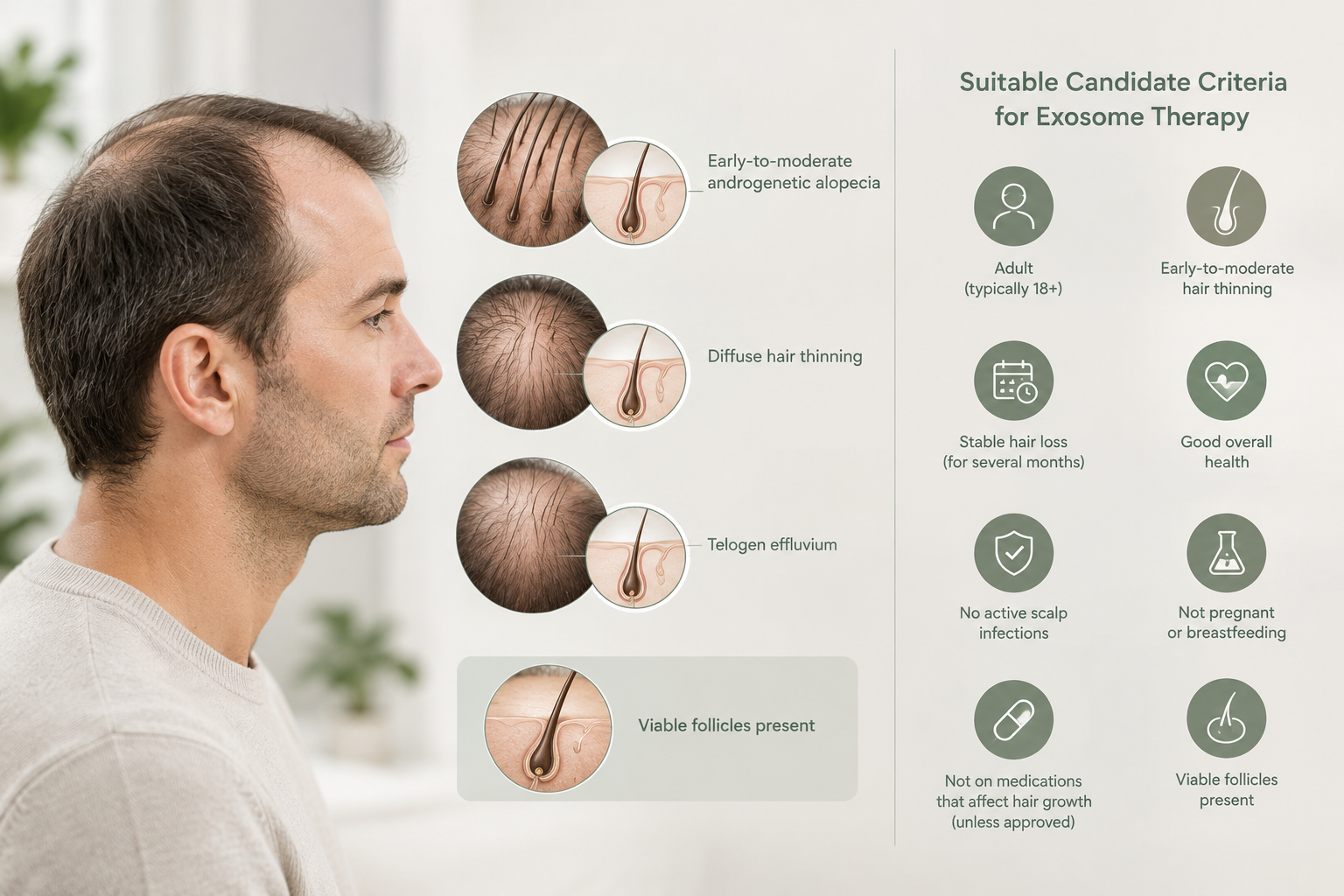
Exosome therapy is unlikely to restore hair in areas where follicles have been permanently lost or replaced by scar tissue. A thorough scalp assessment, which may include trichoscopy or other diagnostic tools, is important to determine whether viable follicles are present and whether the treatment is likely to be relevant for a particular pattern of hair loss.
Who May Not Be Suitable
Not everyone experiencing hair loss will be an appropriate candidate for exosome treatment. A clinical assessment is required to identify any factors that may affect suitability or safety. Individuals who may not be suitable include those with:
- Active scalp infections or inflammatory skin conditions in the treatment area
- A history of certain autoimmune conditions, depending on the specific diagnosis and current disease activity
- Known allergies to components of the exosome preparation or any adjunct products used during the procedure
- Pregnancy or breastfeeding, as safety data in these groups is not established
- Certain blood disorders or those taking medications that significantly affect clotting, depending on the delivery method
- Advanced or complete hair loss where follicles are no longer present
The practitioner should take a full medical history and review any current medications before proceeding. Because exosome products are derived from donor cell lines, individuals with concerns about biological materials should discuss this with their practitioner in advance.
Potential Benefits of Exosome Therapy for Hair
The potential benefits most commonly discussed in the context of exosome hair treatment include improvements in hair density, hair shaft thickness, and the overall health of the scalp environment. Some patients and clinicians report that treated areas show a reduction in shedding and an increase in the proportion of hairs in the active growth phase over time. The treatment is non-surgical, involves no general anaesthesia, and does not require the harvesting of the patient’s own tissue, which distinguishes it from hair transplant procedures.
Because exosome preparations can be standardised in terms of vesicle concentration and growth factor content, there is a theoretical advantage over treatments where the biological potency varies between individuals, such as PRP. However, it is important to be clear that the clinical evidence base for exosome hair treatment is still developing. Most published studies involve small patient numbers, short follow-up periods, and variable preparation methods, which makes it difficult to draw firm conclusions about the magnitude or durability of benefit across different patient populations.
Limitations and Realistic Expectations
Exosome therapy for hair thinning is not a cure for hair loss, and it is important to approach the treatment with realistic expectations. The degree of improvement varies between individuals and depends on factors including the underlying cause of hair loss, the extent of follicle miniaturisation, the patient’s age, hormonal status, and general health. Some individuals may notice meaningful improvements in hair density and texture after a course of treatment, while others may experience more modest changes or require ongoing maintenance sessions to sustain any benefit.
The treatment does not address the root hormonal or genetic drivers of androgenetic alopecia. For this reason, many practitioners recommend combining exosome therapy with evidence-based medical treatments for hair loss, such as topical minoxidil or oral finasteride where appropriate, rather than using it as a standalone intervention. Lifestyle factors including nutrition, stress management, and scalp care also play a role in overall hair health and should not be overlooked.
It is also worth noting that the exosome market is not uniformly regulated. Product quality, vesicle concentration, and the presence of genuine growth factor cargo can vary significantly between manufacturers and suppliers. Patients should ask their practitioner about the specific product being used, its origin, and any available quality or safety data.
Risks and Side Effects
Exosome scalp treatment is generally considered to carry a low risk of serious adverse effects when performed by a qualified practitioner using a reputable preparation, but it is not without potential side effects. Commonly reported temporary effects include:
- Redness, tenderness, or mild swelling at injection sites
- Temporary scalp sensitivity or itching in the treated area
- Minor bruising, particularly with microinjection delivery
- Mild headache following the procedure
More significant risks are uncommon but possible. These include infection at injection sites if sterile technique is not maintained, allergic or hypersensitivity reactions to components of the preparation, and, theoretically, immune responses related to the donor-derived biological material. Because exosome therapy is a relatively new clinical application, long-term safety data across large patient populations is not yet available. Patients should ensure they are treated by a practitioner with appropriate training and that the product used meets relevant regulatory and quality standards in their country.
Recovery and Downtime
Most people are able to return to normal daily activities on the same day as their exosome scalp treatment. The scalp may feel tender or appear slightly red for 24 to 48 hours after the procedure. Practitioners typically advise avoiding vigorous exercise, swimming, saunas, and direct sun exposure for at least 24 hours following treatment. Harsh shampoos, chemical treatments, and heat styling are usually best avoided for a short period after the session to allow the scalp to settle.
There is no surgical recovery period, and most people find the procedure tolerable, particularly when a topical anaesthetic is used beforehand. The level of discomfort experienced during microinjection varies between individuals and depends on scalp sensitivity and the specific areas treated.
When Results May Appear and How Long They May Last
Hair growth is a slow biological process, and visible improvements following exosome therapy are generally not expected within the first few weeks. Most practitioners advise patients to allow at least three to six months after completing an initial course of treatment before assessing the full response. Early signs that the treatment may be working can include a reduction in daily hair shedding and the appearance of new fine hairs in previously thinning areas, though these changes are subtle and may not be immediately obvious.
The durability of results from exosome hair treatment is not yet well established in the clinical literature. Some patients may maintain improvements for a year or longer, while others may find that hair density gradually returns to pre-treatment levels without maintenance sessions. Because the underlying causes of most forms of hair loss are ongoing, periodic maintenance treatments are commonly recommended as part of a longer-term hair health strategy. The appropriate interval between maintenance sessions should be guided by individual response and discussed with the treating practitioner.
How Exosomes Compare to Other Hair Loss Treatments
Several established and emerging treatments are available for hair thinning, and exosome therapy sits within a broader landscape of options. Understanding how it compares can help prospective patients have a more informed conversation with their practitioner.
Platelet-rich plasma (PRP) for hair is one of the most widely used regenerative approaches to hair loss and shares some conceptual similarities with exosome therapy. PRP is derived from the patient’s own blood and delivers a concentrated mix of growth factors to the scalp. It has a longer clinical track record and more published evidence than exosome treatment, though results also vary. Exosomes may offer a more standardised growth factor concentration, but direct comparative studies are limited.
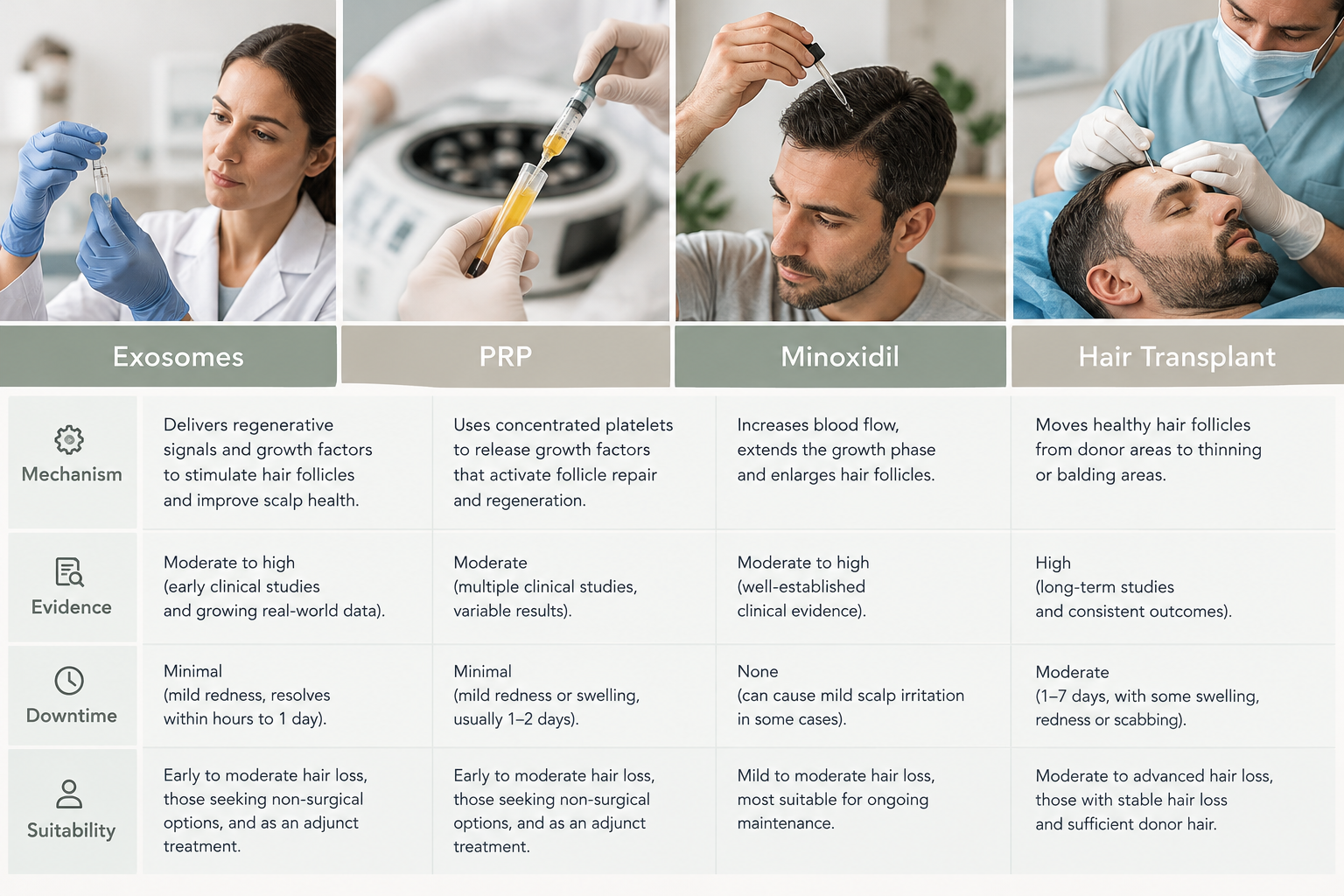
Minoxidil is a topical or oral medication with well-established evidence for slowing hair loss and stimulating regrowth in androgenetic alopecia. It is available without prescription in many countries and is often recommended as a first-line or adjunct treatment. Unlike exosome therapy, minoxidil requires continuous use to maintain its effect.
Finasteride and dutasteride are oral medications that work by reducing the hormonal signal responsible for follicle miniaturisation in androgenetic alopecia. They have strong clinical evidence in men and are sometimes used off-label in women under medical supervision. These medications address the underlying hormonal driver of pattern hair loss in a way that exosome therapy does not.
Low-level laser therapy (LLLT) uses specific wavelengths of light to stimulate follicle activity and is available in clinic-based and home-use devices. Evidence supports modest benefit in some patients, and it can be used alongside other treatments.
Hair transplant surgery involves the permanent relocation of follicles from donor areas to thinning or bald areas. It is the only treatment that can restore hair in areas where follicles are no longer active, but it is a surgical procedure with associated costs, recovery, and suitability requirements. Exosome therapy is sometimes used after hair transplant surgery to support graft survival and scalp healing, though evidence for this specific application is still limited.
Questions to Ask Before Booking a Treatment
Before committing to exosome hair therapy, it is worth asking a prospective practitioner the following:
- What is the specific exosome product being used, and what quality or safety data is available for it?
- What is the regulatory status of this product in this country?
- What results are realistic for my particular pattern and cause of hair loss?
- How many sessions are recommended, and what is the expected cost of a full course?
- What other treatments might complement or be more appropriate than exosome therapy for my situation?
- What are the risks specific to my medical history and current medications?
- How will progress be assessed, and what happens if I do not respond as expected?
Frequently Asked Questions
Are exosomes for hair loss the same as stem cell therapy?
Exosome therapy and stem cell therapy are related but distinct. Stem cell treatments involve introducing living cells into the body, whereas exosome preparations contain only the vesicles secreted by stem cells, not the cells themselves. This distinction has practical implications for regulatory classification and safety profile, and the two approaches should not be used interchangeably.
Can exosome treatment reverse complete baldness?
Exosome therapy is not considered an effective treatment for areas where hair follicles have been permanently lost or replaced by scar tissue. The treatment is aimed at supporting follicles that are still present but underperforming. In cases of advanced or complete hair loss, hair transplant surgery is the only option capable of restoring hair to those areas.
How many exosome sessions are typically needed?
Most treatment protocols suggest an initial course of two to four sessions, often spaced four to six weeks apart, followed by maintenance treatments at intervals determined by individual response. The appropriate number of sessions varies depending on the extent of hair thinning, the underlying cause, and how well the individual responds to treatment.
Is exosome hair treatment painful?
Discomfort levels vary between individuals. When microinjections are used, a topical anaesthetic is typically applied beforehand to reduce discomfort. Most patients describe the procedure as tolerable, with mild tenderness or sensitivity in the treated area for a day or two afterwards.
Can exosome therapy be combined with other hair loss treatments?
Yes, and many practitioners recommend combining exosome therapy with evidence-based treatments such as topical minoxidil, oral medications where appropriate, or low-level laser therapy. Combining approaches may address different aspects of hair loss simultaneously, though the specific combination should be guided by a qualified practitioner based on individual assessment.
How soon will I see results from exosome hair treatment?
Because hair follicle cycling is a slow process, visible improvements are generally not expected before three to six months after completing an initial course of treatment. Some individuals notice a reduction in shedding earlier, but meaningful changes in density or thickness typically take longer to become apparent.
Is Exosome Hair Treatment Worth Considering for Thinning Hair?
Exosome therapy represents a genuinely interesting development in the field of hair loss treatment, drawing on advances in regenerative medicine and cell biology. For individuals with early-to-moderate hair thinning where follicles remain active, the treatment may offer a useful addition to a broader hair health strategy, particularly when other approaches have produced limited results or are not suitable. The non-surgical nature of the procedure, the absence of a lengthy recovery period, and the theoretical advantages of standardised growth factor delivery make it an option worth discussing with a qualified practitioner.
At the same time, it is important to be clear-eyed about the current state of the evidence. Clinical research into exosome hair treatment is still at a relatively early stage, with most studies involving small numbers of patients and short follow-up periods. Results vary between individuals, the treatment does not address the underlying hormonal or genetic causes of pattern hair loss, and the quality of available exosome products is not uniform across the market. Regulatory oversight also differs significantly between countries, which means that not all commercially available preparations have been independently validated.
For anyone considering exosome therapy for hair thinning, the most important first step is a thorough consultation with a practitioner who can assess the specific cause and pattern of hair loss, explain what is realistically achievable, and recommend a treatment plan — whether that includes exosomes, established medical therapies, or a combination of both — that is genuinely tailored to individual needs.